How Does Epoxy Colored Sand Differ from Standard Epoxy Self-Leveling?
When selecting an epoxy flooring system, many project owners, contractors, and distributors face the same question: Should we use epoxy colored sand flooring or standard epoxy self-leveling?
At first glance, both systems are epoxy-based and seamless, which often leads to confusion. However, in real-world applications, these two flooring systems serve very different purposes.
Understanding the structural, performance, and application differences between epoxy colored sand and epoxy self-leveling is essential to avoid mismatched material choices, unnecessary costs, and long-term maintenance issues. This article provides a practical, engineering-focused comparison to help professionals make informed decisions.
Why It Is Important to Distinguish Between Epoxy Colored Sand and Epoxy Self-Leveling?
In many projects, epoxy flooring is chosen early in the design phase, sometimes without a clear understanding of how different epoxy systems behave in use. Treating epoxy colored sand and epoxy self-leveling as interchangeable often results in performance gaps.
The consequences of incorrect selection may include:
- Insufficient slip resistance in public areas.
- Unexpected wear in high-traffic zones.
- Visual dissatisfaction after installation.
- Increased maintenance or repair costs.
By clearly distinguishing these two systems, project stakeholders can align flooring performance with actual usage conditions rather than relying on appearance or initial cost alone.
Fundamental Differences in Material Structure
Epoxy Colored Sand Flooring Structure
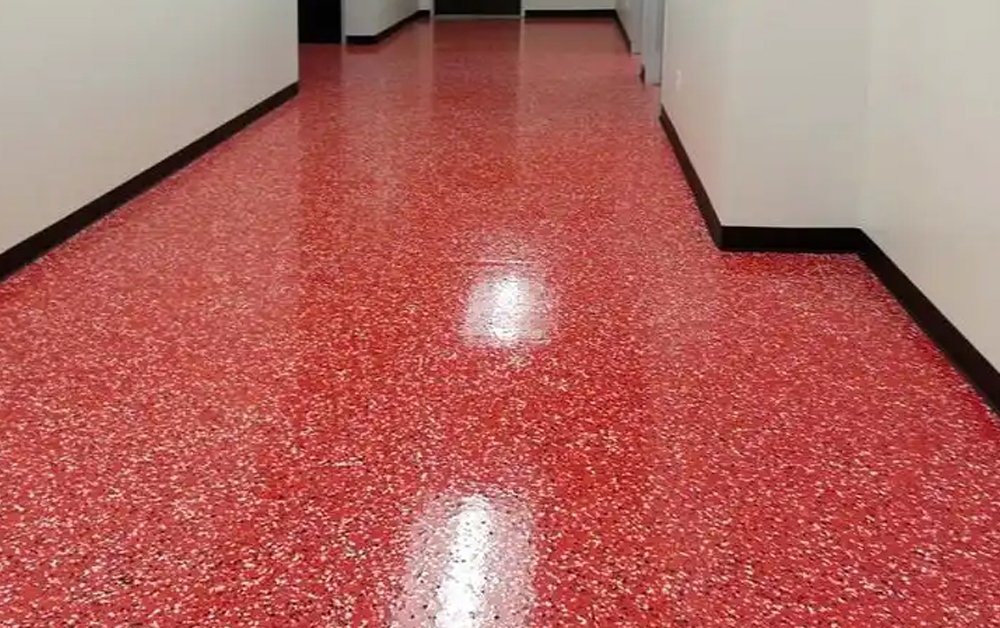
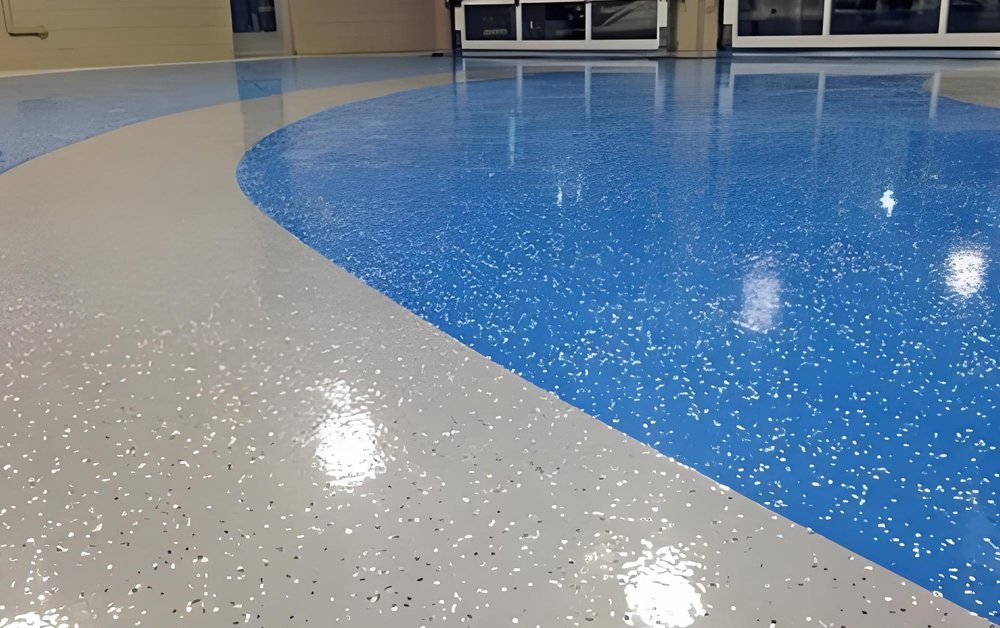
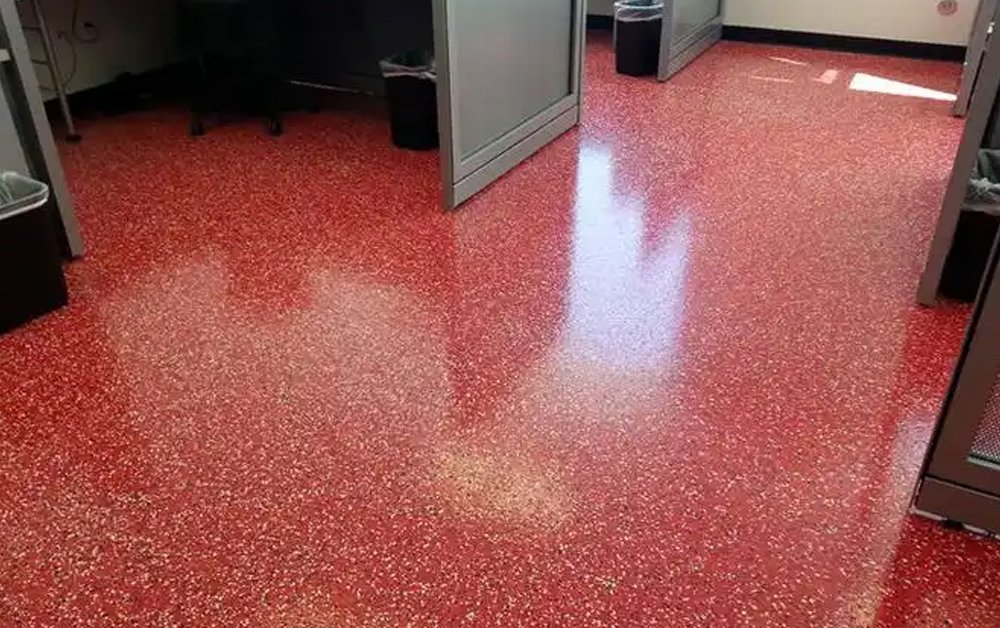
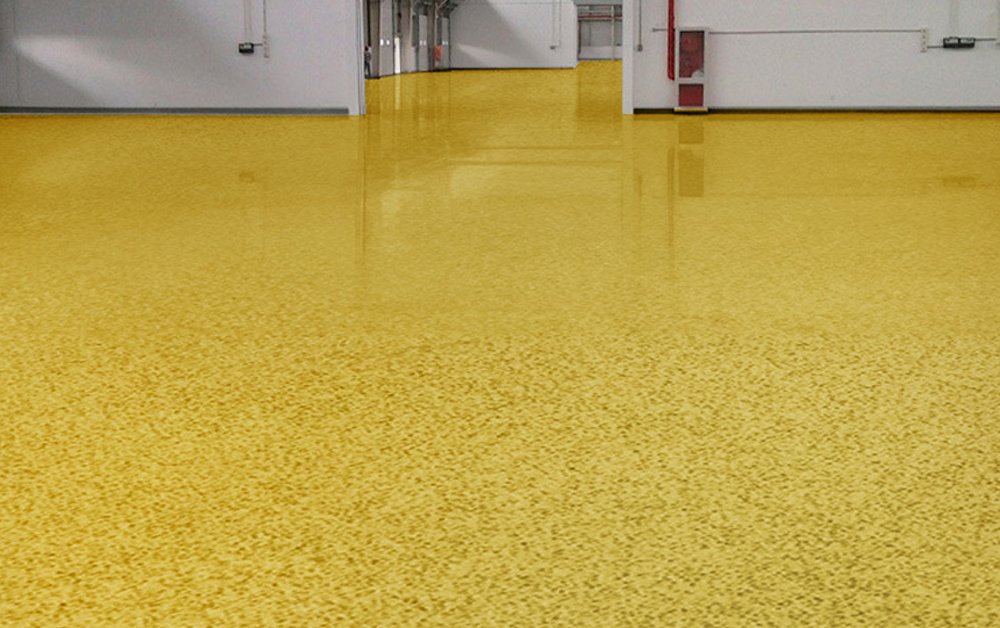
Epoxy colored sand flooring is a multi-component system composed of epoxy resin and graded colored sand aggregates. The sand particles form a physical structure within the resin, creating a textured and thicker flooring layer.
Key structural characteristics:
- Aggregate-based system
- Textured surface profile
- Typically higher system thickness
- Visual depth created by sand layering
Epoxy Self-Leveling Flooring Structure
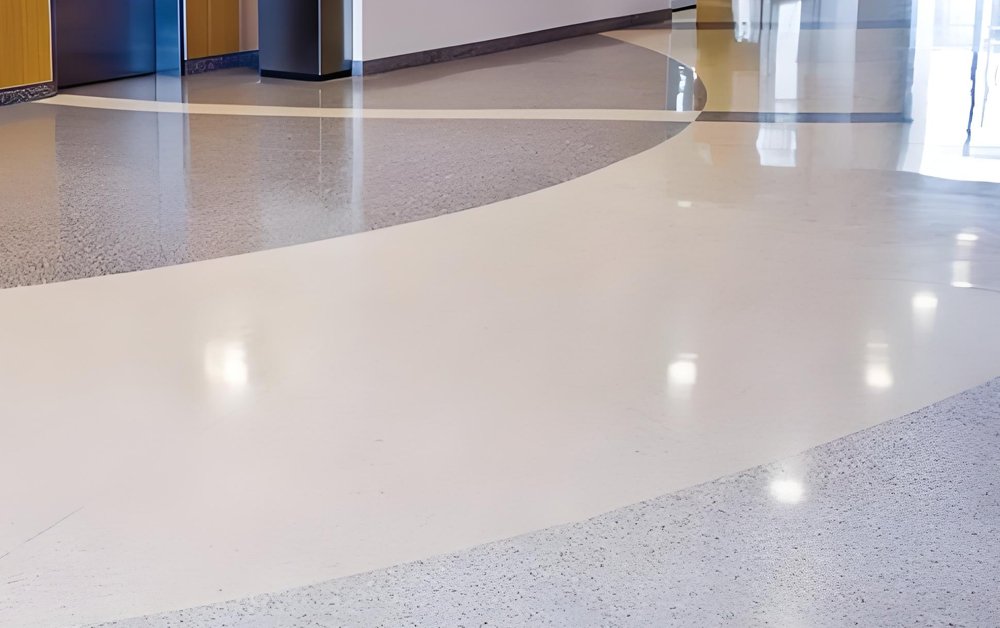
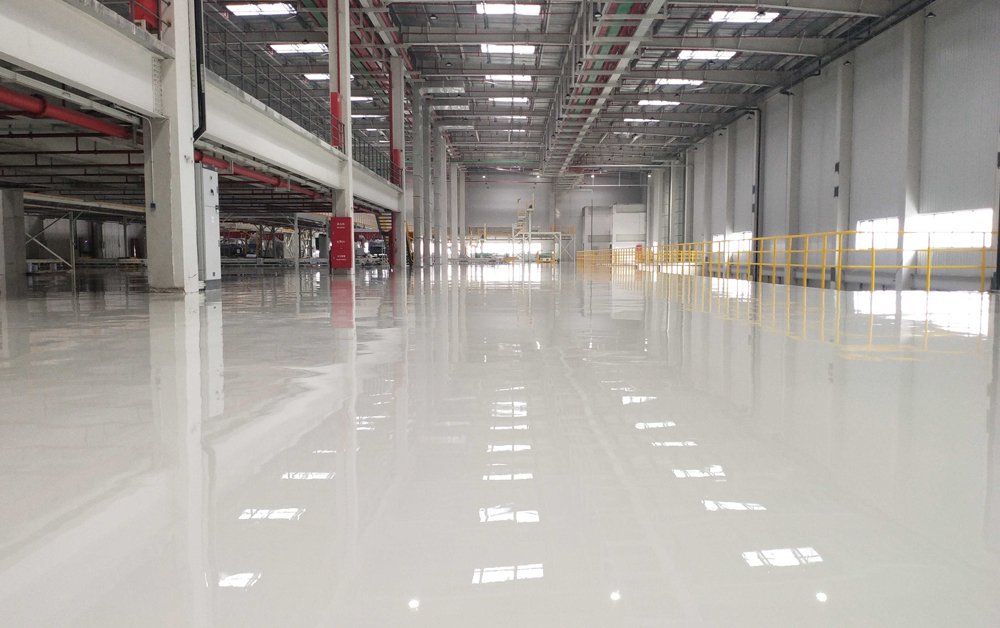
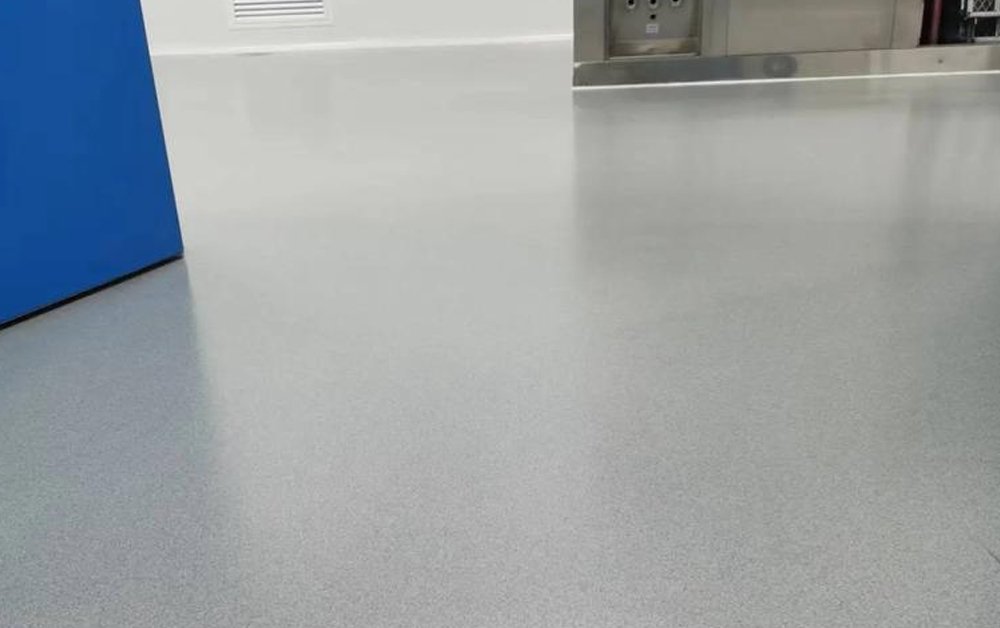
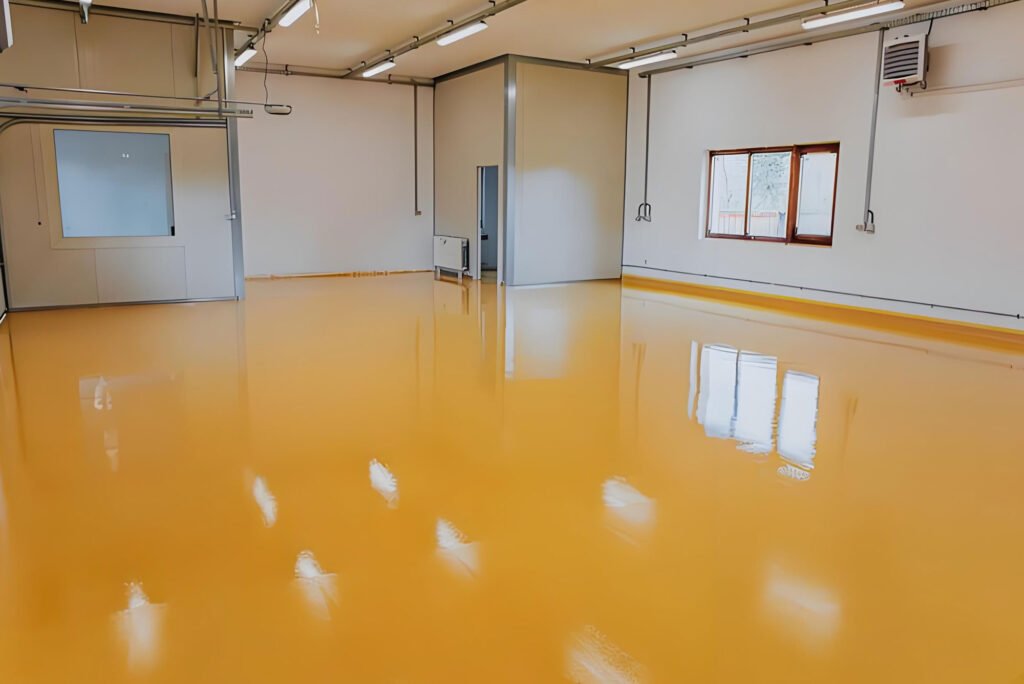
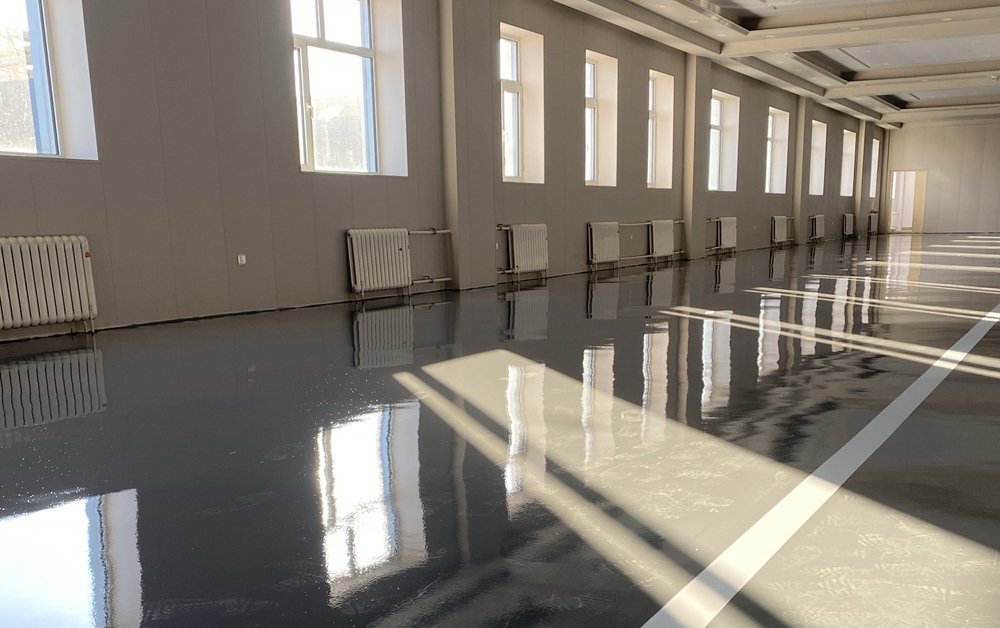
Epoxy self-leveling flooring is a fluid resin-based system designed to spread evenly across the surface, creating a smooth and glossy finish.
Key structural characteristics:
- Resin-dominant formulation
- Smooth, flat surface
- Lower system thickness
- Uniform appearance
This fundamental difference in structure directly affects performance, appearance, and suitability.
Differences in Installation Method and Construction Requirements
The installation process for these two systems varies significantly and impacts labor requirements, project timelines, and site conditions.
Epoxy Colored Sand Installation
Colored sand epoxy flooring requires controlled broadcasting or troweling of sand into wet resin layers, followed by sealing. This process:
- Requires skilled application
- Allows design customization
- Involves multiple steps
Epoxy Self-Leveling Installation
Self-leveling epoxy relies on controlled pouring and spreading:
- Faster installation process
- Lower labor intensity
- Limited design variation
While self-leveling systems are easier to apply, colored sand systems offer greater flexibility at the cost of higher technical demands.
Performance Comparison in Real Use Conditions
Performance is often the deciding factor in flooring selection. The table below summarizes key performance differences:
| Performance Aspect | Epoxy Colored Sand | Epoxy Self-Leveling |
|---|---|---|
| Surface texture | Textured | Smooth |
| Slip resistance | High | Moderate |
| Decorative flexibility | High | Limited |
| Thickness tolerance | Higher | Lower |
| Cleaning ease | Moderate | Easy |
Epoxy colored sand flooring excels in environments where safety and aesthetics must coexist, while self-leveling epoxy is preferred in clean, controlled spaces.
Differences in Suitable Application Scenarios
Where Epoxy Colored Sand Is Commonly Used:
Epoxy colored sand flooring is widely used in:
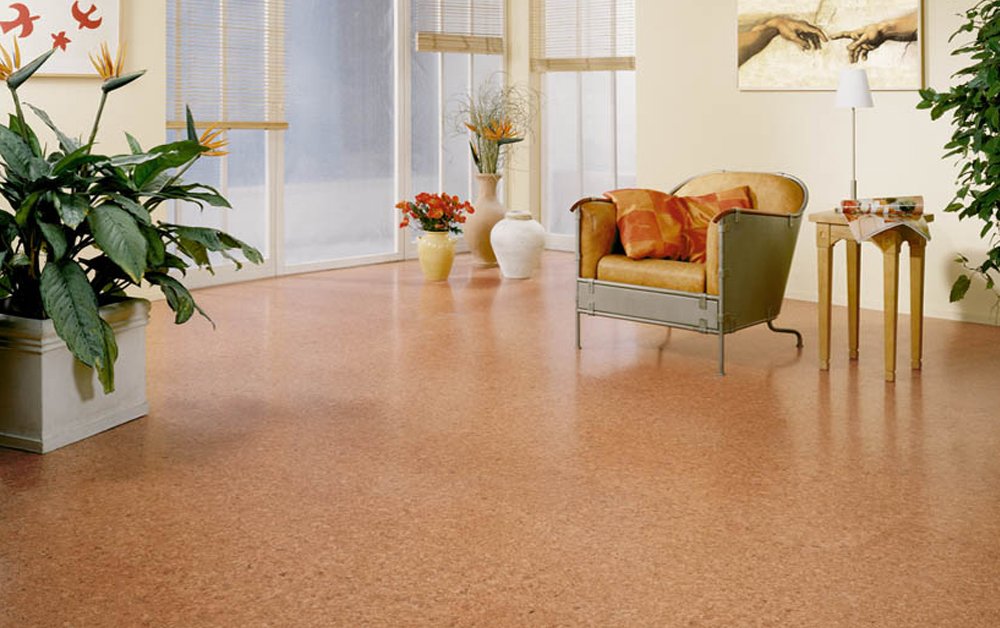
- Commercial lobbies and retail spaces
- Public buildings such as hospitals and schools
- Exhibition halls and cultural facilities
Its textured surface and decorative versatility make it ideal for spaces with frequent pedestrian movement.
Where Epoxy Self-Leveling Is Commonly Used:
Epoxy self-leveling systems are better suited for:
- Laboratories and clean rooms
- Industrial workshops
- Warehouses and storage areas
In these environments, smoothness and ease of cleaning are prioritized over decorative features.
Lifecycle Cost and Maintenance Considerations
Initial installation cost is only part of the decision. Long-term maintenance and service life often differ between the two systems.
Epoxy Colored Sand Lifecycle Considerations
- Higher initial cost
- Longer aesthetic lifespan
- Requires periodic sealing
Epoxy Self-Leveling Lifecycle Considerations
- Lower initial cost
- Easier cleaning
- Surface wear becomes visible faster
From a lifecycle perspective, colored sand systems may offer better value in public-facing areas, while self-leveling systems remain economical in functional spaces.
Why Manufacturer Expertise Matters for Both Systems?
Both epoxy colored sand and self-leveling systems rely heavily on formulation stability and production consistency. Poor-quality resin or inconsistent aggregates can compromise performance regardless of system type.
Experienced manufacturers provide:
- Stable formulations
- Consistent batch quality
- Technical guidance during application
This expertise is especially important for large-scale or multi-phase projects where visual and performance consistency is critical.
YURU’s Professional Approach to Epoxy Flooring System Selection
YURU Waterproof is a professional manufacturer specializing in epoxy floor coatings, waterproof materials, and grouting systems. YURU supplies both epoxy colored sand flooring systems and epoxy self-leveling systems, developed for different functional requirements.
YURU’s approach focuses on:
- Matching system performance to project conditions.
- Providing complete epoxy flooring systems.
- Supporting contractors with technical guidance.
Rather than promoting a single solution, YURU helps clients select the most suitable epoxy flooring system based on real project needs.
How to Choose the Right Epoxy Flooring System for Your Project?
Choosing between epoxy colored sand and epoxy self-leveling should be based on a clear understanding of:
- Traffic intensity
- Safety requirements
- Visual expectations
- Maintenance strategy
Early communication with a manufacturer can significantly reduce selection risks and improve project outcomes.
Contact YURU Waterproof or send an inquiry to receive professional advice tailored to your epoxy flooring project.
FAQs
Is epoxy colored sand stronger than epoxy self-leveling?
Epoxy colored sand offers better slip resistance and texture, while strength depends on system design.
Which system is easier to maintain?
Epoxy self-leveling floors are easier to clean due to their smooth surface.
Can epoxy colored sand be used in industrial areas?
It is suitable for light industrial environments but not heavy impact zones.
Is epoxy colored sand flooring suitable for industrial use?
It is suitable for light industrial environments, depending on conditions.
Why does manufacturer quality matter?
Manufacturer expertise ensures formulation stability and consistent performance.
Does YURU supply both systems?
Yes, YURU provides both epoxy colored sand and epoxy self-leveling systems.
Conclusion
Although epoxy colored sand and epoxy self-leveling systems share the same resin base, they differ significantly in structure, installation, performance, and application suitability. Treating them as interchangeable often leads to compromised results.
By understanding these differences and working with an experienced manufacturer such as YURU, project owners and contractors can select the epoxy flooring system that delivers long-term performance, safety, and value.

YURU Product solutions