How to Mix Two-Component Polyurethane Waterproof Coating Correctly On-Site?
Introduction:
Two-component polyurethane waterproof coatings are widely used in roofs, basements, podium slabs, and infrastructure projects because of their high strength, excellent adhesion, and long-term durability.
However, field experience shows that a large percentage of PU coating failures are not caused by poor materials—but by incorrect on-site mixing.
Blistering, soft curing, incomplete reaction, low tensile strength, or sticky surfaces are often traced back to one issue:
→ improper proportioning or mixing of Component A and Component B.
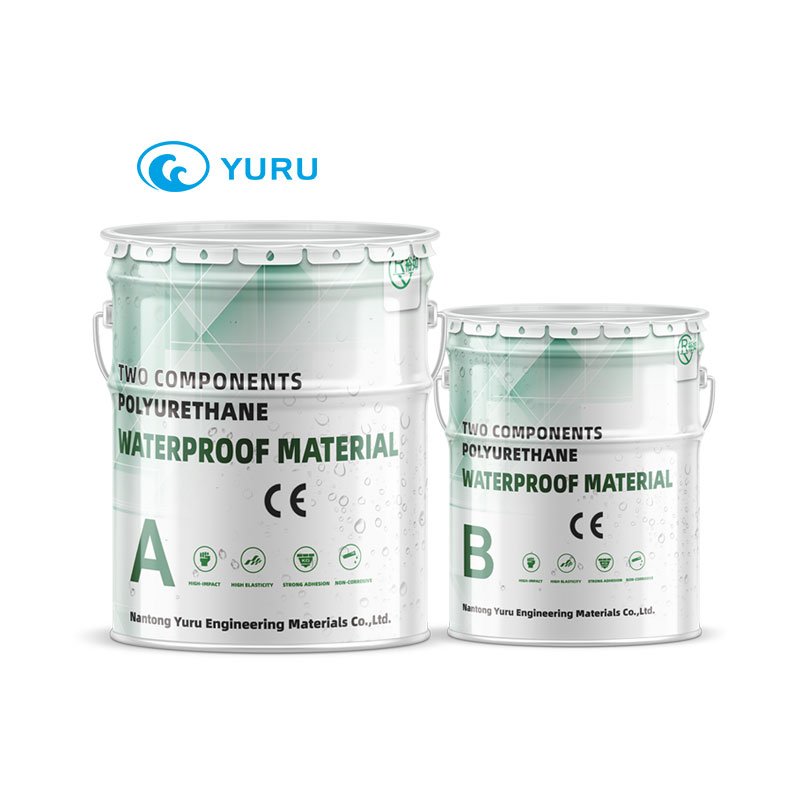
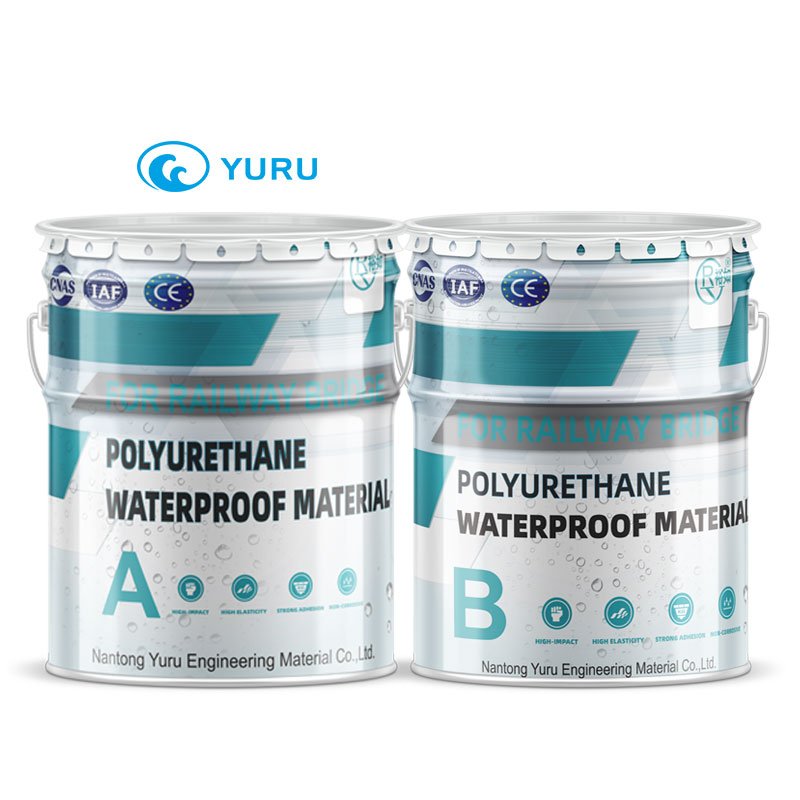
This guide explains, step by step, how to mix two-component polyurethane waterproof coating correctly on-site, what to avoid, and how professional manufacturers like YURU Waterproof design products to reduce mixing risks in real construction environments.
1. Why Correct Proportioning and Mixing Is Critical for Two-Component PU Coatings?
Two-component polyurethane coatings cure through a chemical reaction between component A (containing polyols, fillers, etc.) and component B (containing isocyanates).
When mixed correctly:
- A dense, elastic polymer network forms.
- Mechanical strength reaches design values.
- Waterproof integrity is maintained for years.
When mixed incorrectly:
- Chemical reactions remain incomplete.
- Crosslink density becomes uneven.
- Long-term durability drops sharply.
Even small deviations in mixing ratio can lead to:
- Delayed curing or no curing.
- Brittle or overly soft films.
- Reduced adhesion to concrete.
- Premature failure under water pressure.
This is why two-component PU coatings demand discipline and accuracy on-site.
2. Pre-Mixing Preparation: Most Problems Start Before Mixing Begins
Many applicators focus on the mixing step itself, but in reality, most failures originate before the mixer is even turned on.
2.1 Environmental Conditions
Before mixing, confirm:
- Ambient temperature is within manufacturer limits.
- Substrate temperature is not below dew point.
- Relative humidity is controlled.
- Cold temperatures slow reactions.
- Excessive heat shortens pot life.
- High humidity can interfere with surface curing.
2.2 Material Conditioning
Both components should:
- Be stored at recommended temperature.
- Be allowed to acclimate on-site.
- Never be mixed cold directly from storage.
Uneven temperatures between components can cause:
- Viscosity mismatch
- Incomplete blending
- Reaction imbalance
2.3 Clean Tools and Containers
Water, dust, or residue inside mixing containers is a major risk.
Always ensure:
- Containers are dry and clean.
- Mixing paddles are free of cured residue.
- Measuring tools are accurate.
Polyurethane chemistry is extremely sensitive to moisture contamination.
3. Understanding the Mixing Ratio: Why “Close Enough” Is Not Enough.
3.1 What the Mixing Ratio Really Means:
The mixing ratio is not arbitrary.
It is calculated based on:
- Molecular weight of raw materials
- Required crosslink density
- Designed mechanical performance
Changing the ratio alters the polymer structure itself.
3.2 Weight Ratio vs Volume Ratio
Professional manufacturers specify either:
- Weight-based ratio (recommended)
- Or calibrated volume ratio
Using volume without calibration is risky due to density differences.
3.3 Why Guesswork Leads to Failure:
Common on-site mistakes include:
- “Eyeballing” proportions
- Splitting kits unevenly
- Mixing partial kits without weighing
These practices often cause:
- Soft films
- Surface tackiness
- Reduced chemical resistance
YURU Waterproof supplies clearly labeled kits with stable ratios to reduce on-site errors.
4. Correct On-Site Mixing Procedure: Step-by-Step Best Practice
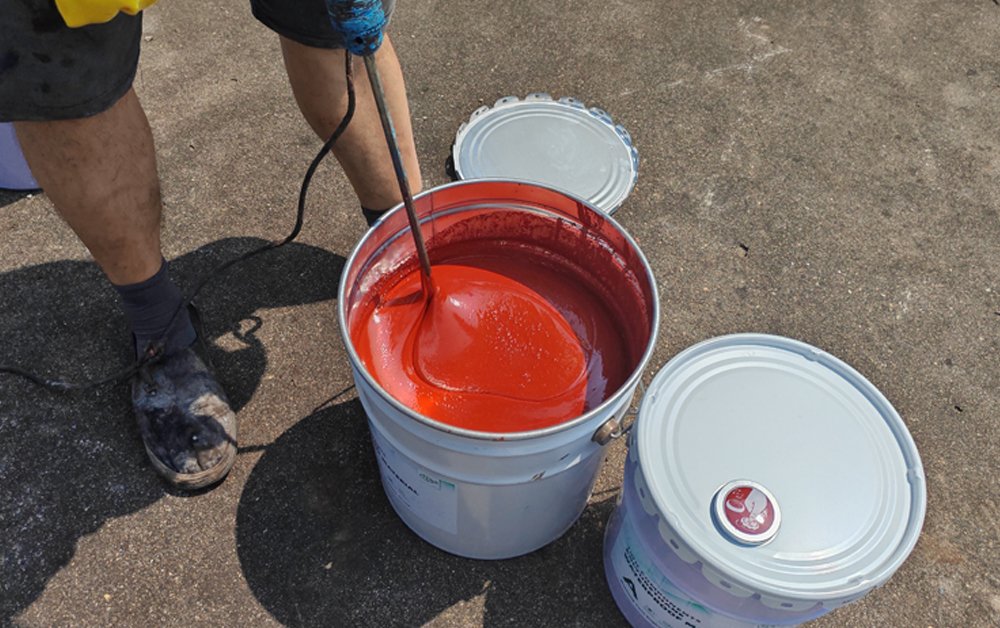
4.1 Pre-Mixing Individual Components
Before combining:
- Stir Component A separately to re-disperse fillers
- Stir Component B gently if required
Skipping this step can cause uneven composition.
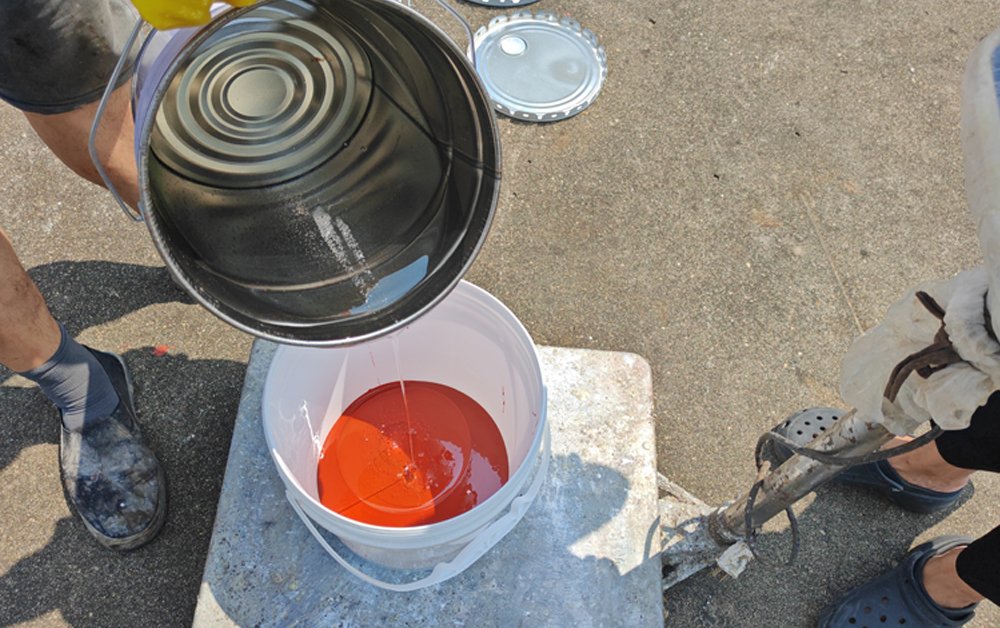
4.2 Combining Components
- Pour Component B into Component A (or as specified).
- Avoid splashing or rapid dumping.
4.3 Mixing Equipment and Speed
Recommended tools:
- Low-speed electric mixer (300–500 rpm)
- Spiral or paddle mixer
High-speed mixing introduces:
- Air bubbles
- Foam formation
- Reduced film density
4.4 Mixing Duration
- Mix continuously for the recommended time.
- Scrape container sides and bottom.
- Ensure color and texture are uniform.
Incomplete mixing is one of the most common hidden causes of failure.
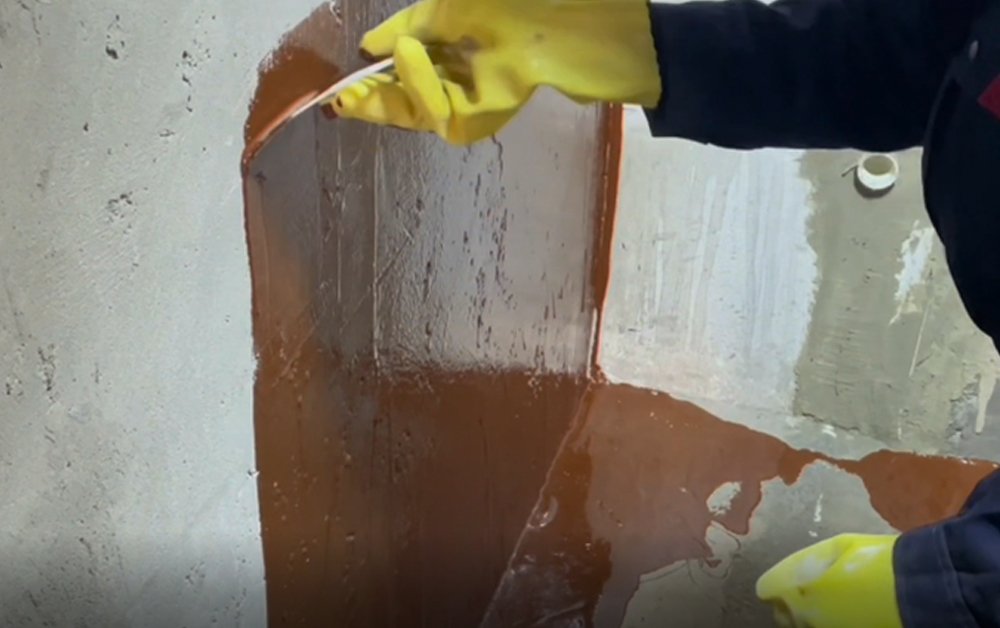
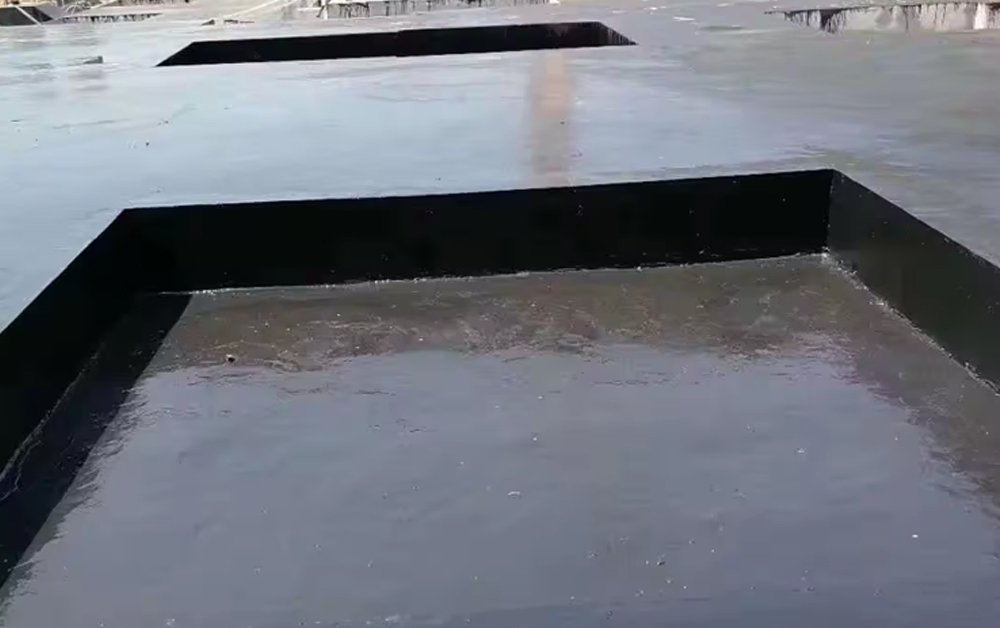
5. Common Mixing Mistakes and Their Consequences
5.1 Mixing Too Much at Once
Large batches:
- Reduce workable time
- Increase waste
- Cause uncontrolled heat buildup
Always mix quantities suitable for the application window.
5.2 Ignoring Pot Life
Once mixed, chemical reaction starts immediately.
Using material beyond pot life leads to:
- Poor leveling
- Weak bonding
- Incomplete curing
5.3 Uneven Mixing
Unmixed material at container edges results in:
- Soft spots
- Color inconsistency
- Localized failure
6. Climate-Specific Mixing Adjustments
6.1 Hot Climate Conditions
Challenges:
- Shortened pot life
- Rapid viscosity increase
Best practices:
- Mix smaller batches
- Work during cooler hours
- Use products with extended open time
6.2 Cold Climate Conditions
Challenges:
- Slow curing
- High viscosity
Best practices:
- Warm materials before mixing
- Extend curing time
- Use cold-resistant formulations
YURU Waterproof develops formulations specifically optimized for different climate zones.
7. Why YURU Two-Component PU Coatings Are Easier to Mix On-Site?
YURU Waterproof designs products based on real construction feedback, not laboratory theory alone.
Key advantages include:
- Stable reaction window
- Clear mixing instructions
- Balanced viscosity between components
- Reduced sensitivity to minor site variations
This allows contractors to achieve consistent results even under challenging conditions.
FAQs: Two-Component Polyurethane Waterproof Coating Mixing
1. Can I mix partial kits of two-component PU coating?
Yes, but only if you accurately weigh both components according to the specified ratio.
2. What happens if the ratio is slightly off?
Even small deviations can affect curing speed, elasticity, and adhesion.
3. Can I add solvent to adjust viscosity?
Only if explicitly approved by the manufacturer. Unauthorized dilution can destroy performance.
4. How long can mixed PU coating be used?
Only within its stated pot life. After that, chemical reaction reduces performance.
5. Is manual mixing acceptable?
For small quantities, yes—but mechanical low-speed mixing is strongly recommended.
6. Why does my coating stay sticky after curing?
Common causes include incorrect ratio, poor mixing, or low temperature.
7. Does YURU provide on-site technical support?
Yes. YURU offers remote and project-based technical assistance worldwide.
Conclusion:
Two-component polyurethane waterproof coatings deliver outstanding performance, but only when mixed correctly.
No installation skill can compensate for:
- Wrong ratio
- Poor mixing
- Ignored pot life
Choosing a reliable manufacturer and following disciplined mixing procedures ensures:
- Full mechanical performance
- Long service life
- Fewer callbacks and repairs
The right mixing method matters as much as the right material.
Contact YURU Waterproof to receive mixing guides, data sheets and sample.
YURU Product solutions