How to Repair Concrete Cracks Using Epoxy Injection Grouts?
Introduction:
Concrete cracks are more than just a surface problem. In buildings and infrastructure, cracks affect durability, water resistance, load transfer, and long-term performance. That’s why professional contractors use epoxy injection grouts instead of simple surface patching.
Epoxy injection works from the inside. Inject the right resin into the crack, and it fills voids, bonds the concrete back together, and creates a strong, lasting repair.
But here’s the thing — not every epoxy grout works for every crack.
A fine hairline crack requires different resin behavior than a structural crack in a tunnel lining or bridge pier. A fast repair project may require a different pot life than a deep grouting project. A wet concrete surface also needs different attention compared with a dry structural crack.
This guide explains how to repair concrete cracks using epoxy injection grouts, how to choose the right material, how to avoid common mistakes, and how YURU Waterproof’s EG epoxy resin grouting series can support different repair conditions.
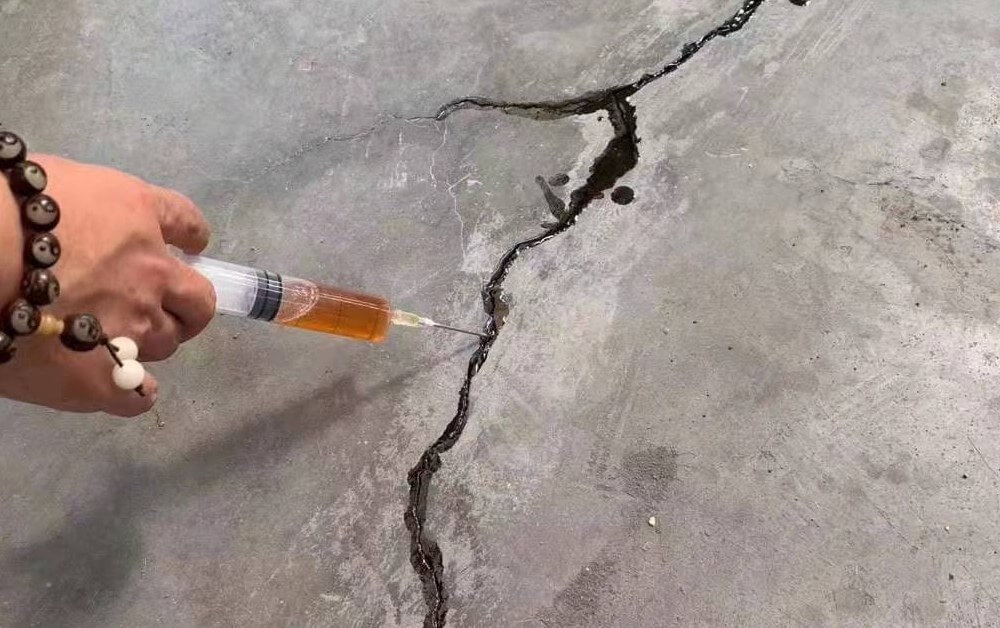
Why Concrete Cracks Should Not Be Repaired Only on the Surface?
Surface Repair Often Hides the Problem Instead of Solving It
A crack might look small on the outside. But inside, it could be deeper, wider, or connected to hidden voids. Cover the surface, and the crack stays open inside.
This creates several risks:
- Water keeps flowing through
- Rebar starts rusting
- The crack gets bigger under stress
- The surface patch fails
- The structure keeps getting weaker
Surface patching is fine for cosmetic cracks. But for cracks that affect strength or waterproofing? Not enough.
Epoxy Injection Repairs the Crack from the Inside
Epoxy injection grout works differently from surface patching. The material is injected into the crack under controlled pressure. After curing, it forms a strong internal bond.
A successful epoxy injection repair can help:
- Fill the crack deeply.
- Bond separated concrete surfaces.
- Reduce water and chemical penetration.
- Improve structural continuity.
- Strengthen damaged zones.
- Extend the service life of the structure.
That’s why epoxy injection is used in bridges, tunnels, basements, dams, and industrial buildings.
Epoxy Injection Is Not the Same as Emergency Leak Stopping
This point is very important.
Epoxy resin injection is mainly used for structural crack repair, bonding, reinforcement, and sealing. It is not always the first choice for active water leakage with strong water flow.
For active leaks, contractors may first use polyurethane injection grout or polyurea injection grout to stop water. After the water flow is controlled, epoxy injection can be used for structural repair if needed.
In simple terms:
| Repair Goal | Better Material Choice |
| Structural crack bonding | Epoxy injection grout |
| Active water leakage | PU or polyurea injection grout |
| Fine crack sealing | Low-viscosity epoxy grout |
| Long-term structural repair | Epoxy resin grouting material |
Choosing the wrong system is one of the most common reasons crack repair fails.
What Is Epoxy Injection Grout?
Basic Composition of Epoxy Resin Grouting Material
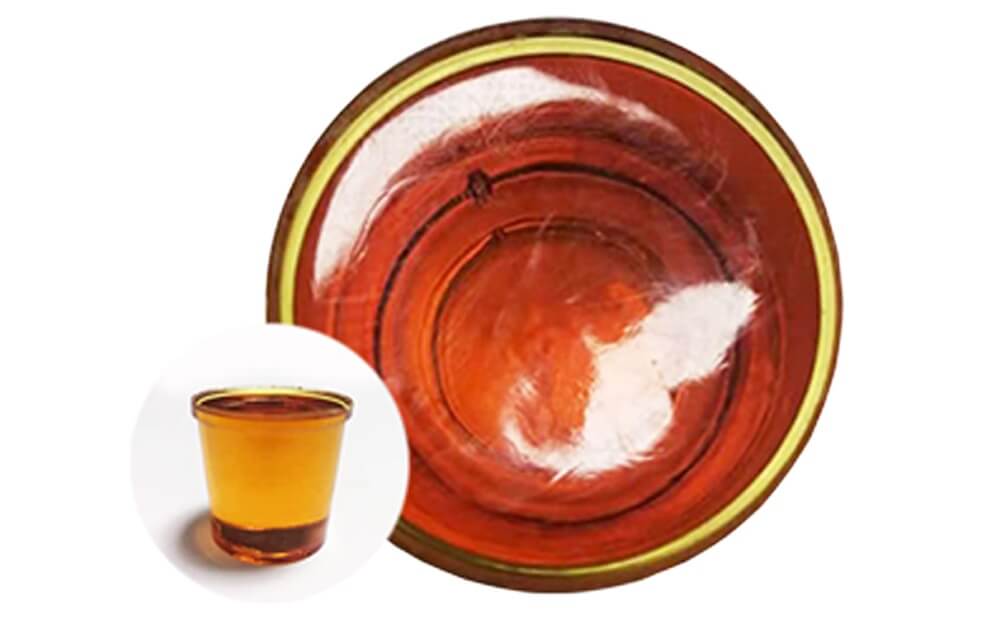
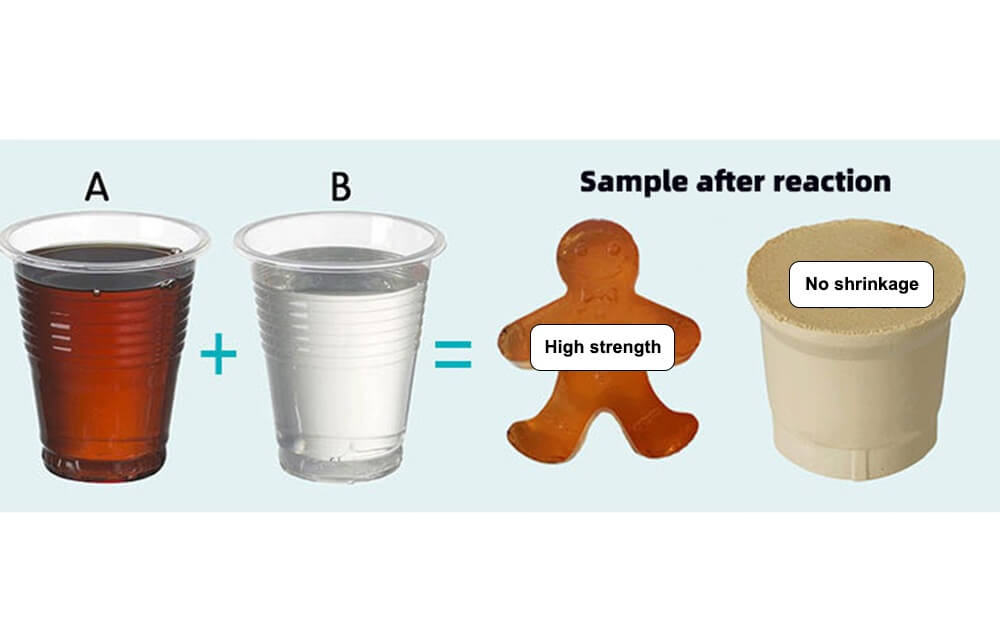
Epoxy injection grout is usually a two-component material:
- Component A: Epoxy resin
- Component B: Hardener or curing agent
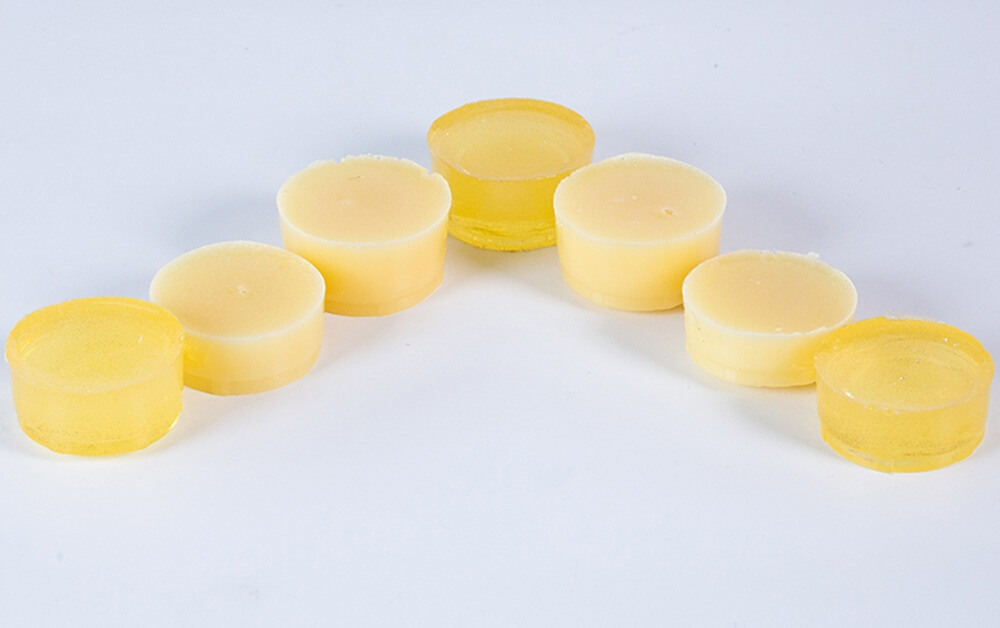
Before injection, the two components are mixed according to the specified ratio. Once mixed, a chemical reaction begins. The liquid resin gradually cures into a hard, strong, adhesive material.
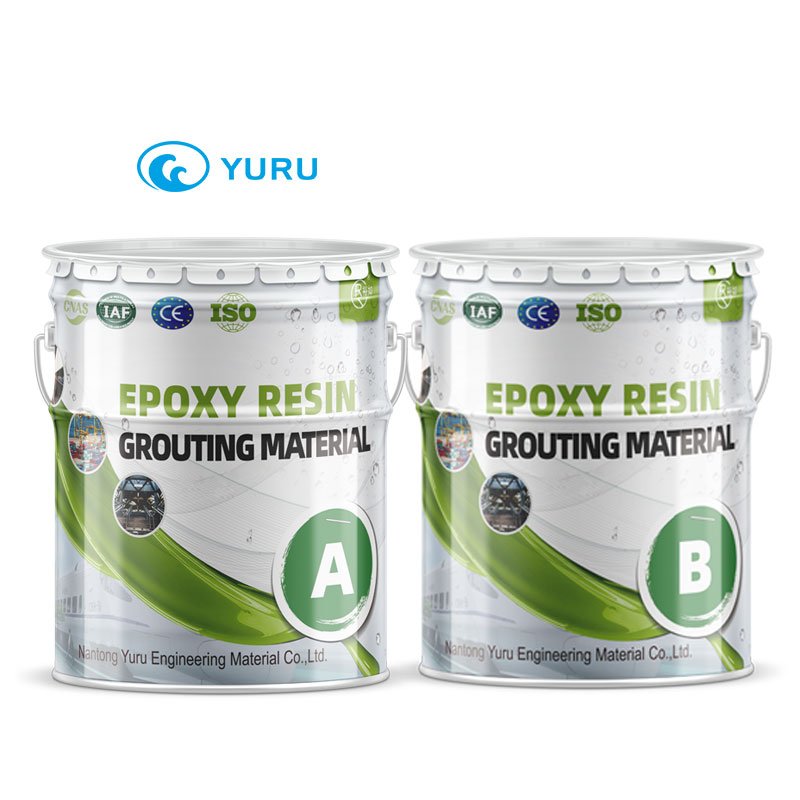
YURU Waterproof provides different EG epoxy resin grouting systems, including:
- EG 1:1 Epoxy Resin Grouting Material
- EG 1:2 Epoxy Resin Grouting Material
- EG 1:4 Epoxy Resin Grouting Material
Each ratio is designed for different crack widths, repair speeds, strength requirements, and penetration needs.
How Epoxy Injection Grout Works in Concrete Cracks?
The repair process is simple in principle, but it requires careful workmanship.
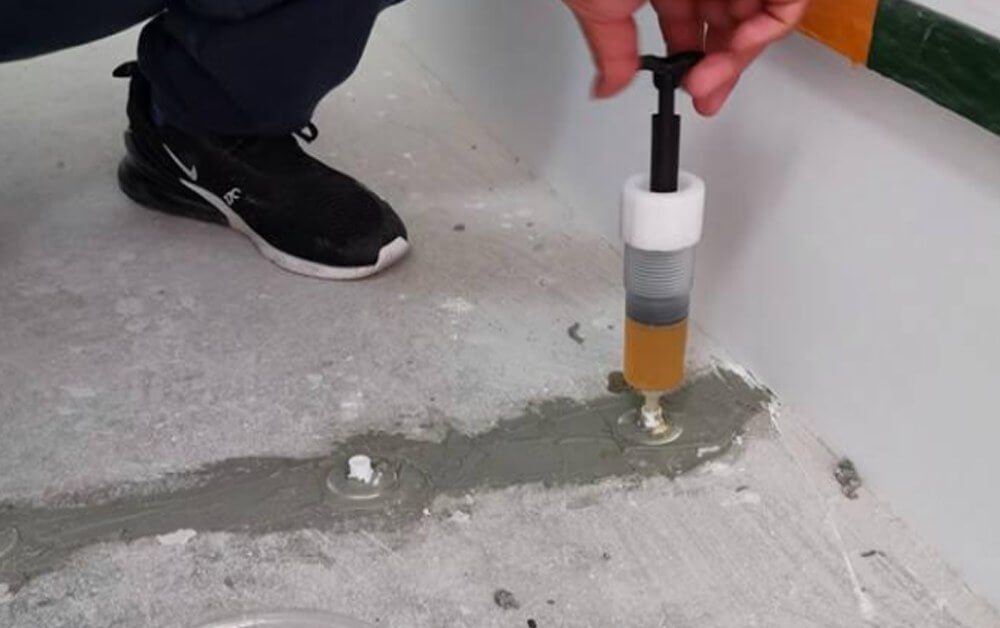
First, the crack is inspected and prepared. Then injection ports are installed along the crack. After that, mixed epoxy resin grout is injected into the crack. The material flows into the internal crack network and bonds with the concrete surface. Once cured, it creates a solid repair body.
A good epoxy injection repair should achieve three things:
- Penetration – the resin must reach the crack depth.
- Bonding – the cured resin must adhere strongly to concrete.
- Durability – the repair must resist water, stress, and aging.
If one of these three points fails, the repair may not perform well.
Where Epoxy Injection Grout Is Commonly Used?
Epoxy injection grouts are used in many engineering projects, including:
- Concrete beams
- Columns
- Slabs
- Basement walls
- Tunnels
- Metro structures
- Bridge piers
- Dams
- Ports and docks
- Water towers
- Swimming pools
- Industrial floors
- Pipeline joints
- Underground utility structures
For contractors and distributors, epoxy grout is not just a repair product. It is part of a complete concrete rehabilitation system.
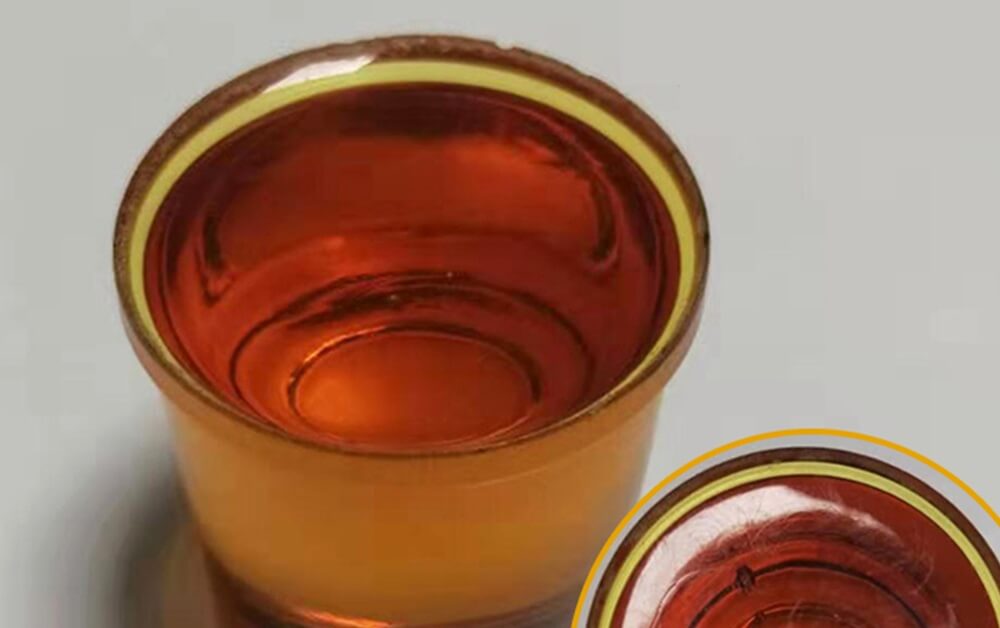
YURU EG Epoxy Resin Grouting Series: 1:1, 1:2, and 1:4
YURU Waterproof’s EG epoxy resin grouting series includes different mixing ratio systems to meet different repair needs. Instead of using one epoxy product for all cracks, contractors can choose the proper formulation based on crack width, penetration depth, required strength, and construction speed.
EG Epoxy Resin Grouting Material 1:1 – High-Solid, High-Strength Structural Repair Type
EG 1:1 is designed for projects that require strong bonding, structural repair, and reliable waterproof sealing. It is suitable for demanding concrete crack repair work where strength and durability are important.
Main Features of EG 1:1
EG 1:1 offers several engineering benefits:
- High solid content
- Strong penetration
- Room-temperature curing
- Low heat release
- Low shrinkage
- Strong bonding
- Reinforcement, waterproofing, and anti-corrosion functions
This makes it suitable for projects where cracks need more than simple sealing.
Key Technical Performance of EG 1:1
Important performance values include:
| Item | EG 1:1 Performance |
| Initial viscosity | 185 mPa·s |
| Working time | Around 35 minutes |
| Compressive strength | 45 MPa |
| Tensile shear strength | 5.8 MPa |
| Tensile strength | 12 MPa |
| Dry bonding strength | 3.6 MPa |
| Wet bonding strength | 2.4 MPa |
| Impermeability pressure | 1.2 MPa |
These values show that EG 1:1 is suitable for structural repair projects requiring strong mechanical performance.
Best Applications for EG 1:1
EG 1:1 is suitable for:
- Tunnel crack repair
- Metro structure repair
- Beam and column honeycomb reinforcement
- Dam seepage control
- Port and dock repair
- Water tower repair
- Swimming pool structural crack repair
- Pipeline joint sealing
- Concrete structure reinforcement
For projects where bonding strength and structural restoration are important, EG 1:1 is often the preferred option.
EG Epoxy Resin Grouting Material 1:2 – Balanced Engineering Performance Type
EG 1:2 is a balanced epoxy resin grouting material. It combines penetration ability, mechanical strength, bonding performance, and chemical resistance. It is suitable for many general engineering repair projects.
Main Features of EG 1:2
EG 1:2 provides:
- Low viscosity
- Strong penetration
- High bonding strength
- Good mechanical properties
- Weather resistance
- Acid, alkali, and salt resistance
- Environmentally friendly performance
- Good waterproof sealing ability
It is a practical choice for projects that require both strength and penetration.
Key Technical Performance of EG 1:2
Important performance values include:
| Item | EG 1:2 Performance |
| Fine crack penetration | Below 0.1 mm |
| Compressive strength | 25 MPa |
| Tensile shear strength | 8.5 MPa |
| Tensile strength | 85 MPa |
| Dry bonding strength | 4.2 MPa |
| Wet bonding strength | 2.9 MPa |
| Impermeability pressure | 1.5 MPa |
| Permeability pressure ratio | 500% |
YURU EG 1:2 is especially useful when the repair needs both sealing and mechanical performance.
Best Applications for EG 1:2
EG 1:2 can be used in:
- Reservoir dam crack treatment
- Sluice and aqueduct waterproof reinforcement
- Basement crack repair
- Roof and wall leakage repair
- Bridge pier repair
- Bridge beam crack repair
- Tunnel lining leakage control
- Underground utility tunnel waterproofing
- Chemical plant anti-corrosion repair
- Wastewater treatment plant repair
YURU EG 1:2 is a strong option for contractors who need a versatile epoxy injection grout for multiple engineering environments.
EG Epoxy Resin Grouting Material 1:4 – Ultra-Low Viscosity Fast Penetration Type
EG 1:4 is designed for micro-cracks, fast repair work, shallow leakage control, and projects that require excellent penetration. It is especially useful where crack openings are very small.
Main Features of EG 1:4
EG 1:4 provides:
- Ultra-low viscosity
- High penetration
- Fast crack coverage
- Fast curing
- High construction efficiency
- Suitability for micro-cracks
- Low VOC environmental performance
This makes it ideal for fast and fine crack repair.
Key Technical Performance of EG 1:4
Important performance values include:
| Item | EG 1:4 Performance |
| Mixed viscosity | ≤200 mPa·s |
| Penetration ability | Below 0.05 mm micro-cracks under 0.1–0.3 MPa |
| Working time | 20–30 minutes |
| Full curing time | ≤12 hours |
| 28-day compressive strength | ≥50 MPa |
| Tensile strength | ≥8 MPa |
| Bonding strength with concrete | ≥2.8 MPa |
| VOC | ≤50 g/L |
EG 1:4 is particularly useful for projects where quick penetration into very fine cracks matters.
Best Applications for EG 1:4
EG 1:4 is suitable for:
- Building micro-crack repair
- Old building renovation
- Underground garage shallow leakage treatment
- Civil defense wall gap sealing
- Water supply and drainage pipe joint sealing
- Base void filling under pavement tiles
- Prefabricated component joint sealing
- Quick crack pre-treatment before renovation
For fine crack repair and fast construction, EG 1:4 is a strong option.
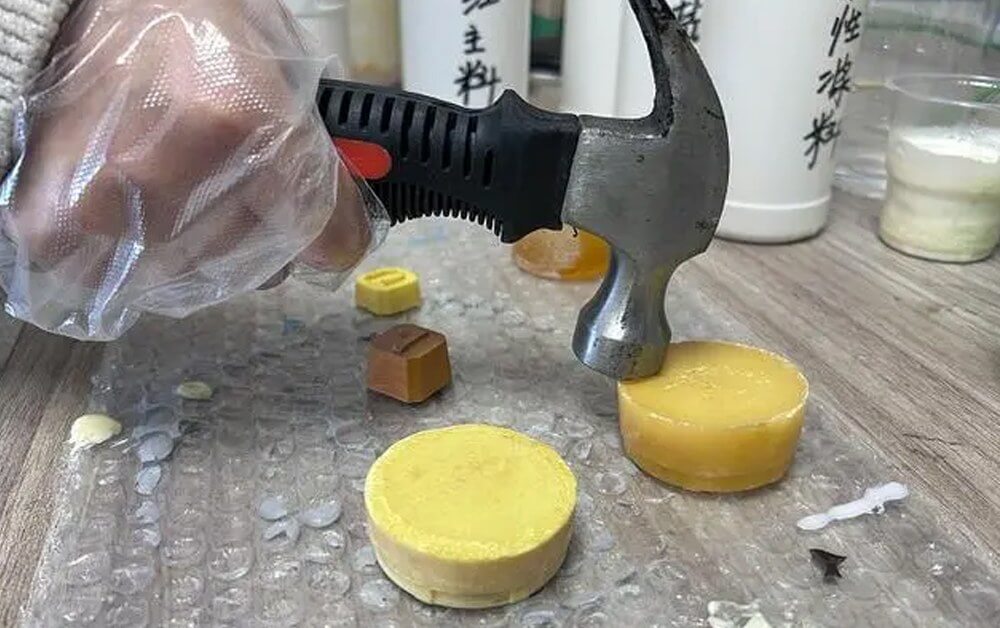
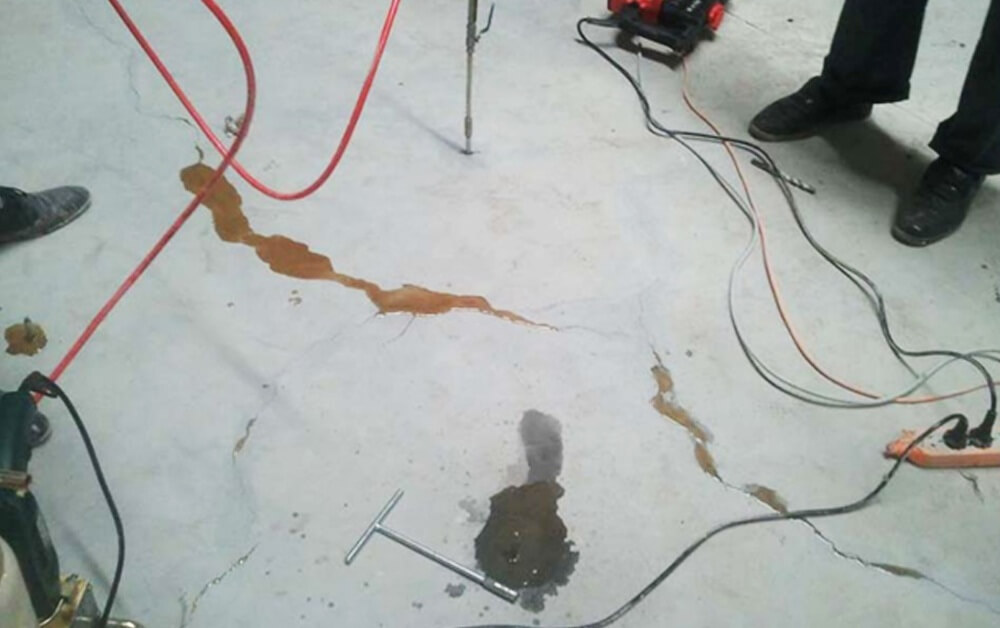
EG 1:1 vs 1:2 vs 1:4: How to Choose the Right Epoxy Injection Grout
Selecting the right epoxy grout is about matching the material to the crack condition — not always choosing the strongest product.
Choose by Crack Width
| Crack Condition | Recommended Product | Reason |
| Micro-cracks below 0.05 mm | EG 1:4 | Ultra-low viscosity and fast penetration |
| Fine cracks below 0.1 mm | EG 1:2 | Balance between penetration and strength |
| Structural cracks | EG 1:1 or EG 1:2 | Better bonding and repair strength |
| Cracks needing fast repair | EG 1:4 | Short curing time and easy penetration |
| Cracks needing reinforcement | EG 1:1 | Higher structural repair focus |
Choose by Repair Goal
- If the goal is fast sealing, EG 1:4 may be suitable.
- If the goal is balanced waterproofing and reinforcement, EG 1:2 may be better.
- If the goal is high-strength structural bonding, EG 1:1 is usually more appropriate.
This selection logic helps contractors avoid over-specifying or under-specifying materials.
Choose by Project Type
| Project Type | Recommended EG System |
| Building micro-cracks | EG 1:4 |
| Basement leakage repair | EG 1:2 / EG 1:4 |
| Bridge cracks | EG 1:2 |
| Tunnel and metro repair | EG 1:1 / EG 1:2 |
| Pipeline joints | EG 1:1 / EG 1:4 |
| Dam and reservoir repair | EG 1:1 / EG 1:2 |
| Prefabricated component joints | EG 1:4 |
Standard Process for Repairing Concrete Cracks Using Epoxy Injection Grouts
Epoxy injection is a professional repair method. The material matters, but the construction process matters just as much.
Step 1: Inspect and Classify the Crack
Before injection, the contractor should inspect:
- Crack width
- Crack depth
- Crack length
- Moisture condition
- Water leakage condition
- Crack movement
- Structural importance
This step determines whether epoxy injection is suitable and which EG system should be selected.
Step 2: Clean the Concrete Surface
Remove:
- Dust
- Oil
- Loose concrete
- Surface laitance
- Old coating
- Standing water
- Contaminants
A clean surface improves bonding and reduces injection failure.
Step 3: Install Injection Ports
Injection ports should be placed along the crack direction. The spacing depends on crack width, depth, and concrete thickness.
For deep structural cracks, closer spacing may be needed to ensure complete filling.
Good injection port installation helps the grout distribute evenly inside the crack.
Step 4: Seal the Crack Surface
Before pressure injection, the visible crack surface is usually sealed to prevent resin leakage.
The seal must be strong enough to withstand injection pressure.
If the surface seal fails, resin may escape before filling the crack completely.
Step 5: Mix Component A and Component B Accurately
This is one of the most important steps.
YURU EG systems must be mixed according to the correct ratio:
- EG 1:1
- EG 1:2
- EG 1:4
Do not change the ratio casually.
Incorrect mixing can cause:
- Incomplete curing
- Lower strength
- Poor bonding
- Brittle cured resin
- Sticky surface
- Injection failure
Mix thoroughly until the material becomes uniform.
Step 6: Control Working Time
Epoxy resin grouting material has a limited working time after mixing.
For example:
- EG 1:1 provides about 35 minutes working time.
- EG 1:4 provides about 20–30 minutes working time.
In hot climates, pot life may become shorter. Therefore, contractors should mix in small batches and avoid preparing too much material at once.
Step 7: Inject from Low Point to High Point
For vertical cracks, injection usually starts from the lowest port and moves upward.
This helps air escape and improves crack filling.
For horizontal cracks, injection should follow the crack direction gradually.
Injection pressure should be controlled. Too little pressure may not fill the crack. Too much pressure may damage the concrete or force material into unwanted areas.
Step 8: Perform Secondary Injection When Needed
Some cracks have complex internal paths. One injection pass may not completely fill all voids.
For deeper or more complex cracks, secondary injection can improve repair quality.
For example, EG 1:1 repair work may benefit from a second injection after an interval, depending on site conditions.
This helps improve filling density and repair completeness.
Step 9: Remove Ports and Finish the Surface
After curing:
- Remove injection ports.
- Clean excess resin.
- Seal port holes.
- Grind the surface if needed.
- Inspect the repaired crack.
For visible areas, surface finishing may be required for appearance.
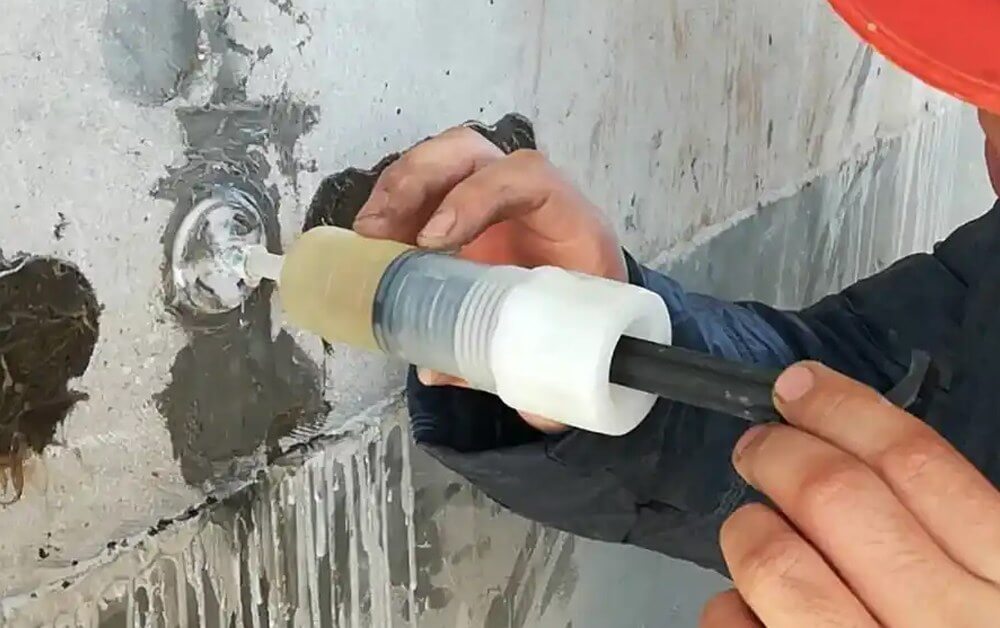
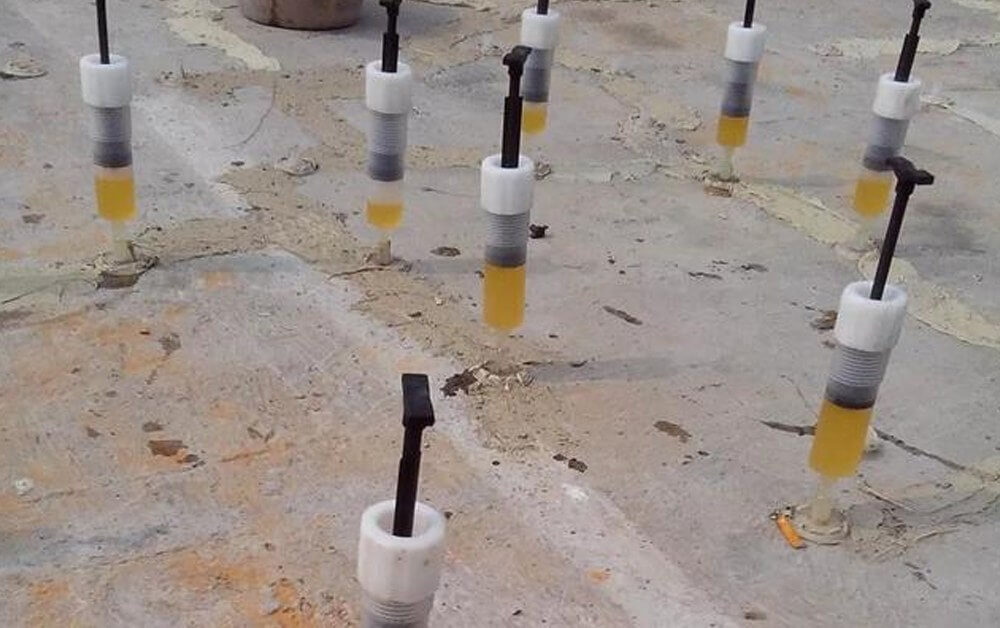
Common Mistakes When Using Epoxy Injection Grouts
Even great materials fail with the wrong method.
Mistake 1: Using Epoxy Injection for Active Water Flow
Epoxy isn’t always right for active leaks. Strong water flow dilutes and washes out the resin.
A better approach may be:
- Stop active water using PU or polyurea injection grout.
- After water is controlled, use epoxy injection for structural repair.
This staged method often performs better in real projects.
Mistake 2: Changing the A/B Mixing Ratio
Some workers adjust the mixing ratio to change curing speed. This is risky.
Changing the ratio can damage the chemical reaction and reduce final performance.
Always follow the specified mixing ratio.
Mistake 3: Mixing Too Much Material at One Time
Epoxy resin generates heat during curing. If too much material is mixed at once, the reaction can accelerate.
This may cause:
- Premature gelation
- Equipment blockage
- Material waste
- Poor injection quality
Small-batch mixing is safer.
Mistake 4: Ignoring Moisture Conditions
Some YURU EG systems can provide good wet bonding performance, but surface preparation is still important.
If the concrete is very wet or humidity is high, drying or pre-treatment may be needed.
For fine crack repair with EG 1:4, the substrate condition should be carefully controlled. In high humidity environments, drying with hot air may improve repair reliability.
Mistake 5: Skipping Secondary Injection
Deep cracks may not be fully filled in one pass. Skipping secondary injection may leave internal voids.
For structural repair, complete filling is critical.
Mistake 6: Choosing the Wrong Viscosity
High-strength resin may not always penetrate micro-cracks well. Ultra-low viscosity resin may not always be ideal for larger structural repair zones.
This is why YURU offers EG 1:1, 1:2, and 1:4 systems.
Epoxy Injection Grout vs PU Grout vs Polyurea Grout
Concrete crack repair often involves different injection materials. Understanding their roles helps avoid mistakes.
Epoxy Injection Grout
Best for:
- Structural crack repair
- Crack bonding
- Reinforcement
- Sealing fine cracks
- Concrete durability restoration
Main advantage:
- High bonding strength and structural repair performance
PU Injection Grout
Best for:
- Active water leakage
- Emergency leak stopping
- Water-reactive crack filling
Main advantage:
- Fast water stopping and expansion
Polyurea Injection Grout
Best for:
- Flexible waterproof crack repair
- Dynamic cracks
- Long-term waterproof sealing
Main advantage:
- Flexibility and durability in movement conditions
Which One Should You Use?
| Crack Condition | Recommended Material |
| Dry structural crack | Epoxy injection grout |
| Active water flow | PU injection grout |
| Moving waterproof crack | Polyurea injection grout |
| Fine dry crack | Low-viscosity epoxy grout |
| Structural repair after leak stopping | Epoxy injection grout |
The best repair method often combines correct diagnosis with the right material.
Project Applications for YURU EG Epoxy Injection Grouts
Basement Crack Repair
Basements crack from shrinkage, settlement, and water pressure.
- For fine cracks and seepage-prone areas: EG 1:2 provides balanced performance.
- EG 1:4 is useful for micro-cracks and shallow leakage paths.
- EG 1:1 can be used where structural repair is required.
Tunnel and Metro Structure Repair
Tunnels handle vibration, water pressure, and long life demands.
EG 1:2 is useful for bridge pier and beam crack repair, while EG 1:1 may be selected for areas requiring stronger structural bonding.
Bridge Crack Repair
Bridges take traffic, vibration, temperature changes, and moisture.
EG 1:2 is useful for bridge pier and beam crack repair, while EG 1:1 may be selected for areas requiring stronger structural bonding.
Dam and Hydraulic Engineering Repair
Water control structures require materials with good impermeability and bonding strength.
EG 1:1 and EG 1:2 can work for dam, reservoir, sluice, and aqueduct repair projects.
Industrial Building and Chemical Plant Repair
Industrial environments have chemicals, moisture, and stress.
EG 1:2 offers chemical resistance and mechanical performance for industrial repair applications.
Old Building Renovation and Prefabricated Component Repair
EG 1:4 works well for micro-cracks, prefabricated joints, and fast renovation preparation because of its low viscosity and fast curing behavior.
How to Choose an Epoxy Injection Grout Supplier?
Choosing the right supplier is as important as choosing the right product.
Look for Multiple Product Options
A professional supplier should not offer only one resin for every crack.
YURU Waterproof provides EG 1:1, 1:2, and 1:4 systems, allowing contractors to choose based on real site conditions.
Check Technical Data
Professional buyers should ask for:
- TDS
- SDS
- Product test data
- Application instructions
- Packaging information
- Shelf life details
Good technical documentation helps reduce project risk.
Evaluate Engineering Experience
A supplier with real project experience can help contractors avoid mistakes in:
- Material selection
- Mixing ratio
- Injection pressure
- Working time control
- Secondary injection
This support is valuable for customers.
Ask About OEM and Customization
For distributors and construction material brands, OEM service can be important.
YURU Waterproof supports cooperation, technical support, product selection advice, and international supply.
Why Contractors Choose YURU Waterproof EG Epoxy Grouting Materials?
Complete EG Epoxy Resin Grouting Series
YURU Waterproof provides:
- EG 1:1 High-solid, high-strength repair type
- EG 1:2 balanced engineering performance type
- EG 1:4 ultra-low viscosity fast penetration type
This product structure helps contractors match different crack repair needs.
Suitable for Multiple Engineering Fields
YURU EG systems can support:
- Basement repair
- Tunnel repair
- Metro repair
- Bridge crack repair
- Water conservancy projects
- Industrial building repair
- Pipeline joint sealing
- Prefabricated structure repair
Practical Support
YURU Waterproof can provide:
- Product recommendations
- Technical documents
- OEM support
- Project-based material selection
- Sample supply
- International cooperation support
For contractors and distributors, this helps reduce procurement and application risk.
FAQs:
1. What is epoxy injection grout used for?
Repairs concrete cracks — fills voids, bonds cracked concrete, improves structural continuity, reduces water/chemical penetration.
2. Can epoxy injection grout stop active water leaks?
Epoxy is not usually the best first choice for strong active leaks. It is better for structural repair. For active water flow, PU or polyurea injection grout may be used first, followed by epoxy repair if structural bonding is required.
3. What is the difference between EG 1:1, EG 1:2, and EG 1:4?
YURU EG 1:1 is a high-strength structural repair type, EG 1:2 offers balanced engineering performance and EG 1:4 is an ultra-low viscosity fast penetration type for micro-cracks and quick repair.
4. Why is accurate A/B mixing important?
The mixing ratio controls the curing reaction. Incorrect ratios can cause poor curing, weak strength, brittleness, sticky material, or repair failure.
5. Does YURU Waterproof provide OEM epoxy grouting materials?
Yes. YURU Waterproof supports cooperation, OEM service, technical documentation, sample supply, and project-based product recommendations.
Conclusion:
Repairing concrete cracks with epoxy injection grouts takes more than just injecting resin into a crack. Success takes careful diagnosis, the right material, accurate mixing, proper pressure, and good inspection.
YURU Waterproof’s EG epoxy resin grouting series gives contractors practical choices:
- EG 1:1 for high-strength structural repair
- EG 1:2 for balanced engineering repair
- EG 1:4 for micro-crack penetration and fast repair
When used correctly, epoxy injection grouts can restore concrete integrity, improve durability, reduce water penetration, and extend the service life of concrete structures.
Looking for reliable epoxy injection grouts for concrete crack repair?
YURU Waterproof provides EG epoxy resin grouting materials for basements, tunnels, bridges, water conservancy projects, industrial buildings, and concrete structural repair.
Contact YURU Waterproof today to request:
- Free samples
- Technical data sheets
- Product selection support
- OEM cooperation
- Project repair recommendations
Let our technical team help you choose the right epoxy injection grout for your next concrete crack repair project.
YURU Product solutions