Why Epoxy Injection Is Used for Structural Reinforcement?
Introduction:
A lot of people treat concrete cracks as a simple surface problem. In many projects, workers see a crack, seal the surface, and think they’re done. But in structural concrete, a crack isn’t just a line on the surface. It may represent a break in internal continuity, a path for water and corrosion, or a sign that the member has already experienced stress beyond normal limits.
That’s why epoxy injection is a go-to for structural reinforcement.
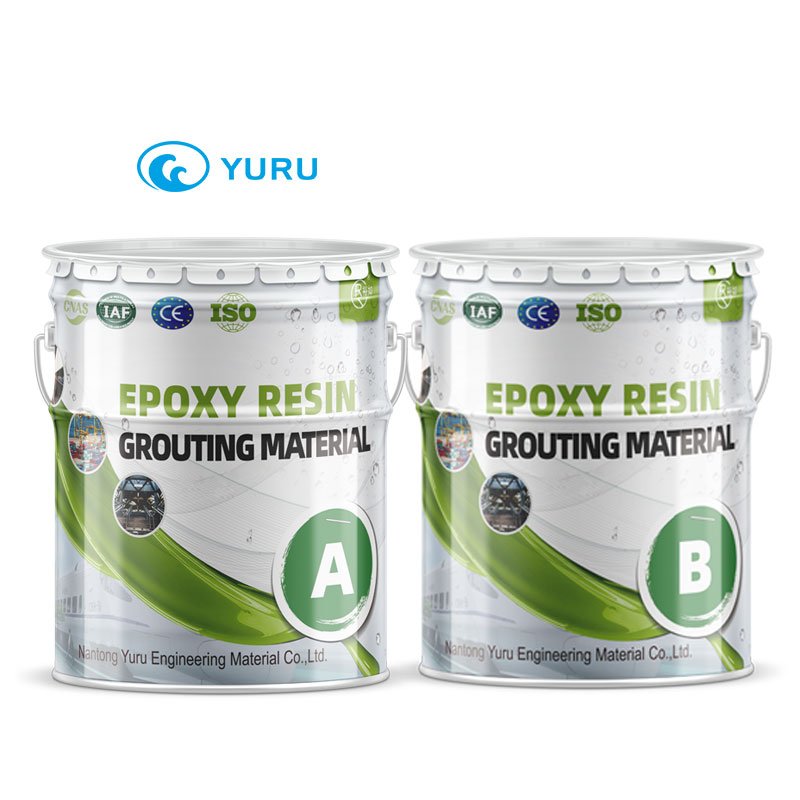
Unlike surface fillers, epoxy grouting material goes into the crack, bonds the concrete back together, and cures into a hard, strong, durable repair. When the crack is stable and correctly diagnosed, epoxy injection helps restore local strength, improve load transfer, reduce water penetration, and make the structure last longer.
However, epoxy injection isn’t a magic fix for every crack. It works best on stable cracks where the goal is structural bonding, and when you pick the right material for the crack. If the crack is moving, has active water flow, or is caused by ongoing overload, you need to be careful — or combine epoxy with other methods.
This guide explains why epoxy injection is used for structural reinforcement, what it actually reinforces, how engineers judge whether it is suitable, and how YURU EG epoxy resin grouting materials can support different structural repair needs.
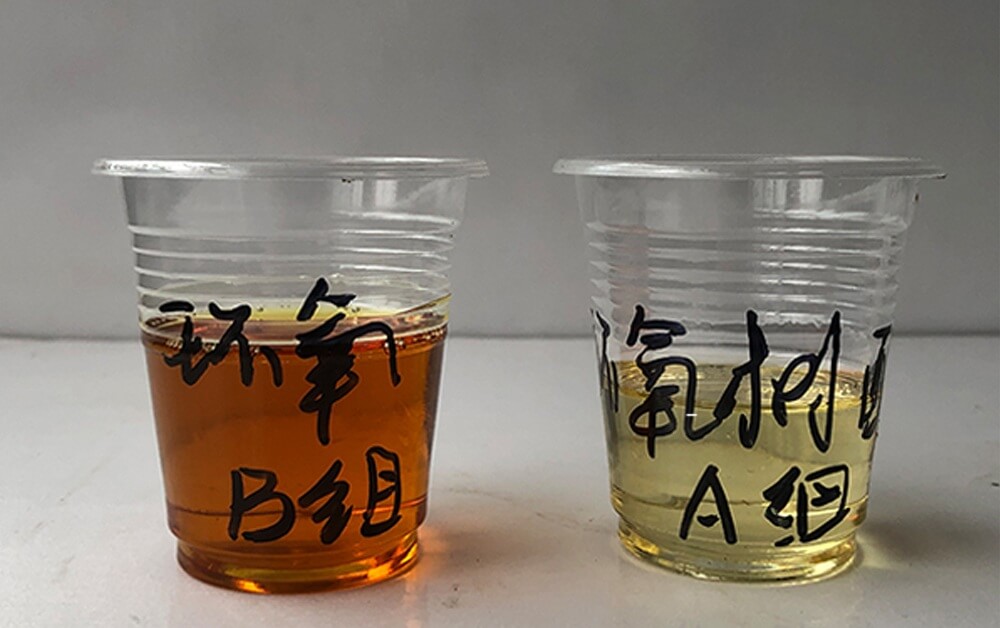
Structural Reinforcement Starts with Understanding the Crack
Before choosing any repair material, a contractor or engineer must first understand the crack itself. This step is often more important than the product selection.
A concrete crack can be cosmetic, non-structural, waterproofing-related, or structural. The wrong diagnosis leads to the wrong material choice. In real projects, this is one of the most common causes of repeated repair failure.
Not Every Concrete Crack Needs Structural Reinforcement
Some concrete cracks are shallow surface shrinkage cracks. They may affect appearance but not structural performance. Other cracks are caused by drying shrinkage, plastic settlement, or minor temperature movement. Others come from drying shrinkage, settlement, or minor temperature changes.
These cracks may only require surface sealing, flexible coating, or waterproof treatment.
Structural cracks are different.
They may appear in:
- Concrete beams
- Columns
- Floor slabs
- Bridge girders
- Tunnel linings
- Metro structures
- Retaining walls
- Dams
- Industrial concrete members
These cracks can break internal continuity. Left untreated, they can reduce durability, let water in, and sometimes affect load transfer.
Epoxy injection is mainly for cracks that need internal bonding – not just surface coverage.
Why Crack Diagnosis Comes Before Material Selection?
A good repair decision starts with several practical questions:
- Is the crack still moving?
- Dry, damp, or actively leaking?
- Surface crack or deep?
- Does it go all the way through?
- Is the crack located in a load-bearing area?
- Rust around the rebar?
- Getting wider over time?
If the crack is static and needs strength recovery, epoxy injection may be a suitable solution, if the crack is moving, flexible materials such as polyurethane or polyurea injection may be required first, if water is flowing through the crack, water-stopping grout may be needed before structural reinforcement.
This is why professional repair work should begin with diagnosis, not with the question, “Which material is cheapest?”
The Difference Between Repair, Sealing, and Reinforcement
These three words are often used together, but they do not mean the same thing.
- Repair — Restore damaged area to usable condition
- Sealing — Close path to stop water/air/chemicals
- Reinforcement — Improve structural behavior of cracked area
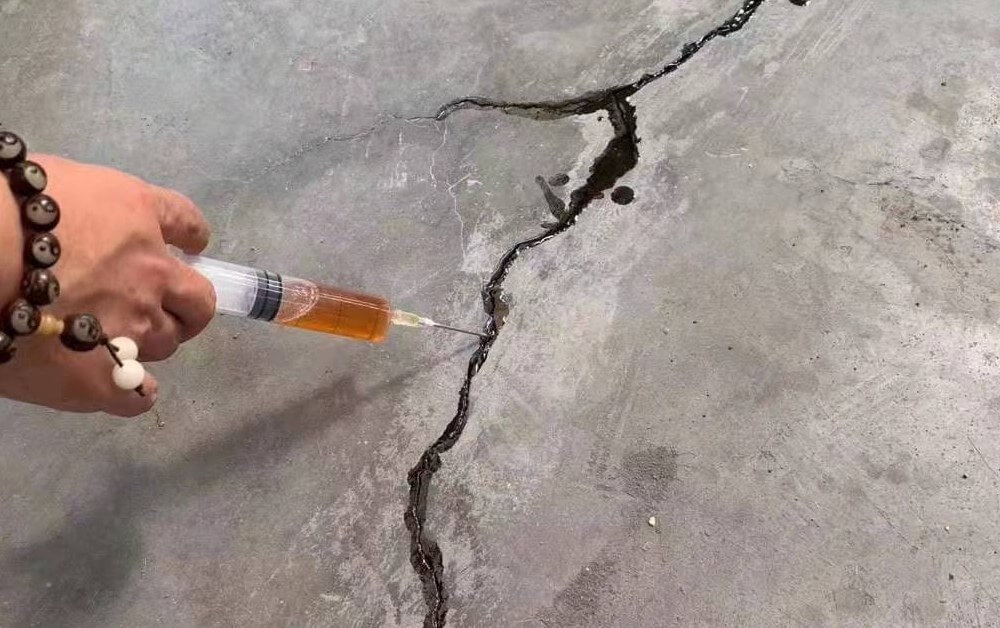
Epoxy injection can provide sealing benefits, but its real value is reinforcement. It enters the crack and bonds the separated concrete surfaces. This makes it different from a surface coating or a flexible sealant.
In simple terms, surface sealants cover the crack. Epoxy injection works inside the crack.
How Epoxy Injection Restores Structural Continuity?
When concrete cracks, the original continuous structure is interrupted. The crack creates a separation plane — loads may no longer pass through as intended.
Epoxy injection helps by filling the crack and bonding both sides together.
Epoxy Resin Bonds the Two Sides of the Crack
The main reason epoxy injection is used for structural reinforcement is bonding.
Mixed correctly, epoxy flows into the crack. After curing, it becomes a hard, strong adhesive that bonds to the concrete. That bond helps reconnect the two sides.
This can improve:
- Local structural continuity
- Load transfer across the crack
- Crack stability
- Durability of the repaired area
- Resistance to water and chemical ingress
The goal isn’t just to fill space – it’s to reconnect the crack faces so the concrete acts like a solid piece again.
This matters most in beams, slabs, bridges, tunnels, and other concrete structures.
Load Transfer Depends on Adhesion, Not Just Filling
You can fill a crack with lots of things. But not every filled crack becomes structurally reinforced.
For reinforcement, adhesion matters.
The cured grout has to bond to the concrete. Without strong adhesion, you won’t restore load transfer.
Several factors influence bonding performance:
- Cleanliness of the crack surface
- Moisture condition
- Resin viscosity
- Injection completeness
- Curing quality
- Concrete strength
- Correct A/B mixing ratio
This is why epoxy injection is a technical process. It is not enough to inject material and hope for the best. The resin must go deep enough, bond right, cure fully, and stay stable.
Why Low Shrinkage Matters After Curing?
After an injection material cures, it should remain dimensionally stable.
After curing, the material should stay stable. If it shrinks too much, gaps form between the resin and concrete. Those gaps hurt bonding and let water or air back in.
High quality epoxy grout has low shrinkage. That keeps it tight against the crack surface and improves long-term reliability.
YURU EG 1:1 epoxy resin grouting material is designed with low heat release and small shrinkage, making it suitable for structural crack repair where stable internal bonding is required.
Why Reinforcement Also Means Durability Protection?
Structural reinforcement is not only about strength. It is also about durability.
Cracks allow harmful substances to enter concrete, including:
- Water
- Chlorides
- Sulfates
- Carbon dioxide
- Industrial pollutants
- Deicing salts
Once these reach the steel, corrosion starts. Corrosion causes steel expansion, more cracking, spalling, and further damage.
Epoxy injection helps close the crack path. After curing, the epoxy forms a dense barrier that reduces water and contaminant penetration. That protects the steel and makes the structure last longer.
In this way, epoxy injection supports both structural bonding and long-term durability.
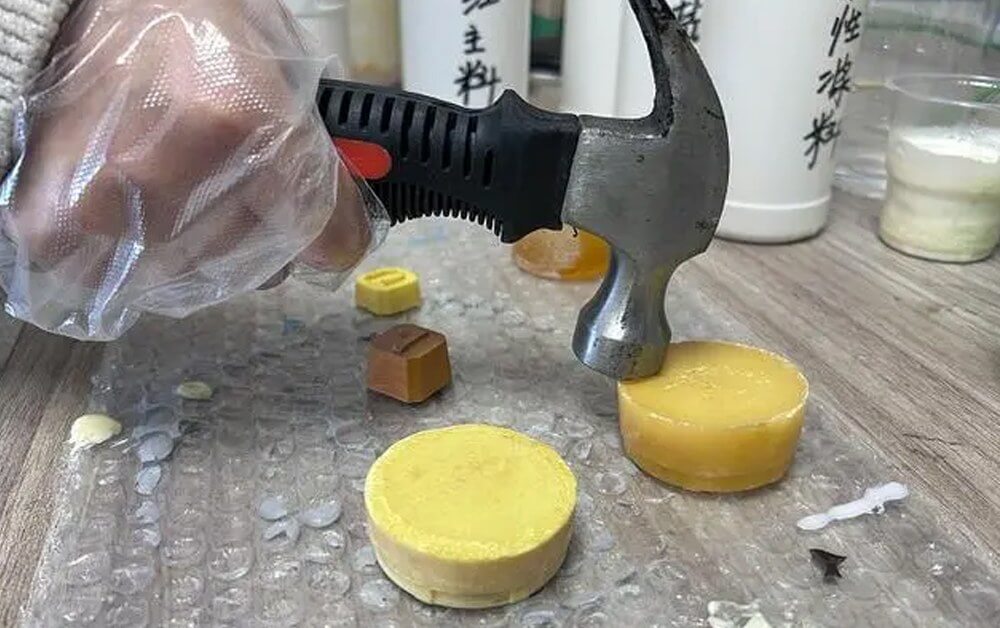
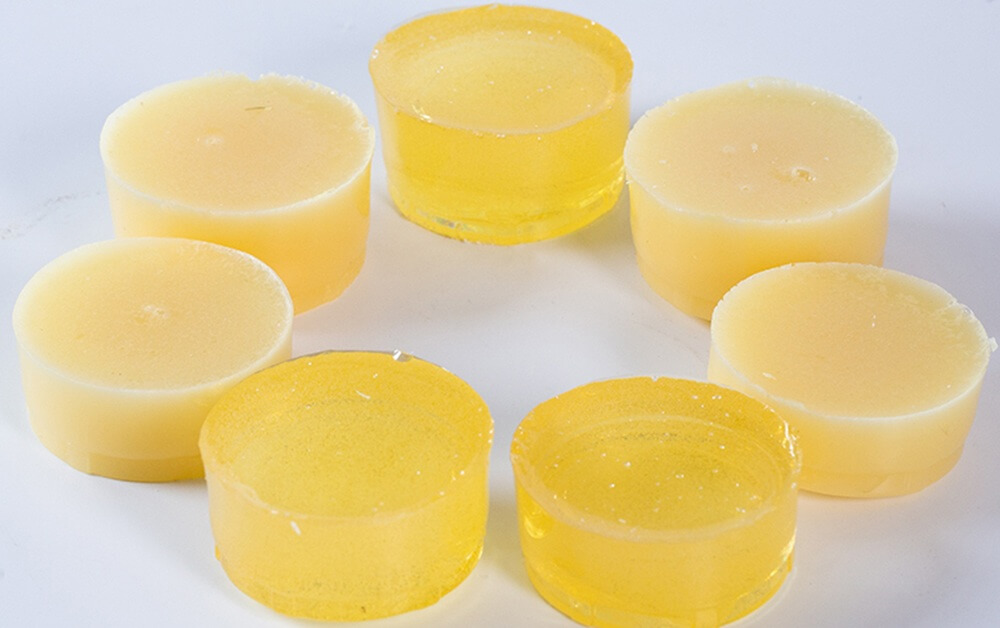
Why Epoxy Injection Is Preferred for Static Structural Cracks?
Epoxy injection performs best when the crack is stable.
A static crack does not continue opening and closing significantly. Since epoxy cures into a rigid, strong material, it is best suited for cracks where movement has stopped or is minimal.
Static Cracks Allow Epoxy to Perform Its Bonding Function
A stable crack gives epoxy resin the right condition to perform.
Once injected and cured, the epoxy grout can maintain a strong bond between the two sides of the crack. But if the crack keeps moving after repair, the epoxy can crack again or lose its bond.
This is why crack behavior must be evaluated before repair.
Static structural cracks are often caused by:
- Past shrinkage
- Previous overload that is no longer active
- Construction defects
- Settlement that has stabilized
- Thermal stress that is no longer severe
- Localized impact or damage
If the cause has been addressed and the crack is no longer moving, epoxy injection can be an effective reinforcement method.
Typical Static Structural Crack Applications
Epoxy injection is commonly used for cracks in load-bearing or durability-sensitive concrete elements.
Typical applications include:
Concrete Beam Cracks — Beams carry loads across spans. Cracks affect stiffness and durability. Epoxy bonds stable cracks.
Column Cracks — Columns are critical. Stable cracks may get epoxy, but serious cracks need an engineer.
Floor Slab Cracks — Industrial slabs, basement slabs, and structural floors may develop cracks due to shrinkage, settlement, or loading. Epoxy injection can be used where bonding and crack sealing are needed.
Bridge Girder Cracks — Bridges face traffic vibration, moisture, weather. Epoxy for stable cracks needing bonding and durability.
Tunnel Lining Cracks — Tunnels crack from ground pressure, settlement, construction stress. Epoxy works for stable cracks needing structural bonding.
Dam and Hydraulic Concrete Cracks — Water structures need strong sealing and durability. Epoxy helps repair stable cracks and reduce water entry.
When Fine Cracks Still Require Reinforcement
Small cracks get ignored because they seem harmless. But fine cracks matter if they’re in structural areas or let water reach the rebar.
Fine cracks may become entry paths for:
- Moisture
- Chloride ions
- Chemical contaminants
- Carbonation
This can reduce durability over time.
For fine cracks, low-viscosity epoxy injection grout is important. The resin must be able to enter narrow openings and travel deep into the crack.
YURU EG 1:4 is designed for micro-crack penetration. It has a mixed viscosity of ≤200 mPa·s and can penetrate micro-cracks below 0.05 mm under low pressure conditions of 0.1–0.3 MPa. This makes it useful for early-stage crack treatment, old building renovation, prefabricated component joints, and fine concrete crack repair.
When Epoxy Injection Should Not Be Used Alone
Epoxy injection is powerful when used correctly. But it should not be treated as a universal crack repair solution.
Some cracks need water stopping first. Others need flexible materials. Some require structural redesign or additional strengthening measures.
Active Water Leaks Need Water-Stopping First
Epoxy injection is not the best first choice for strong active water leakage.
If water is flowing through the crack, epoxy resin may struggle to bond properly. The water can interfere with penetration, adhesion, and curing. In severe cases, the resin may be washed away before it performs.
For active leaks, contractors often use:
- PU injection grout
- Polyurea injection grout
- Water-reactive grout
These materials are better suited for stopping water flow. After leakage is controlled, epoxy injection may be used later if structural reinforcement is required.
This staged method is often more reliable than trying to use epoxy as both a water stopper and structural repair material at the same time.
Moving Cracks May Reopen After Rigid Repair
Epoxy injection creates a rigid bond. This is useful for stable cracks but risky for moving cracks.
Moving cracks may open and close due to:
- Temperature changes
- Structural settlement
- Vibration
- Traffic loads
- Expansion and contraction
- Ongoing foundation movement
If a crack continues moving after epoxy injection, the rigid repair may crack again. In such cases, flexible waterproofing or a combined repair system may be more suitable.
For example, polyurea injection grout may be selected for flexible waterproof sealing, while epoxy injection may only be used after structural movement has been controlled.
Structural Overload Cannot Be Solved by Grout Alone
If a crack is caused by ongoing overload, epoxy injection alone is not enough.
Examples include:
- Undersized structural members
- Excessive live load
- Severe reinforcement corrosion
- Foundation settlement
- Continuous structural deformation
- Design defects
In these cases, the crack is a symptom of a deeper structural problem. Injection grout cannot remove the cause. A qualified engineer should evaluate the structure and determine whether additional strengthening is required.
Possible solutions may include:
- Carbon fiber reinforcement
- Steel plate bonding
- Section enlargement
- Load reduction
- Foundation treatment
- Reinforcement replacement
Structural redesign
Epoxy injection may still be part of the repair system, but it should not be the only action.
Key Material Properties That Make Epoxy Suitable for Reinforcement
The performance of epoxy injection depends on more than one number. A good structural repair grout balances viscosity, bonding strength, mechanical strength, curing, and durability.
Bonding Strength Determines Interface Recovery
Bonding strength is key for structural reinforcement. Epoxy must bond to both crack faces. The stronger the bond, the better the repair restores continuity.
YURU EG epoxy resin grouting materials provide reliable bonding performance for different conditions:
| Product | Bonding Performance |
| EG 1:1 | Dry bonding strength around 3.6 MPa; wet bonding strength around 2.4 MPa |
| EG 1:2 | Dry bonding strength around 4.2 MPa; wet bonding strength around 2.9 MPa |
| EG 1:4 | Bonding strength with concrete ≥2.8 MPa |
These values are useful because real concrete repair projects are not always perfectly dry. Wet bonding performance is especially important in basements, tunnels, hydraulic structures, and underground projects.
Viscosity Controls Crack Penetration Depth
Viscosity affects how deeply the grout can penetrate.
If the resin is too thick, it may only fill the entrance of the crack. The deeper part may remain empty. This creates hidden voids and reduces reinforcement quality.
Low-viscosity epoxy grout can enter fine cracks more effectively.
YURU EG series includes different viscosity profiles for different project needs:
- EG 1:1 has an initial viscosity of about 185 mPa·s.
- EG 1:2 can penetrate fine cracks below 0.1 mm.
- EG 1:4 has mixed viscosity ≤200 mPa·s.
- EG 1:4 can penetrate micro-cracks below 0.05 mm under 0.1–0.3 MPa low pressure.
This makes product selection more precise. A micro-crack may require EG 1:4, while a larger structural crack may benefit from EG 1:1 or EG 1:2.
Mechanical Strength Supports Long-Term Crack Stability
After curing, epoxy grout must have enough mechanical strength to support the repair objective.
Important strength indicators include:
- Compressive strength
- Tensile strength
- Tensile shear strength
- Bonding strength
YURU EG products provide different strength characteristics:
| Product | Key Mechanical Strength |
| EG 1:1 | Compressive strength about 45 MPa; tensile strength about 12 MPa; tensile shear strength about 5.8 MPa |
| EG 1:2 | Compressive strength about 25 MPa; tensile shear strength about 8.5 MPa; tensile strength about 85 MPa |
| EG 1:4 | 28-day compressive strength ≥50 MPa; tensile strength ≥8 MPa |
These figures help engineers compare the material with project requirements. However, the highest strength is not always the best choice. The right material should match the crack width, penetration requirement, substrate condition, and repair purpose.
Impermeability Protects the Reinforced Zone
A repaired crack shouldn’t let water back in. Water carries salts and chemicals that reduce durability.
YURU EG 1:1 provides an impermeability pressure of around 1.2 MPa. EG 1:2 provides an impermeability pressure of around 1.5 MPa and a permeability pressure ratio of around 500%.
For structural reinforcement projects in underground or hydraulic environments, this waterproofing performance adds long-term protection to the reinforced area.
Pot Life Affects Field Workability
Pot life is the usable time after mixing Component A and Component B.
If the material cures too quickly, workers may not have enough time for complete injection. If it cures too slowly, project efficiency may drop.
YURU EG 1:1 has a working time of about 35 minutes. EG 1:4 has a working time of about 20–30 minutes. These working times allow contractors to plan batch mixing, injection speed, and project sequence more accurately.
In hot climates, pot life may become shorter. Contractors should mix smaller batches and avoid leaving mixed epoxy in containers for too long.
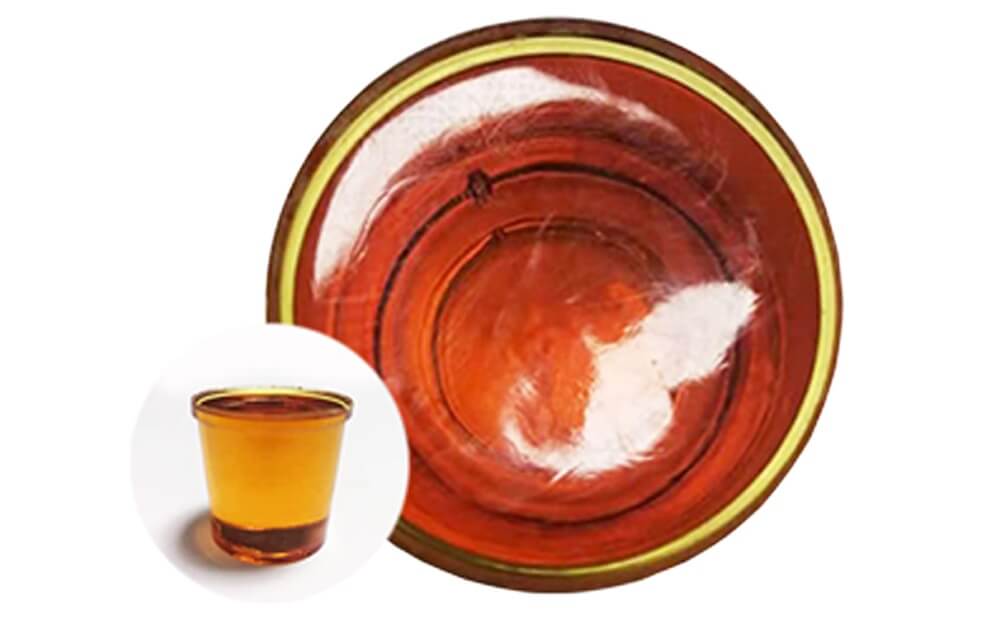
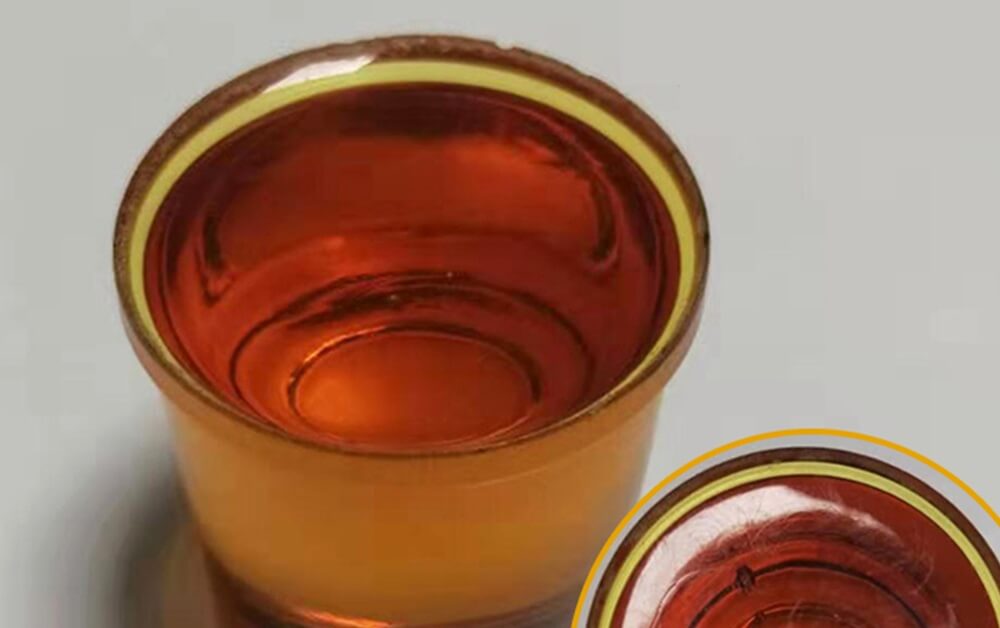
YURU EG Epoxy Injection Grouts for Different Reinforcement Needs
A single epoxy injection grout cannot solve every structural crack problem. Different cracks require different penetration, strength, and curing behavior.
YURU Waterproof offers EG epoxy resin grouting materials in different ratios to support different engineering needs.
EG 1:1: For High-Strength Structural Bonding
YURU EG 1:1 is suitable for projects where high-strength bonding and structural repair are important.
It is designed with:
- High solid content
- High penetration
- Room-temperature curing
- Low heat release
- Small shrinkage
- Strong adhesion
- Reinforcement, waterproofing, and anti-corrosion functions
EG 1:1 is suitable for structural cracks in:
- Tunnels
- Metro structures
- Concrete beams and columns
- Ports and docks
- Dams
- Water towers
- Swimming pools
- Pipeline joints
Its value lies in stable structural bonding. For cracks that require strong internal connection and long-term durability, EG 1:1 is a practical option.
EG 1:2: For Balanced Reinforcement and Waterproof Sealing
YURU EG 1:2 is a balanced engineering repair type.
It is suitable for projects requiring both structural reinforcement and waterproof sealing.
Key features include:
- Low viscosity
- Strong penetration
- High bonding strength
- Good mechanical performance
- Acid, alkali, and salt resistance
- Weather resistance
- Environmental friendliness
EG 1:2 is suitable for:
- Bridge pier cracks
- Bridge beam cracks
- Tunnel lining repair
- Basement cracks
Dam cracks - Sluice and aqueduct repair
- Underground utility tunnels
- Chemical plants
- Wastewater treatment facilities
This product is useful when the project requires a balance between penetration, strength, waterproofing, and chemical resistance.
EG 1:4: For Micro-Crack Penetration and Early Reinforcement
YURU EG 1:4 is designed for fine crack penetration and fast repair.
Its main advantages include:
- Ultra-low viscosity
- High penetration
- Fast crack coverage
- Fast curing
- High construction efficiency
- Suitability for micro-cracks
- VOC ≤50 g/L
EG 1:4 is suitable for:
- Building micro-cracks
- Old building renovation
- Underground garage shallow cracks
- Civil defense wall gaps
- Water supply and drainage pipe joints
- Pavement tile base void filling
- Prefabricated component joints
The main value of EG 1:4 is early intervention. Fine cracks can be treated before they become wider, deeper, or more damaging.
How Engineers Select the Right Epoxy Injection Grout?
Selecting epoxy grout is not about choosing the most expensive or strongest option. It is about matching the product to the crack.
Selection by Crack Behavior
| Crack Behavior | Engineering Judgment | Recommended Direction |
Static structural crack | Suitable for epoxy bonding | EG 1:1 / EG 1:2 |
| Fine micro-crack | Needs deep penetration | EG 1:4 |
| Damp structural crack | Needs wet bonding ability | EG 1:1 / EG 1:2 |
| Active water leak | Stop water first | PU or polyurea injection, then epoxy if needed |
| Moving crack | Needs flexibility | Polyurea or combined repair system |
This table helps prevent the common mistake of using one grout for all crack types.
Selection by Reinforcement Objective
| Reinforcement Goal | Recommended Product Direction |
| High-strength bonding | EG 1:1 |
| General structural repair | EG 1:2 |
| Micro-crack penetration | EG 1:4 |
| Waterproofing plus reinforcement | EG 1:2 |
| Deep structural crack repair | EG 1:1 / EG 1:2 |
| Fast renovation preparation | EG 1:4 |
The repair goal should guide the material choice. For example, a bridge girder crack and an old building micro-crack should not be treated with the same logic.
Selection by Project Risk Level
High-risk projects require higher-quality technical support.
Examples include:
- Metro systems
- Tunnels
- Bridges
- Dams
- Ports
- Industrial plants
- Water treatment structures
These projects often involve safety, operation, and long service-life expectations. Buyers should ask for technical data sheets, application guidance, product samples, and project-specific recommendations before purchasing.
Construction Factors That Decide Reinforcement Performance
Even the best epoxy injection grout can fail if construction quality is poor.
For structural reinforcement, workmanship matters as much as material performance.
Crack Cleaning Affects Adhesion
Epoxy resin must bond to concrete. If the crack contains dust, mud, oil, loose particles, or standing water, bonding quality may drop.
Before injection, workers should clean the surface and prepare the crack according to site conditions.
Poor cleaning can lead to:
- Weak adhesion
- Incomplete bonding
- Resin leakage
- Reduced durability
- Repair failure
For structural projects, cleaning is not a small detail. It directly affects reinforcement performance.
Mixing Ratio Controls Final Strength
Epoxy resin grouting materials must be mixed accurately.
YURU EG series includes:
- EG 1:1
- EG 1:2
- EG 1:4
Each product has its own specified A/B ratio. Contractors should not change the ratio to speed up or slow down curing.
Incorrect mixing can cause:
- Incomplete curing
- Sticky resin
- Low strength
- Poor adhesion
- Brittle cured material
- Equipment blockage
In structural reinforcement work, accurate mixing is non-negotiable.
Injection Completeness Matters More Than Injection Pressure Alone
Many workers believe higher injection pressure means better repair. This is not always true.
Excessive pressure can:
- Widen the crack
- Damage weak concrete
- Force resin into unwanted paths
- Break surface sealing
- Waste material
The goal is not maximum pressure. The goal is complete filling.
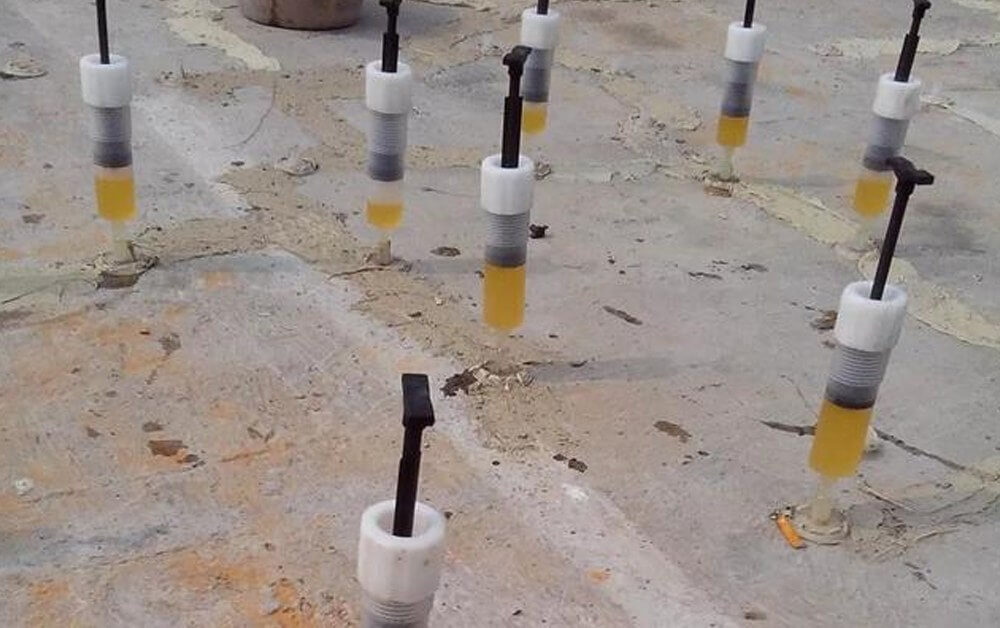
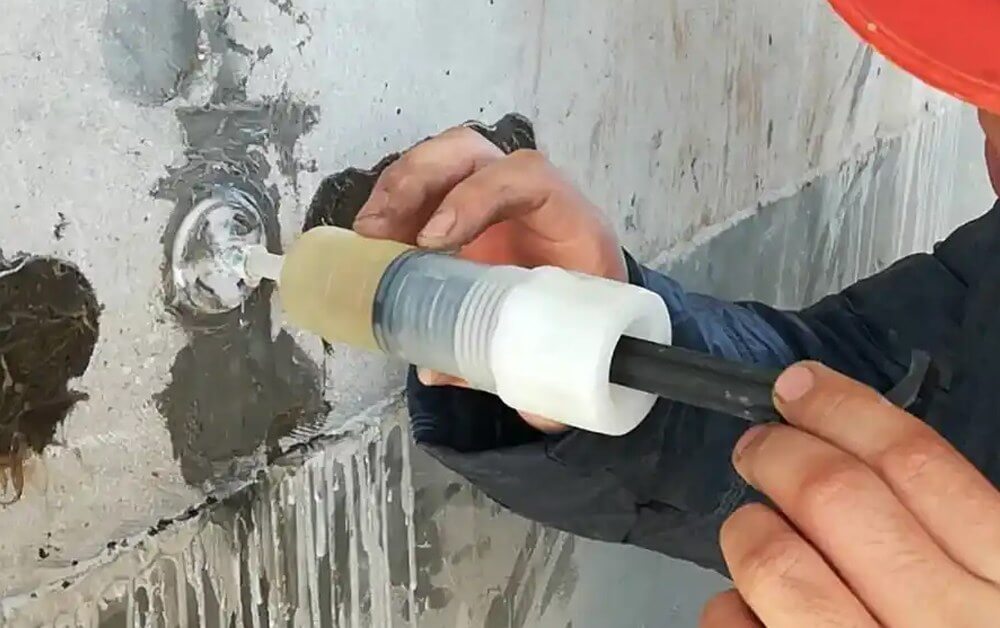
A good injection process should ensure that the resin travels through the crack and appears at adjacent ports where appropriate. Deep cracks may require staged injection or secondary injection.
Curing Conditions Affect Long-Term Reinforcement
Epoxy curing is affected by temperature, humidity, batch size, and working time.
In hot conditions, the reaction may speed up. In cold conditions, curing may slow down.
Contractors should consider:
- Site temperature
- Material temperature
- Pot life
- Batch size
- Injection sequence
- Ventilation
- Humidity
For example, EG 1:1 has a working time of about 35 minutes, while EG 1:4 has a working time of about 20–30 minutes. Planning the work around these times helps avoid premature curing and incomplete injection.
How to Evaluate Whether Epoxy Reinforcement Was Successful?
A structural reinforcement project should not end immediately after injection. Inspection and verification are essential.
The Crack Should Be Fully Filled
A successful injection should fill the internal crack path as completely as possible.
Signs of proper filling may include:
- Resin appearing at adjacent ports
- Stable injection pressure
No sudden material loss - No major leakage from surface seals
- No hollow areas after curing
For deeper cracks, secondary injection may be needed to improve filling completeness.
The Resin Should Cure Normally
After curing, the resin should become hard and stable.
Problems may include:
- Sticky surface
- Soft cured material
- Uneven curing
- Excessive heat
- Unreacted resin
- Brittle failure
These issues often point to incorrect mixing, poor temperature control, contamination, or expired material.
The Repaired Area Should Remain Stable
After repair, the area should be monitored.
Contractors should check:
- Whether the crack reopens
- Whether water returns
- Whether new cracks appear
- Whether surface sealing remains stable
- Whether structural movement continues
If the crack continues moving, the original cause may not have been solved.
Documentation Should Be Kept for Engineering Projects
For professional projects, documentation is important.
Records should include:
- Product name
- Batch number
- Mixing ratio
- Injection date
- Injection location
- Injection pressure
- Site temperature
- Crack condition
- Worker notes
- Inspection results
This helps owners, contractors, and engineers evaluate repair quality and trace any later issues.
Common Misunderstandings About Epoxy Injection Reinforcement
Misunderstanding 1: Epoxy Injection Can Fix Any Crack
Epoxy injection is best for stable structural cracks. It’s not ideal as a single solution for:
- Strong active leaks
- Moving cracks
- Ongoing settlement cracks
- Cracks caused by serious overload
- Cracks requiring flexible waterproofing
Correct use brings good results. Wrong use creates repeat repairs.
Misunderstanding 2: Higher Strength Always Means Better Repair
Strength isn’t the only factor. A super-strong epoxy might be too thick for micro-cracks. A low-viscosity resin might penetrate well but not bond as strongly.
The best choice depends on:
- Crack width
- Crack depth
- Moisture condition
- Structural requirement
- Pot life
- Penetration demand
- Final strength requirement
Match the material — don’t just chase one number.
Misunderstanding 3: Surface Sealing = Structural Repair
Surface sealing may improve appearance and reduce surface water entry. But it does not reconnect the inside of a structural crack.
Epoxy injection works because it fills the internal crack and bonds the concrete surfaces. This is why it can be used for reinforcement, while surface treatment alone often cannot.
Misunderstanding 4: Injection Pressure Is the Main Success Factor
Pressure is only one part of injection work.
Important factors also include:
- Resin viscosity
- Crack preparation
- Port spacing
- Surface sealing quality
- Injection sequence
- Material pot life
- Crack saturation
- Curing condition
A well-controlled low-pressure injection can be more effective than uncontrolled high-pressure injection.
Why Contractors Choose YURU for Epoxy Structural Reinforcement?
Contractors, distributors, and project owners need reliable materials and practical support. YURU Waterproof provides a complete EG epoxy resin grouting series for different crack reinforcement conditions.
Three EG Systems for Different Reinforcement Conditions
YURU offers:
- EG 1:1 for high-strength structural bonding
- EG 1:2 for balanced engineering reinforcement
- EG 1:4 for low-viscosity micro-crack penetration
This helps customers choose based on real crack behavior rather than using one product for all projects.
Technical Data That Supports Engineering Decisions
YURU EG products provide useful engineering data, including:
- Viscosity
- Working time
- Compressive strength
- Tensile strength
- Tensile shear strength
- Dry bonding strength
- Wet bonding strength
- Impermeability pressure
- VOC performance
These values help engineers and buyers make informed decisions before construction.
Suitable for Infrastructure, Industrial, and Building Repair Markets
YURU EG epoxy resin grouting materials can support:
- Tunnel structural repair
- Metro crack reinforcement
- Bridge concrete repair
- Basement structural crack repair
- Dam and reservoir reinforcement
- Industrial concrete repair
- Pipeline joint sealing
- Prefabricated structure repair
- Water treatment facility repair
This makes the EG series suitable for both building repair and infrastructure maintenance markets.
OEM and Technical Support for Customers
YURU supports customers with:
- OEM manufacturing
- Private label cooperation
- Packaging customization
- Technical data sheets
- Product samples
- Project selection advice
International supply support
For distributors and contractors, this reduces procurement risk and helps improve project outcomes.
FAQ: Epoxy Injection for Structural Reinforcement
1. Why is epoxy injection used for structural reinforcement?
Enters cracks, bonds both sides, cures into strong repair — restores local continuity, improves durability.
2. Is epoxy injection suitable for moving cracks?
Epoxy injection is not ideal for cracks that continue moving. Moving cracks often require flexible materials, structural stabilization, or a combined repair system.
3. Can epoxy injection be used in wet cracks?
Some epoxy grouts have wet bonding ability, but active water flow should be stopped first. Damp cracks require careful material selection and surface preparation.
4. Which YURU EG epoxy grout is best for structural reinforcement?
YURU EG 1:1 is suitable for high-strength structural bonding, EG 1:2 is suitable for balanced engineering repair. EG 1:4 is suitable for micro-crack penetration and early-stage crack treatment.
5. Is epoxy injection better than PU injection?
They serve different purposes. Epoxy injection is better for structural bonding and reinforcement. PU injection is better for rapid water stopping in active leakage conditions.
Conclusion:
Epoxy injection is used for structural reinforcement because it works inside the concrete crack. It bonds separated concrete surfaces, fills internal voids, improves local continuity, and protects the reinforced zone from water and harmful contaminants.
Its value is greatest in stable structural cracks where internal bonding is required.
However, epoxy injection should not be used blindly. Active water leaks need water stopping first. Moving cracks need flexible or combined repair systems. Cracks caused by overload or ongoing structural movement require engineering evaluation.
YURU Waterproof’s EG epoxy resin grouting series provides practical options for different reinforcement needs:
- EG 1:1 for high-strength structural bonding
- EG 1:2 for balanced reinforcement and waterproof sealing
- EG 1:4 for micro-crack penetration and early repair
When the crack diagnosis is correct, the product is properly selected, and the injection process is carefully controlled, epoxy injection can become a reliable and long-lasting structural repair solution.
If you are looking for epoxy resin grouting materials for concrete structural crack repair, tunnel crack reinforcement, bridge crack injection, basement structural repair, or hydraulic engineering reinforcement, YURU Waterproof can provide professional support.
Contact YURU Waterproof today to request:
- EG 1:1 / EG 1:2 / EG 1:4 technical data sheets
- Free product samples
- Crack repair product selection advice
- OEM and private label solutions
- Project-based technical recommendations
- International supply support
Choose YURU Waterproof to find the right epoxy injection grout for your next structural reinforcement project.
YURU Product solutions