Why Polyurethane Grout Does Not Expand Properly?
Introduction:
Polyurethane grout is widely used for waterproof injection — leaking basements, tunnels, underground parking, elevator pits, retaining walls, subway stations. It reacts with water, expands, foams, creates a waterproof barrier in cracks, joints, voids, honeycomb concrete.
But here’s the problem contractors run into all the time.
- The grout is injected correctly.
- The pump pressure appears normal.
- The injection packers are installed correctly.
Yet the polyurethane grout barely expands.
In some projects, foaming is significantly lower than expected.
In others, almost no expansion occurs at all.
As a result:
- Water leakage continues.
- More material is consumed.
- The repair fails.
- Additional labor is required.
- Project costs increase.
- Clients lose confidence.
This raises an important question:
Why does polyurethane grout sometimes fail to expand properly?
The answer is rarely as simple as blaming the material.
In reality, polyurethane grout expansion depends on a combination of factors including water availability, crack conditions, injection pressure, temperature, grout quality, storage conditions, and product selection.
Understanding these factors can dramatically improve project success rates.
This guide covers the most common reasons polyurethane grout won’t expand, how to figure out what’s wrong, and how to fix it on real construction sites.
Understanding How Polyurethane Grout Expands
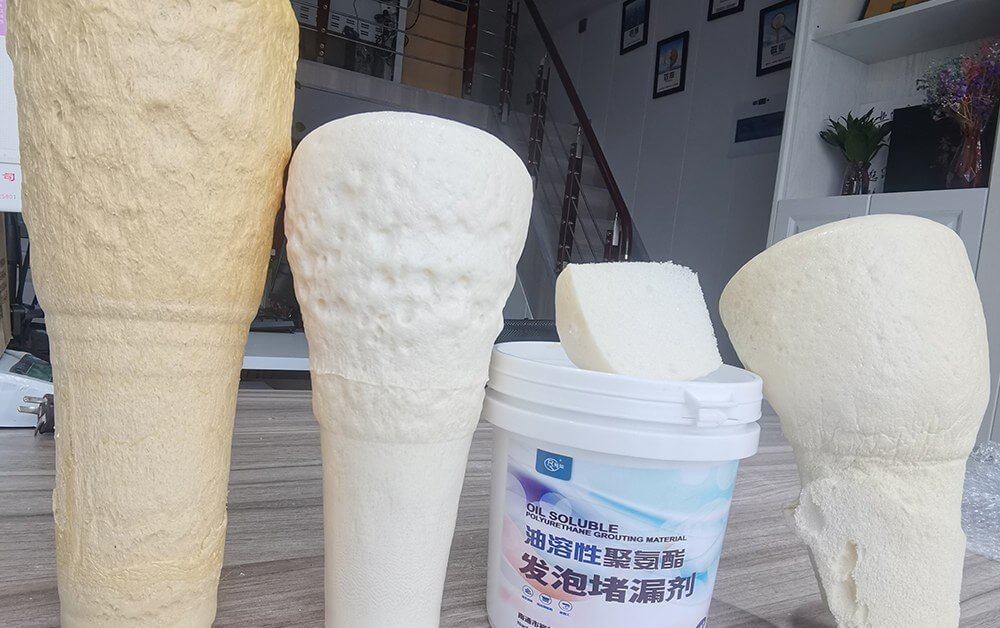
Before we talk about why it fails, let’s understand how polyurethane grout works. A lot of contractors think polyurethane automatically expands after injection. That’s not quite right. Expansion is a chemical reaction that depends heavily on the conditions around it.
What Happens During the Polyurethane Grouting Reaction?
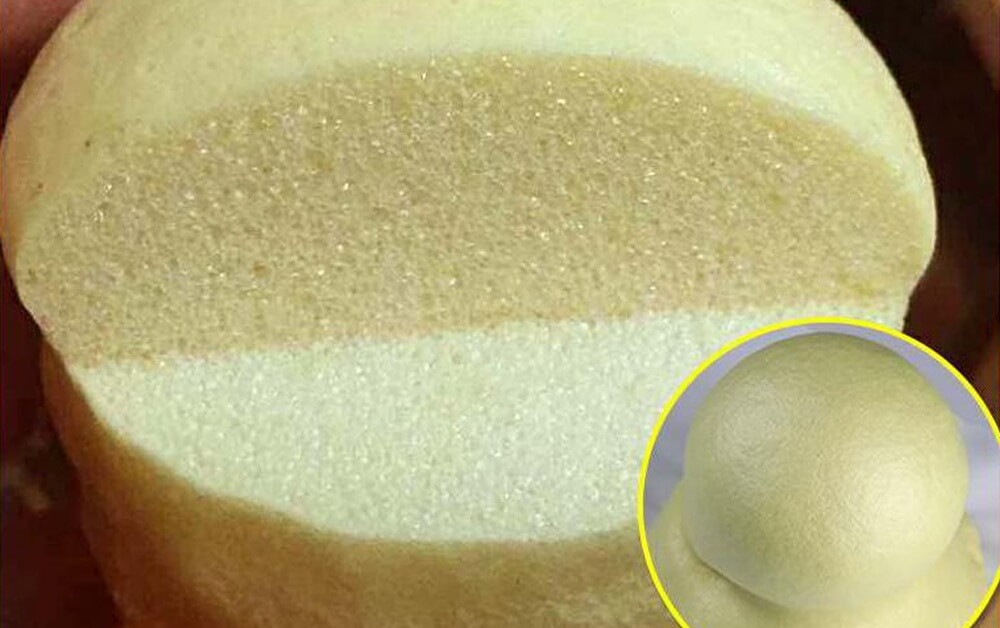
Polyurethane injection grout has chemicals that react with moisture. When it hits water inside a crack or void, a reaction starts. That reaction creates gas. Gas makes foam. Foam expands. Expansion fills empty spaces. Then the cured foam becomes a waterproof barrier.
Here’s the five-stage process:
- Injection: Liquid grout injected into crack/void under pressure — low viscosity travels deep.
- Water contact: Grout encounters water — reaction begins — water amount directly influences expansion.
- Gas generation: Carbon dioxide gas generated — responsible for creating foam structure.
- Expansion: Grout expands, fills surrounding spaces — reaches areas liquid alone couldn’t penetrate.
- Curing: Material cures and stabilizes — forms waterproof barrier resisting future water intrusion.
This process sounds straightforward.
However, every stage can be affected by external factors.
Even small changes in water availability, temperature, or injection technique can dramatically change expansion performance.
Why Expansion Is Critical for Waterproof Crack Repair?
Expansion is not merely a desirable characteristic. It is the primary reason polyurethane grout is used for active water leaks.
Without sufficient expansion:
- Cracks may remain partially open.
- Water channels may remain active.
- Voids may not be fully filled.
- Hydrostatic pressure can continue pushing water through the structure.
A polyurethane grout that does not expand properly behaves very differently from a polyurethane grout that reaches its intended expansion ratio.
For example:
Imagine a leaking tunnel crack containing multiple interconnected voids, if expansion occurs properly:
- Foam reaches secondary pathways.
- Water channels become blocked.
- The waterproof barrier becomes continuous.
If expansion is insufficient:
- Only the immediate injection area becomes filled.
- Water simply finds another route.
- Leakage returns quickly.
This is why expansion performance directly affects project success.
The Most Common Reasons Polyurethane Grout Does Not Expand Properly
Many contractors assume poor expansion automatically means poor-quality material.
While low-quality products can certainly contribute, they are often not the primary cause.
In actual waterproofing projects, most expansion failures are linked to site conditions and application factors.
Let’s examine the most common causes.
Reason #1 – Insufficient Water Inside the Crack
A lot of waterproofing contractors forget that polyurethane grout often needs water to create foam. Without enough moisture, the chemical reaction doesn’t complete.
As a result:
- Expansion decreases.
- Foaming slows down.
- Void filling becomes limited.
- Waterproof performance suffers.
Dry Cracks Are Often Misleading
Many cracks appear wet from the outside.
However, deep inside the concrete structure, the crack may actually be dry.
Contractors often inject polyurethane grout expecting aggressive foaming.
Instead, they observe very little expansion.
The reason is simple. The material lacks enough moisture to complete the reaction.
Slightly Damp Cracks May Also Cause Problems
Some cracks contain only minimal moisture.
These situations are particularly challenging because:
- The grout begins reacting.
- Expansion starts.
- The reaction quickly stalls.
The resulting foam structure may be weak and incomplete.
Why Active Leaks Usually Produce Better Expansion?
Interestingly, actively leaking cracks often produce the best expansion results.
Because water is continuously present:
- The reaction remains active.
- More gas is generated.
- Expansion ratios increase.
- Waterproof barriers become more complete.
This explains why polyurethane grout often performs exceptionally well in tunnels, subway systems, retaining walls, and underground structures experiencing active seepage.
Reason #2 – Low Ambient Temperature
Temperature plays a much larger role in polyurethane expansion than many contractors realize.
Every chemical reaction depends on energy. Temperature directly influences reaction speed.
When temperatures drop significantly:
- Reaction rates decrease.
- Expansion slows.
- Foam structure changes.
- Cure times become longer.
Winter Construction Challenges
Winter waterproofing projects frequently encounter expansion issues.
Common examples include:
- Underground parking structures
- Tunnel repairs
- Retaining wall rehabilitation
- Water treatment facilities
- Cold-climate basements
In these environments, grout may appear sluggish and unresponsive.
The material itself may be perfectly acceptable.
The temperature simply prevents optimal reaction performance.
Underground Structures Can Remain Cold Year-Round
Many contractors focus only on outdoor weather.
However, underground environments often remain significantly colder than expected.
For example:
- Subway tunnels
- Utility corridors
- Deep basements
- Mining infrastructure
may maintain temperatures well below ideal reaction conditions even during summer.
How Low Temperature Affects Expansion?
Low temperatures typically cause:
- Reduced expansion ratios
- Slower foam development
- Increased viscosity
- Longer cure times
- Reduced penetration distance
As a result, the final waterproof barrier may not perform as intended.
Reason #3 – Polyurethane Grout Has Absorbed Moisture Before Use
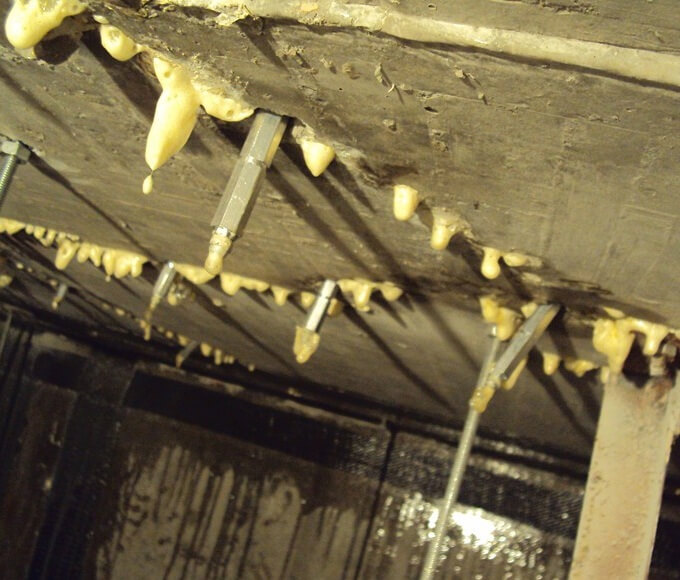
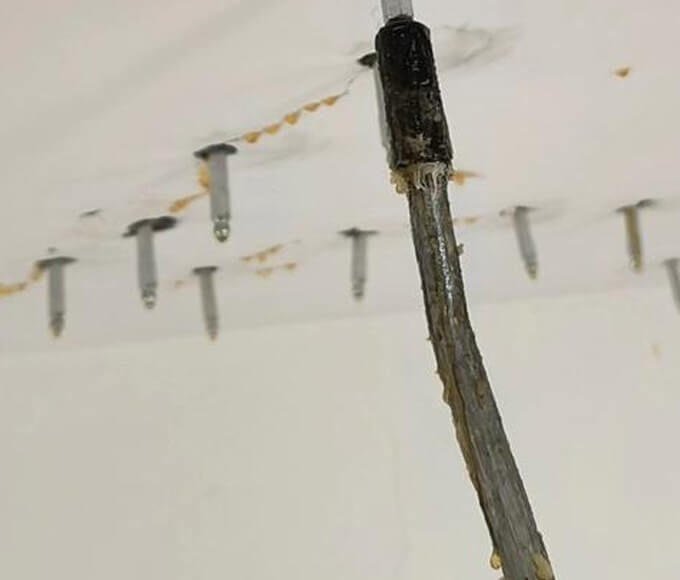
Storage conditions are frequently overlooked. But bad storage is one of the top reasons polyurethane grout fails. Polyurethane is very sensitive to moisture.
If water gets into the package early, unwanted reactions start before the material ever hits the job site.
Common Storage Mistakes
Contractors often make mistakes such as:
- Leaving containers partially open.
- Storing material in humid environments.
- Using damaged packaging.
- Keeping material for excessive periods.
- Exposing containers to temperature fluctuations.
All of that lets moisture in.
What Happens When Moisture Enters the Container?
Premature reactions begin slowly.
At first, the material may appear normal.
However, chemical activity has already started.
This leads to:
- Reduced reactivity.
- Lower expansion potential.
- Inconsistent foaming.
- Shortened shelf life.
Eventually, the material loses its ability to perform as designed.
Warning Signs of Moisture Contamination
Contractors should inspect for:
- Thickened material
- Skin formation
- Abnormal viscosity
- Partial crystallization
- Irregular color changes
These signs often indicate moisture exposure.
Using compromised material almost always results in poor expansion performance.
Reason #4 – Injection Pressure Is Too Low
Pressure is another critical factor.
Even the highest-quality polyurethane grout cannot expand properly if it never reaches the target area.
Why Pressure Matters?
Injection pressure serves two purposes:
First, it pushes grout into the crack.
Second, it distributes material throughout interconnected void networks.
Without adequate pressure:
- Penetration depth decreases.
- Voids remain unfilled.
- Expansion occurs only near the injection port.
This creates an incomplete waterproof barrier.
Common Pressure-Related Problems
Many projects experience:
- Underpowered injection pumps
- Worn seals
- Leaking hoses
- Blocked packers
- Incorrect pressure settings
These problems reduce grout movement and limit expansion effectiveness.
Expansion Requires Space
Polyurethane foam expands into available voids.
If grout never reaches those voids, expansion becomes restricted.
The result is often mistaken for poor material quality when the real issue is inadequate grout distribution.
Reason #5 – Incorrect Product Selection
Not all polyurethane grouts are identical.
One of the biggest mistakes contractors make is assuming every polyurethane grout behaves the same way.
In reality, different formulations are designed for different applications.
Hydrophilic Polyurethane Grout
Hydrophilic polyurethane grout absorbs water and remains flexible after curing.
Advantages include:
- Long-term adaptability
- Flexible waterproofing
- Suitable for moving cracks
- Excellent performance in persistent moisture conditions
However, expansion characteristics may differ from highly foaming systems.
Hydrophobic Polyurethane Grout
Hydrophobic polyurethane grout generally produces more aggressive foaming.
Advantages include:
- Rapid expansion
- Fast leak stoppage
- High expansion ratios
- Strong resistance to flowing water
However, it may not always be the best solution for every crack condition.
Matching Product to Project Conditions
Choosing the wrong grout type can create expansion problems even when application procedures are correct.
For example:
Using a formulation intended for active water flow in a nearly dry crack may produce disappointing results.
Similarly, using a slow-reacting system in a severe leak may fail to stop water quickly enough.
Therefore, product selection should always be based on:
- Water conditions
- Crack size
- Structure type
- Repair objective
- Long-term performance requirements
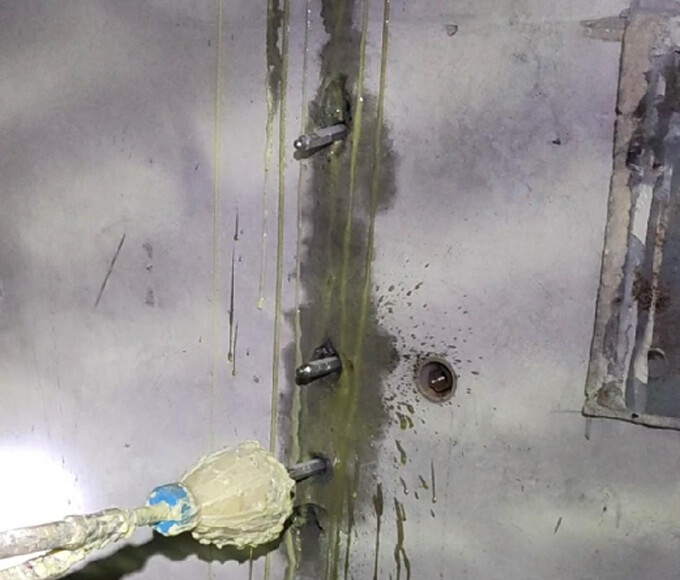
How Water Conditions Affect Polyurethane Grout Expansion?
One of the most misunderstood aspects of polyurethane injection grouting is the relationship between water and expansion.
Many contractors assume that more water automatically means better foaming. Others believe polyurethane grout should expand even in completely dry cracks.
The truth lies somewhere in between.
Understanding the actual water conditions inside a structure is often the key to successful waterproofing.
Expansion Performance in Active Water Leaks
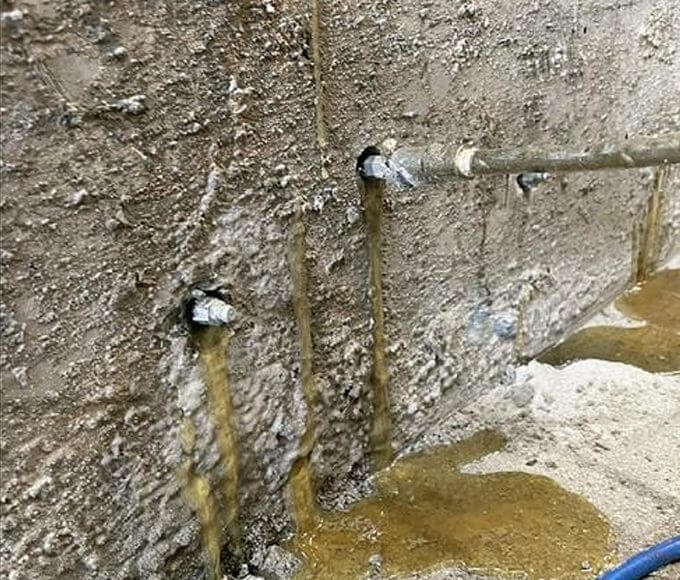
Active leaks generally provide the most favorable environment for polyurethane grout expansion.
Examples include:
- Underground tunnels with flowing seepage
- Elevator pits with continuous leakage
- Subway stations under hydrostatic pressure
- Water tanks with structural cracks
- Basement walls experiencing active infiltration
In these situations, water is continuously available.
As the grout encounters water:
- The chemical reaction remains active.
- Carbon dioxide generation continues.
- Expansion becomes more aggressive.
- Foam fills secondary pathways more effectively.
This is why hydrophobic polyurethane grout is frequently used in active leak conditions.
Its rapid foaming action can quickly stop water movement before it spreads further into the structure.
Why Active Leaks Often Produce Higher Expansion Ratios?
In laboratory demonstrations, polyurethane grout often achieves impressive expansion ratios.
The reason is simple:
The reaction environment is optimized.
Field conditions rarely provide such consistency.
However, active leak conditions come closest to laboratory performance because water is readily available throughout the crack network.
As a result:
- Expansion becomes more predictable.
- Void filling improves.
- Material utilization increases.
- Waterproofing performance becomes more reliable.
Expansion Performance in Damp Cracks
Damp cracks are more complicated.
These cracks contain moisture but lack free-flowing water.
Examples include:
- Retaining walls after rainfall
- Basement walls with seasonal seepage
- Foundation cracks with slight dampness
- Parking structures exposed to humidity
At first glance, these cracks appear ideal.
However, they often create inconsistent expansion behavior.
Why Damp Cracks Can Produce Unpredictable Results?
The problem is moisture distribution.
A crack may appear damp on the surface while remaining relatively dry deeper inside.
As grout travels through the crack:
- Expansion begins.
- Moisture becomes depleted.
- The reaction slows.
- Foam formation becomes uneven.
Contractors often observe expansion near injection ports but limited foaming farther into the structure.
This incomplete expansion leaves hidden pathways available for future leakage.
Practical Contractor Solution
Experienced waterproofing contractors frequently perform moisture assessments before grouting.
By understanding where water is actually located, they can:
- Improve material selection.
- Adjust injection strategy.
- Determine whether pre-wetting is necessary.
These steps significantly improve project outcomes.
Expansion Performance in Dry Cracks
Dry cracks represent one of the most challenging scenarios for polyurethane grout.
Many injection failures occur because contractors attempt to use water-reactive polyurethane materials in cracks containing little or no moisture.
Why Dry Cracks Limit Expansion?
Without water:
- The chemical reaction remains incomplete.
- Gas generation decreases.
- Foaming becomes minimal.
- Expansion ratios fall dramatically.
The grout may still cure.
However, the expansion that makes polyurethane so effective never fully develops.
Common Dry Crack Applications
Examples include:
- Structural concrete cracks above grade
- Dry parking structures
- Bridge repair projects
- Newly formed shrinkage cracks
- Interior concrete walls
These conditions often require special treatment before injection.
The Importance of Pre-Wetting Dry Cracks
Professional contractors often solve this problem through pre-wetting.
Pre-wetting involves introducing controlled amounts of water before grout injection.
The process provides:
- Improved reaction conditions
- Better foam formation
- Increased expansion ratios
- More complete crack filling
Although simple, this technique is frequently overlooked by inexperienced crews.
In many projects, pre-wetting alone can dramatically improve waterproofing performance.
Construction Mistakes That Prevent Proper Expansion
Even excellent polyurethane grout fails with incorrect application — many expansion failures caused by workmanship, not material quality.
Incorrect Injection Port Spacing
Injection port placement is one of the most critical factors in successful grouting.
Yet it is often treated as an afterthought.
What Happens When Ports Are Too Far Apart?
Large spacing creates untreated areas between injection points.
As grout expands:
- It cannot bridge large distances effectively.
- Voids remain unfilled.
- Water pathways survive.
The result is incomplete waterproofing.
What Happens When Ports Are Too Close Together?
Excessively close spacing creates different problems:
- Increased material consumption
- Higher labor costs
- Excessive pressure buildup
- Potential crack enlargement
The goal is balance.
Proper spacing depends on:
- Crack width
- Structure thickness
- Grout viscosity
- Expected penetration distance
Experienced contractors adjust spacing based on actual site conditions rather than fixed rules.
Injecting Too Fast
Many operators assume faster injection improves productivity.
Unfortunately, excessive speed often reduces effectiveness.
Why Fast Injection Causes Problems?
When grout enters too quickly:
- Material bypasses critical voids.
- Pressure spikes occur.
- Uneven distribution develops.
- Premature blowouts may happen.
The grout may travel along the easiest path rather than filling the entire defect.
Signs of Overly Fast Injection
Common indicators include:
- Material escaping adjacent cracks
- Surface leakage
- Uneven foam formation
- High material consumption
Slower, controlled injection usually produces superior results.
Injecting Too Slowly
Slow injection creates a different set of challenges.
Premature Reaction Risk
Polyurethane grout begins reacting once moisture contact occurs.
If injection is excessively slow:
- Viscosity increases during application.
- Penetration decreases.
- Hoses may clog.
- Packers become blocked.
This prevents the material from reaching deeper sections of the crack network.
Balancing Injection Speed
Successful contractors understand that speed must match:
- Reaction time
- Temperature
- Crack geometry
- Material viscosity
There is no universal injection rate.
The optimal approach depends on project conditions.
Using the Wrong Grouting Pump
Equipment selection matters more than many people realize.
The wrong pump can dramatically reduce expansion performance.
Manual Injection Pumps
Advantages:
- Low cost
- Easy maintenance
- Suitable for small repairs
Limitations:
- Lower pressure capacity
- Slower application
- Limited penetration in large structures
Electric High-Pressure Pumps
Advantages:
- Consistent pressure
- Improved penetration
- Greater productivity
- Better suitability for large-scale projects
Limitations:
- Higher cost
- Increased maintenance requirements
- Greater operator training needed
Choosing the wrong pump frequently leads to poor grout distribution and reduced expansion effectiveness.
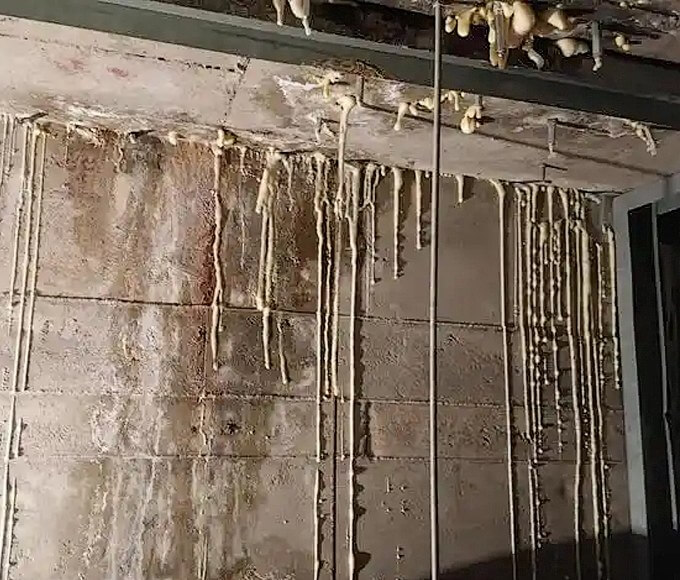
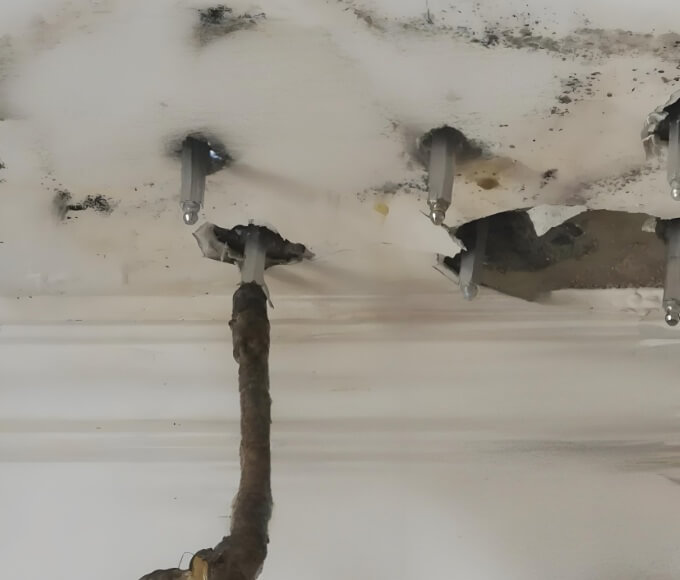
How to Improve Polyurethane Grout Expansion Performance?
Fortunately, most expansion problems can be corrected.
Successful waterproofing contractors follow a systematic process to maximize grout performance.
Perform a Water Assessment Before Injection
The first step is understanding the water condition.
Many failures occur because contractors skip this assessment.
Every crack falls into one of three categories:
Active Water Leak
Characteristics:
- Continuous water flow
- Hydrostatic pressure present
- High moisture availability
Recommended grout:
- Hydrophobic polyurethane grout
Damp Crack
Characteristics:
- Moisture present
- Limited water movement
- Seasonal seepage possible
Recommended grout:
- Hydrophilic or specialized hybrid systems
Dry Crack
Characteristics:
- No visible moisture
- Limited water availability
- Structural repair applications
Recommended approach:
- Pre-wetting
- Alternative injection strategies
- Potential use of epoxy systems when waterproofing is not the primary objective
Understanding the condition first prevents many costly mistakes.
Use Proper Injection Pressure
Pressure directly influences penetration depth.
However, more pressure is not always better.
Low Pressure Problems
Low pressure often causes:
- Limited penetration
- Incomplete filling
- Restricted expansion
Excessive Pressure Problems
Excessive pressure may cause:
- Crack enlargement
- Surface blowouts
- Material waste
- Structural damage
Professional contractors adjust pressure according to:
- Crack width
- Concrete quality
- Structure thickness
- Water pressure conditions
Controlled pressure almost always outperforms aggressive pressure.
Pre-Wet Dry Cracks
As discussed earlier, water is essential for expansion.
When dry cracks are encountered, pre-wetting can significantly improve performance.
Benefits include:
- Faster reaction
- Better foam structure
- Increased expansion ratio
- Improved waterproofing reliability
Many experienced contractors consider pre-wetting a standard practice for dry concrete conditions.
Choose the Right Polyurethane Grout Type
Not every polyurethane grout performs the same way.
The choice between hydrophilic and hydrophobic systems significantly affects expansion behavior.
Selecting the correct material often determines whether a project succeeds or fails.
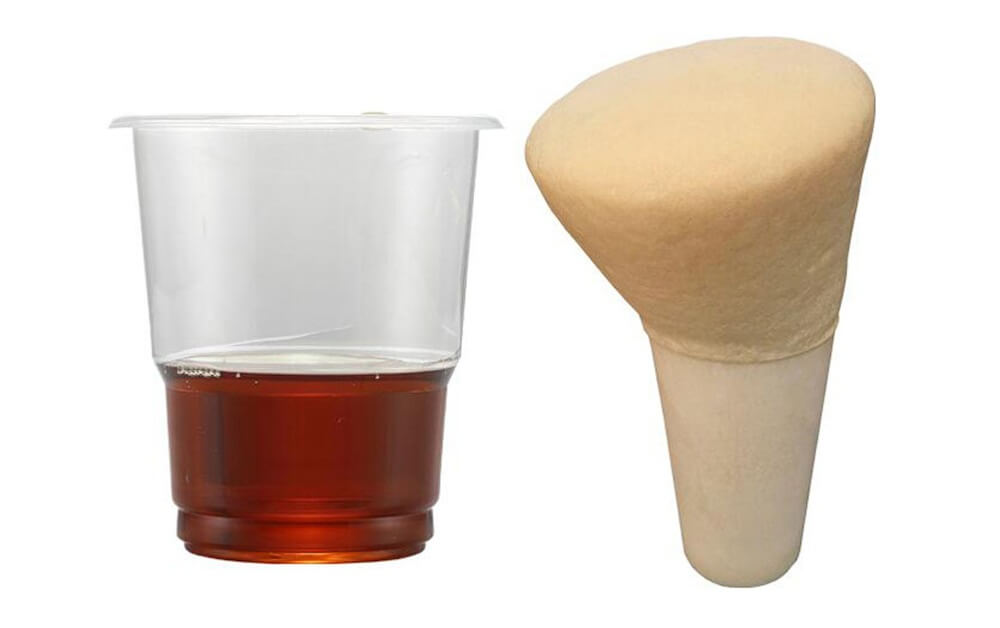
Hydrophilic vs Hydrophobic Polyurethane Grout Expansion Performance
Hydrophilic Polyurethane Grout:
- Behavior: Water-seeking — reacts with water, continues interacting with moisture even after curing.
- Structure: Flexible — adapts to small substrate movements (unlike rigid foam systems).
- Applications: Basement walls, retaining walls, water tanks, underground structures, construction joints, expansion joints.
- Expansion: Controlled — lower ratio than hydrophobic, but superior long-term performance in permanently damp environments.
- Key advantage: Remains flexible — tolerates small structural movements, maintains waterproof seal.
Hydrophobic Polyurethane Grout:
- Behavior: Rapid reaction with water — aggressive foaming action, extremely effective for stopping active leaks.
- Applications: Tunnel leakage, subway structures, elevator pits, active crack leaks, water-bearing rock formations, emergency leak repair.
- Expansion: High expansion ratio — foam rapidly fills voids, blocks water pathways.
- When valuable: High water pressure, severe leakage, immediate results required.
- Consideration: Aggressive foaming not always ideal — long-term structural movement and crack behavior must be considered.
Which type is better for your project?
| Condition | Choose |
| Long-term flexibility required, cracks experience movement, moisture persistent, waterproofing durability priority | Hydrophilic |
| Active water flow exists, rapid leak stoppage required, water pressure significant, emergency repair necessary | Hydrophobic |
Key insight: Experienced waterproofing engineers often combine different technologies. Most successful repairs are based on proper diagnosis — not simply selecting the highest-expansion product.
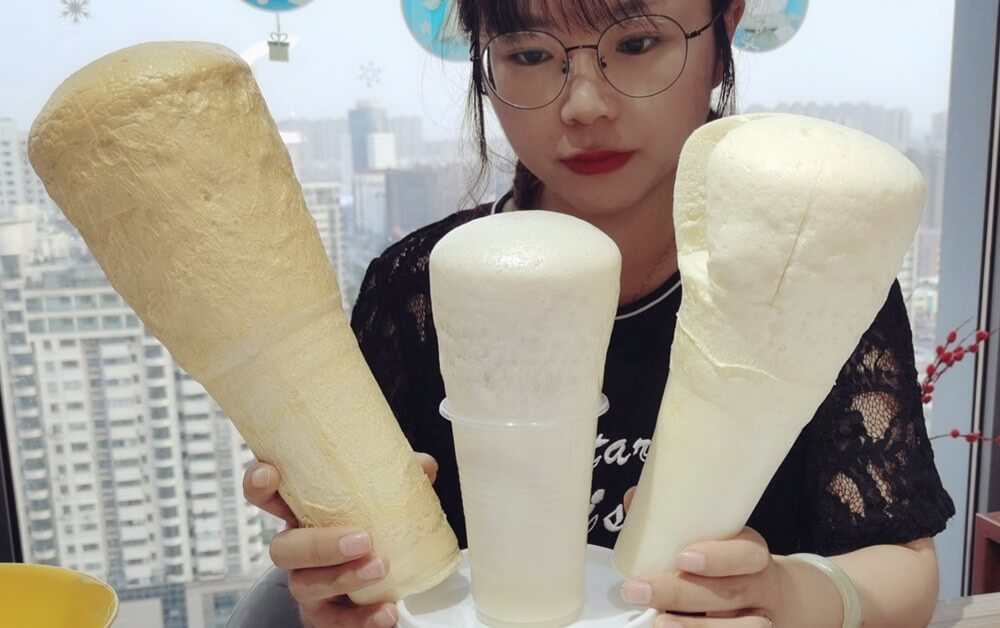
What to Do If Polyurethane Grouting Fails?
Even experienced contractors mess up sometimes. The key is figuring out why it failed and picking the right fix.
Secondary Injection Strategy
In many cases, complete system replacement is unnecessary.
Localized secondary injection can often solve the problem.
When Secondary Injection Works Best
Secondary injection is suitable when:
- Expansion was insufficient
- Water pathways remain active
- Injection coverage was incomplete
- Leakage has been reduced but not eliminated
Before reinjection, contractors should evaluate:
- Existing grout distribution
- Remaining leakage pathways
- Crack geometry
- Moisture conditions
This assessment helps maximize the success of the second application.
Polyurethane Plus Epoxy Injection Combination
For projects requiring both waterproofing and structural reinforcement. That’s where polyurethane and epoxy work together.
Procedure: Step 1 – polyurethane grout to stop active water leakage; Step 2 – allow waterproofing stabilization; Step 3 – epoxy resin to restore structural integrity.
This approach is frequently used for:
- Structural wall cracks
- Parking garages
- Bridges
- Water-retaining structures
- Industrial concrete facilities
The combination provides both waterproofing and strength restoration.
Redesigning the Grouting Plan
Severe leakage projects sometimes require a completely revised strategy.
Examples include:
- Large void networks
- Multiple leakage pathways
- High hydrostatic pressure
- Failed previous repairs
In these cases, success depends on:
- New drilling patterns
- Revised injection sequences
- Alternative grout chemistry
- Improved pressure control
Professional evaluation becomes critical.
How to Choose a Reliable Polyurethane Grout Supplier?
Product quality plays a major role in waterproofing success.
Unfortunately, the global market contains products with dramatically different performance levels.
Selecting a reliable supplier is therefore essential.
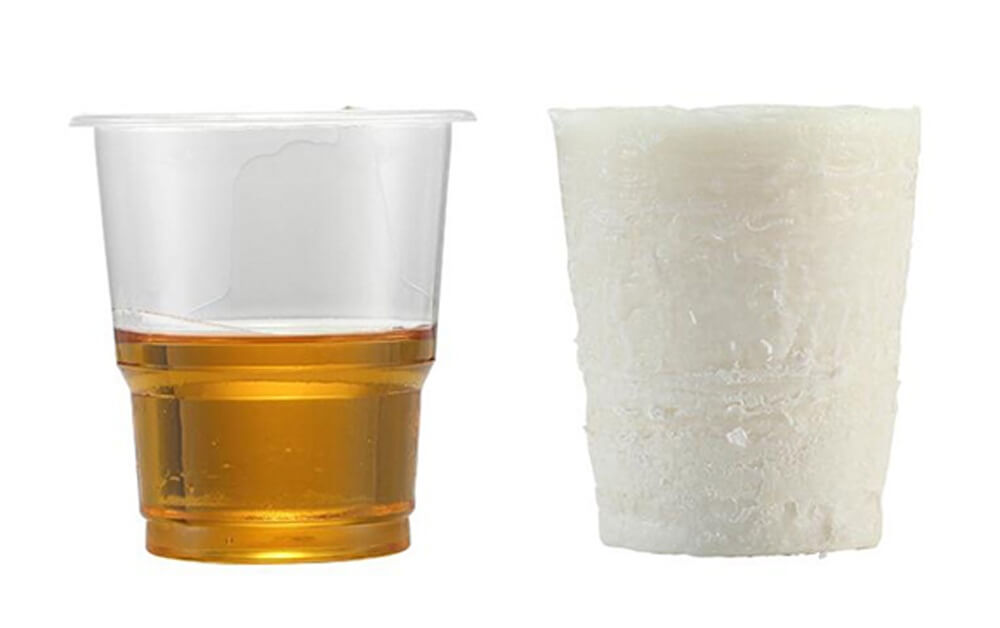
Check Real Expansion Ratio Data
Many suppliers advertise impressive expansion numbers.
However, buyers should always ask:
- Under what conditions were these tests conducted?
- Was the test performed with water?
- What temperature was used?
- Was the result measured in a laboratory or field environment?
Reliable suppliers provide realistic performance.
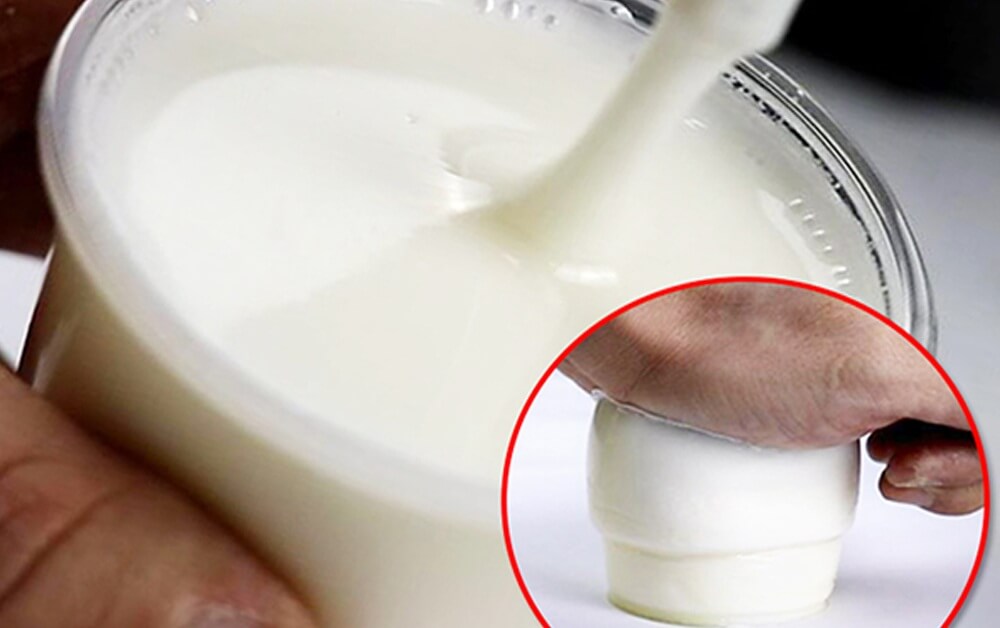
Evaluate Product Consistency
Consistency is often more important than peak performance.
Contractors need products that perform the same way every time.
Ask suppliers about:
- Batch quality control
- Manufacturing standards
- Raw material sourcing
- Shelf-life stability
- Technical documentation
Stable performance reduces project risk.
Look for Technical Support
A quality supplier does more than sell material.
Professional technical support should include:
- Product selection assistance
- Leak diagnosis support
- Injection recommendations
- Equipment guidance
- Troubleshooting assistance
Technical support often determines whether a project succeeds or fails.
Consider OEM and Customized Formulations
Large contractors and distributors may require specialized products.
Custom options may include:
- Expansion ratio adjustment
- Reaction speed modification
- Viscosity optimization
- Packaging customization
- Private labeling
Suppliers capable of customization typically have stronger technical expertise.
Why Contractors Choose YURU Polyurethane Grout?
For waterproofing professionals, selecting the right supplier is as important as selecting the right material.
YURU Waterproof has developed polyurethane grouting solutions specifically for waterproof crack repair applications.
Stable Expansion Performance
One of the most important requirements in injection grouting is consistency.
YURU polyurethane grout systems are designed to provide:
- Reliable expansion
- Predictable reaction behavior
- Stable waterproofing performance
- Reduced project uncertainty
This helps contractors improve success rates and reduce costly callbacks.
Hydrophilic and Hydrophobic Solutions Available
Different projects require different solutions. YURU has both:
- Hydrophilic — for long-term waterproofing, damp environments, flexible sealing.
- Hydrophobic — for active leaks, emergency repairs, high expansion.
This allows contractors to match material selection with project requirements.
Customizable Formulations for Different Projects
Not every project has the same conditions.
YURU supports customization options including:
- Expansion ratio
- Reaction time
- Viscosity
- Packaging
- OEM branding
These options help distributors and contractors serve diverse markets.
Professional Technical Support
YURU provides technical assistance for:
- Basement waterproofing
- Tunnel leak repair
- Subway waterproofing
- Elevator pit leakage
- Retaining wall seepage
- Underground structure rehabilitation
By combining product expertise with project support, contractors can achieve more predictable outcomes.
FAQs:
1. Why Is My Polyurethane Grout Not Foaming?
Most common causes: insufficient water, low temperature, moisture-contaminated material, incorrect pressure, wrong product selection — detailed site assessment usually required.
2. Can Failed Polyurethane Grouting Be Repaired?
Yes.
Options include:
- Secondary injection
- Additional polyurethane application
- Polyurethane and epoxy combination systems
- Revised injection strategies
Most failed projects can be improved when the root cause is properly identified.
3. Does Higher Expansion Always Mean Better Waterproofing?
Not necessarily.
While expansion is important, long-term waterproofing performance depends on:
- Adhesion
- Flexibility
- Durability
- Chemical resistance
- Proper application
The highest expansion ratio is not always the best solution.
Conclusion
Polyurethane grout expansion problems are among the most common challenges in waterproof crack repair.
However, the cause is rarely a single factor.
In most projects, expansion performance is influenced by a combination of:
- Water availability
- Temperature
- Material storage conditions
- Injection pressure
- Crack geometry
- Equipment selection
- Product chemistry
- Contractor experience
Understanding all of that helps you diagnose problems and get better results.
By selecting the right polyurethane grout, use proper injection techniques, and work with reliable suppliers. That’s how you cut down on failures.
Looking for professional polyurethane injection materials for waterproof crack repair? YURU Waterproof can help.
We provide:
- Hydrophilic Polyurethane Grout
- Hydrophobic Polyurethane Grout
- Waterproof Crack Injection Systems
- Tunnel Leakage Repair Solutions
- Basement Waterproofing Materials
- OEM & Private Label Services
- Technical Support for Contractors
Contact YURU Waterproof today to discuss your waterproofing challenges and receive professional technical recommendations.
YURU Product solutions