Chemical Grouting vs Cement Grouting: Which Should You Choose?
Introduction:
More underground structures are being built, while older tunnels, basements, utility corridors, mines, water-control structures, and concrete foundations are entering maintenance cycles. Grouting is no longer only an emergency repair method — it has become part of long-term underground structure management.
That is why the comparison between chemical grouting and cement grouting matters.
The practical question is not whether chemical grout is always better than cement grout, or whether cement grout is outdated — both methods are still used in civil engineering, tunneling, mining, foundation repair, underground waterproofing, and water-control projects. The real decision: which grout can reach the target area, react or set correctly, control water or fill voids, and remain stable under project conditions?
This guide compares chemical grouting vs cement grouting from a jobsite and procurement perspective. It explains when to use polyurethane grout, acrylate injection grout, epoxy injection resin, cementitious grout, or a combined grouting approach.
What Is Chemical Grouting?
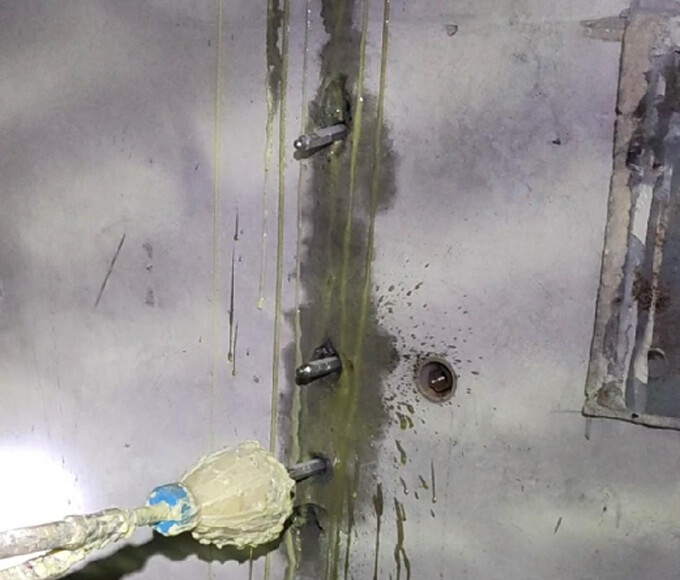
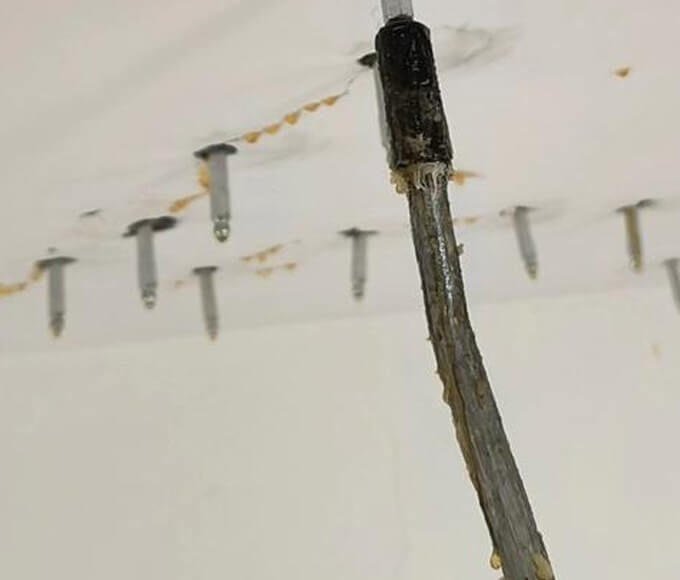
Chemical grouting is a method of injecting chemical grout into cracks, joints, soil pores, rock fissures, voids, or water paths. After injection, the material reacts, foams, gels, cures, or bonds to achieve a specific repair goal.
Common materials: Polyurethane grout, acrylate injection grout, epoxy injection, microcrystalline polyurea grout, and other specialized formulations.
Chemical grouting is used when project needs:
- Fast water sealing
- Low-viscosity penetration
- Fine crack injection
- Seepage control
- Curtain grouting
- Flexible waterproof sealing
- Structural crack bonding
- Localized repair in difficult leakage areas
However, chemical grouting is not one single material. The function depends on the product type.
Polyurethane grout is commonly used for active water leakage and wet cracks. Acrylate injection grout is often chosen for fine seepage paths and curtain grouting. Epoxy injection resin is used when the target is structural crack bonding, not fast water stopping.
This distinction is important. A contractor who simply asks for “chemical grout” may still end up with the wrong product if the leakage condition and repair objective are not clear.
What Is Cement Grouting?
Cement grouting uses cement-based slurry to fill voids, treat rock fissures, improve ground conditions, or support underground structures — may be ordinary cement slurry, ultrafine cement grout, cement-bentonite grout, stabilized cement slurry, or cementitious grout modified with additives.
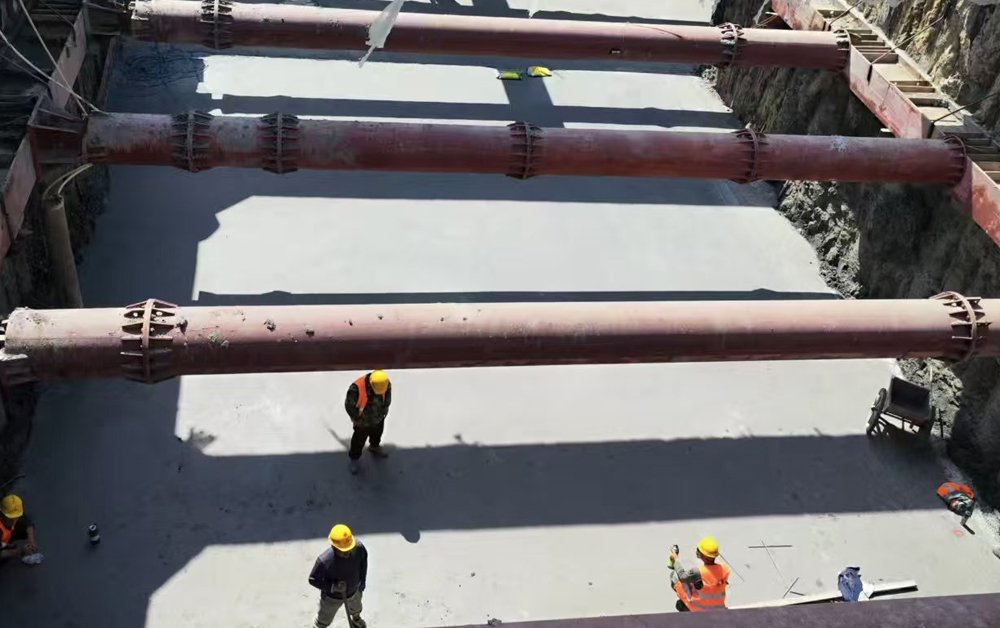
Cement grouting is widely used in foundation stabilization, dam foundation treatment, rock fissure grouting, tunnel backfill, mine void filling, soil improvement, and large-volume underground works.
Its main advantage is practicality for volume. Cementitious grout is usually more economical when the target area is large, the voids are open enough, and the project needs bulk filling or ground improvement.
But cement grouting has limits. Ordinary cement particles cannot easily enter very fine cracks or low-permeability seepage paths. Under active water flow, cement slurry can also face washout risk before it sets, unless the design and additives are suitable.
So cement grouting is not a weak method. It is simply designed for a different range of engineering conditions.
Chemical Grouting vs Cement Grouting: Key Differences
The difference between chemical grouting and cement grouting is not only the material name – it is also viscosity, particle size, setting mechanism, water-sealing speed, cost structure, penetration ability, and field control.
| Comparison Point | Chemical Grouting | Cement Grouting |
| Material type | PU, acrylate, epoxy, silicate, and other chemical grouts | Cement slurry, ultrafine cement, cement-bentonite, cementitious grout |
| Penetration | Can be low-viscosity for fine cracks and low-permeability paths | Ordinary cement is limited by particle size |
| Setting or reaction | Foaming, gelling, curing, polymerization, or bonding | Cement hydration and hardening |
| Water stopping | PU grout can react quickly for active leakage | Usually slower; may face washout in strong flow |
| Cost structure | Higher material cost in many cases | Lower unit material cost for volume work |
| Large void filling | Possible but often expensive | More economical and practical |
| Fine seepage control | Strong advantage | Limited unless ultrafine cement or suitable design is used |
| Structural repair | Epoxy resin can bond cracks | Cementitious grout can provide bulk support and strength |
| Site control | Reaction time, gel time, mixing ratio, safety handling | Water-cement ratio, stability, bleeding, pressure, setting time |
| Typical use | Active leaks, fine cracks, curtain grouting, crack injection | Rock fissures, foundation treatment, void filling, large-volume grouting |
| Combined use | Seals fine paths and active leaks | Fills large voids and stabilizes ground |
A simple way to think about it: cement grouting is often chosen when the target is large enough and volume matters. Chemical grouting is often chosen when the target is small, wet, active, or difficult to reach.
When Should You Choose Chemical Grouting?
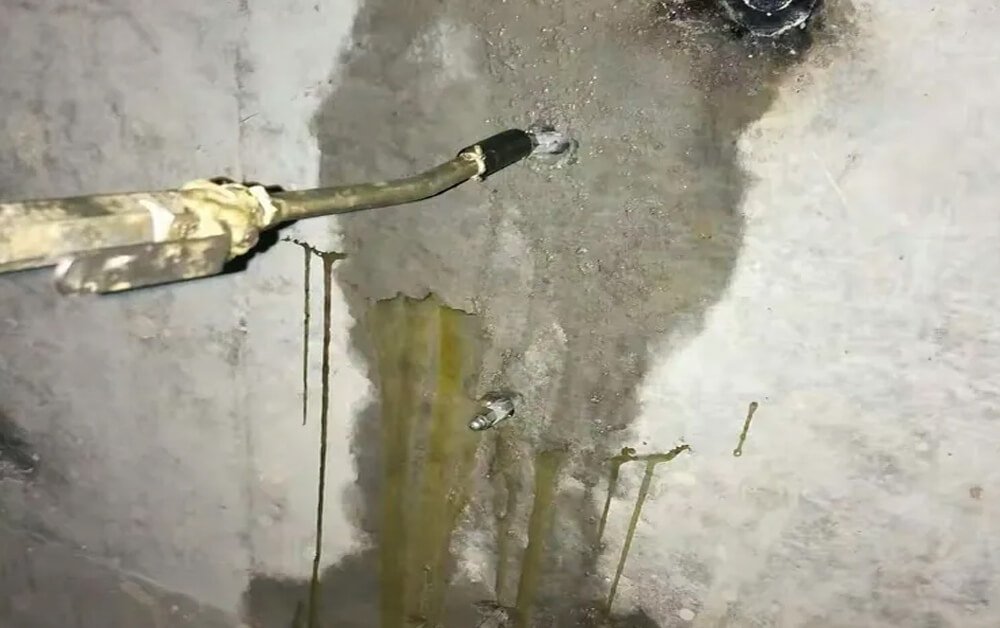
Chemical grouting is usually the better direction when the project requires penetration, fast reaction, water sealing, or special bonding performance.
Active Water Leakage and Fast Sealing
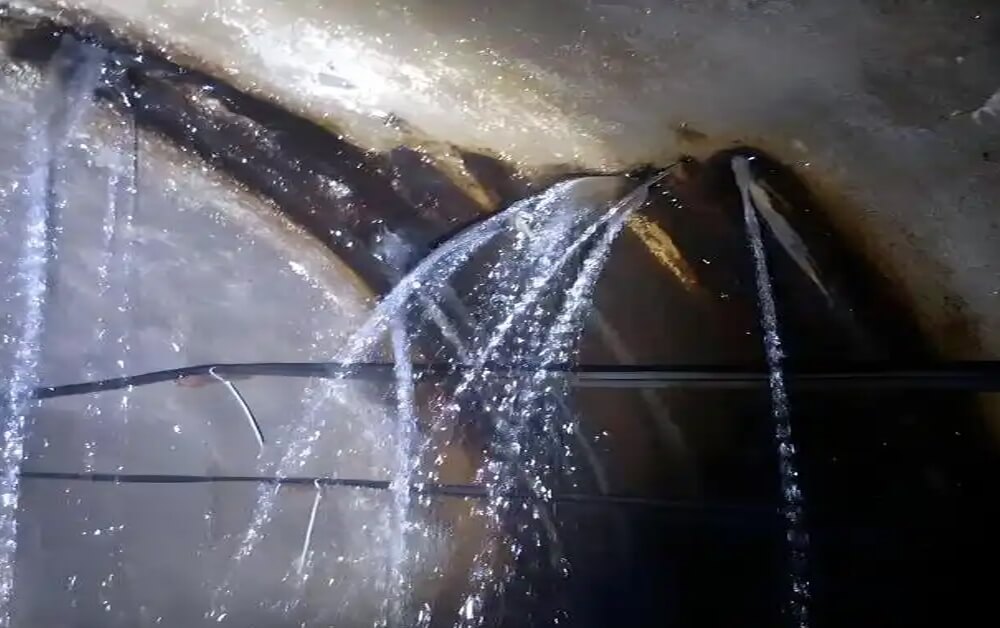
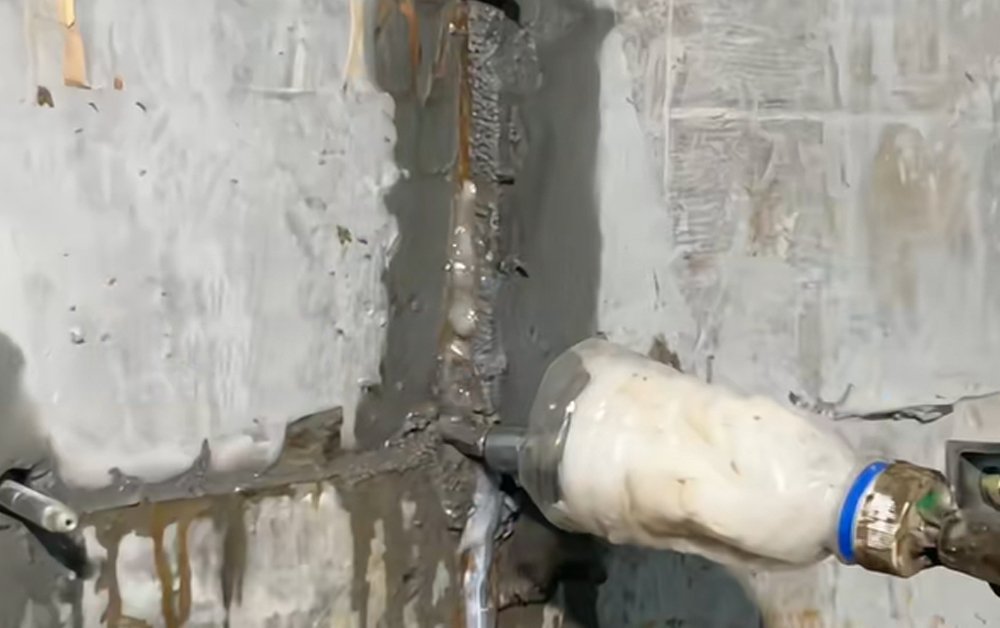
For active water leakage, polyurethane grout is often the first material to consider. It can react with water and expand or cure to block the leakage path.
Common applications include tunnel leakage, basement cracks, leaking construction joints, segment joint leakage, underground passages, and concrete structures with active seepage.
Cement grout may not be the best first choice in strong active leakage because the slurry may be diluted or washed away before it sets — water-reactive chemical grout gives better control.
Fine Cracks and Low-Permeability Paths
Fine cracks and low-permeability seepage paths are difficult for ordinary cement grout — particles may be too large, or slurry may not travel far enough.
Chemical grouts can often be formulated with lower viscosity. Acrylate injection grout, for example, is commonly used where penetration is more important than bulk filling. It can move through fine water paths and gel after a controlled time.
This is why chemical grouting is often used for detailed seepage control, curtain grouting, and behind-structure water paths.
Curtain Grouting and Seepage Control
Curtain grouting is not only about blocking a visible leak. It may aim to create a barrier behind a structure, reduce water movement, or control seepage over a wider area.
Acrylate grout or other low-viscosity chemical grouts may be useful when the seepage paths are small and distributed. In some cases, cement grouting can also be used for curtain work, especially when the ground or fissures allow cementitious slurry to enter.
The choice depends on permeability, water pressure, formation type, and the target barrier.
Structural Crack Bonding with Epoxy Resin
Epoxy injection resin is a chemical grouting material, but its job is different from PU grout or acrylate grout.
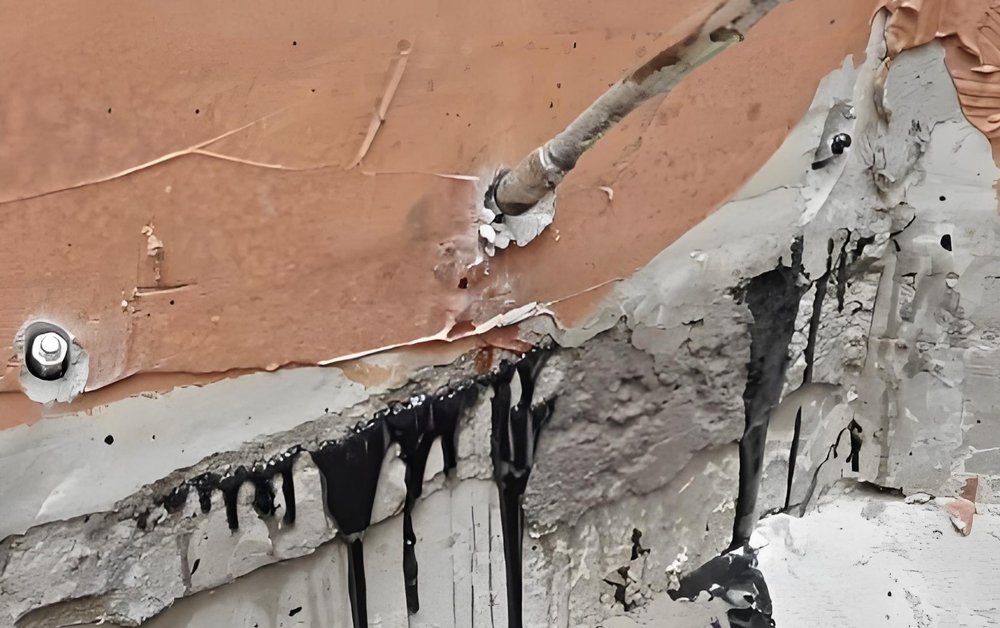
Epoxy resin is used for structural crack bonding. It is suitable for dry or controlled cracks where the repair target is strength restoration and concrete integrity.
It is usually not the first choice for active water leakage — stop water with PU first, then assess whether epoxy is needed for structural bonding later.
When Should You Choose Cement Grouting?
Cement grouting is a practical solution for large voids, rock fissures, ground improvement, and high-volume filling — it remains important in civil works because many underground problems are not fine cracks; they are large spaces, loose ground, or open fissures.
Large Voids and Rock Fissures
When the project involves larger fissures, open rock fractures, underground voids, tunnel backfill, or mine cavities, cement grouting is often more suitable.
It can fill volume more economically than chemical grout. It can also provide mass support after hardening.
This is why cementitious grout is still widely used in rock engineering, mining, dam works, foundation treatment, and tunnel-related grouting.
Foundation Stabilization and Ground Improvement
For foundation stabilization and ground improvement, cement grouting can help fill voids, improve soil or rock conditions, reduce permeability in larger paths, and increase support.
The design will depend on the ground type, required strength, injection pressure, grout take, and project target. Cement grout is often chosen when the repair is not only about stopping water but also about improving mass stability.
Cost-Sensitive Large-Volume Projects
Chemical grout can become expensive when the injection volume is large. Cement grout is usually more economical for large-volume applications.
This does not mean the cheapest material is always the best. It means the cost should be evaluated against the target. If the void is large and the grout must fill mass, cementitious grout is often the more practical choice.
When Ultrafine Cement Grout May Be Needed
Sometimes ordinary cement grout is too coarse, but the project still needs a cement-based system. In these cases, ultrafine cement grout may be considered.
Ultrafine cement improves penetration compared with ordinary cement. However, it is still different from chemical grout. It does not behave like PU, acrylate, or epoxy resin. The decision should still consider particle size, permeability, setting time, pumping conditions, and cost.
Application Scenarios: Which Grout Works Better?
In real projects, selection becomes clearer when it is tied to the application.
| Application Scenario | More Suitable Direction |
| Active tunnel crack leakage | Chemical grouting / PU grout |
| Large void behind tunnel lining | Cement grouting or combined grouting |
| Fine seepage path | Chemical grouting / acrylate grout |
| Rock fissure consolidation | Cement grouting |
| Segment joint leakage | Chemical grouting |
| Large-volume cavity filling | Cement grouting |
| Structural crack bonding | Epoxy injection resin |
| Foundation stabilization | Cement grouting or project-based grouting |
| Curtain seepage control | Chemical or cement grouting depending on permeability |
| High-pressure complex leakage | Combined grouting plan may be needed |
The more complex the underground condition, the less likely one material can solve everything.
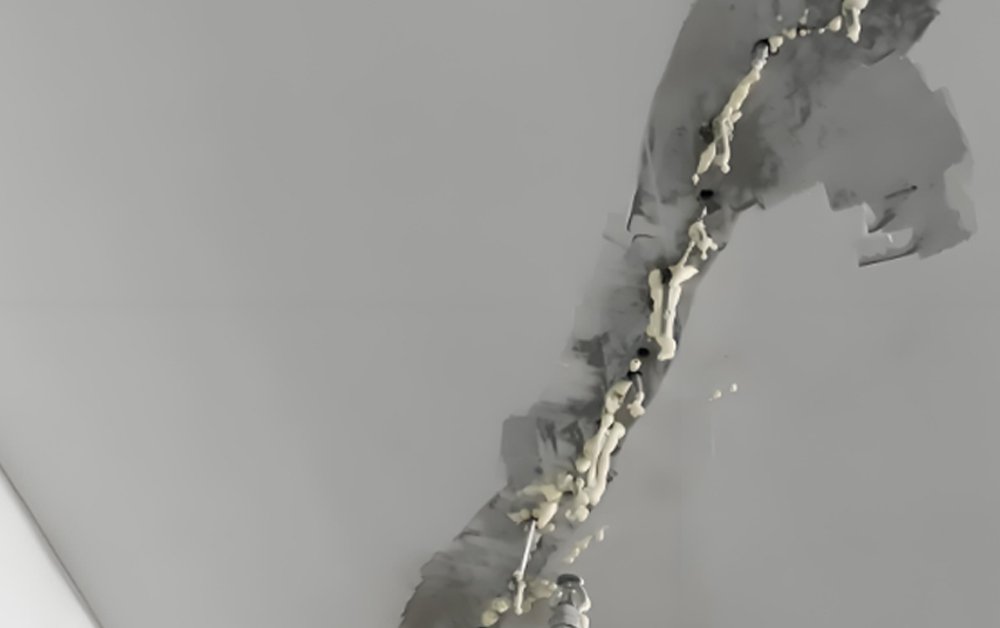
Can Chemical Grouting and Cement Grouting Be Used Together?
Yes. In complex underground engineering, chemical grouting and cement grouting are often complementary.
A project may need cement grout for large voids and ground improvement, PU grout for active water leakage, acrylate grout for fine seepage paths, and epoxy injection resin for structural crack bonding. The important point is not how many materials are used. The important point is whether each material is used in the correct location for the correct purpose.
Cement First, Chemical Grout Later
If the project has large voids, open fissures, or ground that needs bulk filling, cement grout may be used first. After the large spaces are treated, chemical grout can be used to seal fine seepage paths, joints, or localized leakage points.
This approach is common when volume and fine sealing are both required.
Chemical Grout First for Active Leakage
If active water is flowing, it may be necessary to stop the water first. Polyurethane grout can be used to block active leakage before further cement grouting or structural repair is carried out.
This sequence prevents slurry washout and gives the contractor a more stable repair environment.
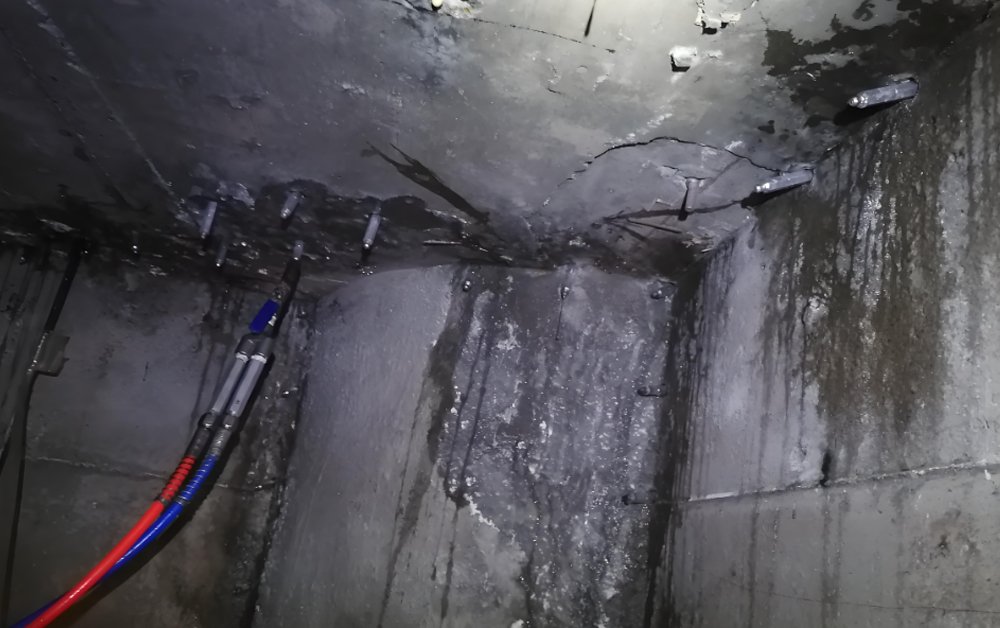
Case Example: Combined Grouting in an Underground Utility Corridor Project
In one underground utility corridor project in China, a combined grouting approach was used for leakage control and structural repair. The project did not rely on one material for all conditions. Instead, different materials were selected for different areas and repair objectives.
YURU Waterproof supplied polyurethane grout, customized epoxy injection resin, and cement grouting material for the project.
Polyurethane grout was used in areas that required water sealing or treatment of wet leakage. Customized epoxy injection resin was used in selected crack areas where stronger bonding and structural repair performance were needed. Cement grouting material was used where cementitious slurry was more suitable for void filling, bulk treatment, or reinforcement.
The project was completed smoothly, and the current condition remains stable without reported problems.
This case shows a practical point: chemical grouting and cement grouting can work together when the project has different leakage paths, crack conditions, and filling requirements. The success of a combined grouting system comes from correct matching, not from using more materials than necessary.
Project-Based Grouting Design Matters
A combined grouting plan should not be copied from one project to another. The design should consider pore size, water activity, groundwater pressure, injection pressure, material penetration, crack movement, structural target, budget, equipment, and available construction time.
For underground utility corridors, tunnels, basements, dams, mines, and water-control structures, this project-based thinking is often more reliable than choosing one material by habit.
Common Mistakes When Comparing Chemical and Cement Grouting
Most grouting mistakes start before the pump is turned on. They start with poor selection logic.
Choosing Only by Material Price
Cement grout is usually cheaper per unit, but it may not reach fine cracks or low-permeability seepage paths. Chemical grout is usually more expensive per unit, but it may reduce rework in detailed leakage repair.
The better comparison is total project cost, not material price alone.
Using Cement Grout for Fine Water Paths
Ordinary cement grout may not enter fine leakage channels because of particle size and slurry behavior — if target is a microcrack, thin seepage path, or joint leakage, low-viscosity chemical grout may perform better.
Using Chemical Grout for Large Voids Without Cost Control
Chemical grout can be effective, but it is not always economical for large voids. Filling a large cavity entirely with chemical grout may increase cost without improving the result.
For volume work, cement grouting or a combined system is often more practical.
Ignoring Water Pressure and Washout Risk
Active water can wash out or dilute unsuitable grout. This is especially important when comparing cement grout and PU grout.
If water is moving strongly, the repair team should consider whether a fast-reactive chemical grout is needed before cementitious work.
No Trial Injection or Parameter Confirmation
For complex projects, trial injection can save time and cost. It helps confirm whether the grout reaches the target zone, reacts or sets properly, and can be pumped under site conditions.
Large orders without parameter confirmation may create unnecessary risk.
How to Evaluate Grouting Materials Before Purchase?
A good purchase decision should match performance data with field needs.
For Chemical Grouting Materials
When evaluating chemical grouting materials, check:
- Viscosity
- Reaction time
- Gel time
- Expansion ratio
- Tensile strength
- Flexibility
- Water pressure resistance
- Wet-condition curing behavior
- Equipment compatibility
- Safety data and handling requirements
For PU grout, reaction time and expansion behavior are especially important for water stopping, for acrylate injection grout, gel time and penetration matter, for epoxy injection resin, bonding strength and crack condition are more important.
For Cement Grouting Materials
When evaluating cement grouting materials, check:
- Particle size
- Water-cement ratio
- Stability
- Bleeding
- Setting time
- Compressive strength
- Flowability
- Anti-washout performance
- Additive compatibility
- Pumpability
For cement grout, the key is whether it can be mixed, pumped, placed, and set under the project conditions.
Both Systems
For both chemical and cement grouting, confirm the project objective first. Then review the substrate or ground condition, crack or void size, water pressure, injection pressure, equipment compatibility, TDS, MSDS, site support, and whether sample testing or trial injection is needed.
Procurement teams should ask suppliers about the application boundary, not only the product price.
Why Choose YURU Waterproof for Chemical Grouting Materials?
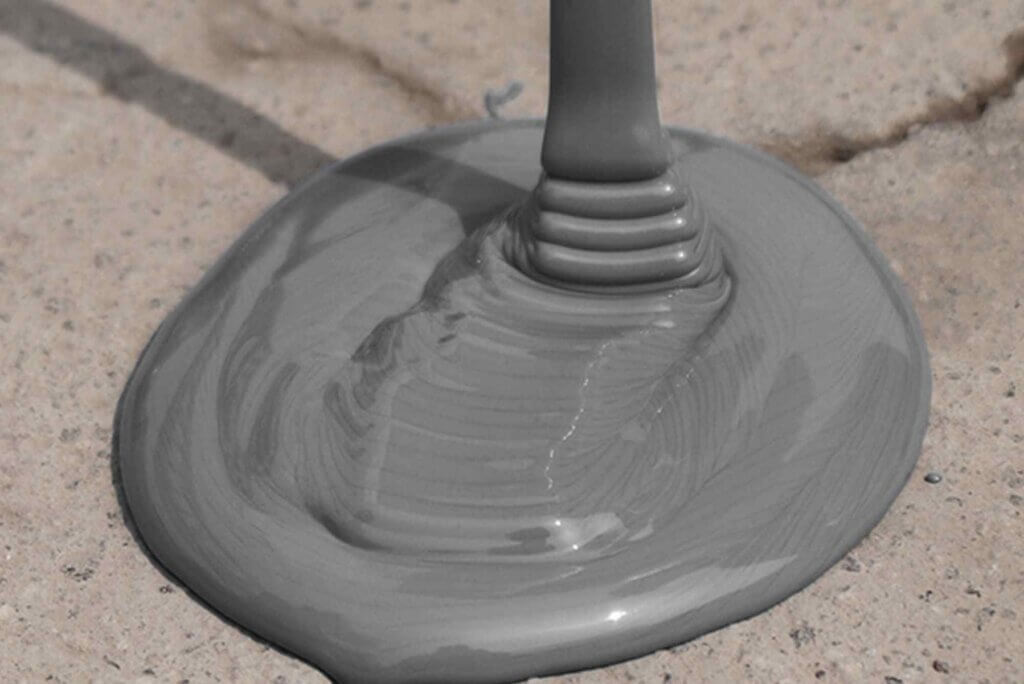
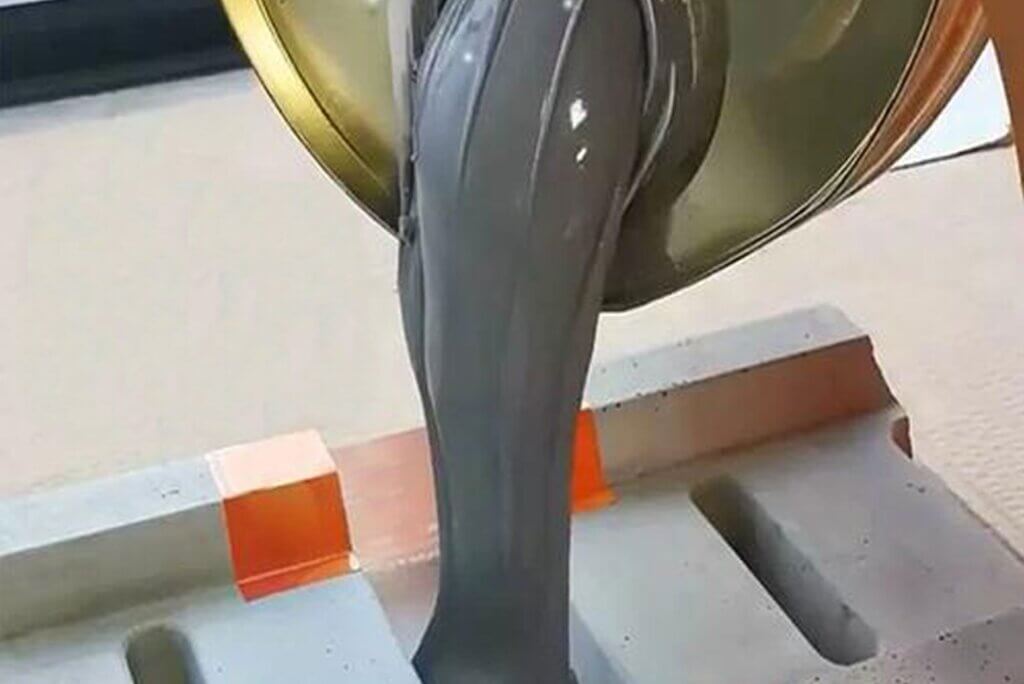
YURU Waterproof is a professional manufacturer of waterproof coatings, injection grouting materials, and floor coating systems. For chemical grouting applications, YURU Waterproof can provide polyurethane grout, acrylate injection grout, epoxy injection resin, customized epoxy injection resin, and project-based material support.
YURU Waterproof materials can be used in tunnel leakage repair, basement crack injection, utility corridor repair, concrete joint sealing, curtain grouting, underground waterproofing, water tanks, dams, mines, and other concrete structure leakage projects.
For contractors, distributors, procurement teams, importers, private-label brands, long-term partners — YURU support OEM/ODM, custom packaging, sample testing, technical docs, and application communication.
In underground utility corridor and infrastructure repair projects, YURU Waterproof has supported combined grouting approaches using polyurethane grout, customized epoxy injection resin, and cementitious grouting materials according to different leakage and repair conditions.
Final Checklist Before Choosing Chemical or Cement Grouting
Before selecting a grout, review these questions:
- Is the project goal water sealing, ground improvement, void filling, curtain grouting, or structural repair?
- Are the cracks or voids fine, medium, or large?
- Is there active water leakage?
- Is there groundwater pressure?
- Is fast reaction required?
- Is low-viscosity penetration required?
- Is large-volume filling required?
- Is the project sensitive to material cost?
- Do you need polyurethane grout?
- Do you need acrylate injection grout?
- Do you need epoxy injection resin?
- Do you need cementitious grout?
- Is customized epoxy injection resin required?
- Is a combined grouting approach needed?
- Have viscosity, particle size, reaction time, setting time, strength, and washout risk been reviewed?
- Are the grouting equipment and injection pressure suitable?
- Are TDS, MSDS, and technical support available?
- Is sample testing or trial injection needed?

FAQs:
1. What is the difference between chemical grouting and cement grouting?
Chemical grouting uses materials such as polyurethane grout, acrylate injection grout, epoxy injection resin, or silicate grout — often used for fine cracks, active leakage, low-permeability seepage paths, and detailed water control. Cement grouting uses cementitious slurry — often used for large voids, rock fissures, foundation stabilization, and large-volume filling.
2. Can chemical grouting and cement grouting be used together?
Yes. Many underground projects use both methods. Cement grout may be used for large voids or ground stabilization, while chemical grout may be used for fine seepage, active leakage, or structural crack repair.
3. Why does cement grouting fail in fine leakage paths?
Ordinary cement grout may not enter fine cracks or low-permeability paths because of particle size and slurry behavior. In these cases, low-viscosity chemical grout may be more effective.
4. What materials are used in chemical grouting?
Common materials include polyurethane grout, acrylate injection grout, epoxy injection resin, polyurea grout, and other specialized chemical grouts.
5. Does YURU Waterproof provide chemical grouting materials?
Yes. YURU Waterproof provides polyurethane grout, acrylate injection grout, epoxy injection resin, customized epoxy injection resin, and project-based chemical grouting material support, including sample testing, technical documents, OEM/ODM service, and packaging customization.
Conclusion:
Chemical grouting and cement grouting are not simple replacements for each other. They are different systems for different engineering goals.
Chemical grouting is better for fine cracks, active water leakage, low-permeability seepage paths, fast reaction, structural crack bonding, and detailed water control. Cement grouting is better for large voids, large fissures, rock treatment, foundation stabilization, and cost-sensitive volume work.
In complex underground projects, the best answer may be a combined grouting approach. Cement grout may handle large voids. PU grout may stop active water. Acrylate grout may control fine seepage. Epoxy injection resin may repair structural cracks.
The strongest grouting decision is not made by material name. It is made by project goal, water condition, void size, material reach, and long-term performance.
If you need grouting materials, YURU Waterproof can help review your leakage condition, crack size, groundwater pressure, construction window, repair target, and procurement needs.
Contact YURU Waterproof for polyurethane, acrylate, epoxy, customized epoxy, cementitious materials, sample testing, OEM/ODM, private-label packaging, project-based solutions for tunnel leaks, underground waterproofing, crack injection, curtain grouting, utility corridors, water sealing.
YURU Product solutions