Is Epoxy Colored Sand Floor Paint Better Than Traditional Epoxy Flooring?
Introduction:
Choosing the right epoxy flooring system is an important decision for commercial, residential, and industrial projects.
Many customers compare epoxy colored sand floor paint vs epoxy flooring because both systems can create durable and attractive floor surfaces.
However, they are not the same solution.
Traditional epoxy flooring usually uses multiple layers with separate materials, including epoxy resin layers and additional aggregate applications.
Epoxy colored sand floor paint employs a different approach, with colored sand pre-integrated into the coating system. This integration may simplify application and produce more consistent decorative finishes.
The better choice depends on your project.
Before selecting a flooring system, customers should consider:
- Floor usage condition
- Required appearance
- Construction method
- Labor requirements
- Long-term maintenance
For example:
- A warehouse floor may focus more on load resistance and durability.
- A shopping mall, showroom, hotel, or commercial space may require both performance and visual appeal.
This is why many project owners and contractors evaluate:
Epoxy colored sand flooring vs traditional epoxy flooring
instead of choosing a system only based on price.
This article explains the key differences between epoxy colored sand floor paint and traditional epoxy flooring, helping you select the right flooring solution for your project.
Epoxy Colored Sand Floor Paint vs Traditional Epoxy Flooring: Key Differences
Material Structure Comparison
The biggest difference between epoxy colored sand floor paint and traditional epoxy flooring is the material structure.
Traditional epoxy flooring usually follows a multi-layer construction method.
A common system includes:
- Primer layer
- Epoxy base coat
- Sand broadcasting layer
- Grinding process
- Epoxy top coat
The contractor applies each layer separately and controls the amount of aggregate during construction.
This system allows flexibility but requires more construction experience.
Epoxy colored sand floor paint uses a different structure.
The colored sand has already been mixed into the epoxy material before application.
The installer does not need to add separate colored sand during construction.
Colored sand floor system mainly includes:
- Surface preparation
- Primer application if required
- Epoxy colored sand floor paint application
- Leveling and finishing
- Curing
This design reduces additional sand handling during installation.
Comparison Table: Epoxy Colored Sand Floor Paint vs Epoxy Flooring
| Comparison Factor | Epoxy Colored Sand Floor Paint | Traditional Epoxy Flooring |
| Sand Integration | Colored sand is pre-mixed into the material | Sand is added separately during construction |
| Installation Process | Fewer application steps | Multiple construction stages |
| Appearance Control | More consistent color distribution | Depends on installer experience |
| Construction Complexity | Easier for general applications | Requires more process control |
| Decorative Effect | Natural colored sand texture | Depends on aggregate selection |
| Customization | Color customization available | Flexible layer design |
| Labor Requirement | Lower material handling requirement | More construction coordination |
| Typical Application | Commercial, decorative, residential floors | Industrial and customized epoxy systems |
Installation Method Difference
Traditional Epoxy Flooring Installation
Traditional epoxy flooring needs careful control.
Contractor needs to manage:
- Resin mixing
- Layer thickness
- Aggregate distribution
- Surface preparation
- Final coating quality
The separate sand application process gives contractors more control over the final texture.
However, it also creates more steps.
If the installer does not control the process properly, problems may appear, such as:
- Uneven surface texture
- Uneven color distribution
- Poor bonding between layers
For large projects, construction experience becomes an important factor.
Epoxy Colored Sand Floor Paint Installation
Epoxy colored sand floor paint simplifies the application process.
Because the colored sand is already mixed into the material, contractors do not need to separately broadcast and control the sand layer.
This provides several advantages:
- Easier application
- More stable appearance
- Reduced construction steps
- Lower installation complexity
For projects where consistent decorative flooring is important, this system can provide a practical solution.
Appearance and Design Comparison
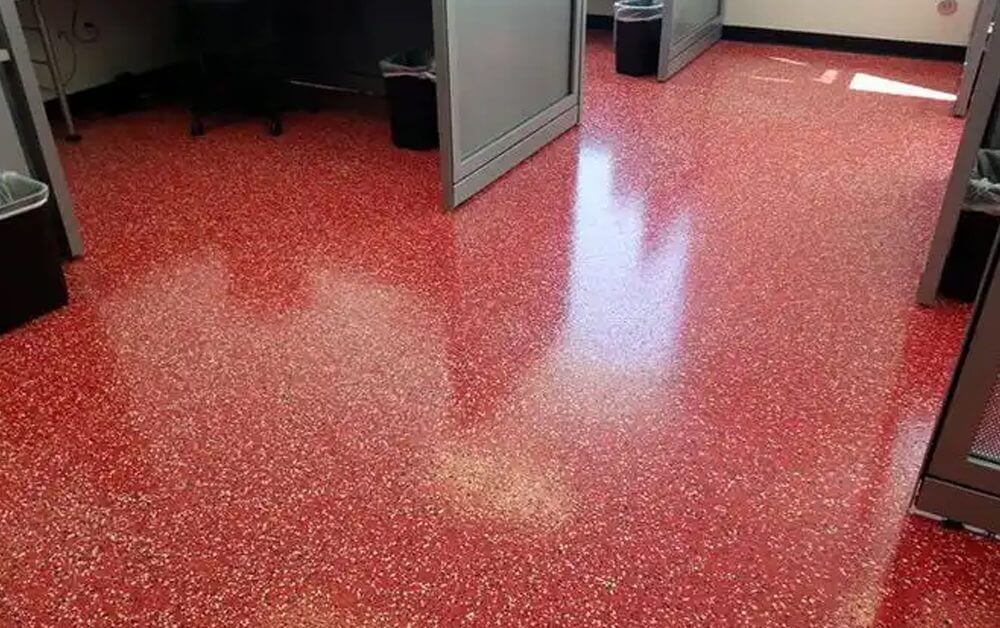
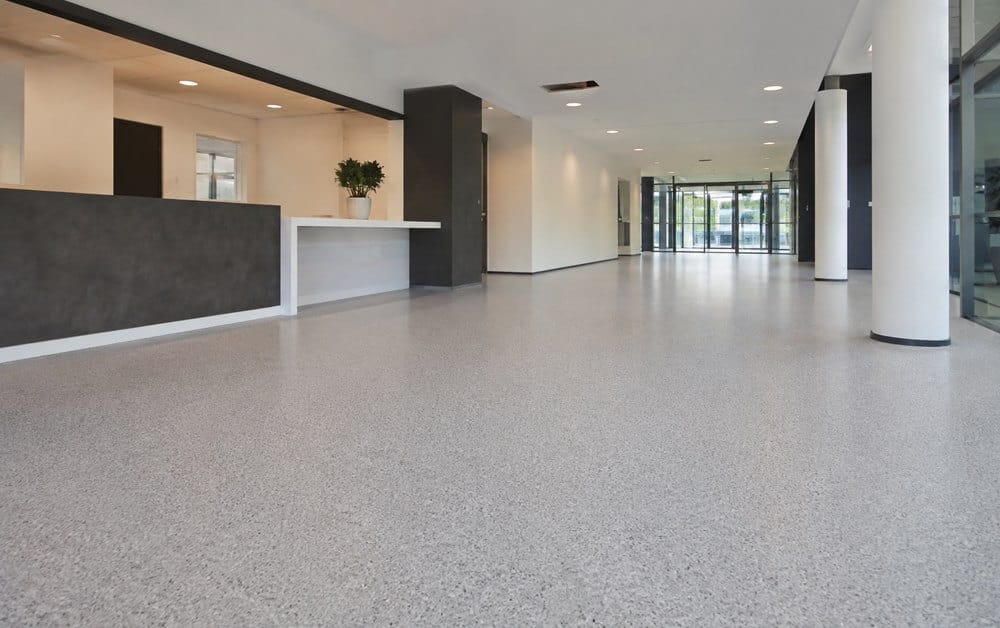
Epoxy Colored Sand Flooring Provides a Decorative Stone-Like Effect
One reason customers choose epoxy colored sand flooring is the visual appearance.
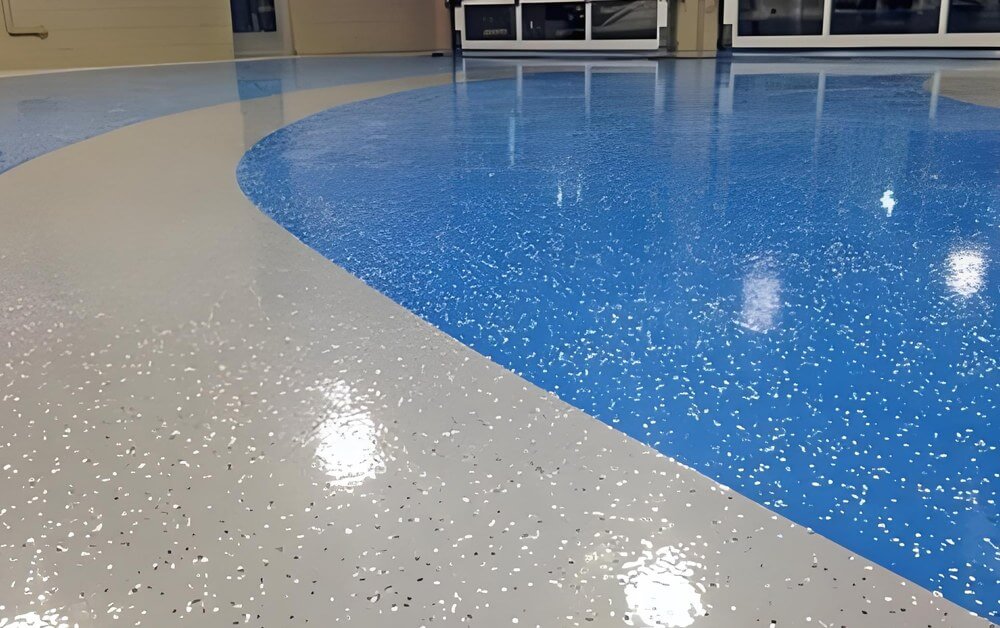
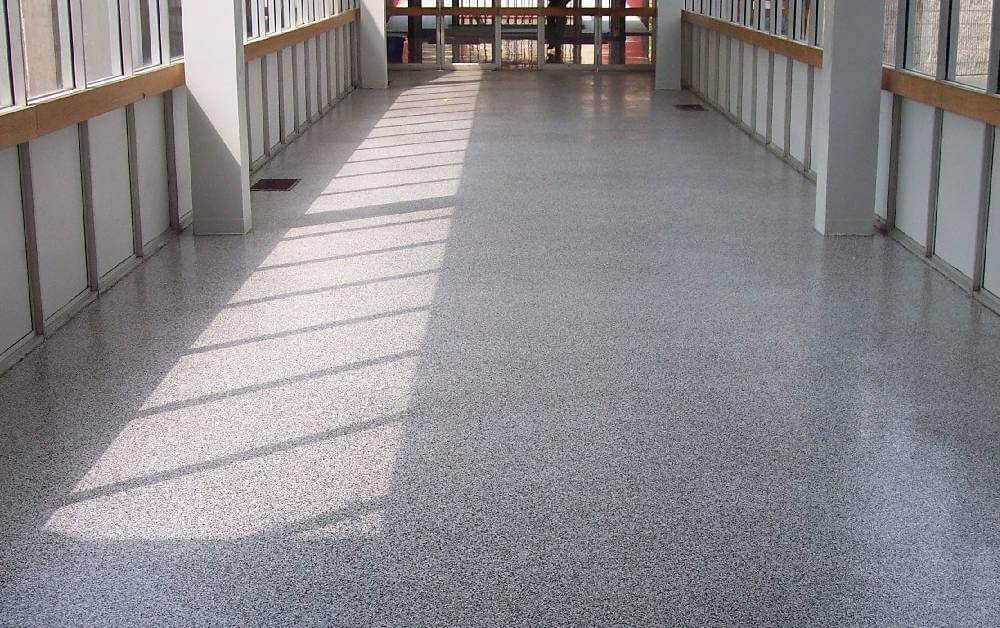
The integrated colored sand creates a textured finish that can resemble:
- Natural stone
- Decorative aggregate flooring
- Premium commercial flooring
This makes it suitable for:
- Retail stores
- Hotels
- Office buildings
- Exhibition areas
- Residential spaces
The final appearance depends on:
- Color selection
- Sand size
- Resin quality
- Installation quality
Traditional Epoxy Flooring Offers Flexible Layer Design
Traditional epoxy flooring provides more freedom in system design.
Contractors can adjust:
- Aggregate size
- Layer thickness
- Surface texture
This makes it suitable for projects with specific engineering requirements.
For example:
Industrial facilities may require a customized epoxy system based on:
- Equipment loads
- Chemical exposure
- Traffic conditions

Performance Comparison: Which Flooring System Performs Better?
There is no single answer to which flooring system performs better.
The correct choice depends on the project environment.
Both systems deliver durable flooring when appropriate materials are selected and installation protocols are followed.
Durability and Wear Resistance Comparison
Epoxy Colored Sand Floor Paint Performance
Epoxy colored sand floor paint provides:
- Good wear resistance
- Strong surface protection
- Decorative durability
It works well for areas with:
- Foot traffic
- Light commercial use
- General indoor applications
Typical applications include:
- Shops
- Restaurants
- Offices
- Residential garages
Traditional Epoxy Flooring Performance
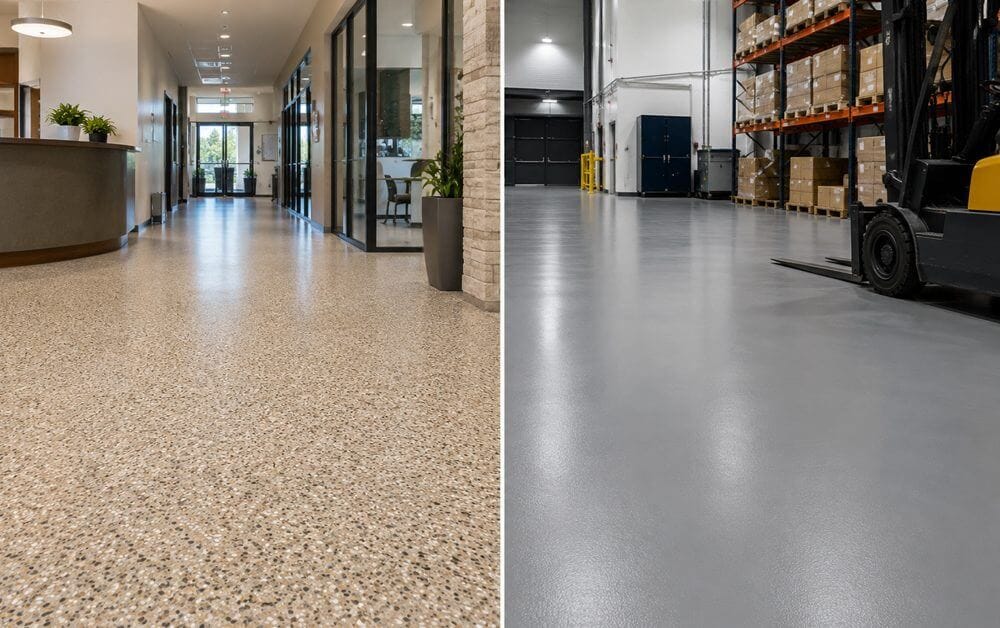
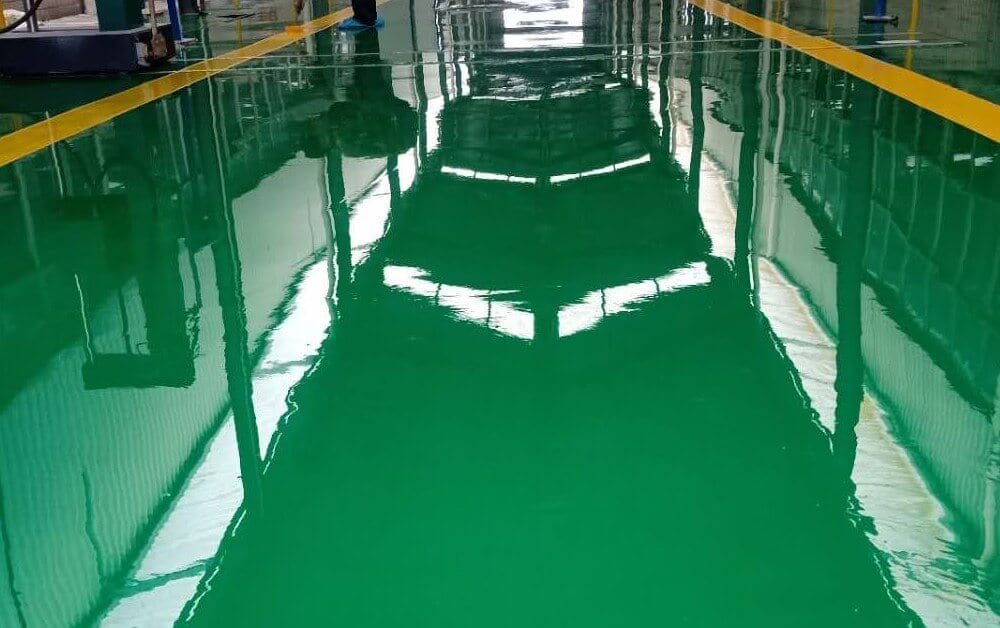
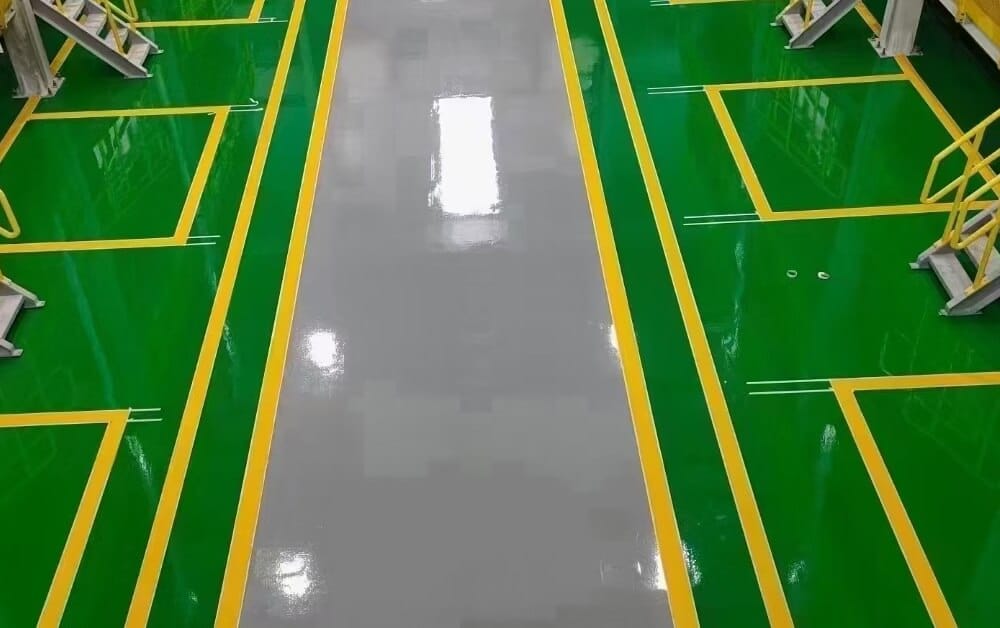
Traditional epoxy flooring can be designed for more demanding environments.
By adjusting:
- Resin system
- Layer thickness
- Aggregate selection
Contractors can create flooring systems for:
- Factories
- Warehouses
- Heavy-duty areas
Surface Appearance and Maintenance
Epoxy Colored Sand Flooring
The textured surface helps create a premium appearance.
It can hide minor surface marks better compared with smooth coatings.
Maintenance priorities:
- Routine cleaning
- Contaminant removal
- Surface protection
Traditional Epoxy Flooring
Traditional epoxy systems often create a smoother surface.
Advantages include:
- Easy cleaning
- Smooth appearance
- Suitable for hygienic environments
Industries such as:
- Food processing
- Pharmaceutical facilities
- Clean production areas
may prefer smooth epoxy flooring systems.
Commercial Project Selection: Which One Should You Choose?
The decision depends on the purpose of the floor.
Choose Epoxy Colored Sand Floor Paint When You Need:
- Decorative appearance
- Faster installation
- Consistent color effect
- Commercial visual appeal
Recommended applications:
- Shopping centers
- Hotels
- Retail spaces
- Offices
- Residential projects
Choose Traditional Epoxy Flooring When You Need:
- Customized performance
- Heavy-duty protection
- Specific industrial requirements
Recommended applications:
- Manufacturing plants
- Warehouses
- Workshops
- Heavy traffic areas
Simple Selection Guide
Project Requirement
↓
Decorative Appearance?
↓
Yes → Epoxy Colored Sand Floor Paint
No
↓
Heavy Industrial Performance?
↓
Yes → Traditional Epoxy Flooring System
↓
Evaluate Project Conditions
Key Decision Factors
Before purchasing, customers should evaluate:
Floor Usage
Ask:
- How much traffic will the floor receive?
- Will vehicles operate on the surface?
- Will chemicals contact the floor?
Appearance Requirement
Ask:
- Does the project require decorative flooring?
- Does color consistency matter?
- Does the customer prefer a stone-like appearance?
Construction Conditions
Ask:
- Who will install the flooring
- How much construction time is available?
- What equipment is available?
Which Flooring System Is Better for Commercial Projects?
Commercial flooring projects usually have higher requirements than residential floors.
A commercial floor must provide more than a good appearance.
It should also support:
- Daily traffic
- Easy maintenance
- Long service life
- Stable appearance
When comparing epoxy colored sand floor vs epoxy flooring, the better choice depends on the commercial environment.
Different spaces have different priorities.
Epoxy Colored Sand Flooring for Commercial Spaces
Retail Stores and Showrooms
Retail spaces need flooring that creates a strong visual impression.
Customers usually focus on:
- Color design
- Surface texture
- Clean appearance
- Maintenance convenience
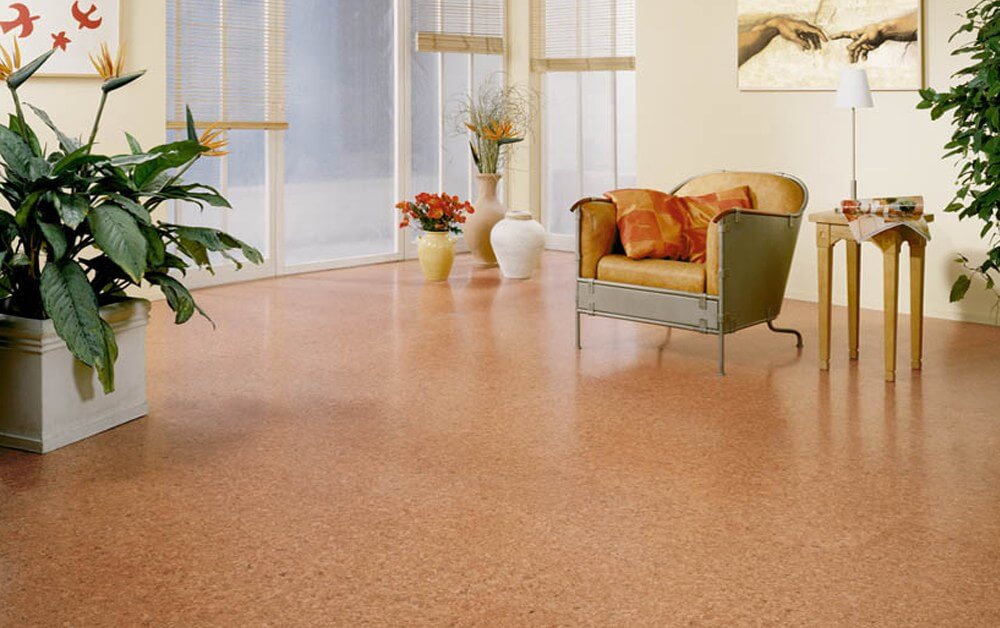
Epoxy colored sand flooring is often suitable for these applications because it creates a decorative surface with a natural stone-like appearance.
It can help commercial spaces achieve a premium look while maintaining good floor protection.
Hotels and Public Areas
Hotels, restaurants, and public buildings often require flooring systems that combine:
- Decorative design
- Durability
- Easy cleaning
Epoxy colored sand floor paint provides a balance between appearance and performance.
The integrated colored sand creates a consistent surface effect, which helps reduce visual differences caused by uneven aggregate application.
Office Buildings
Office flooring requires a professional appearance and comfortable environment.
Epoxy colored sand flooring can be considered for:
- Reception areas
- Meeting rooms
- Public corridors
- Common spaces
The final selection should consider:
- Foot traffic level
- Design requirements
- Maintenance expectations
Traditional Epoxy Flooring for Industrial Applications
Warehouses and Manufacturing Facilities
Industrial floors often face different challenges.
They may experience:
- Heavy equipment movement
- Forklift traffic
- Mechanical stress
- Chemical exposure
Traditional epoxy flooring systems allow contractors to customize the floor structure based on project requirements.
For example:
- Additional reinforcement layers
- Different aggregate selection
- Customized thickness design
Heavy-Duty Industrial Areas
For demanding industrial environments, the flooring system should focus on performance first.
The selection should consider:
- Load requirements
- Impact resistance
- Chemical exposure
- Repair requirements
In these applications, traditional epoxy flooring may provide more flexibility for system design.
Epoxy Colored Sand Floor Paint Purchasing Considerations
Choosing the right epoxy colored sand floor paint requires more than checking the product name.
Customers should evaluate the material, supplier capability, and application requirements.
Check the Product Formula
The quality of epoxy colored sand flooring depends on the complete formulation.
Important factors include:
- Epoxy resin quality
- Colored sand selection
- Mixing ratio
- Surface performance
A reliable supplier should provide clear product information.
Customers should understand:
- What materials are included
- How the system is applied
- What performance it can achieve
Confirm Whether the Colored Sand Is Pre-Mixed
This is an important difference in the market.
Some traditional systems require:
- Separate colored sand purchasing
- Manual mixing
- Additional broadcasting process
YURU epoxy colored sand floor paint uses a pre-mixed concept.
The colored sand is already integrated into the material system.
This can provide:
- Easier application
- More stable appearance
- Reduced construction steps
Evaluate Color Customization Ability
Commercial projects often have specific design requirements.
Customers may need:
- Different colors
- Brand-related colors
- Decorative effects
A professional epoxy colored sand flooring supplier should provide:
- Color samples
- Customized solutions
- Technical recommendations
Review Technical Data and Testing Information
Before placing a larger order, customers should check:
- Product specifications
- Performance reports
- Application instructions
Technical documents help customers understand whether the flooring system matches the project requirements.
Supplier Selection Checklist for Epoxy Colored Sand Flooring
Selecting a reliable supplier is as important as selecting the flooring material.
A good supplier helps reduce project risks.
Manufacturing Capability
Customers should check whether the supplier has real production ability.
Important points include:
- Factory production capacity
- Quality control process
- Raw material management
- Product consistency
A manufacturer with stable production can provide more reliable cooperation.
Product Development Ability
Different markets may require different flooring solutions.
A capable supplier should support:
- Product improvement
- Color adjustment
- Packaging customization
- Application suggestions
This is especially important for overseas customers serving different markets.
Technical Support Before Purchase
Flooring projects often require communication before ordering.
A professional supplier should understand:
- Project location
- Floor usage
- Customer expectations
- Application environment
Then the supplier can recommend a suitable solution.
OEM and Export Experience
For international cooperation, suppliers should understand export requirements.
Important abilities include:
- OEM packaging
- Product labeling
- Documentation support
- Stable shipment
A supplier with export experience can make cooperation smoother.
Ghana Customer Example: Choosing YURU Epoxy Colored Sand Floor Paint
Customer Background
A customer from Ghana contacted YURU for epoxy colored sand floor paint.
The customer had two requirements:
- Use the flooring system for personal residential application.
- Sell the product to other local customers.
Therefore, the customer needed a product with:
- Good appearance
- Reliable performance
- Market acceptance
Product Selection Process
During communication, YURU introduced two different epoxy colored sand flooring options.
The first option was a traditional system:
- Colored sand separated from epoxy material
- Similar to many products available in the market
The second option was:
Pre-mixed epoxy colored sand floor paint
The colored sand was already mixed into the material.
Why the Customer Selected the Pre-Mixed Solution?
After discussion, the customer preferred the pre-mixed epoxy colored sand floor paint.
The main reasons included:
- No additional colored sand mixing required
- Easier application
- More consistent appearance
- Better convenience for end users
During the communication process, YURU also provided:
- Color samples
- Product information
- Performance details
The customer selected the product after confirming the color and performance requirements.
Long-Term Cooperation Potential
The customer placed an initial order of one ton.
This cooperation was not only based on product supply.
It also included:
- Technical communication
- Product selection support
- Market requirement discussion
This reflects how YURU works with overseas partners.
YURU Waterproof focuses on helping customers choose suitable flooring solutions instead of only supplying materials.
YURU Epoxy Colored Sand Flooring Manufacturing Capability
The YURU Waterproof provides epoxy flooring solutions for different project requirements.
The product system includes:
- Epoxy colored sand floor paint
- Traditional epoxy flooring systems
- Customized epoxy flooring solutions
Pre-Mixed Epoxy Colored Sand Flooring Solution
One key feature of YURU epoxy colored sand flooring is the pre-mixed material design.
Unlike systems that require separate colored sand application, this solution integrates colored sand into the coating system.
Advantages include:
- Simplified construction process
- Stable decorative effect
- Reduced labor steps
This makes it suitable for many commercial and decorative flooring applications.
Color Customization and OEM Support
Different markets have different preferences.
YURU supports customers with:
- Color adjustment
- Packaging customization
- OEM solutions
This allows distributors and project partners to provide suitable products for their local markets.
Quality Control and Product Stability
A stable flooring product requires consistent manufacturing.
YURU focuses on:
- Raw material control
- Production management
- Product testing
This helps customers receive consistent products for different projects.
Why Choose YURU as Epoxy Colored Sand Flooring Supplier?
Professional Flooring Material Manufacturer
YURU Waterproof focuses on manufacturing:
- Waterproof coatings
- Injection grouting materials
- Epoxy flooring systems
The company provides direct manufacturing support for overseas customers.
Engineering-Based Product Recommendation
YURU understands that different projects require different flooring solutions.
The recommendation process considers:
- Project application
- Surface requirements
- Appearance expectations
- Construction conditions
Custom Solutions for Different Markets
YURU supports cooperation with:
- Contractors
- Distributors
- Project partners
Through:
- OEM service
- Product customization
- Technical communication
Stable Supply and Long-Term Cooperation
A successful supplier relationship requires consistency.
YURU supports customers through:
- Stable production
- Reliable quality
- Continuous communication
FAQs:
The main difference is the material structure and installation method.
Epoxy colored sand floor paint contains pre-mixed colored sand, while traditional epoxy flooring usually adds aggregate separately during construction.
It depends on the project.
Epoxy colored sand flooring is suitable for decorative commercial projects.
Traditional epoxy flooring is suitable for projects requiring customized performance.
YURU pre-mixed epoxy colored sand floor paint does not require additional colored sand addition during application.
The colored sand is already integrated into the material.
Common applications include:
- Retail stores
- Hotels
- Offices
- Commercial buildings
- Residential projects
Check:
- Factory capability
- Product quality
- Technical support
- Customization ability
- Export experience
Conclusion:
When comparing epoxy colored sand floor vs epoxy flooring, there is no single answer for every project.
Traditional epoxy flooring provides flexibility for customized industrial applications.
Epoxy colored sand floor paint provides a convenient solution for projects that need decorative appearance, consistent texture, and simpler application.
The right choice depends on:
- Project environment
- Floor usage
- Design requirements
- Construction conditions
A professional epoxy colored sand flooring supplier can help customers choose the right system and avoid unnecessary problems.
YURU provides epoxy colored sand flooring solutions with manufacturing capability, customization support, and technical communication.
Contact YURU Waterproof to discuss your epoxy flooring project and find a suitable flooring solution.
YURU Product solutions