Best Epoxy Flooring Solutions for Food Processing and Cold Storage
Introduction:
In food processing plants and cold storage warehouses, the selection of floor coatings requires careful consideration, taking into account hygiene control, operational safety, and long-term asset protection. With traditional industrial flooring systems, problems such as cracking, delamination, chemical corrosion, and thermal shock damage are commonplace.
For this reason, epoxy resin flooring solutions remain one of the most widely adopted systems in food processing and cold storage facilities worldwide.
However, not all epoxy resin floors are created equal.
This guide will explain how to choose the best epoxy resin flooring solution for food factories and cold storage environments, based on performance data, real-world operating conditions, and manufacturing expertise from YURU Waterproof, a professional epoxy resin flooring manufacturer.
1. Why Food Processing Plants and Cold Storage Facilities Have Stricter Flooring Requirements?
1.1 Hygiene and Regulatory Compliance
Food production environments are governed by strict international standards, including:
- HACCP
- FDA regulations
- EU food safety directives
- Local sanitation and health inspection codes
Flooring systems must be:
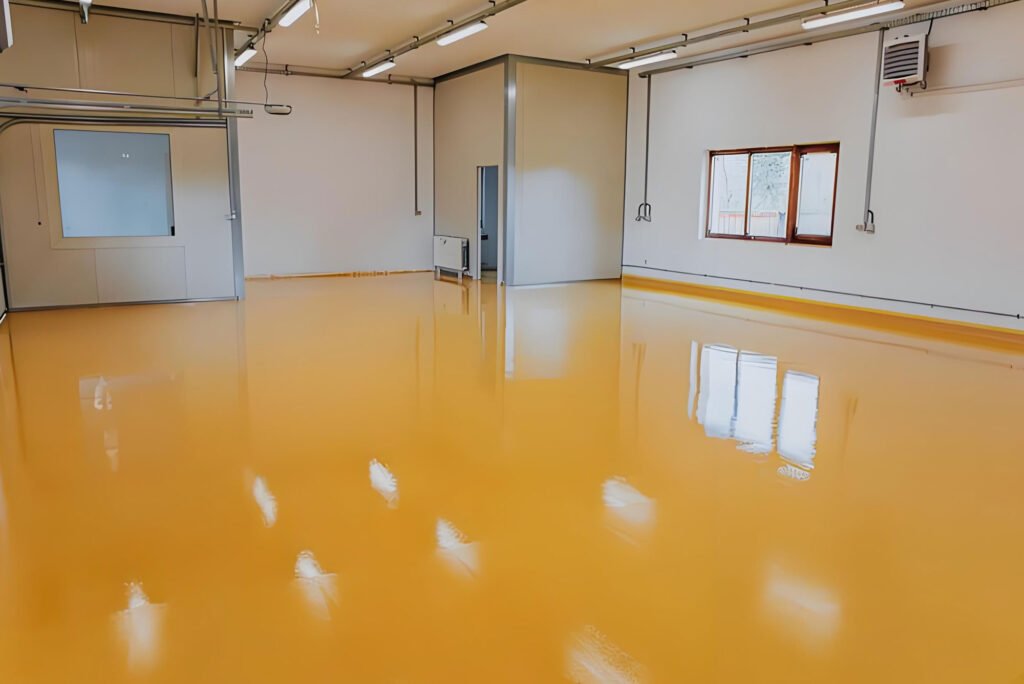
- Seamless and non-porous
- Resistant to bacterial growth
- Easy to clean and sanitize repeatedly
Even microscopic cracks or pinholes can become breeding grounds for bacteria.
1.2 Continuous Moisture and Chemical Exposure
Unlike standard warehouses, food facilities face:
- Daily high-pressure washdowns.
- Exposure to alkaline cleaners, acids, oils, fats, sugars, and salts.
- Standing water in processing zones.
Floor coatings must maintain adhesion and integrity under constant wet conditions.
1.3 Mechanical Stress from Operations
Typical loads include:
- Forklifts and pallet trucks
- Heavy processing equipment
- Repetitive point loads
A weak flooring system will wear prematurely, creating dust, cracks, and safety hazards.
2. Low-Temperature Resistance and Thermal Shock: The First Rule of Cold Storage Flooring
2.1 The Hidden Enemy: Thermal Cycling
Cold storage floors experience:
- Temperatures from -20°C to -40°C.
- Frequent door openings.
- Rapid transitions between freezing and ambient temperatures.
These cycles create internal stress between concrete substrates and floor coatings.
2.2 Why Standard Epoxy Fails in Cold Rooms:
Conventional epoxy resins can become:
- Brittle at low temperatures
- Prone to cracking
- Susceptible to debonding
Once adhesion is compromised, moisture penetration accelerates failure.
2.3 Cold-Resistant Epoxy Formulations
Professional epoxy flooring for cold storage requires:
- Modified resin systems with improved flexibility.
- Low-temperature curing capability.
- High bond strength to damp or cold substrates.
At YURU, epoxy formulations for cold environments are tested for thermal shock resistance and low-temperature flexibility, not just room-temperature performance.
3. Five Key Performance Requirements for Epoxy Flooring in Food and Cold Chain Facilities
3.1 Chemical Resistance
Flooring must withstand:
- Caustic detergents
- Chlorine-based disinfectants
- Organic acids from food processing
Epoxy systems with insufficient chemical resistance will discolor, soften, or lose adhesion.
3.2 Slip Resistance Under Wet Conditions
Food plants are inherently wet environments.
Slip resistance must be engineered into the system through:
- Aggregate selection
- Surface texture control
- Anti-slip additives
The goal is safety without compromising cleanability.
3.3 Impermeability and Liquid Resistance
Liquids must not penetrate the floor.
A properly designed epoxy system forms a dense, impermeable barrier that:
- Prevents bacterial ingress
- Protects the concrete substrate
- Simplifies sanitation procedures
3.4 Mechanical Strength and Impact Resistance
Forklift traffic and dropped tools are unavoidable.
Epoxy flooring must resist:
- Abrasion
- Impact damage
- Point loading
High-build or mortar-based epoxy systems are often preferred in heavy-duty zones.
3.5 Seamless, Joint-Minimized Construction
Minimizing joints reduces contamination risk.
Epoxy flooring systems allow for:
- Continuous, joint-free surfaces
- Cove detailing at wall-floor junctions
- Hygienic drainage integration
4. Comparing Epoxy Flooring Systems for Food Processing and Cold Storage
4.1 Water-Based Epoxy Flooring
Advantages:
- Low VOC emissions
- Odor-free application
- Suitable for food-sensitive environments
Limitations:
- Lower chemical resistance
- Limited thickness
Best Use:
- Light-duty food areas, packaging rooms, dry processing zones.
4.2 Solvent-Based Epoxy Flooring
Advantages:
- Strong adhesion
- Higher chemical resistance
Limitations:
- VOC emissions
- Requires ventilation
Best Use:
- Mechanical rooms, non-production zones.
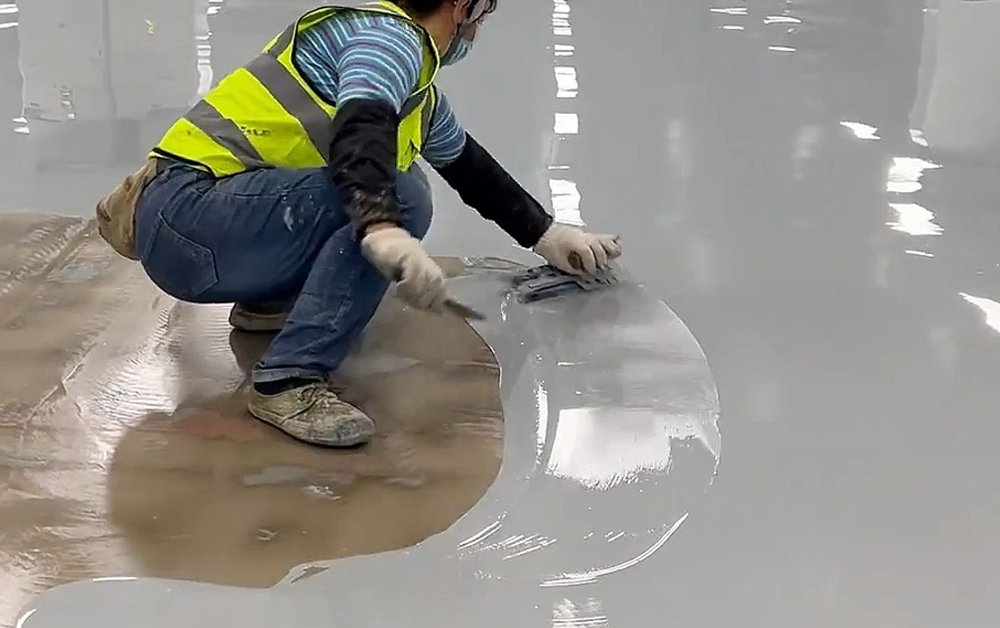
4.3 Epoxy Self-Leveling Systems
Advantages:
- Smooth, seamless finish
- Easy to clean
- High aesthetic value
Limitations:
- Lower impact resistance
Best Use:
- Processing rooms, food preparation areas.
4.4 Heavy-Duty Epoxy Mortar Flooring
Advantages:
- Exceptional mechanical strength
- Excellent thermal shock resistance
- Long service life
Limitations:
- Higher material and labor cost
Best Use:
- Cold storage floors, heavy processing zones, loading areas.


5. Installation, Downtime, and Risk Control in Food Facilities
5.1 Minimizing Production Downtime
Food plants cannot afford extended shutdowns.
Professional epoxy systems should offer:
- Predictable curing schedules
- Fast return-to-service options
- Phased installation plans
5.2 Moisture Management During Installation
Concrete substrates in food facilities are rarely dry.
Epoxy systems must tolerate:
- Residual moisture
- Cold substrates
- Condensation risks
Moisture-tolerant primers are essential.
5.3 Avoiding Common Installation Failures
Most flooring failures result from:
- Inadequate surface preparation
- Incorrect system selection
- Poor contractor training
A reliable manufacturer provides technical support beyond material supply.
6. How to Evaluate a Professional Epoxy Flooring Manufacturer?
6.1 Manufacturing Capability
Key indicators include:
- In-house resin formulation
- Automated mixing and quality control
- Batch traceability
6.2 Technical Documentation and Testing
A professional supplier provides:
- Complete technical data sheets
- Chemical resistance charts
- Cold-temperature performance data
6.3 Project Support and Customization
Food facilities are not identical.
The right manufacturer offers:
- Customized system recommendations
- On-site or remote technical guidance
- Sample testing for approval
7. YURU Epoxy Flooring Solutions for Food Processing and Cold Storage
YURU Waterproof has developed a complete range of epoxy flooring systems specifically for food and cold chain applications.
7.1 System-Based Approach
Rather than selling isolated products, YURU provides:
- Primer + body coat + topcoat systems
- Zone-specific formulations
- Compatibility across substrates
7.2 Global Project Experience
YURU epoxy flooring systems have been applied in:
- Food processing plants
- Cold storage warehouses
- Industrial facilities
7.3 Engineering Support
Clients benefit from:
- Material selection guidance
- Application recommendations
- Long-term performance planning
YURU focuses on durability, compliance, and lifecycle value, not short-term cost reduction.
FAQs
1. Is epoxy flooring safe for food processing areas?
Yes. When properly formulated and installed, epoxy flooring is seamless, non-toxic after curing, and compliant with food safety standards.
2. Can epoxy flooring handle freezer temperatures?
Standard epoxy may fail. Cold-resistant epoxy systems designed for low temperatures are required.
3. How long does epoxy flooring last in food facilities?
With proper design and maintenance, high-quality systems can last 10–20 years.
4. Is epoxy flooring slip-resistant when wet?
Yes, when anti-slip textures are engineered into the system.
Conclusion:
Choosing the right epoxy flooring system is a technical decision that requires understanding materials, environments, and long-term performance.
Looking for a reliable epoxy flooring solution for your food processing plant or cold storage facility?
Contact YURU Waterproof today to receive professional system recommendations, technical documentation, and sample support tailored to your project requirements.
YURU Product solutions