Best Injection Grout for Tunnel Leakage Repair
Introduction:
Tunnel leakage repair is rarely solved by choosing one “strong” material and injecting it into every wet crack. In real tunnel projects, the best injection grout depends on where the water comes from, how active the leakage is, how wide the crack or joint is, whether the structure is moving, and what the repair is expected to achieve.
For an active leak in a tunnel lining, polyurethane grout may be the first material to consider, for fine seepage behind the lining, acrylate injection grout may be more suitable. For a dry structural crack that needs strength recovery, epoxy injection resin has a very different role. In some projects, a single material is not enough. The repair team may need staged chemical grouting, site testing, or a customized PU grout formulation.
This guide explains how to choose injection grout for tunnel leakage repair from a practical engineering and procurement perspective. It covers polyurethane grout, acrylate injection grout, epoxy injection resin, chemical grouting selection logic, common failure causes, and key purchase parameters.
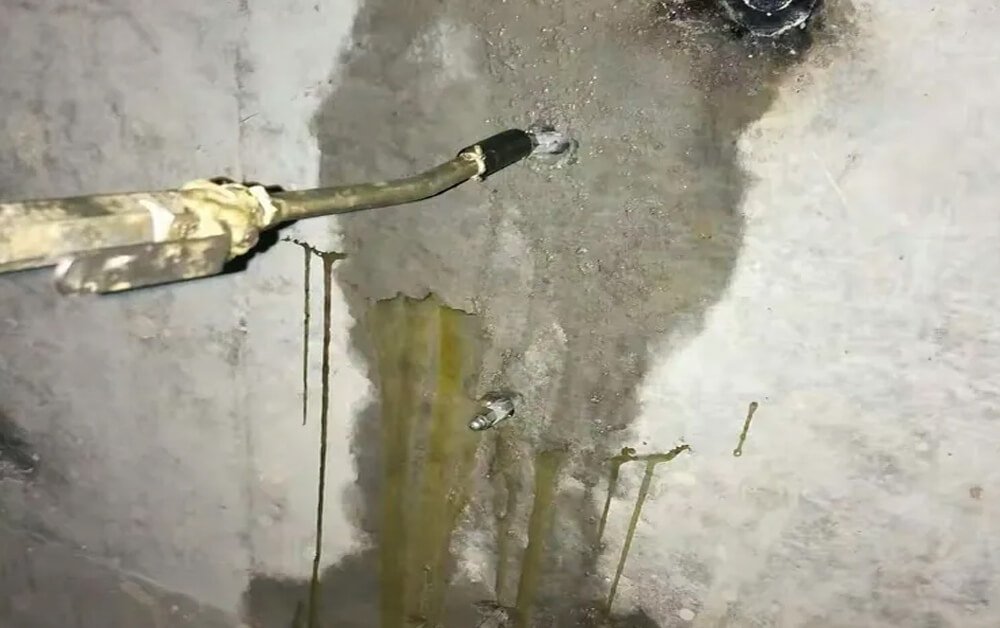
What Is Injection Grout for Tunnel Leakage Repair?
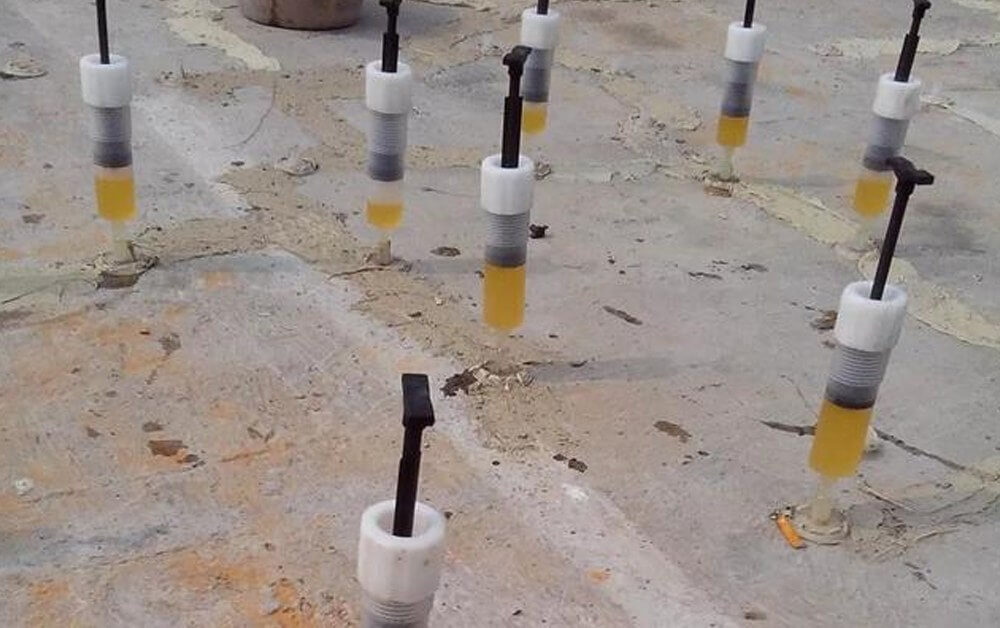
Injection grout is a repair material injected into cracks, joints, voids, water paths, or surrounding ground through packers and grouting equipment. In tunnel leakage repair, the grout is usually used to stop active water, seal seepage channels, fill voids, form a waterproof barrier, or restore crack integrity.
The most common chemical grouting materials used in tunnel repair include polyurethane grout, acrylate injection grout, and epoxy injection resin. Each material has a different job.
Polyurethane grout is commonly used where water is active. It reacts with water and can expand, foam, or cure into a flexible sealing body. Acrylate injection grout is usually selected when low viscosity, penetration, and adjustable gel time are needed. Epoxy injection resin is used when the main target is bonding and structural crack repair, not fast water stopping.
A good tunnel grouting plan starts with investigation. Before choosing a product, the contractor should understand the water activity, leakage path, crack width, water pressure, repair objective, and available construction window.
Why Tunnel Leakage Repair Needs the Right Chemical Grouting Material?
Tunnel leakage is not only a surface problem. Water may travel through cracks, construction joints, segment joints, cold joints, annular gaps, back-of-lining voids, or ground water paths before it appears on the tunnel surface.
This is why the visible leak is not always the real source. A crack that drips today may become a stronger leak after rain, groundwater rise, or vibration. A joint that looks wet may be connected to a larger water path behind the lining.
Using the wrong grout can create short-term improvement but poor long-term performance. For example, a rigid epoxy resin is not a practical first choice for a crack with active water flow. Fast foaming PU stops water fast but may not restore structure. Low-viscosity acrylate penetrates fine seepage well but needs careful gel time control and experienced application.
Tunnel Leakage Is Usually a System Problem
Leaks involve structure, groundwater, joints, cracks, drainage, construction history. Sealing only the visible wet point misses the real water path.
This is especially important in subway, railway, road, utility tunnels — limited repair windows, long service expectations. A failed repair does not only waste material; it can also create traffic interruption, repeated maintenance, and safety concerns.
Material Selection Affects Both Sealing Speed and Durability
Different injection grouts behave differently under water pressure, wet conditions, and movement.
A fast-reactive polyurethane grout can help stop active leakage quickly. A low-viscosity acrylate injection grout can travel into fine water paths. Epoxy injection resin can bond structural cracks when conditions are dry or controlled.
The selection should not be based only on product name. It should be based on reaction time, viscosity, expansion ratio, gel time, tensile strength, flexibility, water pressure resistance, and compatibility with site equipment.
Growing Tunnel Infrastructure Increases Maintenance Pressure
As more cities invest in underground transportation, road tunnels, rail tunnels, utility corridors, and water infrastructure, tunnel maintenance becomes more important. Existing tunnels also age. Cracks, leakage, joint deterioration, and water infiltration are not unusual in long-term service.
This means contractors and procurement teams need a better material selection process. A standard product list is useful, but project-based judgment is more valuable.
Main Types of Injection Grout Used in Tunnel Leakage Repair
There is no single best injection grout for every tunnel leak. The material must match the leakage condition.
Polyurethane Grout for Active Water Leakage
Polyurethane grout is one of the most widely used materials for active water leakage repair in tunnels and underground structures. It can react with water and form foam or a flexible cured body, depending on the formulation.
PU grout is commonly used for leaking cracks, construction joints, segment joints, wet tunnel linings, underground passages, and emergency water stopping.
There are two common directions:
- Hydrophobic polyurethane grout — for active water flow, larger water paths, fast water stopping, reacts/expands to block leakage channel.
- Hydrophilic polyurethane grout — absorbs water, and is often used for damp cracks, fine leakage, repeated moisture contact.
Important parameters include reaction time, viscosity, expansion ratio, tensile strength, flexibility, cured body stability, and water pressure resistance. PU grout is very useful for water stopping, but it should not be treated as a structural repair resin.
Acrylate Injection Grout for Fine Seepage and Curtain Grouting
Acrylate injection grout is known for low viscosity and adjustable gel time. It can penetrate fine cracks, pores, and small seepage paths where higher-viscosity grouts may not reach.
It is often used for fine seepage, behind-lining water paths, curtain grouting, and water control behind concrete structures. In tunnel projects, acrylate grout can be helpful when the visible leakage is part of a wider seepage zone rather than a single open crack.
However, acrylate injection grout requires careful site control. Mixing ratio, gel time, equipment condition, and injection sequence all matter. It is better suited to experienced grouting teams that understand curtain formation and seepage control.
Epoxy Injection Resin for Structural Crack Repair
Epoxy injection resin is different from PU grout and acrylate grout. Its main value is bonding strength.
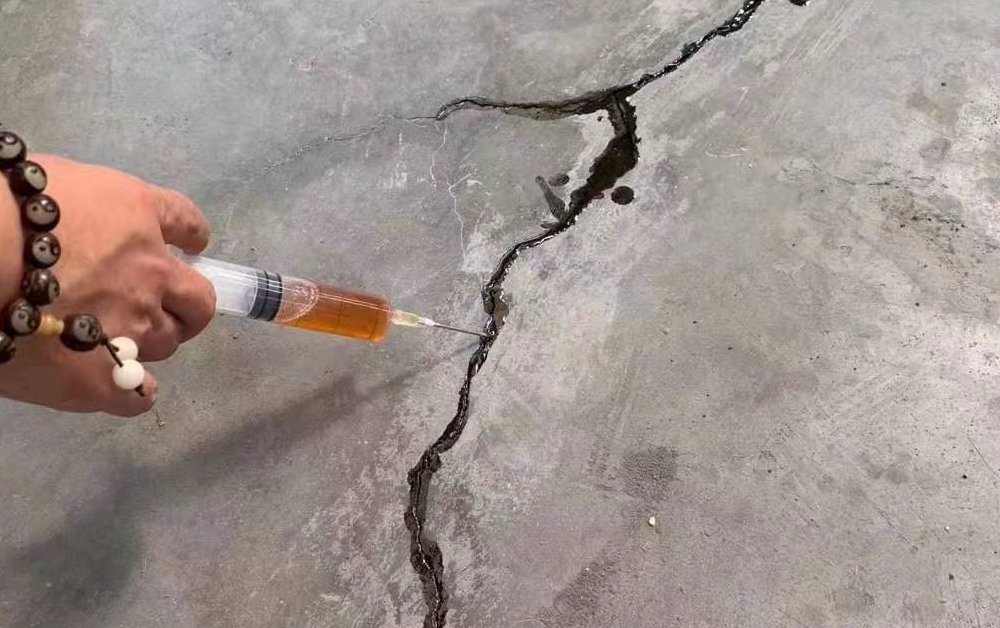
Epoxy resin is used for structural crack repair when the crack is dry or only slightly damp and the goal is to restore integrity. It can bond concrete crack surfaces and harden into a strong repair body.
For active water leakage, epoxy injection resin is usually not the first choice. If a tunnel crack is actively leaking, the repair may first require polyurethane grout to stop the water. After the area is controlled and the structure is evaluated, epoxy resin may be considered if structural bonding is needed.
The simple rule is this: epoxy injection resin is for structural crack repair, not fast water stopping.
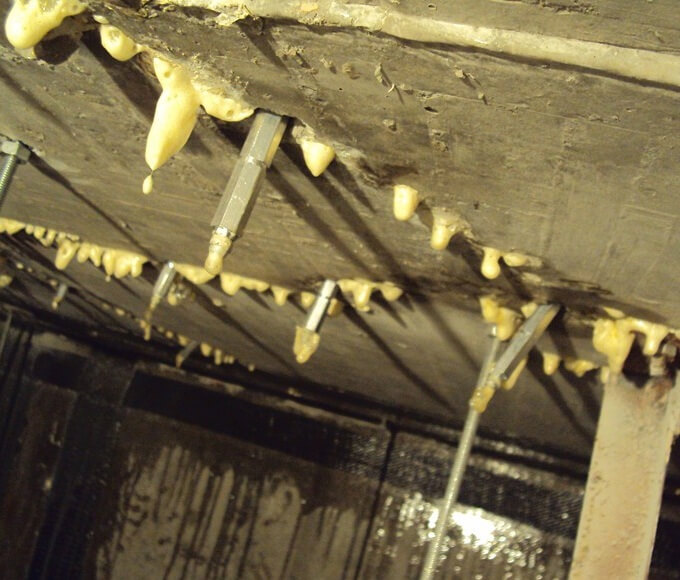
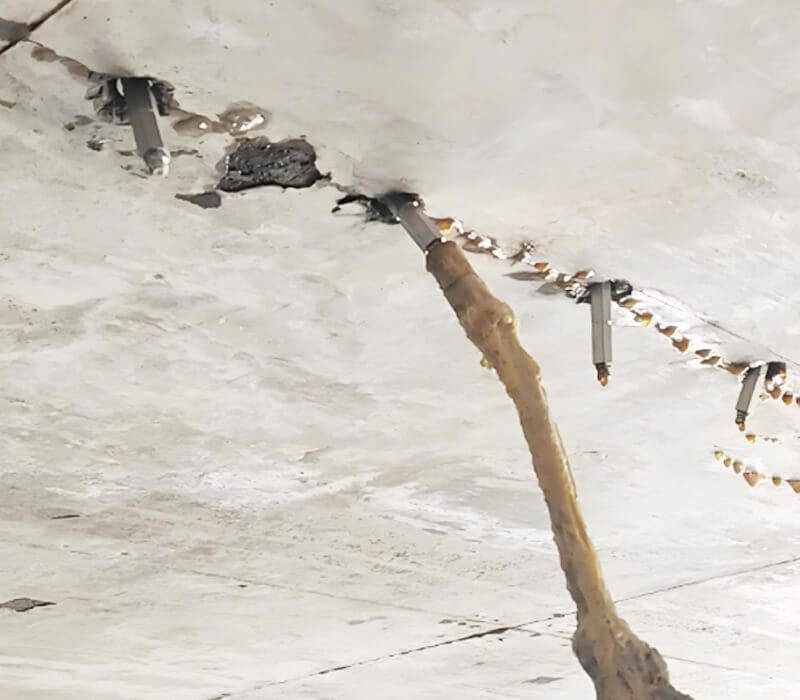
How to Choose the Best Injection Grout Based on Tunnel Leakage Conditions?
A good selection starts with the leakage condition, not the product catalog.
| Tunnel Leakage Condition | Better Grout Direction |
| Continuous water flow through a crack | Polyurethane grout |
| Emergency active water stopping | Hydrophobic polyurethane grout |
| Damp fine cracks | Hydrophilic polyurethane grout |
| Fine seepage behind lining | Acrylate injection grout |
| Large seepage zone | Acrylate curtain grouting |
| Dry structural crack | Epoxy injection resin |
| Leaking crack that later needs structural repair | PU grout first, epoxy resin later if needed |
| Segment joint leakage | PU grout or acrylate grout depending on water path |
| Behind-lining water migration | PU grout or acrylate grout after investigation |
| High-pressure groundwater leakage | Project-specific PU grout or combined grouting plan |
In real tunnel work, the contractor should confirm water pressure, leakage path, crack movement, and repair target before final selection.
Case Example: Customized PU Grout for a Middle East Tunnel Project
YURU Waterproof once worked with a Middle East customer on a tunnel waterproofing injection project. At the beginning of the cooperation, the customer purchased a standard polyurethane grout for tunnel leakage repair.
As the project moved forward, the site conditions became more demanding. The leakage may have been affected by groundwater pressure, complex water channels, or other underground conditions. The standard PU grout did not fully match the project requirement.
The customer then discussed the issue with YURU Waterproof’s technical team. Instead of simply repeating the same product, the team reviewed the application needs and developed a more targeted polyurethane grout formulation.
The adjustment focused on several key points.
First, the reaction time needed to match the water flow and injection window. If the grout reacts too slowly, it may be washed away. If it reacts too fast, it may not travel far enough into the water path.
Second, the tensile strength needed to support better stability in cracks and joints after curing. Tunnel joints and cracks may experience vibration, pressure, or slight movement.
Third, the maximum water pressure resistance needed to be improved for the underground pressure water condition.
Finally, the formulation had to remain compatible with the customer’s injection equipment, packer arrangement, and site working rhythm.
This case shows why standard polyurethane grout is not always enough for complex tunnel leakage repair. For high-pressure water, continuous seepage, or difficult underground conditions, contractors should confirm the technical parameters before bulk purchase. In some projects, customized PU grout can be more practical than forcing a standard product into a difficult site.
Selection Factors Contractors Should Check Before Injection
Before injection starts, the team should inspect the leakage condition carefully. A few minutes of investigation can prevent days of repeated repair.
Water Activity
The first question is simple: how active is the water?
Active flow, dripping, damp cracks, seasonal seepage, dry structural cracks — all need different thinking. Active water often points toward polyurethane grout. Fine seepage may need acrylate injection grout. Dry structural cracks may require epoxy injection resin.
Leakage Path
The visible leak is not always the source. Water may travel behind the lining and appear at a weak point.
Contractors should check whether water comes from a crack, construction joint, segment joint, void behind lining, ground pores, drainage failure, or connection between several paths. The leakage path affects drilling pattern, packer position, pressure control, and grout selection.
Crack Width and Movement
Wide cracks, fine cracks, static cracks, and moving cracks behave differently.
A moving crack or joint may need a more flexible sealing material. A dry structural crack may need epoxy injection resin. A wet crack under pressure usually needs water-reactive grout first.
Water Pressure and Flow Rate
High-pressure water changes the material requirement. The grout must react and build resistance before it is pushed away. In some cases, staged injection is needed.
Low-pressure seepage may allow deeper penetration with a low-viscosity material. This is where acrylate injection grout may become useful.
Repair Objective
The repair objective should be written clearly before material selection.
Is the goal to stop active water, seal seepage paths, fill voids, form a curtain barrier, stabilize surrounding ground, restore structural strength, or combine several objectives?
Without a clear repair objective, it is easy to choose a material that performs well in one way but fails in another.
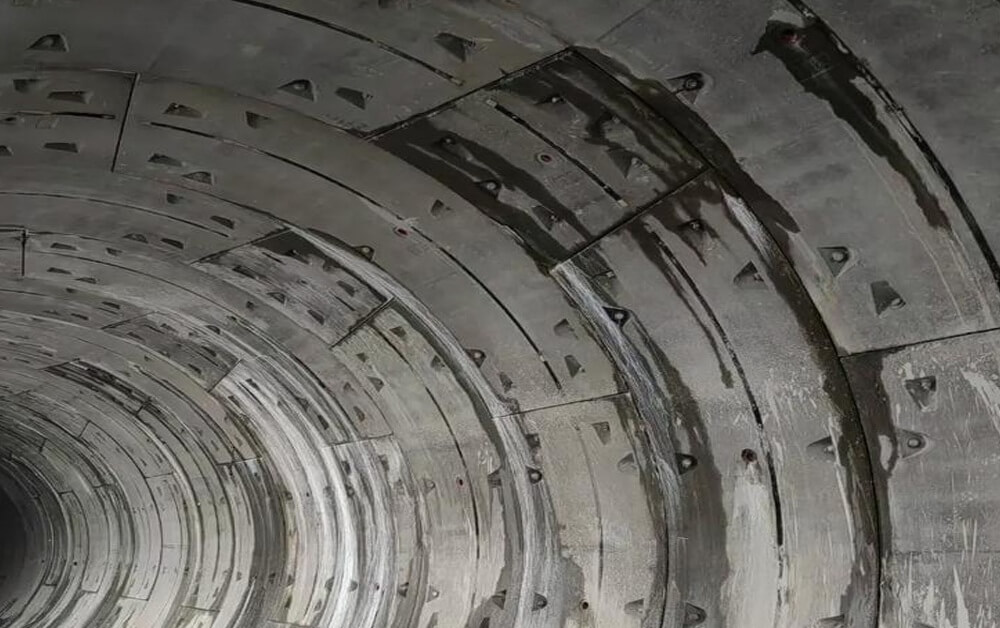
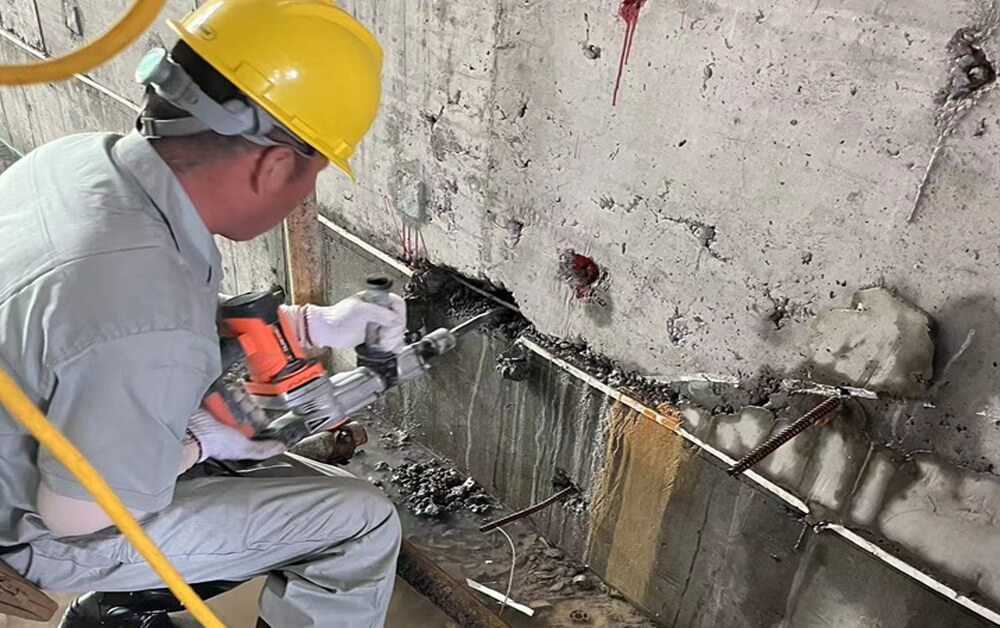
Common Tunnel Leakage Areas and Recommended Injection Grout
Different tunnel areas create different leakage patterns.
Concrete Cracks in Tunnel Lining
For active leaking cracks, polyurethane grout is usually the first material to consider. It reacts with water and can seal the path quickly.
For dry cracks that need structural repair, epoxy injection resin may be more suitable. If the crack is moving, a rigid resin may not be the best choice, and a flexible sealing material may be needed.
Construction Joints and Segment Joints
Construction joints and segment joints are common leakage points in tunnels. The repair method depends on the joint condition and water path.
PU grout is often used for quick water stopping. Acrylate injection grout may be used when the water path is fine, distributed, or located behind the joint area.
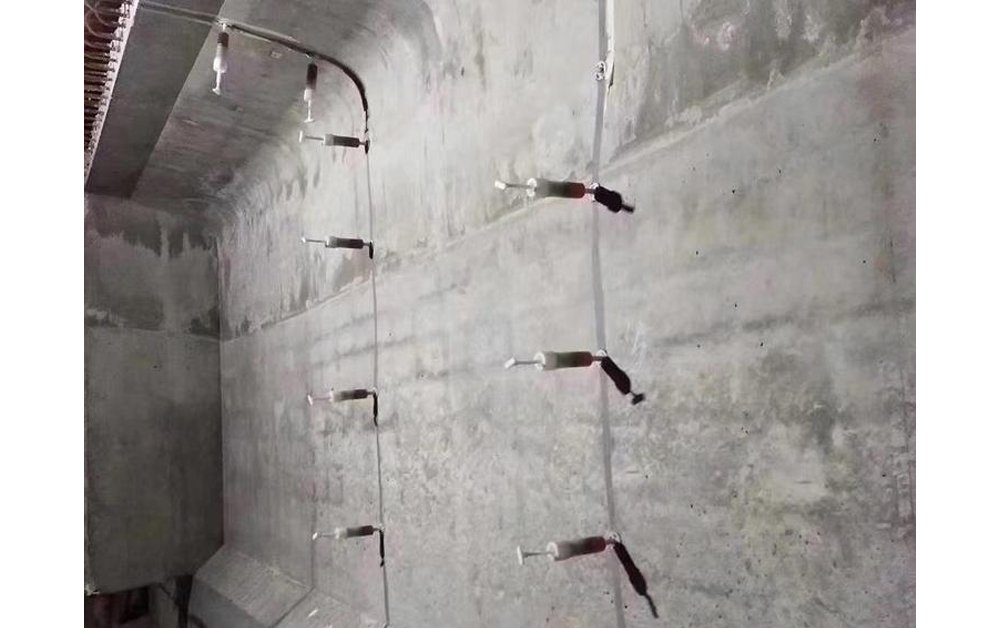
Drilling angle, packer depth, injection pressure, and injection sequence are critical here.
Behind-Lining Water Paths and Voids
Behind-lining water migration can be difficult. If the contractor only seals the visible leak, water may appear nearby later.
In these cases, the team should evaluate whether curtain grouting or back-of-lining injection is needed. PU grout may be useful for larger flow paths. Acrylate grout may be better for fine seepage control. The final choice depends on void size, water pressure, and target area.
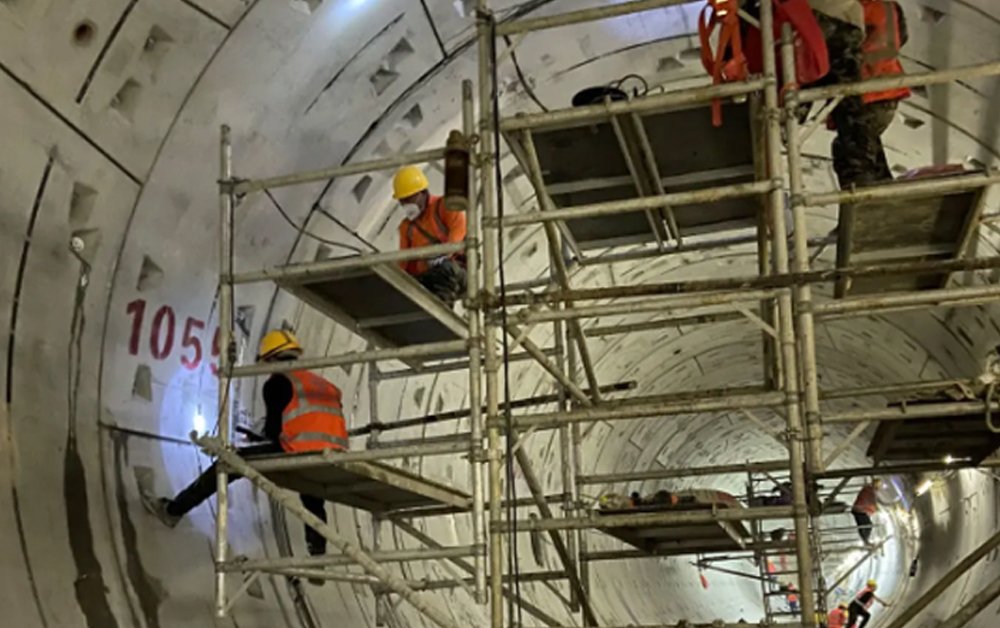
Metro, Railway, Highway, and Utility Tunnels
Different tunnel types have different constraints.
Metro and railway tunnels often have limited work windows and strict safety requirements. Highway tunnels may involve traffic reopening pressure and drainage concerns. Utility tunnels may stay damp for long periods and require protection for cables, pipes, and equipment.
A good injection grout selection should match the operating environment, not only the crack size.
Why Injection Grouting Fails in Tunnel Leakage Repair?
Injection grouting fails for predictable reasons. Most failures are not mysterious.
Wrong Material for the Leakage Condition
Using epoxy resin for an active water leak is a common mismatch. Using high-foam PU grout for a structural bonding objective is another mismatch.
The material must match the site condition.
Poor Leakage Investigation
If the team does not investigate the water source and leakage path, the repair may only seal the surface. Water then moves to another weak point.
This is why tunnel leakage repair should start with observation, mapping, and drilling strategy.
Incorrect Drilling and Packer Installation
The grout must reach the water path. If the hole angle, depth, spacing, or packer installation is wrong, the material may not enter the target area.
Poor packer installation can also cause grout loss, pressure loss, or surface leakage around the hole.
Uncontrolled Injection Pressure
Too low — grout won’t enter crack/void. Too high — widens cracks, uncontrolled movement, damage weak areas. Control pressure according to structure, crack condition, grout behavior.
No Long-Term Monitoring After Repair
Tunnel leaks can change after rainfall, groundwater fluctuation, vibration, or seasonal changes. A repair that looks successful on the first day should still be monitored.
Long-term observation helps confirm whether the selected grout and injection pattern solved the real leakage path.
Case-Based Selection: Which Grout Should Be Used First?
In many tunnel projects, the first material is chosen by the first repair target.
| Project Objective | First Selection Logic |
| Stop active water | PU grout |
| Seal fine seepage | Acrylate grout |
| Restore crack strength | Epoxy resin |
| Control behind-lining water | Acrylate or PU based on flow |
| Emergency tunnel leak repair | Fast-reactive PU grout |
| Long-term seepage barrier | Acrylate curtain grouting |
| High-pressure leakage | Customized PU grout or combined system |
For active leakage, stop the water first, for fine seepage, think about penetration and gel control, for structural cracks, think about bonding and strength. For high-pressure leakage, review whether the standard grout is enough.

How to Evaluate Injection Grout Quality Before Purchase?
For contractors, distributors, importers, and procurement teams, price is only one part of the decision. Tunnel injection grout must be evaluated by performance parameters.
Viscosity and Penetration Ability
Low-viscosity materials enter fine cracks and pores more easily. Higher-viscosity or fast-foaming materials may be more suitable for larger water paths and fast sealing.
The correct viscosity depends on crack width, water flow, and the required penetration depth.
Reaction Time and Gel Time
Reaction time is critical for polyurethane grout. In strong water flow, the grout must react before being washed out. But if it reacts too quickly, it may stop near the injection point and fail to penetrate deeper.
Acrylate injection grout is judged by gel time control. The gel time should match the required travel distance and the working conditions.
Epoxy injection resin is judged more by pot life, working time, and final strength.
Expansion Ratio and Water-Stopping Ability
PU grout expansion ratio affects how well the material fills cracks and voids. However, higher expansion is not always better.
Too much foam may reduce density or strength in some conditions. The expansion behavior should match the leak size, water flow, and desired cured body stability.
Tensile Strength and Flexibility
Tunnel cracks and joints may be affected by vibration, settlement, or micro-movement. The cured grout should have enough stability and, in many sealing applications, enough flexibility.
In the Middle East tunnel project mentioned earlier, tensile strength was one of the parameters adjusted during customized PU grout development. This shows that mechanical behavior is not a minor detail when the site condition is demanding.
Maximum Water Pressure Resistance
For tunnels with pressure water, the grout must resist being pushed out or bypassed after curing. Maximum water pressure resistance becomes especially important in deep underground, high groundwater, or continuous seepage conditions.
Buyers should ask more than “Does it foam?” They should ask how the material performs under pressure water conditions and whether it is suitable for the project environment.
Packaging, Equipment Compatibility, and Technical Support
Tunnel grouting also depends on packaging, machine compatibility, packer selection, and clear instructions.
Before purchase, confirm packaging size, shelf life, recommended grouting equipment, packer type, cleaning method, TDS, MSDS, and site application guidance. For complex tunnel projects, sample testing or small-area trial injection is a safer approach.
Why Choose YURU Waterproof for Tunnel Injection Grout Solutions?
YURU Waterproof is a professional manufacturer of waterproof coatings, injection grouting materials, and floor coating systems. For tunnel leakage repair, YURU Waterproof can provide polyurethane grout, acrylate injection grout, epoxy injection resin, and project-based chemical grouting material support.
YURU Waterproof can help contractors, waterproofing material distributors, procurement teams, importers, private-label brands, and long-term supply partners discuss grout selection based on tunnel leakage condition, crack type, groundwater pressure, work window, and repair objective.
For complex tunnel projects, YURU Waterproof can communicate around key parameters such as reaction time, viscosity, expansion ratio, tensile strength, flexibility, water pressure resistance, packaging, and equipment compatibility.
In some Middle East tunnel cooperation, YURU Waterproof has worked with customers to adjust PU grout performance according to pressure water and site requirements. This project-based approach helps customers avoid relying only on standard materials when site conditions require more specific performance.
Final Checklist Before Choosing Tunnel Injection Grout
Before buying injection grout for tunnel leakage repair, review these questions:
- Is the tunnel leakage active, dripping, damp, seasonal, or dry?
- Does the water come from cracks, construction joints, segment joints, voids, or behind-lining paths?
- Is there groundwater pressure?
- Is the crack static or moving?
- Is the goal water stopping, seepage control, void filling, curtain grouting, or structural repair?
- Do you need polyurethane grout?
- Do you need acrylate injection grout?
- Do you need epoxy injection resin?
- Is a customized PU grout required?
- Is a combined grouting plan needed?
- Have viscosity, reaction time, gel time, expansion ratio, tensile strength, and water pressure resistance been confirmed?
- Are the grouting machine, packers, and injection pressure suitable?
- Are TDS, MSDS, and application guidance available?
- Is sample testing or trial injection needed?
- Can the manufacturer support stable supply and technical communication?
FAQs:
1. What is the best injection grout for tunnel leakage repair?
There is no single best grout for every tunnel leak. Polyurethane grout is often used for active water leakage, acrylate injection grout is suitable for fine seepage and curtain grouting, and epoxy injection resin is used for dry structural crack repair.
2. Why does tunnel injection grouting fail?
Common causes include wrong material selection, poor leakage investigation, incorrect drilling, poor packer installation, uncontrolled injection pressure, and no monitoring after repair.
3. Which parameters matter most when buying tunnel injection grout?
Important parameters include viscosity, reaction time, gel time, expansion ratio, tensile strength, flexibility, cured body stability, water pressure resistance, equipment compatibility, and technical documentation.
4. Can different injection grouts be used together?
Yes. Some tunnel projects may use PU grout first to stop active water, acrylate grout to control fine seepage behind the lining, and epoxy injection resin later for structural crack repair if needed.
5. Does YURU Waterproof provide tunnel injection grout materials?
Yes. YURU Waterproof provides polyurethane grout, acrylate injection grout, epoxy injection resin, customized PU grout support, technical documents, sample testing, OEM/ODM service, and project application communication.
Conclusion: The Best Injection Grout Depends on Leakage Condition and Project Pressure
The best injection grout for tunnel leakage repair is not a fixed product. It is a decision based on water activity, leakage path, crack condition, pressure, repair objective, and construction window.
For active water leakage, polyurethane grout is often the most direct choice, for fine seepage or curtain grouting, acrylate injection grout may be more suitable, for dry structural crack repair, epoxy injection resin has greater value.
For high-pressure water, complex leakage channels, or demanding tunnel repair conditions, a standard PU grout may not be enough. Reaction time, tensile strength, viscosity, expansion behavior, and water pressure resistance may need to be reviewed or adjusted.
The practical rule is simple: investigate first, select second, inject third. A good grouting result comes from matching the material to the tunnel, not forcing the tunnel to fit the material.
If you are looking for the best injection grout for tunnel leakage repair, YURU Waterproof can help review your leakage condition, crack type, groundwater pressure, application window, and project target.
Contact YURU Waterproof to discuss polyurethane grout, acrylate injection grout, epoxy injection resin, customized PU grout, chemical grouting materials, sample testing, OEM/ODM cooperation, private-label packaging, and wholesale supply for tunnel leakage repair projects.
YURU Product solutions