Polyurea Grouting vs. PU Injection
Chemical grouting is widely used in tunnels, basements, subway systems, pipelines, and municipal infrastructure to control water ingress and reinforce structural integrity. In many regions, contractors simply refer to all these materials as “PU injection” or “grouting foam.” But the truth is: not all injectable materials are the same—and choosing the wrong one can cause a project to leak again within months.
Today, the mainstream materials used in the waterproofing industry can be separated into five categories:
- Oil-based Hydrophobic PU
- Water-based Hydrophilic PU
- Single-Component Polyurea Grouting Resin
- Acrylate Grouting
- Epoxy Resin Injection Grouting
Understanding the fundamental differences among these materials is the key to preventing recurring leakage and achieving long-term crack repair. So, why do some structures leak again after only one rainy season? Let’s uncover the real answer.


Lifting the Fog: Why Grouting Materials Are Not All the Same?
In the field, PU injection has become a catch-all phrase for any type of crack repair. This oversimplification leads to incorrect material selection and subsequent failures.
Industry Reality: Mislabeling Leads to Misapplication
Contractors often default to PU because they are familiar with it. However, PU includes multiple subtypes—each with distinct chemical behaviors, reaction mechanisms, and curing results.
Three Core Categories That Matter
- Hydrophobic PU → reacts violently with water, creates rigid foam
- Hydrophilic PU → absorbs water, turns into elastic gel
- Polyurea Grouting Resin → moisture-cured elastomer, minimal foaming
Why Projects Re-Leak:
Because each material behaves differently, improper selection can cause:
- brittleness
- volume shrinkage
- loss of adhesion
- structural movement failure
This sets the stage for understanding the limitations of traditional PU and the advantages of Polyurea.
The Limitations of Traditional PU: Hydrophobic and Hydrophilic
PU injection changed the waterproofing industry decades ago, but it was never designed for permanent sealing of dynamic cracks.
1. Hydrophobic PU Foam: Powerful but Brittle
Advantages
Hydrophobic PU is known for its explosive reaction with water:
- Instant foaming
- Rapid expansion
- Effective at stopping heavy water inflow
This makes it ideal for emergency leak control.
Critical Weakness: Brittleness
Once cured, hydrophobic PU forms rigid foam. Over time:
- The foam structure dries
- Becomes brittle
- Cracks under vibration or thermal expansion
- Breaks away from concrete
When the concrete shifts even slightly, the PU foam fractures—leading to secondary leakage.
2. Hydrophilic PU Gel: Flexible but Shrinkable
Advantages
Hydrophilic PU absorbs water to create a soft, gel-like filler:
- High water affinity
- Good penetration
- Effective in damp cracks
Critical Weakness: Shrinkage in Dry Conditions
Hydrophilic PU depends on water to maintain volume. In dry environments:
- Water evaporates
- Gel shrinks
- Bonding weakens
- Gaps reappear
This is why structures repaired in the rainy season often leak again during the following dry season.
Comparison Table: Hydrophobic PU vs Hydrophilic PU vs Polyurea
| Property / Type | Hydrophobic PU | Hydrophilic PU | Polyurea Grouting |
|---|---|---|---|
| Reaction with Water | Foaming | Absorbs water into gel | Moisture curing |
| Final Form | Rigid foam | Soft gel | Dense elastomer |
| Weakness | Brittle over time | Shrinks in dry conditions | None (stable) |
| Crack Movement Resistance | Poor | Medium | Excellent |
| Long-Term Durability | Medium | Medium | High |

Polyurea Grouting: Why It Has Become the “No-Compromise” Solution
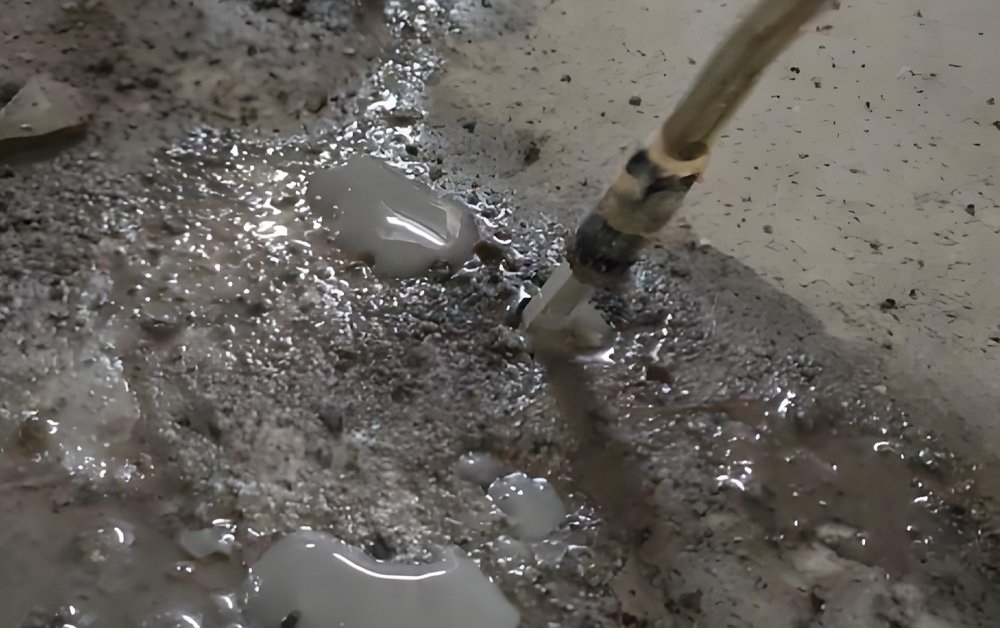
YURU’s single-component Polyurea grouting resin is engineered to resolve the weaknesses of both hydrophobic and hydrophilic PU.
It Is Not Foam. It Is a Solid Elastomer.
Unlike PU:
- It does not rely on foaming.
- It does not rely on water retention.
- It cures into a dense, rubber-like elastomer.
Ultimate Volume Stability
Compared with PU materials:
- Hydrophobic PU may crack → Polyurea will not become brittle
- Hydrophilic PU may shrink → Polyurea stays stable in any humidity
Micro-Foaming + Strong Adhesion
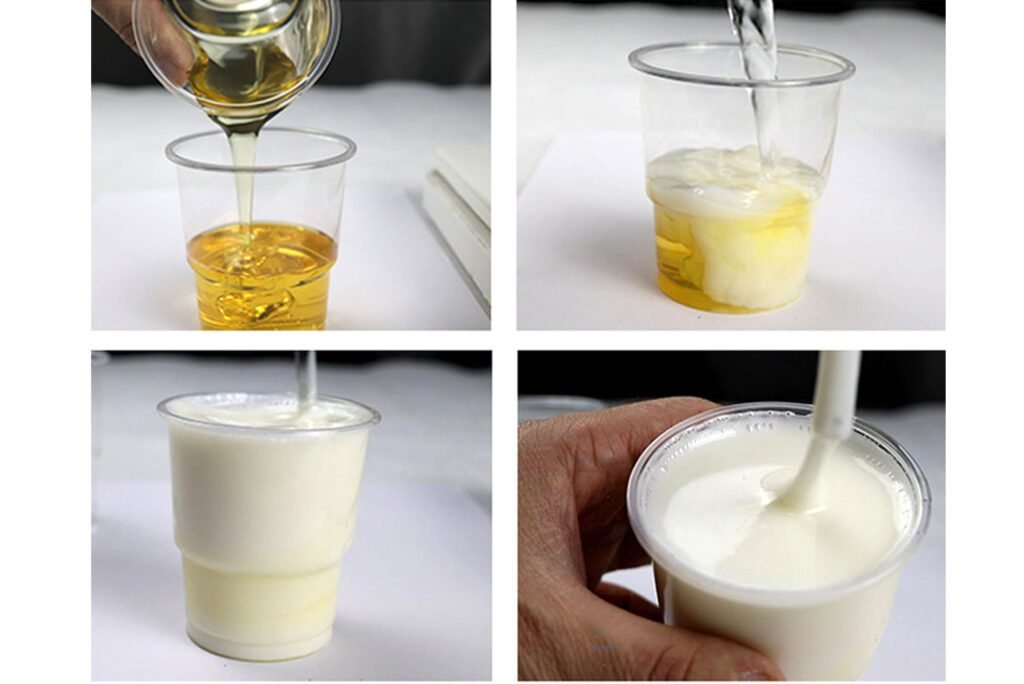
Upon contact with moisture, Polyurea may produce light micro-foaming, enabling:
- Crack penetration
- Surface wetting
- Tight mechanical bonding
But once cured, it becomes a solid elastomer, forming a permanent internal seal.
Dynamic Crack Repair: The Real Test of Material Quality
Concrete structures are not static. Tunnels, bridges, subway shafts, and basements all experience:
- thermal expansion
- vibration
- heavy loads
- soil settlement
Material Behavior Simulation
Hydrophobic PU:
Crack widens → rigid foam is torn apart → leakage returns
Hydrophilic PU:
Crack widens + environment dries → gel shrinks → new gaps appear
Polyurea:
Crack widens → elastomer stretches → remains bonded → no leakage
Why Polyurea Wins:
Polyurea’s high elongation and tear resistance allow it to follow structural movement like a rubber band—without breaking or detaching.
This makes it ideal for heavy-duty engineering environments:
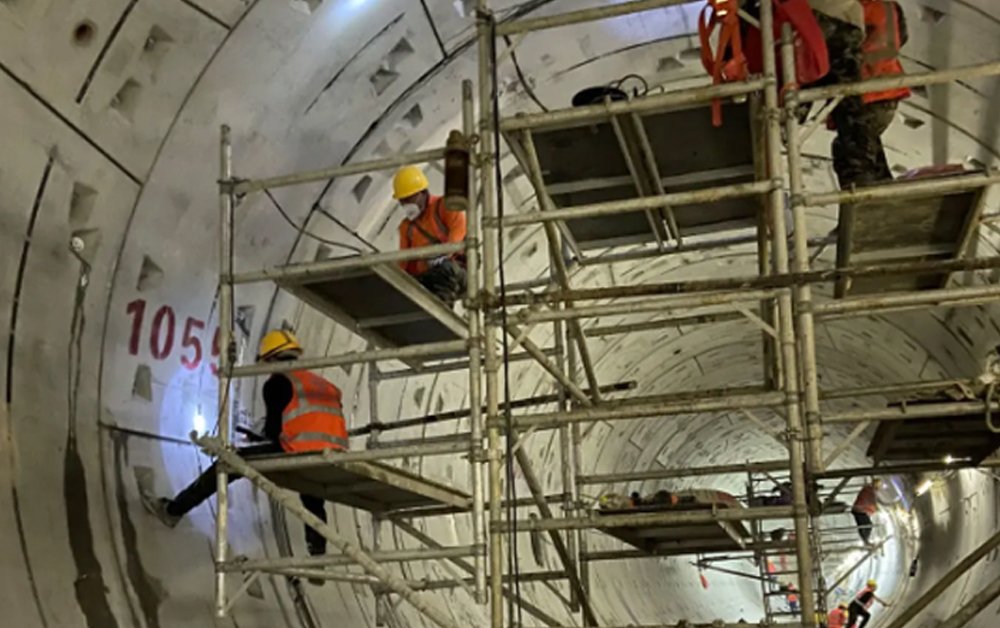
- Metro tunnels
- Municipal pipelines
- Underground garages
- High-value commercial buildings
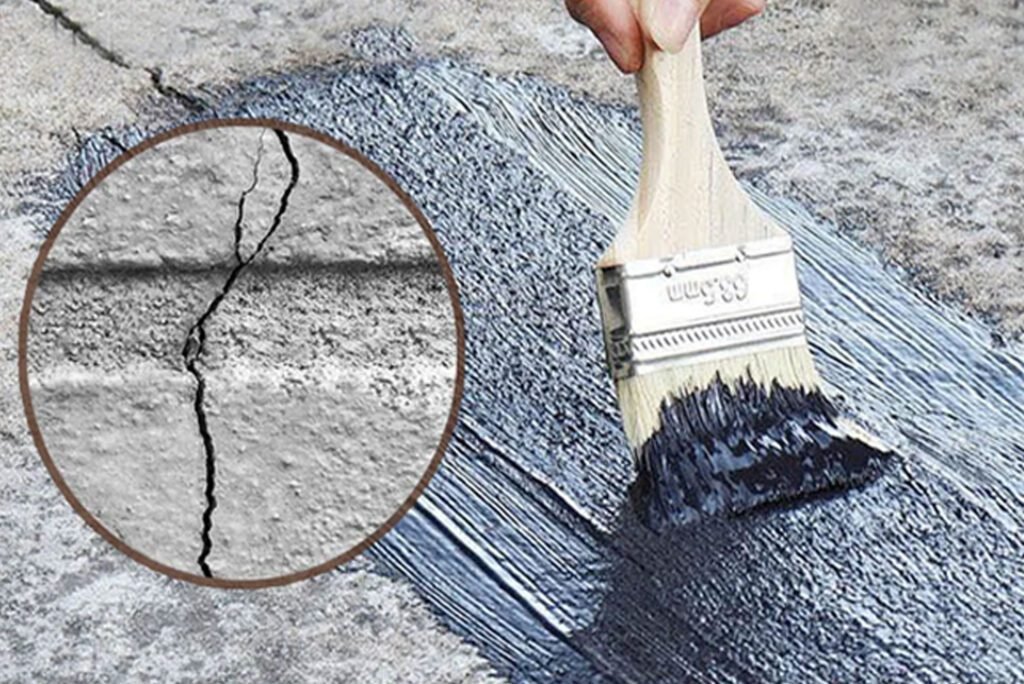

Single-Component Application: Faster and Safer Construction
Contractors often worry that advanced materials require complicated equipment. Not Polyurea.
Traditional Two-Component Systems = Complexity
They require:
- Accurate ratio mixing
- Skilled operators
- Special double-cylinder pumps
YURU’s Single-Component Polyurea = Convenience
- No mixing
- No catalyst
- No ratio mistakes
- No curing failures
And because it is compatible with standard PU grouting pumps, contractors can upgrade performance without upgrading equipment.
Long-Term Cost Analysis: Why Polyurea Is Cheaper in the End?
At first glance, PU seems cheaper. But the real cost lies in:
- Re-injection
- Labor fees
- Site revisit costs
- Customer complaints
- Architectural damage repair
Where Polyurea Should Be Mandatory:
- Municipal tunnels
- Subway systems
- Water treatment plants
- High-end residential basements
- Foundation repair for commercial buildings
When the goal is “fix once, fix permanently,” Polyurea is the only logical choice.

YURU Waterproof: Your Professional Partner for Grouting Solutions
YURU Waterproof is more than a material manufacturer—we provide complete leak-sealing systems.
Why Buyers Choose YURU?
- ISO-certified Polyurea production
- Strict raw material screening
- Stable bulk supply for wholesalers
- Technical support for contractors
- OEM/ODM custom solutions
- Engineering Support Included
Our team assists with:
- Injection pressure adjustments
- Handling fast-flow water leaks
- Equipment matching
- Crack diagnosis
For Buyers:
Not sure whether your project needs PU or Polyurea?
Experience elasticity and zero-shrinkage performance firsthand.
FAQs
1. Is Polyurea better than PU for long-term crack repair?
Yes. Polyurea forms a dense elastomer that does not shrink or become brittle, making it superior for long-term waterproofing.
2. Does Polyurea require special equipment?
No. YURU’s single-component Polyurea works with standard PU injection machines.
3. Can Polyurea handle structural movement?
Absolutely. Its high elasticity allows it to follow crack expansion and contraction without breaking.
4. When should hydrophobic PU be used?
It is suitable for emergency water-stopping where fast foaming is needed.
5. Is Polyurea environmentally safe?
Yes. It is low in VOCs and forms a stable, non-toxic solid after curing.
Conclusion
Hydrophobic PU, hydrophilic PU, and Polyurea all have their place in waterproofing. But for long-term structural protection—especially under dynamic movement—PU injection simply cannot match Polyurea’s stability, elasticity, and bonding strength.
Polyurea grouting resin represents the next generation of leak-sealing technology. With its solid elastomeric structure, moisture-cured stability, and single-component convenience, it provides a level of performance that traditional PU systems cannot achieve.
For contractors, wholesalers, and engineering project owners seeking reliability and durability, YURU Waterproof’s Polyurea grouting solutions deliver long-lasting value and peace of mind.

YURU Product solutions