Polyurea vs Polyurethane Waterproofing: Key Differences and Applications
Polyurea vs Polyurethane Waterproofing
Waterproofing is one of the most critical stages in modern construction projects, especially in infrastructure, industrial facilities, and commercial buildings. Among the leading materials available today, polyurea and polyurethane waterproofing systems stand out for their exceptional performance and reliability.
However, contractors and distributors often struggle to decide which system is the most suitable for their project. Should you choose a polyurea coating for its fast curing and UV resistance, or a polyurethane coating for its flexibility and proven performance?
In this article, YURU Waterproof — a professional manufacturer specializing in waterproof coatings, grouting materials, and flooring systems — explores the key differences, applications, and selection guidelines between polyurea and polyurethane waterproofing systems.
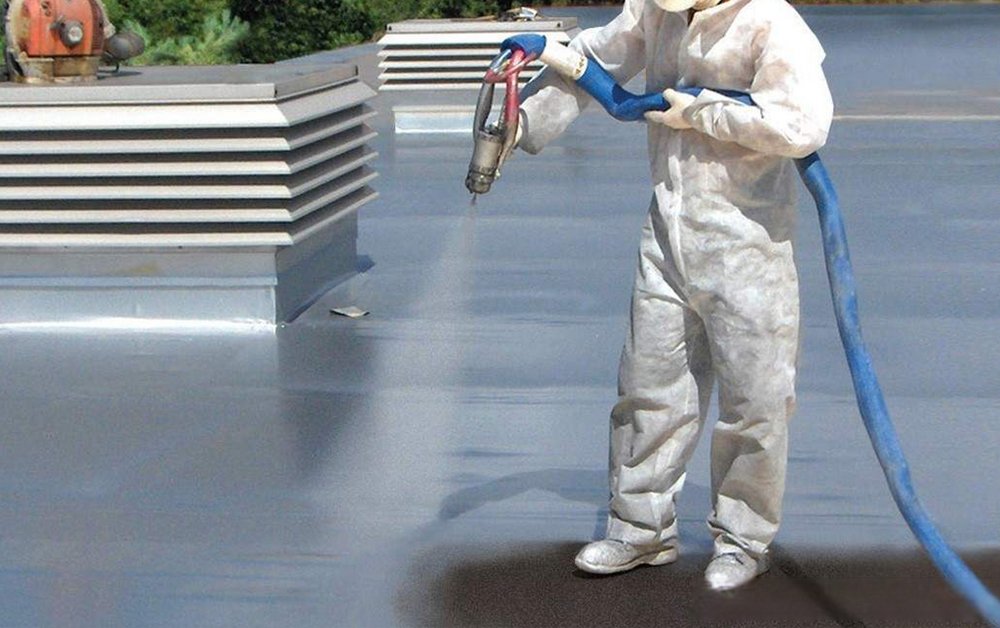
Understanding the Two Leading Waterproofing Technologies
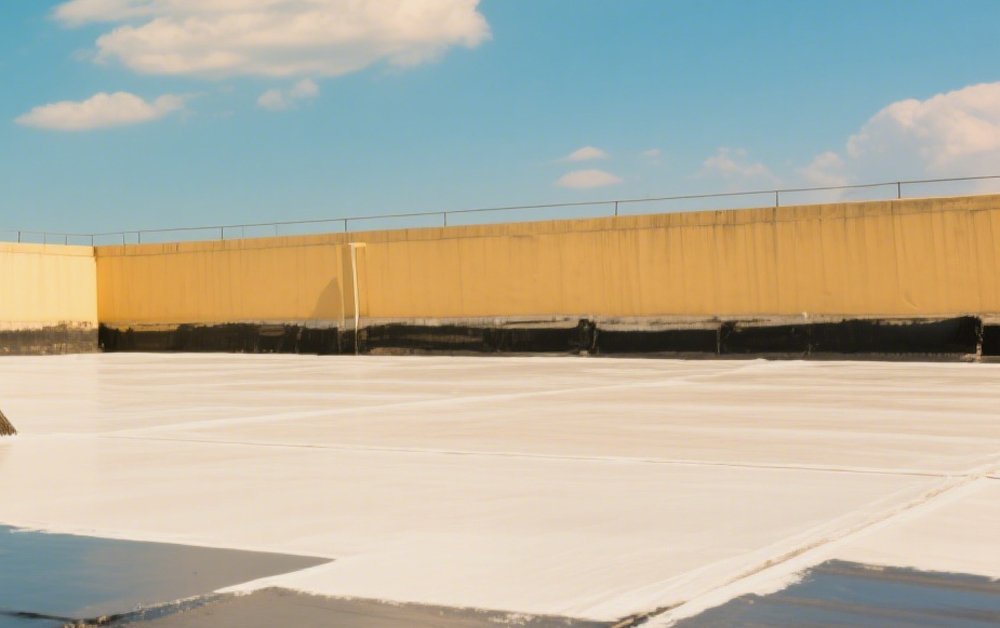
Both polyurea and polyurethane are advanced polymer-based materials designed to form seamless, durable, and long-lasting waterproof membranes.
- Polyurea waterproofing systems are known for their rapid curing, high tensile strength, and resistance to UV, chemicals, and abrasion.
- Polyurethane waterproofing systems, on the other hand, are widely recognized for their flexibility, strong adhesion, and cost-effectiveness.
While both are reliable solutions, each material behaves differently under environmental and structural conditions. Choosing the right one depends on your project type, surface conditions, exposure level, and application requirements.
YURU Waterproof integrates both systems in its product portfolio, providing contractors with tailored solutions to meet performance and budget goals.
Chemical and Functional Differences
The main distinction between polyurea and polyurethane lies in their chemical composition and curing mechanisms.
- Polyurea coatings are formed by the reaction of an isocyanate component with an amine resin. This reaction is fast, and is unaffected by moisture or humidity. The result is a tough, elastic, and seamless film ideal for large-scale or exposed applications.
- Polyurethane coatings, however, are produced from the reaction between isocyanates and polyols. This process takes more time, allowing for better control during application. Polyurethane systems tend to offer superior flexibility and crack-bridging ability, making them suitable for surfaces with potential structural movement.
In practical terms:
- Polyurea is preferred when speed, chemical resistance, and durability are priorities.
- Polyurethane is favored when adhesion, cost efficiency, and adaptability are more important.
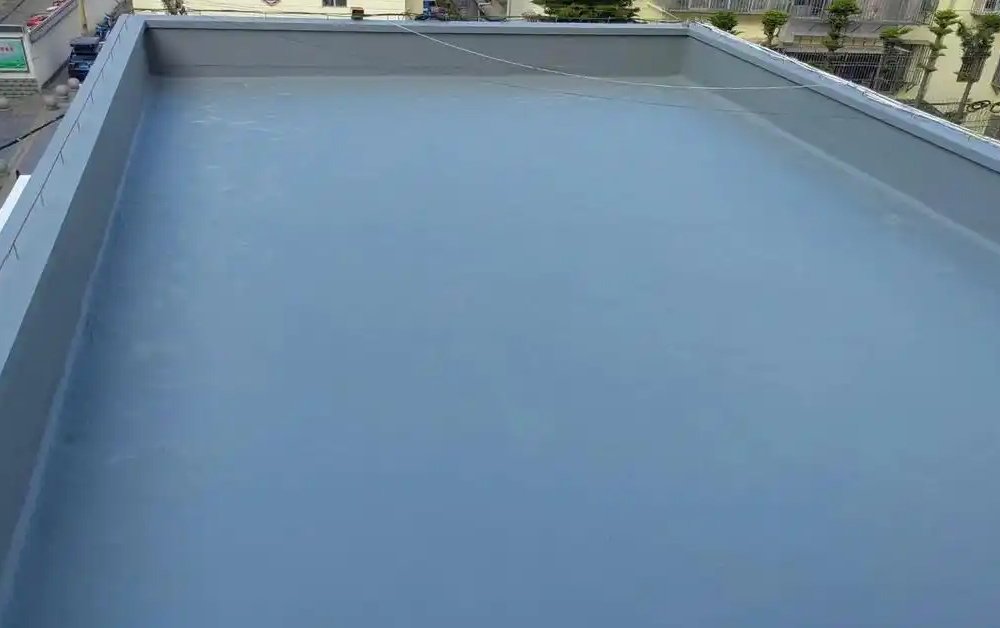

YURU Polyurea Waterproofing Systems
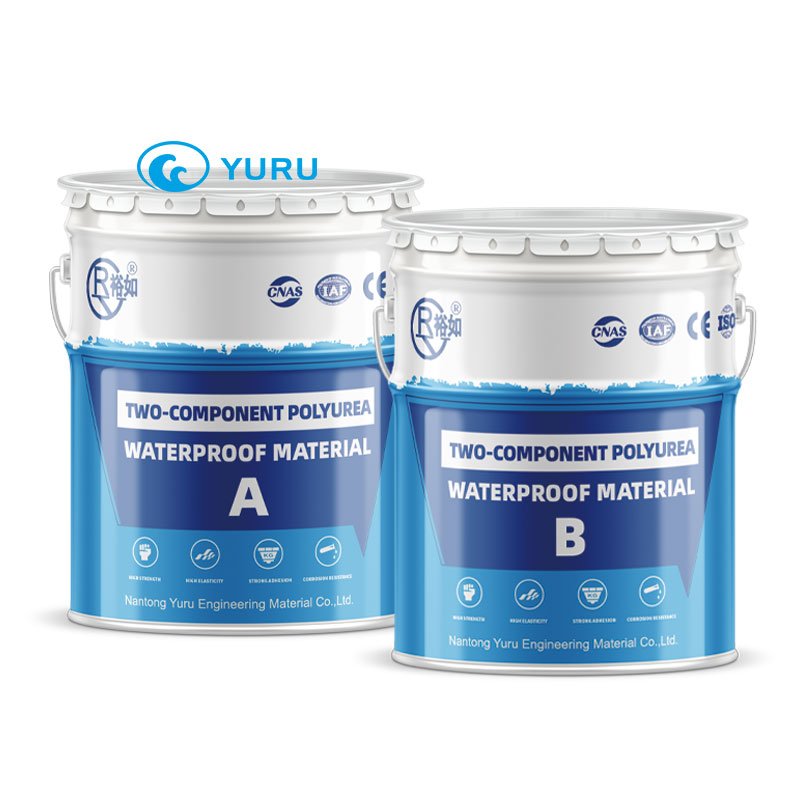
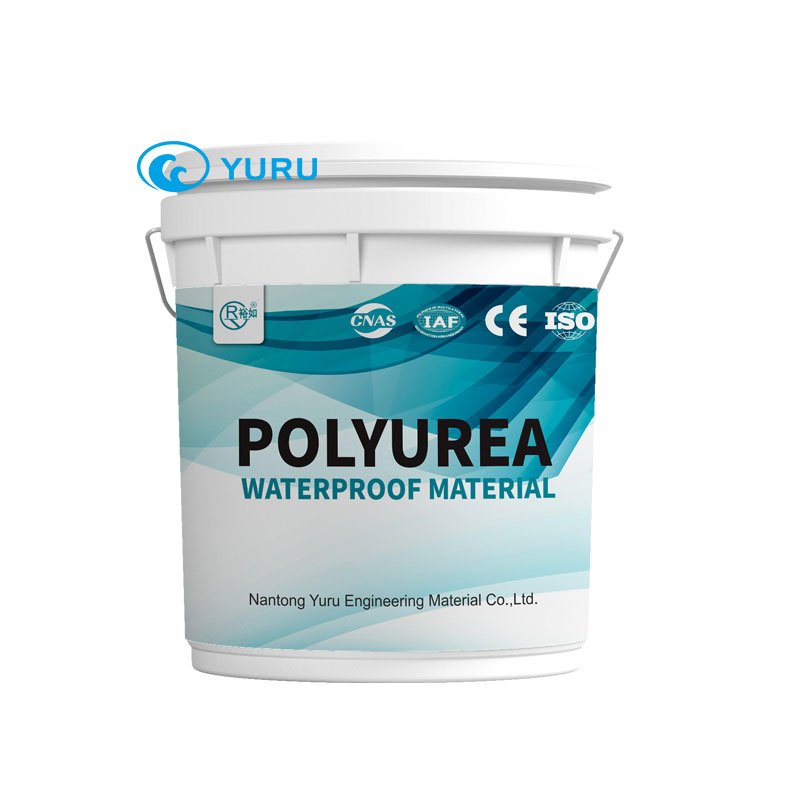
YURU Waterproof offers a comprehensive range of polyurea waterproof coatings, designed for both hand-applied and spray-applied projects. Each product balances performance, curing speed, and application flexibility to suit different project needs.
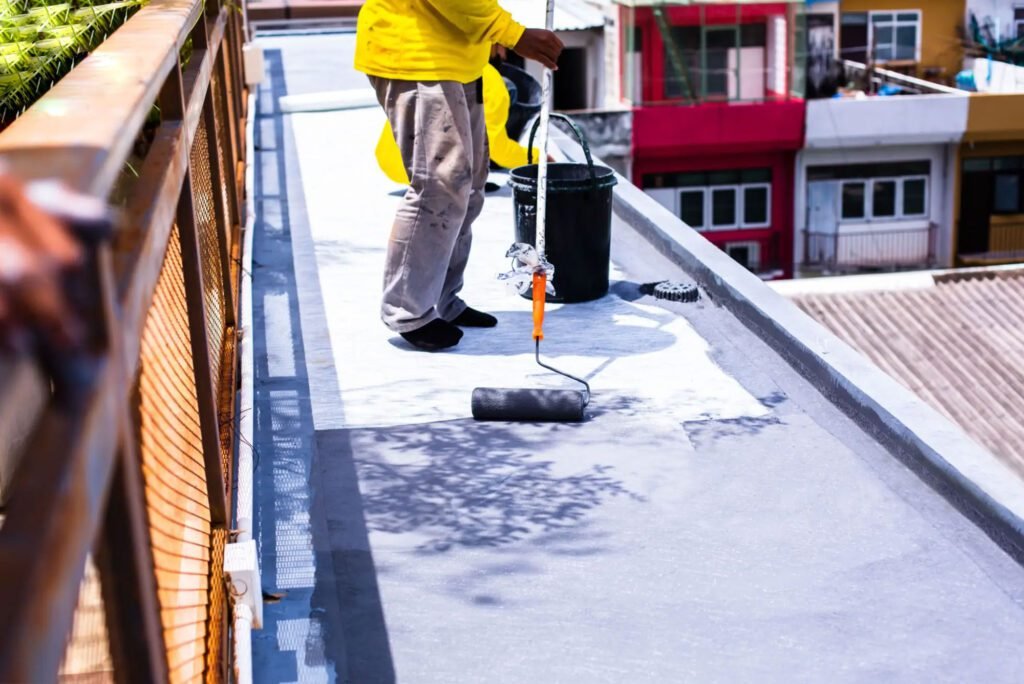
This product is formulated for convenient manual application using brushes or rollers. It offers:
- Moderate curing speed for flexible operation;
- Excellent adhesion and water resistance;
- Ideal for medium-sized projects, renovation works, and detailed waterproofing zones.
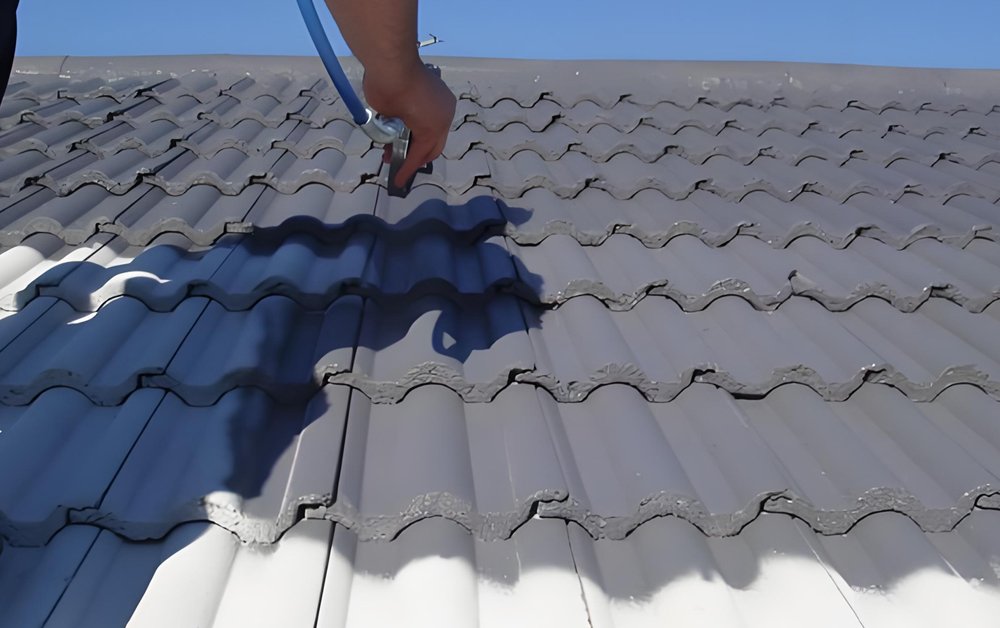
A high-performance system suitable for spray applications:
- Fast curing (though not instant), enabling efficient large-area construction;
- Excellent chemical and weather resistance;
- Recommended for tunnels, basements, rooftops, and industrial flooring.
(3) Two-Component Polyaspartic Polyurea Coating
YURU’s advanced polyaspartic polyurea features:
- Faster curing than standard polyurea;
- Exceptional UV resistance and color stability;
- Ideal for exposed roofs, bridges, parking decks, and marine environments.
All YURU polyurea systems deliver high elasticity, seamless adhesion, abrasion resistance, and 20–30 years of service life, making them the go-to solution for demanding infrastructure applications.
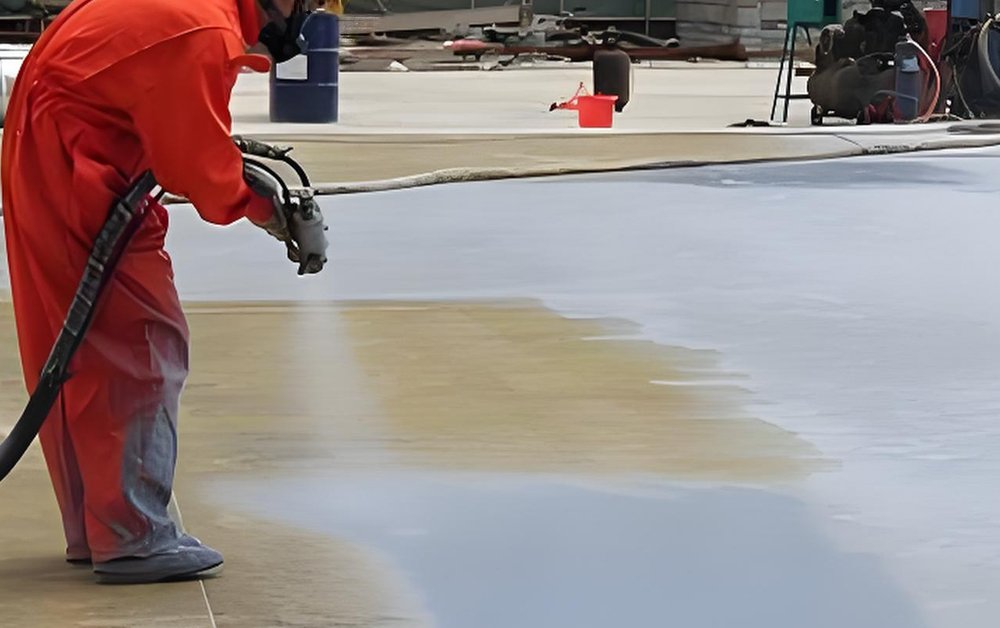
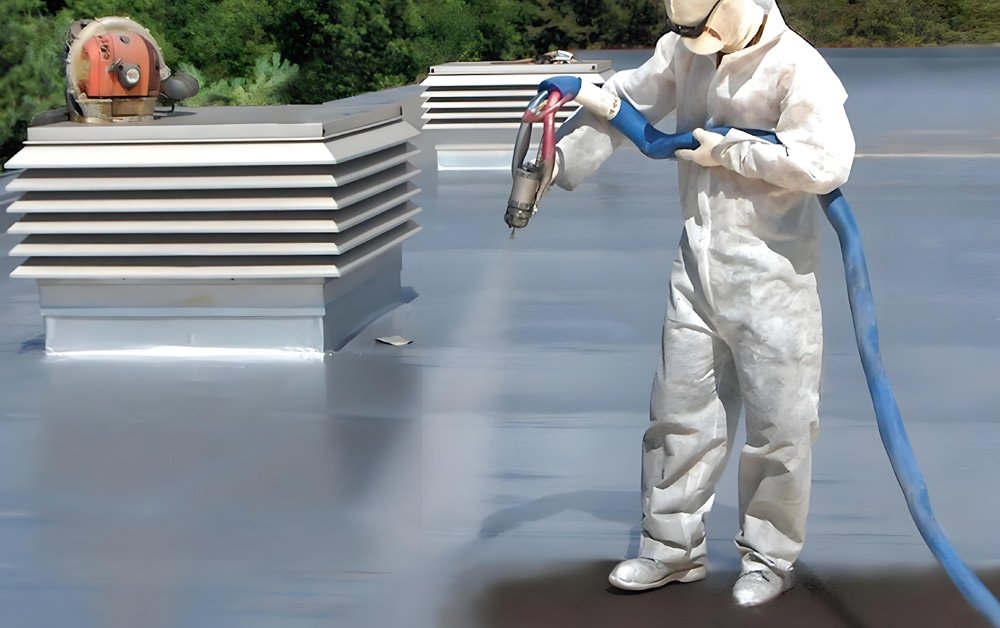
YURU Polyurethane Waterproofing Systems
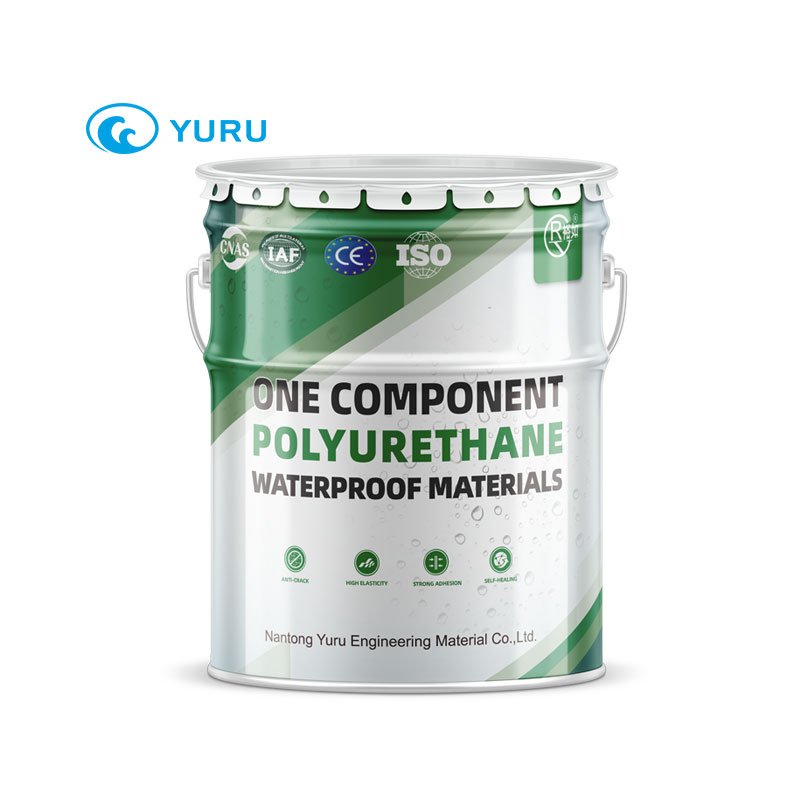
YURU Waterproof also provides a complete lineup of polyurethane waterproof coatings, engineered for both indoor and outdoor construction projects.
- Easy to apply by brush or roller;
- Suitable for basic waterproofing layers;
- Must be protected with a coating or screed for UV stability;
- Service life: 20–30 years with proper protection.
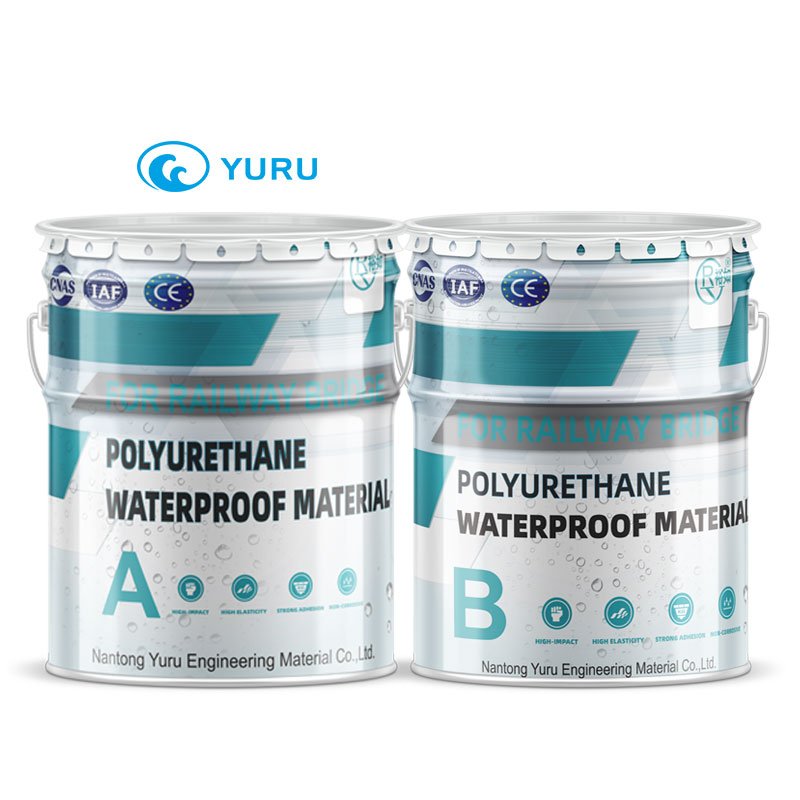
- Offers stronger adhesion and better film integrity;
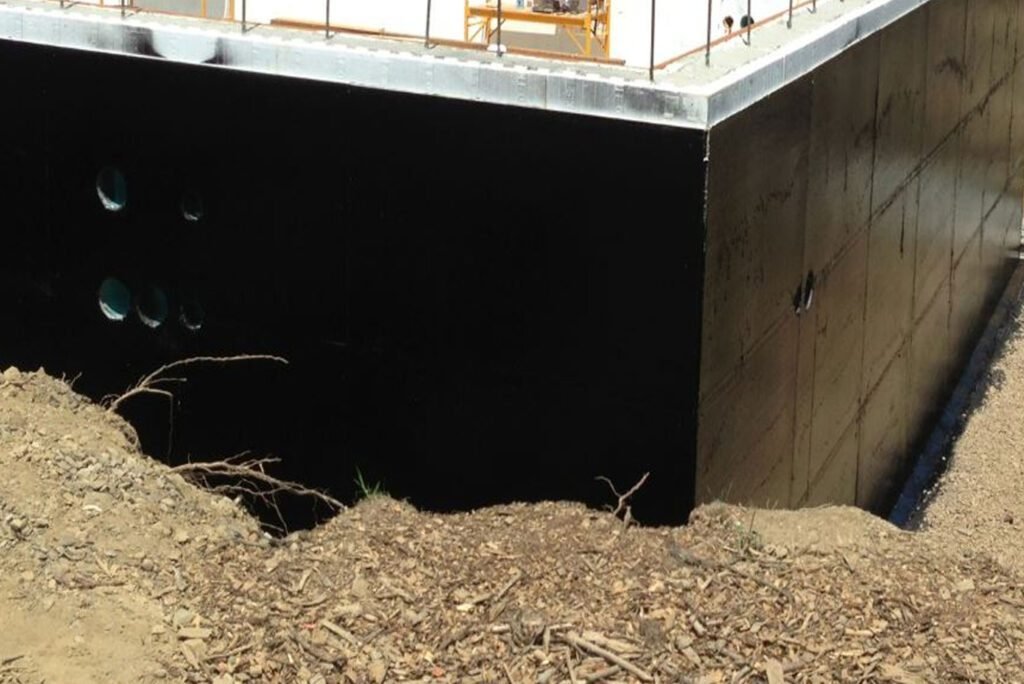
- Commonly used in basements, subways, and structural waterproofing;
- Requires protective coating when used outdoors.
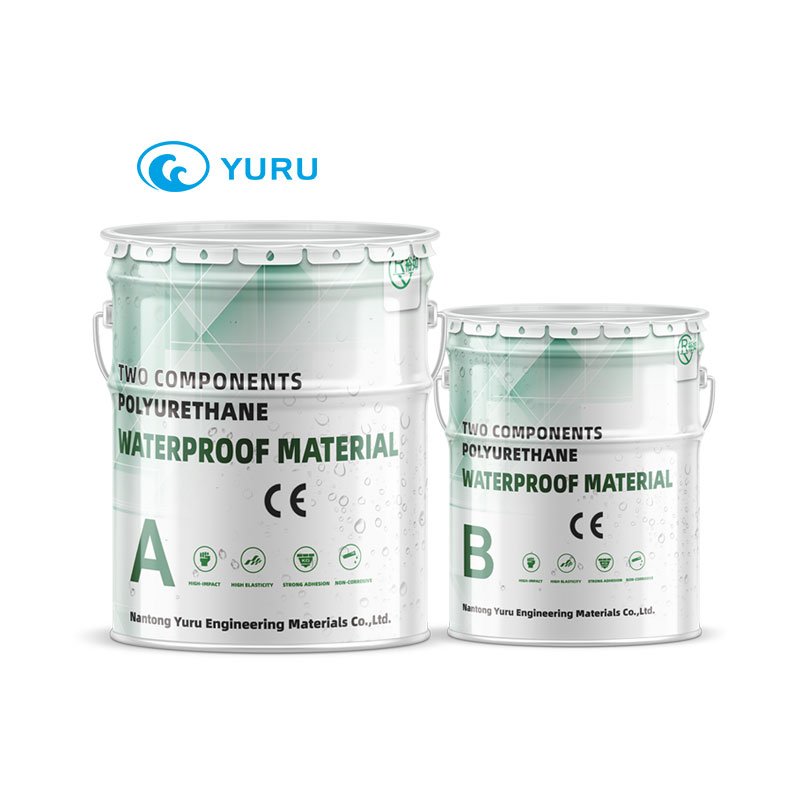
- Designed for exposed applications;
- UV-resistant, non-yellowing, and crack-resistant;
- Ideal for roofs, bridges, and outdoor decks.
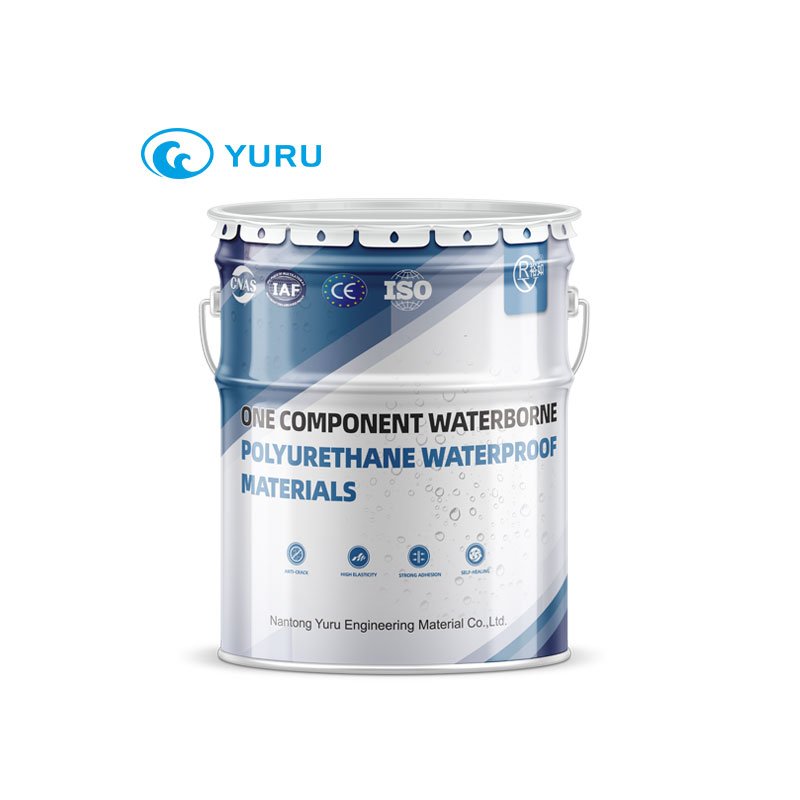
- Environmentally friendly, low-VOC formulation;
- Can be used for exposed applications;
- Resistant to aging, discoloration, and cracking;
- Service life up to 20 years.
Together, YURU’s polyurethane coatings deliver reliable waterproofing, high flexibility, and long-term performance, providing contractors with versatile solutions for different environments.
Performance Comparison: Polyurea vs Polyurethane
| Feature | Polyurea | Polyurethane |
|---|---|---|
| Curing Speed | Fast | Moderate |
| Flexibility | High elasticity, moderate flexibility | Excellent flexibility |
| UV Resistance | Outstanding | Moderate (requires protection) |
| Abrasion Resistance | Excellent | Good |
| Chemical Resistance | Excellent | Good |
| Application Method | Spray or brush | Brush or roller |
| Service Life | 20–30 years | 15–25 years |
From this comparison, it’s clear that polyurea excels in durability, UV resistance, and rapid curing, while polyurethane offers superior adaptability and cost-effectiveness.
YURU Waterproof provides both systems, allowing contractors to balance performance and budget for every project.
Application Scenarios — Which System Should You Choose?
Polyurea is ideal for:
- Exposed concrete roofs
- Parking decks and bridges
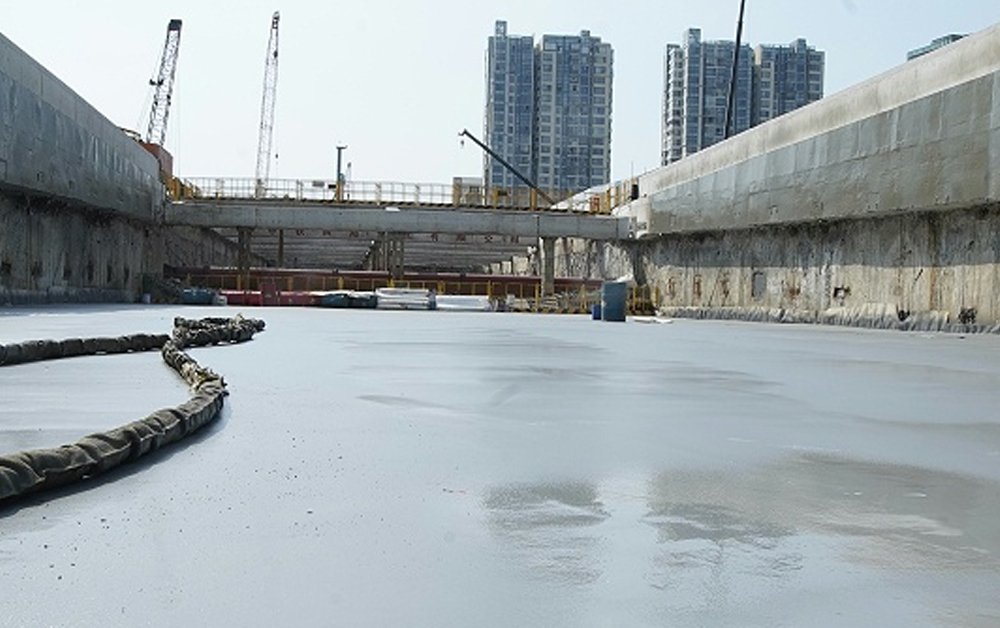
- Tunnels and subways
- Industrial flooring
- Wastewater treatment plants
- Harsh chemical environments
Polyurethane is best suited for:
- Basements and retaining walls
- Residential and commercial waterproofing
- Swimming pools
- Underground structures
- Roofs requiring flexible sealing layers
If you’re unsure which product suits your project, YURU Waterproof provides technical consultation, formulation customization, and OEM production to ensure your coating matches your engineering specifications.
Why Choose YURU Waterproof?
YURU Waterproof has been specializing in waterproofing materials for over a decade.
Our expertise covers polyurea coatings, polyurethane coatings, injection grouting materials, and flooring systems.
Why professionals worldwide trust YURU:
- Strong R&D capability – in-house formulation for both polyurea and polyurethane systems.
- OEM/ODM service – private label and custom performance available.
- Proven reliability – used in tunnels, bridges, and commercial roofing projects worldwide.
- Technical support – full engineering consultation, on-site training, and application guidance.
Conclusion
Both polyurea and polyurethane waterproofing systems play vital roles in modern infrastructure protection. Choosing between them depends on project conditions, exposure requirements, and installation preferences.
With decades of formulation experience and a strong OEM foundation, YURU Waterproof delivers both systems — engineered for durability, flexibility, and performance that meets the demands of contractors and engineering firms worldwide.
For technical consultation or OEM partnership, visit YURU Waterproof today and discover professional-grade waterproofing solutions tailored for your business.
YURU Product solutions