Spray Polyurea Waterproof Coating Application Guide
Introduction:
Over the last twenty years, spray polyurea waterproof coating has become one of the fastest-growing technologies in the global waterproofing industry. Now it’s a go-to solution for roofing, underground waterproofing, wastewater facilities, bridges, parking decks, tunnels, and large-scale infrastructure.
Contractors keep choosing polyurea because it delivers performance that traditional systems struggle to match — all at once.
- Seamless waterproofing
- Rapid curing
- Exceptional flexibility
- High abrasion resistance
- Long service life
- Excellent chemical resistance
But here’s the catch. Polyurea isn’t a “spray and forget” material.
Most polyurea waterproofing failures don’t come from bad material. They come from poor surface prep, wrong equipment settings, bad application technique, or not understanding the system.
This guide provides a practical overview of spray polyurea waterproof coating application.
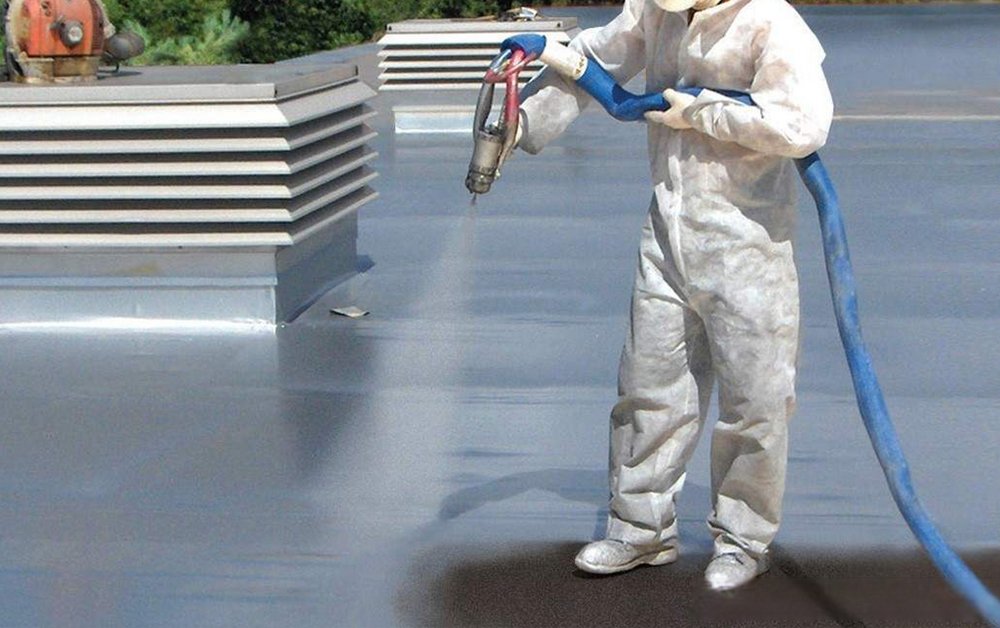
Why Spray Polyurea Is Becoming the Preferred Waterproofing Technology?
Limitations of Traditional Waterproofing Systems
Traditional waterproofing methods have been used for decades. But they have real limits — especially on big infrastructure projects.
Common limitations include:
- Seam failures in membrane systems
- Long installation times
- Difficult detailing around complex structures
- Poor resistance to mechanical damage
- Limited elongation capacity
On large projects, those problems mean higher maintenance costs over time.
Advantages of Spray Polyurea Waterproof Coating
Polyurea fixes a lot of these issues with its unique chemistry and application process.
Major benefits include:
Seamless Waterproof Membrane
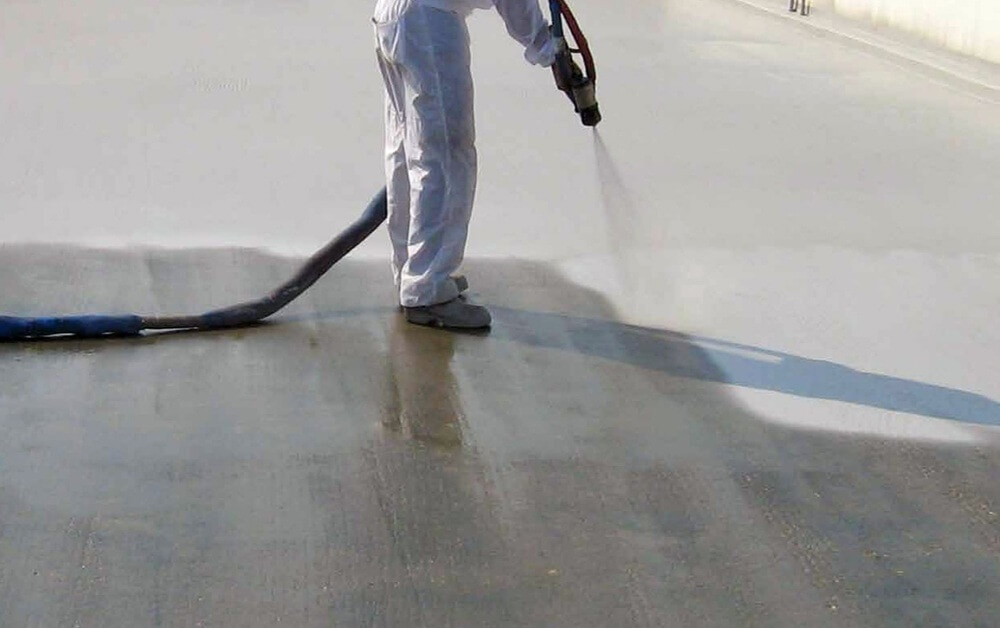
Spray-applied polyurea forms one continuous membrane. No overlaps, no joints. That eliminates one of the most common causes of waterproofing failure.
Extremely Fast Cure Time
Most polyurea systems cure within seconds.
This rapid curing allows:
- Faster project completion
- Reduced downtime
- Earlier return to service
For industrial facilities, this can significantly reduce operational disruptions.
High Elasticity
Quality polyurea systems can achieve elongation rates exceeding 300%.
This flexibility allows the coating to accommodate:
- Thermal movement
- Structural vibration
- Concrete shrinkage
- Minor substrate cracking
Exceptional Durability
Properly installed polyurea systems can provide service lives exceeding 20 years in many environments.
What Is Spray Polyurea Waterproof Coating?
Basic Chemistry of Polyurea
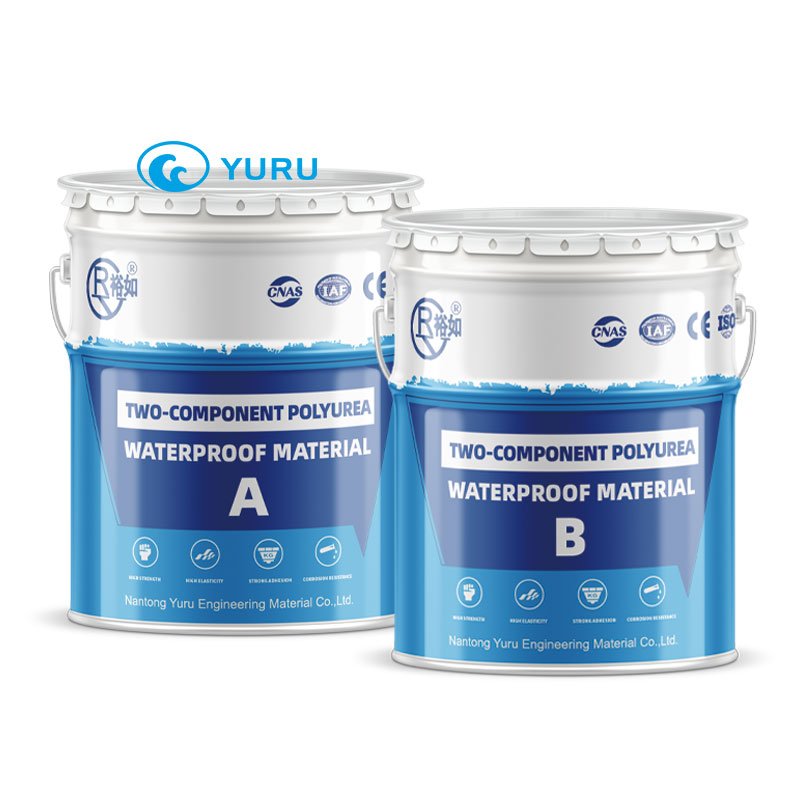
Polyurea is made by a reaction between two components.
Component A
Typically based on isocyanates.
Component B
Typically composed of amine-terminated resins and additives.
When mixed under high temperature and pressure, these components react almost instantly.
The result is a highly durable elastomeric membrane.
Why Polyurea Reacts So Quickly?
Polyurethane coatings rely on moisture to cure. That can cause problems in humid or cold conditions. Polyurea reacts directly between its two components.
This provides several advantages:
- Fast curing
- Reduced humidity sensitivity
- Consistent application quality
- Greater installation efficiency
Pure Polyurea vs Hybrid Polyurea vs Polyurethane
Contractors ask the question is: “Which system should I choose?”
It depends on your project requirements.
| Property | Pure Polyurea | Hybrid Polyurea | Polyurethane |
| Cure Speed | Excellent | Very Good | Moderate |
| UV Resistance | Excellent | Good | Moderate |
| Chemical Resistance | Excellent | Good | Good |
| Flexibility | Excellent | Good | Good |
| Service Life | 20+ Years | 10-15 Years | 8-12 Years |
| Cost | Higher | Medium | Lower |
When to Choose Pure Polyurea?
Pure polyurea is generally preferred for:
- Infrastructure projects
- Wastewater facilities
- Industrial roofs
- Bridge decks
- High-performance waterproofing
When Hybrid Polyurea Is Appropriate?
Hybrid systems offer a balance between performance and budget.
They are often used for:
- Commercial buildings
- Parking structures
- General waterproofing applications
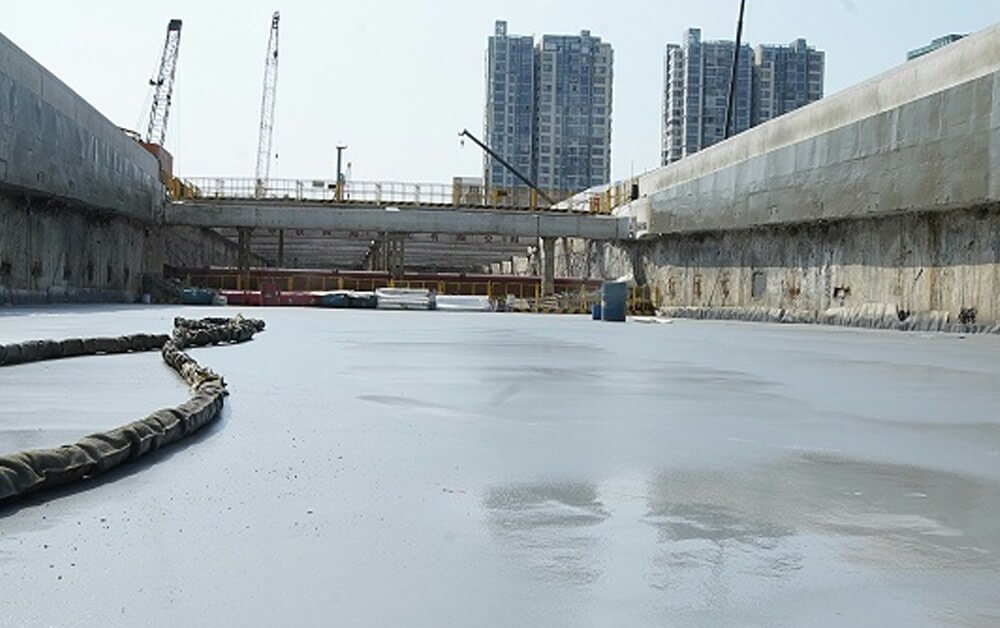
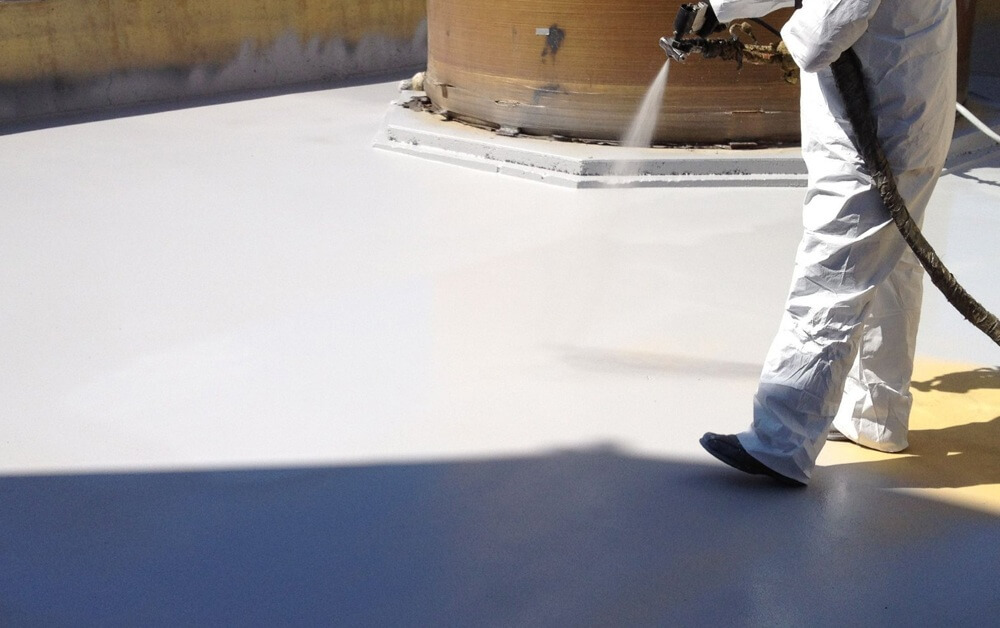
Surface Preparation – The Foundation of Successful Polyurea Application
Many experienced contractors agree on one principle:
More than 70% of waterproofing failures originate from poor substrate preparation.
Why Surface Preparation Matters?
Even the highest-quality polyurea cannot compensate for:
- Loose concrete
- Oil contamination
- Moisture issues
- Dust accumulation
Without proper preparation, adhesion problems become inevitable.
Concrete Surface Preparation
Concrete substrates require careful evaluation.
Recommended Procedures
Step 1 – Inspect Surface Integrity
Identify:
- Cracks
- Honeycombing
- Delamination
- Weak concrete
Step 2 – Mechanical Surface Preparation
Methods may include:
- Grinding
- Shot blasting
- Scarifying
These processes remove contaminants and create the desired surface profile.
Step 3 – Repair Defects
Before spraying polyurea:
- Fill cracks
- Repair voids
- Patch damaged areas
A stable substrate improves long-term performance.
Moisture Testing
Moisture is one of the biggest enemies of coating adhesion.
Excessive moisture can cause:
- Blistering
- Delamination
- Pinholes
Contractors should verify moisture content before installation.
Metal Roof Preparation
Polyurea is widely used on metal roofs.
However, metal surfaces require different preparation techniques.
Rust Removal
Corrosion must be removed before coating.
Common methods include:
- Sandblasting
- Power tool cleaning
- Abrasive blasting
Surface Profile Creation
A suitable anchor profile helps improve adhesion.
Smooth metal surfaces often require mechanical roughening.
Primer Application
Specialized primers help:
- Improve adhesion
- Prevent corrosion
- Enhance long-term durability
Why Primers Are Critical for Polyurea Systems?
Some contractors attempt to reduce costs by skipping primers.
This is a costly mistake.
Proper primers provide:
- Better adhesion
- Improved substrate sealing
- Reduced outgassing risk
- Enhanced system durability
The correct primer depends on:
- Concrete
- Steel
- Existing coatings
- Composite substrates
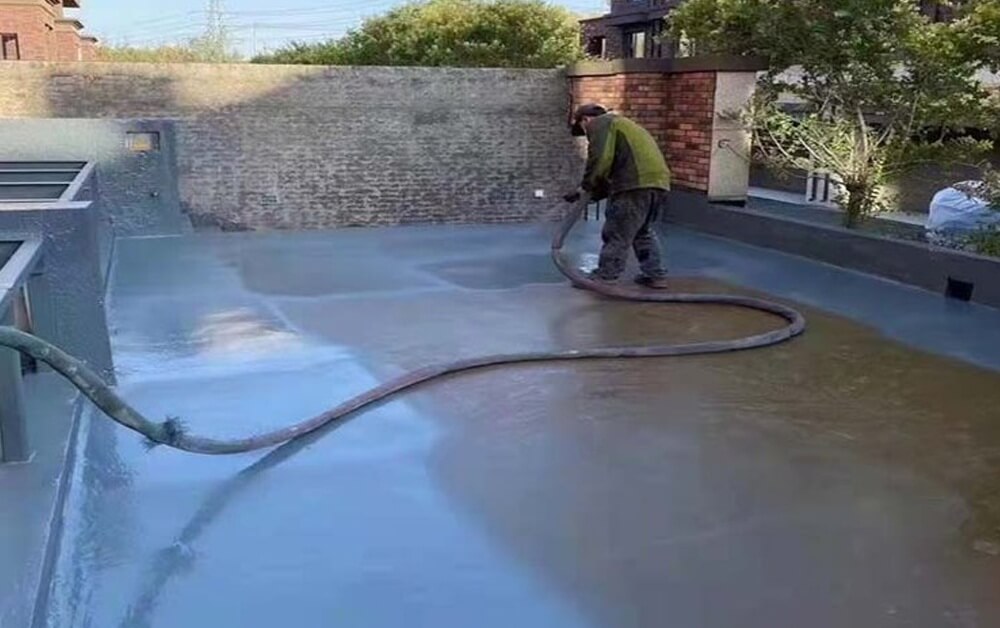
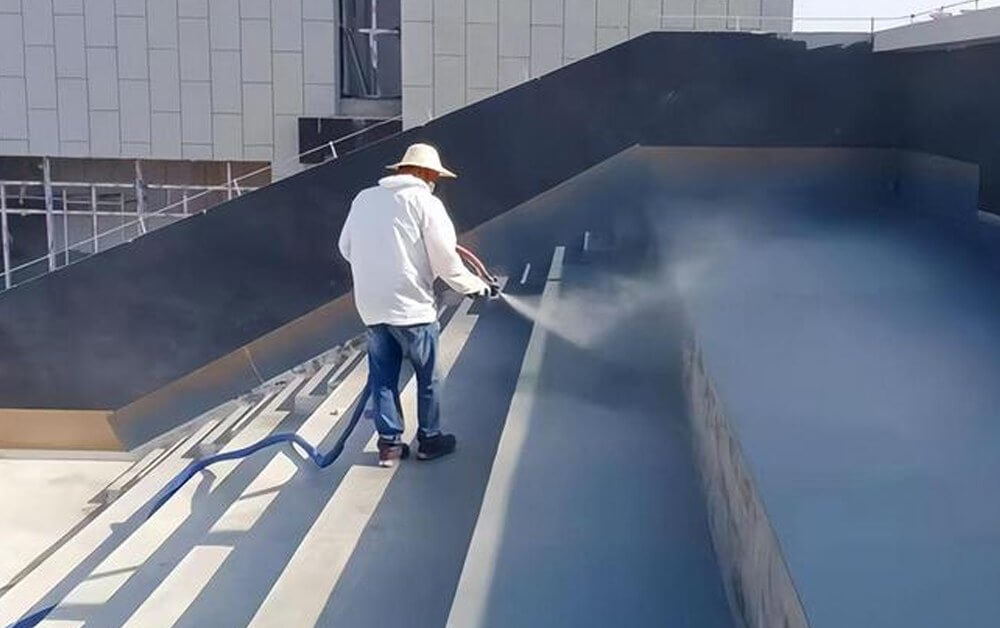
Polyurea Spray Equipment Requirements
Unlike conventional coatings, polyurea requires specialized application equipment.
High-Pressure Plural Component Sprayers
Professional polyurea systems rely on:
- High temperature
- High pressure
- Precise ratio control
Equipment must maintain consistent material flow throughout the application process.
Temperature Control
Typical processing temperatures range between:
- 65°C to 80°C
Proper temperature ensures optimal mixing and reaction.
Pressure Control
Most systems operate at:
- 2000–3500 psi
Insufficient pressure may cause poor atomization.
Excessive pressure may create overspray and material waste.
Standard Spray Polyurea Application Procedure
Step 1 – Site Inspection
Evaluate:
- Weather conditions
- Surface condition
- Access requirements
- Safety considerations
Step 2 – Surface Preparation
Clean, repair, profile. Most failures start with bad prep. Get it right.
Step 3 – Primer Installation
Apply primer according to manufacturer specifications.
Allow proper curing time.
Step 4 – Polyurea Spraying
Apply multiple passes as required.
Monitor:
- Thickness
- Coverage rate
- Spray pattern consistency
Step 5 – Detail Reinforcement
Special attention should be given to:
- Drains
- Pipe penetrations
- Expansion joints
- Corners
- Vertical transitions
These areas represent the highest leakage risk.
Step 6 – Quality Inspection
Verify:
- Film thickness
- Adhesion
- Continuity
- Visual appearance
Professional inspection reduces future warranty claims.
Common Spray Polyurea Application Problems and How to Prevent Them?
Even though polyurea technology is highly advanced, but application mistakes can still mess up the job. Most failures aren’t the coating’s fault — they’re installation errors.
Learn these problems, and you’ll save yourself from costly repairs and warranty headaches.
Blistering and Bubbling
Blistering is one of the most frequently reported coating defects.
Common Causes
- Excess substrate moisture
- Improper primer curing
- Contaminated surfaces
- Trapped air inside concrete pores
When the concrete heats up, trapped moisture expands and pushes up under the coating. Blisters form.
This can eventually lead to blister formation.
Prevention Methods
- Conduct moisture testing before application
- Use suitable primers
- Ensure substrate temperature exceeds dew point requirements
- Allow adequate primer curing time
Poor Adhesion
When the coating doesn’t stick, it’s usually bad prep.
Common Causes
- Dust contamination
- Oil contamination
- Weak concrete
- Incorrect primer selection
- Delayed coating application beyond primer recoat window
Prevention Methods
- Follow proper surface preparation standards
- Verify substrate integrity
- Use manufacturer-recommended primers
- Monitor recoat intervals carefully
Pinholes
Pinholes may appear as small surface defects but can compromise waterproofing performance.
Common Causes
- Outgassing concrete
- Excess substrate porosity
- Moisture contamination
- Improper spraying technique
Prevention Methods
- Apply sealing primers
- Control substrate temperature
- Use multiple coating passes if necessary
Uneven Thickness
Inconsistent membrane thickness can create weak points within the waterproofing system.
Common Causes
- Inconsistent spray patterns
- Improper gun distance
- Inexperienced operators
- Equipment calibration issues
Prevention Methods
- Maintain consistent spray speed
- Regularly calibrate equipment
- Verify thickness during application
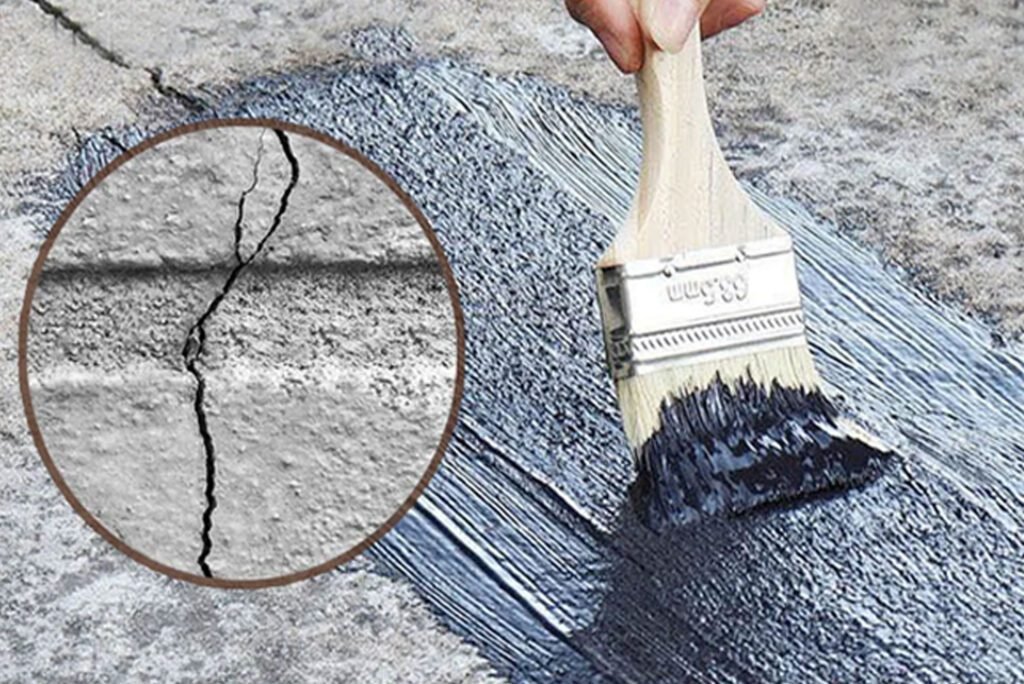

Spray Polyurea Waterproofing for Different Applications
Roof Waterproofing
Roofing is one of the biggest uses for spray polyurea.
Key Challenges:
Roofs face continuous exposure to:
- UV radiation
- Rainwater
- Wind
- Thermal movement
Polyurea’s elasticity lets it move with the roof without cracking.
Typical Applications:
- Concrete roofs
- Metal roofs
- Commercial buildings
- Industrial facilities
- Warehouse roofing
Why Polyurea Works Well on Roofs?
Major benefits include:
- Seamless membrane formation
- Excellent crack bridging
- UV-resistant formulations
- Long-term weather resistance
When combined with proper surface preparation, roof waterproofing systems can achieve service lives exceeding two decades.
Basement Waterproofing
Underground structures face unique challenges.
Typical Problems:
- Hydrostatic pressure
- Groundwater intrusion
- Structural movement
- Construction joint leakage
Polyurea creates a continuous waterproof barrier that can handle groundwater pressure.
Benefits for basements: Joint-free, high elongation, great adhesion to concrete, water penetration resistance.
Tunnel and Subway Waterproofing
Infrastructure owners increasingly use polyurea in underground transportation projects.
Why Tunnels Need Advanced Waterproofing?
Tunnel environments often experience:
- Continuous moisture exposure
- Crack development
- Ground movement
- High maintenance costs
Polyurea provides long-term protection while minimizing future repair requirements.
Typical Tunnel Waterproofing Areas:
Common applications include:
- Tunnel linings
- Utility tunnels
- Subway stations
- Service corridors
Wastewater Treatment Plants
These are some of the toughest conditions for waterproofing.
Exposure Conditions
Structures may encounter:
- Chemical attack
- Biological contamination
- Continuous immersion
- Abrasion
Polyurea’s chemical resistance makes it highly suitable for these facilities.
Benefits: Chemical resistance, waterproofing, abrasion resistance, long life.
Bridge Deck Waterproofing
Bridges experience constant stress.
Typical Challenges:
- Traffic loading
- Vibration
- Thermal expansion
- Water infiltration
Polyurea membranes help protect concrete from chloride penetration and moisture damage.
How to Achieve a 20+ Year Service Life with Polyurea?
One of the strongest selling points of spray polyurea waterproof coating is durability.
However, achieving a 20-year lifespan requires more than selecting a high-quality material.
Proper Surface Preparation
Surface preparation remains the single most important factor.
A properly prepared substrate provides:
- Better adhesion
- Improved durability
- Reduced defect risk
Many long-term failures originate from shortcuts taken during preparation.
Correct Membrane Thickness
Different projects require different thickness specifications.
Typical ranges include:
| Application | Recommended Thickness |
| Roofs | 1.5–2.0 mm |
| Basements | 2.0–3.0 mm |
| Tunnels | 2.5–4.0 mm |
| Wastewater Facilities | 3.0–5.0 mm |
Insufficient thickness often reduces waterproofing reliability.
Quality Control During Application
Regular inspection should include:
- Wet film thickness checks
- Dry film thickness verification
- Adhesion testing
- Holiday detection
These procedures help identify defects before project completion.
Protective Topcoats and Protection Layers
In some environments, additional protection may significantly extend service life.
Examples include:
UV-Resistant Topcoats
Improve color retention and weather resistance.
Mortar Protection Layers
Useful for heavy traffic areas.
Tile Systems
Frequently used on exposed waterproof decks.
Proper protection can help waterproofing systems exceed 20 years of service.
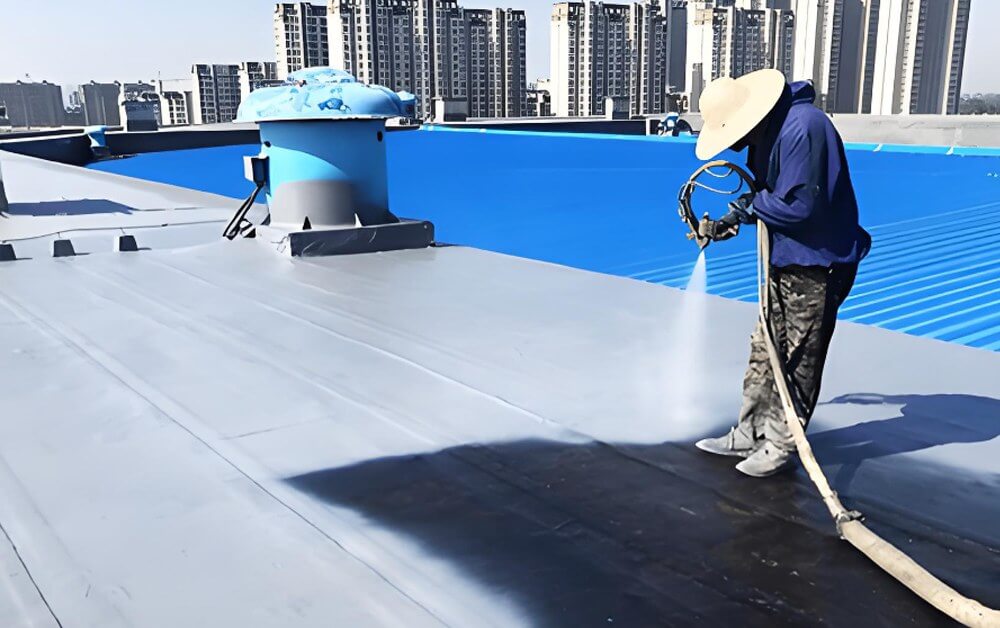
YURU Waterproof Spray Polyurea Solutions
At YURU Waterproof, we understand that successful waterproofing involves more than simply supplying materials.
It requires a complete system approach.
Comprehensive Polyurea Product Portfolio
YURU provides:
- Pure Polyurea Waterproof Coating
- Hybrid Polyurea Coating
- Polyurea Primer Systems
- Roof Waterproofing Solutions
- Underground Waterproofing Systems
These products are designed to meet the requirements of modern infrastructure and industrial projects.
Suitable for Challenging Environments
Our systems are widely used in:
- Roof waterproofing projects
- Subway systems
- Tunnels
- Wastewater facilities
- Industrial plants
- Municipal infrastructure
Technical Support for Contractors
YURU Waterproof supports global partners through:
- Product selection guidance
- Technical training
- OEM services
- Waterproofing system recommendations
- International project support
Our objective is to help contractors achieve long-term waterproofing success.
FAQs:
1. What is spray polyurea waterproof coating?
Spray polyurea is a high-performance elastomeric waterproofing membrane formed by spraying two components under high pressure and temperature.
2. How long does polyurea waterproofing last?
Properly installed polyurea systems can last 20 years or longer depending on environmental conditions and maintenance.
3. Can polyurea be applied on concrete roofs?
Yes. Polyurea is widely used on concrete roofs because of its seamless waterproofing and crack-bridging properties.
4. Can polyurea withstand UV exposure?
Yes. High-quality polyurea systems offer excellent UV resistance.
5. Does YURU Waterproof offer OEM polyurea solutions?
Yes. YURU Waterproof provides OEM, private label, and customized waterproofing solutions for distributors and contractors worldwide.
Conclusion:
Spray polyurea waterproof coating has become one of the most advanced waterproofing technologies available today.
Its unique combination of:
- Seamless waterproofing
- High elasticity
- Rapid curing
- Long-term durability
- Chemical resistance
makes it suitable for some of the most demanding construction environments.
Long-term success requires proper surface prep, professional equipment, experienced applicators, and systematic quality control — not just good material.
Looking for a reliable spray polyurea supplier for roofing, tunnels, basements projects? YURU Waterproof is ready to support your success.
Contact YURU Waterproof today to receive:
- Product Catalog
- Technical Data Sheets
- Free Samples
- OEM Solutions
- Waterproofing Consultation
YURU Product solutions