What Types of Resins Does a Professional Injection Grouting Material Supplier Offer?
Introduction:
In injection grouting projects, failures rarely come from equipment or labor alone. More often, they originate from a fundamental mismatch between resin type and site conditions.
Across tunnels, basements, dams, subways, and underground structures, leaks are not uniform.
- Some involve high-pressure flowing water.
- Others are slow seepage through microcracks.
- Some require immediate emergency sealing, while others demand long-term structural integrity.
This is why professional injection grouting material suppliers never rely on a single resin system. Instead, they develop, manufacture, and support multiple resin families, each engineered for a specific role.
In this guide, we will introduce the core resin types, explain where each one performs best.
1. Why Resin Type Determines Grouting Performance More Than Application Technique?
Injection grouting is often described as a construction method. In reality, it is a material science solution applied through construction means.
1.1 Grouting Failures Usually Start with Material Misjudgment
Common field problems include:
- Foam collapsing after initial expansion
- Gel washing out under continuous seepage
- Rigid materials cracking again under movement
- Chemical incompatibility with groundwater
In most cases, these failures are predictable if the resin selection ignores:
- Water pressure
- Crack width and connectivity
- Structural movement
- Chemical exposure
- Required service life
A professional supplier’s role is not merely to sell resin, but to help engineers avoid these mismatches.
1.2 Why Single-Product Suppliers Are a Risk in Complex Projects?
Suppliers offering only one grouting resin often attempt to force that material into every application.
This leads to:
- Overuse of hydrophobic PU where elasticity is needed.
- Incorrect use of epoxy in wet conditions.
- Ignoring acrylate solutions for micro-permeation problems.
Professional suppliers distinguish themselves by resin diversity.
2. Polyurethane (PU) Grouting Resins: The Backbone of Water Sealing Systems
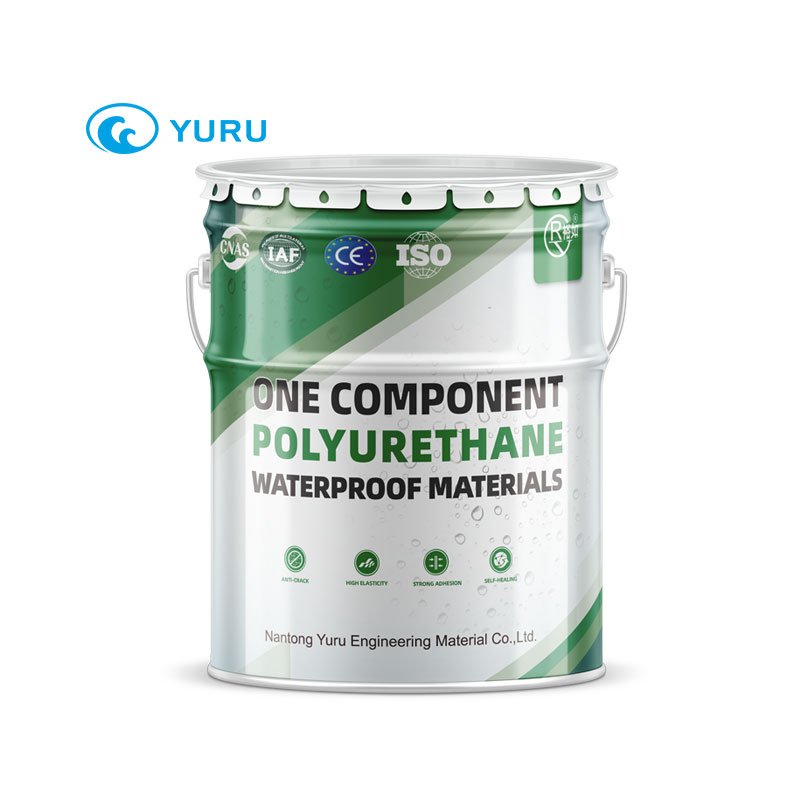
Polyurethane grouting materials remain the most widely used resins in underground waterproofing projects. However, polyurethanes are divided into two systems: hydrophobic and hydrophilic.
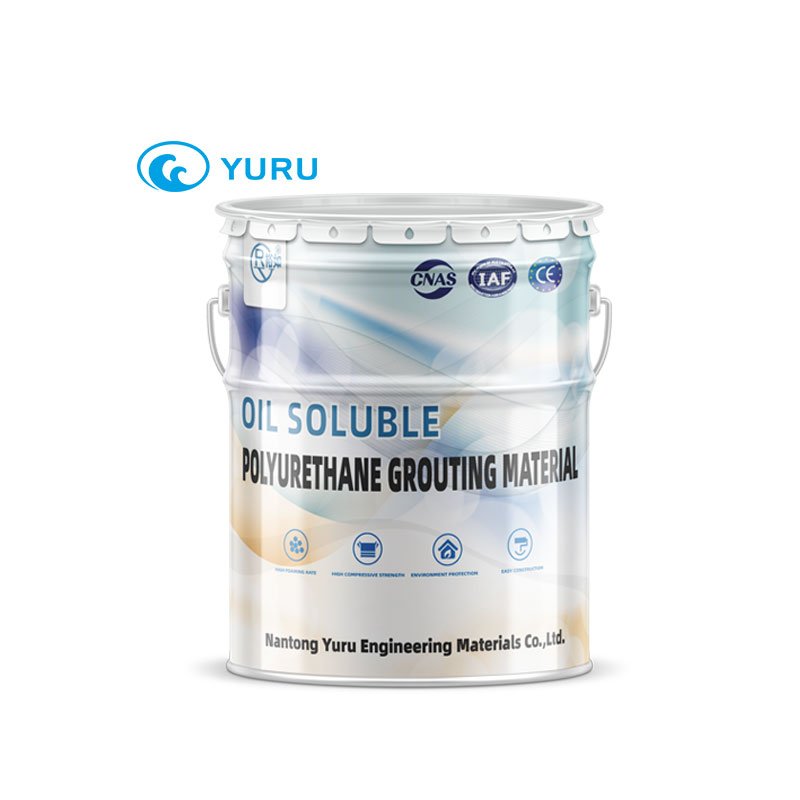
2.1 Hydrophobic Polyurethane Grouting Resin: Rapid Water Stopping
Hydrophobic polyurethane reacts immediately upon contact with water.
Main Reaction Mechanism:
- Water-triggered chemical reaction
- Rapid generation of carbon dioxide
- Formation of a highly expansive closed-cell foam
Performance Characteristics:
- Reaction time: seconds to minutes
- Expansion rate: up to several times the original volume
- Final structure: rigid to semi-rigid, closed-cell structure
- Waterproofing performance: completely waterproof
Typical Applications:
- Active leakage points with significant water flow
- High-pressure leakage points
- Emergency leak sealing
- Sudden water ingress at tunnel lining joints
Hydrophobic polyurethane is not suitable for applications requiring long-term flexibility. Its function is to achieve rapid water stopping.
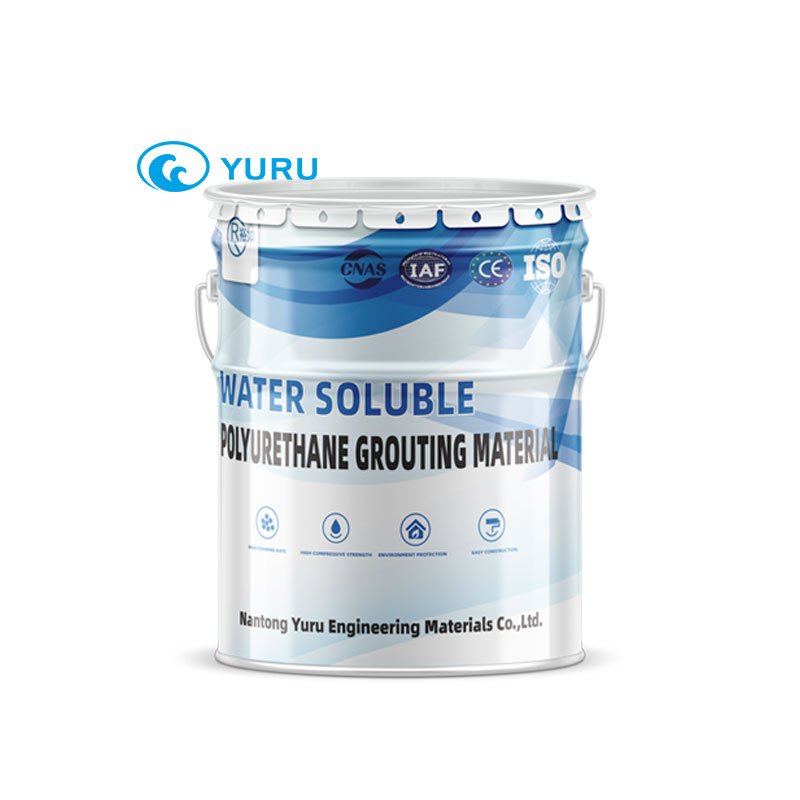
2.2 Hydrophilic Polyurethane Grouting Resin: Long-Term Elastic Sealing
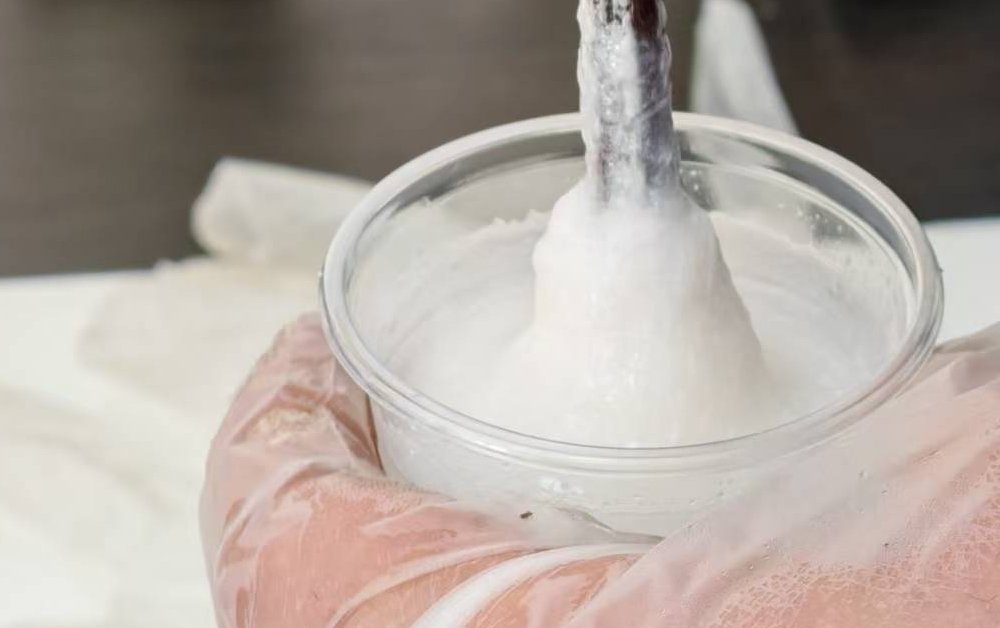
Hydrophilic polyurethane uses water as part of its curing mechanism.
Main Reaction Mechanism:
- Water-activated polymerization reaction
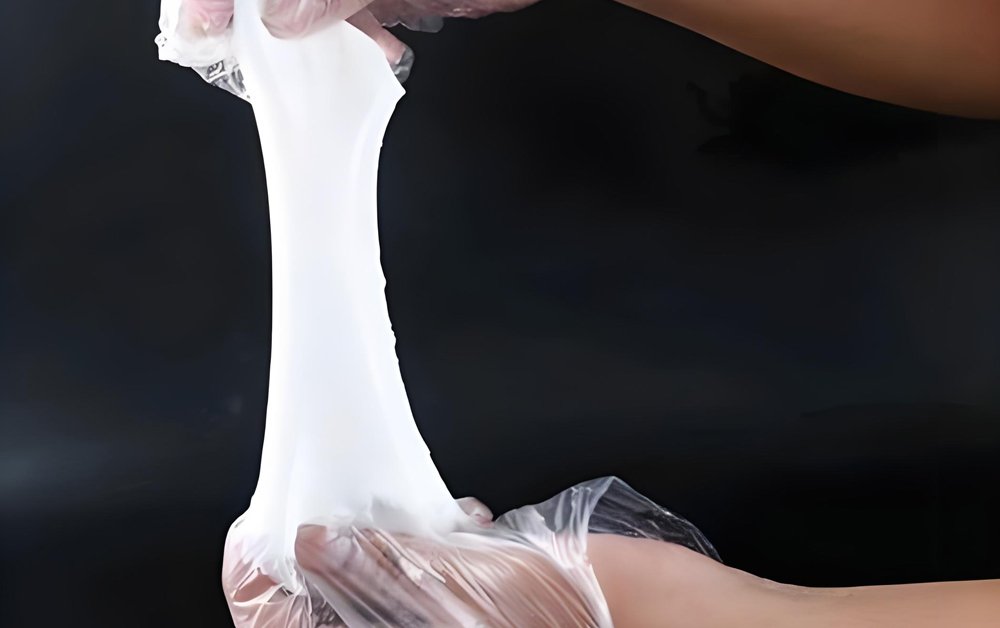
- Formation of an elastic hydrogel
- Controllable expansion and contraction
Performance Characteristics:
- Adjustable gel time
- Low or minimal expansion
- High elasticity and high elongation
- Strong adhesion to concrete
Typical Applications:
- Structural cracks with displacement
- Construction joints and cold joints
- Long-term leakage control
- Secondary sealing after hydrophobic polyurethane leak sealing
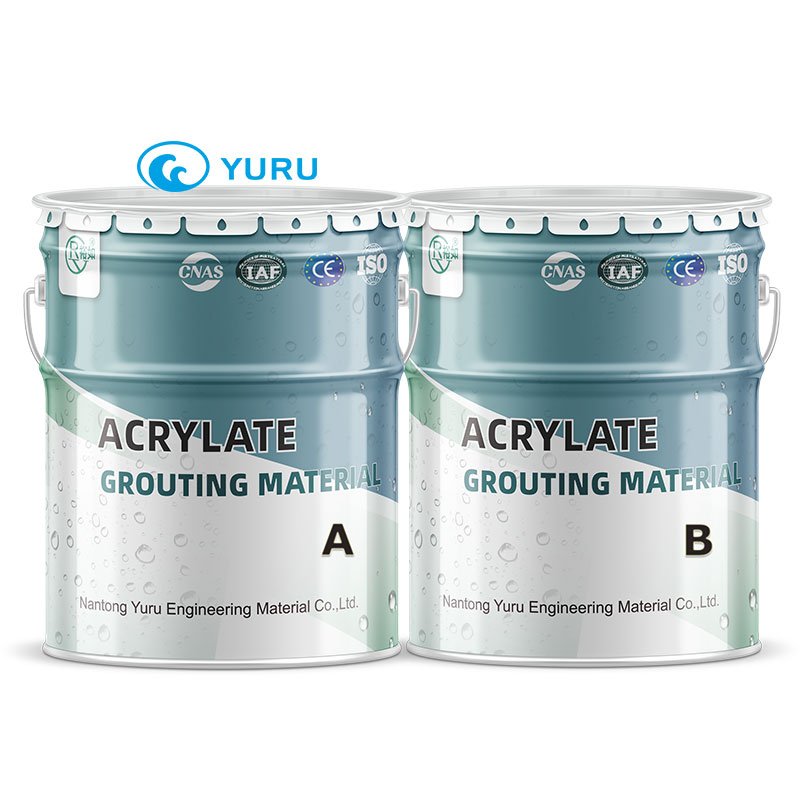
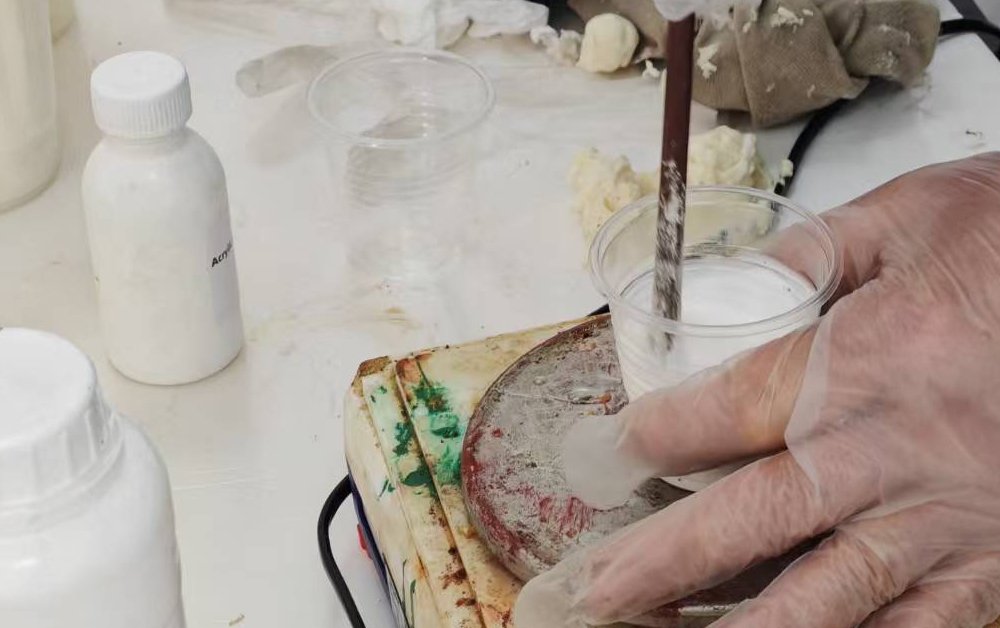
3. Acrylate Grouting Resins: Micro-Penetration and Curtain Grouting Specialists
Acrylate grouting materials occupy a unique position in professional resin portfolios.
They are not designed for forceful expansion. They are designed for penetration and distribution.
3.1 Why Acrylate Resins Are Unmatched for Fine Cracks and Soils?
Acrylate resins typically feature:
- Ultra-low viscosity (close to water)
- Excellent soil and microcrack penetration
- Adjustable gel times from seconds to hours
These properties make them indispensable in:
- Tunnel curtain grouting
- Subway seepage control
- Dam foundation sealing
- Soil stabilization behind structures
3.2 Environmental and Durability Considerations
Modern professional suppliers formulate acrylates to ensure:
- Low toxicity
- Groundwater compatibility
- Long-term chemical stability
This is particularly critical in infrastructure projects where environmental approval is required.
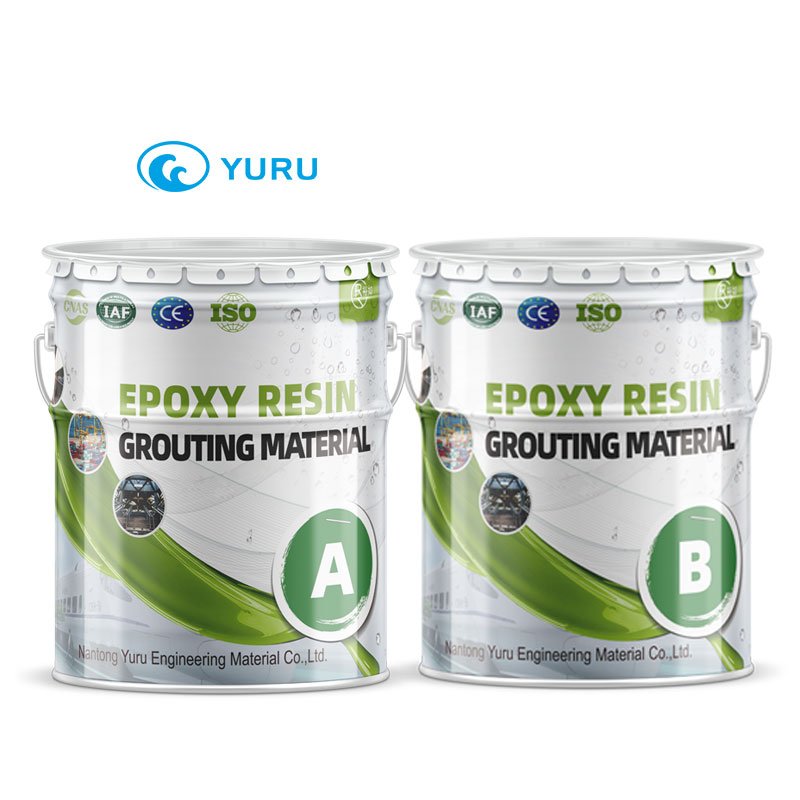
4. Epoxy Grouting Resins: Structural Strength Comes First
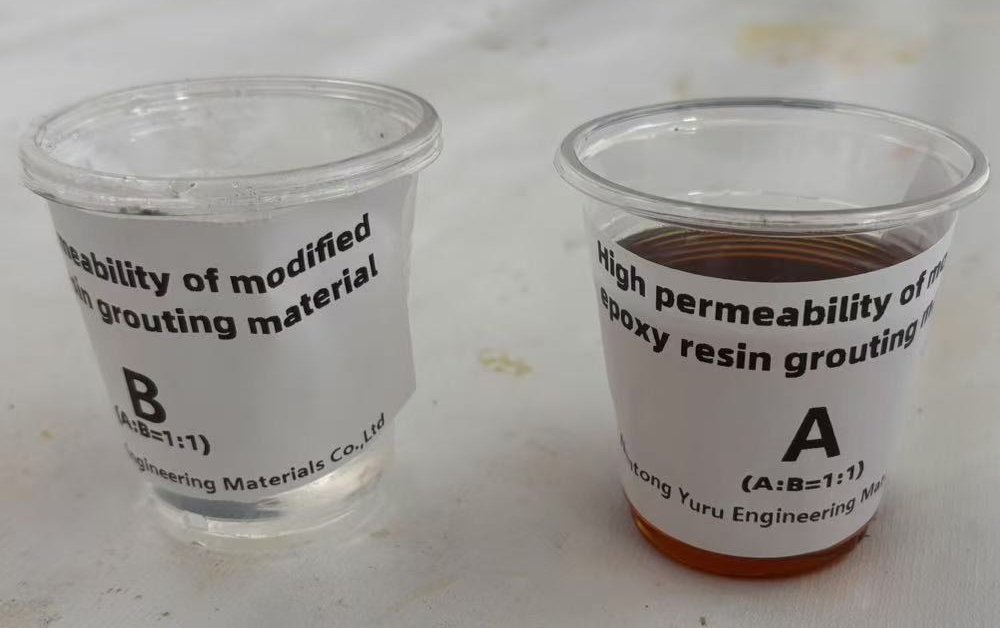
Epoxy resins are often misunderstood in waterproofing projects. They are not leak-stopping materials in the traditional sense.
4.1 What Epoxy Does Best?
Epoxy excels at:
- High compressive and tensile strength
- Strong bonding to dry or semi-dry concrete
- Structural crack restoration
Typical uses include:
- Load-bearing crack repair
- Structural strengthening
- Concrete integrity restoration
4.2 Limitations That Professional Suppliers Clearly Communicate
Epoxy resins:
- Are rigid after curing
- Perform poorly in active water flow
- Cannot accommodate structural movement
5. Polyurea Grouting Resins: High-Performance Solutions for Extreme Conditions
Polyurea grouting materials represent a higher-performance category.
5.1 Key Advantages of Polyurea Systems
Polyurea resins offer:
- Fast reaction times
- Excellent chemical resistance
- Superior durability
- Strong bonding under harsh conditions
Applications include:
- Industrial underground structures
- Chemically aggressive environments
- Infrastructure requiring long service life
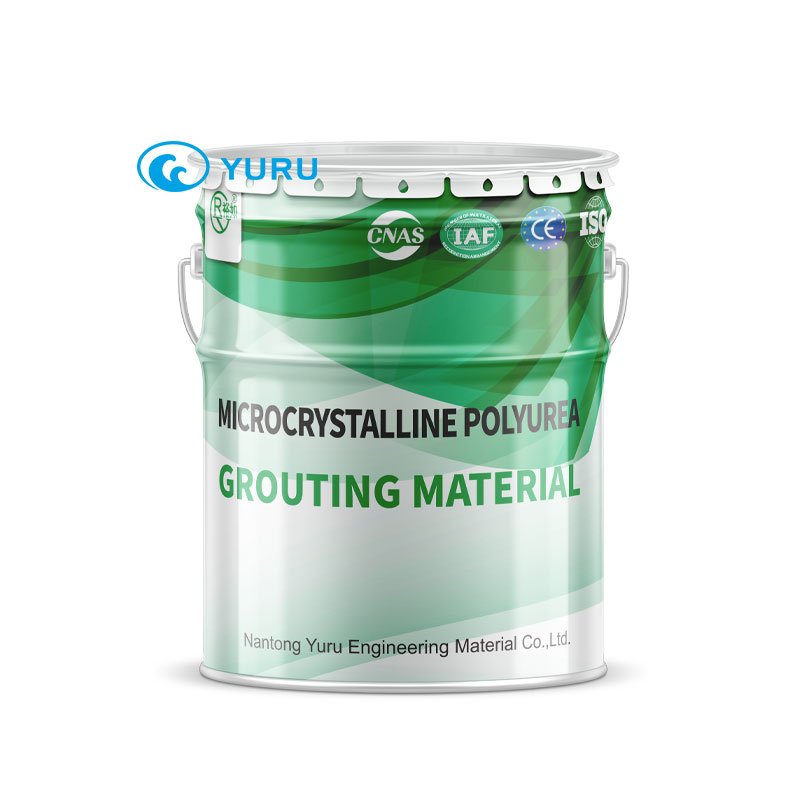
6. Microcrystalline Polyurea: Advanced Hybrid Grouting Technology
Microcrystalline polyurea represents the next evolution in grouting materials.
6.1 Why Microcrystalline Structure Matters
This resin type combines:
- Elasticity of polymer systems
- Structural stability of crystalline formations
- Enhanced aging resistance
It is especially suited for:
- Long-life municipal projects
- High-standard waterproofing systems
- Projects with strict durability requirements
YURU Waterproof integrates microcrystalline polyurea into system-level solutions.
7. How to Evaluate a Truly Professional Grouting Resin Supplier?
A professional supplier is defined not by product count, but by solution capability.
Key indicators include:
- Multiple resin families under one technical system.
- Clear application boundaries for each material.
- Ability to recommend combination strategies.
- Field-tested project experience.
YURU Waterproof provides:
- Hydrophobic & hydrophilic PU systems
- Acrylate grouting materials
- Epoxy structural grouts
- Polyurea and microcrystalline polyurea solutions
All supported by technical selection guidance
8. Comparative Overview: How Different Grouting Resins Perform in Real Projects
Functional Comparison of Common Injection Grouting Resins
| Resin Type | Viscosity | Reaction Speed | Expansion | Elasticity | Structural Strength | Typical Use |
|---|---|---|---|---|---|---|
| Hydrophobic PU | Medium | Very fast, adjustable | High | Low–Medium | Low | Emergency water stoppage |
| Hydrophilic PU | Low–Medium | Adjustable | Low | High | Low | Long-term leak sealing |
| Acrylate | Very low | Adjustable | None | Medium | Very low | Curtain grouting, soil sealing |
| Epoxy | Medium–High | Slow | None | Very low | Very high | Structural crack repair |
| Polyurea | Low–Medium | Extremely fast | Low | Medium–High | Medium | Harsh environments |
| Microcrystalline Polyurea | Medium | Fast | Low | High | Medium–High | Long-life infrastructure |
FAQs:
1. What is the main difference between hydrophobic and hydrophilic PU grouting materials?
Hydrophobic PU reacts with water to expand and form foam, making it ideal for rapid water stoppage. Hydrophilic PU reacts with water to form an elastic gel, making it better suited for long-term crack sealing and movement accommodation.
2. When should epoxy grouting be used instead of flexible resins?
Epoxy resins are used when structural strength restoration is required and crack movement is minimal.
3. How important is viscosity when selecting a grouting resin?
Viscosity directly affects penetration depth and crack accessibility. Lower viscosity resins perform better in microcracks and porous substrates, while higher viscosity resins suit wider voids.
4. Can grouting resins be customized for temperature or reaction time?
Yes. Professional suppliers like YURU Waterproof can adjust gel time, reaction speed, and viscosity based on site temperature and injection conditions.
5. Can multiple grouting materials be used in one project?
Absolutely. Professional projects often use multi-stage grouting systems, such as hydrophobic PU for initial water stoppage followed by hydrophilic PU or acrylate for long-term sealing.
Conclusion:
Selecting the appropriate grouting resin is crucial in the grouting construction process. It requires considering the actual site conditions and choosing the right resin based on functional requirements.
It also requires selecting a reliable grouting material supplier who focuses on providing solutions.
If you are evaluating grouting materials for the following projects:
- Tunnels, subways, or underground infrastructure
- Dams, foundations, or water retention structures
- Industrial facilities or long-life civil engineering assets
Contact YURU Waterproof to discuss your project and receive technical material recommendations, resin selection, and sample support tailored to your specific application.
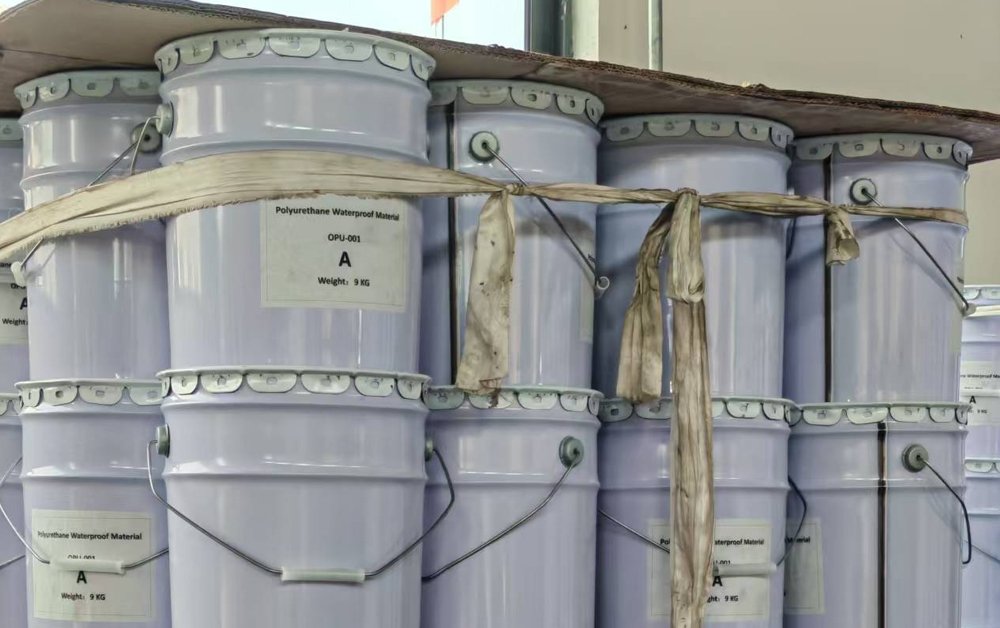
YURU Product solutions