Which Polyurea Waterproofing System Is Best for Concrete Roofs?
Why Polyurea Waterproofing Is Essential for Modern Concrete Roofs?
Concrete roofs are constantly exposed to harsh weather conditions, temperature fluctuations, and UV radiation. Over time, these elements can cause surface cracks, leaks, and deterioration. Traditional waterproofing systems—such as bituminous membranes, polyurethane coatings, or PVC sheets—often struggle to maintain long-term protection under these stresses.
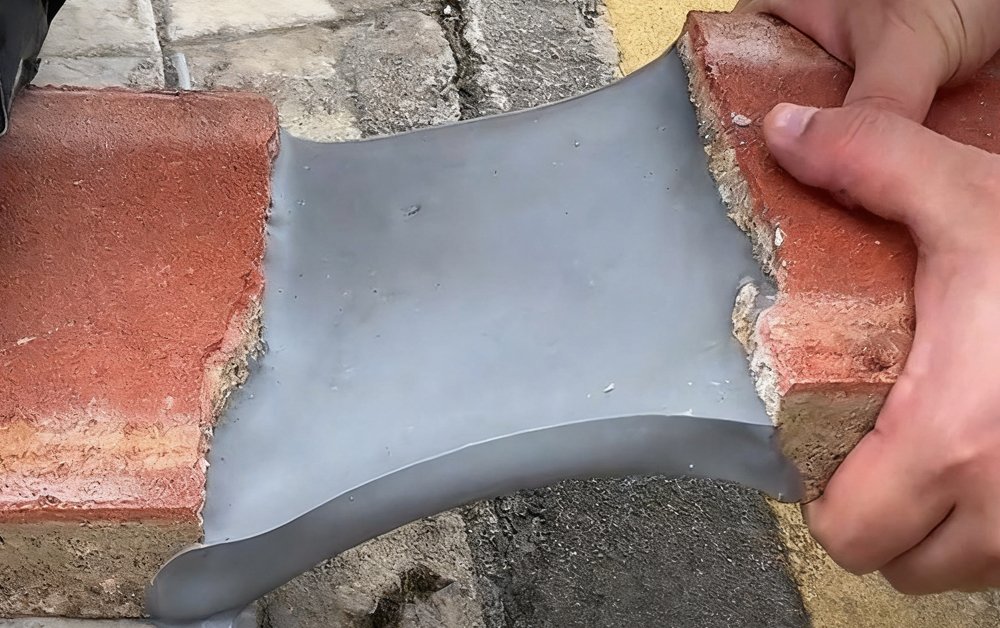
Polyurea waterproofing, however, represents a new generation of technology in the construction industry. It forms a seamless, highly elastic, and durable membrane that fully adheres to the substrate. The result is a long-lasting waterproof barrier that effectively prevents water infiltration and concrete degradation.
Today, polyurea systems are widely used in high-performance projects, including commercial roofs, industrial buildings, metro stations, and bridges, due to their outstanding flexibility, rapid curing, and superior chemical resistance.
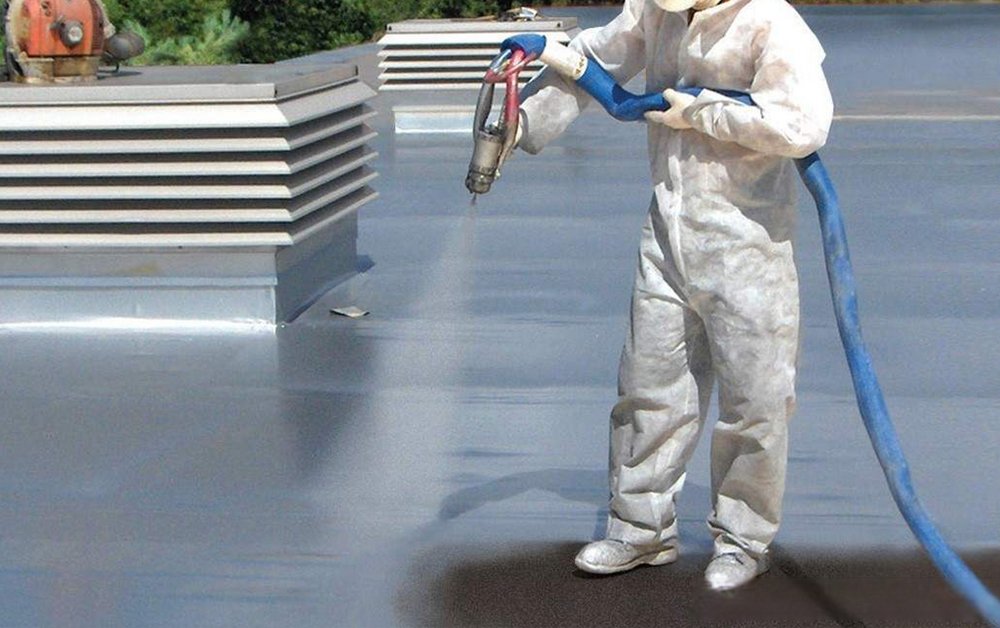
Key Advantages of Polyurea Waterproofing Systems Over Traditional Coatings
When compared to traditional materials, polyurea coatings offer a unique combination of efficiency, performance, and sustainability. Below are the main benefits that make polyurea a preferred choice for contractors and engineers:
- Seamless protection – Applied by brushing, spraying, polyurea creates a uniform membrane without joints or overlaps.
- Fast curing – The coating sets within hours, minimizing downtime and allowing for quick project completion.
- Superior durability – Resistant to UV rays, thermal cycles, abrasion, and chemicals, polyurea maintains integrity even under extreme conditions.
- High elasticity – Its ability to stretch and recover makes it ideal for structures prone to movement or vibration.
- Low VOC and eco-friendly – Polyurea systems are solvent-free, making them safe for the environment and workers.
- Excellent adhesion – Bonds strongly with concrete, metal, and other substrates, ensuring long-term waterproofing.
These characteristics make polyurea coatings a strategic choice for roofing systems that demand both durability and performance.
Main Types of Polyurea Waterproofing Systems and Their Applications
Different roof projects require different waterproofing solutions. Below are the main types of polyurea systems and their practical uses.
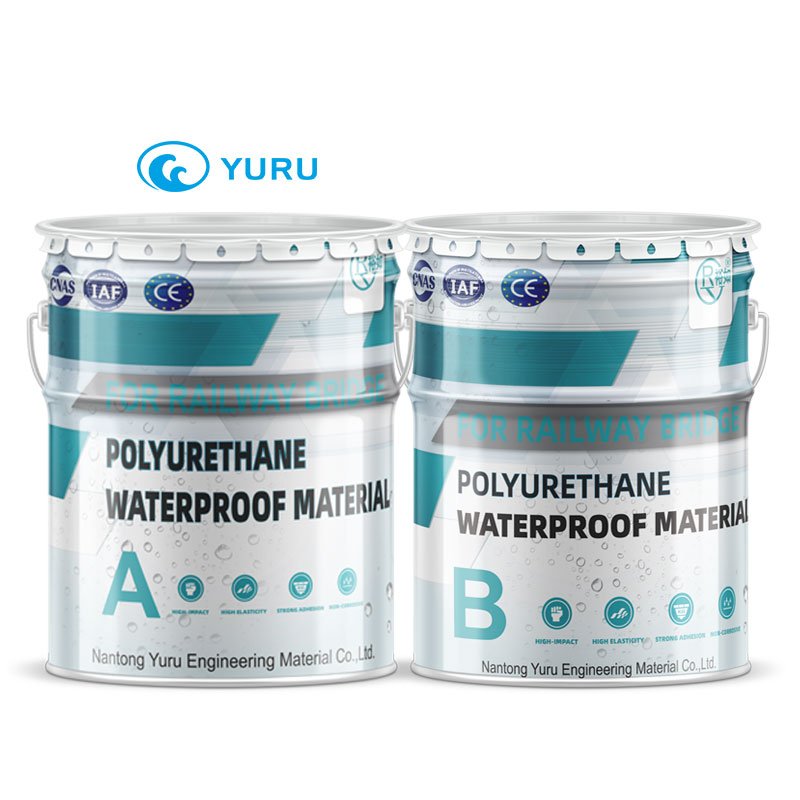
Single-Component Polyurea Waterproof Coating
Single-component polyurea is moisture-cured, meaning it reacts with air humidity to form a protective film.
It’s easy to apply—no mixing or special equipment needed—making it suitable for small-scale projects or roof maintenance work.
While its curing speed is slower than two-component systems, it offers a cost-effective solution for repairs, roof renovations, and maintenance projects.
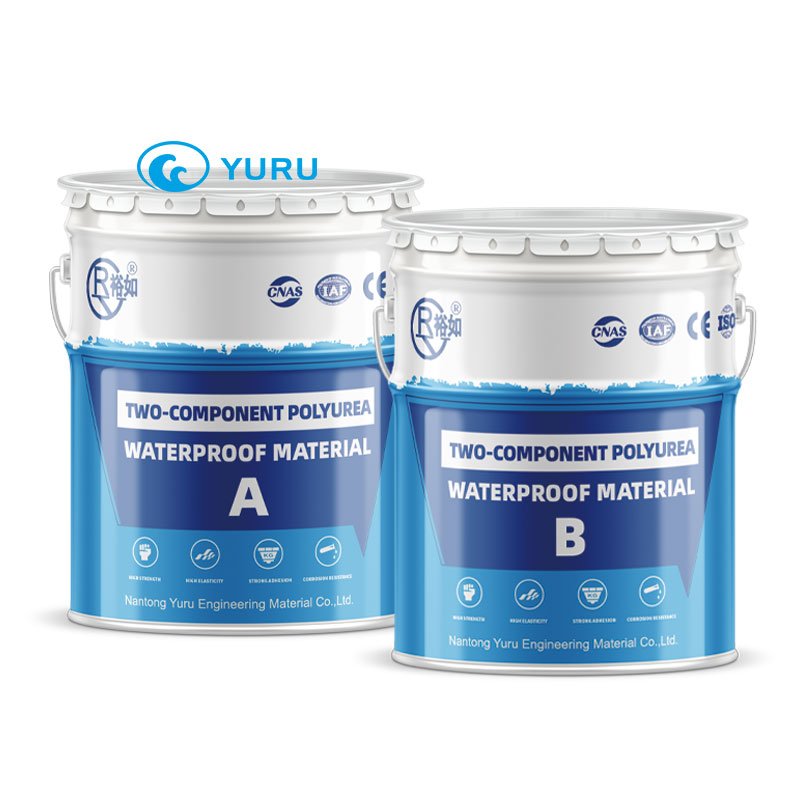
Two-Component Polyurea Waterproof Coating
This system is made up of two liquid components that react instantly when brushed, sprayed. It’s widely known for its outstanding mechanical properties and UV stability.
Two-component polyurea creates a dense, tough, and flexible membrane that adheres perfectly to concrete surfaces. Its superior anti-aging, anti-yellowing, and crack-bridging abilities make it ideal for large-scale projects such as commercial roofs, car parks, and exposed roof decks.
In short, it’s the go-to solution for long-term, high-performance roof waterproofing.
Polyurea Grouting Material
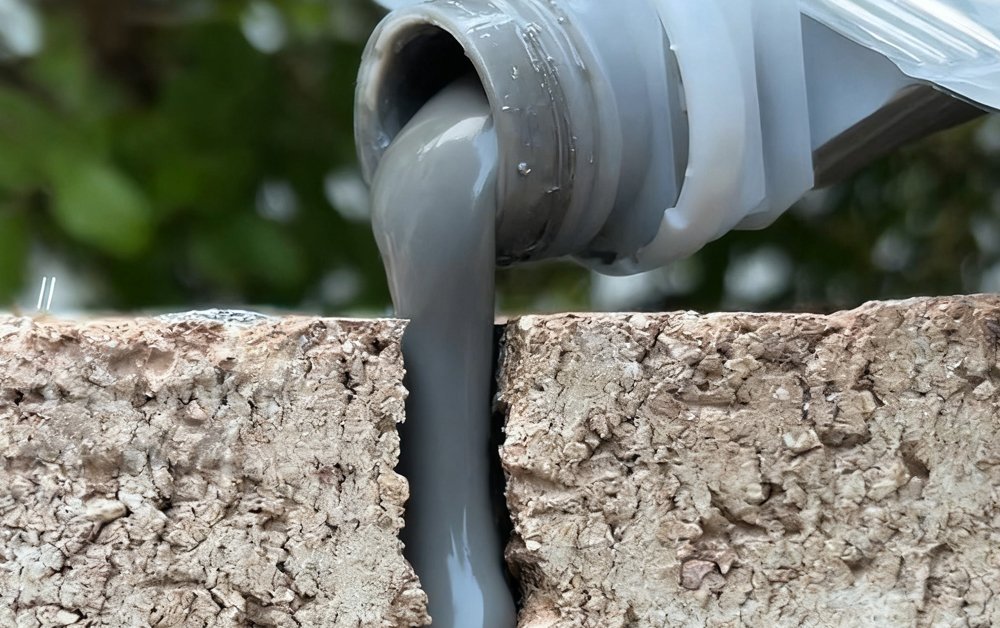
Polyurea grouting materials are designed to seal cracks, joints, and leaking points in concrete structures. They have low viscosity and fast expansion, allowing them to penetrate fine cracks and fill voids effectively.
These materials are essential in underground structures, basements, tunnels, and roof expansion joints, where conventional coatings cannot reach. Once cured, they form a durable, watertight seal that stops water infiltration at its source.
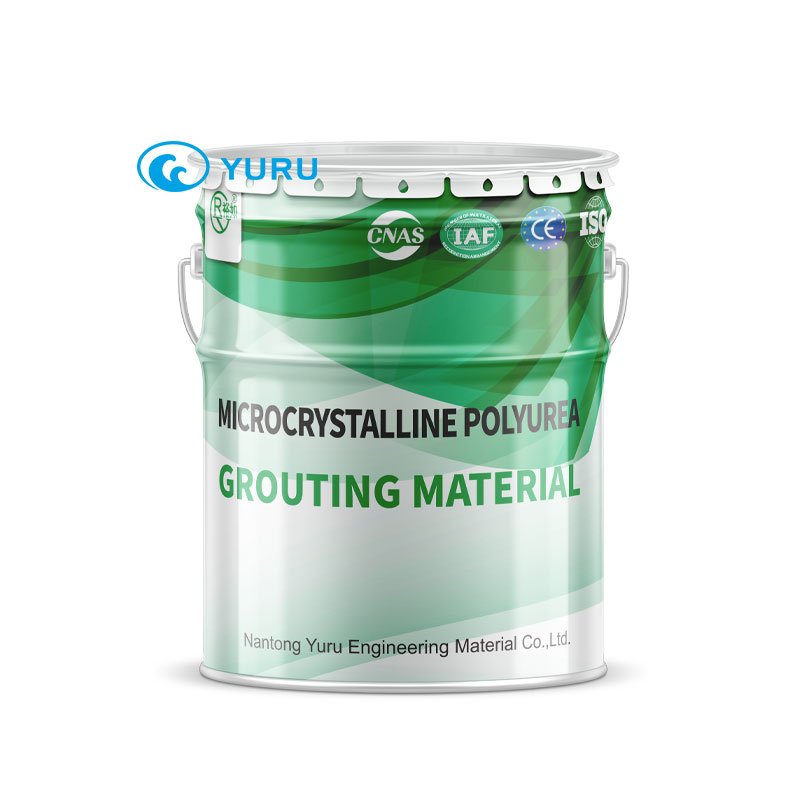
Microcrystalline Polyurea Grouting Material
Microcrystalline polyurea is an advanced formulation that combines toughness and flexibility. Its microcrystalline molecular structure allows it to absorb movement and resist fatigue under structural stress.
It’s particularly suited for dynamic joints, deformation zones, and structural cracks where flexibility and long-term waterproofing are critical.
This system is highly recommended for roof movement joints or concrete slabs with shifting stress.
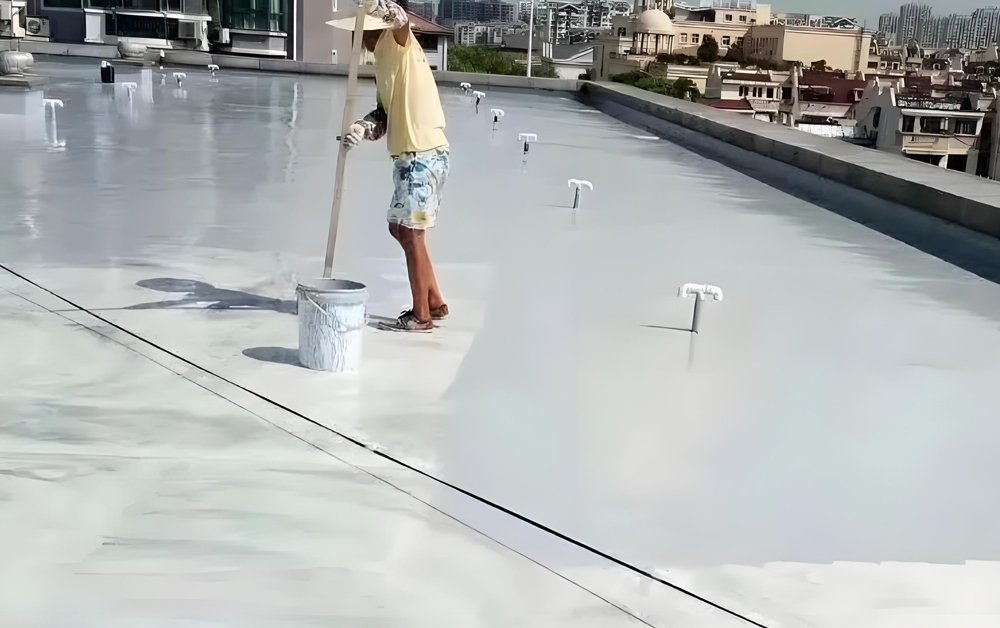
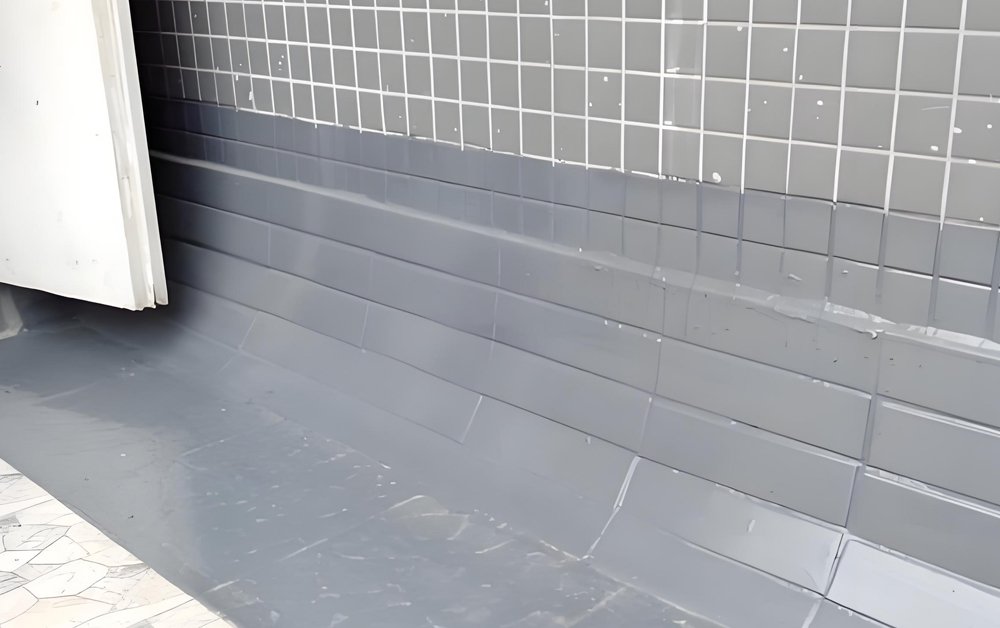
How to Select the Right Polyurea System for Your Concrete Roof?
Choosing the ideal polyurea system depends on several project-specific factors. Here’s how to evaluate them:
- Project scale and complexity – Large, exposed roofs usually benefit from two-component systems due to their strength and UV resistance.
- Application conditions – For small projects or minor repairs, single-component coatings offer a practical and efficient choice.
- Structural movement – If cracks or joints are involved, polyurea grouting or microcrystalline systems ensure long-lasting waterproofing.
- Budget and maintenance goals – Consider life-cycle cost, not just material price. Polyurea’s extended lifespan often results in lower total costs.
In essence, two-component polyurea systems remain the preferred option for durable and sustainable concrete roof waterproofing, especially in demanding environments.
Application Practices and Project Considerations
Proper application is crucial to ensure performance. Key recommendations include:
- Surface preparation – Clean and dry the substrate thoroughly to enhance adhesion.
- Priming – Apply a compatible primer to prevent pinholes and air bubbles.
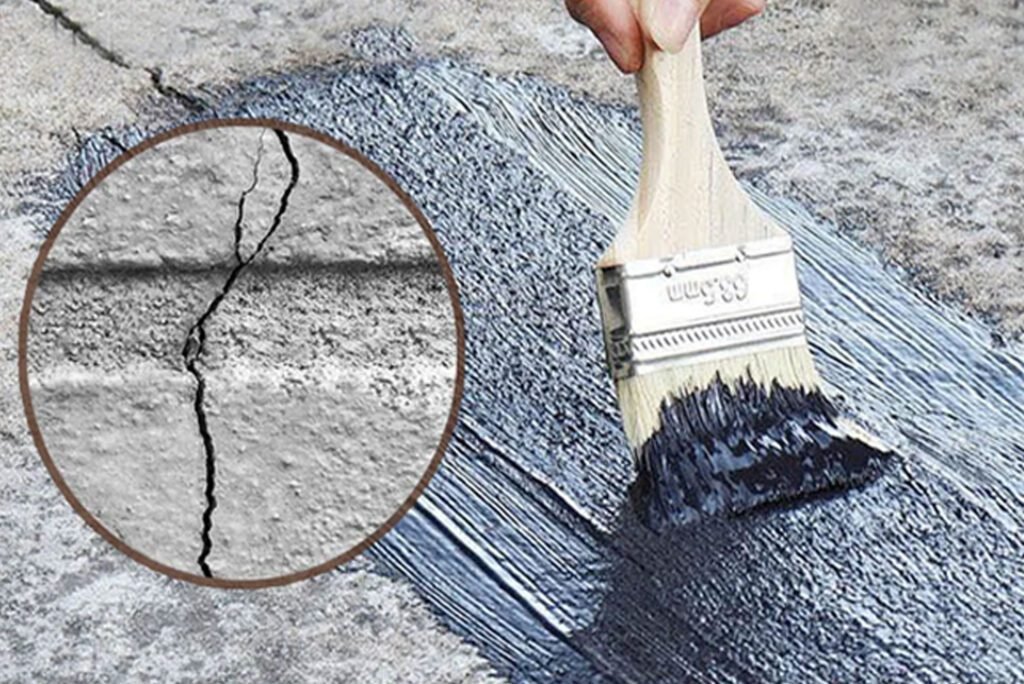
- Application by brushing – Apply evenly to the substrate according to the correct mixing ratio.
- Spraying process – Use professional high-pressure equipment and maintain proper temperature and mixing ratios.
- Layer control – Apply the coating evenly to achieve uniform coverage.
- Quality inspection – Check film thickness, bonding, and surface finish before handing over the project.
At YURU Waterproof, we not only supply polyurea materials but also provide technical guidance, on-site training, and system solutions to help contractors achieve consistent project quality.
Choosing a Reliable Polyurea Waterproofing Supplier
When sourcing polyurea systems, working with an experienced supplier is essential. Reliable suppliers should:
- Possess in-house R&D and manufacturing capabilities.
- Offer custom formulations (OEM/ODM) based on specific project requirements.
- Have proven quality control systems and certifications.
- Provide technical data sheets (TDS) and project support.
- Demonstrate successful references in large-scale waterproofing projects.
YURU Waterproof stands out as a trusted partner for contractors and distributors worldwide. With over a decade of experience in polyurea coatings, floor systems, and grouting materials, YURU delivers comprehensive waterproofing solutions tailored to global engineering needs.
Why YURU Waterproof Is the Trusted Partner for Contractors and Distributors?
YURU Waterproof combines innovation, manufacturing expertise, and engineering know-how to deliver exceptional waterproofing systems.
Our advantages include:
- A full product range covering single- and two-component polyurea coatings, grouting systems, and microcrystalline technologies.
- Reliable product consistency and quality assurance.
- Eco-friendly formulations compliant with EU and global standards.
- A dedicated technical team offering design and construction guidance.
- Proven project experience across Asia, the Middle East, and Europe.
Partner with YURU Waterproof today to access high-performance polyurea waterproofing systems engineered for durable, sustainable, and efficient roof protection.

FAQs: Polyurea Waterproofing for Concrete Roofs
1. What makes polyurea better than polyurethane coatings?
Polyurea cures faster, lasts longer, and offers superior UV and chemical resistance, making it ideal for exposed concrete roofs.
2. Can polyurea coatings be applied on old roofs?
Yes. After surface cleaning and priming, polyurea can restore aging roofs with seamless, long-lasting protection.
3. How long does a polyurea waterproofing system last?
A well-applied polyurea system can last over two decades with minimal maintenance.
4. Can polyurea be used with other waterproofing systems?
Absolutely. It can be combined with primers, topcoats, or grouting systems for a complete waterproofing solution.
5. Does YURU Waterproof provide OEM and technical support?
Yes. YURU Waterproof offers OEM/ODM customization, formulation support, and full technical guidance for contractors and distributors.
YURU Product solutions