Epoxy Colored Sand Floor Coating OEM Manufacturing Guide
Introduction:
For flooring brands, distributors, importers, or sourcing teams, OEM manufacturing isn’t just about slapping a private label on a bucket. The real work starts way earlier — product positioning, color selection, sample testing, packaging design, technical docs, production control, and long-term repeat supply.
This matters even more with colored sand epoxy flooring because the product is both functional and decorative. A standard epoxy coating may be judged mainly by durability, adhesion, or abrasion resistance. A colored sand epoxy floor is also judged by color, texture, surface consistency, and the final visual effect after application.
If the color is wrong, the product fails before the contractor even talks about performance, if the package looks weak, the local market may not trust the brand. If the technical documents are unclear, installers may make mistakes. That is why a good OEM project should build a product line that can be sold, applied, reordered, and supported over time.
What Is Epoxy Colored Sand Floor Coating OEM Manufacturing?
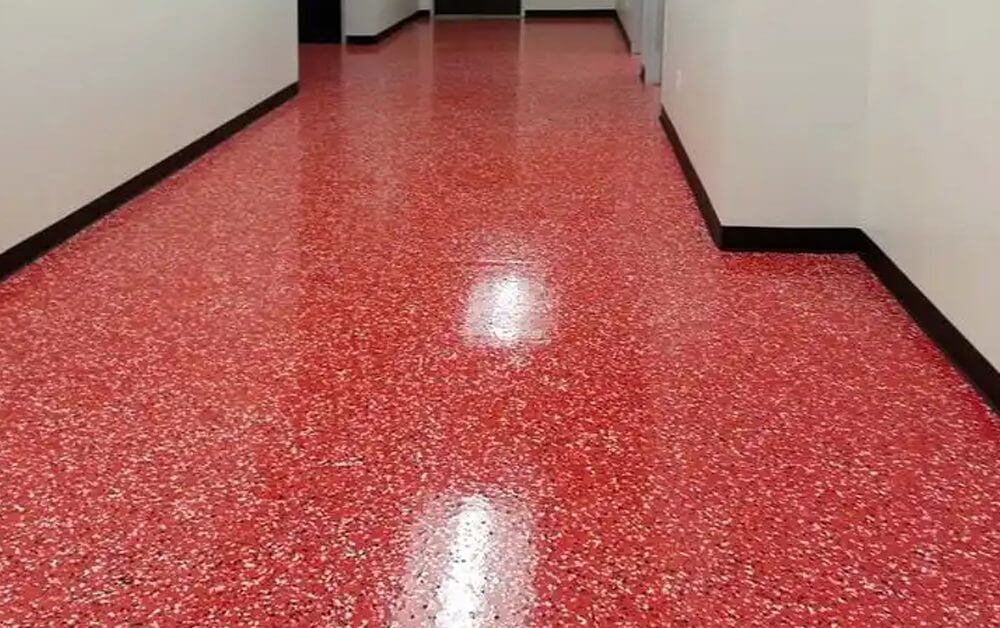
Epoxy colored sand floor coating OEM manufacturing means a manufacturer produces colored sand epoxy flooring products under a customer’s brand, packaging, color series, or market requirements. In practice, it can include far more than a label change.
A complete OEM program may involve product form selection, color and texture development, bucket size, label design, mixing instructions, TDS, MSDS, sample boards, private-label packaging, trial orders, and repeat batch control. For some clients, it may also include guidance on whether to choose a pre-mixed colored sand epoxy floor coating or a separate colored sand epoxy floor system.
The purpose is not just to ship a product. The purpose is to help the customer build a stable flooring product line for local distributors, flooring contractors, project owners, and private-label sales channels.
This is why epoxy colored sand floor coating OEM manufacturing should be treated as a technical and commercial cooperation. The product must look right, perform correctly, and remain consistent from the first sample to future repeat orders.
Why OEM Manufacturing Is More Than Private Label Packaging?
Private label packaging is only the visible part of an OEM flooring product. A bucket with a custom brand name may look professional, but if the product inside is unstable, the label will not protect the seller.
A mature OEM floor coating project should answer several practical questions before mass production begins:
- Who will sell the product?
- Who will install it?
- What type of flooring projects will use it?
- What colors are easiest to promote in the local market?
- What application method is realistic for the contractor network?
- What documents are needed for sales and technical support?
- How will repeat orders remain consistent?
Private Label Is Only the First Step
Private label service can include label design, brand name, packaging size, and product description. These details matter, especially for importers and wholesale distributors who need a professional product appearance.
Still, packaging alone does not make a good OEM product. The formula, solid content, color control, storage stability, and application guidance must also be reliable. Otherwise, the product may look good in the warehouse but create problems on the jobsite.
The Product Must Match the Buyer’s Market
Some markets prefer products that are easy to explain and easy to apply. In those cases, a pre-mixed epoxy colored sand floor coating may be more suitable because the colored sand is already blended into the material.
Other markets are more project-driven. Contractors may want more control over color blends, surface texture, and decorative effects. For these projects, a separate colored sand epoxy floor system may be a better choice.
The right OEM manufacturer should help the customer make this decision instead of pushing one standard product for every market.
Technical Support Protects the Customer’s Brand
Once the product reaches the local market, the end user usually contacts the distributor, contractor, or private-label brand first. If the floor has color variation, poor curing, weak adhesion, or unclear application instructions, the local seller must deal with the complaint.
Clear technical support reduces that risk. Application guides, TDS, MSDS, sample approval records, and troubleshooting suggestions are not just paperwork. They are part of the brand protection system.
Key OEM Options for Epoxy Colored Sand Floor Coating
Before starting an OEM order, the customer and manufacturer should clarify what can be customized and what should remain stable. Too many changes without testing can create risk. Too little flexibility may make the product difficult to sell in the target market.
Product Form: Pre-Mixed or Separate Colored Sand System
One of the first decisions is the product form.
A pre-mixed epoxy colored sand floor coating means the colored sand and epoxy material are already blended in the bucket. This format is usually easier for contractors to apply and easier for distributors to promote. It can reduce on-site mixing mistakes and make the product more standardized.
A separate colored sand epoxy floor system means the colored sand is supplied separately. The installer mixes or broadcasts the sand during application according to the project design. This gives more flexibility for custom colors, surface texture, and decorative effects. However, it also requires stronger installation skills.
Neither option is automatically better. The right choice depends on the market, contractor experience, desired finish, and sales positioning.
Color and Texture Customization
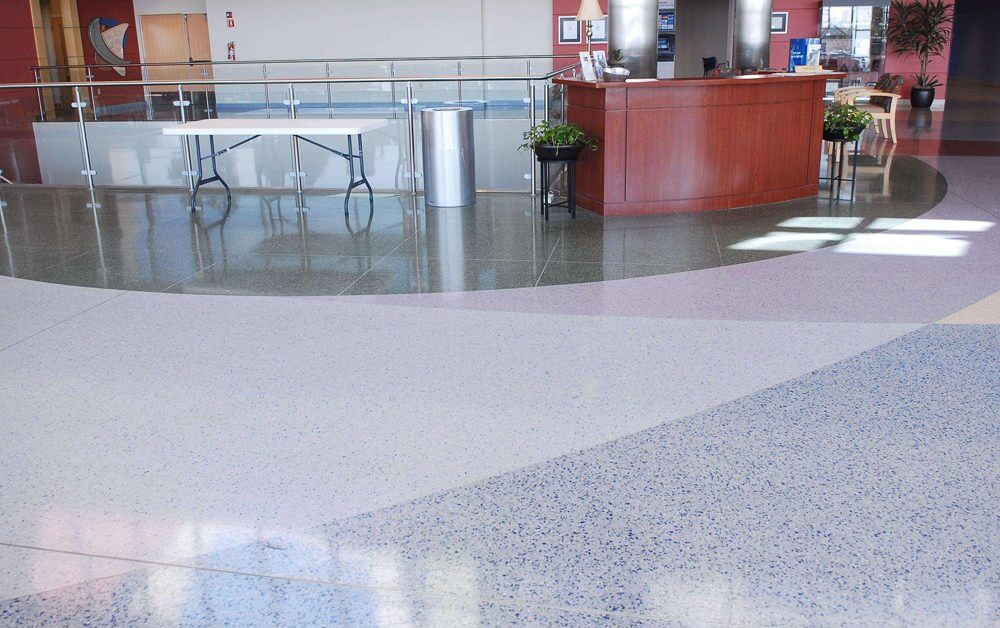
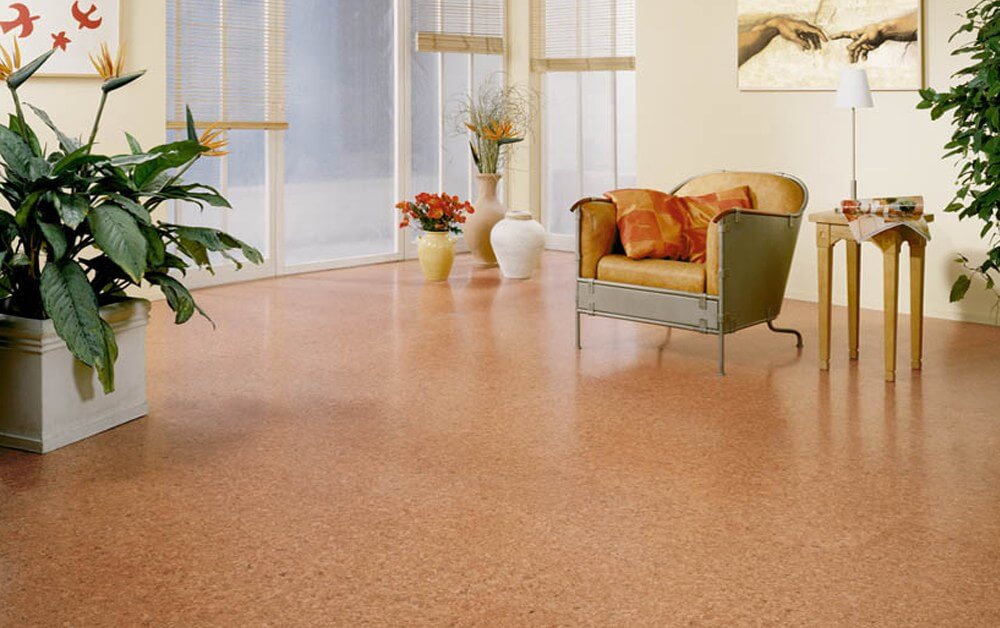
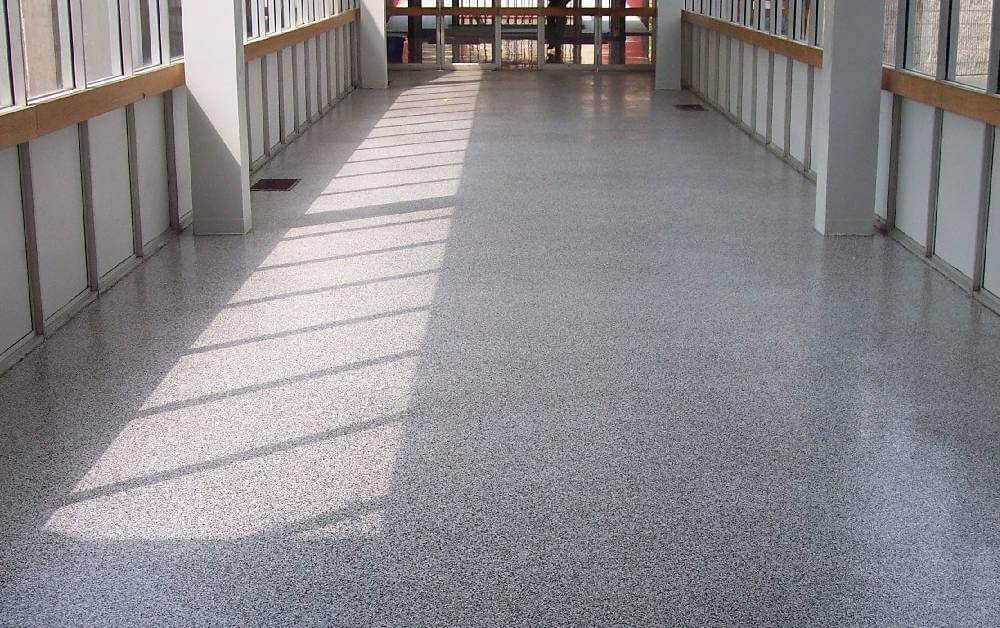
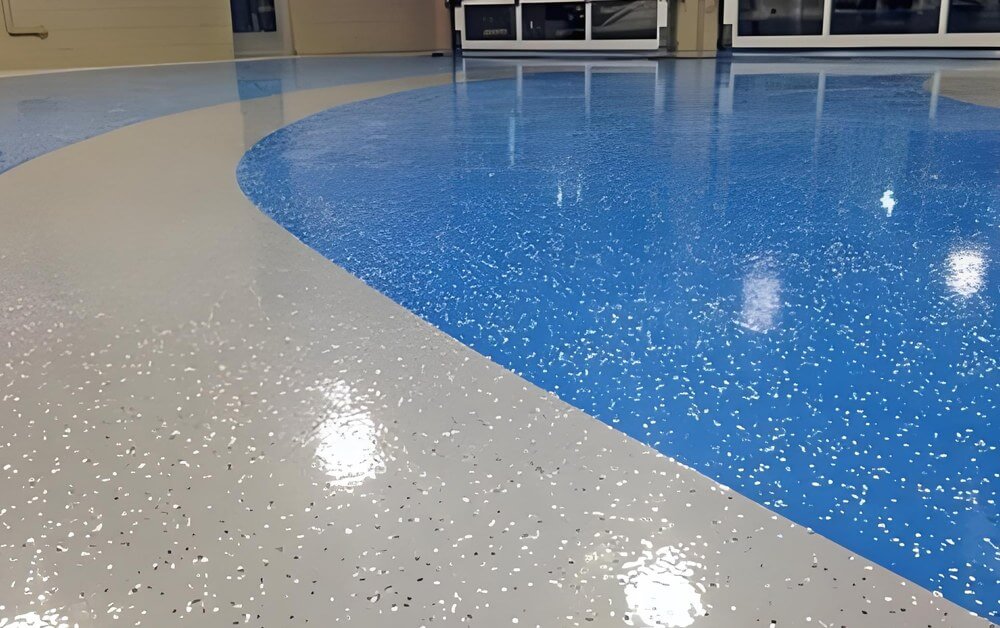
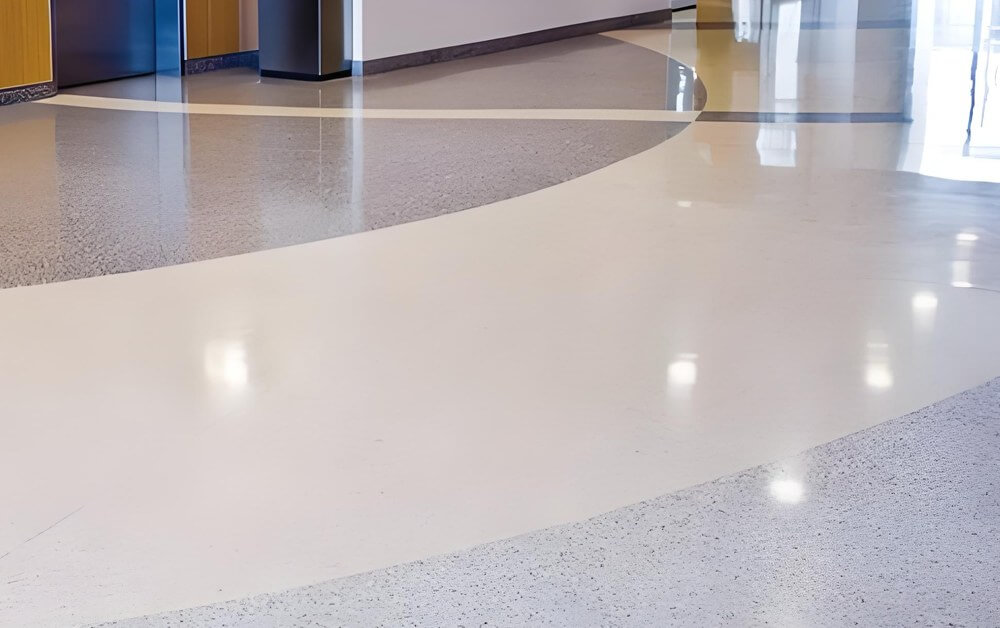
Color is one of the most sensitive parts of epoxy colored sand flooring. Customers may request grey, beige, gold, white, cream, stone-like tones, or custom blends for commercial spaces, garages, offices, or public buildings.
During OEM development, the manufacturer should help confirm:
- Color series
- Colored sand combination
- Particle size
- Surface roughness
- Gloss level
- Sample board appearance
- Trial application result
- Batch sample records
Digital photos are not enough for final color approval. Lighting, screen settings, camera exposure, resin tone, and surface texture can all change how a color appears. Physical samples are much safer before bulk production.
Packaging Size and Bucket Design
Packaging affects both product protection and market trust. A weak bucket, unclear label, or poorly matched component packaging can create problems even when the material itself is acceptable.
OEM packaging may include:
- Main component and hardener package size
- Separate colored sand bag or bucket size
- Private-label design
- Mixing ratio information
- Batch number and production date
- Storage instructions
- Safety warnings
- Export packaging and pallet loading method
For long-distance shipping, packaging strength should not be treated as a small detail. Leakage or damaged buckets can quickly turn a good product into a customer service problem.
Formula Adjustment and Application Feel
Some OEM clients may need adjustments based on local climate, installer habits, and project requirements. Common discussion points include viscosity, pot life, curing time, solid content, coverage rate, flow, odor, storage stability, and how well the resin holds the colored sand.
These changes should be tested carefully. A formula that works well in one climate may behave differently in a hot warehouse, a humid coastal area, or a cold jobsite. A reliable manufacturer will not promise every adjustment instantly. They should test samples and explain the trade-offs.
Technical Documents and Sales Materials
A private-label flooring product needs more than a bucket and a price list. The local seller usually needs documents to explain, promote, and support the product.
Useful materials include:
- Technical data sheet
- Safety data sheet
- Application guide
- Color chart
- Sample board
- Label information
- Product photos
- Project application suggestions
- Frequently asked questions
- Troubleshooting guide
These documents make the product easier to sell and easier to apply correctly.
OEM Manufacturing Process: From Sample to Bulk Production
A good OEM process should be controlled step by step. This reduces confusion and prevents a common problem: the sample looks acceptable, but the bulk shipment does not match the customer’s expectation.
Step 1: Confirm Product Positioning
The process should begin with the market, not the formula. Wholesale, private-label retail, contractor supply, or project-based work?
The answer drives everything: packaging, price, color, product form, application guide, technical support.
For example, high-end showroom floor needs different finish than parking garage contractor floor.
Step 2: Choose Pre-Mixed or Separate Colored Sand System
The next step is choosing the product system.
A pre-mixed system is easier to standardize and usually better for markets that need convenient installation. A separate colored sand system is more flexible and better for skilled contractors who want more control over the decorative result.
If the customer is unsure, sample testing and a small trial application are usually the best way to compare both options.
Step 3: Develop Color Samples and Texture Boards
Color approval should happen before bulk production. The customer and manufacturer should confirm color blends, surface texture, gloss level, and sample code.
For decorative colors, sample boards are especially important. Gold, beige, cream, and other light decorative tones may look very different under different lighting conditions.
A good sample process should include sample numbering and retained samples. This makes future production easier to compare.
Step 4: Test Application and Performance
Color alone is not enough. The sample should also be checked for application behavior and basic performance.
Check mixing feel, pot life, curing, surface uniformity, adhesion, abrasion, compressive strength, flexural strength, solid content, coverage, storage stability.
If the product is pre-mixed, the customer should check whether the colored sand remains well distributed. If the system uses separate colored sand, the customer should check whether the application instructions are clear enough for local contractors.
Step 5: Finalize Packaging, Label, and Documents
After the sample is approved, packaging and documentation should be finalized.
This includes bucket design, label artwork, component names, mixing ratio, safety information, batch code, TDS, MSDS, application instructions, and export packaging details.
At this stage, it is better to check everything carefully. A wrong label, unclear mixing ratio, or missing safety information can cause unnecessary delays later.
Step 6: Start a Trial Order Before Large-Scale Supply
A trial order is useful before moving to large-scale supply. It allows the customer to test shipping, packaging strength, local sales feedback, application response, and contractor acceptance.
For private-label buyers, a trial order also helps confirm whether the product fits the planned market position. It is better to find small issues during a trial order than after a full container has already reached the market.
Step 7: Build Long-Term Supply and Quality Tracking
OEM cooperation should not end after the first shipment. If the product sells well, repeat supply becomes the real test.
Manufacturer should keep stable formulas, retained samples, batch records, color references, customer feedback — consistency for repeat orders and product line expansion.
How to Evaluate OEM Product Quality Before Placing an Order?
Before placing an order, a buyer should look beyond the appearance of the sample. Decorative flooring still needs practical performance.
Check Solid Content and Coverage Rate
Solid content affects how much useful material remains on the floor after curing. It also influences film build, shrinkage, coverage rate, surface fullness, and real cost per square meter.
A product may look cheaper by bucket price but become more expensive if the coverage is poor or the effective film is too thin. For OEM buyers, the TDS should clearly show recommended consumption, thickness, and coverage guidance.
Check Color Consistency and Batch Control
Color consistency is one of the most important quality points in epoxy colored sand floor coating OEM.
The manufacturer should be able to manage sample approval, retained samples, batch numbers, and repeat order color control. This is especially important for gold, beige, cream, grey, and other decorative tones where color differences are easy to notice.
Buyers should not approve production only through digital images. Physical samples and sample records are safer.
Check Adhesion and Surface Strength
The floor coating must bond well to concrete. Poor adhesion may lead to peeling, hollow areas, or early failure.
Surface strength also matters, especially for parking garages, commercial corridors, premium garages, and light industrial floors. A decorative floor still needs to resist wear, traffic, cleaning, and daily use.
A responsible manufacturer should be able to recommend a full system, including primer and topcoat when needed.
Check Pot Life and Curing Behavior
Pot life affects how comfortable the product is to apply. If the working time is too short, contractors may struggle during larger applications. If curing is too slow, the project may take longer to open for use.
Temperature and humidity can change curing behavior. This is why sample testing should consider the customer’s local conditions whenever possible.
Check Storage Stability and Packaging Safety
Storage and shipping are part of product quality. Pre-mixed systems must be checked for sand settling and material stability. Separate colored sand systems must be checked for package sealing and component matching.
For export orders, strong packaging, clear labels, batch codes, and proper pallet loading can reduce damage and confusion after arrival.
Common OEM Mistakes to Avoid
Many OEM problems can be prevented if the buyer slows down before the first bulk order. The most expensive mistake is usually not a higher product price. It is a product that enters the market too early without enough confirmation.
Choosing a Supplier Only by Low Price
Low price can hide weak solid content, unstable coverage, poor color control, low-quality packaging, unclear documents, or weak technical support.
A low-cost product may look attractive during quotation, but if it creates complaints, rework, or damaged brand trust, the real cost becomes much higher.
Approving Color Only from Digital Photos
Digital photos are useful for early discussion, but they should not be the final basis for bulk production. Color can shift because of lighting, camera settings, screen display, resin tone, sand batch, and surface texture.
Real Case Example: Why Physical Sample Approval Matters?
A flooring products wholesaler in the United Kingdom once contacted YURU Waterproof after facing a serious color mismatch with another supplier. The buyer had ordered several decorative epoxy colored sand floor coating colors, including gold and beige tones. After receiving the goods, the actual product colors were clearly different from what had been confirmed during communication.
Before placing a new bulk order with YURU Waterproof, the wholesaler tested samples first. After confirming the color, surface effect, and product appearance, the customer proceeded with a full container order.
This case shows why sample testing is not a formality. For decorative epoxy colored sand flooring, especially light or premium color ranges, physical sample approval should happen before bulk production.
Ignoring Local Application Conditions
A product that works well in one market may need adjustment or extra guidance in another. Temperature, humidity, ventilation, concrete condition, and contractor habits can all affect application.
Buyers should discuss local jobsite conditions with the manufacturer before approving the final product.
Starting Bulk Orders Without Trial Testing
A trial order can help check packaging, shipping, local feedback, application behavior, and contractor acceptance. It also gives the customer time to improve labels, instructions, and product positioning before larger orders.
For new private-label products, trial orders are often a safer path than jumping directly into high-volume supply.
Using Weak Labels and Incomplete Instructions
A private-label product should be easy to understand. Labels and documents should clearly show mixing ratio, usage, safety information, storage requirements, batch code, and basic application steps.
If the installer does not understand how to use the product, even a good formula can create poor results.
What Documents Should an OEM Manufacturer Provide?
A reliable OEM manufacturer should provide documents that support sales, application, safety, and repeat supply.
Common documents include:
- Product specification
- Technical data sheet
- Safety data sheet
- Application guide
- Color chart
- Sample approval record
- Label artwork confirmation
- Packaging specification
- Batch number record
- Storage and shelf-life information
- Troubleshooting guide
- Project application recommendations
For distributors and private-label brands, these materials make the product easier to promote. For contractors and project teams, they reduce misunderstanding during application.
How to Choose a Reliable Epoxy Colored Sand Floor Coating OEM Manufacturer?
The best OEM partner is not just the factory with the lowest quotation. It is the manufacturer that can support stable production, clear communication, and repeatable product quality.
Production Capability
The manufacturer should have floor coating production capability, mixing equipment, packaging control, and quality inspection procedures. For pre-mixed systems, blending stability is especially important.
Color and Sample Control
The manufacturer should provide physical samples, sample codes, retained samples, and batch records. This helps reduce color risk in repeat orders.
Technical Communication
Good communication should include more than price and lead time. The manufacturer should be able to discuss solid content, coverage rate, pot life, curing time, application method, substrate conditions, and common jobsite issues.
OEM/ODM Flexibility
OEM/ODM support may include color customization, private-label packaging, product form selection, label design, sample testing, and market positioning discussion.
Long-Term Supply Stability
A strong OEM partner should help maintain formula stability, color stability, packaging consistency, lead time reliability, and future product line expansion.
Why Choose YURU Waterproof for Epoxy Colored Sand Floor Coating OEM?
YURU Waterproof is a professional manufacturer of waterproof coatings, grouting materials, and floor coating systems. For epoxy colored sand floor coating OEM projects, YURU Waterproof support distributors, importers, private-label brands, contractors, procurement teams, and long-term supply partners.
YURU Waterproof can assist with pre-mixed or separate colored sand epoxy system discussion, color customization, sample testing, private-label packaging, TDS, MSDS, and project application communication.
In previous overseas wholesale cooperation, YURU Waterproof has helped clients reduce color-matching risks by confirming samples before bulk production. This sample-based process is especially useful for decorative colored sand flooring, where appearance and batch consistency are critical.
Final Checklist Before Starting OEM Cooperation
Before starting an OEM project, review these questions:
- What is your target market?
- Who will sell or install the product?
- Do you need a pre-mixed system or a separate colored sand system?
- Have you confirmed the color and texture with physical samples?
- Have you tested solid content, coverage, and application feel?
- Is the packaging size suitable for your market?
- Do you need OEM/ODM or private-label packaging?
- Can the manufacturer provide TDS and MSDS?
- Is a trial order needed before bulk supply?
- Does the supplier keep retained samples and batch records?
- Can the manufacturer support repeat orders with stable color and packaging?
- Is technical communication clear enough for your sales and installation channels?
FAQs:
1. What is epoxy colored sand floor coating OEM manufacturing?
Epoxy colored sand floor coating OEM manufacturing is a service where a manufacturer produces colored sand epoxy flooring products based on a customer’s brand, market needs, packaging requirements, colors, technical documents, and application expectations.
2. Can epoxy colored sand floor coating be customized for private-label brands?
Yes. It can be customized with private-label packaging, color series, bucket size, product information, application guide, and sometimes product form or application characteristics, depending on testing and manufacturing capability.
3. What should I confirm before starting an OEM order?
You should confirm the target market, product form, color samples, packaging, label content, TDS, MSDS, application method, trial order plan, batch control, and long-term supply ability.
4. Why is solid content important in OEM epoxy colored sand floor coating?
Solid content affects film build, coverage rate, shrinkage, surface fullness, and real cost per square meter. It should be reviewed together with recommended thickness and application method.
5. Does YURU Waterproof provide epoxy colored sand floor coating OEM service?
Yes. YURU Waterproof can support epoxy colored sand floor coating OEM/ODM service, including private-label packaging, color customization, sample testing, technical documents, and product selection guidance for wholesale and project supply.
Conclusion:
Epoxy colored sand floor coating OEM manufacturing is not simply putting a customer’s logo on a bucket. A reliable OEM program should help build a product line that can be sold, applied, reordered, and supported over time.
Before placing a bulk order, buyers should review product form, color control, solid content, coverage rate, application feel, packaging quality, technical documents, sample testing, batch management, and long-term supply stability.
For decorative flooring products, sample confirmation and color control are not optional. They are part of the quality system.
If you are looking for a reliable epoxy colored sand floor coating OEM manufacturer, YURU Waterproof can help you develop products for private label, wholesale, or flooring project supply.
Contact YURU Waterproof to discuss sample testing, pre-mixed epoxy colored sand floor coating, separate colored sand epoxy floor systems, color customization, private-label packaging, technical documents, OEM/ODM cooperation, and wholesale quotation.
YURU Product solutions