Polyurethane Waterproof Coating Manufacturer in China: How to Choose the Right PU Roof Coating Supplier?
Introduction:
Finding a polyurethane waterproof coating manufacturer in China is not difficult. The difficult part is choosing a manufacturer who understands your roof waterproofing project, not only your purchase quantity.
Many overseas customers search for polyurethane waterproof coating, polyurethane waterproof coatings, or polyurethane waterproofing because they require a functional material for roof waterproofing, basement protection, balcony waterproofing, or concrete surface protection. However, product nomenclature alone does not indicate suitability for a given project.
For roof projects, the first question should not be, “Which PU coating is the cheapest?” A better question is:
Will this PU coating match the roof exposure, substrate condition, climate, protection layer needs, application method, and long-term maintenance?
This is especially important for polyurethane waterproof coating for roof projects. An exposed roof in Malaysia, the Middle East, or Southeast Asia faces rain, sunlight, heat, UV, and temperature changes. A non-exposed roof may have a mortar layer, tile layer, insulation layer, or other protection system above the waterproofing membrane. These two roof conditions should not always use the same PU coating system.
YURU Waterproof is a source manufacturer in China, founded in 2003, specializing in waterproofing materials, grouting materials, and floor coating systems. For overseas roof waterproofing customers, YURU does not only supply polyurethane waterproof coatings. More importantly, YURU helps customers understand which PU coating direction is more suitable for exposed roofs, non-exposed roofs, contractor application, and long-term product supply.
What Is Polyurethane Waterproof Coating?
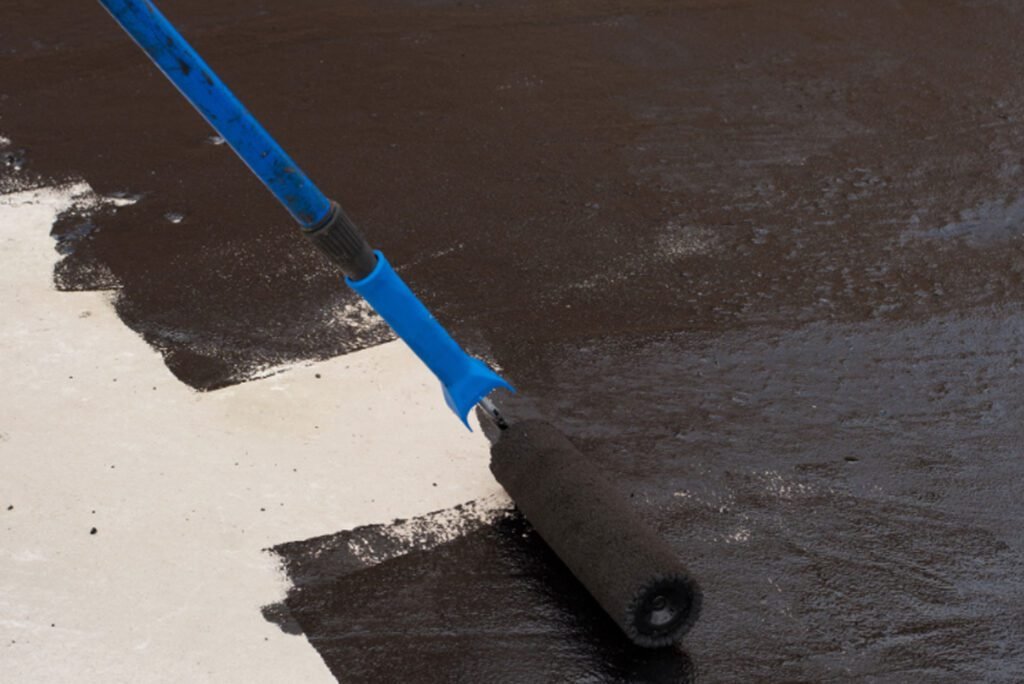
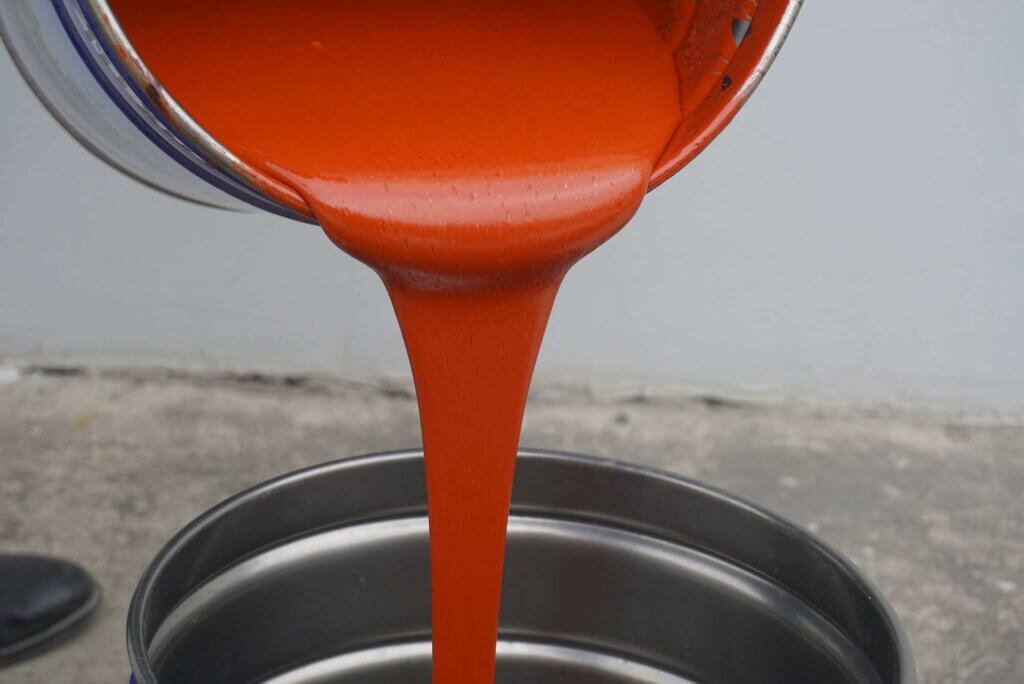
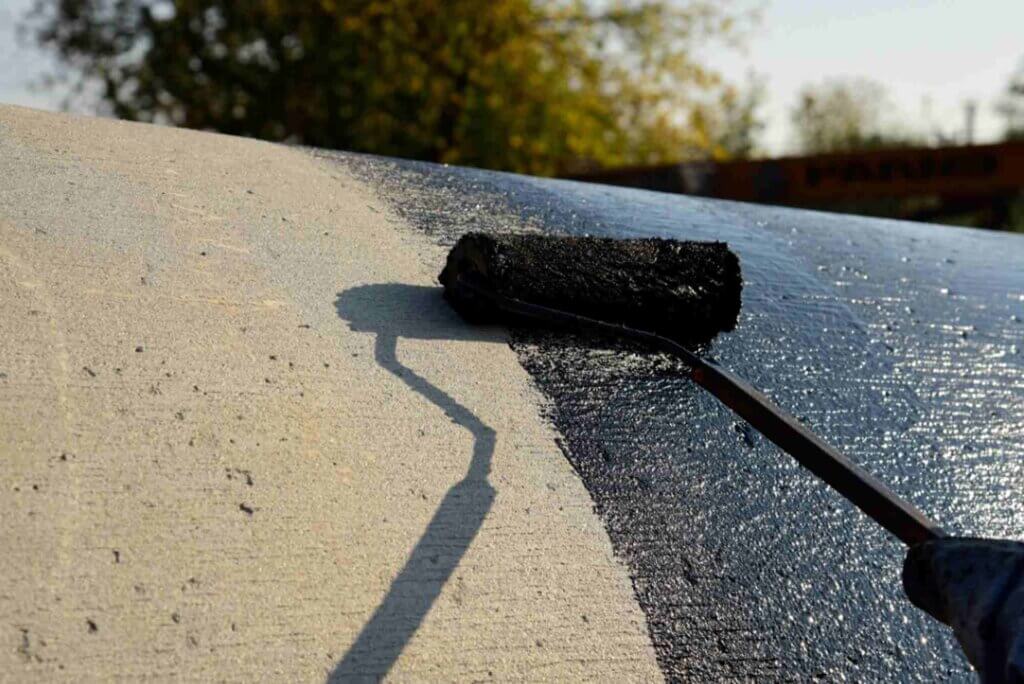
Polyurethane waterproof coating is a liquid-applied waterproofing material. It is applied to prepared substrates and, upon curing, forms a flexible waterproof membrane that bonds to the surface and provides protection against water and moisture ingress.
Depending on the product formula, polyurethane waterproof coating can be used on suitable concrete, cement mortar, metal, wood, and other prepared construction substrates. It can also be supplied in different colors, packaging sizes, and application grades according to market needs.
Common application areas include:
- Roof waterproofing
- Basement surface waterproofing
- Foundation waterproofing
- Balcony and terrace waterproofing
- Bathroom and wet area waterproofing
- Concrete slab waterproofing
- Some building repair and renovation projects
However, contractors should not confuse PU coating with PU grout.
Polyurethane waterproof coating is for surface waterproofing. Polyurethane injection grout is for cracks, joints, and leakage channels.
This difference matters. If a roof needs a continuous waterproof membrane, PU coating is the product direction. If an underground crack has active leakage, PU injection grout is usually the product direction. A reliable manufacturer should help customers separate these two situations before recommending materials.
Why Roof Waterproofing Buyers Look for PU Coating Manufacturers in China?
A lot of buyers turn to Chinese manufacturers for stable supply, OEM/ODM support, competitive pricing, and flexible packaging. But roof coatings aren’t commodities. A bad coating means repair claims, project delays, and unhappy customers.
Therefore, when choosing a Chinese polyurethane waterproof coating manufacturer, customers should look at three things together: product suitability, factory capability, and application support.
Stable Factory Supply Matters
A serious waterproofing business needs stable supply. If the viscosity, curing time, packaging, color, or performance changes from batch to batch, local contractors may lose trust in the product.
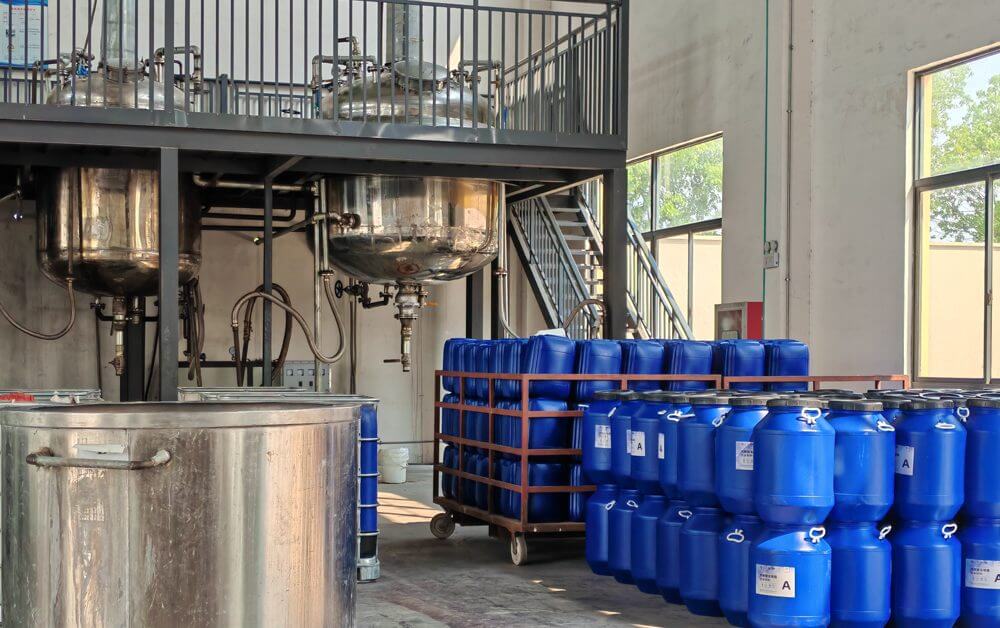
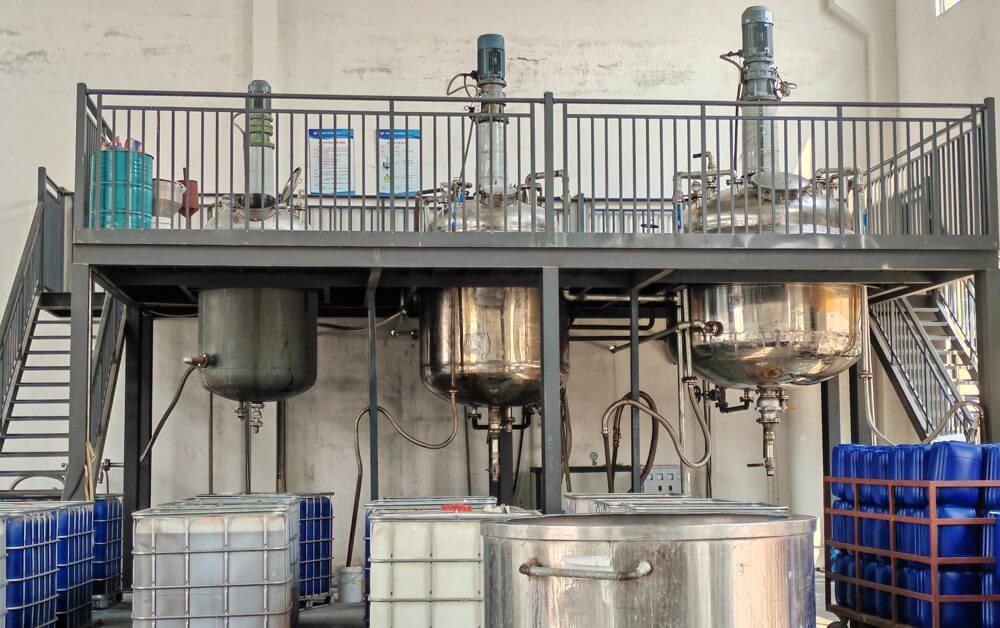
YURU has a 10,000 m² facility with 6 specialized production lines and an annual capacity exceeding 10,000 tons. This production infrastructure supports long-term orders, project supply, and product line planning for overseas customers.
OEM/ODM Support Helps Local Brands Grow
Many importers and distributors do not want to sell generic products forever. They want private-label packaging, local market positioning, product documentation, and packaging designs that fit their customers.
YURU supports OEM/ODM services, including formulation communication, labeling, packaging, color, size, and branding. This allows customers to build their own polyurethane waterproofing product line for roof projects, building waterproofing, and construction material distribution.
Application Guidance Reduces Wrong Product Selection
For roof waterproofing, many failures do not come from the coating itself. They come from wrong product selection or wrong application.
For example:
- Exposed roofs may need UV consideration, a topcoat, or a protection layer.
- Non-exposed roofs may need compatibility with mortar, tiles, or other covering layers.
- Some roof details may need polyester fabric reinforcement.
- The coating cannot be applied as thinly as ordinary paint.
- Active crack leakage should not be treated with PU coating alone.
A manufacturer who only gives a price cannot help customers avoid these mistakes. A better supplier helps customers understand the application boundary before bulk purchase.
Main Types of Polyurethane Waterproof Coatings YURU Can Supply
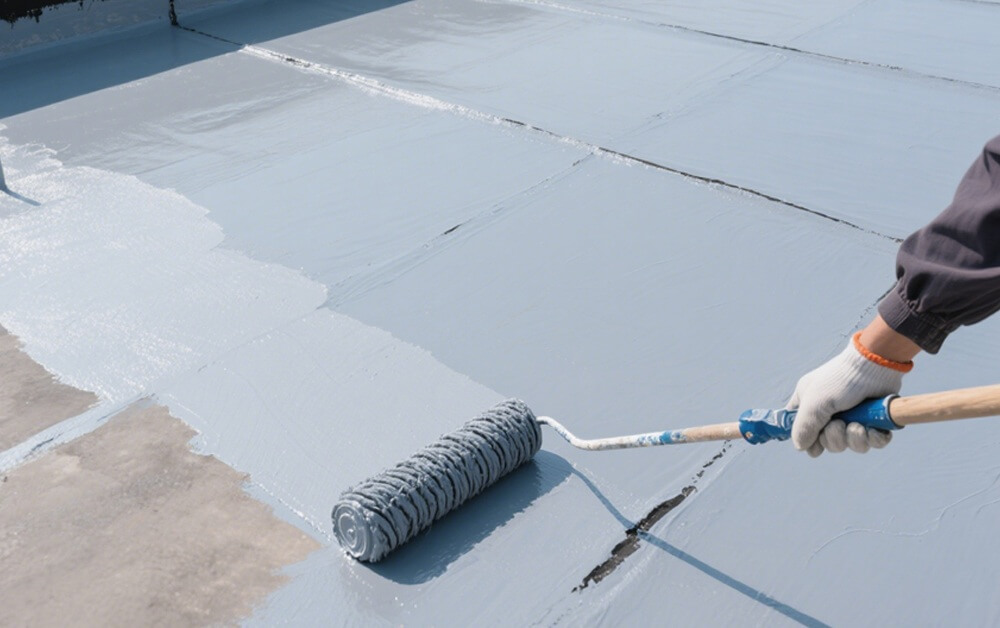
Different polyurethane waterproof coating types serve distinct project requirements. Which one you need depends on roof exposure, substrate condition, construction team experience, and the overall system design.
One-Component Polyurethane Waterproof Coating
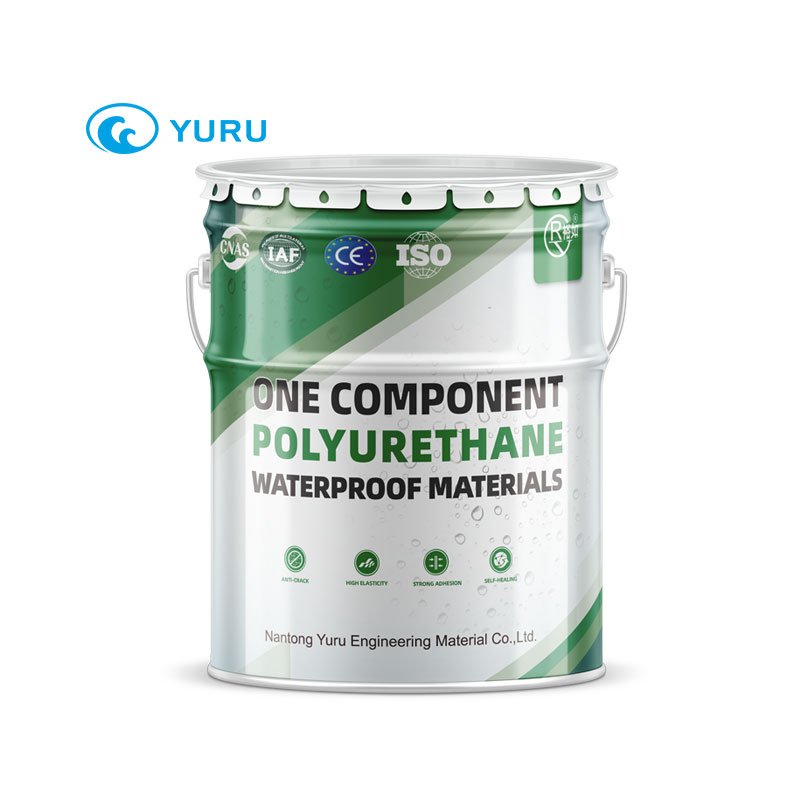
One-component polyurethane waterproof coating is convenient for site application. Contractors do not need to mix two components by ratio before use.
This product direction can suit common waterproofing projects such as roofs, balconies, bathrooms, and concrete surface waterproofing. It is especially practical for contractors who need easier application and distributors who want a product that is easier to explain to local customers.
Still, one-component PU coating must be applied correctly. Contractors need to clean the substrate, control thickness, treat details, and follow drying time requirements.
One-Component Water-Based Polyurethane Waterproof Coating
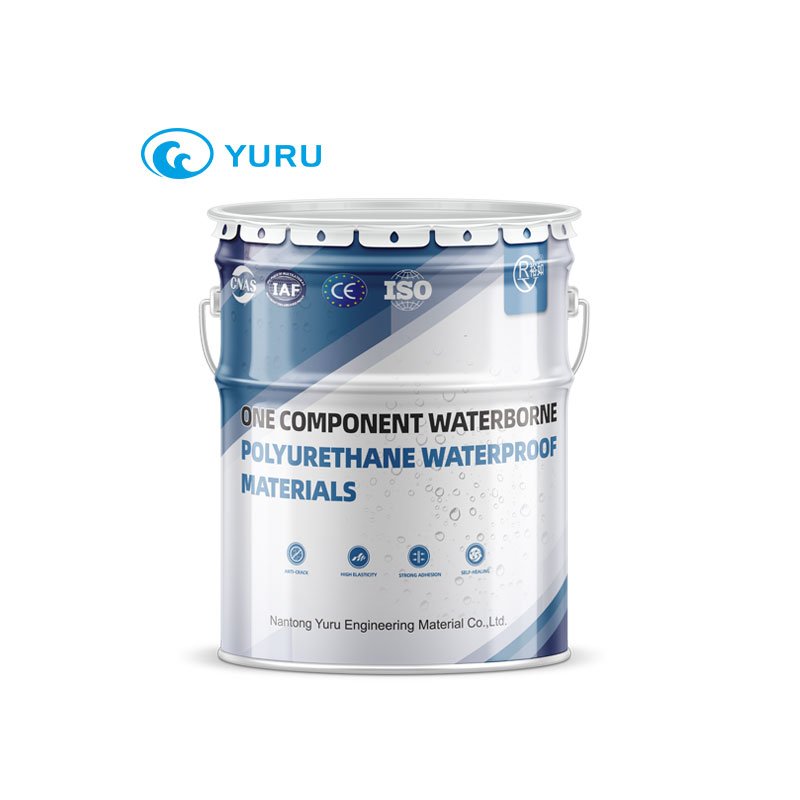
Water-based PU coating is a good option for selected roof and surface jobs. It’s easier to handle, has lower odor than solvent-based systems, and fits markets that care about convenience and environmental direction.
For some exposed roof projects, YURU may recommend water-based polyurethane waterproof coating. However, exposed roof waterproofing needs more than one thin layer of coating. In many cases, contractors should apply it with polyester fabric reinforcement according to the application guide.
This is especially important around:
- Roof cracks
- Pipe roots
- Corners
- Drains
- Parapet areas
- Overlaps
- Weak roof details
The coating should fully wet and cover the fabric. If workers leave wrinkles, hollow areas, or uncovered fabric edges, the waterproofing layer may become weak.
Two-Component Polyurethane Waterproof Coating
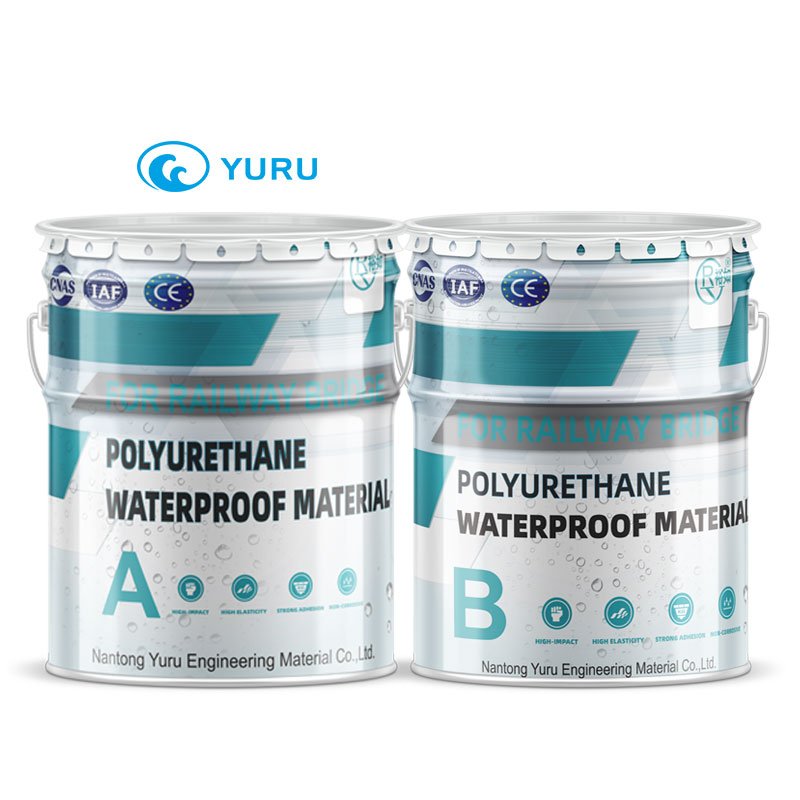
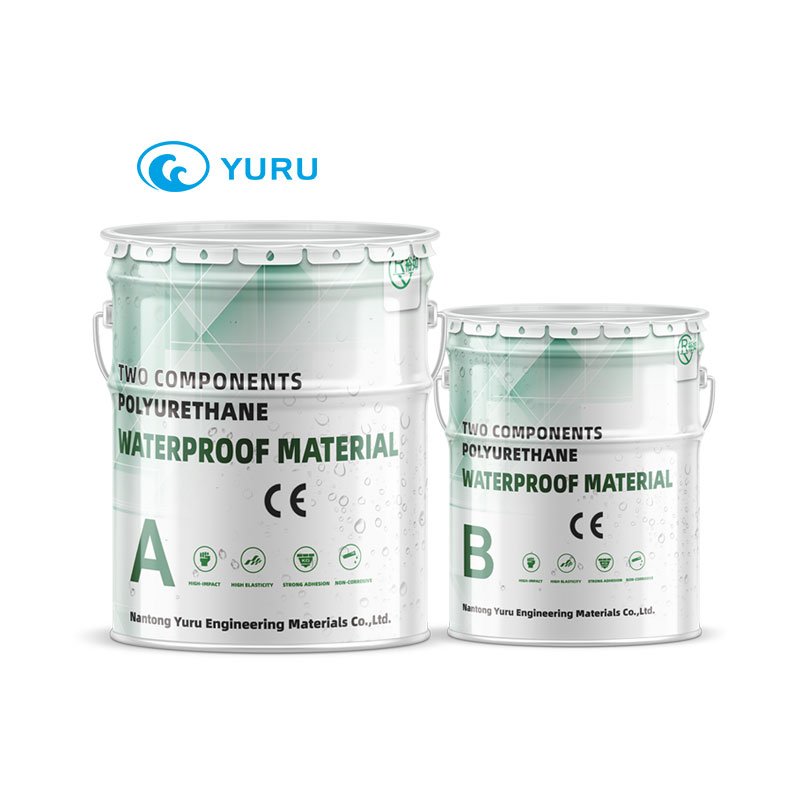
Two-component polyurethane waterproof coating is for projects that need stronger performance control and professional application. It requires correct mixing ratio, full stirring, and attention to pot life.
YURU may recommend two-component polyurethane waterproof coating for both exposed and non-exposed roof projects, depending on project requirements.
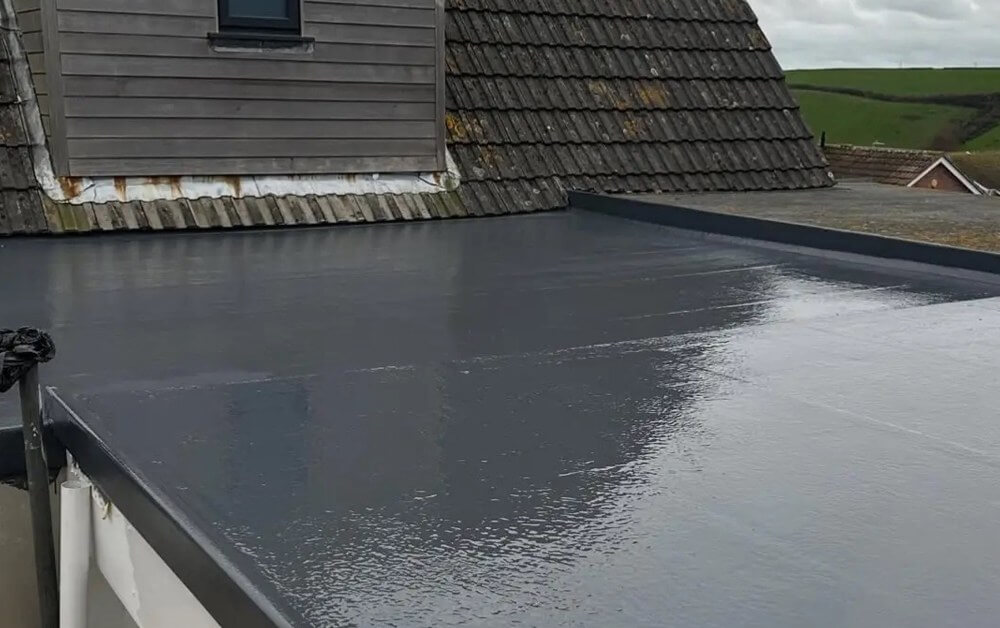
For exposed roofs, the important point is protection. If a two-component PU coating is used in an exposed roof system, the contractor should add a suitable protection layer or topcoat according to the project requirement. This helps the system better handle sunlight, rain, and outdoor exposure.
For non-exposed roofs, two-component PU coating may be used under protection or covering layers, provided substrate, thickness, and curing conditions meet project specifications.
How to Choose Polyurethane Waterproof Coating for Roof Projects?
First Confirm: Is the Roof Exposed or Non-Exposed?
This is the first selection point.
An exposed roof means the waterproofing layer may face sunlight, rain, UV, heat, temperature movement, and outdoor weather directly.
A non-exposed roof means another layer may cover the waterproofing membrane, such as mortar, tiles, insulation, protection board, or another construction layer.
These two situations require different thinking.
For exposed roofs, customers should ask:
- Is the PU coating suitable for exposure?
- Does it need a topcoat?
- Does it need a protection layer?
- Does it need polyester fabric reinforcement?
- Can it handle local rain, heat, and UV?
- What thickness should contractors apply?
For non-exposed roofs, customers should ask:
- Will the PU membrane bond well to the substrate?
- Is it compatible with the protection or covering layer?
- How long should it cure before the next layer?
- Does the surface need primer?
- What is the recommended thickness?
Product Options for Exposed Roofs
For exposed roof waterproofing, YURU may suggest two directions depending on project requirements.
Water-Based Polyurethane Waterproof Coating
This can be suitable for selected exposed roof waterproofing projects. It is easier to apply and can match roof repair markets where contractors prefer brush or roller application.
However, contractors should follow YURU’s application guide and use reinforcement where needed. Polyester fabric can help strengthen roof details and improve the stability of the waterproofing layer.
Two-Component Polyurethane Waterproof Coating with Protection Layer or Topcoat
Two-component PU coating can also be used in some exposed roof projects. However, when customers use it on exposed roofs, YURU recommends adding a protection layer or topcoat according to the project requirement.
This is not a small detail. In hot, rainy, or high-UV markets, the protection layer or topcoat can become an important part of the roof waterproofing system.
Product Options for Non-Exposed Roofs
For non-exposed roof waterproofing, YURU may recommend:
- Two-component polyurethane waterproof coating
- One-component oil-based polyurethane waterproof coating
These systems can work when the waterproof membrane will receive later protection or coverage. However, contractors still need proper substrate cleaning, thickness control, and curing time.
Non-exposed does not mean low standard. It simply means the final service environment is different from direct exposure.
Confirm the Roof Substrate
Roof substrate affects application.
A concrete roof may need cleaning, crack treatment, and moisture control. A metal roof may need rust treatment and primer. A wood roof may need surface stability checks. An old roof renovation project may need compatibility testing.
Customers should not only ask for “PU roof coating.” They should send roof photos, substrate information, and project conditions to the manufacturer. A good supplier can then recommend a more suitable product.
Confirm Coating Thickness and Coverage
Polyurethane waterproof coating is not ordinary paint. It must form a real waterproofing membrane.
If the coating is too thin, it may not resist water, bridge small defects, or protect roof details. Before purchase, customers should confirm:
- Recommended coating thickness
- Theoretical coverage
- Number of coats
- Drying time
- Recoat interval
- Application temperature
- Substrate condition
- Whether fabric, topcoat, or protection layer is needed
A professional manufacturer should provide these details through TDS and application guidance.
How to Evaluate a Polyurethane Waterproof Coating Manufacturer in China?
A good manufacturer should help customers reduce project risk, not only reduce purchase cost.
Check Whether the Manufacturer Understands Roof Applications
Some suppliers only say their product is “waterproof.” That is not enough.
A good manufacturer should ask whether the roof is exposed or non-exposed. It should ask about the substrate, climate, drainage, protection layer, and application method. It should also explain when to use water-based PU, two-component PU, or oil-based PU.
This application understanding is often more valuable than a small price difference.
Check Product Range
A reliable manufacturer should have more than one product option.
YURU supplies different polyurethane waterproof coatings, including one-component PU coating, one-component water-based PU coating, and two-component PU coating. In addition, YURU also supplies acrylic waterproof coatings, polyurea waterproof coatings, liquid rubber systems, silicone waterproof coatings, cementitious waterproofing materials, and grouting materials.
This wider product range helps customers build a complete waterproofing product system instead of relying on one coating for all situations.
Check Technical Documents
Before bulk purchase, customers should request:
- TDS
- MSDS
- Product photos
- Packaging photos
- Application guide
- Sample testing support
- Certifications when needed
- Storage and transportation information
YURU can provide technical documents for product communication and export support. For international customers, clear documents help local sales teams, contractors, and project buyers understand the product more easily.
Check Factory Capacity and Quality Control
A factory should control raw materials, formulation, production, and quality inspection.
YURU has a 10,000 m² manufacturing facility, 6 specialized production lines, and annual production capacity exceeding 10,000 tons. The company uses a professional QC team to support product inspection and batch control.
YURU has also introduced environmental protection equipment and established environmental protection testing systems. This supports cleaner production management and long-term manufacturing stability.
Check OEM/ODM Ability
Private-label customers should ask more than “Can you print my logo?”
They should confirm:
- Can the manufacturer customize labels?
- Can it support packaging design?
- Can it discuss color and packaging size?
- Can it provide English product documents?
- Can it help avoid wrong product names or misleading labels?
- Can it keep packaging consistent across orders?
YURU supports OEM/ODM services, including labeling, packaging, color, size, branding, and formulation communication.
Common Mistakes When Buying PU Waterproof Coatings from China
The wrong purchase decision can create problems long after the container arrives.
Choosing Only by Lowest Price
While low pricing is commercially attractive, the cost of roof waterproofing failure typically far exceeds any initial price savings.
Products with unstable viscosity, unclear solid content, inadequate elasticity, poor packaging, or lacking application guidance will likely generate contractor complaints and project issues.
A more prudent approach involves comparing samples, technical documentation, factory capability, and service support prior to supplier selection.
Ignoring Exposed and Non-Exposed Roof Differences
Exposed roofs and non-exposed roofs do not face the same environment.
If a customer buys a PU coating for an exposed roof but ignores UV, rain, topcoat, or protection layer, the system may not match the site. If a customer buys a product for a non-exposed roof but applies it before proper curing, the next layer may create problems.
Roof exposure should be discussed before quotation.
Applying PU Coating Like Ordinary Paint
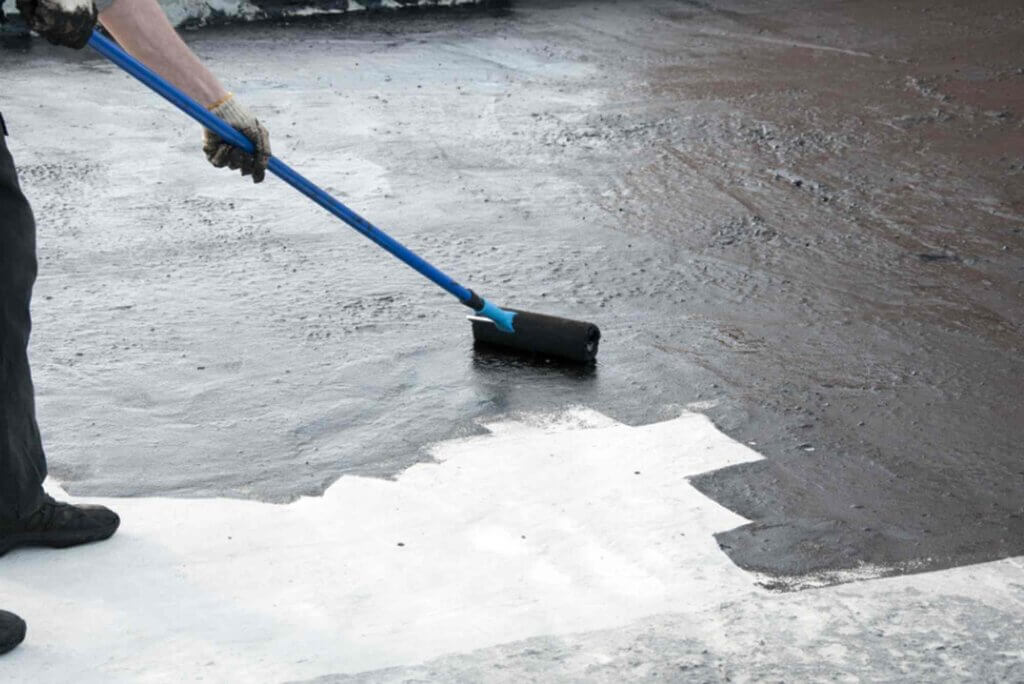
PU waterproof coating needs enough thickness. It also needs proper layering and detail treatment.
Workers should not apply one thin coat and expect long-term waterproofing. For roof details, polyester fabric, extra coating layers, or sealant may be needed.
Confusing PU Coating with PU Grout
PU coating forms a waterproof membrane on the surface. PU grout is injected into cracks and leakage channels.
If a basement crack has active leakage, PU coating is not the correct first solution. If a roof needs a waterproof membrane, PU grout cannot replace coating.
A reliable manufacturer should explain this boundary clearly.
Skipping Sample Testing
Different markets have different climates, substrates, and contractor habits. Sample testing helps customers check viscosity, application feel, drying time, film formation, color, packaging, and basic adhesion.
For OEM/ODM products, sample approval should come before bulk production.
Case Example: Malaysia Roof Waterproofing Contractor Choosing YURU PU Waterproof Coatings
YURU Waterproof has a Malaysia customer who specializes in roof waterproofing construction. At the beginning of the cooperation, the customer worked with YURU mainly on polyurethane waterproof coating.
The customer handled both exposed roof waterproofing and non-exposed roof waterproofing projects. Because these roof conditions were different, YURU did not recommend using one PU coating for every project.
Project Background
Malaysia has heavy rainfall, humidity, and many roof leakage repair needs. Roof waterproofing contractors often work with concrete roofs, renovation roofs, and roofs with different exposure conditions.
The customer needed a PU coating supplier who could help distinguish which product direction matched each type of roof project.
YURU Product Selection Review
YURU reviewed the customer’s roof waterproofing needs and separated the projects into two categories:
- Exposed roof waterproofing
- Non-exposed roof waterproofing
For exposed roofs, YURU reminded the customer to consider UV, rain, temperature changes, protection layer, or topcoat requirements.
For non-exposed roofs, YURU focused on membrane waterproofing performance, adhesion, curing condition, and compatibility with later covering layers.
Recommended Options for Exposed Roof Projects
For exposed roofs, YURU suggested two possible directions:
- Water-based polyurethane waterproof coating
This can be considered for selected exposed roof waterproofing projects where convenient application and roof surface waterproofing are needed.
- Two-component polyurethane waterproof coating
This can also be used in some exposed roof projects. However, if the customer uses it on exposed roofs, YURU recommends adding an additional protection layer or topcoat according to project requirements.
The key point is simple: exposed roof waterproofing needs a system approach, not only one coating layer.
Recommended Options for Non-Exposed Roof Projects
For non-exposed roof projects, YURU suggested:
- Two-component polyurethane waterproof coating
This is suitable for certain roof waterproofing systems with later protection or covering layers.
- One-component oil-based polyurethane waterproof coating
This can be considered for some non-exposed roof and concrete waterproofing projects.
The product still needs correct substrate preparation, thickness control, and curing time before later layers are added.
Final Product Purchased
The Malaysia customer finally purchased two-component polyurethane waterproof coating from YURU.
For exposed roof projects, the customer followed the requirement to add an extra protection layer or topcoat. This helped the system better match outdoor roof conditions.
Long-Term Cooperation
After long-term cooperation, the customer remained satisfied with YURU’s products and service support. Later, the customer continued to purchase other waterproofing materials from YURU, including acrylic waterproof coating and polyurea waterproof coating.
Why Choose YURU as Your Polyurethane Waterproof Coating Manufacturer in China?
YURU Waterproof, officially Nantong Yuru Engineering Materials Co., Ltd., was founded in 2003. The company is a source manufacturer specializing in waterproofing materials, grouting materials, and floor coating systems for construction and infrastructure projects.
Source Manufacturer Since 2003
YURU has more than 23 years of industry experience and a registered capital of RMB 81.88 million. The company serves construction waterproofing, infrastructure repair, roof waterproofing, and building material distribution markets.
Manufacturing Capacity and QC Support
YURU operates a 10,000 m² manufacturing facility with 6 specialized production lines and annual production capacity exceeding 10,000 tons.
The company controls raw materials, formulation, production, and quality inspection. A professional QC team supports product consistency and batch management.
YURU has introduced environmental protection equipment and established environmental protection testing systems, supporting responsible production and long-term manufacturing management.
Complete Waterproofing Product System
YURU’s product range includes:
- Polyurethane waterproof coatings
- Acrylic waterproof coatings
- Polyurea waterproof coatings
- Liquid rubber waterproofing systems
- Cementitious waterproof coatings
- Silicone waterproof coatings
- Polyurethane grouts
- Polyurea grouts
- Epoxy resin injection materials
- Acrylate grouting materials
- Epoxy floor coatings
These materials are used in roofs, basements, tunnels, utility corridors, concrete structures, metro systems, railway tunnels, highways, industrial buildings, parking facilities, and public construction projects.
Export Experience and Certifications
YURU has exported for over 10 years to more than 70 countries — US, Canada, Australia, Europe, Middle East, Africa, Southeast Asia, Russia.
The company’s products are certified under ISO 9001, ISO 14001, CE, China Environmental Labeling, RoHS, and other relevant standards.
OEM/ODM and Long-Term Cooperation
YURU supports OEM/ODM, private label, formulation communication, packaging customization, labeling, color, size, branding, sample testing, TDS, MSDS, application guidance, and wholesale supply.
For customers looking for a polyurethane waterproof coating manufacturer in China, YURU can support both product supply and project-based material selection.
FAQs:
1. What is polyurethane waterproof coating used for?
Polyurethane waterproof coating is for surface waterproofing — roofs, balconies, bathrooms, basements, foundations, concrete structures. It cures to form a flexible waterproof membrane.
2. Can PU waterproof coating be used for roofs?
Yes. But choose by roof exposure. Exposed roofs may need water-based PU or two-component PU with a protection layer or topcoat. Non-exposed roofs may use two-component PU or one-component oil-based PU coating.
3. How do I choose a PU coating manufacturer in China?
Check if they understand roof applications, exposed vs non-exposed, product range, factory capacity, QC, TDS, MSDS, sample testing, OEM/ODM, export experience, and application support.
4. Does YURU offer OEM/ODM polyurethane waterproof coatings?
Yes. YURU supports OEM/ODM, private-label packaging, label customization, color and packaging size options, sample testing, TDS, MSDS, application guidance, and wholesale supply.
Conclusion: Contact YURU Waterproof for Polyurethane Waterproof Coating Supply
Looking for a polyurethane waterproof coating manufacturer in China? Need PU coatings, waterproofing materials, or roof-specific products? YURU Waterproof can help you choose a suitable product direction.
Contact YURU Waterproof to discuss polyurethane waterproof coating, polyurethane waterproof coating for roof, one-component PU coating, one-component water-based polyurethane waterproof coating, two-component PU coating, exposed roof waterproofing, non-exposed roof waterproofing, PU coating protection layer, topcoat requirements, sample testing, TDS, MSDS, OEM/ODM supply, private-label packaging, and wholesale cooperation.
YURU Product solutions