Epoxy Colored Sand Flooring: A Complete Guide for Commercial and Industrial Projects
Introduction: Understanding Epoxy Colored Sand Flooring for Modern Projects
Flooring systems in commercial and industrial spaces aren’t just about looking clean. They have to handle daily operations, foot and vehicle traffic, stay easy to clean, and look professional.
Traditional concrete floors often face common problems such as:
- Dust generation;
- Surface wear;
- Staining;
- Difficult cleaning;
- Poor visual appearance.
For these reasons, many project owners and contractors choose resin-based flooring systems.
Among these solutions, epoxy colored sand flooring has become a popular option for spaces that require both decorative appearance and practical performance.
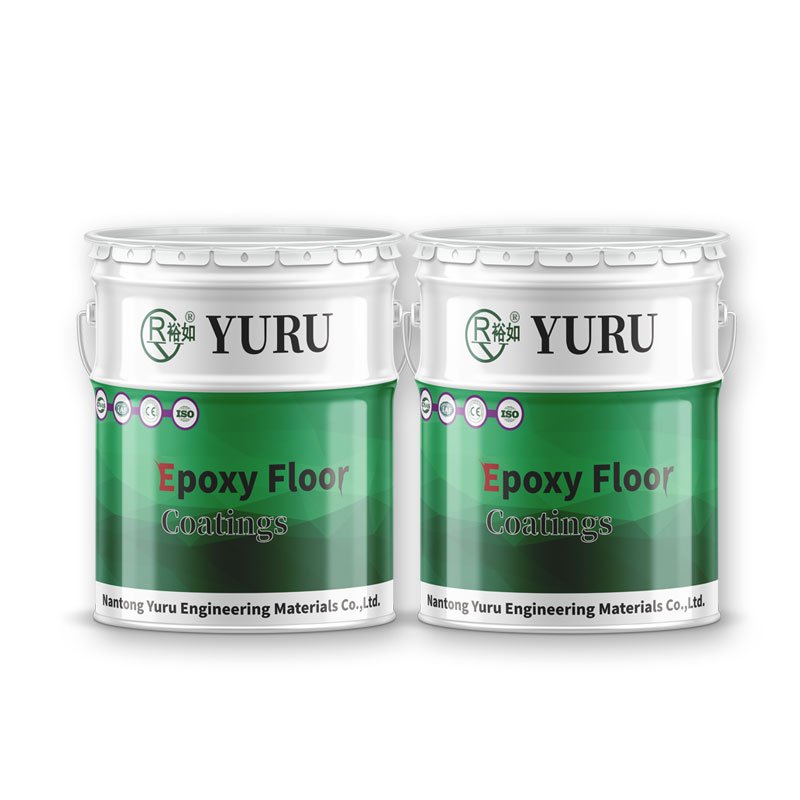
Unlike simple floor paint systems, epoxy colored sand self-leveling floor paint combines epoxy resin, colored sand, and curing agents into one complete coating system. The colored sand is already mixed inside the material, creating a uniform texture and decorative effect after application.
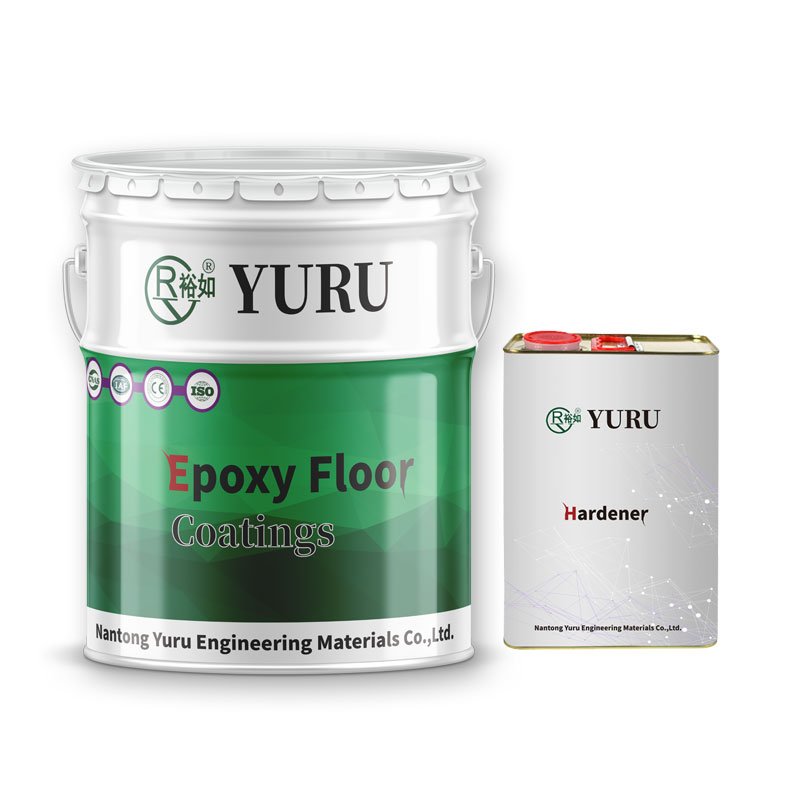
The system uses a two-component formula. After mixing the components, workers apply the material by trowel. The coating then levels itself and forms a seamless, high-strength floor surface.
This makes epoxy colored sand flooring suitable for many applications, including:
- Commercial buildings;
- Showrooms;
- Hotels;
- Public spaces;
- Warehouses;
- Industrial facilities.
For projects that need a balance between design and durability, colored sand epoxy flooring provides an alternative to traditional epoxy floors.
This guide explains how epoxy colored sand flooring works, where it is used, how it compares with standard epoxy flooring, and how to select the right flooring system for commercial and industrial projects.
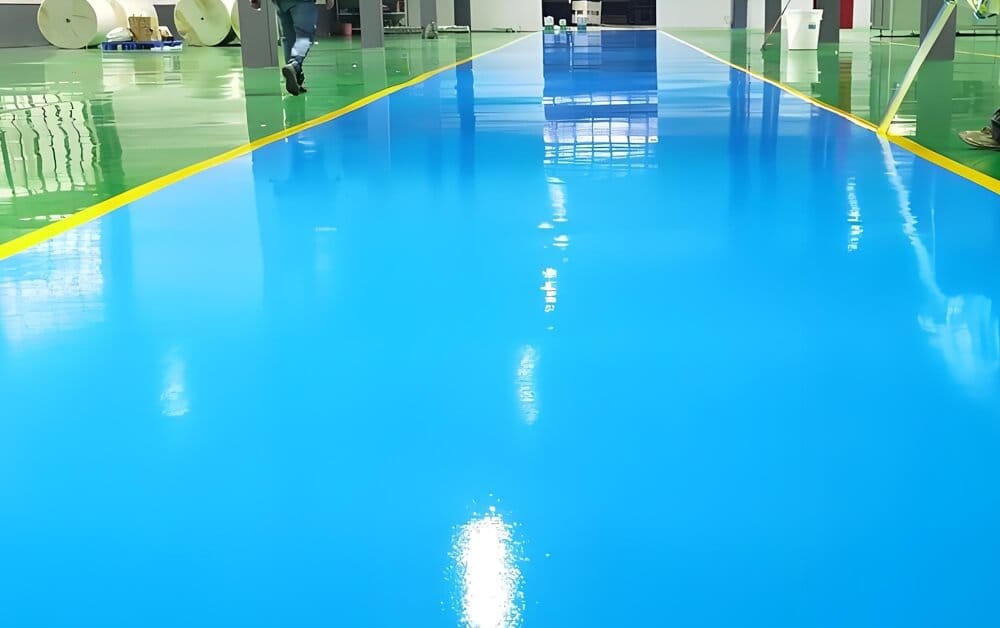
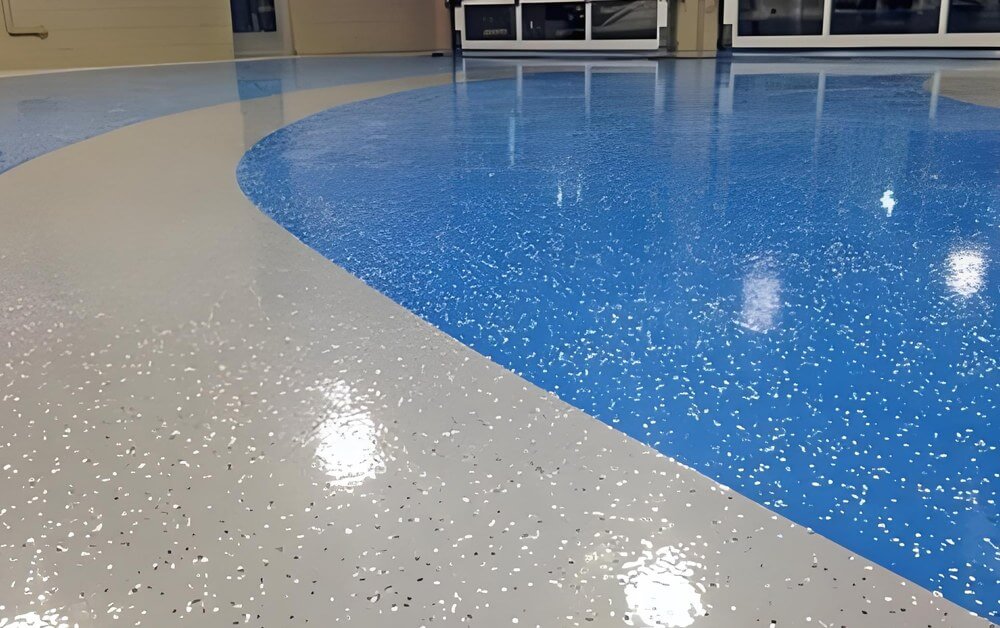
What Is Epoxy Colored Sand Flooring?
Epoxy colored sand flooring is a two-component self-leveling system made from three main ingredients:
- Epoxy resin;
- Colored sand aggregates;
- Curing agent.
You don’t have to broadcast colored sand separately — it’s already mixed into the material before you apply it.
Once you mix Part A and Part B, you get a consistent flooring mixture. Workers spread it with tools, and it cures into a seamless decorative floor.
The basic structure includes:
Concrete Substrate → Surface Preparation → Primer Layer (If Required) → Two-Component Epoxy Colored Sand Self-Leveling Floor Paint (Epoxy Resin + Colored Sand + Curing Agent) → Curing → Finished Seamless Flooring Surface
This structure allows the flooring system to provide:
- Decorative appearance;
- Strong bonding;
- Wear resistance;
- Easy cleaning;
- Long-term floor protection.
How Epoxy Colored Sand Flooring Works?
The performance of this flooring system comes from the combination of epoxy resin and colored sand.
Epoxy resin provides:
- Strong adhesion;
- Chemical resistance;
- Hard surface performance;
- Good mechanical strength.
The colored sand provides:
- Natural texture;
- Decorative patterns;
- Visual depth;
- Improved surface design.
Together, these materials create a floor that combines function and appearance.
The colored sand becomes integral to the flooring structure, distinguishing it from conventional decorative paints that rely on thin surface films.
This makes the system suitable for projects where appearance and durability must work together.
Epoxy Colored Sand Flooring Is Different From Traditional Epoxy Flooring
Both use epoxy resin, but they’re different in looks and performance.
| Feature | Standard Epoxy Flooring | Epoxy Colored Sand Flooring |
| Main Material | Epoxy resin system | Epoxy resin + colored sand + curing agent |
| Surface Appearance | Single color finish | Textured decorative finish/Marble effect |
| Design Flexibility | Medium | Higher |
| Decorative Effect | Simple and clean | More natural and premium |
| Application Areas | Industrial floors | Commercial + industrial projects |
| Surface Texture | Smooth | More visual texture |
A standard epoxy floor works well when the main goal is a clean and functional surface.
However, many modern projects require more than function.
They also need:
- Better appearance;
- Brand-friendly colors;
- Interior design compatibility;
- A professional finish.
This is where decorative epoxy flooring solutions become valuable.
Why Choose Epoxy Colored Sand Self-Leveling Floor Paint?
A successful flooring system must match the environment where it will be installed.
Commercial and industrial spaces have different requirements. A hotel lobby needs a different floor solution compared with a factory workshop.
Epoxy colored sand self-leveling floor paint provides several advantages.
Seamless Decorative Surface
One major advantage of epoxy colored sand flooring is its seamless appearance.
Because the material spreads as one continuous coating, it reduces visible joints and creates a clean surface.
This is especially useful for:
- Commercial spaces;
- Exhibition areas;
- Retail environments;
- Public buildings.
The colored sand inside the epoxy system creates natural visual variation.
The result is a floor that looks more decorative than standard epoxy coatings.
Strong Wear Resistance for Daily Use
Commercial and industrial floors experience constant pressure.
Examples include:
- Foot traffic;
- Equipment movement;
- Material handling;
- Daily cleaning operations.
A flooring system must maintain its surface quality over time.
Epoxy colored sand flooring provides a durable surface when the correct system design and installation process are used.
The final performance depends on:
- Concrete preparation;
- Coating thickness;
- Material quality;
- Construction control.
A high-quality floor system starts with a strong foundation.
Easy Maintenance and Cleaning
Cleaning costs are an important consideration for many facilities.
A well-installed epoxy colored sand floor provides:
- Smooth cleaning performance;
- Reduced dust problems;
- Better resistance to stains;
- Easier daily maintenance.
For areas such as:
- Food-related facilities;
- Commercial buildings;
- Public spaces;
easy maintenance helps reduce long-term operation costs.
Flexible Design Options for Commercial Projects
Modern commercial projects often require flooring that matches the overall design.
Epoxy colored sand flooring can support different visual styles through:
- Color selection;
- Sand combinations;
- Surface effects;
- Finish options.
This makes it suitable for:
- Shopping centers;
- Hotels;
- Office buildings;
- Showrooms.
Compared with ordinary industrial floors, colored sand epoxy flooring provides more design flexibility.
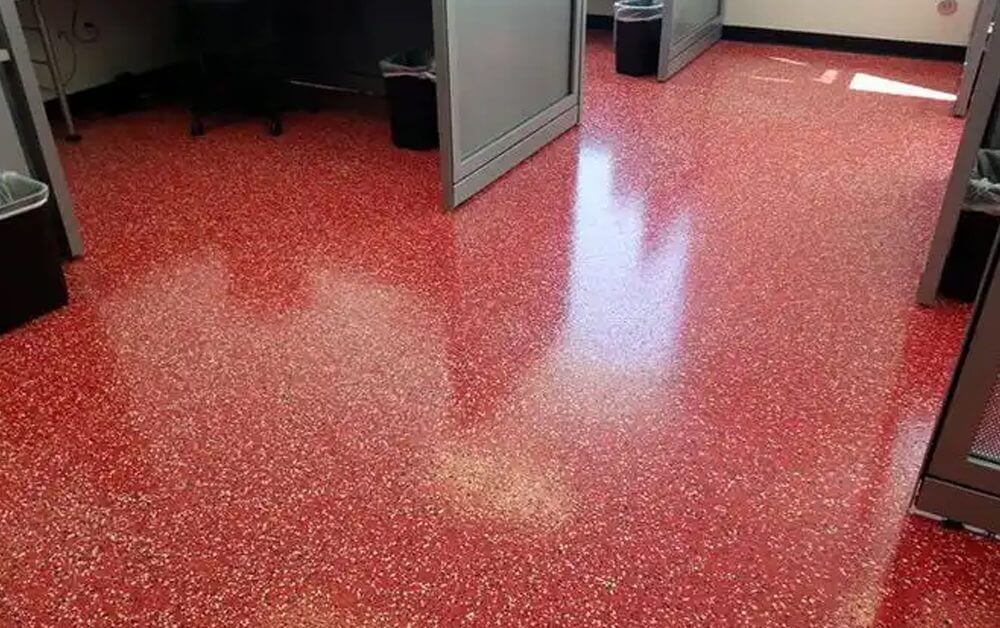
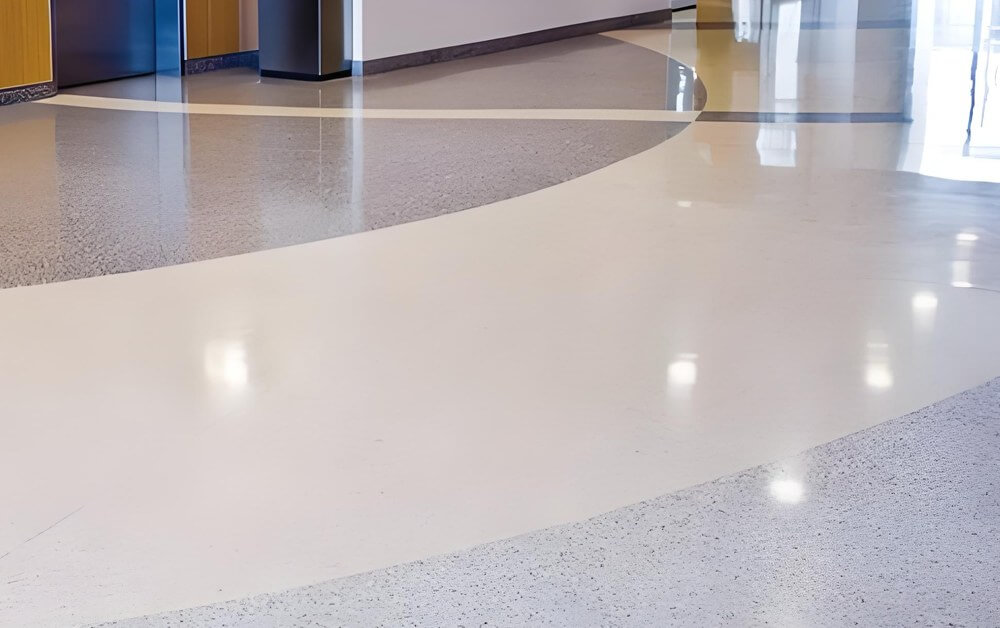
Epoxy Colored Sand Flooring vs Decorative Epoxy Flooring
The term decorative epoxy flooring covers many epoxy-based flooring solutions.
However, not all decorative epoxy systems provide the same structure.
Some systems focus mainly on visual effects.
Epoxy colored sand flooring focuses on both:
- Decorative appearance;
- Functional floor performance.
The selection depends on the project goal.
When Choose Decorative Epoxy Flooring?
Decorative epoxy flooring is appropriate when primary requirements include:
- Attractive appearance;
- Custom design;
- Interior decoration;
- Clean surface.
Typical applications:
- Retail spaces;
- Hotels;
- Exhibition halls;
- Office areas.
When Choose Epoxy Colored Sand Flooring?
Epoxy colored sand flooring is more suitable when projects require:
- Decorative appearance;
- Better surface texture;
- Wear resistance;
- Long-term floor performance.
Typical applications:
- Commercial buildings;
- Industrial facilities;
- Public areas;
- High-traffic spaces.
Where Is Epoxy Colored Sand Flooring Used?
The application of epoxy colored sand flooring continues to expand because it combines appearance and performance.
Different projects have different expectations.
The following sections explain common applications.
Commercial Applications of Epoxy Colored Sand Flooring
Shopping Centers and Retail Spaces
Retail environments require floors that create a positive customer experience.
Important requirements include:
- Attractive appearance;
- Easy cleaning;
- Comfortable visual design;
- Good durability.
Epoxy colored sand floors can provide a premium surface without requiring complex maintenance.
Hotels and Public Buildings
Hotels and public buildings often need flooring that balances design and function.
Common areas include:
- Lobby areas;
- Corridors;
- Reception spaces;
- Public rooms.
A decorative epoxy flooring system can help create a professional environment while maintaining practical performance.
Offices and Showrooms
Office and showroom floors represent company image.
The flooring system needs to provide:
- Clean appearance;
- Modern design;
- Long service life.
Epoxy colored sand flooring allows designers to create customized floor styles while maintaining durability.
Industrial Applications of Epoxy Colored Sand Flooring
Warehouses and Production Facilities
Industrial floors face more demanding conditions.
Common challenges include:
- Heavy traffic;
- Equipment movement;
- Frequent cleaning;
- Surface wear.
A properly designed epoxy colored sand floor can support these environments by providing a durable and easy-to-maintain surface.
Industrial Facilities Requiring Commercial Epoxy Flooring Performance
Many industrial projects require more than basic protection.
They need flooring systems that provide:
- Stable performance;
- Easy maintenance;
- Professional appearance.
For this reason, commercial epoxy flooring and industrial epoxy systems often use advanced resin technologies.
The final flooring selection should consider:
- Traffic level;
- Chemical exposure;
- Cleaning requirements;
- Expected service life.
Material Composition and Performance of Epoxy Colored Sand Flooring
A high-quality epoxy colored sand flooring system depends on the balance between resin, colored sand, and curing components.
Each part plays a different role.
The combination creates a flooring surface that provides both decorative appearance and practical performance.
Epoxy Resin Component
Epoxy resin is the main binder in the flooring system.
It provides:
- Strong bonding with concrete;
- Hard surface performance;
- Chemical resistance;
- Structural stability.
The resin connects the colored sand particles and creates a unified flooring structure after curing.
A good epoxy resin system helps the floor maintain its appearance and performance under daily use.
Colored Sand Component
In YURU epoxy colored sand self-leveling floor paint, the colored sand is already integrated into the material formula.
The colored sand is not installed as a separate layer.
This design provides:
- Uniform color distribution;
- Consistent surface texture;
- Stable decorative effect;
- Easier system control during construction.
Compared with separate sand broadcasting systems, the pre-mixed formula reduces the risk of uneven sand distribution during installation.
Curing Agent Component
The curing agent activates the epoxy reaction.
It controls:
- Hardening process;
- Final strength development;
- Surface performance.
For two-component epoxy colored sand flooring, correct mixing between Component A and Component B is essential.
Incorrect mixing can affect:
- Curing quality;
- Surface appearance;
- Mechanical performance.
Key Performance Advantages of Epoxy Colored Sand Flooring
A properly installed epoxy colored sand floor provides several important benefits.
Seamless Surface
The self-leveling property helps create a continuous surface with fewer visible joints.
This supports:
- Easy cleaning;
- Modern appearance;
- Reduced dirt accumulation.
High Strength Performance
The epoxy system provides strong mechanical properties.
It can support applications requiring:
- Wear resistance;
- Daily traffic resistance;
- Long-term floor protection.
Decorative Appearance
Unlike traditional single-color epoxy floors, colored sand epoxy flooring creates a richer visual effect.
It can match different project designs through:
- Color combinations;
- Surface texture;
- Decorative styles.
Environmentally Friendly Formula
YURU epoxy colored sand self-leveling floor paint uses a solvent-free formula.
This makes it suitable for indoor projects where low odor and environmental considerations are important.
How Is Epoxy Colored Sand Flooring Installed?
The final performance of a flooring system depends not only on the material.
The installation process also plays an important role.
A professional installation usually follows several steps.
Step 1: Concrete Surface Inspection
Prior to construction, the concrete substrate should be assessed for:
The inspection focuses on:
- Surface strength;
- Cracks;
- Moisture condition;
- Oil contamination;
- Existing damage.
A weak substrate can affect the entire flooring system.
Step 2: Surface Preparation
Surface preparation creates the correct foundation for epoxy bonding.
Typical preparation includes:
- Concrete grinding;
- Dust removal;
- Surface cleaning;
- Crack repair.
The goal is to create a clean and stable surface.
Step 3: Primer Application
Depending on the project requirements, a primer layer may be applied.
The primer helps:
- Improve adhesion;
- Reduce surface absorption;
- Create a better connection between concrete and epoxy flooring.
Step 4: Mixing Component A and Component B
Epoxy colored sand flooring is a two-component system.
Before application, workers must:
- Follow the correct mixing ratio;
- Mix thoroughly;
- Control the working time.
Proper mixing ensures uniform performance.
Step 5: Trowel Application and Self-Leveling
After mixing, workers apply the material using professional tools.
The coating spreads across the surface and creates a smooth floor finish.
The self-leveling property helps achieve:
- Uniform thickness;
- Smooth appearance;
- Seamless surface quality.
Step 6: Curing and Final Inspection
After application, the floor needs sufficient curing time.
Before use, the project team should inspect:
- Surface appearance;
- Flatness;
- Defects;
- Final performance.
A complete inspection helps ensure long-term reliability.
Installation Flow Chart
Concrete Inspection → Surface Grinding & Cleaning → Crack Repair → Primer Application → Component A + Component B Mixing → Epoxy Colored Sand Self-Leveling Application → Curing → Final Inspection → Finished Floor Surface
Performance Testing of Epoxy Colored Sand Flooring
For commercial and industrial projects, performance data helps customers evaluate whether a flooring system meets project requirements.
YURU performs product testing to verify mechanical properties and durability.
Abrasion Resistance Test
Result:
123 mm²
Abrasion resistance shows how well the flooring surface handles wear caused by daily movement.
This performance is important for:
- Warehouses;
- Commercial buildings;
- Public facilities;
- High-traffic areas.
Lower abrasion loss values correspond to superior wear resistance.
Flexural Strength Test
Result:
21.5 MPa
Flexural strength reflects the ability of the material to resist bending stress.
This property helps the flooring system handle normal operational stress after curing.
Compressive Strength Test
Result:
38.6 MPa
Compressive strength indicates the ability of the flooring material to resist pressure.
This is important for applications involving:
- Equipment;
- Heavy loads;
- Industrial operation areas.
Performance Summary Table
| Test Item | Result | Importance |
| Abrasion Resistance | 123 mm² | Surface wear protection |
| Flexural Strength | 21.5 MPa | Resistance to bending stress |
| Compressive Strength | 38.6 MPa | Load-bearing performance |
Common Problems When Installing Epoxy Colored Sand Flooring
Even high-quality flooring materials may fail under improper installation conditions.
Understanding common failure modes enables contractors to avoid unnecessary remediation.
Poor Adhesion Between Floor and Concrete
Problem:
The coating may peel or detach from the substrate.
Common Causes:
- Dust on the surface;
- Weak concrete;
- Oil contamination;
- Poor preparation.
Solution:
Before application:
- Grind the surface;
- Remove contamination;
- Repair damaged areas;
- Confirm substrate quality.
Uneven Surface Appearance
Problem:
The finished floor may show:
- Color differences;
- Uneven texture;
- Surface defects.
Common Causes:
- Incorrect mixing;
- Uneven application;
- Poor construction control.
Solution:
Workers should:
- Follow mixing requirements;
- Apply consistent thickness;
- Use proper tools.
Poor Curing Performance
Problem:
The floor does not reach expected hardness.
Common Causes:
- Wrong mixing ratio;
- Insufficient mixing;
- Incorrect curing conditions.
Solution:
Control:
- Material ratio;
- Construction temperature;
- Curing time.
Wrong Flooring Selection for the Application
Different projects require different systems.
For example:
A showroom may focus on:
- Appearance;
- Design;
- Easy cleaning.
A factory may focus on:
- Wear resistance;
- Load performance;
- Chemical resistance.
The correct system selection improves long-term value.
Real Project Case: Epoxy Colored Sand Flooring Solution
Project Background
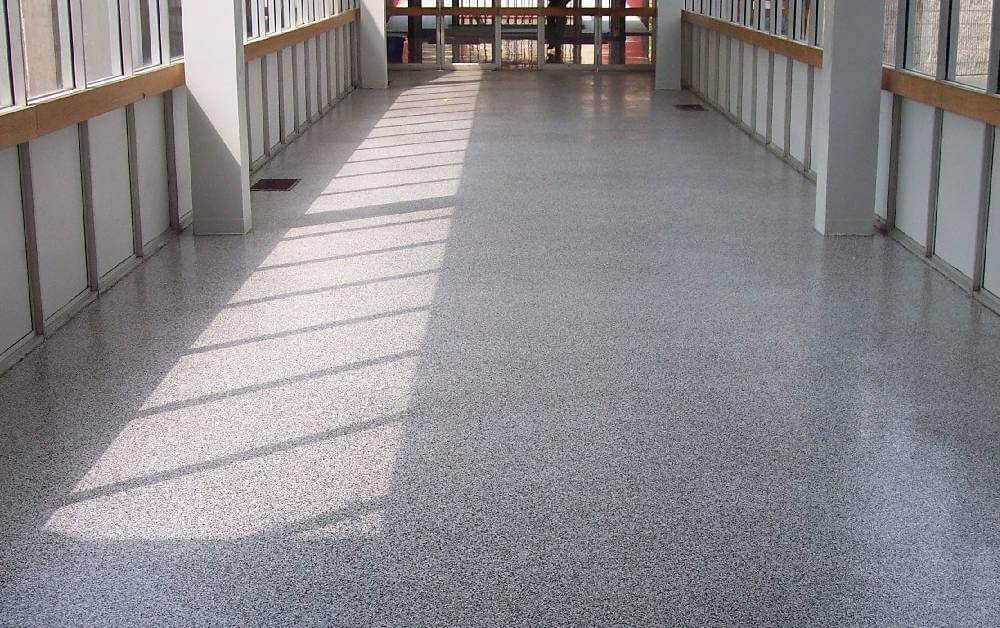
A commercial project required a flooring system capable of delivering both decorative appearance and practical durability.
Customer requirements included:
- Maintain a professional appearance;
- Support daily use;
- Provide easy maintenance.
Customer Requirements
The project team focused on:
- Seamless floor appearance;
- Stable surface performance;
- Decorative color effect;
- Long-term maintenance convenience.
Traditional floor paint could not provide enough design flexibility.
YURU Flooring Solution
YURU recommended an epoxy colored sand self-leveling floor paint system.
The solution included:
- Two-component epoxy colored sand flooring material;
- Customized color selection;
- Technical application guidance.
Because the colored sand was already integrated into the epoxy system, the construction process remained controlled and consistent.
Project Result
After installation, the floor achieved:
- Smooth decorative appearance;
- Uniform color effect;
- Durable surface performance;
- Easy cleaning characteristics.
The project demonstrated that epoxy colored sand flooring can combine visual design with practical engineering requirements.
Why Choose YURU Epoxy Colored Sand Flooring Manufacturer?
Selecting a flooring supplier requires more than checking product appearance.
Customers also need:
- Stable production;
- Quality control;
- Technical support;
- Customization capability.
Professional Flooring Material Manufacturer
YURU Waterproof specializes in:
- Waterproof coatings;
- Grouting materials;
- Floor coating systems.
The company provides epoxy flooring solutions for commercial and industrial applications.
Customized Epoxy Colored Sand Flooring Solutions
YURU supports:
- Custom colors;
- OEM packaging;
- Product customization;
- Project-based solutions.
This allows customers to match flooring requirements with different markets and projects.
Factory Production and Quality Control
YURU operates:
- 10,000 m² manufacturing facility;
- Multiple production lines;
- Professional quality inspection processes.
The factory controls:
- Raw materials;
- Production process;
- Finished product quality.
Technical Support Beyond Material Supply
YURU provides support including:
- Product selection;
- Application guidance;
- Technical documents;
- Project communication.
The goal is to help customers select the right flooring system for each project.

FAQs:
Epoxy colored sand flooring is a two-component self-leveling system comprising epoxy resin, colored sand aggregates, and curing agent.
The colored sand is pre-dispersed within the material.
The system cures to form a seamless decorative floor surface.
Yes.
It can be used in areas requiring:
- Wear resistance;
- Easy maintenance;
- Decorative appearance.
Common applications include:
- Factories;
- Warehouses;
- Commercial facilities.
The main difference is the integrated colored sand system.
Normal epoxy flooring usually focuses on a single-color protective surface.
Epoxy colored sand flooring provides:
- More decorative effects;
- Richer texture;
- Greater design flexibility.
Yes.
Manufacturers can customize:
- Colors;
- Packaging;
- Product specifications.
YURU provides customized epoxy flooring solutions according to project requirements.
Service life depends on:
- Installation quality;
- Traffic conditions;
- Maintenance;
- Environmental exposure.
Proper preparation and correct application improve long-term performance.
Conclusion:
Epoxy colored sand flooring provides a practical solution for projects that require both decorative appearance and strong floor performance.
Compared with traditional epoxy floors, it offers:
- Richer visual effects;
- Seamless surface appearance;
- Better design flexibility;
- Suitable durability for commercial and industrial applications.
However, successful flooring performance depends on:
- Correct product selection;
- Proper concrete preparation;
- Professional installation;
- Quality material control.
For commercial spaces, decorative epoxy flooring can improve the overall environment.
For industrial applications, commercial epoxy flooring solutions can provide better durability and maintenance performance.
YURU provides epoxy colored sand flooring solutions for different project requirements.
Contact YURU to discuss:
- Epoxy colored sand floor paint;
- Customized flooring systems;
- Commercial and industrial flooring applications.
YURU Product solutions