Is Epoxy Good for Flooring?
Introduction: Is Epoxy a Good Choice for Flooring?
Choosing the right flooring system is a big decision for any commercial or industrial project.
A floor has to do more than just cover concrete. It needs to handle daily activities, cut down on maintenance, and stay clean-looking for years.
Many project teams ask the same question:
Is epoxy good for flooring?
Yes. Epoxy flooring is a reliable choice for many applications — when you select the right system for the project.
However, epoxy flooring is not one single product.
Different epoxy systems provide different performance levels.
For example:
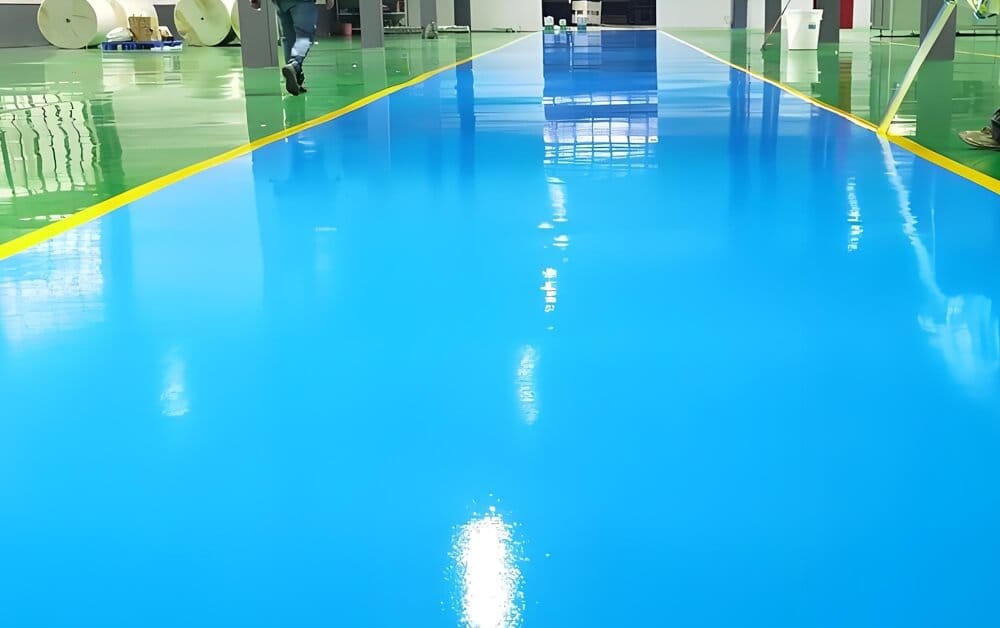
- A warehouse may need a durable industrial epoxy floor coating.
- A showroom may need a decorative epoxy flooring system.
- A commercial building may need a balance between appearance and performance.
- A factory may require stronger resistance against wear and chemicals.
The final result depends on several factors:
- Concrete condition;
- Floor usage;
- Required durability;
- Installation quality;
- Maintenance expectations.
This guide covers why epoxy flooring is popular, what benefits it offers, where it works best, and how to select the right system for commercial and industrial projects.

What Is Epoxy Flooring?
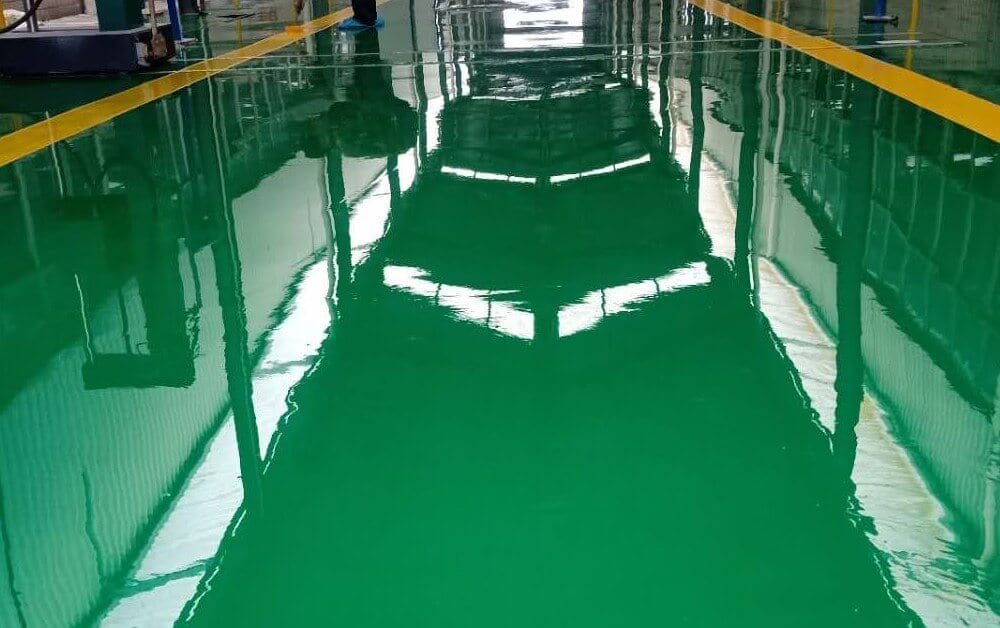
Epoxy flooring is a resin-based flooring system applied over concrete surfaces.
Primary components typically include:
- Epoxy resin
- Curing agent
- Optional additives or aggregates
Mix them together, and the material reacts to form a hard protective surface.
Unlike plain concrete, epoxy creates a sealed layer on top.
This helps improve:
- Surface protection;
- Cleaning performance;
- Appearance;
- Floor durability.
Epoxy flooring is widely specified for environments requiring additional concrete protection.
Typical applications include:
- Warehouses
- Factories
- Parking facilities
- Commercial buildings
- Workshops
- Public facilities
How Does Epoxy Flooring Work?
The performance of epoxy flooring comes from the chemical reaction between resin and curing components.
The basic installation process includes:
Concrete → Inspect → Grind & Clean → Primer → Apply Epoxy → Cure → Finished Floor
The concrete substrate provides the foundation.
The epoxy layer provides protection.
A successful flooring system requires both:
- Good material;
- Proper construction.
Why Is Concrete Preparation Important?
Many flooring problems do not come from the epoxy material itself.
They often start from poor substrate preparation.
Before applying epoxy, workers need to check:
- Surface strength
- Moisture condition
- Existing cracks
- Oil
- Dust/debris
A clean and stable concrete surface helps epoxy bond properly.
Without proper preparation, problems may appear later, such as:
- Peeling;
- Poor adhesion;
- Uneven surface;
- Reduced service life.
Why Is Epoxy Good for Flooring?
Epoxy flooring is popular because it gives you protection, good looks, and easy maintenance.
However, the best flooring choice depends on the project environment.
Here’s why many commercial and industrial projects go with epoxy.
Epoxy Provides Strong Surface Protection
| Concrete Problems | Epoxy Solves |
| Dust formation | Protective layer |
| Surface wear | Handles daily traffic + equipment |
| Staining | Easier cleaning |
| Difficult cleaning | Protects concrete base |
Epoxy Flooring Is Easy to Clean and Maintain
Maintenance is an important factor for many facilities.
A damaged or dusty floor increases cleaning work and operating costs.
Epoxy flooring provides a sealed surface that helps reduce:
- Dust accumulation;
- Dirt penetration;
- Liquid absorption.
This makes daily maintenance easier.
For example:
- A warehouse can benefit from easier cleaning.
- A commercial building can maintain a cleaner appearance.
- A production area can improve workplace conditions.
Epoxy Provides a Professional Appearance
Modern projects require floors that perform well and look professional.
Epoxy flooring offers different appearance options.
Depending on the system, customers can choose:
- Solid colors;
- Gloss finishes;
- Decorative effects;
- Custom designs.
This makes epoxy suitable for spaces where appearance matters.
Examples include:
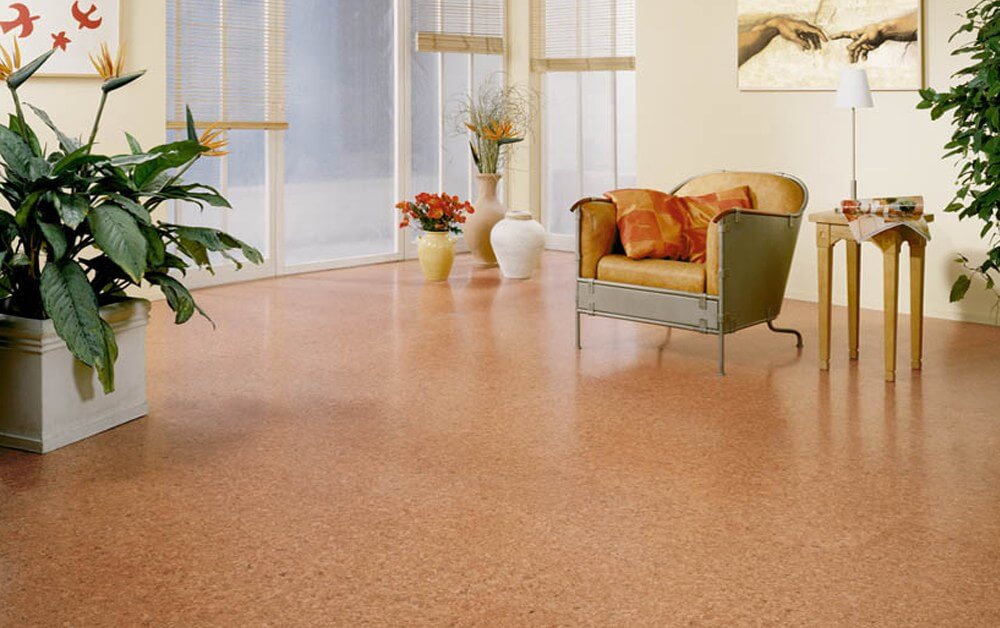
- Showrooms;
- Hotels;
- Retail areas;
- Office buildings.
Epoxy Flooring Provides Long-Term Value
The initial material cost is only one part of a flooring decision.
Project owners also consider:
- Maintenance frequency;
- Repair requirements;
- Service life;
- Daily operation impact.
A properly selected epoxy flooring system can reduce long-term maintenance needs.
The value comes from:
- Better floor protection;
- Easier cleaning;
- Reduced surface damage;
- Improved working environment.
Where Is Epoxy Flooring Used?
Epoxy flooring works well in many different environments.
The correct system depends on the conditions of each project.
Industrial Applications
Industrial facilities usually require floors with strong functional performance.
Common requirements include:
- Wear resistance;
- Chemical resistance;
- Easy maintenance;
- Stable performance.
Warehouses
Warehouses often experience:
- Forklift traffic;
- Material movement;
- Heavy daily use.
An industrial epoxy floor coating can provide a durable surface that supports warehouse operations.
Key benefits include:
- Reduced dust;
- Easier cleaning;
- Better surface protection.
Manufacturing Facilities
Factories have different flooring challenges.
The floor may need to handle:
- Equipment movement;
- Production activities;
- Chemical exposure;
- Frequent cleaning.
The flooring system should match the specific working environment.
A heavy-duty epoxy system may be suitable for demanding industrial areas.
Workshops and Service Areas
Workshops often require a floor that can resist:
- Oil contamination;
- Mechanical impact;
- Daily wear.
Epoxy flooring helps create a cleaner and more organized working space.
Commercial Applications
Commercial projects usually require both performance and appearance.
The floor often becomes part of the overall building design.
Retail Spaces
Retail areas need flooring that creates a positive customer experience.
Important requirements include:
- Attractive appearance;
- Easy maintenance;
- Long-term durability.
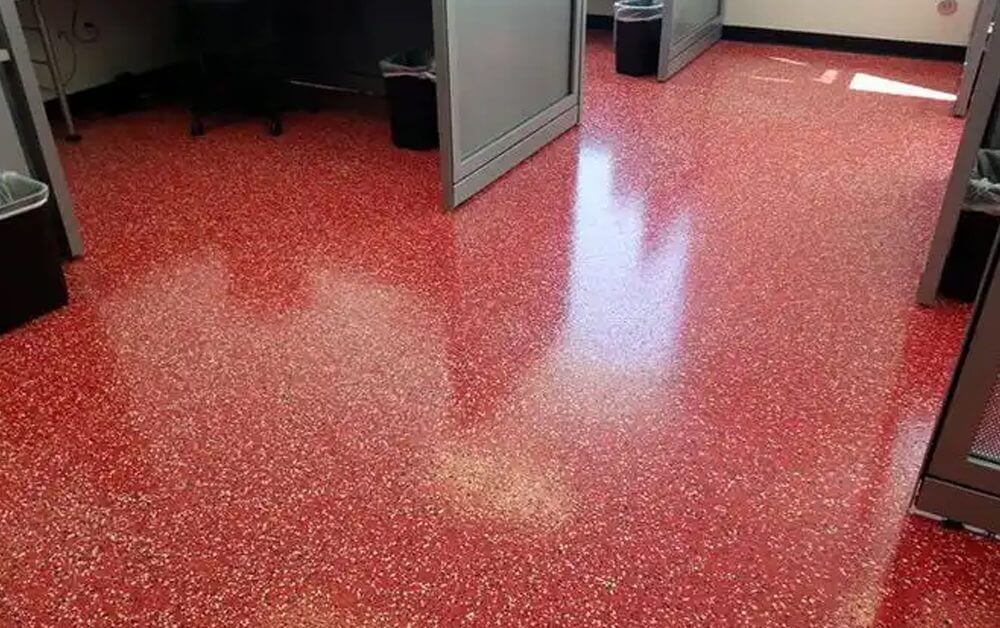
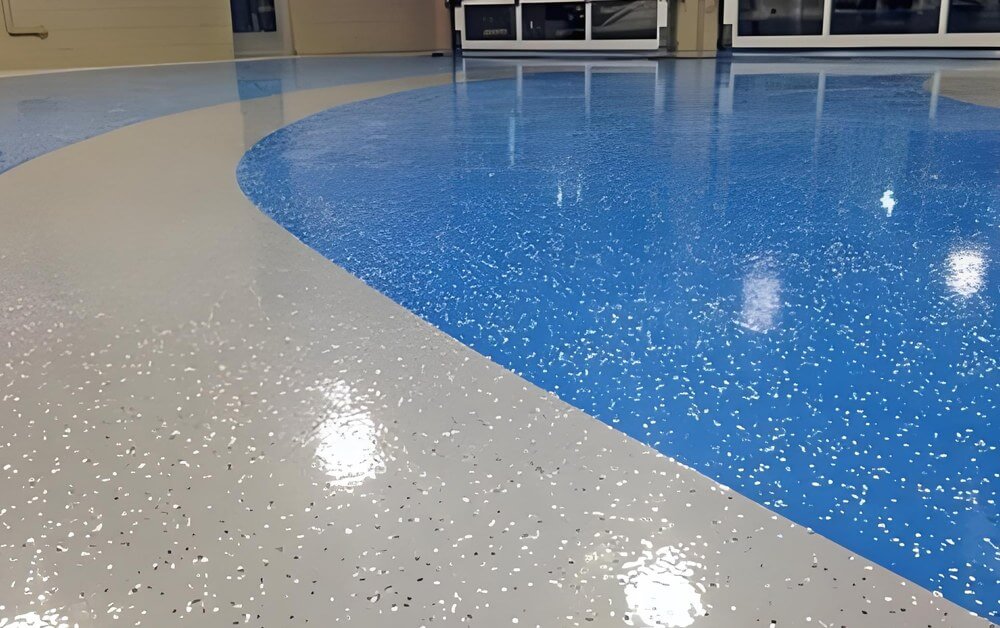
Decorative epoxy flooring can provide a more customized visual effect.
Hotels and Public Buildings
Hotels and public buildings often focus on:
- Clean appearance;
- Comfortable environment;
- Design consistency.
Epoxy systems can support different styles through:
- Color selection;
- Decorative finishes;
- Surface effects.
Offices and Showrooms
Office and showroom floors represent company image.
A professional floor can improve the overall environment.
Epoxy flooring provides:
- Smooth appearance;
- Easy maintenance;
- Modern design options.
Choosing the Right Epoxy Flooring System
The question is not only:
“Is epoxy good for flooring?”
The better question is:
“Which epoxy system is suitable for my project?”
Different environments require different solutions.
| Project Requirement | Recommended Direction |
| Warehouse | Industrial epoxy floor coating |
| Factory | Heavy-duty epoxy flooring system |
| Showroom | Decorative epoxy flooring |
| Commercial building | Epoxy colored sand flooring |
| Parking area | Wear-resistant epoxy system |
When Epoxy Floor Coating Is a Good Choice
An epoxy floor coating is suitable when the project mainly requires:
- Concrete protection;
- Easy cleaning;
- Functional performance;
- Cost-effective maintenance.
Typical applications include:
- Warehouses;
- Workshops;
- Industrial areas.
The focus is usually performance rather than decorative design.
When Epoxy Colored Sand Flooring Is a Better Choice
Epoxy colored sand flooring is suitable when projects need:
- Decorative appearance;
- Seamless surface;
- Design flexibility;
- Practical durability.
The system combines:
- Epoxy resin;
- Colored sand;
- Curing agent.
The colored sand is already integrated into the material.
It does not require a separate sand broadcasting process.
This makes it different from other decorative epoxy systems.

Different Types of Epoxy Flooring Systems
Epoxy flooring is not a single product category.
Different epoxy systems provide different performance characteristics.
The right choice depends on:
- Project environment;
- Floor usage;
- Appearance requirements;
- Durability expectations.
The main epoxy flooring systems include:
- Epoxy floor coating;
- Epoxy colored sand flooring;
- Heavy-duty epoxy flooring systems.
Epoxy Floor Coating
This is one of the most common options.
It creates a protective layer over concrete and improves performance.
Main advantages include:
- Good concrete protection;
- Easy cleaning;
- Smooth appearance;
- Chemical resistance.
This system works well for:
- Warehouses;
- Workshops;
- Industrial areas;
- Utility rooms.
For projects where the main goal is floor protection, epoxy floor coating provides a practical solution.
Epoxy Colored Sand Flooring
Epoxy colored sand flooring focuses on both performance and appearance.
The system uses:
- Epoxy resin;
- Colored sand;
- Curing agent.
Everything is combined into one system.
The colored sand is already mixed in.
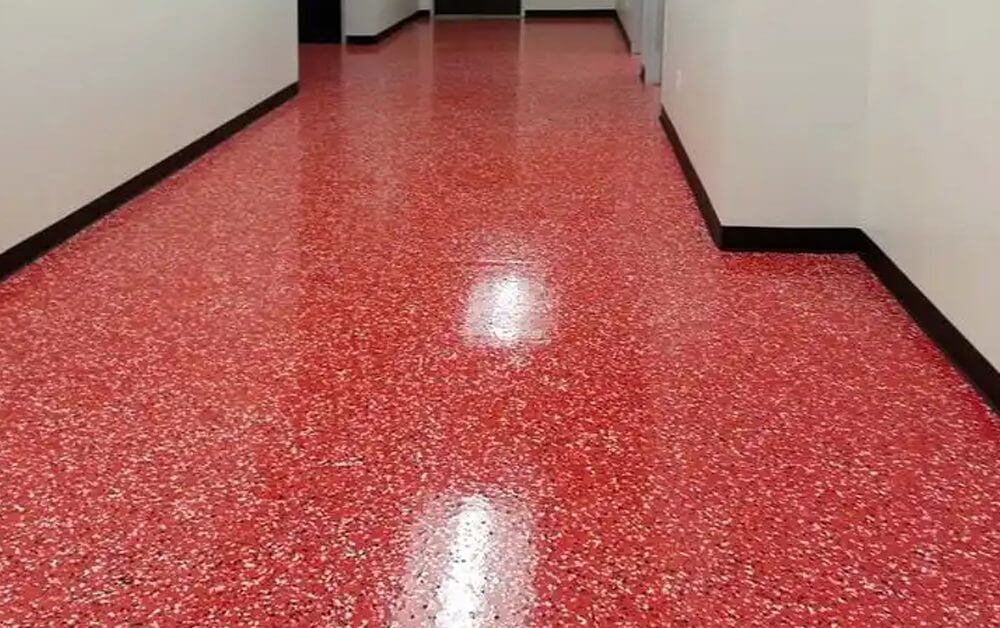
This creates:
- Decorative texture;
- Seamless surface;
- Custom appearance;
- Strong visual effect.
Suitable for:
- Commercial buildings;
- Hotels;
- Showrooms;
- Public spaces.
It is a good choice when a project needs more than a basic protective floor.
Heavy-Duty Epoxy Flooring Systems
Some industrial environments require stronger flooring performance.
Heavy-duty epoxy systems are designed for areas with:
- Heavy traffic;
- Equipment movement;
- Higher mechanical stress.
Typical applications include:
- Manufacturing plants;
- Industrial workshops;
- Logistics facilities.
The system selection should consider actual operating conditions.
A stronger system is not always necessary.
The correct system is the one that matches the project.
Epoxy Floor Coating vs Epoxy Colored Sand Flooring: Which Is Better?
Many customers compare:
epoxy colored sand vs epoxy floor
because both systems use epoxy technology.
However, they solve different project needs.
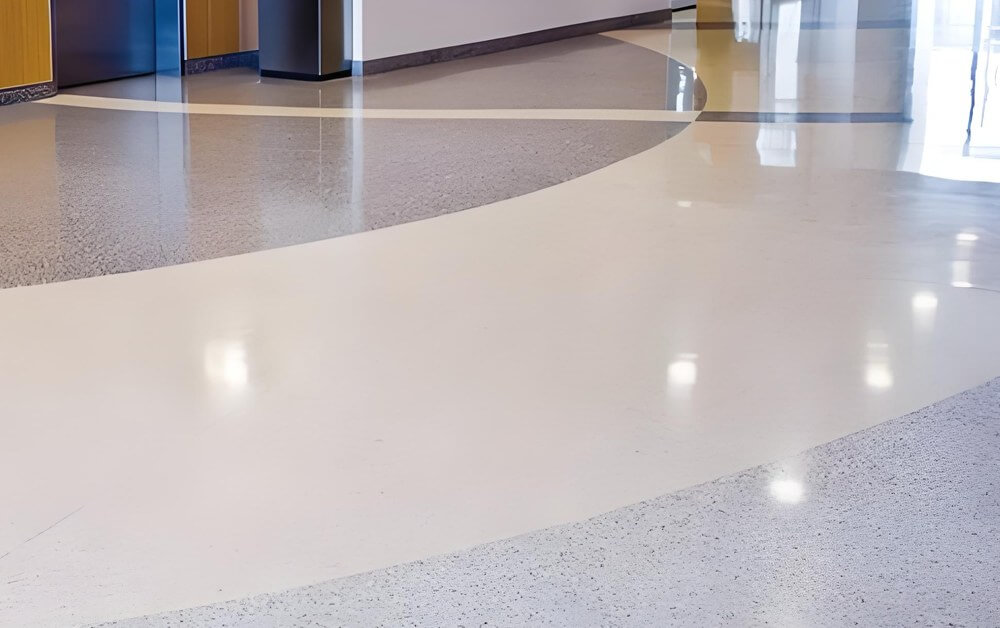
| Feature | Epoxy Floor Coating | Epoxy Colored Sand Flooring |
|---|---|---|
| Main Purpose | Surface protection | Protection + decorative appearance |
| Material Structure | Epoxy resin system | Epoxy resin + colored sand + curing agent |
| Appearance | Simple and clean | Textured decorative finish |
| Design Options | Limited | More flexible |
| Surface Effect | Smooth finish | Rich visual texture |
| Main Focus | Function | Function + appearance |
| Typical Application | Industrial areas | Commercial + industrial projects |
Appearance Comparison
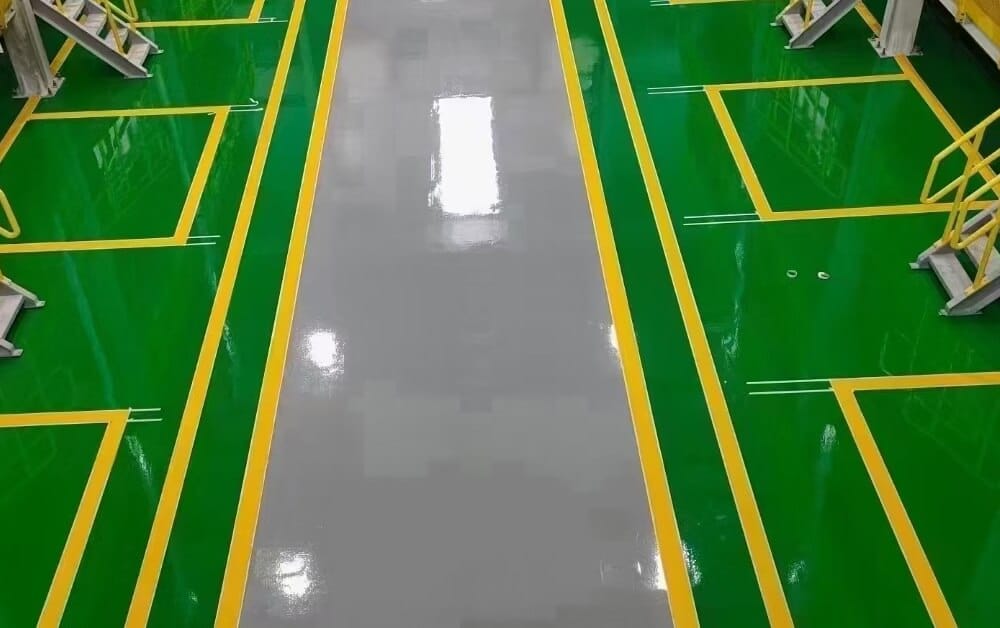
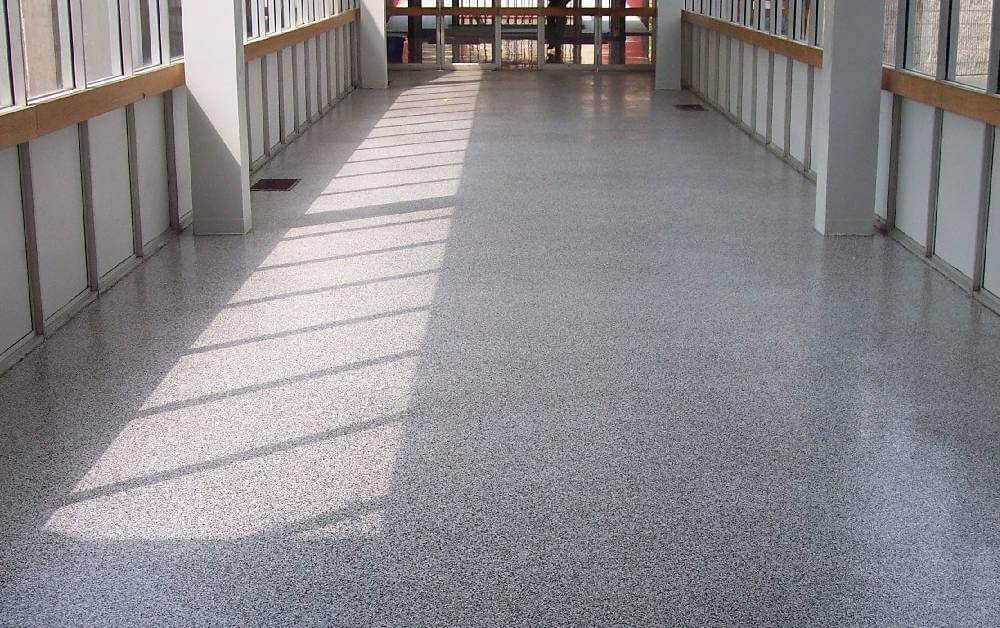
Epoxy floor coating usually provides a simple and professional surface.
It works well when appearance is important but not the main priority.
Examples:
- Warehouses;
- Workshops;
- Storage areas.
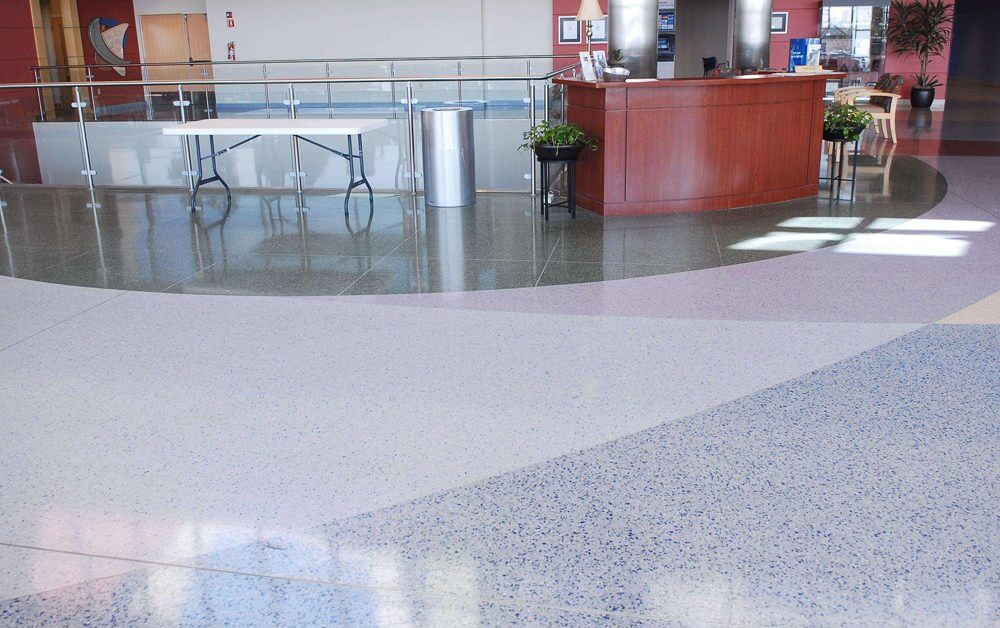
Epoxy colored sand flooring provides a more decorative finish.
The integrated colored sand creates:
- Natural texture;
- Better visual depth;
- More design possibilities.
This makes it suitable for:
- Showrooms;
- Hotels;
- Retail spaces;
- Public buildings.
Performance Comparison
Both systems can provide good durability when properly designed and installed.
However, the performance focus is different.
Epoxy floor coating mainly provides:
- Surface protection;
- Wear resistance;
- Easy maintenance.
Epoxy colored sand flooring provides:
- Decorative performance;
- Surface protection;
- Design flexibility.
The correct choice depends on project requirements.
Maintenance Comparison
Both systems create sealed surfaces.
This helps:
- Reduce dust;
- Improve cleaning efficiency;
- Protect concrete.
For commercial spaces, epoxy colored sand flooring can provide additional value because it combines maintenance advantages with decorative appearance.
For industrial areas, epoxy floor coating can provide reliable floor protection.
Epoxy Flooring vs Traditional Concrete Floor
Concrete is a widely used flooring substrate.
Plain concrete has issues: dust, wear, stains, hard to clean.
Epoxy flooring improves the performance of concrete surfaces.
| Feature | Traditional Concrete Floor | Epoxy Flooring |
|---|---|---|
| Surface Protection | Basic | Improved |
| Dust Control | Limited | Better |
| Cleaning | More difficult | Easier |
| Appearance | Simple | Customizable |
| Chemical Resistance | Limited | Higher |
| Maintenance | More frequent | Reduced |
Why Apply Epoxy Over Concrete?
Concrete provides structural strength.
However, epoxy provides additional surface protection.
The combination creates a better flooring solution.
Epoxy helps:
- Protect concrete;
- Improve appearance;
- Reduce maintenance work.
For commercial and industrial projects, epoxy flooring extends the functional value of concrete floors.
How to Select the Best Epoxy Flooring Solution?
Choosing epoxy flooring requires understanding the project conditions.
The following factors should be considered.
Consider the Project Environment
Different environments have different requirements.
Industrial Areas
Priorities:
- Wear resistance;
- Chemical resistance;
- Load performance.
Recommended direction:
Industrial epoxy floor coating.
Commercial Areas
Priorities:
- Appearance;
- Design;
- Easy cleaning.
Recommended direction:
Epoxy colored sand flooring or decorative epoxy flooring.
Consider Traffic Conditions
Floor traffic directly affects system selection.
Low traffic areas:
- Offices;
- Small commercial spaces.
Medium traffic areas:
- Retail stores;
- Public buildings.
High traffic areas:
- Warehouses;
- Factories;
- Parking facilities.
Consider Appearance Requirements
Some projects need only functional protection.
Others need a floor that supports the overall design.
Choose decorative systems when the floor contributes to:
- Customer experience;
- Brand image;
- Interior design.
Consider Installation Conditions
A good epoxy system requires proper construction.
Important factors include:
- Concrete preparation;
- Moisture control;
- Mixing accuracy;
- Application thickness;
- Curing conditions.
Material quality and installation quality work together.
Common Problems and How to Avoid Them
Even high-quality epoxy systems can fail if the installation process is not controlled.
Understanding common problems helps improve project results.
Poor Concrete Surface Preparation
Problem:
The coating may lose adhesion.
Causes:
- Dust;
- Oil contamination;
- Weak concrete surface;
- Improper grinding.
Solution:
Before applying epoxy:
- Clean the surface;
- Remove contamination;
- Repair damaged areas;
- Check substrate condition.
Incorrect Mixing of Components
Two-component epoxy systems require correct mixing.
Problems may happen when:
- The ratio is incorrect;
- Mixing time is insufficient;
- Material is used beyond working time.
Correct mixing helps achieve stable curing performance.
Wrong System Selection
Different projects need different flooring solutions.
A decorative floor may not be suitable for a heavy industrial environment.
A simple industrial coating may not meet commercial design requirements.
The best flooring system matches the project purpose.
Ignoring Maintenance Requirements
A good flooring system still needs proper maintenance.
Regular cleaning and correct usage help extend service life.
Maintenance requirements should be considered before selecting the system.
Why Choose YURU Epoxy Flooring Solutions?
YURU Waterproof provides epoxy flooring systems designed for commercial and industrial applications.
The company focuses on practical flooring solutions that combine:
- Performance;
- Appearance;
- Stable supply;
- Technical support.
Complete Epoxy Flooring Product Solutions
YURU provides different flooring systems, including:
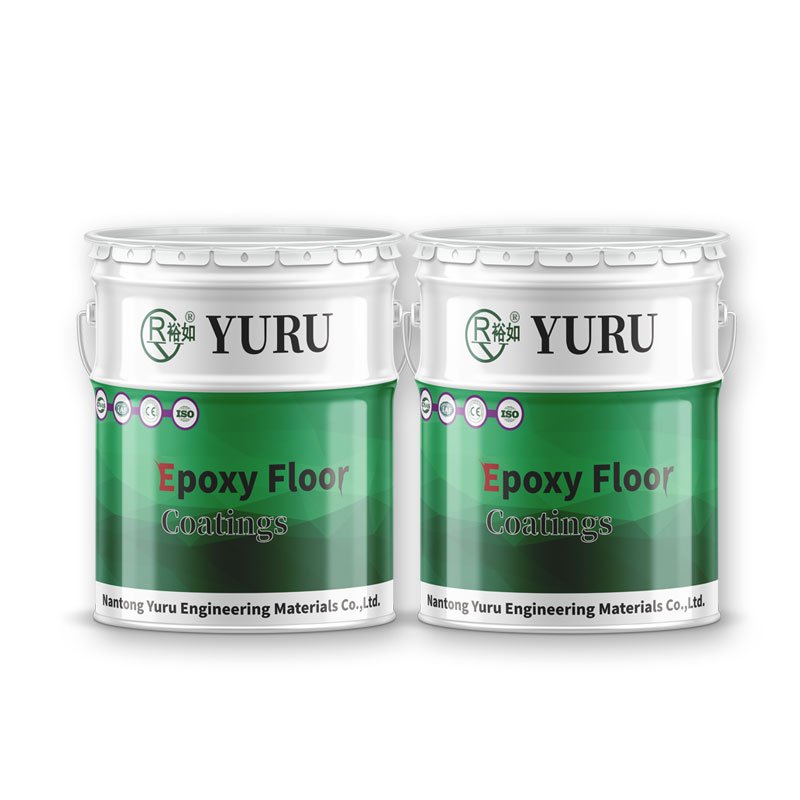
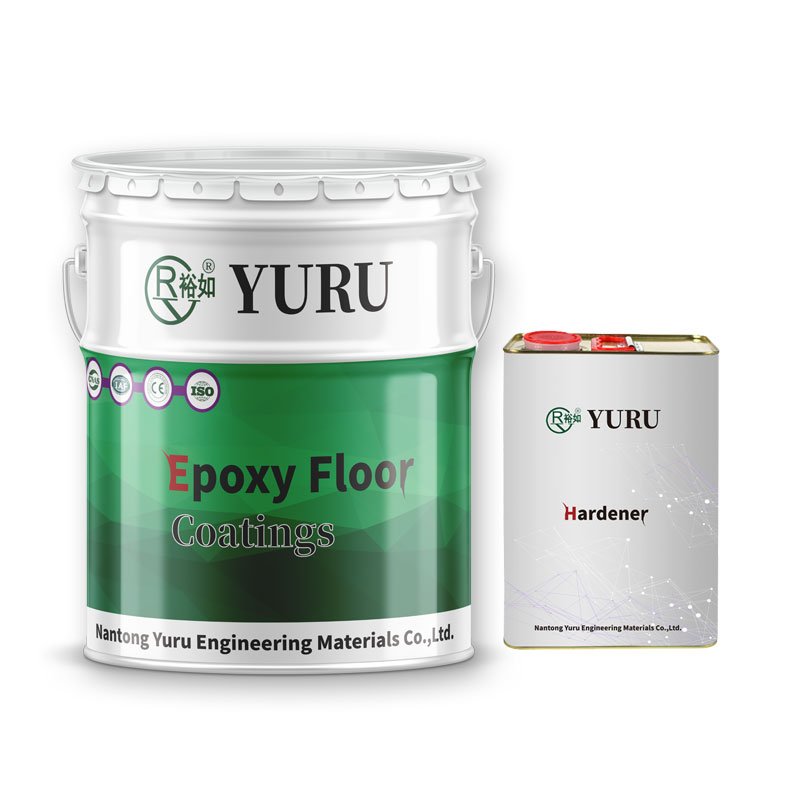
Epoxy Floor Coating
Suitable for:
- Industrial areas;
- Warehouses;
- Functional floor protection.
Epoxy Colored Sand Self-Leveling Floor Paint
Suitable for:
- Commercial buildings;
- Showrooms;
- Projects requiring decorative appearance.
The product uses:
- Epoxy resin;
- Colored sand;
- Curing agent.
The colored sand is already integrated into the material.
Customized Flooring Support
Different markets have different requirements.
YURU supports:
- Custom colors;
- Packaging solutions;
- OEM services;
- Technical communication.
This helps customers develop flooring products suitable for different applications.
Manufacturing Capability
Founded in 2003, YURU Waterproof specializes in:
- Waterproofing materials;
- Grouting materials;
- Floor coating systems.
The company operates manufacturing facilities with production and quality control processes.
YURU supports customers with:
- Stable material supply;
- Product guidance;
- Project support.
FAQs:
Yes. Good for many commercial/industrial applications.
It provides:
Surface protection;
Easy maintenance;
Good appearance;
Long-term value.
Depends on installation quality, floor usage, maintenance, environment. Properly installed = long-term protection.
Epoxy floor coating is primarily formulated for surface protection.
Epoxy colored sand flooring integrates protective performance with decorative appearance.
Selection should be based on project requirements.
Yes.
Warehouses use epoxy because it helps:
- Reduce dust
- Improve cleaning
- Protect concrete
Yes.
Customization options may include:
- Color;
- Finish;
- Packaging;
- Product specifications.
Conclusion:
So, is epoxy good for flooring?
Yes.
Best results come from choosing the correct system.
Choose epoxy floor coating when the project needs:
- Reliable protection;
- Easy maintenance;
- Industrial performance.
Choose epoxy colored sand flooring when the project needs:
- Decorative appearance;
- Design flexibility;
- Performance balance.
There is no single flooring system that fits every project.
The right choice depends on:
- Environment;
- Traffic;
- Appearance requirements;
- Maintenance expectations.
YURU provides epoxy flooring solutions for different project needs.
Contact YURU to discuss your epoxy floor coating and epoxy colored sand flooring requirements.
YURU Product solutions