Epoxy Flooring: How to Choose the Right Epoxy Floor Coating System for Industrial and Commercial Projects
A warehouse, a cleanroom, and a commercial showroom can all use epoxy flooring — but they’re not asking the floor to do the same job.
Warehouse deals with forklifts and repeated abrasion. A cleanroom cares more about a smooth, easy-to-maintain surface. In a commercial interior, appearance and daily cleaning can matter as much as wear.
Those differences affect way more than the topcoat color.
For an industrial or commercial project, I would start with one question:
- What does this floor actually need to handle every day?
The answer helps determine what belongs underneath the finish: how the concrete should be treated, whether the floor needs additional build, and what type of surface should be used at the end.
What Is an Epoxy Flooring System?
The term “epoxy flooring” is often used for the coating people can see on top of the concrete.
In many projects, that visible finish is only part of the floor.
A typical epoxy flooring system may include:
Concrete substrate → Epoxy primer → Intermediate or build coat → Epoxy topcoat
↓
Finished working floor
The exact build varies.
A sound concrete slab in a lightly used area may need a relatively simple system. An older floor with pits, weak areas or heavier traffic may need repair and additional build before the finish coat goes down.
The finished floor is a system, not simply the last layer you can see.
What Does Each Layer of an Epoxy Floor Actually Do?
The layers in an epoxy floor are there for different reasons. A primer isn’t just a thin topcoat, and an intermediate coat isn’t just extra appearance.
Primer: Connecting the Flooring System to the Concrete
The primer starts at the concrete.
It penetrates and seals the surface, establishing the interface for subsequent layers. On porous, loose, or sandy concrete, this function is particularly critical.
A good topcoat cannot compensate for a weak or poorly prepared substrate underneath it.
For buyers: check the primer as part of the flooring spec — not an afterthought.
Intermediate Coat: Building the Floor Before the Finish
The intermediate layer is often where much of the floor is corrected and built.
An uneven or damaged slab may need more than a primer and finish coat. The intermediate layer can help level the surface, fill local defects and add the build needed before the final coating is applied.
In YURU’s solvent-free system, the intermediate coat is designed for leveling, floor build and pit repair. It can be mixed with quartz sand to form an epoxy mortar layer when more thickness or correction is needed.
That makes it especially relevant for old concrete, uneven surfaces, or heavier mechanical service.
Topcoat: The Surface the Facility Actually Uses
People walk on it. Vehicles travel over it. Cleaning equipment moves across it. Oils, cleaning agents, or process chemicals may contact it.
Its specification should reflect actual service conditions alongside required finish, color, and texture.
A smooth finish may suit one facility. Another floor may need texture for slip control, or a different formulation where chemical exposure is more demanding.
The topcoat matters — but it can’t be selected in isolation from the floor underneath.
Why Can't One Epoxy Flooring System Fit Every Project?
Because the job changes from one floor to another.
A quiet storage area and a logistics warehouse may both have concrete — but continuous forklift traffic changes the mechanical demand.
A clean manufacturing area and an underground parking garage may both need surfaces that are easy to maintain, while the parking floor also has to deal with vehicles and may need a different surface texture.
So the specification starts with the job the floor has to do.
| Project condition | What it can affect |
| Concrete condition | primer, repair and build requirements |
| Traffic level | wear and surface requirements |
| Forklifts or heavy equipment | mechanical build and system thickness |
| Chemical exposure | resin and finish selection |
| Cleaning / hygiene | smoothness and cleanability |
| Slip requirement | surface texture |
| Special function | anti-static, anti-corrosion or decorative system |
| Available downtime | application, recoating and cure planning |
A request such as “2,000 m² of epoxy floor paint” tells a supplier how large the area is.
It does not tell them what the floor needs to survive.
What Does “Heavy-Duty Epoxy Flooring” Actually Require?
Not just a standard topcoat with a tougher label.
If forklifts, loaded carts, vehicles, or repeated impact are part of normal service, the whole build matters.
Weak areas in the concrete may need repair first. An uneven floor may need leveling. Some projects need an intermediate or mortar build before the finish coat is applied.
A thin finish coat cannot provide all of those functions by itself.
For a heavy-use floor, look at the substrate, build layers and finish together — not only the hardness of the topcoat.
This also explains why two products both described as “heavy-duty epoxy” may represent very different systems once the full build is examined.

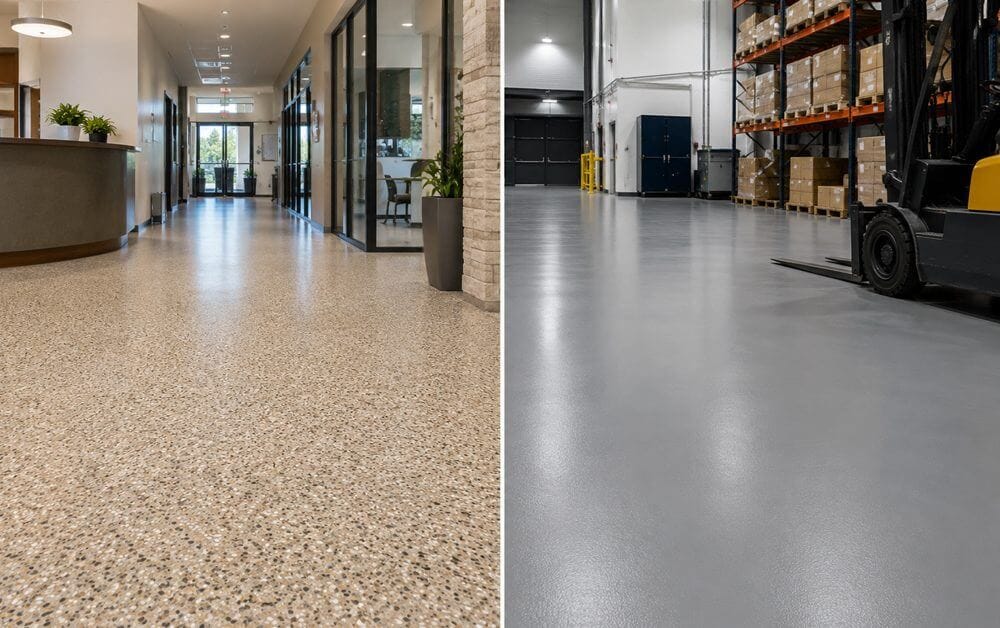
Which Epoxy Flooring Material Fits Different Industrial and Commercial Areas?
The same type of facility can still need a different floor when traffic, substrate, or exposure changes. These examples are starting directions — not fixed specs.
| Application | Main concerns | Possible system direction |
| Warehouse | forklift traffic, abrasion, loading | stronger build with a durable wear surface |
| Factory | mechanical loads, cleaning, process exposure | multilayer industrial epoxy system |
| Underground parking | vehicle traffic, substrate condition, slip | project-specific build with suitable texture |
| Cleanroom | smoothness, cleaning, surface maintenance | smooth seamless flooring |
| Electronics facility | electrostatic control | anti-static epoxy system |
| Chemical processing area | specific chemical exposure | system selected for the actual chemicals and service conditions |
| Commercial interior | appearance, cleaning, color | smooth or decorative system |
YURU’s wider flooring range includes self-leveling, anti-static, anti-corrosion, textured and colored-sand systems for different project requirements.
Chemical exposure is a good example of why the project details matter.
Saying a floor needs to be “chemical resistant” isn’t enough. Ask: which chemicals? At what concentration? Occasional splash or daily operation?
The same principle applies to slip resistance and static control.
A smooth epoxy floor isn’t automatically slip-resistant. A standard epoxy system isn’t automatically anti-static. Both functions must be designed into the system when the project requires them.
Why Should Buyers Compare the Whole System, Not Just the Price per Kilogram?
Two suppliers can quote almost the same topcoat price and still be quoting very different floors.
One quotation may assume that the concrete is already sound and needs little correction. Another may include primer, local repair, a quartz-filled build layer and several coating stages before the floor is finished.
That changes both material use and total project cost.
Primer use changes with the concrete. Repair and mortar build change the amount of intermediate material. The finish coat then has its own coverage and film-build requirement.
So a meaningful comparison looks more like:
substrate preparation + primer + repair/build + finish
rather than:
topcoat price per kilogram
A cheaper topcoat doesn’t automatically mean a cheaper finished floor.
It may just mean more of the system hasn’t been included in the quote yet.
What Should You Ask an Epoxy Floor Coating Manufacturer or Supplier?
Before comparing epoxy floor coating manufacturers or suppliers, check what’s included.
Ask:
- Do you supply a complete flooring system or only the finish coat?
- Which primer is intended to work with the selected system?
- Does the floor need an intermediate or mortar build layer?
- What substrate conditions should be checked before application?
- Does each layer have its own mixing and application requirements?
- Can you provide the relevant TDS and SDS?
- Options for anti-slip, anti-static, or chemical resistance?
A quote for one topcoat and a quote for a complete primer-build-finish system are not the same offer.
Where the full build remains unclear, request clarification before comparing prices.
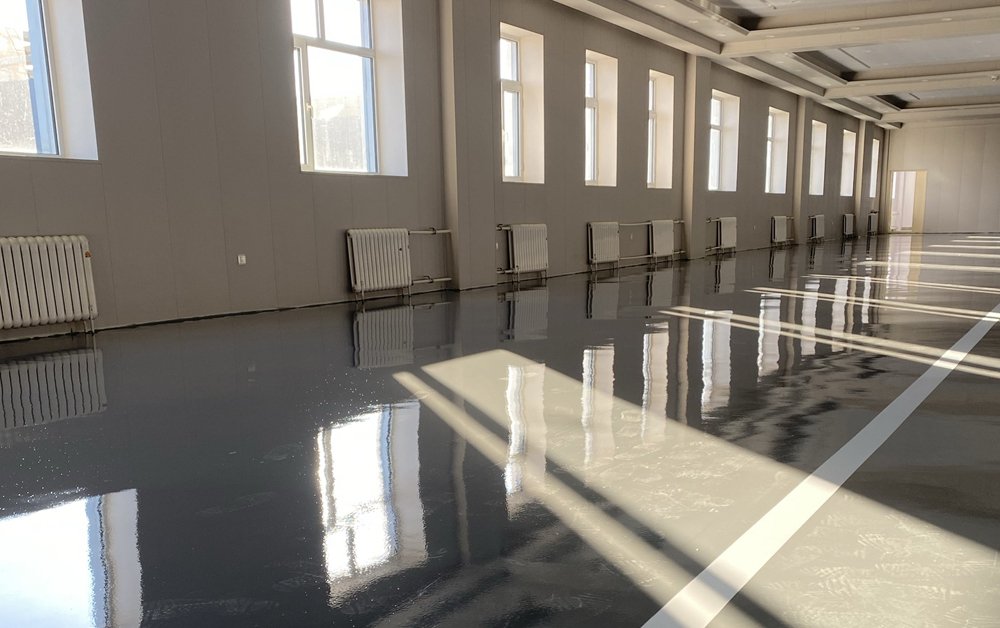
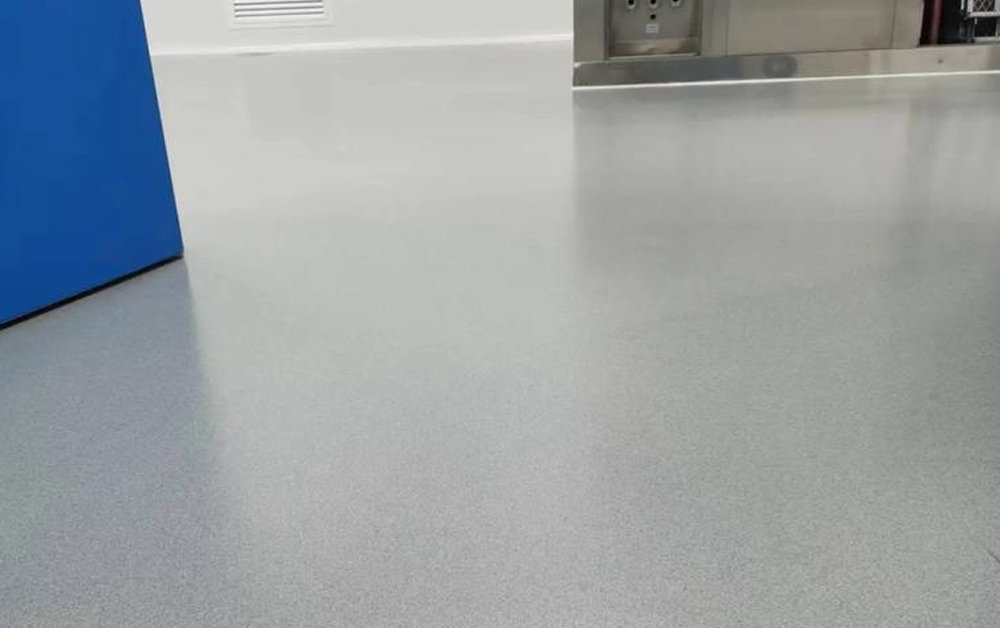
How Does a YURU Solvent-Free Epoxy Flooring System Fit Together?
YURU’s solvent-free epoxy flat-coating system provides a practical example of how a multilayer epoxy floor can be arranged.
| Layer | YURU product example | Main role |
| Primer | Solvent-Free Epoxy Floor Primer | penetrate, seal and anchor to concrete |
| Intermediate | Solvent-Free Epoxy Floor Intermediate Coat | repair, level and build the floor |
| Topcoat | Solvent-Free Epoxy Flat Coating | exposed finish and working surface |
YURU’s current product documentation identifies these three products as a matching solvent-free flooring system.
The layer-specific mixing requirements are also different.
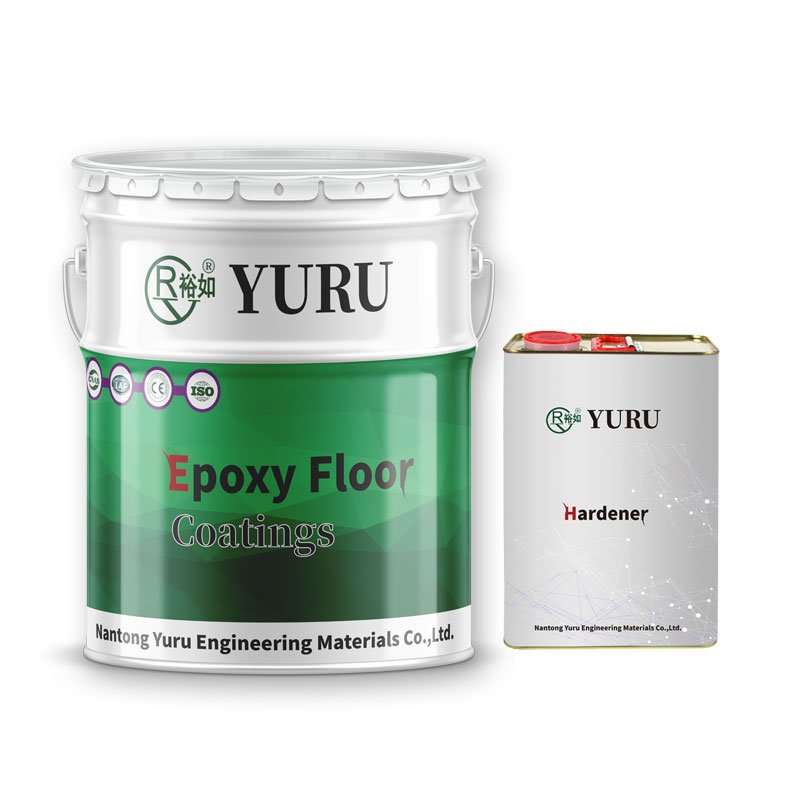
In this YURU system, the primer is mixed 2:1 by weight, while the intermediate coat and flat topcoat use 5:1.
Each layer therefore needs its own technical instructions. “Two-component epoxy” is not enough information for batching an entire flooring system.
Coverage, film build and curing requirements also need to be checked for the individual product rather than copied from another layer.
This three-layer build suits one type of flooring requirement. Other projects may need self-leveling, anti-static, textured or heavier-build systems instead.
What Information Should You Prepare Before Requesting an Epoxy Flooring Quote?
For a first quotation, the most useful project information is:
- project type and total floor area;
- concrete condition and site photos;
- expected traffic, forklifts or heavy loads;
- known chemical exposure;
- slip, anti-static or other special requirements;
- preferred finish and color;
- target thickness or shutdown time, if already specified.
You do not need a complete engineering specification before the first enquiry.
Clear photos and a good description of how the floor will be used are already far more useful than asking only for “the price of epoxy paint.”
For YURU projects, these details help us narrow the discussion toward a standard flat-coating system, heavier build, self-leveling, anti-static, textured or another flooring direction before the material quantity and final quotation are prepared.
FAQs
Does every epoxy floor need primer, intermediate coat and topcoat?
No.
The layer build depends on the concrete and what the floor faces.
A multilayer system may use primer, intermediate, and topcoat. Another project might need a simpler or more specialized build.
Is thicker epoxy flooring always better?
No.
Additional thickness can be useful when the floor needs leveling, repair or more mechanical build, but thickness alone does not make a system suitable.
Concrete condition, traffic, load, chemical exposure and the required surface still need to match the proposed floor.
What epoxy flooring is suitable for factories and warehouses?
No single epoxy flooring system suits every factory or warehouse.
A light-use storage area and a logistics floor with continuous forklift traffic place very different demands on the system.
Check concrete condition, traffic, mechanical load, cleaning requirements, and chemical exposure before deciding on the build.
What should I ask an epoxy floor coating supplier before ordering?
Ask what’s included in the full system.
Confirm primer, build layer, topcoat, substrate requirements, layer instructions, technical docs.
Where anti-slip, anti-static, or specific chemical resistance is required, incorporate those requirements before requesting the final quotation.
Need Help Matching an Epoxy Flooring System to Your Project?
If you are sourcing epoxy flooring for a factory, warehouse, parking area, cleanroom or commercial project, send us the basic project conditions first.
The most useful starting information is:
floor area + substrate condition + traffic/load + chemical exposure + required finish + site photos
YURU can use those details to review the flooring direction, identify a suitable primer/build/topcoat combination and prepare the relevant technical information before the final quotation.
YURU Product solutions