When Should You NOT Use Acrylate Grout?
Introduction
On a tunnel waterproofing job, water may be finding its way through fine cracks or narrow joints. Low-viscosity acrylate grout can reach these small passages before it forms a flexible sealing gel.
But what if the contractor discovers a large cavity behind the concrete? The repair now requires more than sealing small passages. A space needs to be filled, and the selected material must meet the requirements of that repair.
The situation changes again when a cracked concrete member needs to carry structural loads, or when water suddenly begins rushing into an underground structure. These jobs place very different demands on an injection material.
YURU’s current acrylate grout is intended mainly for seepage control and flexible sealing. We would not recommend it for bulk filling large cavities, restoring structural load transfer or as the first response to a severe water inrush. The conditions on site and the purpose of the repair need to be clear before a suitable grout can be selected.
What Is Acrylate Grout Designed to Do?
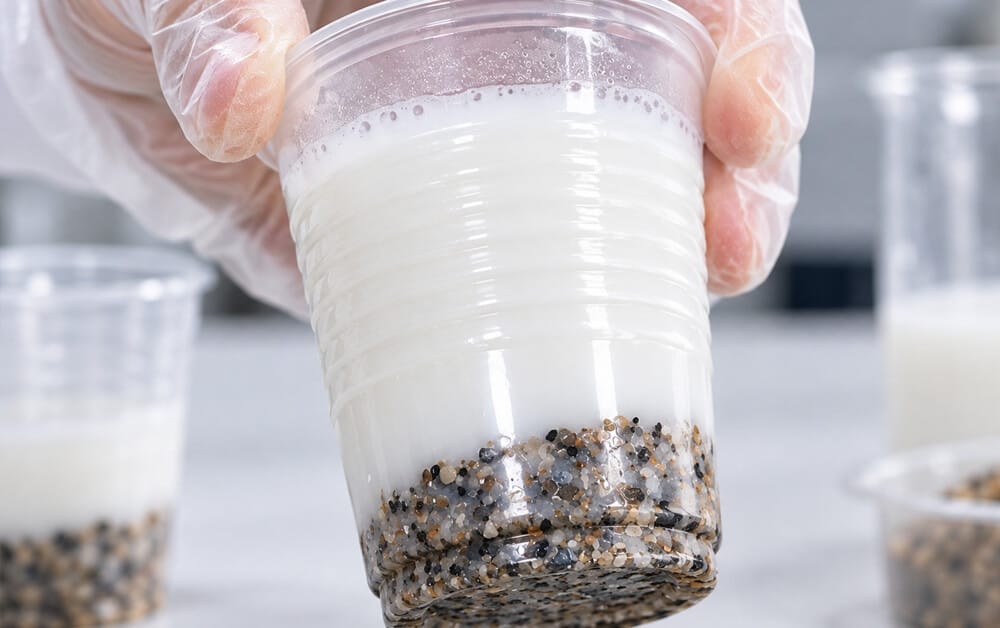
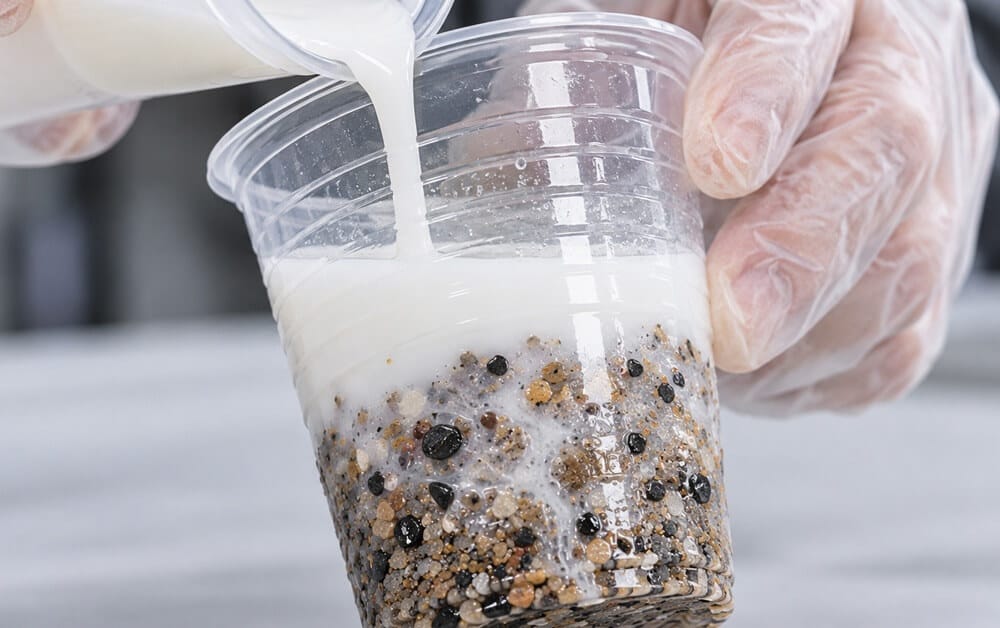
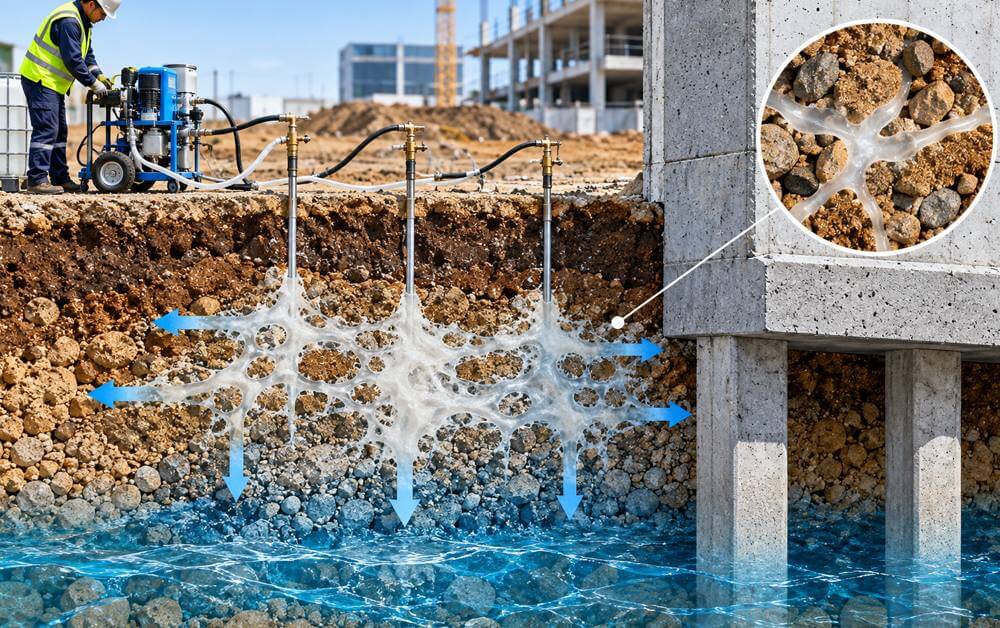
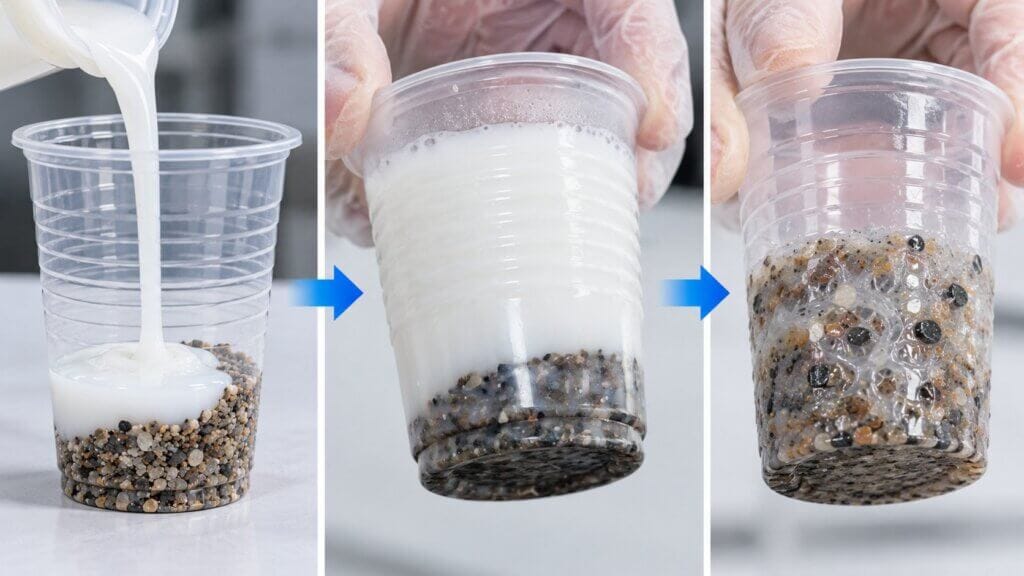
Acrylate grout is a low-viscosity chemical injection material formulated for waterproofing and seepage control. Depending on formulation, it penetrates fine cracks, joints, and permeable ground prior to setting into a flexible gel.
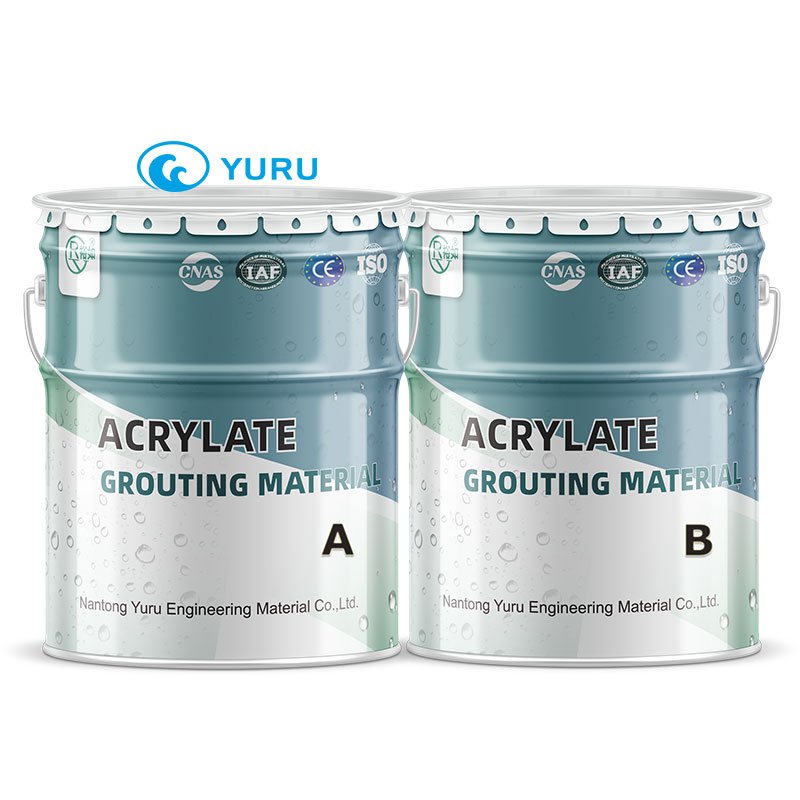
YURU’s current acrylate grouting materials are two-component systems. Once the components react, they form an elastic gel that expands when exposed to water. They’re intended for underground seepage treatment, tunnel lining waterproofing, and sealing suitable cracks in concrete or rock.
For contractors dealing with water moving through narrow or distributed leakage paths, this kind of penetration can be useful. The material can reach spaces that are difficult to treat from the exposed surface alone.
The full working principle is covered in our guide to how acrylate grout works.
When Is Acrylate Grout the Wrong Material for the Job?
Large Open Voids That Need Bulk Filling
A leaking concrete wall may have a network of fine cracks, but it can also contain a larger cavity behind the surface. If the investigation reveals a substantial empty space, the repair has to account for the volume of material needed and the condition of the surrounding concrete.
YURU’s current acrylate grout is designed for penetration and seepage sealing. We would not specify it as the main filler for a large open cavity, particularly where the repair requires significant volume replacement or mechanical support.
This limitation is not unique to YURU. The manufacturer of DE NEEF AC-400 acrylate grout also states that its product is not intended for large void filling.
Acrylate remains appropriate for smaller gaps, joints, and irregular leakage pathways. For large cavities, the contractor should first determine cavity dimensions, confinement, and required fill performance. A cementitious grout or purpose-designed filling resin may be more appropriate, depending on repair requirements.
Structural Cracks That Require Load Transfer
Water leaks and structural damage can happen in the same crack. But stopping the water doesn’t automatically restore the structural performance of the cracked member.
Where a crack needs to transfer forces between two sections of concrete, the repair material must provide the required structural bonding performance. This is particularly important in load-bearing elements such as beams, columns and structural slabs.
Acrylate gel is mainly for flexible sealing. Its low viscosity helps it get into fine openings — but that property alone tells us very little about its ability to transfer structural loads.
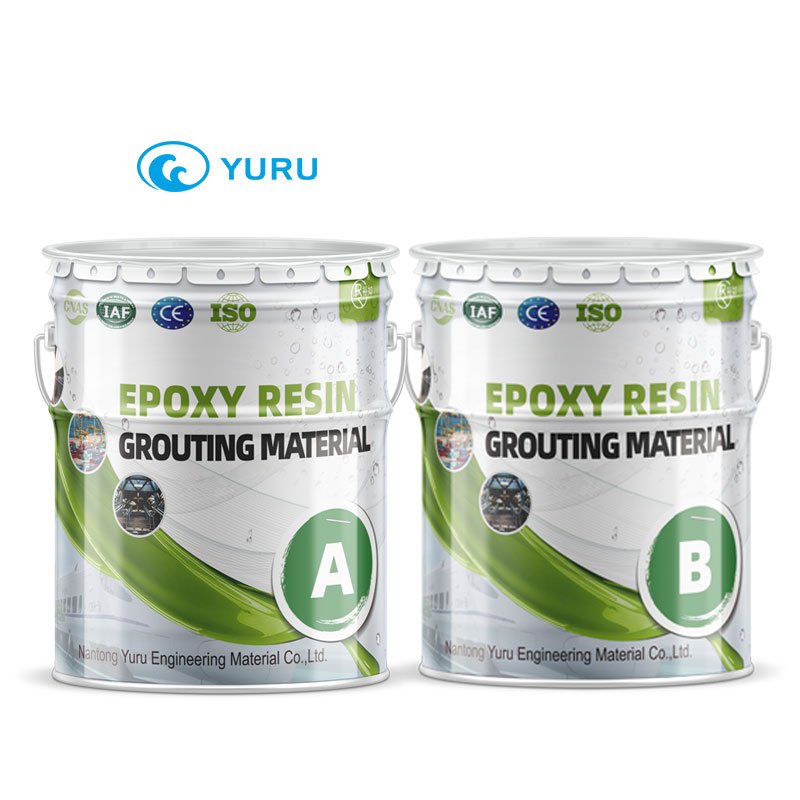
For a stable structural crack, a suitably qualified epoxy injection resin may be considered following engineer assessment of crack condition, moisture conditions, and repair requirements. Moving cracks or other complex damage may require a different structural repair approach.
Sika’s injection systems guidance also identifies acrylate resins as flexible materials used for non-structural injection.
If a concrete member needs both waterproofing and structural repair, those two functions should be addressed in the repair design. YURU acrylate grout may be considered for the sealing portion where appropriate, but it should not be relied on to restore structural load transfer.
Sudden, Severe Flowing-Water Leakage
A tunnel joint with persistent seepage gives a contractor a different injection problem from an opening where water is entering rapidly.
During severe water inrush, grout must reach the target zone and remain there while water flows through the opening. Strong flow can carry material away from the intended treatment zone before an effective seal develops.
YURU’s acrylate grouts have relatively short gelation times in their reported tests, but gel time alone cannot tell us how much material will remain in place under flowing-water conditions. Water velocity, pressure, leakage-path geometry and the grout’s resistance to washout also matter.
For sudden, severe flowing-water emergencies, we don’t recommend current acrylate grout as the first-stage water-stopping material.
A suitable fast-reacting polyurethane foam may warrant evaluation where the immediate objective is controlling heavy water flow. Once that flow is under control, the project may require a separate injection treatment for longer-term sealing.
There are specialized acrylate systems designed for more demanding water-ingress conditions. For example, Sika lists its Injection-304 polyacrylic gel for high water ingress, including under hydrostatic pressure.
That capability pertains to a specific product system. It should not be assumed for every acrylate grout.
For YURU’s current material, controlled seepage sealing remains the more appropriate starting point. Severe emergency water stopping requires a different level of product and site assessment.
Major Ground Strengthening or Structural Lifting
Major Ground Strengthening or Structural Lifting
Acrylate injection can reduce water movement in suitable permeable ground. Depending on formulation and soil conditions, it may also help consolidate granular material around the injected area.
But if the project needs to raise a settled slab or significantly improve foundation bearing capacity, that’s a different objective.
The contractor must achieve a defined mechanical result, often involving changes to soil stiffness, density, load-bearing behavior or structural position. The injection system must be selected and verified for that work.
YURU’s current acrylate products are not our default recommendation for major bearing-capacity improvement or structural lifting. The available product data do not establish that they can deliver a specified lifting force or foundation improvement.
Such projects need geotechnical or structural assessment. Depending on the site, the engineer may consider cementitious ground-improvement methods, compaction grouting or a specialized expansion resin system.
Acrylate may still have a separate role where groundwater control is part of the project. Our article on acrylate grouting for soil stabilization explains that application in more detail.
When Should Acrylate Grout Be Verified Before Use?
Conditions surrounding an injection area may change over time. A joint remaining damp year-round may require different grout from one subject to seasonal drying or freezing. Drinking-water projects additionally impose requirements beyond leakage arrest.
Repeated Wet-Dry or Freeze-Thaw Exposure
Some underground joints remain wet for years. Others dry out during warmer months and become wet again after heavy rain. For an acrylate gel, that change in moisture can affect its volume and how well it maintains contact with the surrounding concrete.
Drying shrinkage has been a concern with traditional acrylate grouts. The U.S. Army Corps of Engineers discusses the effects of repeated wetting, drying and freezing in its Chemical Grouting manual. Newer formulations may behave differently. WEBAC 270, for example, is described by its manufacturer as having very little volume loss when drying.
YURU’s Type I and Type II acrylate grouts have a reported water expansion rate of 35%. That helps understand behavior in contact with water — but doesn’t establish whether the seal holds through repeated wet-dry or freeze-thaw cycles.
For joints exposed to such conditions, the relevant question is cured gel performance after repeated cycling. This requires durability testing for the specific product, not merely initial swelling data.
Potable-Water Contact Without Product-Specific Approval
A grout stopping seepage through the outside of a reservoir wall may face different requirements from one injected into a structure with direct drinking-water contact.
YURU describes its Type I and Type II acrylate materials as non-toxic. That alone doesn’t establish approval for potable-water contact.
In some markets, products for drinking-water contact are assessed under standards like NSF/ANSI/CAN 61. Requirements can differ by country and by how the material contacts the water.
If the grout will be used in a drinking-water tank or another potable-water application, check the project’s approval requirements before placing an order. The certification or test documents need to cover the actual formulation being supplied.
What Should You Consider Instead of Acrylate Grout?
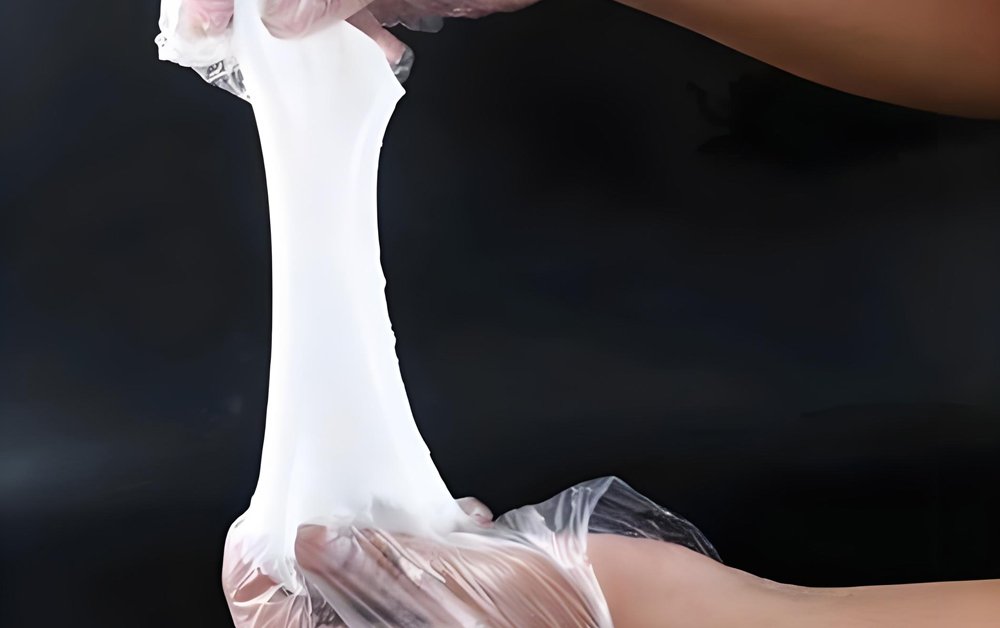
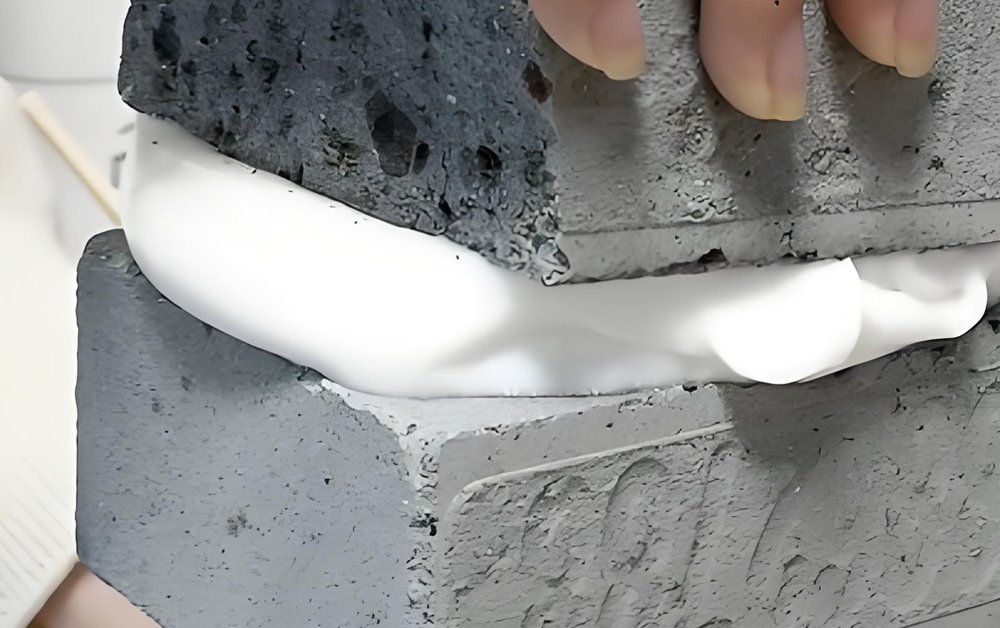
A useful material comparison starts with the required repair outcome. Waterproof sealing, structural bonding, emergency flow control, and bulk filling all involve injection — but they need different performance.
| Main project objective | Acrylate grout assessment | Material direction to evaluate |
| Fine cracks and distributed seepage paths | Often suitable for evaluation | Appropriate acrylate injection system |
| Large open cavity filling | YURU current product not recommended for bulk filling | Cementitious grout or specialized filling resin |
| Structural crack bonding | Not suitable as the principal structural bonding material | Qualified structural epoxy or another structural repair system |
| Sudden, severe flowing-water leakage | YURU current product not preferred for emergency first-stage stopping | Fast-reacting water-stopping polyurethane system |
| Ground seepage reduction | May be suitable | Acrylate permeation or curtain grouting |
| Major bearing-capacity improvement or lifting | Not a default choice | Engineered ground-improvement or lifting system |
| Repeated wet-dry or freeze-thaw exposure | Additional durability evidence required | Product with verified cycling performance |
| Drinking-water contact | Product-specific compliance evidence required | System meeting the applicable approval requirements |
This table helps narrow material options before a full spec is prepared. Final selection still depends on actual site conditions and proposed product performance.
Structural epoxy injection, for instance, requires a crack suitable for that repair method. Polyurethane water-stopping materials also differ in reaction speed, expansion, and intended application. Selecting a material family is only the beginning of the technical review.
YURU supplies different injection grouting materials, including polyurethane, epoxy and acrylate systems. We recommend matching the material to the main engineering task before selecting a particular product.
What Do YURU Acrylate Grout Technical Data Tell Us?
YURU’s AG Acrylic Grouting Material is available in two standard types, Type I and Type II. Both are two-component, low-viscosity materials intended to form flexible, water-expanding gels.
Their reported viscosity is 8 mPa·s, with a 35% water expansion rate for each type. The measured gelation times are 26 seconds for Type I and 15 seconds for Type II.
These values help describe the materials, although site temperature, injection conditions and the actual formulation must be considered when planning the work.
The two technical sheets also report sand-solid compressive strength results of 242 kPa for Type I and 412 kPa for Type II.
These are results for the tested sand-solid bodies.
For projects involving structural repair, severe flowing water or special durability requirements, the buyer should request evidence relevant to those particular tasks rather than relying on one general performance figure.
Beyond our standard Type I and Type II products, YURU also supports customized acrylate grout formulations to meet specific project conditions and injection requirements. Different sites may call for adjustments to gel time, working characteristics or other formulation properties. Customers can share their site conditions, injection equipment and construction requirements with our technical team so we can discuss suitable adjustments. Any customized formulation is subject to technical feasibility and performance verification.
You can review our YURU acrylate grouting material or contact us to discuss the specifications and customization options for your project.
What Should Buyers Check Before Specifying Acrylate Grout?
When a buyer asks for acrylate grout, knowing the project type helps — but it’s rarely enough to confirm the material.
A tunnel project might involve water seeping through fine lining joints, leakage around penetrations or a sudden opening with heavy water flow. Those conditions can lead to very different product choices.
For an initial assessment, we normally need the following information:
- Repair objective: What needs to be achieved — seepage reduction, water stopping, filling, structural repair or ground improvement?
- Substrate and leakage conditions: Is the grout being injected into concrete, rock, joints or soil? What are the approximate crack or cavity dimensions and the observed water conditions?
- Required performance: Does the project specify permeability, flexibility, structural performance or another measurable requirement?
- Service environment: Will the treated area experience repeated drying, freezing, chemical exposure or any special contact conditions?
- Supporting information: Can the buyer provide site photos, drawings, relevant test results or project specifications?
These details allow us to review whether YURU’s current acrylate material is a reasonable option for the intended application.
For distributors and importers, confirming the actual application before ordering is especially useful. A contractor requesting “acrylate injection material” may have a suitable waterproofing job, or they may be asking for a performance that belongs to another grout system.
Clear project information makes it easier to identify that difference before the material is supplied.
Frequently Asked Questions
Can acrylate grout be used for structural crack repair?
Acrylate grout may be used to seal leakage through suitable cracks. Where the repair must restore structural bonding or transfer loads, the engineer should specify a material qualified for that structural function.
Can acrylate grout stop flowing water?
Some specialized acrylate systems can work in high-water-ingress conditions. YURU’s current acrylate material is not recommended as the first-stage treatment for a sudden, severe water inrush. A qualified fast-reacting polyurethane water-stopping system may be more appropriate to evaluate.
Is acrylate grout suitable for large void filling?
YURU’s current acrylate material is not intended for bulk filling large open cavities. Suitable small gaps or seepage channels may be treated with acrylate, while substantial cavities generally require a separate assessment of filling volume and mechanical requirements.
Does higher sand-solid compressive strength mean better structural reinforcement?
A higher test result alone doesn’t prove structural reinforcement capability. Sand-solid compressive strength describes performance in a particular test arrangement. Structural bonding, load transfer and foundation bearing capacity require their own supporting evidence.
Need to Check Whether Acrylate Grout Fits Your Project?
If you are sourcing injection material for a tunnel, dam, basement, underground structure or ground-treatment project, share the repair objective and available site information with YURU.
Project photos, drawings, leakage conditions and performance requirements will help us review whether our current acrylate system is suitable for further evaluation. Where additional testing or another grout type is needed, that can be identified before the quotation is finalized.
YURU Product solutions