Can Epoxy Injection Be Used in Wet Concrete Cracks?
Introduction
A damp concrete crack does not always rule out epoxy injection. The problem is knowing what kind of moisture is present. A crack left damp after earlier water exposure is very different from one where groundwater is still finding its way through, even if the leak is barely noticeable.
For structural repairs, conventional epoxy injection generally works best when the crack is clean, dry and no longer moving. For a stable crack requiring structural bonding, epoxy injection may be considered where concrete is damp, provided the selected resin has been tested and approved for that condition.
But if water is still coming through the crack, the situation changes. Flowing water can interfere with bonding and carry uncured epoxy away before it has formed a continuous repair. At YURU Waterproof, we don’t recommend our conventional EG structural epoxy grouts for stopping active water leakage. The water needs to be controlled with a suitable material before any separate structural repair is considered.
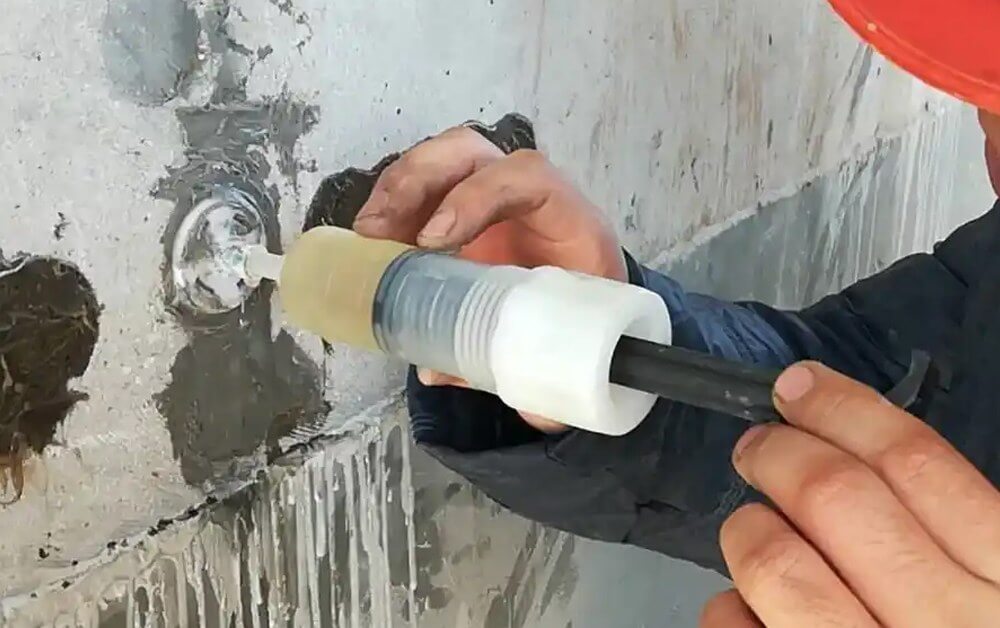
Is the Concrete Crack Damp, Saturated, or Actually Leaking?
A wall can feel damp without an active leak. Moisture may stay in the concrete after previous water exposure — but the crack itself isn’t carrying water anymore.
Where water continues to appear at the crack following surface wiping or drying, however, the condition differs. Even minimal continuous seepage indicates ongoing water migration through the opening.
Before choosing epoxy injection, we need to distinguish four conditions.
| Concrete Condition | Epoxy Injection Suitability | What to Do |
| Dry, stable crack | Conventional structural epoxy can be considered. | Confirm the repair objective, crack stability and required bonding properties. |
| Damp crack without active leakage | A verified moisture-tolerant epoxy may be suitable. | Verify permitted moisture conditions and supporting test results. |
| Wet crack with standing water | Conventional epoxy suitability should not be assumed, even with wet-bonding test data. | Address free water and confirm whether the selected resin permits the actual substrate condition. |
| Actively leaking crack, including slow seepage | YURU’s conventional EG structural epoxy grouts are not intended for active water-leak stopping. | Evaluate appropriate hydrophilic or hydrophobic polyurethane injection grout. |
One distinction warrants attention: saturated surface-dry (SSD) concrete differs from a crack filled with water. In SSD conditions, the concrete contains moisture but has no free-standing water on the relevant surface. The internal crack condition still needs to be checked before injection.
For an epoxy repair, seeing a damp surface is only the beginning of the assessment. We also need to know whether the crack is stable and what the repair is expected to achieve.
Why Does Moisture Affect Structural Epoxy Bonding?
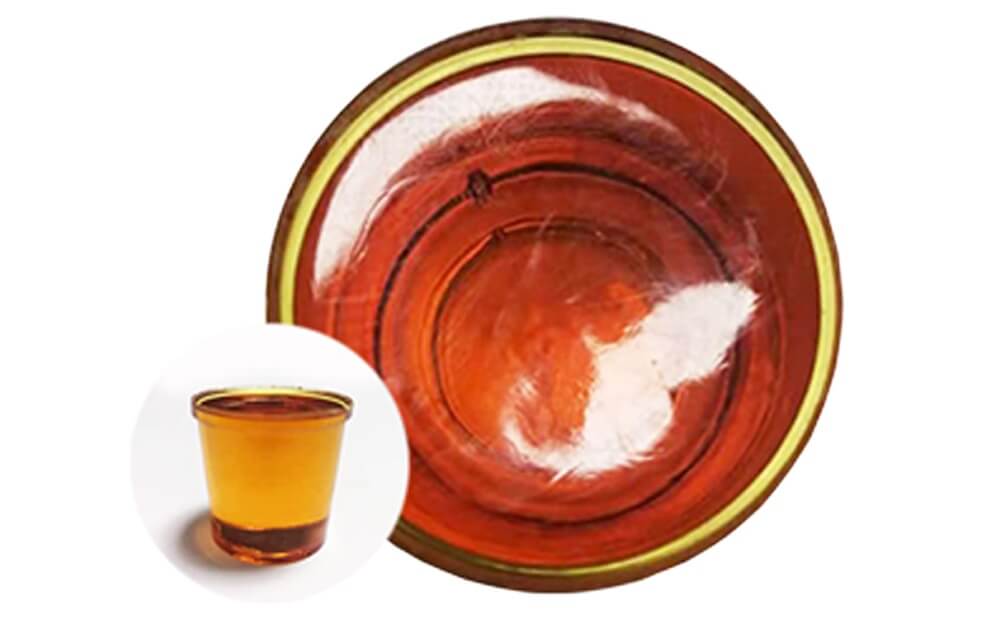
Structural epoxy injection functions by filling a suitable crack and bonding concrete surfaces as the resin cures. For adequate bond development, the material must reach the intended surfaces and maintain sufficient contact.
Water can interfere with this process, particularly when the epoxy is sensitive to moisture.
A film of water between the resin and concrete may prevent the expected adhesion. Dirt, loose particles and deposits inside the crack can cause similar problems. Even if the resin itself hardens, the resulting repair may not develop the bonding performance required by the project.
Some specially formulated epoxies can tolerate damp concrete. Others require much drier conditions.
The American Concrete Institute’s ACI RAP-1 guide recommends considering a moisture-tolerant epoxy when a structural crack remains damp and cannot be dried.
Water is not the only concern. If the crack continues to move because of settlement, thermal movement or another unresolved cause, rigid epoxy bonding may not provide a suitable repair. The source of the cracking should be assessed before the material is selected.
Our article on epoxy injection for structural reinforcement covers the structural repair considerations in more detail.
When Can Moisture-Tolerant Epoxy Injection Be Considered?
Not every epoxy needs completely dry concrete. Some formulations bond to damp surfaces — but the acceptable moisture condition varies by product.
The ACI RAP-1 guide recommends considering a moisture-tolerant epoxy when a structural crack remains damp and cannot be dried. A product example is Sikadur-52 Injection Normal, which permits dry or saturated surface-dry concrete but requires the substrate to be free of standing water.
The ASTM C881/C881M specification also covers two-component epoxy bonding systems capable of curing under humid conditions and bonding to damp concrete. That does not mean every epoxy resin meets the specification or can be used under the same conditions.
For a damp structural crack, we would want to see the resin’s permitted substrate conditions, relevant bonding test results and curing requirements before recommending it for the project. A general claim of high strength is not enough to establish moisture tolerance.
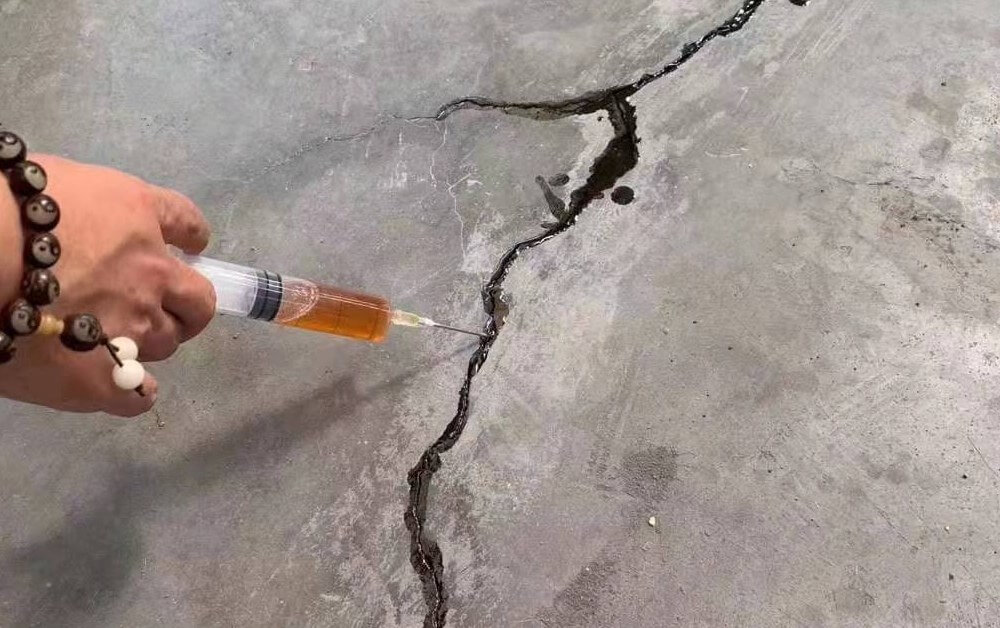
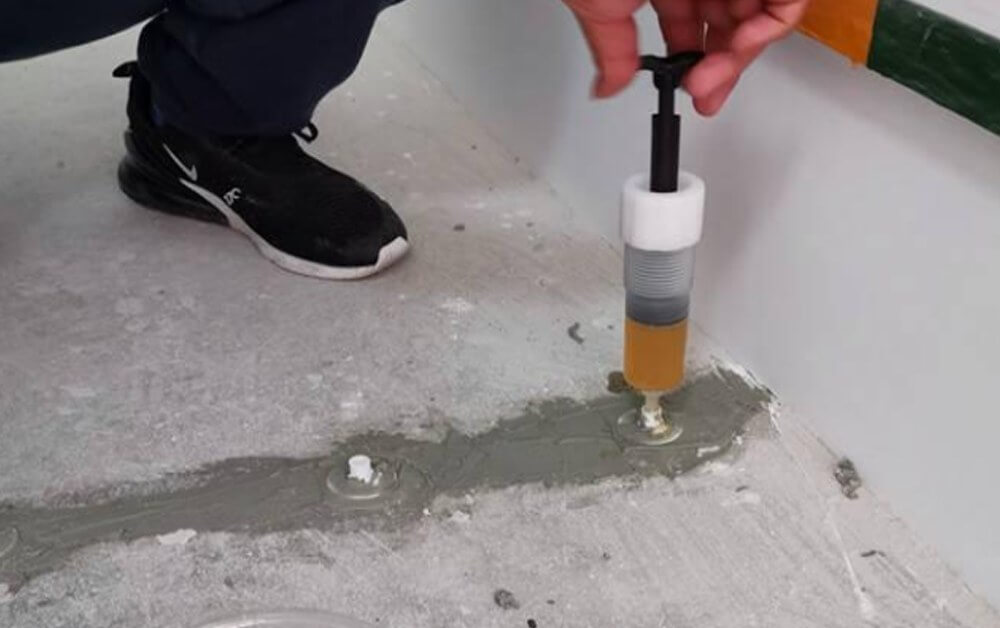
Why Shouldn't Conventional Epoxy Be Used to Stop Active Water Leakage?
There are two practical problems when conventional structural epoxy is injected into a crack that is still carrying water.
The first is bonding. Moving water can prevent the resin from maintaining proper contact with the concrete surfaces. Even if the material cures, it may not develop the continuous bond needed for a structural repair.
The second is material washout.
Moving Water Can Wash Away Uncured Epoxy Resin
Two-component epoxy cures via chemical reaction following resin and hardener mixing. Unlike water-reactive polyurethane grouts, conventional structural epoxy does not depend on water contact for expansion and sealing.
The material also requires time within the crack to cure.
Imagine injecting a low-viscosity epoxy into a joint where groundwater is still passing through. The resin may enter the opening, but the moving water can displace or carry some of the uncured material along connected leakage paths before it has developed sufficient strength.
Part of the resin may escape beyond the intended repair area. Other sections of the crack may receive too little material to form a continuous bond.
The epoxy components may still undergo their curing reaction. The problem is that insufficient mixed resin may remain in the required location to cure into a complete, bonded repair.
This is why an epoxy injection can be unsuccessful in a leaking crack even when the resin itself has satisfactory laboratory strength.
SealBoss explains in its epoxy and polyurethane injection comparison that epoxy needs to remain contained within a crack until it has cured sufficiently to develop strength.
The Simpson Strong-Tie Crack Injection Guide also advises stopping continuous water seepage before proceeding with an appropriate epoxy repair. It identifies polyurethane injection materials as an alternative for actively leaking cracks.
For YURU’s conventional EG structural epoxy formulations, this is a clear application limit. We do not recommend them for active water-leak stopping, whether the leakage is slow, continuous or severe.
When Should Polyurethane Injection Be Considered?
Hydrophilic and hydrophobic polyurethane injection grouts are commonly used where water needs to be controlled within cracks or joints.
A suitable hydrophilic PU formulation can be considered for selected water-bearing cracks and joints where its water-reactive sealing behavior matches the repair conditions.
Hydrophobic PU foam grout is often used when reactive expansion is needed to block active water flow.
The choice still depends on the amount of water, pressure, crack geometry and the formulation being used. A grout suitable for limited seepage should not automatically be assumed capable of handling a sudden high-pressure leak.
YURU supplies both WPU hydrophilic and OPU hydrophobic polyurethane injection materials. Their differences and application requirements are discussed in our guide to polyurethane injection grouting materials.
What Do Wet Bonding Test Results Really Tell You?
A wet-bonding strength value may inform epoxy injection resin selection for damp concrete. But before comparing numbers, ask: how was the test done?
Was the concrete surface damp or saturated? What curing duration was permitted? Which test method? Where did the specimen fail?
These details affect how the result should be interpreted. Two manufacturers may report wet-bonding strength in MPa without necessarily testing their products under identical conditions.
A controlled wet-bonding test also differs from injection into a crack with groundwater passing through it. The latter introduces additional problems involving resin placement, material retention and the condition of the bonding surfaces.
Reading YURU's EG 1:1, 2:1 and 4:1 Results
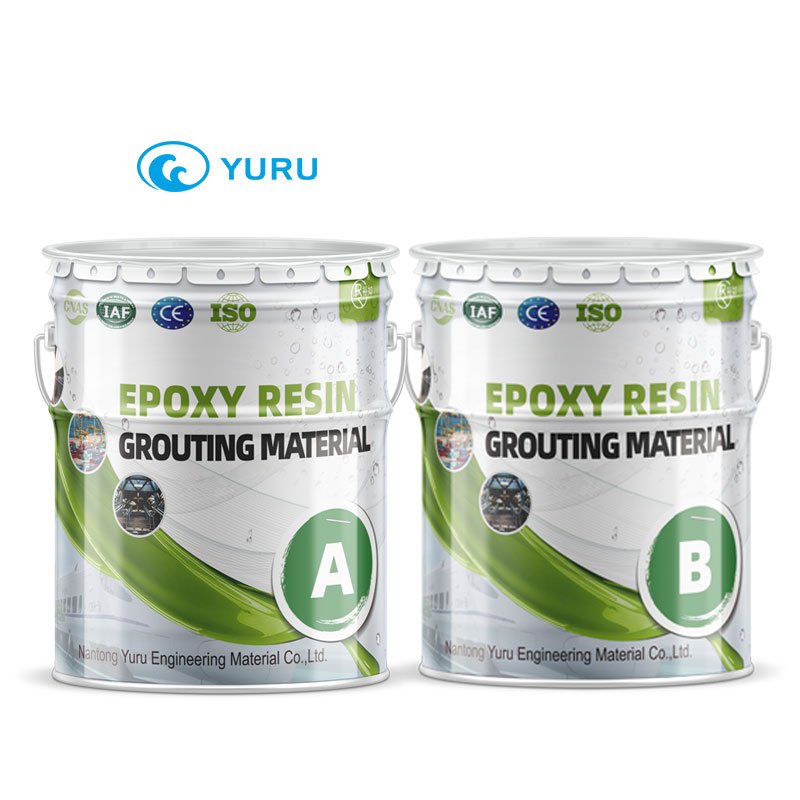
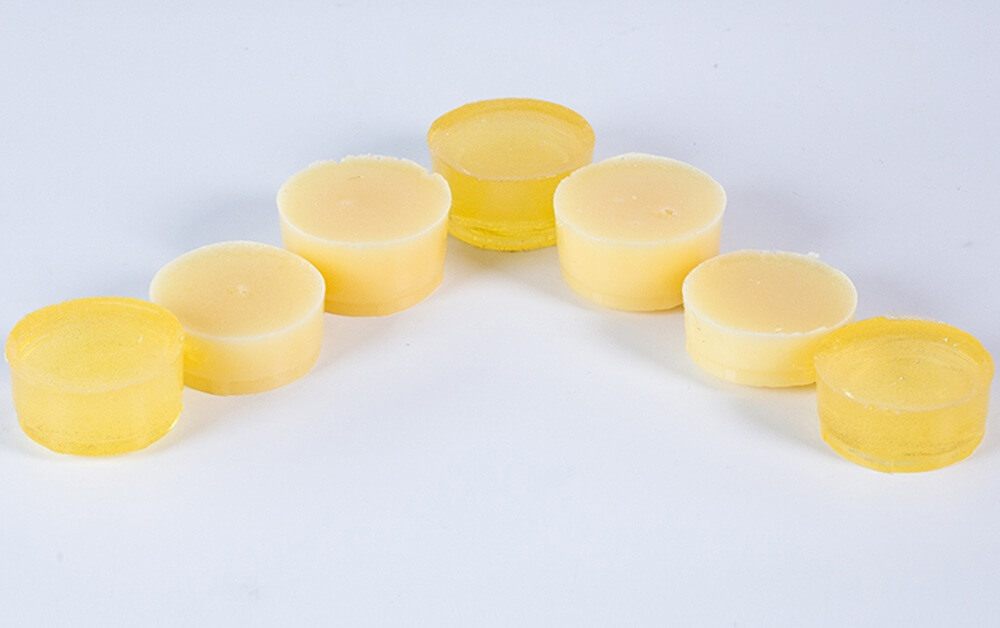
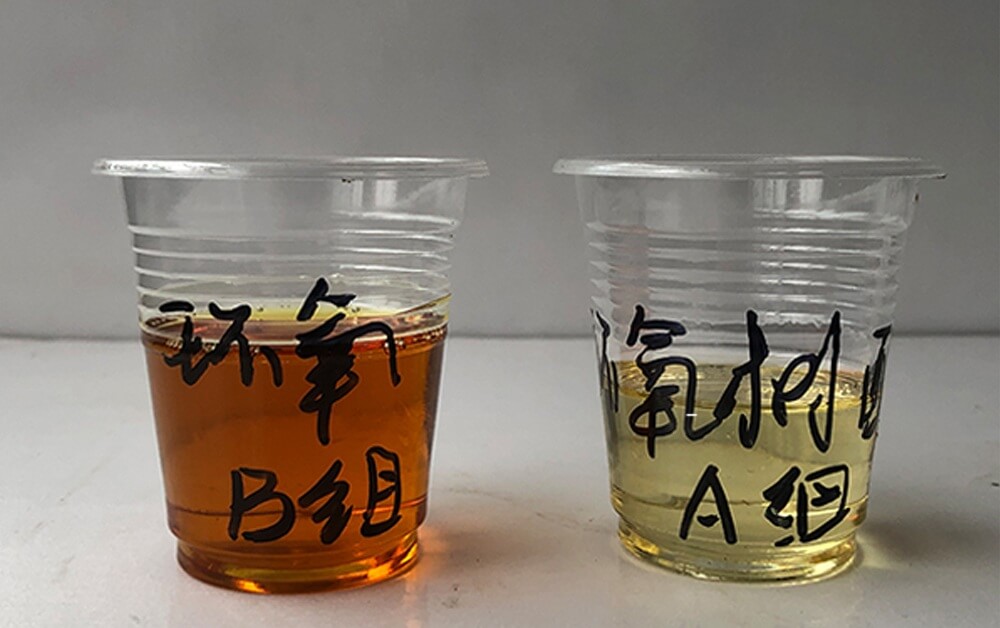
YURU Waterproof offers three EG epoxy resin grouting formulations. Their available product documentation and updated test reports contain the following bonding-strength results.
| YURU EG Formulation | Reported Dry Bonding Strength | Reported Wet Bonding Strength |
| EG 1:1 | 3.6 MPa | 2.4 MPa |
| EG 2:1 | 5.6 MPa | 5.1 MPa |
| EG 4:1 | 4.3 MPa | 2.8 MPa |
EG 2:1 has a reported wet-bonding value of 5.1 MPa, while EG 4:1 reports 2.8 MPa. Those are the values recorded in the available product reports, not a ranking of how the materials will perform inside every damp concrete crack.
For project approval, we recommend reviewing the full test report together with the current technical data sheet. The test method, substrate preparation and curing conditions should match the performance being requested.
For more product information, visit our YURU Two-Component Epoxy Grouting Material page.
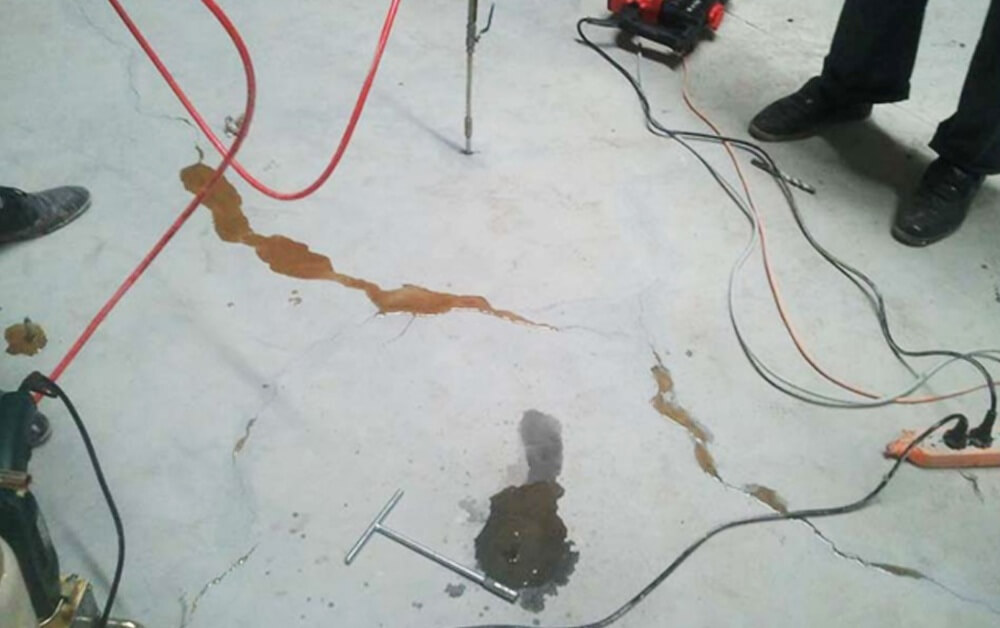
What Should Contractors Check Before Approving Epoxy Injection?
An epoxy resin may have suitable bonding strength on paper but still be the wrong material for a particular crack. Before approving a product, contractors and engineers should confirm the repair objective, water condition and supporting technical evidence.
| Item to Check | What to Confirm |
| Water condition | Dry, damp without leakage, standing water or continuing seepage |
| Crack stability | Whether the crack has stopped moving and its cause has been assessed |
| Repair objective | Whether structural bonding is required or the immediate task is water stopping |
| Product suitability | Permitted substrate moisture and surface preparation conditions |
| Test evidence | Bonding test method, specimen condition, curing requirements and results |
| Injection properties | Viscosity, specified A:B mixing ratio, working time and temperature limits |
| Project requirements | Relevant material specifications and repair acceptance criteria |
For procurement or project approval, we recommend requesting the current TDS, SDS and relevant test reports for the exact resin formulation.
Material approval is only one part of the process. The completed repair may also require checks to confirm that epoxy reached the intended areas and developed the required performance.
ACI RAP-1 discusses test cores and nondestructive evaluation as possible methods. The actual inspection and acceptance procedure should follow the project’s requirements.
Can Structural Epoxy Be Considered After PU Water Stopping?
Some concrete cracks have both a leak problem and a separate structural repair need. Once suitable PU injection controls the water, assess the structure to see if further repair is necessary.
Epoxy injection isn’t automatically the next step.
Polyurethane may already occupy the crack, leaving no suitable path for epoxy to reach the concrete surfaces that need bonding. Crack may still be moving or affected by unresolved structural problem.
If additional structural repair is needed, the engineer should determine whether epoxy injection is still feasible — or whether another approved method is more appropriate.
Frequently Asked Questions
Can epoxy injection bond to damp concrete?
Moisture-tolerant epoxies may work for damp cracks without active leakage. Conventional structural epoxy injection is generally better for clean, dry cracks — not recommended as a standard solution for damp conditions. Moisture on crack surfaces interferes with adhesion and reduces bonding reliability.
Can conventional epoxy injection stop slow water seepage?
YURU’s conventional EG structural epoxy grouts are not suitable for stopping active leakage, including slow continuous seepage. Moving water can interfere with bonding and wash uncured resin away before it forms a reliable repair. An appropriate WPU or OPU polyurethane injection grout should be evaluated instead.
What documents should buyers request for moisture-tolerant epoxy injection?
Ask for the current TDS, SDS and relevant bonding test reports.
If a project requires compliance with a particular standard, request supporting evidence for the specified product rather than relying on general performance claims.
Need Help Reviewing Epoxy Injection Resin for Your Project?
If you are sourcing epoxy injection resin for structural concrete crack repair, YURU Waterproof can help you review the available EG formulations and technical documentation.
Tell us whether the crack is dry or damp, whether water is still leaking and what the repair needs to achieve. If structural bonding is required, we can discuss product specifications, testing information and supply requirements.
For contractors, importers and distributors, YURU also supports bulk procurement and technically feasible OEM/ODM options.
YURU Product solutions