Anti-UV Waterproof Coating Guide: Materials & Durability
On an exposed roof, fading is easy to notice. Loss of flexibility is harder to spot, but it can be a much bigger problem. Sunlight, changing temperatures, and repeated movement gradually put waterproof coatings under stress. What matters is whether the membrane can continue doing its job after that exposure.
At YURU Waterproof, our preferred options for demanding exposed projects include two-component hand-applied polyurea and spray-applied polyurea. Silicone and acrylic coatings also have their place, particularly in roof maintenance and refurbishment. With conventional polyurethane waterproofing, a separate UV-resistant protective layer may be needed.
Anti-UV waterproof coating selection should reflect the surface to be covered, the conditions it will encounter, and the properties it must retain. Actual formulation and weathering data provide substantially more information than the descriptor “UV-resistant” on a product label.
What Makes a Waterproof Coating UV-Resistant?
Sunlight changes a coating in several ways. Yellowing and fading affect appearance. Chalking leaves a powdery surface. More serious aging reduces flexibility or strength — eventually the film can crack under movement.
These changes don’t necessarily happen at the same time. A coating may change color without immediately losing its waterproofing function. Another may still look acceptable while becoming less able to stretch over a moving joint.
Polyurea is a good example. Some formulations are more susceptible to visible color changes, while others are developed specifically for UV and color stability. VersaFlex’s aliphatic polyurea coatings and YURU’s aliphatic polyurea coatings are an example of the latter.
Reflective roof coatings introduce an additional consideration. A bright surface may reflect greater solar energy and assist roof thermal management; however, reflectivity does not equate to UV aging resistance. The Cool Roof Rating Council measures solar reflectance and thermal emittance as roof surface properties. Those measurements don’t tell us how much tensile strength or flexibility a waterproof membrane retains after weathering.
A roof coating also faces conditions a simple UV claim doesn’t describe: movement around joints, water exposure, heat cycling, occasional foot traffic for maintenance. The coating must remain suitable for those conditions as a complete waterproofing system.
How Do Different Anti-UV Waterproof Coatings Compare?
The material name gives a starting point — not the full picture of outdoor performance. Two products from the same chemical family can behave differently if their formulations and intended applications differ.
YURU supplies several coating systems for exposed waterproofing. We generally give greater consideration to our two-component polyurea formulations on projects that need a durable membrane with strong mechanical properties. Silicone and acrylic are useful for other roofing situations, while polyurethane needs to be assessed as either an exposed-grade product or part of a protected system.
| YURU Coating System | Where It Is Used | Product-Specific Consideration |
| WUVH-2 Hand-Applied Polyurea | Roof details, irregular surfaces, smaller exposed areas | Manual application and stated artificial-weathering criteria |
| WUVS-2 Spray Polyurea | Larger roofs, exposed concrete, steel structures | Fast curing, mechanical performance, specialist spray equipment |
| WSC Silicone | Exposed roof waterproofing and refurbishment | UV/weather-resistance claims, adhesion and roof drainage |
| WAC-1 Acrylic | Metal roofs, older roof maintenance, local repairs | Substrate compatibility and availability of UV-specific test evidence |
| Polyurethane Waterproofing | Specified roof membrane systems | Whether the formulation is UV-stable or needs a compatible protective finish |
How Do Hand-Applied and Spray Polyurea Perform Outdoors?
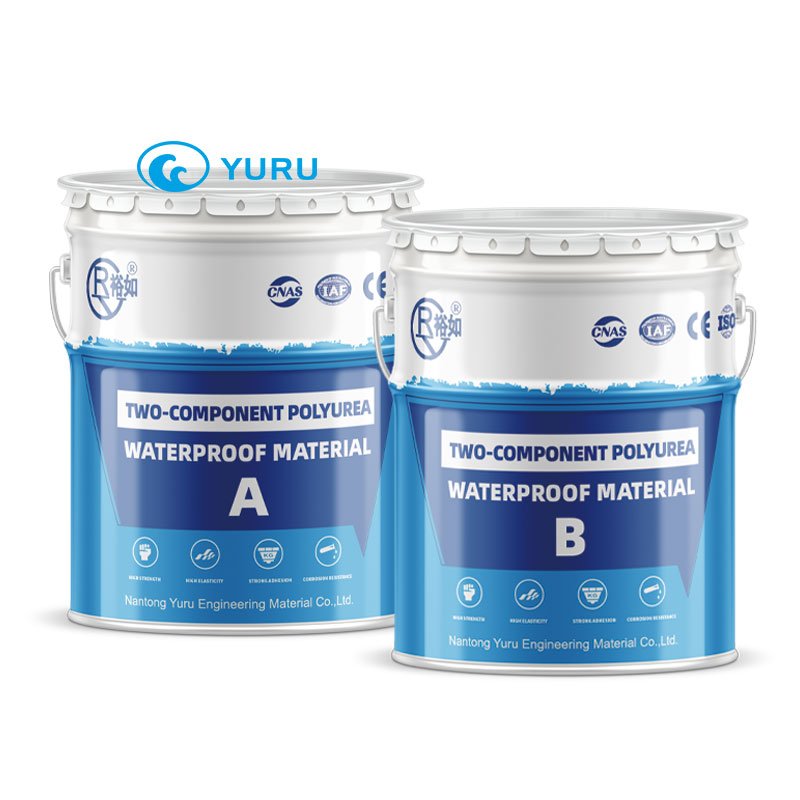
YURU WUVH-2 and WUVS-2 are both two-component polyurea waterproofing materials intended for different ways of working. Their application characteristics are quite different, even though both are among our preferred options for demanding exposed projects.
WUVH-2: Hand-Applied Polyurea
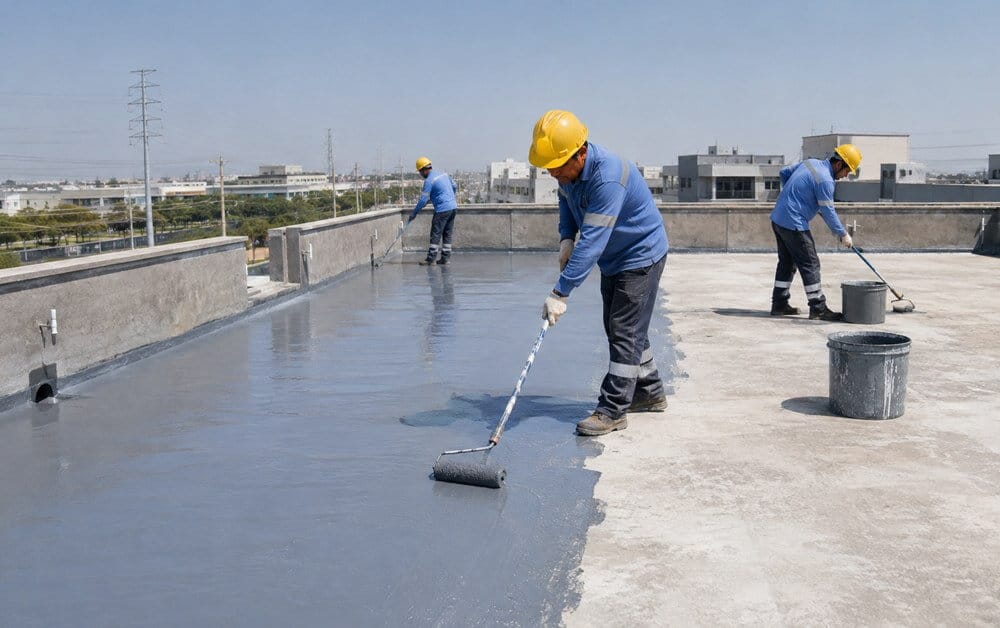
A roof with numerous pipe penetrations, upstands, and narrow areas can be awkward to spray. On jobs like these, being able to work with a scraper or roller is a practical advantage.
WUVH-2 is formulated for hand application. Its specified gel time is 15–30 minutes, allowing the mixed material to be spread before it sets. The resulting coating is intended to form a seamless, elastic waterproof layer.
The product data sheet also includes a 1,000-hour artificial-weathering specification. The stated requirements are no cracking or powdering, tensile strength retention of at least 80%, and elongation-at-break retention of at least 70%.
These are useful performance criteria for an exposed coating, particularly because flexibility and resistance to cracking matter throughout the membrane’s service life.
The slower reaction and manual application make WUVH-2 a suitable option to evaluate where the work involves complex details or limited areas rather than an extensive open surface.
WUVS-2: Spray-Applied Polyurea
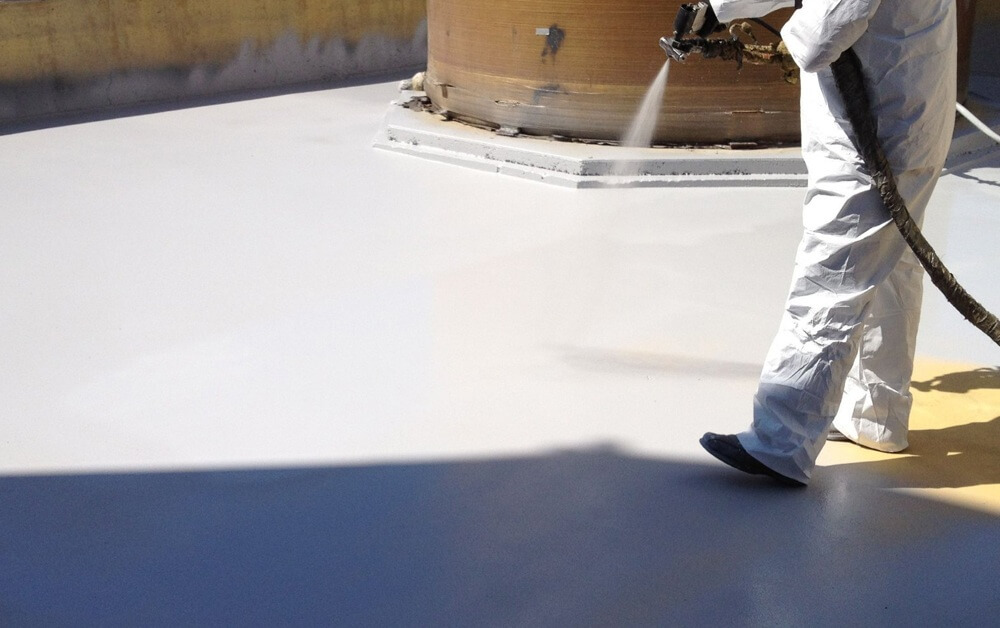
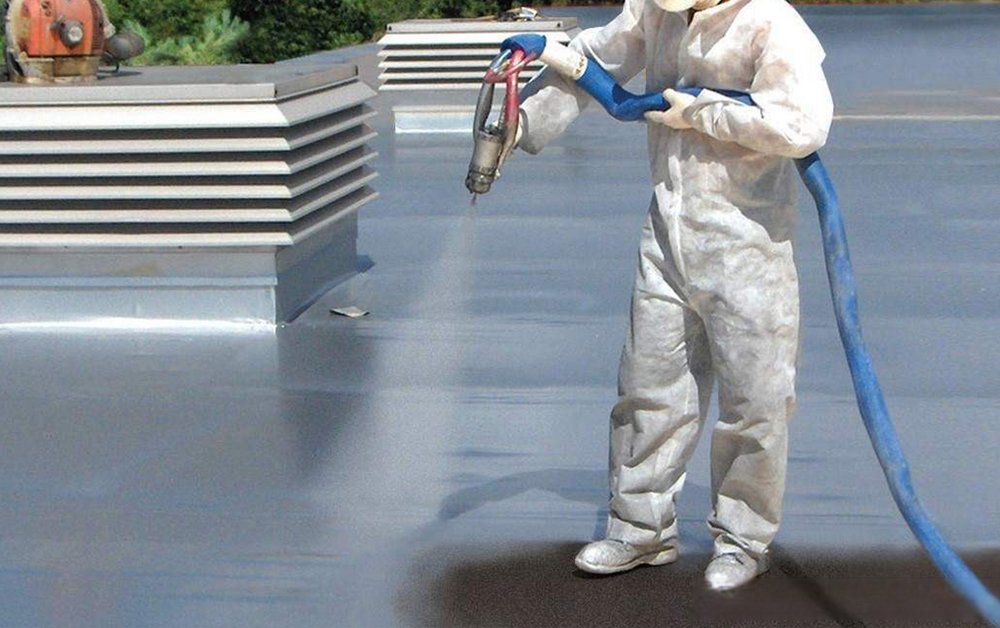
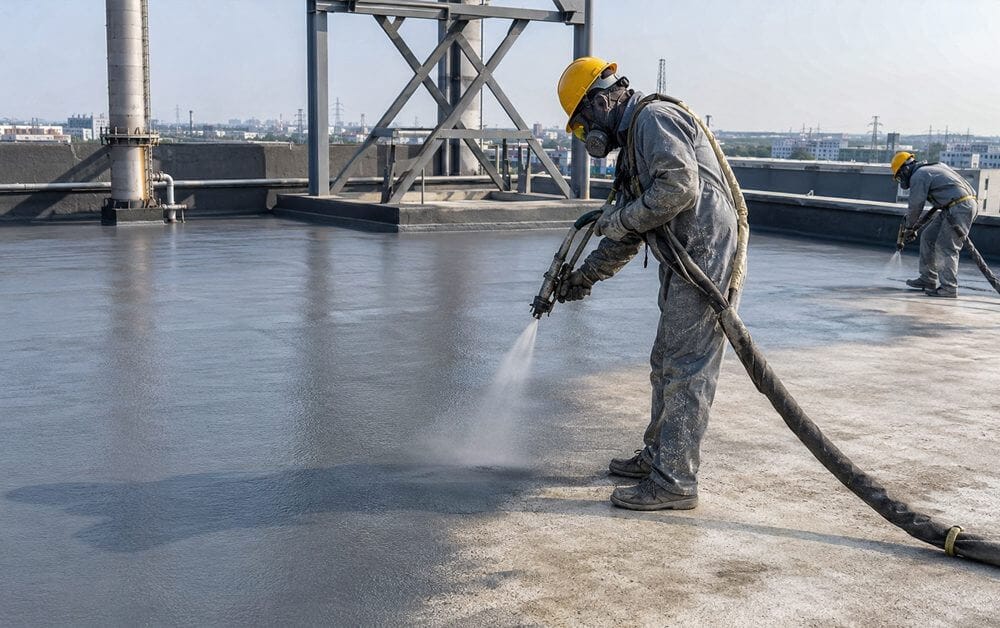
The situation changes on a large industrial roof or exposed concrete structure. Here, a specialist spray crew can cover broad surfaces with a continuous membrane, without relying on the working time needed for manual spreading.
WUVS-2 uses professional spray equipment and cures rapidly. Its data sheet reports a gel time of 16 seconds and a tack-free time of 20 seconds. The recorded tensile strength is 16.2 MPa, with elongation at break of 460%.
The same document reports no cracking or deformation for its artificial-weathering item under aging at constant elongation.
On an actual project, installation requirements are usually the clearest distinction between these two systems. WUVH-2 allows manual work around details. WUVS-2 is intended for larger areas where specialist equipment and rapid membrane formation are appropriate.
Our separate article on spray and hand-applied polyurea waterproofing covers the broader differences between the two application methods.
When Should You Choose Silicone or Acrylic Waterproof Coatings?
Polyurea is a strong option for demanding projects — but not every roof needs a heavy-duty system. For many exposed roofs, silicone and acrylic provide reliable waterproofing with favorable sunlight and weather resistance. Selection frequently depends on roof drainage conditions, existing surface, and project budget.
Silicone Waterproof Coating
YURU WSC silicone waterproof coating is designed for roofs exposed to sunlight, rain, and changing temperatures. It forms a flexible waterproof membrane with good UV resistance and weathering performance.
One of its useful features is resistance to ponding water. On flat and low-slope roofs, rainwater doesn’t always drain away immediately. WSC can be considered for these conditions, where both UV exposure and temporary water accumulation are concerns. Its reflective properties are another advantage for roofs exposed to strong sunshine.
Silicone is also useful for refurbishing existing roofs without replacing the entire waterproofing system, provided the original surface is sound and the new coating has suitable adhesion. For commercial and industrial buildings, it offers a practical alternative when long-term outdoor weather resistance is a priority.
Acrylic Waterproof Coating
Acrylic waterproof coating is another good choice for exposed roofs — especially when the project needs a balance of weather resistance, easy application, and material cost.
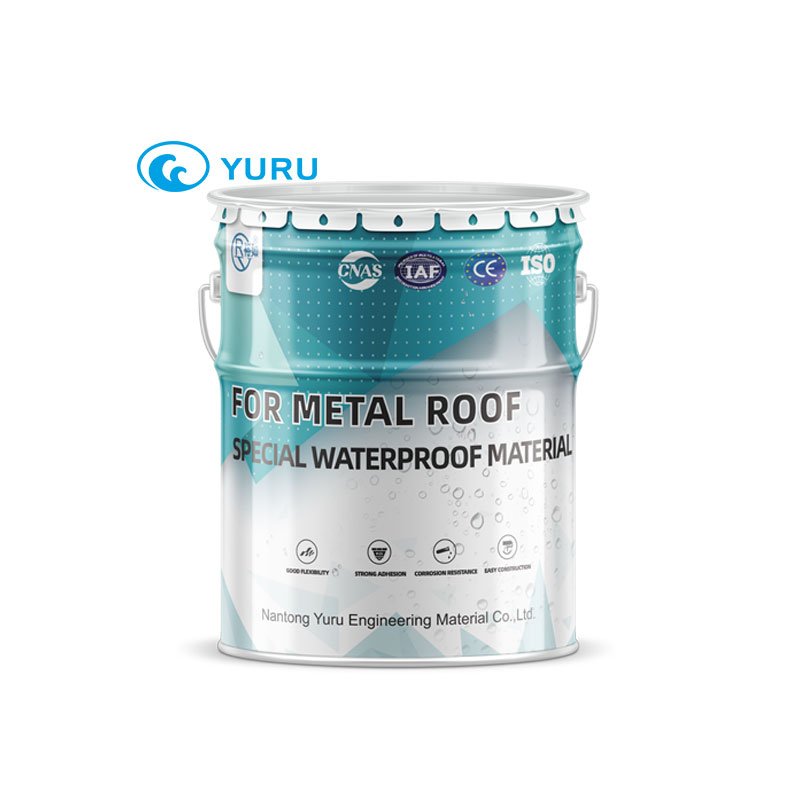
YURU WAC-1 offers good UV resistance and outdoor durability. It can be used on various surfaces, including metal roofing and concrete, making it suitable for both new waterproofing work and roof refurbishment.
For example, an aging metal roof may have leaking joints, corroded fasteners, or worn coating areas. Acrylic coating can be applied to these details or across larger roof sections, depending on the condition of the surface. Its application process is relatively straightforward and doesn’t require the specialized equipment used for spray polyurea.
Cost is another reason acrylic remains popular. For projects that don’t require the higher mechanical performance of polyurea, WAC-1 provides a cost-effective option with good waterproofing and UV-weathering resistance.
For YURU customers, silicone is particularly worth considering where roof ponding and long-term sunlight exposure are concerns, while acrylic is an economical choice for exposed roof waterproofing and maintenance, especially on metal roofs.
Why Do Some Polyurethane Waterproof Coatings Need UV Protection?
Polyurethane can form a flexible waterproof membrane — but not every PU formulation is meant to stay exposed to sunlight.
A common polyurethane coating designed for protected waterproofing may start to deteriorate if left uncovered under continuous UV. A compatible weather-resistant topcoat can protect the underlying membrane.
The word compatible matters here. An exterior coating isn’t automatically suitable over polyurethane. Adhesion, curing conditions, flexibility, and the manufacturer’s recoat interval all need to work together.
For example, Sikalastic-570 Top Coat is designed as a UV-stable protective finish for specified Sika polyurethane roof systems. It shows how the protective finish forms part of an intended waterproofing system rather than being an unrelated extra coat.
There are also polyurethane formulations made for direct outdoor exposure. Sikalastic-621 TC, for example, is described by its manufacturer as a UV-resistant, non-yellowing aliphatic polyurethane product.
So the requirement for a UV topcoat depends on the particular PU system. For YURU projects using a conventional non-UV-resistant polyurethane membrane, we would consider a compatible protective finish. A purpose-designed exposed-grade formulation needs to be evaluated on its own specifications.
How Can Buyers Evaluate UV Resistance and Outdoor Durability?
A waterproof coating can look great when first applied — but what happens after months or years of sun? Does the surface crack or turn powdery? Can it still stretch when the roof expands and contracts?
That’s what really matters when choosing a UV-resistant waterproof coating for outdoor use.
What Does a 1,000-Hour Weathering Test Mean?
Manufacturers use artificial weathering tests to simulate outdoor conditions. Samples are exposed to UV light and, depending on the test, heat and moisture. Then the coating is checked for cracking, surface changes, and loss of strength or flexibility.
YURU WUVH-2, for example, has a 1,000-hour artificial-weathering specification covering cracking, powdering, and mechanical-property retention.
However, 1,000 hours in a laboratory doesn’t mean the coating will last a certain number of years outdoors. The results depend on the testing conditions. Standards such as ASTM G154 describe commonly used artificial UV exposure methods.
Does Good UV Resistance Mean the Coating Will Stay Waterproof?
Not always. A coating may resist cracking and retain much of its flexibility after weathering, but that doesn’t automatically prove it will remain watertight.
For exposed roofs, we pay attention to how well the coating holds up against sunlight, whether it remains flexible, and whether its waterproofing performance has been verified after aging. Together, these details give a clearer picture of long-term durability.
Which Anti-UV Waterproof Coating Is Right for Your Project?
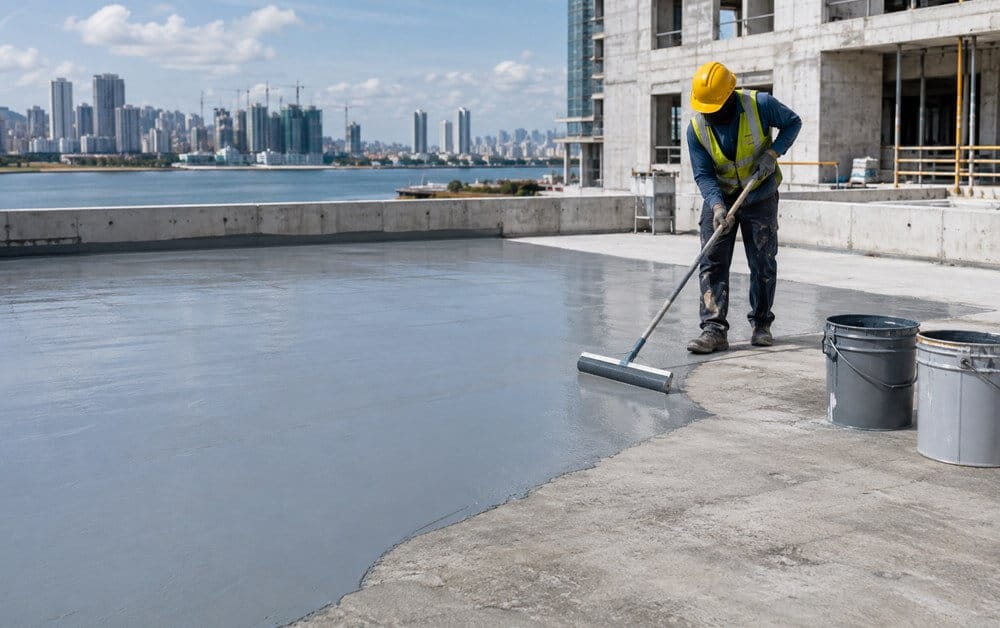
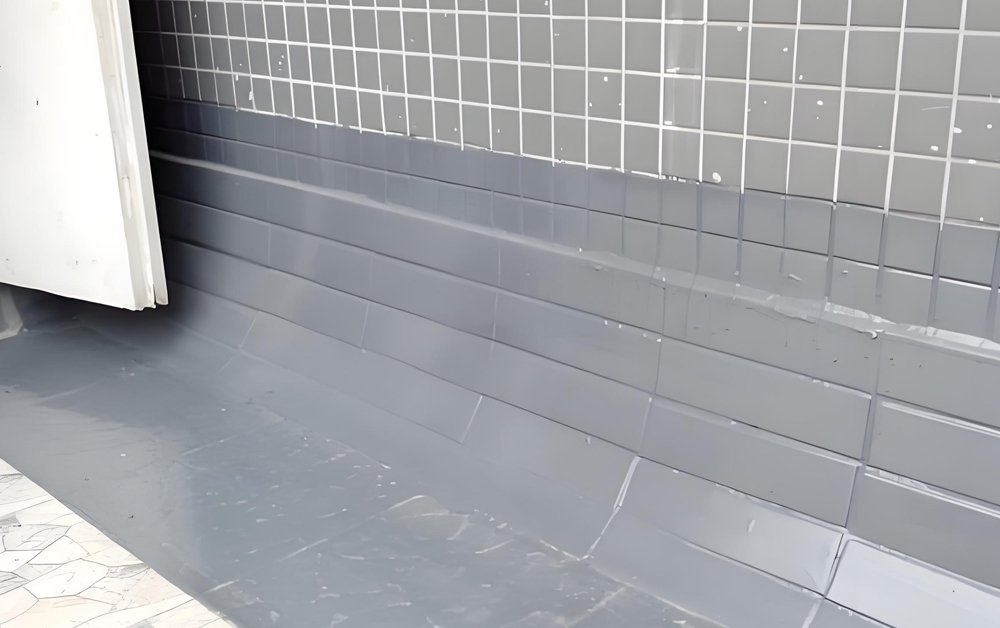
Picture a roof refurbishment where the main surface is still sound — but leaks have developed around penetrations and raised edges. The repair area is small, access is awkward, and setting up spray equipment would take longer than the coating work itself.
A hand-applied system may be the more sensible starting point.
Now change the project to a large industrial structure with broad, accessible surfaces, regular maintenance activity, and a contractor equipped for professional spraying. The choice shifts because installation efficiency and the mechanical demands on the coating are different.
Even two roofs of the same size can need different solutions. A new concrete roof isn’t the same as a metal roof with old coatings, corroded fasteners, and repeated patch repairs. A surface subject to wear also places different demands on the membrane from one that mainly needs protection against weather.
We look at those differences when discussing exposed waterproofing materials at YURU. The existing substrate, condition of the roof, expected exposure, and available application equipment help narrow down the suitable formulation.
For distributors, knowing what local contractors usually handle is equally useful. It helps distinguish demand for manual repair coatings from large-area spray systems or conventional roof refurbishment products.
Comparing materials for hot climates? Our article on waterproof coatings for roofs in hot and UV-exposed areas covers that broader roof-selection question.
Frequently Asked Questions
Can a waterproof coating remain exposed to direct sunlight?
Yes. Certain polyurea, silicone, acrylic, and exposed-grade polyurethane formulations are intended for direct outdoor application. Match product to substrate and exposure.
Does all polyurea waterproof coating have the same UV resistance?
No. Polyurea formulations differ in weathering behavior and color stability. Performance data specific to the formulation in question is more relevant.
What does a 1,000-hour artificial weathering test actually prove?
It provides information about a coating under specified laboratory exposure conditions. Its meaning depends on the test cycle and the properties evaluated.
Can polyurethane waterproof coating be used outdoors without a UV-resistant topcoat?
Yes — if the PU formulation is designed for exposed service. Conventional non-UV-resistant membranes generally need a compatible protective finish.
Conclusion: Choosing an Anti-UV Waterproof Coating
An exposed waterproof membrane needs to retain more than its original appearance. Flexibility, adhesion, weathering behavior, and the installation method all play a part.
For demanding outdoor work, YURU’s WUVH-2 hand-applied and WUVS-2 spray-applied polyurea coatings are among our preferred options. Silicone waterproof and acrylic coating are also practical choices for suitable roof applications, while conventional polyurethane may require UV protection.
For a project or bulk order, share the substrate, work area, exposure conditions, and preferred application method with YURU Waterproof. We can discuss suitable formulations, relevant technical data, OEM options, and material supply.
YURU Product solutions