Polyurethane Grout Injection for Waterproofing: 4 Types
Introduction
Polyurethane grout injection for waterproofing can stop water entering through concrete cracks, construction joints, and underground structures. At YURU Waterproof, we generally recommend basic one-component hydrophobic PU grout for routine seepage, our standard one-component formulation when specific cured-material strength is required, and fast-reacting two-component PU grout for heavy, fast-flowing water. Hydrophilic polyurethane grout is another option for wet areas where water absorption and flexible sealing are needed.
The conditions can vary considerably from one project to another. A basement wall with slow seepage gives the contractor more time to inject the material. An underground tank with groundwater rushing through an opening presents a different challenge. In that situation, the grout has to reach the leaking area and react quickly enough to withstand the flowing water.
We’ve seen that difference firsthand through a recent wastewater tank waterproofing project in Singapore.
What Is Polyurethane Grout Injection for Waterproofing?
Polyurethane grout injection seals water leak paths inside concrete cracks, joints, and other openings. A contractor pumps liquid PU through injection ports into the affected area. The material then reacts and forms a seal within the available space.
Contractors commonly use this method for leaking basements, underground parking structures, tunnels, utility corridors, construction joints, and water-retaining structures.
For example, water entering a basement wall may travel through a crack inside the concrete before it becomes visible on the surface. Injection allows the contractor to deliver grout into that internal passage and seal the area where water is moving.
The type of PU used depends on the repair. Certain formulations react with moisture to produce foam. Others absorb water and form a flexible sealing material. Two-component systems can be formulated for very rapid reactions when water needs to be stopped quickly.
PU grout injection is commonly used for waterproof sealing. If the concrete also has structural damage, the condition of the member and the need for a separate structural repair should be assessed.

How Does Polyurethane Injection Grout Stop Water Leaks?
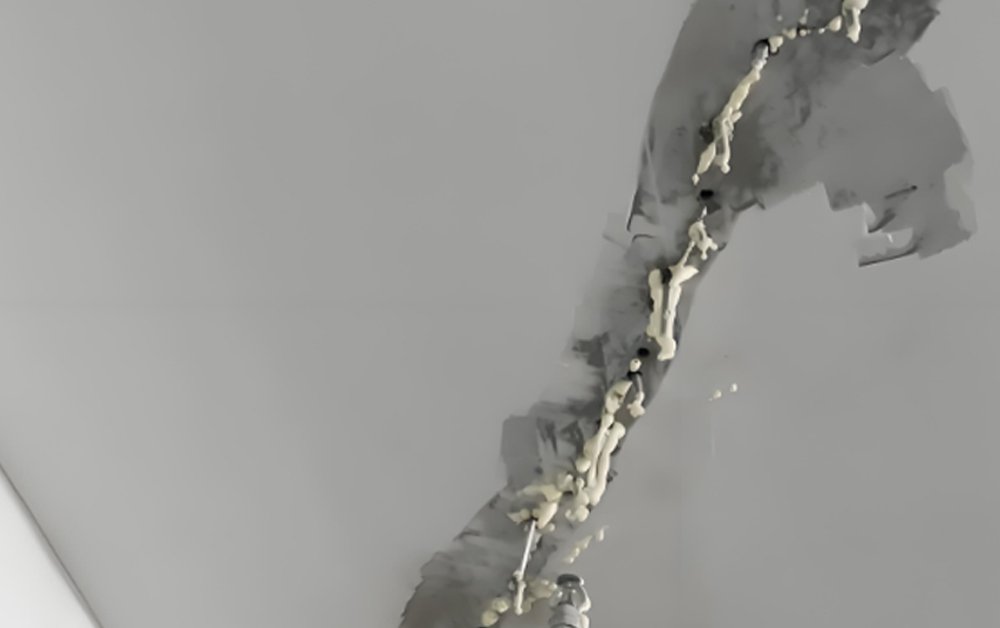
Water often follows small cracks, construction joints, and connected openings inside concrete. During injection, the liquid grout travels through these spaces before the chemical reaction causes it to expand or cure.
Upon contact with water, one-component hydrophobic polyurethane initiates reaction and forms foam. The expanding material fills available gaps and progressively obstructs water flow.
Hydrophilic polyurethane absorbs water during reaction. Depending on formulation, it may form a flexible foam or gel-like material that seals the treated zone.
Two-component polyurethane grout relies on reaction between supplied components. Formulation may be adjusted to achieve a very short reaction period, advantageous where strong water flow complicates conventional injection.
During the repair, contractors also watch what happens around nearby cracks and injection points. Sometimes the water stops at one location but continues appearing farther along the joint. Another injection point may need attention before the leakage is fully sealed.
The SealBoss Injection Guideline provides more information about how polyurethane grouts react and behave during injection.
What Are the Four YURU Polyurethane Injection Grout Options?
YURU manufactures several polyurethane injection grout formulations for different waterproofing requirements. Our hydrophobic range includes basic and standard one-component grades, along with a fast-reaction two-component system. We also offer hydrophilic polyurethane grout for applications involving water absorption and flexible sealing.
The following specifications describe the current YURU formulation options.
Basic One-Component Hydrophobic PU Grout
Our basic one-component hydrophobic polyurethane grout is commonly considered for general leakage repair and concrete crack waterproofing.
This formulation has a specified setting time of 800 seconds or less. Its foam expansion can be adjusted within approximately 5–10 times the original volume.
The adjustable expansion gives us flexibility when discussing different waterproofing requirements with customers. The size of the leakage passage, the amount of incoming water, and the required sealing properties help determine which version to supply.
For routine seepage and localized injection work, the basic grade provides a starting point for selecting an appropriate hydrophobic grout.
Standard One-Component Hydrophobic PU Grout
YURU’s standard one-component hydrophobic PU grout has a setting-time specification of 800 seconds or less, with foam expansion of approximately 10 times.
This grade is formulated with attention to controlled reaction behavior and cured-material strength. Under normal application conditions, the material is intended to provide sufficient time for injection without an unnecessarily rapid reaction.
The current formulation information includes a reported strength requirement of at least 12 MPa.
We offer this formulation for waterproofing applications where its particular cured-material properties are required. The strength specification also needs to match the work being carried out, especially if the project has additional structural requirements.
Fast-Reaction Two-Component Hydrophobic PU Grout
Our two-component hydrophobic polyurethane grout is developed for rapid water-stopping work.
It has a reported reaction and curing interval of approximately 10–30 seconds, with foam expansion of around 30 times.
This formulation is especially relevant when water is entering under pressure and moving too fast for slower grouts to set properly.
Because the reaction is fast, the mixing procedure and injection equipment need to suit the material. The contractor must be able to deliver the grout to the leaking area within its available reaction time.
We recently recommended this formulation for a wastewater tank project in Singapore. The customer had been struggling with heavy groundwater leakage, and the previous injection materials were being washed away before they could form a seal. The two-component PU grout was selected for its rapid reaction characteristics.
Hydrophilic Polyurethane Injection Grout
YURU’s hydrophilic polyurethane injection grout is designed for waterproofing work where the material’s interaction with water is part of the sealing process.
Our current formulation has a gel time of approximately 180 seconds, foam expansion of about 4 times, and a separately reported water-holding capacity of approximately 25 times.
Hydrophilic PU takes up water and can form a flexible sealing body inside wet cracks or joints. This makes it useful to evaluate for damp concrete and areas where moisture remains present.
The water-holding figure describes a separate property from foam expansion. Its measurement basis should be confirmed when preparing project-specific technical documentation.
For joints subject to movement or changes in moisture, the cured material’s flexibility and behavior under the expected conditions should also be considered.
We explain this material family in more detail in our article on hydrophilic vs hydrophobic polyurethane grout.
YURU Polyurethane Injection Grout Comparison
| YURU Formulation | Reported Setting / Gel / Cure Time | Foam Expansion | Additional Property |
| Basic 1K Hydrophobic PU | ≤800 seconds | Adjustable, 5–10× | General waterproofing formulation |
| Standard 1K Hydrophobic PU | ≤800 seconds | Approximately 10× | Reported strength requirement ≥12 MPa |
| Fast-Reaction 2K Hydrophobic PU | Approximately 10–30 seconds | Approximately 30× | Rapid water-stopping formulation |
| Hydrophilic PU Grout | Gel time approximately 180 seconds | Approximately 4× | Reported water-holding capacity approximately 25× |
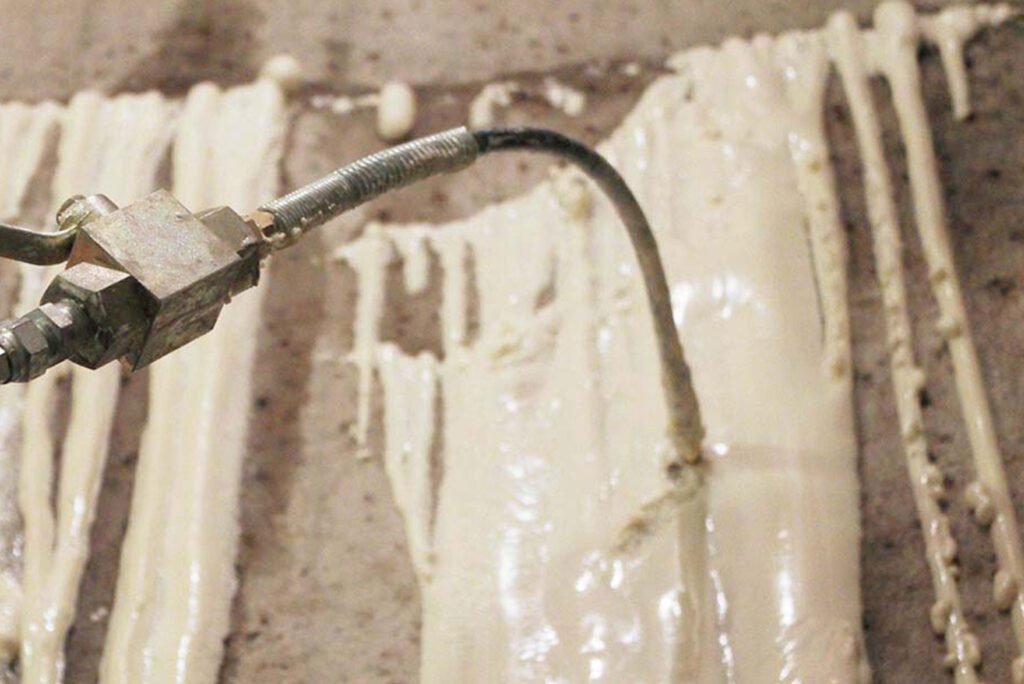
How Do Reaction Time, Foam Expansion and Strength Affect Grouting?
Consider injection into a narrow crack with slow seepage. The material must traverse the opening before setting begins. A formulation with an appropriate reaction period affords the contractor time to reach the affected zone.
Under heavy groundwater flow, things change fast. Water moving through a larger opening can carry uncured grout away. A fast-reacting product can start sealing sooner and help bring the leak under control.
The available reaction time also works alongside viscosity, crack width, temperature, and injection pressure. These factors influence how the material travels before it cures. Our article on injection grout viscosity and penetration into concrete joints explains that part of the process in more detail.
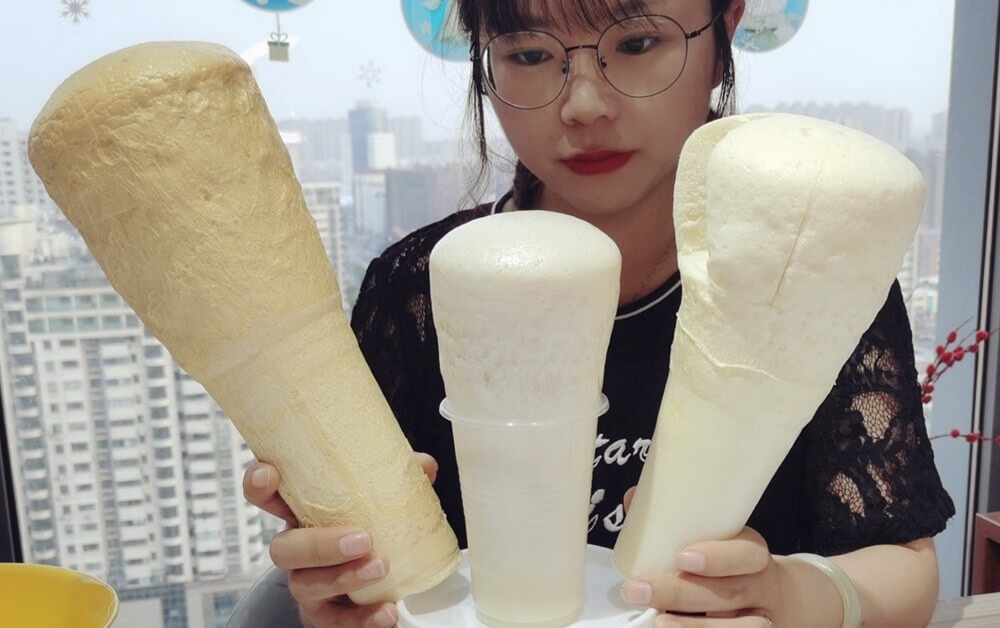
Foam expansion determines the volume occupied by reacting grout. High-expansion formulations may be advantageous where material must fill a larger opening and respond rapidly to flowing water. In narrow cracks, confined space influences foam development and distribution.
Cured material properties also warrant consideration. Certain waterproofing applications require a stronger sealing body, while joints subject to continued movement require appropriate flexibility.
That’s why YURU offers several formulations with different reaction and expansion characteristics. Each has a practical place in waterproof injection work — from manageable seepage through concrete cracks to demanding water-stopping repairs.
Which Polyurethane Grout Should You Use for Different Water Leaks?
First check: water amount, opening type, structure condition.
A small crack with steady seepage may suit a single-component hydrophobic grout. A larger opening carrying groundwater under pressure may require substantially faster reaction. Damp joints may call for a hydrophilic formulation with appropriate flexible sealing properties.
| Leakage Condition | YURU Formulation to Consider | Main Site Requirement |
| Ordinary seepage through concrete cracks | Basic or standard 1K hydrophobic PU | Suitable reaction time and penetration |
| Waterproofing with a specified cured-material strength | Standard 1K hydrophobic PU | Matching the required strength test and performance |
| Heavy, fast-flowing groundwater leakage | Fast-reaction 2K hydrophobic PU | Rapid material reaction and suitable injection equipment |
| Wet joints requiring water-absorbing sealing behavior | Hydrophilic PU grout | Moisture conditions and cured-material flexibility |
| Joints with ongoing movement | A suitably flexible injection system | Ability to accommodate expected movement |
Ordinary Concrete Seepage
For routine basement or underground concrete leakage, a one-component hydrophobic polyurethane grout may be an appropriate option.
Contractors typically have sufficient time to inject material through the crack and allow distribution before curing. Grout viscosity and reaction period influence the extent of leakage path treatment.
YURU’s basic and standard one-component formulations offer different expansion and cured-material specifications. We can discuss the appropriate version after reviewing the leakage conditions and the customer’s application requirements.
Singapore Wastewater Tank Project: Fast Water Leakage Under Pressure
A customer from Singapore recently contacted YURU about a serious leakage problem at a wastewater tank project.
The structure was experiencing heavy groundwater infiltration. Water was entering under high pressure and flowing quickly through the leaking area. Customer had already tried other injection materials, but the water kept washing them away before they could react and form a seal.
The waterproofing work had stalled.
The customer sent us photos and videos showing the conditions at the site. We reviewed the information and discussed what was happening during the previous injection attempts. The immediate requirement was clear: the grout needed to react quickly enough to remain in the leaking area despite the strong water flow.
We recommended YURU’s fast-reaction two-component polyurethane injection grout.
This formulation has a reported rapid reaction and curing interval of approximately 10–30 seconds, with foam expansion of around 30 times. Those characteristics matched the urgent water-stopping requirements described by the customer.
Customer decided to test the material on site and placed an initial order of approximately one metric ton.
After completing the trial, they confirmed the grout had successfully stopped the leakage and worked well under actual project conditions.
The result gave the customer confidence to continue using the material, they subsequently placed an additional order for the same two-component polyurethane grout.
This project showed how much the reaction period can affect an injection repair, the earlier materials were being carried away by groundwater before they could set. With the faster YURU formulation, the customer was able to achieve the required water-stopping result and continue the waterproofing work.
Wet Joints and Moisture-Responsive Sealing
Certain projects involve joints remaining damp for extended periods. Hydrophilic polyurethane may prove useful where water-absorbing behavior contributes to sealing.
Selection depends on moisture presence and required post-cure properties. Where the joint also moves, appropriate grout flexibility is necessary.
In projects involving strong active leakage, contractors may first need to reduce the water flow before carrying out further sealing work. Sika’s injection-material selection guide describes this approach for certain pressurized leakage conditions.

What Matters During PU Injection Waterproofing Work?
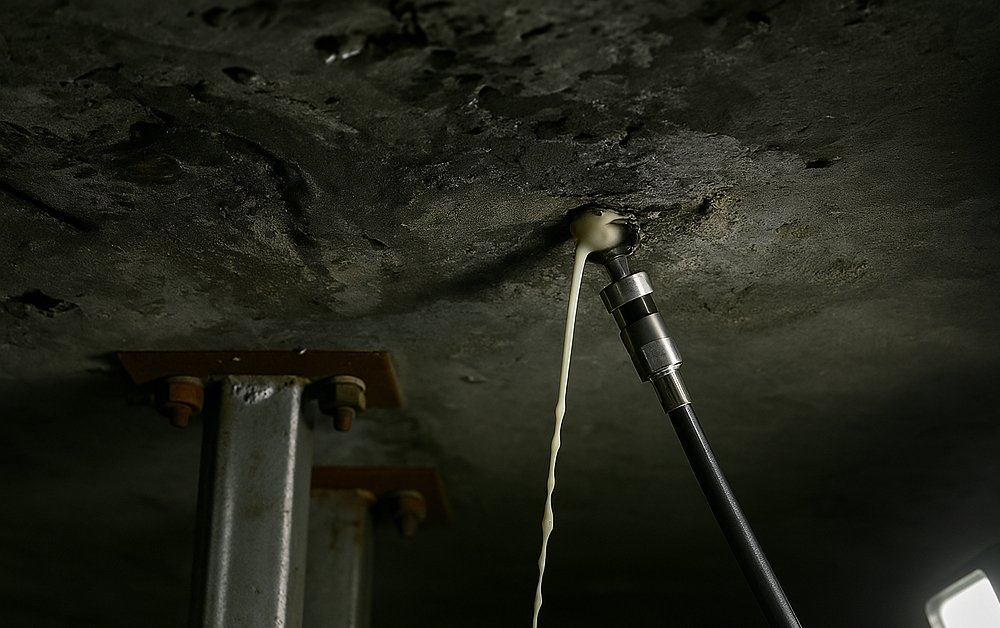
On a leaking construction joint, water may slow down at one injection point and start appearing farther along the crack. The crew needs to follow the water flow and adjust the injection work as the material spreads inside the concrete. Water pressure, temperature, and the condition of the crack can all affect how the job goes.
One thing we pay particular attention to with YURU’s basic and standard one-component hydrophobic PU grouts is storage and handling. These materials may initiate premature curing if moisture enters the container. Once resin thickens or hardens, pumping becomes difficult and equipment blockage may occur.
Drums should remain tightly sealed in a cool, dry location and opened only when material is ready for use. Pumps, hoses, and containers should be free of unwanted moisture prior to resin loading. During construction, unused material should not remain exposed to humid air for extended periods. Residual material in equipment should be handled according to product cleaning and storage instructions.
For our fast-reacting two-component PU grout, the main concern is getting the material into the leaking area within its short reaction time. The mixing equipment, hoses, and injection ports should be ready before the components are combined.
Injection pressure needs attention too — especially when concrete is old or damaged. After curing, check the treated area and nearby joints for remaining leakage before finishing the repair.
What Should Buyers Confirm Before Ordering PU Injection Grout?
Customers often contact us with a product name like “PU injection grout” and a project description. Upon understanding leakage conditions, we can narrow the available formulations.
Photos and videos are especially useful for complicated repairs. In the Singapore wastewater tank project, the customer showed us the strength of the flowing water and described what had happened with the previous materials. That information helped us recommend the fast-reaction two-component formulation for their site trial.
For other projects, the requirements may be different.
A contractor handling ordinary seepage may need a one-component material with an appropriate reaction period. A buyer specifying cured-material strength may be interested in our standard grade, which has a reported requirement of at least 12 MPa. Reaction times also need to match the product version.
For hydrophilic PU grout, the water-absorption characteristics are relevant to the purchase.
Distributors may need different versions for their local markets. Some customers focus on routine concrete leakage repair. Others supply contractors doing emergency water-stopping work.
YURU supports various polyurethane grout formulations, reaction characteristics, expansion requirements, packaging, and OEM or private-label supply. These options can be discussed based on required products and served projects.
For a new inquiry, information about the structure, leakage severity, water flow, previous repair attempts, and available injection equipment gives us a useful starting point.
Frequently Asked Questions
Can polyurethane grout injection stop active water leaks?
Yes. Fast-reacting polyurethane grout is used for active water-stopping work. YURU’s two-component formulation was successfully tested by a Singapore customer dealing with high-pressure groundwater leakage at a wastewater tank project.
What is the difference between one-component and two-component PU grout?
The most fundamental differences are the reaction speed and the expansion ratio. One-component moisture-reactive PU grout reacts upon water contact. Two-component PU grout reacts through its specified component system following mixing. Available reaction time and application equipment depend on formulation.
Does higher foam expansion provide better waterproofing?
Foam expansion assists grout in occupying space within cracks and voids. Outcomes also depend on reaction location, distribution through the leakage pathway, and cured seal properties.
What is the difference between foam expansion and water absorption in hydrophilic PU grout?
Foam expansion describes the material’s increase in volume during reaction. Water absorption or water-holding capacity describes its interaction with water. YURU’s current hydrophilic formulation reports approximately fourfold foam expansion and a separate water-holding figure of about 25 times.
Can polyurethane grout injection provide long-term waterproofing?
Yes, when the selected formulation and injection work suit the structure and the leakage conditions. Some repairs can be completed using one suitable polyurethane system. Others require additional sealing work after the initial water flow has been controlled.
Conclusion: Choosing PU Grout for Waterproofing
Polyurethane grout injection is used across a wide range of leakage conditions, from ordinary concrete seepage to heavy groundwater inflow. The grout’s reaction time, expansion, and cured properties determine where each formulation can be used.
Our recent wastewater tank project in Singapore is a good example. After previous injection attempts struggled with fast-flowing groundwater, the customer tested YURU’s two-component PU grout, successfully stopped the leakage, and placed a further order.
At YURU Waterproof, we supply basic and standard one-component hydrophobic grouts, rapid-reaction two-component PU grout, and hydrophilic formulations for different waterproofing needs.
If you’re sourcing polyurethane injection grout, send us your site conditions, photos or videos, and material requirements. We can discuss suitable formulations, technical documentation, OEM customization, and bulk supply.
YURU Product solutions