
How to Waterproof a Roof?
- 11/12/2024
- yuruwaterproof.com
How to Waterproof a Roof?
Waterproof a roof is critical for protecting structures from water damage, mold, and potential structural issues. This guide will walk you through effective roof waterproofing methods, materials, and best practices, ensuring durability and long-lasting protection. Whether for commercial or residential roofing projects, this article will provide the insights you need to safeguard your roof from the elements.
To waterproof a roof, thoroughly clean the surface, repair any cracks or damages, and apply a quality waterproof coating or membrane. Ensure proper drainage and regular maintenance to prevent future leaks.
Let’s dive into the details to understand the materials, techniques, and steps involved for effective roof waterproofing.
Why is Roof Waterproofing Important?
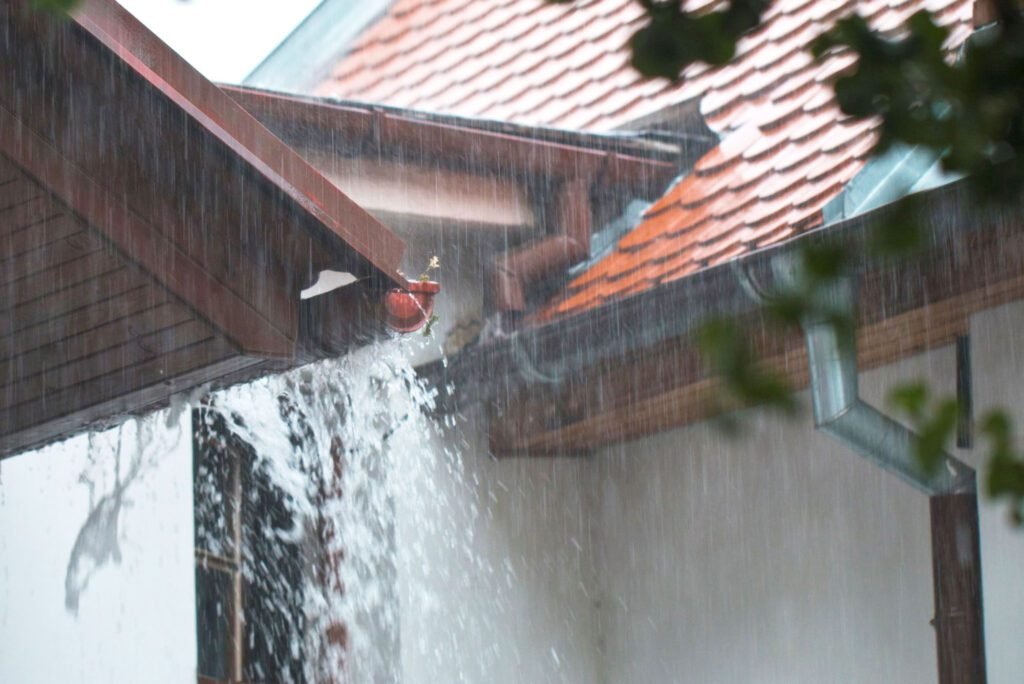
Waterproofing your roof protects it from water seepage, which can lead to significant structural damage over time. Frequent water exposure can weaken roofing materials, cause rot, and promote mold growth. For roofing contractors and project managers, ensuring waterproofing is a way to extend the roof’s lifespan and protect the property value.
Common Questions About Roof Waterproofing
What are the main methods of waterproofing a roof?
The primary methods for waterproofing roofs include using waterproof membranes, liquid-applied coatings, and waterproof paints. Each method has its advantages, depending on the roof type, climate, and budget.
Which waterproofing material is best for flat roofs?
For flat roofs, options like liquid-applied membranes, EPDM PVC membranes, and waterproof coatings offer strong protection against water pooling and seepage. Choosing the right material depends on specific project needs and longevity requirements.
How often should roof waterproofing be done?
Generally, roof waterproofing should be inspected every five years. However, the frequency may vary depending on weather conditions, material type, and roof usage. Regular maintenance can prevent small issues from becoming costly repairs.
Step-by-Step Guide to Waterproofing a Roof
1. Evaluate the Roof Surface
Start by inspecting the roof for any visible signs of damage, such as cracks, holes, or worn-out areas. Check around drains, vents, and seams, as these areas are more prone to leaks.
2. Clean the Roof Thoroughly
Dirt, debris, and old coatings can prevent waterproofing products from adhering effectively. Clean the surface with broom or a pressure washer, making sure it’s dry before moving on.
3. Repair Any Damage
Address any cracks or holes in the roof with a suitable repair compound. This ensures that the waterproofing layer is even and prevents water from penetrating through damaged areas.
If large holes or cracks are found, which will cause a lot of water leakage, it is recommended to first select appropriate grouting materials for filling reinforcement before waterproofing.
4. Choose the Right Waterproofing Material
Choose based on the roof type and durability needs. Consider your options carefully. Waterproofing coatings (such as polyurethane, acrylic or silicone) are popular because of their seamless application, integral film formation, easy application, good weather resistance and UV resistance.
5. Apply the Waterproofing Layer
Follow the manufacturer’s instructions to apply the chosen waterproofing material. Most products recommend at least two coats to ensure full coverage. Allow each layer to cure as required to achieve maximum effectiveness.
6. Ensure Proper Drainage
Water pooling can damage roofs, even when they’re waterproofed. Make sure drains and gutters are clear and working properly to avoid buildup.
Waterproofing Options: Pros and Cons
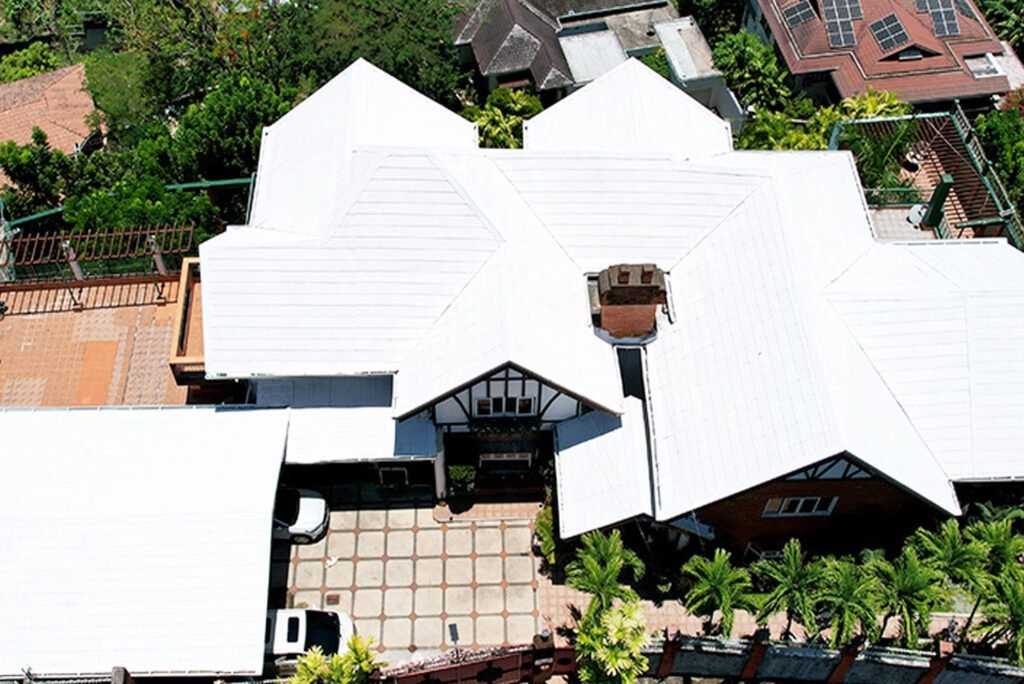
1. Liquid Waterproofing Paints
Pros: Seamless application, great for irregular roof shapes, easy to repair, wide variety, UV and weather resistant, environmentally friendly and durable
Cons: Requires clean, dry surface; some products can be sensitive to weather conditions
2. Waterproof Membranes
Pros: Durable, UV resistant
Cons: Higher initial cost, requires professional installation, construction difficult
3. Bituminous Membranes
Pros: Affordable, strong adhesion
Cons: Not eco-friendly, heavier compared to other options
Waterproofing Paints Construction Method
Preparation before construction:
1. Clean the base surface:
Make sure the base surface is clean, flat, free of oil, dust, etc., and the uneven or cracked areas should be repaired first.
2. Mix the coating:
Some paint products need to be mixed according to proportions, while some products can be used directly.
3. Prepare tools:
Prepare brushes, rollers, protective gloves, safety glasses, masks and other construction tools.
Construction method:
1. Apply the waterproof layer:
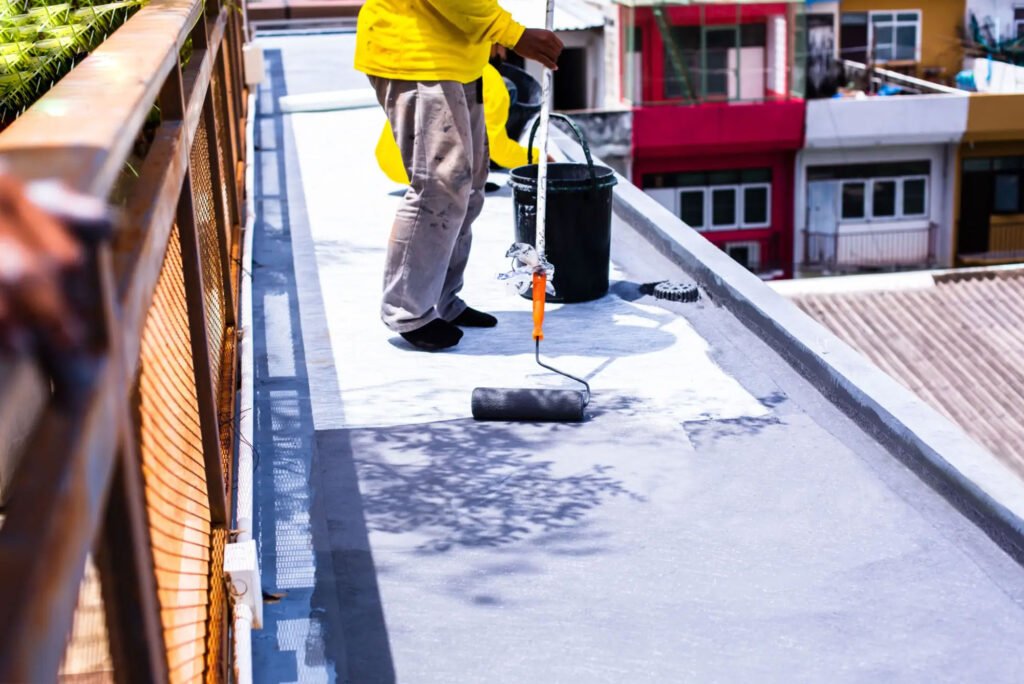
Use a brush or roller to evenly apply the prepared waterproof coating onto the base surface, following the sequence of vertical strokes first, then horizontal; inside areas first, then outside; and top areas first, then bottom. This ensures a uniform coating with no missed spots or untreated corners. Once the first layer is fully dry (typically 2-4 hours), apply a second layer, repeating as needed until the required coating thickness is achieved.
2. Detailed part treatment:
Reinforce areas prone to water leakage, such as around pipes, floor drains, and corners. Use fiberglass mesh cloth as a reinforcing material in these areas to ensure effective waterproofing.
Maintenance after construction:
Maintain ventilation:
After the construction is completed, keep the room ventilated so that the waterproof coating is completely dry.
Protect the waterproof layer:
Before the waterproof coating is completely dry, avoid placing heavy objects or performing other construction on the waterproof layer.
Wrapping Up
Waterproofing your roof is essential for protecting your property and extending the roof’s lifespan. By following these steps and choosing the right materials, you can effectively prevent water damage and save on future repairs. However, you can also use our YURU waterproof paints and waterproof membranes to waterproof your roofing. For more detailed guidance or a quote on high-quality waterproof coatings and waterproof membranes, contact us today. Let’s work together to ensure your roof is protected against the elements year-round.