Basement Foundation Crack Repair: Methods, Materials & When to Use Them
Introduction
Basement foundation crack repair often starts with a simple question: where is the water coming from? A narrow crack may stay dry for months, then begin leaking after several days of rain. Another crack may never leak at all, yet raise concerns about movement in the foundation wall.
For a stable crack in poured concrete, polyurethane injection is one way to stop water entering the basement. Structural epoxy is used for a different purpose: bonding concrete where a structural repair has been specified. However, neither of these two materials is suitable for addressing issues such as outward bulging of walls or ongoing foundation settlement.
The first job is to find out what you’re dealing with. Once the crack and water conditions are understood, choosing a repair method becomes much more straightforward.

How Serious Is a Crack in a Basement Foundation Wall?
Concrete cracks for several reasons. Shrinkage, temperature changes, settlement, and loading can all contribute. Some cracks remain stable for years. Others develop as the foundation continues to move.
Before deciding how to repair a crack, examine its location, direction, and surrounding concrete.
What Can the Crack Pattern Tell You?
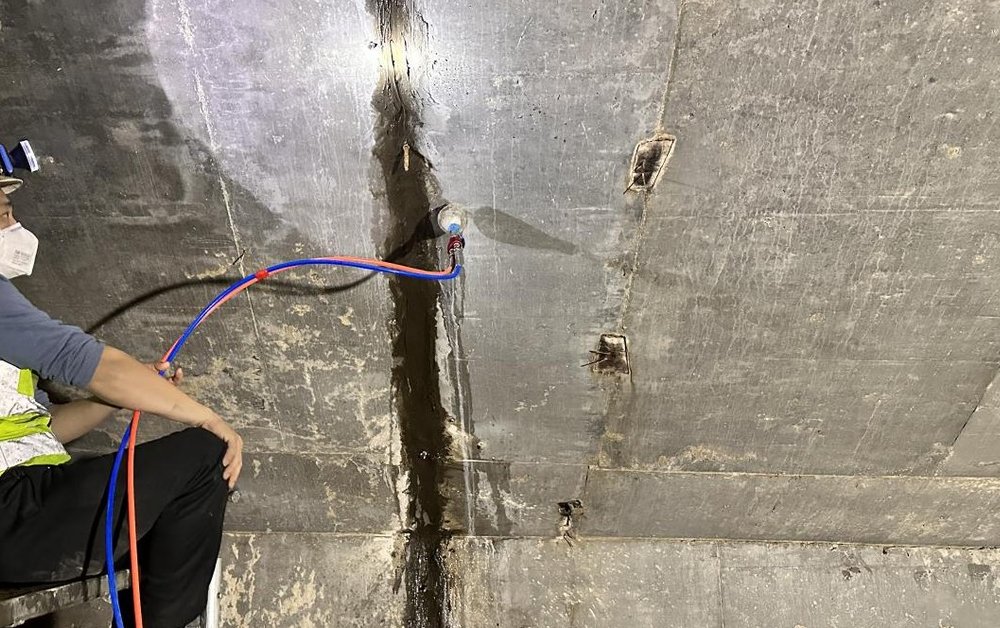
Vertical cracks are common in poured concrete foundation walls. Some form as the concrete shrinks and may remain relatively stable. Even when they don’t affect structural stability, they can provide an opening for groundwater.
Horizontal cracks deserve closer inspection, especially if the wall is bowing inward or the concrete surfaces have shifted. Pressure from the surrounding soil may be involved.
Diagonal cracks may be associated with uneven foundation movement. In concrete block walls, movement may manifest as stair-step cracking along mortar joints.
Pattern provides a useful indication but does not convey the complete condition. A narrow crack that continues to widen may be of greater concern than an older, wider crack that has remained unchanged.
Look for displacement, fresh cracking nearby, and other signs that the foundation is moving.
When Should Structural Safety Be Checked First?
If a basement wall is visibly bulging, leaning, or developing significant displacement, arrange a structural assessment before starting routine crack injection.
The same applies when settlement appears to be continuing.
Injection materials cannot eliminate soil pressure acting on a wall or arrest foundation movement. Even structural epoxy, capable of restoring bonding across suitable concrete cracks, cannot correct underlying settlement.
Where structural stability is in question, the repair plan should be founded on appropriate engineering assessment.
Why Is Water Entering Through the Basement Foundation?
A basement can remain dry for months and develop a leak after several days of rain. Water collecting in the soil around the foundation creates hydrostatic pressure, which can force moisture through openings in the wall.
The challenge is finding those openings.
Groundwater Pressure and Connected Leakage Paths
Consider a vertical crack that leaves a damp streak after heavy rain. Water is entering slowly enough that the wall becomes wet, but there is little visible flow.
Now consider an underground foundation opening with water running continuously through it.
Both involve leakage through concrete, but the repair conditions are very different.
For the first crack, a suitable injection grout may have enough time to enter the opening and react. In the second, flowing water may displace the material before it develops an effective seal.
Water pressure, flow rate, and the path through the concrete all influence the result.
A small interior opening can also connect to a larger crack or void behind the wall. Filling only the visible portion may leave the rest of the leakage path open.
For that reason, identifying where the water travels is just as important as identifying where it appears.
Is the Crack the Actual Entry Point?
Water does not always emerge directly opposite its entry point.
It may travel along a construction joint, around a pipe penetration, or through the connection between the foundation wall and floor.
Concrete block walls can be more difficult to assess because water may move through internal cavities and mortar joints.
Check the surrounding area for stains, damp joints, and previous repairs. If several parts of the basement become wet after rainfall, the problem may involve exterior drainage or a larger waterproofing defect.
Injecting a nearby crack will not solve a leak coming from a different pathway.

Which Basement Foundation Crack Repair Method Should You Use?
Once you understand the source of the problem, choosing the repair gets clearer.
Certain defects require local surface repair; others necessitate injection into the concrete. Where the foundation is affected by drainage issues or movement, work beyond the crack may be required.
Surface Repair and Local Sealing
For minor, localized defects, a compatible repair mortar or sealant may be appropriate.
Surface materials can close openings and protect repaired areas. Their limitations become evident where groundwater migrates through a connected crack behind the exposed surface.
A patch may arrest water emergence at one location without sealing the internal pathway. Under sustained pressure, water may return through the same crack or find an alternative opening.
Where the crack extends into the wall and conveys water, contractors should consider a repair method that addresses the leakage pathway itself.
Crack Injection from Inside the Basement
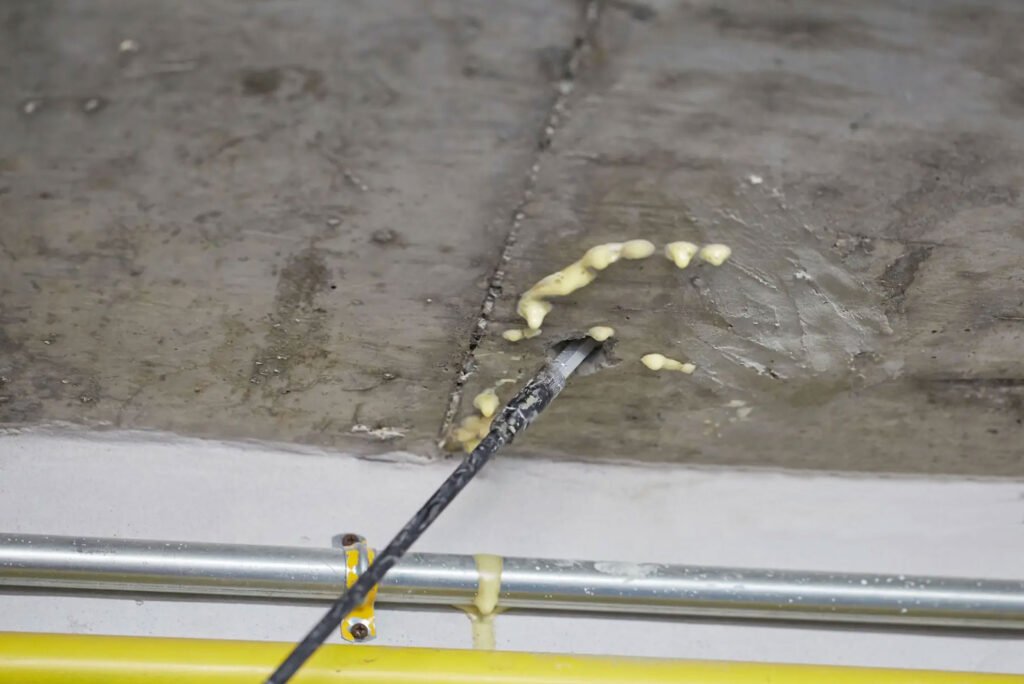
Interior injection is a common approach for suitable cracks in poured concrete foundation walls.
Instead of excavating outside the building, contractors introduce resin through injection ports installed on or within the concrete.
For many defined cracks, controlled low-pressure injection lets the material enter gradually. Other underground repairs may need mechanical packers and different equipment.
The choice depends on the wall, crack, water conditions, and selected resin.
Higher pressure is not necessarily advantageous. Excessive pressure may damage weak concrete or force material into openings not intended for filling.
A properly planned injection repair should deliver material to the required area without inducing additional damage.
Exterior Waterproofing, Drainage and Structural Stabilization
A leaking crack may be only one part of a basement moisture problem.
Where water collects around the building because of bad drainage, you may need improvements to the exterior water-management system.
Damaged exterior waterproofing can also let moisture enter through several locations—not just one isolated crack.
Concrete block walls may need a different approach from solid poured concrete, because water can move through the cavities inside the blocks.
And when the foundation is moving, the structure itself needs attention. Sealing the crack won’t correct the movement that caused it.
Which Injection Material Works Best for Basement Foundation Cracks?
Following selection of injection as the repair method, material selection must correspond to the repair objective.
For waterproofing, the primary concern is delivering grout into the leakage pathway and forming an effective seal; for structural repair, the material must provide the required bond between concrete surfaces.
Water conditions can make the choice more complicated, particularly when the leak involves continuous flow.
One-Component PU Grout for Damp and Leaking Cracks
One-component polyurethane grout is widely used for sealing suitable cracks where moisture or water is present.
Hydrophobic PU reacts with water and expands into a water-insoluble foam. The expanding material helps fill connected openings and interrupt water leakage.
Hydrophilic polyurethane also reacts with water, it will produce an elastic, gel-like seal that is useful in specific wet cracks and joints. Also some formulations can form water-based foaming seal.
For a stable basement crack with intermittent seepage, a suitable one-component PU is often worth considering.
The formulation matters. Viscosity, reaction time, expansion, and cured properties vary between products.
A grout used successfully in a slowly leaking wall may not perform the same way when a much stronger flow of groundwater enters the structure.
Fast-Reaction 2K PU Grout for Severe Active Water Ingress
Active water flow can make injection work difficult, even when the selected grout is intended for waterproofing.
If water moves through the crack faster than the material can seal, the grout gets carried away. Injecting more of the same material doesn’t necessarily fix it.
Fast-reacting two-component polyurethane systems are used where rapid control of flowing water is needed.
The two components get mixed with the specified equipment and procedure. The material reacts and expands, helping restrict water movement in the treatment area.
The reaction must be fast enough to resist washout without preventing the grout from reaching the required depth. This balance is particularly important in connected cracks and voids.
YURU manufactures an emergency-grade, two-component hydrophobic polyurethane grout for demanding underground water-stopping work.
YURU OPU(Emergency) formulation lists the following manufacturer-reported values:
| Property | Reported Value |
| Reaction Time | 20 seconds |
| Coagulation Time | 90 seconds |
| Foaming Rate | 3,600% |
These figures describe the specified formulation.
Field Experience: When Conventional Grout Was Washed Away
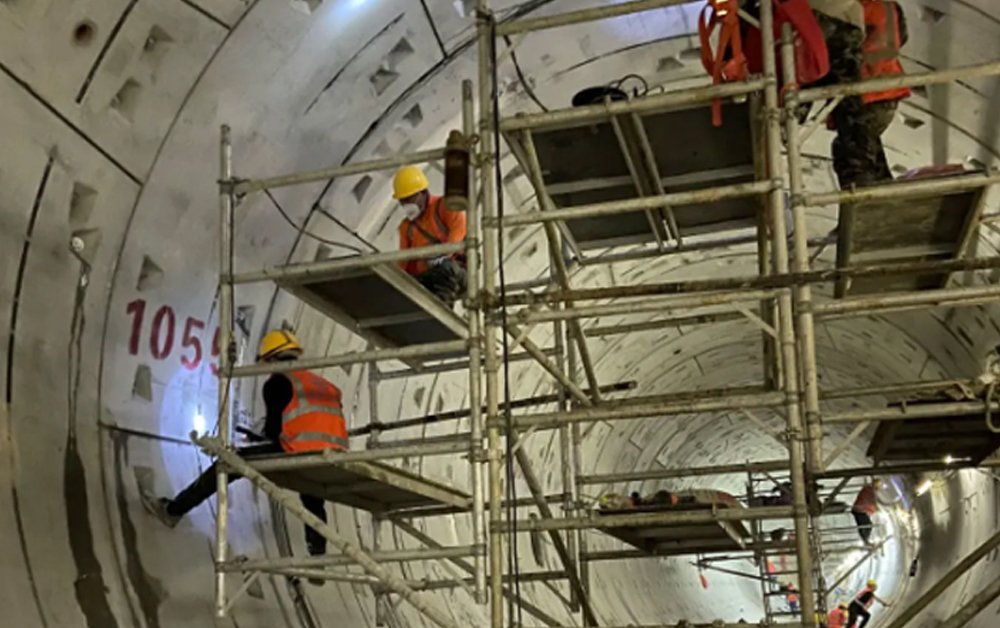
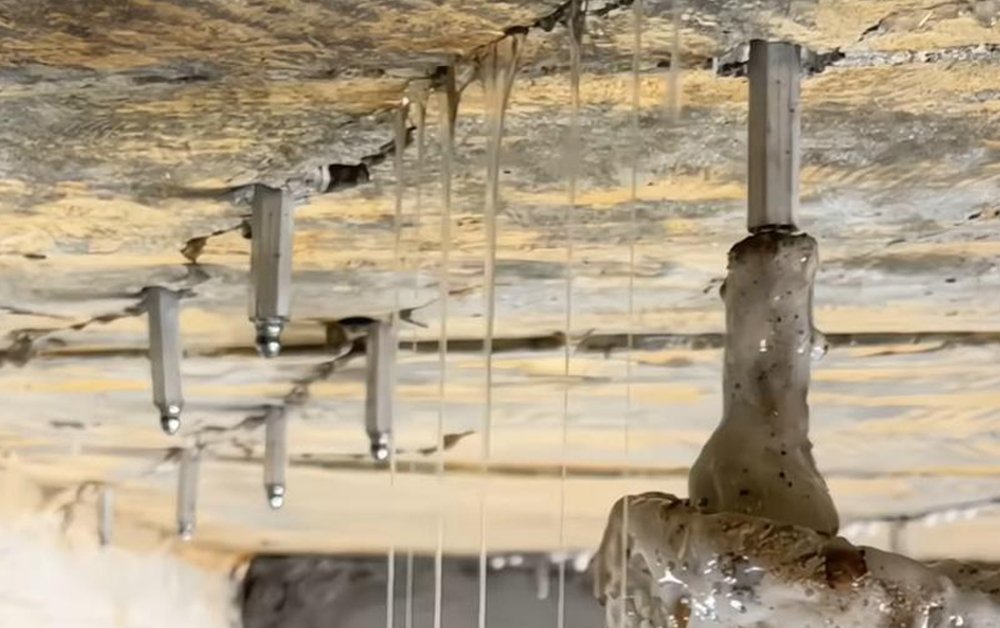
YURU encountered a demanding water-stopping problem during an underground foundation repair project.
The structure had continuous, heavy water inflow. Before the team changed materials, they had tried standard single-component polyurethane grout and other injection products.
Those attempts didn’t work. The moving water washed the materials away before they could effectively reach and seal the leakage path.
YURU recommended switching to an emergency-grade, fast-reacting two-component PU grout.
The team used the new material to control the active leakage and then completed additional sealing work. The repair succeeded, and the structure is now in normal operation.
The change in material addressed the problem the earlier attempts could not overcome: the grout needed to reach the leaking area and form a barrier before the water carried it away.
There is another important part of this example. Stopping the immediate flow was followed by additional sealing; it was not treated as the entire waterproofing repair.
Epoxy Injection for Stable Structural Cracks
Epoxy injection serves a distinct purpose.
Where a stable concrete crack requires structural bonding, a suitable epoxy resin can penetrate the opening and cure into a rigid bond between concrete surfaces.
Prior to epoxy application, the cause of cracking should be established. If the wall keeps moving or the foundation is settling, epoxy isn’t suitable.
Water also affects the repair. Epoxy resin grouting materials aren’t suitable where there’s significant active water seepage.
For structural epoxy injection, stable cracks and compatible substrate conditions constitute the preferred starting point. Where active leakage is present, it may require control before bonding work commences.
When Does Acrylate Injection Make Sense?
Acrylate grout is applied in certain underground seepage-control applications.
Its low viscosity enables suitable formulations to penetrate fine, connected openings prior to forming a sealing gel.
This may be advantageous where the treatment area contains narrow pathways difficult to fill with alternative materials.
However, the grout must remain workable long enough to reach the intended area. Gel time, crack connectivity, and the injection method are all important.
Basement Crack Injection Material Selection
| Site Condition | Material to Evaluate | Main Consideration |
| Damp or moderately leaking concrete crack | Suitable 1K Hydrophobic or Hydrophilic PU | Water exposure, reaction behavior and cured sealing properties |
| Severe active water inflow | Fast-Reaction 2K PU | Flow rate, pressure, penetration and washout resistance |
| Stable crack requiring structural bonding | Structural Epoxy | Crack stability, structural requirements and moisture compatibility |
| Fine, connected seepage pathways | Suitable Acrylate Grout | Viscosity, gel time and injection coverage |
| Continuing settlement or wall displacement | Structural assessment and designed repair | Addressing the movement causing the damage |
This comparison provides an initial direction for material selection. The final product and application method should be checked against the project requirements.
What Should Contractors Check Before Injecting a Basement Crack?
Good injection work starts before you switch on the pump.
The crew needs to understand the crack, decide where the grout should enter, and figure out how the material will reach the area that needs repair.
Confirm the Crack, Water Conditions and Injection Route
Begin with the condition and construction of the wall.
Check the visible crack, nearby joints, and any openings that may connect to the water source. A crack running across the interior surface may extend differently inside the concrete.
Water conditions should be recorded as accurately as practical.
Is the wall damp after rain? Is water seeping steadily? Or is there strong flow that could displace the grout?
Previous repair attempts can be useful evidence. If material was washed away, the reaction behavior or injection approach may need to change. If it hardened before penetrating the crack, a different working time or delivery method may be required.
Match the Injection Method to the Material
The selected grout determines the suitable mixing equipment and influences the choice of pump, packers, and application method.
Drilled injection holes need to provide access to the intended crack. A hole that misses the target opening will not deliver material where it is needed.
Drilling angles, spacing, and injection pressures should follow the approved repair procedure rather than a fixed arrangement replicated from another project.
The crew should also adhere to product instructions regarding mixing, working time, temperature, and curing.
Prior to commencing injection, the Safety Data Sheet (SDS) should be reviewed, required personal protective equipment prepared, and site procedures for chemical handling and pressurized equipment followed.
For further application information, see YURU’s guide to concrete crack injection repair.
Why Do Basement Crack Repairs Leak Again, and How Can You Check the Repair?
A crack may appear dry immediately following injection and begin leaking again upon groundwater rise.
In certain instances, grout has sealed the visible opening while leaving another connected pathway untreated. In other cases, the material never reached the location where the water needed to be stopped.
Common Reasons for Leakage Returning
Grout missed part of leakage path. Filling the interior opening doesn’t always mean the connected crack or void behind the wall is sealed.
Material washed away. Strong water flow may displace grout before an effective barrier develops.
The reaction occurred too early. Material that begins curing before reaching the target area may leave sections of the crack untreated.
Repair was incomplete. Some emergency water-stopping work needs additional sealing or waterproofing once active leakage is controlled.
The original problem remains. Structural movement or unresolved drainage conditions may create new leakage paths.
Where water returns, the responsible problem should first be established. Repeating identical injection without further investigation may yield the same outcome.
What Should Be Checked After Repair?
For waterproofing repairs, inspect the original leakage point and the surrounding wall for renewed water entry.
Consider the conditions during inspection. A repair checked when groundwater is low may need further observation after rainfall or seasonal water-level changes.
Structural injection requires different acceptance checks. Keep records of the material used, injection locations, significant site observations, and any additional sealing work.
These records can help identify what was treated if leakage appears again.
Why Contractors Source Basement Crack Injection Materials from YURU Waterproof?
A contractor dealing with ordinary basement seepage may need a different grout from a team working on a heavily leaking underground structure.
For distributors and project buyers, access to different material formulations makes it easier to supply those jobs without relying on one product for every repair.
YURU Waterproof is a manufacturer of injection grouting and waterproofing materials for construction and infrastructure applications.
Injection Materials for Different Site Conditions
YURU supplies hydrophobic and hydrophilic polyurethane grouts, emergency-grade two-component PU, epoxy injection resins, and acrylate grouting materials.
The range covers different repair needs, including suitable water-stopping, seepage-control, and structural bonding applications.
Customers can discuss available formulations with YURU based on the water conditions, crack characteristics, and intended use.
Our injection grouting material range provides an overview of the available product families.
Fast-Reaction Formulations and Engineering Support
Severe flowing-water leakage is one situation where product selection becomes especially important.
In the underground foundation project described above, changing to an emergency-grade two-component PU helped the repair team overcome the washout problem encountered with earlier materials.
YURU can discuss available reaction characteristics, product specifications, formulation options, samples, and equipment compatibility with contractors and buyers.
For complex repairs, the final injection method should be determined according to the project’s engineering requirements.
Grouting Machines, OEM/ODM and International Supply
Alongside chemical grouts, YURU supplies injection pumps, mechanical packers, and related accessories.
We support OEM/ODM services for distributors and private-label buyers, including packaging, labeling, and formulation development based on agreed requirements.
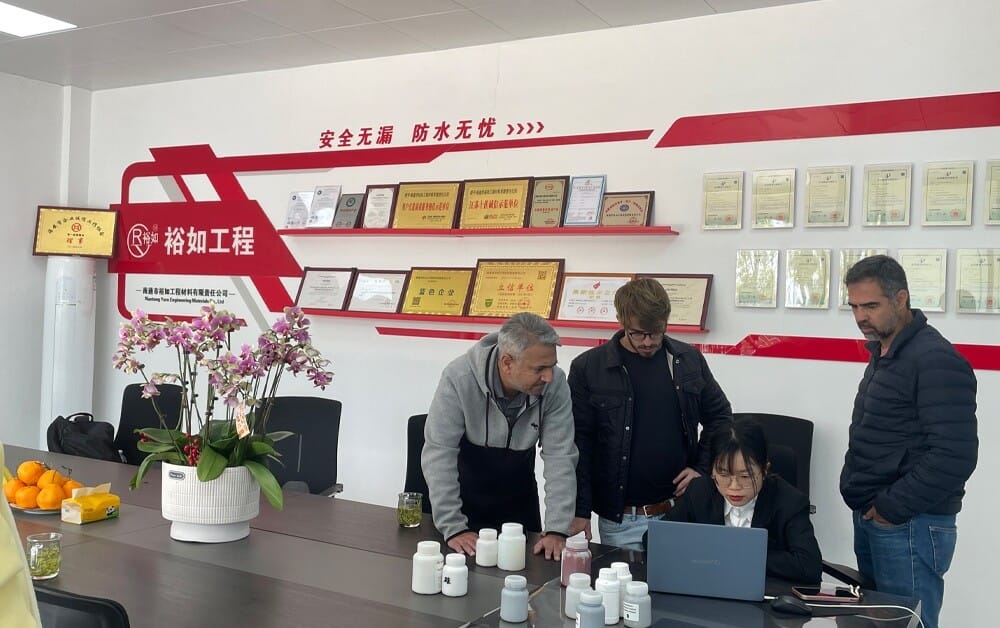
Founded in 2003, YURU supplies construction protection materials to international markets.
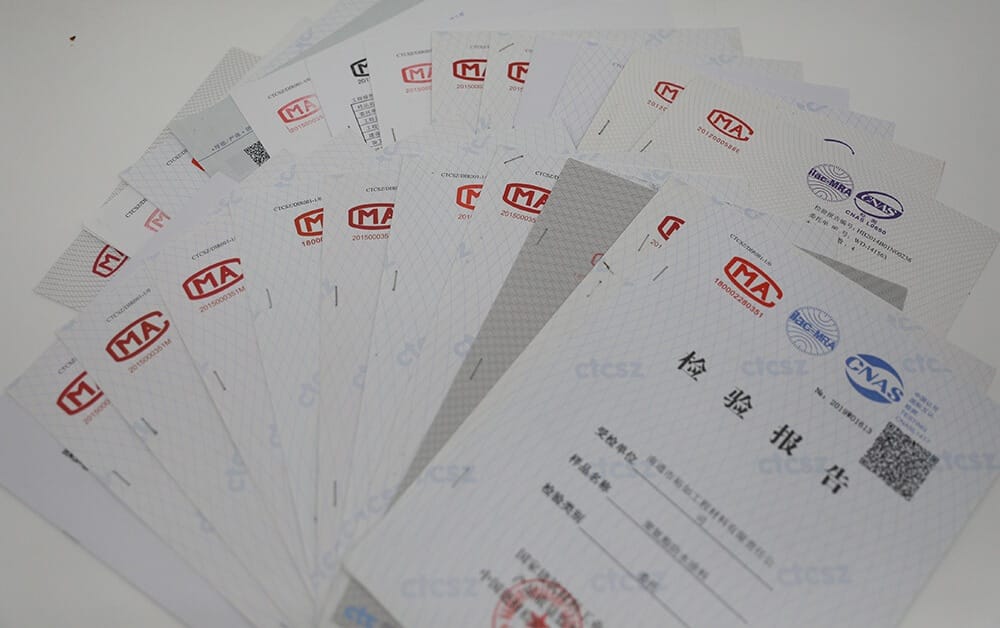
For a project purchase or regular wholesale order, customers can request product documentation, samples, equipment information, and supply details.
Sourcing injection grout for a basement or underground foundation project?
Send YURU the structure type, crack photographs, water conditions, and intended repair requirements. Our team can discuss available material options, technical documents, samples, equipment, and bulk supply.
Frequently Asked Questions
Can basement foundation cracks be repaired from inside?
Interior injection is a common method for suitable cracks in poured concrete basement walls. It allows contractors to introduce repair material from the accessible side. Concrete block cavities, continuing movement, and wider drainage problems may need a different approach.
Is polyurethane or epoxy better for basement cracks?
Polyurethane injection is usually the pick for waterproof sealing of suitable leaking cracks. Structural epoxy grout is for stable concrete that needs rigid bonding. The choice should follow the repair objective and the actual crack condition.
Can two-component PU stop severe active water leakage?
Fast-reacting two-component PU grout can help control strong water inflow when the material and injection method are appropriate. The grout must reach the leakage path and form a barrier before it is displaced. Additional sealing may be required after the initial water stop.
When is crack injection not enough?
- Ongoing foundation settlement
- Bowing wall
- Water entering from unresolved drainage or exterior waterproofing defects
These problems require appropriate structural or water-management repairs.
Conclusion: Choose the Repair Method for the Actual Problem
A leaking foundation crack may be repaired by injection, but the material should be chosen only after the crack and water entry path have been assessed.
Polyurethane, epoxy, and other grouts have different roles. For severe flowing-water leakage, reaction speed and washout resistance may determine whether the grout can form an effective initial seal.
For professional injection materials, equipment, or wholesale supply, contact YURU Waterproof to discuss your project requirements.
YURU Product solutions