How Can You Tell If a Wall Has Rising Damp Before DPC Injection?
Low-level damp doesn’t automatically mean rising damp.
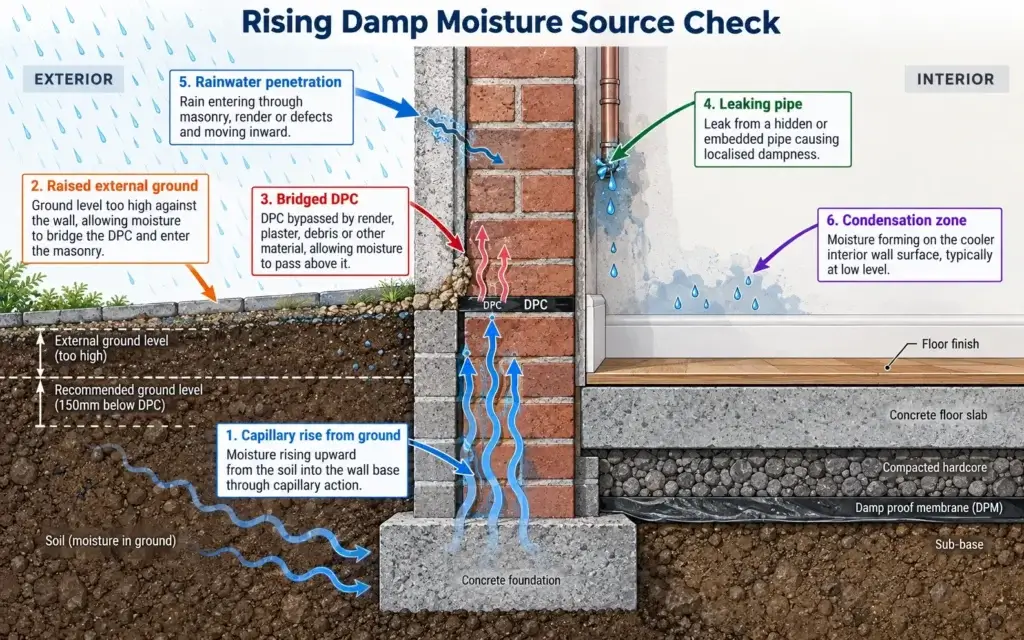
Prior to recommending chemical DPC injection, the moisture source should be identified. A damp patch near floor level may be consistent with capillary rising damp, but comparable damage may originate from rainwater ingress, leaking services, raised ground levels, bridged damp-proof courses, drainage issues, or condensation.
A wrong diagnosis leads to the wrong treatment.
RICS advises that rising damp is frequently misdiagnosed and that the moisture source should be established before remedial work is specified. Historic England adopts a similar position: effective repair depends on understanding moisture ingress and movement within the building fabric.
For contractors, surveyors, and distributors, the practical question is:
Does the moisture pattern fit capillary rising damp, and have stronger alternative explanations been checked first?
Quick Answer: How Do You Identify Rising Damp Before DPC Injection?
A rising damp diagnosis is more credible where moisture is concentrated at the base of porous masonry, follows an upward pattern from ground level, and remains consistent after other sources — condensation, penetrating rain, plumbing leaks, raised ground, and bridged DPCs have been checked.
No single sign confirms rising damp.
Salt staining may support the diagnosis. Damp meters can help map suspicious areas. Thermography can reveal useful temperature and moisture-related patterns.
Rising damp should be diagnosed from a pattern of evidence, not from one symptom, one salt mark, or one meter reading.
1. What Does Rising Damp Usually Look Like?
The defining pattern is moisture moving upward from the base of porous masonry.
RICS describes rising damp as moisture moving vertically upward from the ground through capillary action.
Typical signs of rising damp may include:
- dampness concentrated in the lower part of the wall;
- moisture damage that rises from floor or ground level;
- deteriorated plaster or decoration near the wall base;
- salt deposits or tide-like staining;
- moisture pattern most pronounced in the lower masonry.
The key characteristic is moisture rising from the wall base, not merely a wall that feels damp.
Wall construction changes how that pattern appears. Solid brick, stone, rubble masonry, cavity walls, and older lime-based construction can absorb, distribute, and release moisture differently.
Read the moisture pattern together with the wall construction.
2. What Other Moisture Sources Should You Rule Out First?
Before diagnosing rising damp, verify whether water is reaching the wall from alternative sources.
Historic England lists building defects, faulty services, leaking utilities and drains, groundwater, and occupant-related moisture as common sources. RICS similarly recommends investigating rainwater goods, roofing, plumbing, drainage, ground levels, and other building defects.
Rainwater ingress
Check gutters, downpipes, roof coverings, flashings, pointing, render, joints, and exterior cracks.
A localized patch that worsens following rainfall is more indicative of penetrating moisture than capillary rise.
Plumbing and drainage
Leaks from pipework, bathrooms, kitchens, drains, or service routes may produce low-level damp resembling rising damp.
Where damage is proximate to services, these should be inspected first.
Raised external ground
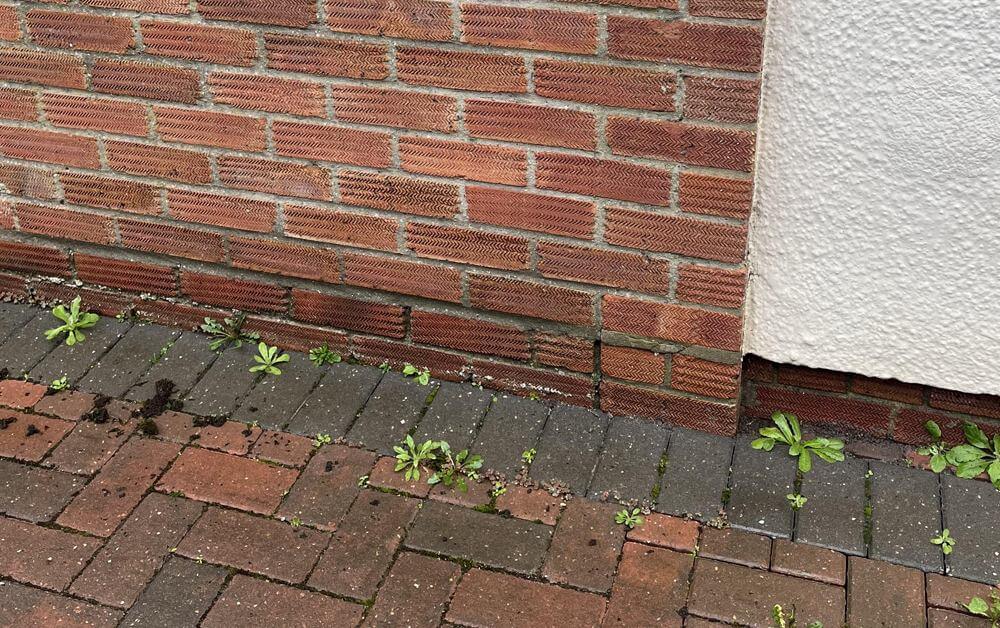
Soil, paving, or landscaping placed too high against the wall can maintain persistent lower masonry moisture.
It may also bypass or bridge an existing damp-proof course.
Bridged damp-proof course
Moisture can pass around an existing DPC through:
- render or plaster extending across it;
- cavity debris;
- raised ground;
- or other continuous moisture paths.
If an existing DPC is being bypassed, the first repair may be to remove the bridge rather than install another chemical barrier.
3. How Can You Distinguish Rising Damp from Condensation and Penetrating Damp?
Moisture pattern typically provides the initial diagnostic indicator.
| Moisture Type | Pattern | Main Clue |
| Rising Damp | Lower-wall moisture migrating upward from ground level | Capillary movement |
| Condensation | Moisture and mould on cold surfaces, corners, windows, or thermal bridges | Humidity + surface temp |
| Penetrating Damp | Localized patches associated with external water entry | Rain or envelope defect |
Rising damp
Rising damp originates at lower masonry and migrates upward via capillary action.
Damage is consequently most pronounced near the wall base.
Condensation
Forms when indoor moisture meets a surface at or below dew point.
RICS notes common occurrence on windows, external walls, ceilings adjacent to external walls, and other cold surfaces.
Mould at cold corners or windows therefore indicates condensation rather than rising groundwater.
Penetrating damp
Follows a route through the building envelope.
It may appear at almost any height and often corresponds with rain exposure or a local external defect.
Rising damp starts with moisture moving up from the ground; condensation forms on cold surfaces; penetrating damp follows a water-entry route through the building envelope.
4. What Do Salts, Tide Marks, and Damaged Plaster Actually Tell You?
Salts constitute useful evidence but do not independently establish a diagnosis.
Moisture migration through masonry can transport soluble salts toward the surface. Upon evaporation, these salts may crystallize, appearing as efflorescence, staining, powdering, or a tide-like band.
That tells you that moisture and salt movement have occurred.
It doesn’t tell you where the water came from.
Salt deposits support rising-damp diagnosis — but don’t identify moisture source alone.
Efflorescence and hygroscopic salts are different problems:
| Type | Behavior |
| Efflorescence | Dissolved salts move to surface, crystallize as water evaporates |
| Hygroscopic | Absorb moisture from humid air → wall stays damp even after liquid source reduced |
That distinction matters when evaluating a wall after treatment.
A visible tide-like band, damaged plaster, or salt staining should therefore be interpreted with:
- the height and shape of the damp pattern;
- wall construction;
- known moisture sources;
- external ground conditions;
- and any previous repairs or contamination.
5. Can a Damp Meter Confirm Rising Damp?
No.
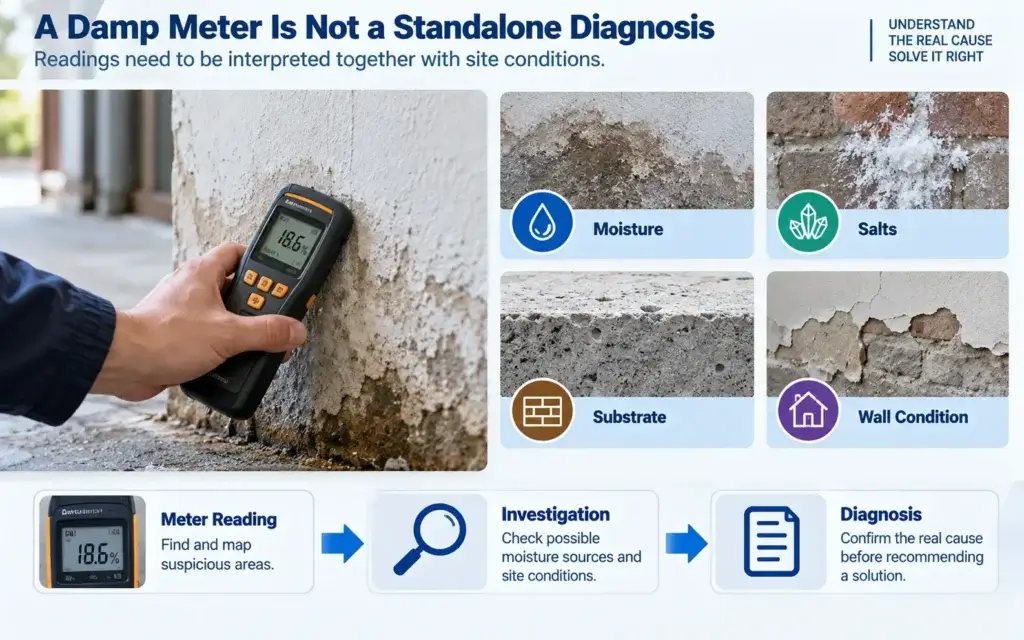
A high damp-meter reading in masonry is a reason to investigate, not proof of rising damp.
RICS specifically advises against using a damp meter alone to diagnose hard walls or solid floors. Electrical meters are reliable for timber, but conductive materials in masonry can also produce high readings.
Use a damp meter to map patterns across different heights and locations, then interpret those readings alongside:
- salt contamination;
- wall construction;
- visible damage;
- plumbing or drainage conditions;
- rain exposure;
- and other possible moisture sources.
Historic England’s 2026 guidance also focuses heavily on the limitations of moisture-measurement techniques and how their results should be interpreted in the context of a wider investigation.
A meter supports the investigation. It does not identify the cause on its own.
6. When Are Thermography or Further Investigations Useful?
Thermography is useful when the visible symptoms do not explain the full moisture pattern.
Infrared imaging can help identify:
- colder surfaces;
- condensation risk;
- moisture-related temperature differences;
- hidden pipework or leaks;
- physical defects.
Historic England characterizes thermal imaging as a non-destructive diagnostic technique; however, images must be interpreted alongside a broader building survey and knowledge of construction history and prior interventions.
Thermography can indicate where a moisture-related pattern exists; it doesn’t independently identify causation.
Where the pattern remains unclear, further investigation may include moisture mapping, drainage and service checks, targeted opening-up, sampling, or monitoring over time.
Use only the investigations needed to answer the practical question:
- Where is the moisture coming from?
7. When Does DPC Injection Become a Reasonable Option?
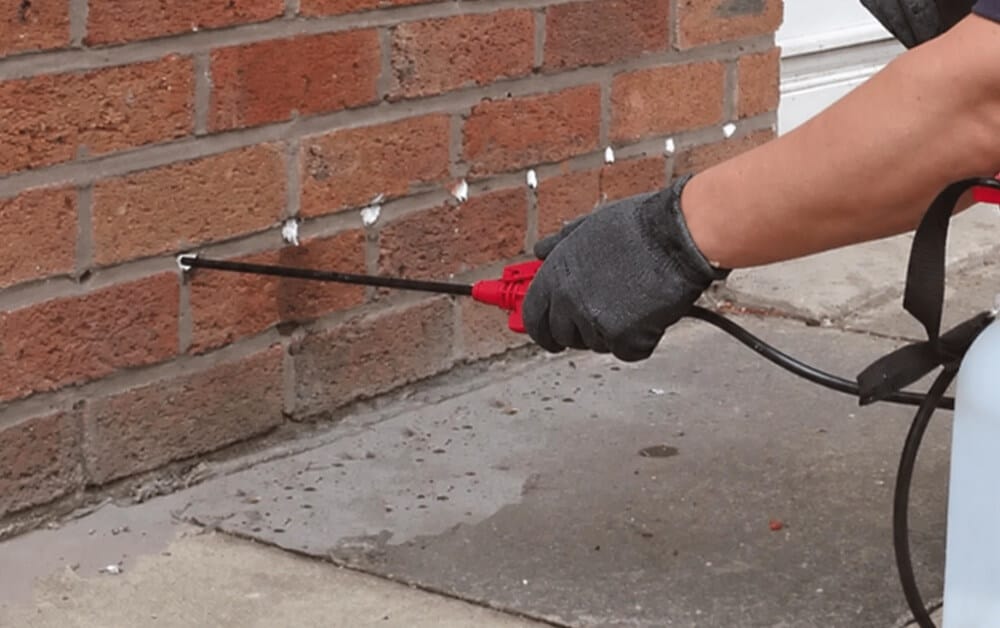
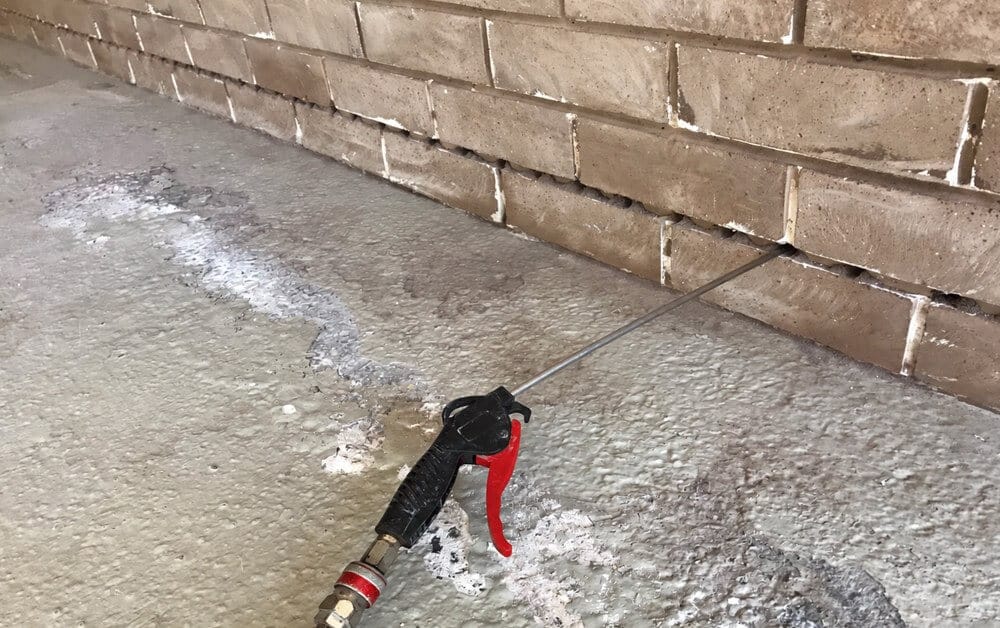
Chemical DPC injection becomes relevant when the moisture pattern is consistent with capillary rising damp and stronger alternative causes have been addressed.
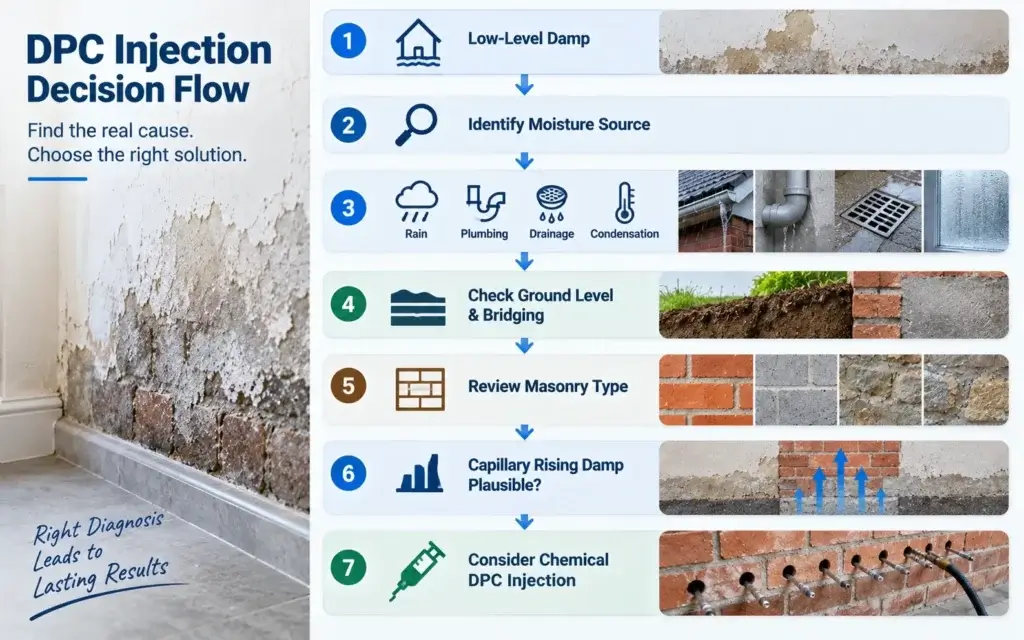
A practical decision sequence is:
Identify the moisture pattern → Check other water sources → Inspect ground levels and DPC bridging → Understand the wall construction → Then consider rising damp treatment
A DPC injection is more reasonable when:
- moisture begins at the base of the wall and follows an upward pattern;
- plumbing and drainage defects have been checked;
- penetrating rain is not the main source;
- raised ground and DPC bridging have been assessed;
- the wall construction is understood;
- and the proposed treatment suits the masonry.
This is where a chemical DPC material becomes relevant.
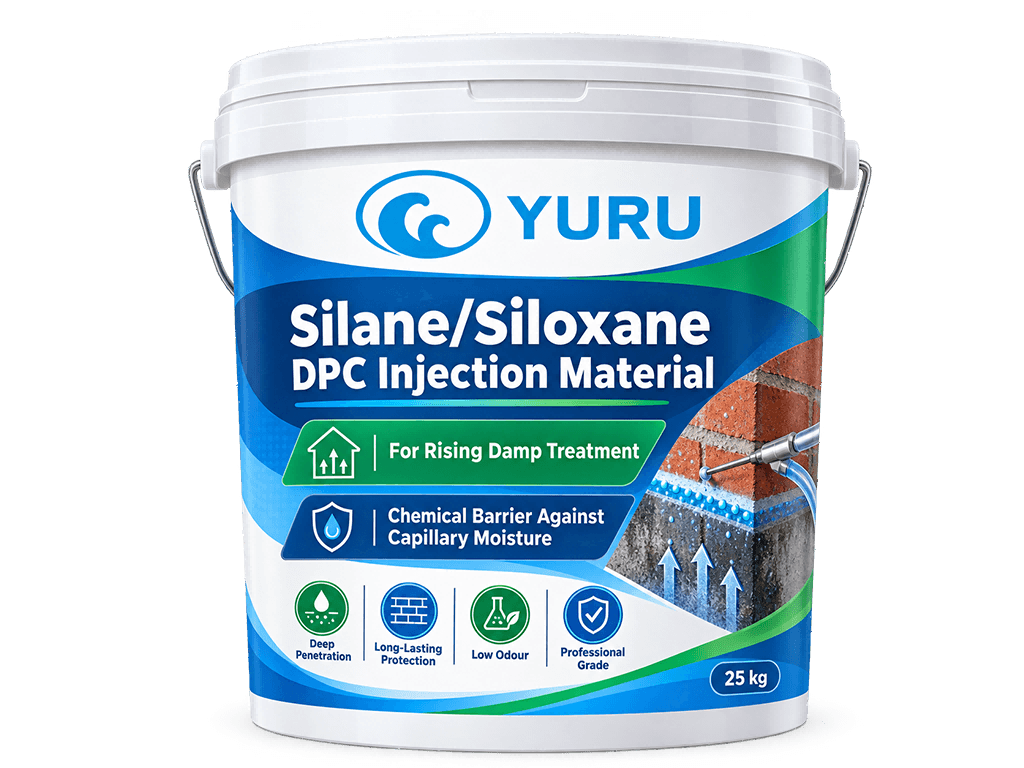
YURU Premium Silane/Siloxane DPC Injection Material is a single-component system based on reactive polydimethylsiloxanes in emulsion and is designed to form a chemical barrier against capillary rising damp in suitable masonry.
Its PDS also lists masonry applications including brick, stone, rubble masonry, and concrete block substrates.
The material should be selected after the moisture mechanism has been established.
Is It Really Rising Damp?
| Observation | How It Affects the Diagnosis | What Else to Check |
| Damp concentrated at wall base | Supports a rising-damp hypothesis | Ground level, DPC, bridging |
| Damp rises upward from ground level | Stronger evidence of capillary movement | Alternative moisture sources |
| Local patch near plumbing | Weak support for rising damp | Pipework and drains |
| Mould on cold surfaces | Points more strongly toward condensation | Humidity and ventilation |
| Salt band or tide-like staining | Supporting clue | Salt source and moisture source |
| Visible efflorescence | Shows salt movement | Salt origin and drying pattern |
| High damp-meter reading | Insufficient alone | Salts, substrate, meter method |
| Damp worsens after rain | Points toward penetrating moisture | Exterior defects |
| Raised ground or bridged DPC | Important causal clue | Remove the bridge and reassess |
This table is a diagnostic framework, not a substitute for a building survey.
The strongest rising damp diagnosis comes from several pieces of evidence pointing toward the same moisture mechanism.
Once rising damp has been reasonably identified, the next step is to determine whether damp proof injection is an appropriate remedial route for the wall.
Before Recommending Chemical DPC Injection, Check These Conditions
- Where does the damp start?
- How high does it extend?
- Is the pattern continuous or localized?
- Are there signs of condensation?
- Do gutters, downpipes, roofs, or external walls show defects?
- Are plumbing or drainage leaks possible?
- Is the external ground level too high?
- Is an existing DPC bridged?
- Are salts present?
- How were moisture readings taken?
- What type of masonry is involved?
- Has the moisture source been identified with reasonable confidence?
If these questions are still unresolved, the DPC decision is not ready yet.
If treatment has already been completed and the wall still appears damp, use our post-DPC damp diagnosis guide before assuming the injection failed.
Frequently Asked Questions
What Are the Most Reliable Signs of Rising Damp?
The strongest diagnosis comes from several clues pointing toward the same mechanism: low-level upward moisture, a plausible ground source, and no stronger alternative explanation such as condensation, rain penetration, plumbing leaks, or DPC bridging.
Can Salt Efflorescence Confirm Rising Damp?
No.
Efflorescence indicates that moisture has transported soluble salts through the masonry and that these salts crystallized as the wall dried.
Read with moisture source, wall construction, building history.
Can a Damp Meter Diagnose Rising Damp?
No.
Electrical damp meters can assist in mapping areas warranting investigation; however, elevated readings in masonry may also reflect conductive salts and other materials.
The meter should be used as part of the investigation, not as a standalone diagnostic.
Should You Inject a DPC Before Fixing Raised Ground or Bridging?
Address the obvious moisture path first.
If raised ground, render, plaster, or cavity debris is bypassing an existing DPC, remove that bridge and reassess the wall before deciding whether a new chemical DPC is still required.
Not Sure Whether the Wall Is Ready for DPC Injection?
For a technical review, useful information includes:
- wall photos;
- location and height of the damp pattern;
- wall type and approximate thickness;
- internal and external ground levels;
- visible DPC condition;
- salt or plaster damage;
- plumbing and drainage conditions;
- rain exposure;
- and any available moisture readings.
YURU Waterproof can use this information to review whether a chemical DPC injection system is relevant to the wall condition and which technical questions should be checked before material selection.
Technical Review
Reviewed by: YURU Waterproof Technical Team
This article provides general guidance for investigating possible rising damp before DPC injection. Building construction, moisture sources, salts, heritage considerations, and local conditions should be assessed before remedial work is selected.
YURU Product solutions