Epoxy Injection Grout Supplier: What Should Buyers Check?
Introduction
Before ordering epoxy injection grout for concrete crack repair, check the formulation, A/B mixing ratio, working time, cured strength, and supporting technical documents. These details help contractors select a resin for the repair and give distributors a clear specification to use when ordering again.
At YURU Waterproof, we manufacture three epoxy injection grout formulations. Our 1:1 modified epoxy cures faster than the 2:1 and 4:1 versions, while the 4:1 formulation offers the highest cured strength of the three. The 2:1 version has its own curing and mechanical properties, which we review according to the customer’s project requirements.
For buyers working with an epoxy injection grout supplier, the discussion usually starts with the concrete repair itself. From there, we can work through the formulation, sample evaluation, packaging, and bulk supply requirements.
What Should an Epoxy Injection Grout Supplier Confirm First?
When someone asks for “two-component epoxy grout,” that tells us the category — but there are still several details to sort out before quoting.
A contractor repairing cracks in a concrete beam may already have an engineer’s specification for the resin. Someone handling a floor slab repair may have questions about crack width, working time, or how soon the repaired area can be used again. These details help us understand which epoxy formulation the project calls for.
At YURU, we supply epoxy injection materials to contractors, distributors, and international buyers. We generally begin by reviewing the intended repair and any technical requirements the customer can provide.
Crack dimensions, the condition of the concrete, and the working temperature can affect the material choice. We also need to know whether the project specifies particular bonding or mechanical properties.
For buyers purchasing epoxy resin for resale, the conversation often extends to packaging sizes, sample availability, and repeat supply. A distributor may need to offer more than one formulation because the repair requirements of their customers differ.
Once the application is clear, we can identify the relevant YURU product version and discuss the technical information available for that material.
Which Concrete Crack Conditions Affect Epoxy Resin Selection?
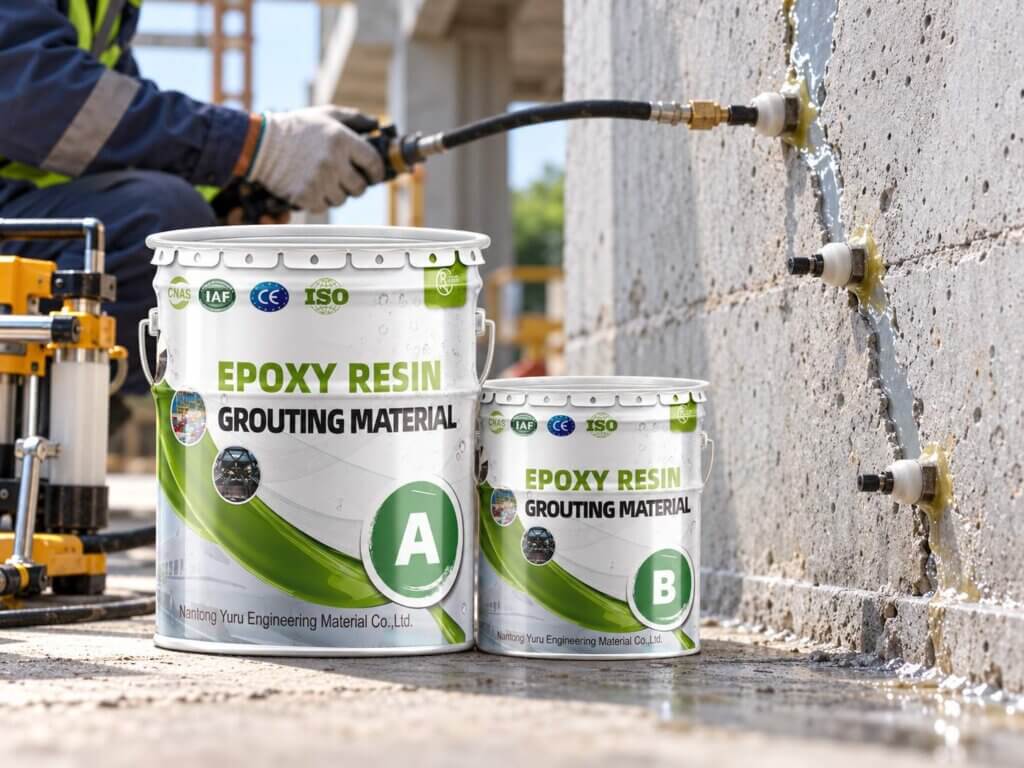
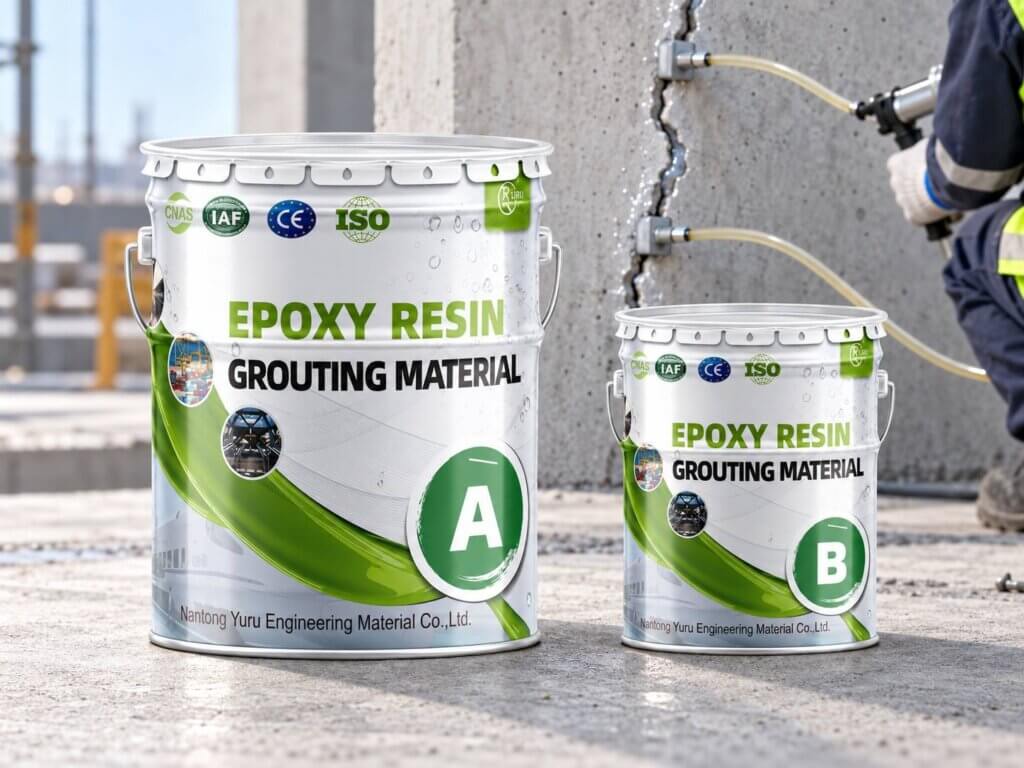
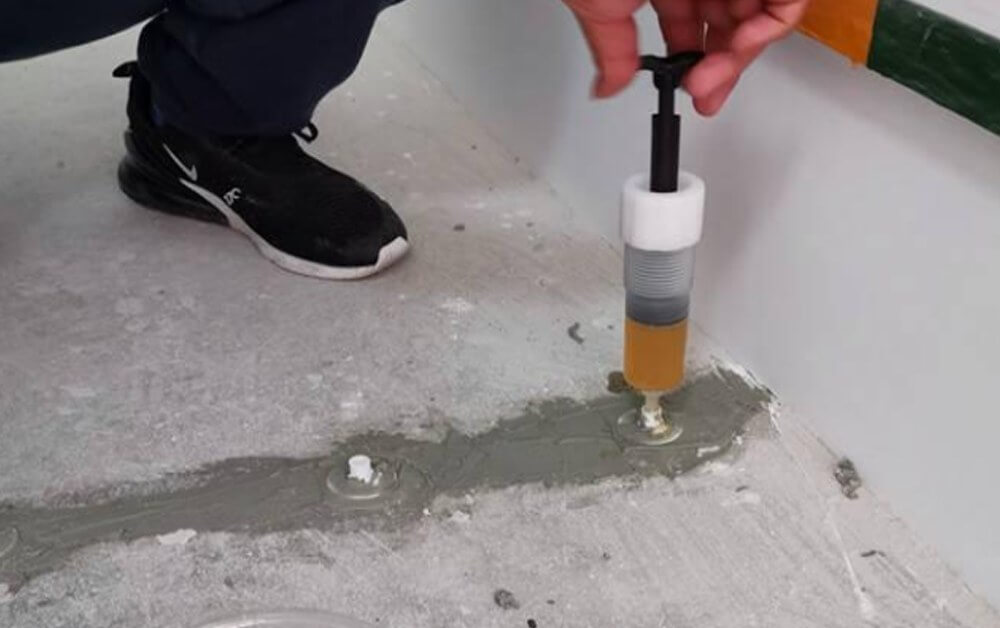
Epoxy resin injection is commonly employed to repair stable concrete cracks where the objective is restoring bonding across the damaged area. The resin is injected in liquid form, permitting entry into the crack prior to curing into hardened material.
The crack condition affects which resin you select.
A narrow crack may require a relatively low-viscosity material that can flow through the available opening. Wider cracks may present different injection requirements. The contractor also needs to consider how accessible the crack is, whether it passes through the full concrete section, and how the injection ports will be arranged.
For standard structural epoxy injection, we recommend assessing the repair under suitable dry substrate conditions. The crack should be properly prepared so that the resin can reach the surfaces it needs to bond.
Another consideration is whether the crack has stopped moving.
If movement continues from temperature changes, settlement, or repeated loading, the repair design must address that movement. A rigid epoxy repair can work for stable structural cracks — if the material and method meet the engineer’s requirements.
On load-bearing concrete, the engineer should establish what the repair is expected to achieve. Bonding a crack is one part of a structural repair — the final spec may include additional requirements for the member.
The American Concrete Institute’s guide to structural crack repair by epoxy injection provides useful background on evaluating cracks and preparing for epoxy injection work.
For buyers, a brief description of the crack and the intended repair is often enough to begin a useful technical discussion with the supplier.
How Should Buyers Verify Different Epoxy Mixing Ratios?
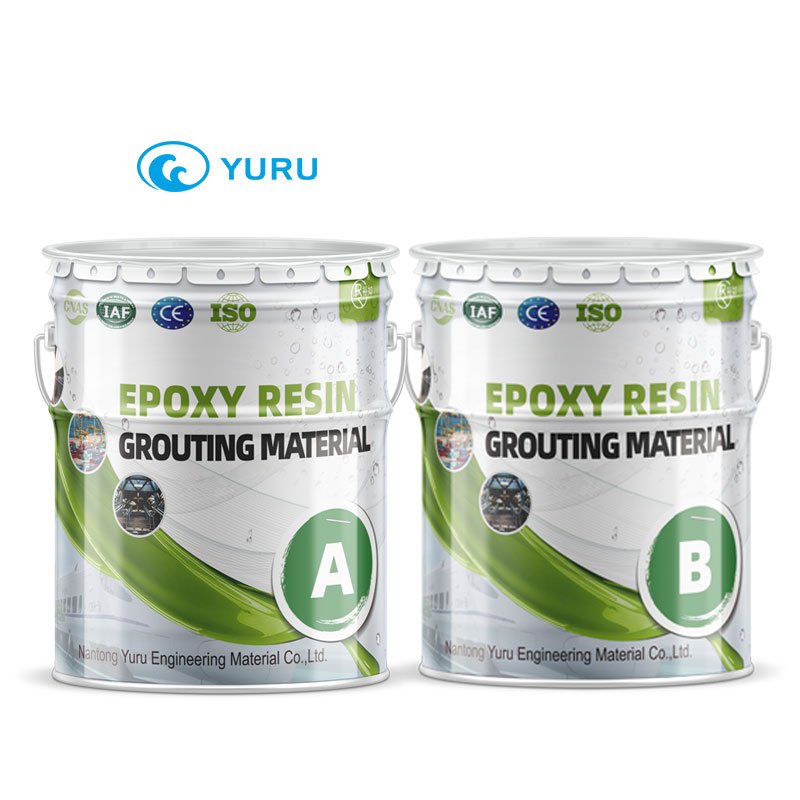
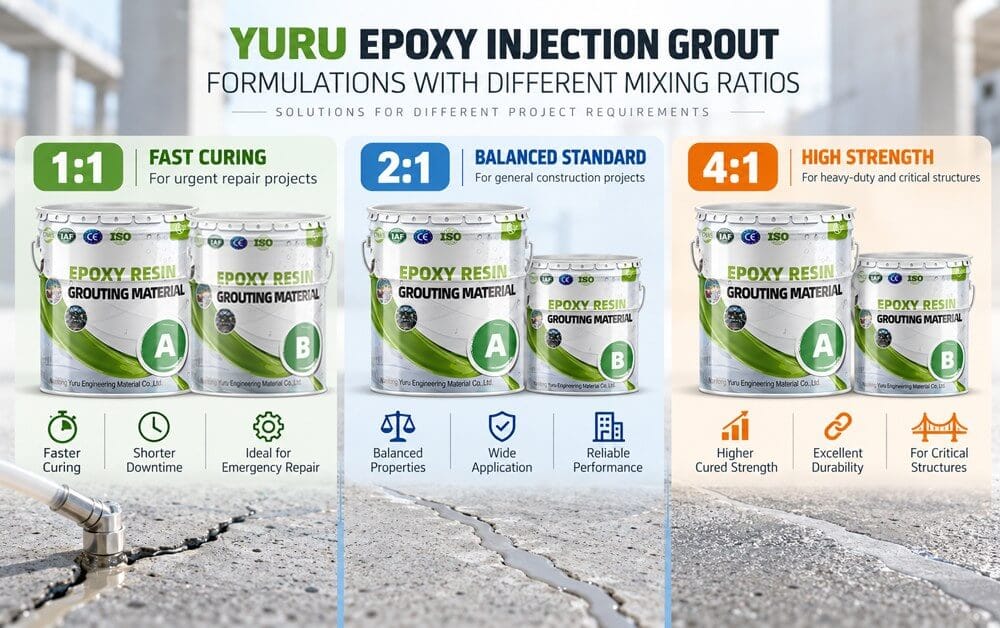
YURU offers three epoxy injection grout formulations: 1:1, 2:1, and 4:1. Each is supplied as a two-component system with its own mixing and performance requirements.
We offer these versions because customers may need different curing characteristics or hardened-material properties for their concrete repair projects.
1:1 Modified Epoxy Injection Grout
Our 1:1 formulation is also called modified epoxy injection grout.
The contractor still needs enough working time to prepare and inject the mixed resin. Temperature and batch size influence viscosity development rate.
Working-time and curing-time specifications should therefore be reviewed together during repair planning.
For this reason, the working-time and curing-time specifications need to be reviewed together when planning the repair.
2:1 Epoxy Injection Grout
The 2:1 epoxy injection grout is another formulation in our range. Its curing behavior is slower than that of the 1:1 modified epoxy.
For a distributor, keeping the product version clear is particularly useful when reordering. The customer-approved sample, quotation, and supplied components should all reference the same formulation.
4:1 Epoxy Injection Grout
YURU’s 4:1 epoxy injection grout has the highest cured strength among our three formulations.
We discuss this version with buyers whose repair specifications place particular emphasis on the mechanical performance of the hardened resin.
The relevant strength measurement depends on the project.
YURU Epoxy Injection Grout Comparison
| Formulation | Confirmed Characteristic | Technical Information to Review |
| 1:1 Modified Epoxy | Faster curing than the 2:1 and 4:1 formulations | Working time, curing conditions, mixing instructions |
| 2:1 Epoxy Injection Grout | Separate formulation with its own curing and mechanical characteristics | Viscosity, working time, strength data |
| 4:1 Epoxy Injection Grout | Highest cured strength among the three formulations | Relevant strength test, curing conditions, bonding requirements |
The ratio on the label must match the actual mixing instructions. Instructions need to identify A and B and specify weight or volume.
For example, a contractor using a scale needs mass proportions. A volume-based dispensing system needs volume instructions.
Each formulation is supplied with its specified component system. Where a different curing speed is required, another suitable formulation within our range may be discussed. Adding extra curing agent to an epoxy mixture can interfere with curing behavior and final properties.
Which Epoxy Grout Technical Data Matter for Bulk Orders?
During epoxy grout specification review with contractors, viscosity and working time are frequently among the first parameters discussed.
Viscosity affects how liquid resin moves through the crack. The published value needs a test temperature — because the same material gets thicker in cooler conditions and flows more readily when warm.
Contractors then require information regarding the duration for which mixed resin remains suitable for injection.
Upon combination of components A and B, the curing reaction initiates. Material temperature and batch quantity influence available pumping time. Larger batches may generate greater heat during reaction; contractors therefore often prepare quantities usable within the product’s specified working period.
Curing time also affects repair scheduling. Projects may require a defined interval before inspection or subsequent construction activity, depending on repair specifications and resin curing conditions.
For structural concrete repair, the mechanical test results deserve close attention.
| Technical Item | What It Tells the Buyer | Supporting Information |
| Viscosity | How the resin flows under the stated test conditions | Value, temperature, test method |
| Working Time / Pot Life | Available time for handling and injection after mixing | Test temperature and batch conditions |
| Curing Time | When the material reaches the stated curing stage | Curing temperature and test definition |
| Mechanical Strength | Hardened-material performance | Test property, result, curing age |
| Bond Strength | Measured bonding performance on a specified substrate | Substrate condition and test method |
| Mixing Ratio | How components A and B are prepared | Component order and weight or volume basis |
The technical information for Sika Sikadur-52 Injection Normal is one example of how a manufacturer can present mixing and material-performance data under specified conditions.
For YURU products, we work with the data for the formulation being quoted. This is particularly important when a customer is comparing the relatively faster curing of our 1:1 modified epoxy with the higher cured strength of our 4:1 version.
How Can Buyers Check Sample and Batch Consistency?
Many epoxy grout orders start with a small test quantity. The customer tries the material, checks mixing and flow during injection, and waits for curing results before ordering more. Once the sample is approved, the next concern is getting the same formulation in the larger shipment.
YURU offers three epoxy injection grout formulations: 1:1 modified epoxy, 2:1 epoxy, and 4:1 epoxy. Each has different curing and hardened-material characteristics. For example, a contractor who has tested our faster-curing 1:1 modified epoxy will expect that same product when the project moves forward. The formulation identified in the sample records needs to carry through to the purchase order.
Test conditions are worth keeping on record as well. Epoxy can behave differently depending on temperature and the quantity mixed at one time. If the customer has arranged laboratory strength testing, the test method and curing age provide useful references for later comparisons.
Upon bulk shipment arrival, product labels and batch numbers assist the receiving team in material identification. Buyers may also compare the supplied TDS with the approved product specification. Where batch-specific test records or a Certificate of Analysis (COA) are required, available documentation can be confirmed during order discussion.
For distributors placing repeat orders, maintaining original sample details and purchase records facilitates consistency across shipments.
What Matters for Epoxy A/B Packaging, Storage and Shipping?
Epoxy injection grout leaves the factory as separate A and B components. Their packaging must be arranged around the mixing requirements of the selected formulation.
This is especially important when an importer orders more than one version.
A distributor may stock YURU’s 1:1 modified epoxy alongside the 4:1 grade. Each package requires clear identification to ensure correct component selection at the job site. Labels, quantities, and technical instructions should correspond to the same product version.
For OEM orders, we can discuss package sizes and private-label requirements with the buyer. Formulation information stays part of that process — including mixing instructions and relevant safety labeling.
Storage also affects the condition of the material when it reaches the contractor.
Components A and B should remain separately packaged in properly closed containers and be stored according to the current product documentation. Temperature limits, shelf life, and handling requirements may differ between formulations, so these details need to be taken from the applicable TDS and SDS.
Following component mixing, the curing reaction initiates. Contractors should plan mixed quantities around available working time and follow product equipment-cleaning instructions.
For export orders, packaging and documentation need to fit the material and destination. Buyers may require particular labels, safety data sheets, or transport information for their market.
We can review these arrangements during the quotation process — especially for distributors planning regular shipments under their own brands.
What Should Be Included in an Epoxy Injection Grout RFQ?
A clear request for quotation facilitates identification of the appropriate YURU formulation and preparation of supply details.
The most useful information includes the type of concrete repair, crack condition, and any required technical properties. Where the engineer has specified viscosity, bonding performance, or curing requirements, the relevant portion of the specification may be shared.
Buyers who’ve selected a formulation can identify the 1:1 modified epoxy, 2:1 epoxy, or 4:1 epoxy in their inquiry.
For international orders, also useful: estimated quantity, destination country, preferred packaging, and OEM requirements. If samples are needed before bulk purchasing, we can discuss which product version should be evaluated.
YURU can review the available formulations and technical information with contractors, importers, and distributors preparing their orders.
You can also visit our YURU Two-Component Epoxy Grouting Material product page for further product information and contact details.
Frequently Asked Questions
What documents should an epoxy injection grout supplier provide?
The current technical data sheet and safety data sheet are the starting documents. Depending on the project and agreed supply requirements, buyers may also request relevant test results, batch identification, or a certificate of analysis.
Are YURU's 1:1, 2:1, and 4:1 epoxy grouts interchangeable?
They are supplied as separate formulations. Our 1:1 modified epoxy cures faster than the other two versions, while the 4:1 formulation has the highest cured strength in the current range. Each product should be selected and mixed according to its own technical instructions.
How should buyers confirm the correct A/B mixing ratio?
Check the technical instructions for the specific formulation. They should identify components A and B, the required proportions, and whether the ratio is measured by weight or volume.
Should a bulk epoxy grout order match the approved sample?
Yes. The purchase order should identify the approved formulation and agreed specs. Then when the shipment arrives, you can check product labels, batch records, and any agreed quality documents.
Can YURU supply private-label epoxy injection grout?
YURU supports OEM and private-label supply discussions, including packaging and labeling requirements. The final arrangement depends on the selected formulation, order quantity, and applicable product documentation.
Conclusion: Buying Epoxy Injection Grout from YURU
For a contractor, epoxy injection grout purchasing begins with the concrete crack and the required repair performance. For a distributor, repeatable product specifications and dependable supply are just as important.
YURU manufactures three formulations with different curing and hardened-material characteristics. We can help buyers review the relevant product information, arrange sample discussions, and confirm packaging and bulk order requirements.
Send YURU Waterproof your concrete repair specification, preferred formulation, and estimated order quantity. We’ll review the available epoxy injection grout options and prepare the information needed for your quotation.
YURU Product solutions