How to Choose Epoxy Floor Coating?
Introduction:
Choosing the right epoxy floor coating is not only about color or price. For industrial, commercial, warehouse, concrete, and garage floors, factors to consider include:
- Floor load
- Traffic level
- Surface condition
- Chemical exposure
- Anti-slip needs
- Odor requirements
- Long-term maintenance
For wholesale buyers, a good epoxy floor coating is not a single product decision. It is a system decision. The primer, middle coat, mortar layer, topcoat, thickness, surface preparation, and manufacturer support all affect the final floor performance.
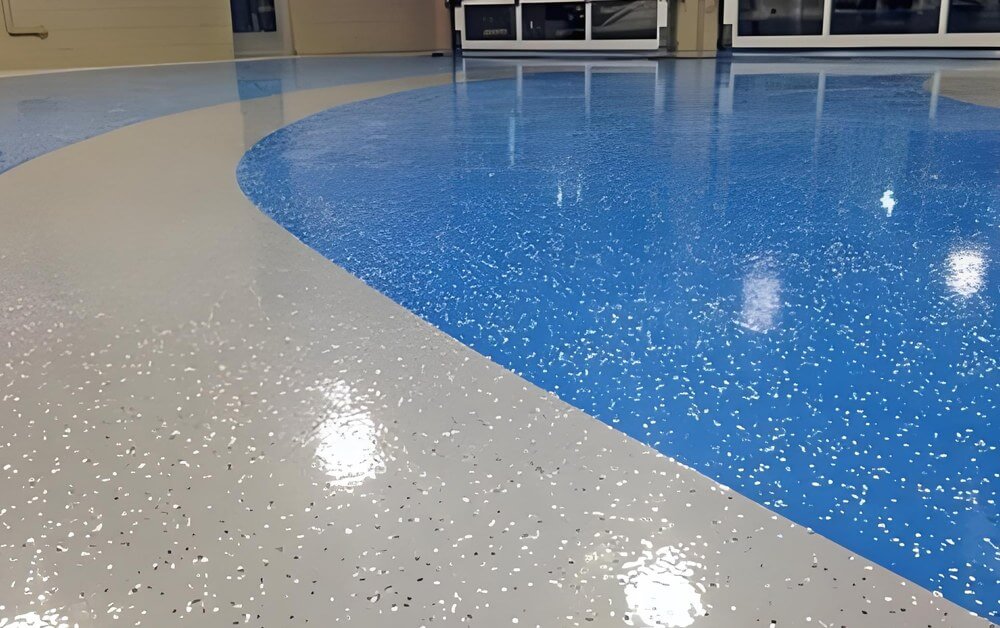
What Is Epoxy Floor Coating?
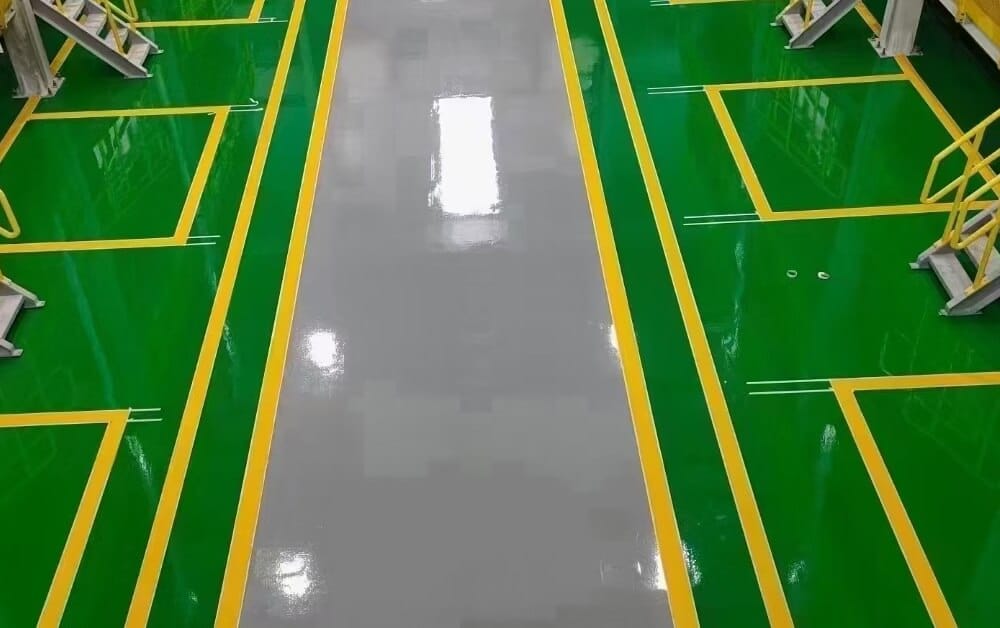
Epoxy floor coating is a resin-based flooring system used to protect and improve concrete floors — made from epoxy resin, curing agent, fillers, pigments, and functional additives. After proper mixing and application, forms a hard, dense, and durable surface on concrete.
It is widely used in factories, warehouses, workshops, laboratories, commercial buildings, garage floors — makes concrete floors more wear-resistant, dust-proof, easier to clean, and more attractive.
Compared to bare concrete, epoxy coating can reduce surface dusting, makes cleaning easier, and resists abrasion, oil, and daily traffic. But here’s the key point: epoxy flooring isn’t just one layer of paint. A reliable epoxy flooring system may include primer, intermediate coating, mortar layer, colored sand layer, and topcoat.
That’s why two products with similar names can perform totally differently on site. One might be fine for light commercial use. Another might be built for forklifts, heavy equipment, garage traffic, or tough industrial floors.
Key Factors to Consider When Choosing Epoxy Floor Coating
The best epoxy floor coating depends on the project. A warehouse, parking garage, food workshop, and decorative commercial floor all need different systems.
1. Project Application Area
The first question is simple: where will the coating be used?
| Area | Priority |
| Industrial plants | Abrasion, compression, impact, frequent cleaning |
| Warehouses/logistics | Forklifts, pallet trucks, heavy racks |
| Garage floors | Tires, oil, water, anti-slip, easy cleaning |
| Commercial spaces | Color stability, smoothness, decorative effect |
| Food/lab/pharma | Easy cleaning, lower odor |
2. Floor Load and Traffic Level
Traffic level has a direct influence on coating selection. A light pedestrian area can use a thinner coating system. But a warehouse with forklifts or a workshop with machinery needs a stronger system.
For medium traffic areas, self-leveling epoxy floor or medium-build system may work. For heavy-duty industrial floors, epoxy mortar flooring is often better (higher thickness, better strength, better impact resistance).
If the floor sees forklifts, trucks, tool carts, or production equipment every day, don’t choose by price alone. Low-cost coatings may look okay at first, but they wear fast, peel under stress, or need early repair.
3. Surface Condition and Moisture Level
Surface preparation is one of the most important reasons for success or failure. Even good product fails if concrete is weak, wet, oily, dusty, cracked.
Before applying, check concrete strength, surface dusting, cracks, oil, old coating residues, and moisture. Poor surface preparation leads to bubbles, peeling, weak adhesion, or uneven appearance.
Underground garages, basements, old workshops, renovation projects — moisture is a serious concern. If vapor pressure rises from the concrete, the epoxy layer blisters or detaches. Confirm primer and system design before application.
4. Chemical Resistance Requirements
Not every project needs the same chemical resistance. A regular warehouse just needs abrasion resistance and dust control. But chemical plants, labs, repair shops, battery rooms, food processing areas, and maintenance zones may need resistance to oil, mild acids, alkalis, solvents, or cleaning agents.
Before purchasing epoxy floor coating, tell the supplier what chemicals might hit the floor, how often spills happen, how long they stay, and how you’ll clean. That helps them recommend the right system.
General epoxy works for ordinary industrial use, but chemical exposure needs careful selection. For professional jobs, always ask for the technical data sheet and application guidance.
5. Anti-Slip and Safety Requirements
Anti-slip matters for parking areas, ramps, wet zones, industrial walkways, and garage floors. A smooth floor might look nice, but it’s a safety risk when water, oil, or dust is present.
You can add quartz sand, colored sand, anti-slip particles, or textured treatment to make it slip-resistant. The right roughness depends on the job — a parking ramp needs more grip than a showroom. A food workshop needs anti-slip, but also easy cleaning.
The best design is not always the roughest surface. It should balance safety, cleaning, wear resistance, and the real working environment.
6. Yellowing Resistance Requirements
Yellowing gets ignored during purchasing, but it’s a real problem after installation. Standard epoxy flooring can yellow under long-term UV exposure, sunlight, or strong light — especially on white, light gray, cream, or light-colored floors.
For indoor industrial floors, yellowing might not matter if appearance isn’t key. But for commercial spaces, offices, showrooms, light-colored garage floors, or areas near sunlight, discuss yellowing resistance before ordering.
If a project requires long-term color stability, ask about yellowing-resistant topcoat or more suitable finishing system. It is better to confirm the environment in advance than to repair color change later.
7. Environmental and Odor Requirements
Odor and environmental concerns matter for indoor projects, underground garages, commercial spaces, food workshops, hospitals, schools, limited ventilation.
Consider ventilation, curing time, worker safety, and reuse timing. For projects with strict indoor air requirements, lower-odor or lower-VOC systems may be more suitable. Contractors should also check the product’s TDS and MSDS before use.
For garage floor coating in enclosed spaces, odor control and ventilation planning are especially important. Even when a product is suitable for the project, poor ventilation during application may affect worker comfort and project scheduling.
8. Appearance and Color Options
Appearance isn’t just decorative. Factories, warehouses use colors for production areas, safety walkways, storage, traffic. In commercial spaces, color and texture influence customer impressions.
Epoxy self-leveling floors provide a smooth, clean look. Epoxy colored sand floor coating provides a more decorative, textured, durable surface. Anti-slip epoxy floors are practical for ramps, garages, and wet areas.
When choosing colors, think about cleaning frequency, lighting, tire marks, dust visibility, and safety marking needs.
9. Budget and Long-Term Maintenance Cost
A cheaper coating is not always a cheaper floor. For wholesale buyers, the real cost includes material cost, labor cost, repair cost, downtime, complaint risk, and service life.
If a coating fails early, repair costs can wipe out any savings. For contractors, poor coating quality can also affect project acceptance and customer trust. For distributors, unstable product quality can increase complaints and reduce repeat orders.
Therefore, the better question is not “Which epoxy floor coating is the cheapest?” The better question is “Which system gives the right performance for this project at a reasonable total cost?”
Common Types of Epoxy Floor Coating
Different epoxy flooring systems for different projects. Here are four common types wholesale buyers often compare.
| Type | Main Use | Key Advantage | Best For |
| Epoxy self-leveling floor coating | Smooth and clean floors | Flat appearance and easy cleaning | Workshops, labs, commercial floors |
| Epoxy mortar flooring system | Heavy-duty floors | High strength and impact resistance | Factories, warehouses, machinery areas |
| Epoxy anti-slip floor coating | Safety-focused floors | Better grip and safer walking/driving | Parking garages, ramps, wet areas |
| Epoxy colored sand floor coating | Decorative and durable floors | Attractive texture and wear resistance | Commercial floors, showrooms, premium spaces |
Epoxy Self-Leveling Floor Coating
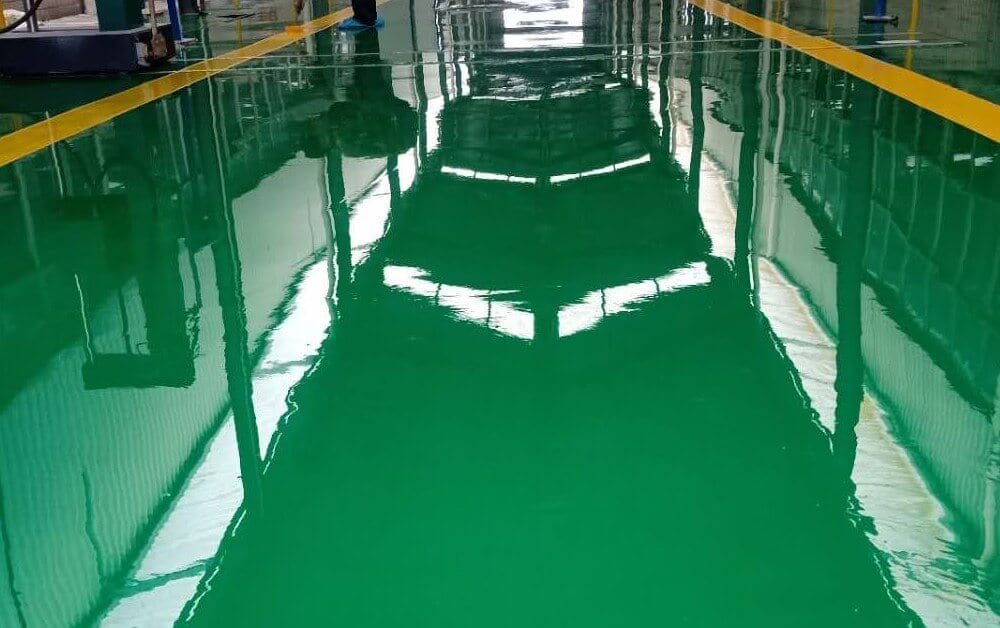
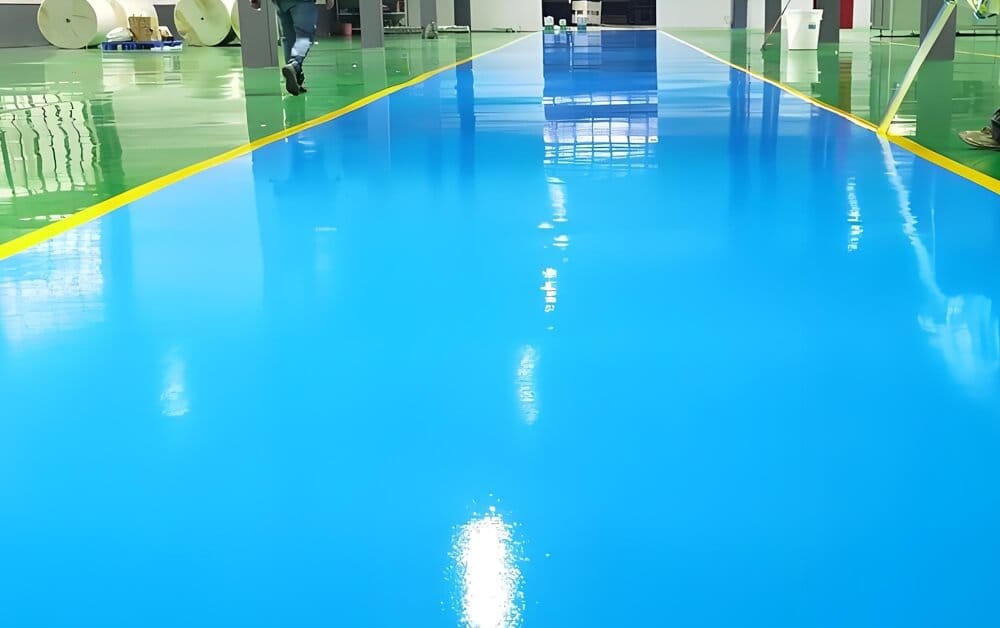
Epoxy self-leveling floor coating gives you a smooth, clean, attractive floor. Common in electronics factories, pharma workshops, labs, food processing, offices, commercial spaces.
Its main advantage is appearance and cleanability. The surface is usually smooth, bright, and easy to maintain. Needs good prep and skill — uneven/damp/poorly prepared concrete ruins the result.
Check flowability, curing time, hardness, wear resistance, color consistency.
Epoxy Mortar Flooring System
Built for stronger, thicker industrial floors. Heavy-duty workshops, machinery areas, warehouses, logistics, high-pressure/impact zones.
This system usually includes epoxy resin with graded sand or aggregate to improve thickness and strength. Repairs and strengthens worn concrete. Handles forklifts and equipment loads.
Needs experienced installers — mixing ratio, layer thickness, compaction, topcoat all affect final performance.
Epoxy Anti-Slip Floor Coating
Safety first. Epoxy anti-slip floor coating is used in parking garages, garage floors, ramps, walkways, wet areas, entrances.
Add quartz sand, anti-slip particles, or textured finish. Useful for garage floors facing water, oil, dust, tires, frequent cleaning.
Pick surface profile based on real use — very rough improves grip but traps dirt and makes cleaning harder.
Epoxy Colored Sand Floor Coating
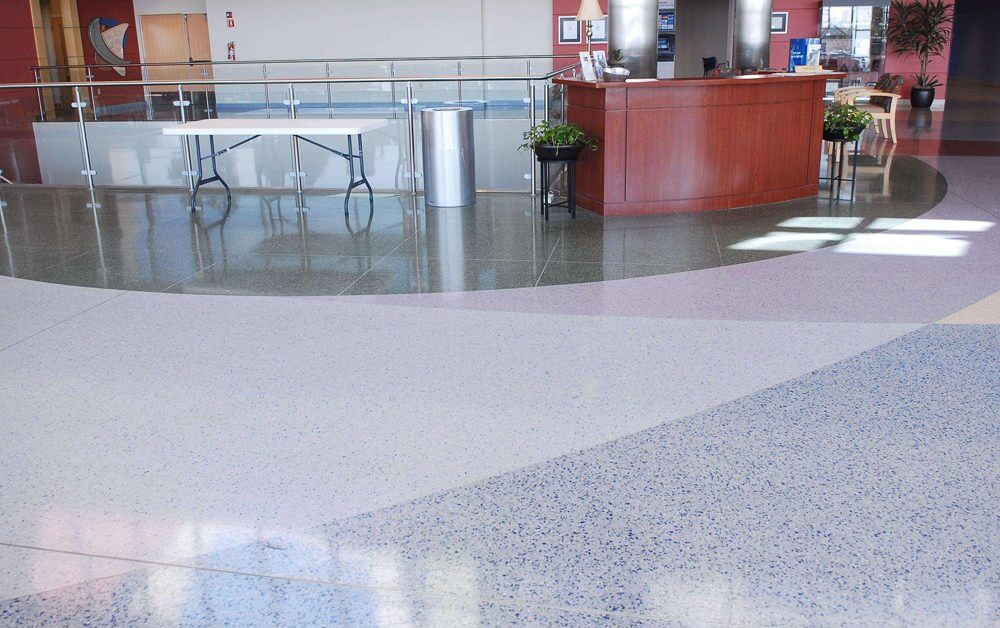
Epoxy colored sand floor coating is popular for projects that need both decorative effect and durability. It can be used in commercial areas, showrooms, offices, public spaces, corridors, and premium industrial floors.
There are two common product forms.
Pre-Mixed Epoxy Colored Sand Floor Coating
In this type, the epoxy material and colored sand are already mixed in the product bucket. The contractor does not need to mix colored sand separately on site.
This makes application easier and reduces mistakes in field mixing. It is suitable for contractors who want faster installation, better color consistency, and more convenient handling. It is also friendly for distributors and project buyers who prefer standardized application.
Separate Colored Sand Epoxy Floor System
In this type, the colored sand is packed separately. The contractor mixes or broadcasts the sand during application according to the project design.
This gives more flexibility in color, texture, thickness, and decorative effect. However, it requires more skill. The contractor must control mixing ratio, spreading uniformity, timing, and surface finishing carefully.
For customized decorative floors, this system can be a better choice. For faster and simpler construction, pre-mixed colored sand epoxy coating may be more practical.
Epoxy Floor Coating Thickness: How to Choose?
Thickness should be based on how the floor will be used — not guesswork. A light commercial floor doesn’t need the same thickness as a forklift warehouse or heavy machinery workshop.
Light pedestrian areas — thin coating or self-leveling may be enough. Warehouses and workshops — medium-build epoxy is more reliable. Heavy-duty industrial — epoxy mortar systems are preferred (higher thickness and strength).
Garage floor coating and parking garages — thickness needs to consider anti-slip, tire wear resistance, oil resistance, and cleaning needs.
| Application | Recommended System Direction | Main Focus |
| Light commercial floor | Self-leveling or thin coating | Appearance and cleaning |
| Warehouse floor | Medium-build epoxy system | Abrasion and dust control |
| Heavy industrial floor | Epoxy mortar system | Compression and impact resistance |
| Garage or parking floor | Anti-slip epoxy system | Tire wear, oil resistance, safety |
| Decorative floor | Epoxy colored sand system | Texture, color, durability |
A common mistake is reducing system thickness only to lower the price. This may create short-term savings, but it can shorten service life and increase repair risk.
How to Judge the Quality of Epoxy Floor Coating?
Judge epoxy floor coating by performance, consistency, and system support — not just how it looks in the bucket.
First, check if the manufacturer provides complete TDS and MSDS — application ratio, curing time, surface prep, storage, safety, performance data.
Second, review key properties such as adhesion, abrasion resistance, compressive strength, flexural strength, hardness, chemical resistance, and working time. For industrial use, wear resistance and adhesion are especially important. For heavy-duty floors, compression and impact resistance should not be ignored.
Third, test application behavior if possible. A product that spreads well, releases bubbles properly, cures consistently, and shows stable color is easier for contractors to use. Batch stability is also important for distributors and large projects.
Fourth, ask whether the manufacturer can provide a complete flooring system, not only one topcoat. A good system may include primer, intermediate layer, mortar material, self-leveling layer, colored sand material, anti-slip solution, and topcoat.
Finally, practical project experience matters. Manufacturers with real flooring project experience can often help buyers avoid mistakes before construction begins.
Common Problems When Using Epoxy Floor Coating
Most epoxy floor failures aren’t from one reason — they’re usually about surface prep, moisture, wrong product, bad mixing, or site conditions.
Why Does Epoxy Floor Coating Bubble?
Moisture, trapped air, poor primer sealing. Concrete moisture → vapor pushes against coating. Primer doesn’t seal → air rises from pores → bubbles.
High humidity, poor mixing, unsuitable thickness may also contribute.
Why Does Epoxy Floor Coating Peel Off?
Weak adhesion — dust, oil, loose concrete, old coating residue, poor grinding, insufficient primer penetration, applying next layer at wrong time.
For concrete epoxy coating, surface preparation is not optional – it is the foundation of the entire system.
Why Does Epoxy Floor Coating Crack?
Concrete already cracked, floor moves, coating too thin for the load. Heavy impact, structural movement, poor crack repair – all cause damage.
Fix cracks before coating. Heavy-duty floors need stronger systems.
Why Does Epoxy Floor Coating Turn Yellow?
Standard epoxy yellows under UV exposure, sunlight, or strong lighting for long periods – light-colored floors show more clearly.
If color stability is important, buyers should ask for a yellowing-resistant solution or a more suitable topcoat. This is especially important for showrooms, commercial areas, light garage floors, and spaces near windows.
How to Reduce Odor Problems During Application?
Odor can be reduced by choosing a more suitable low-odor system, checking MSDS information, improving ventilation, controlling application schedule, and allowing full curing before use.
For indoor or enclosed spaces, planning is important. The product choice, airflow, temperature, humidity, and construction timing all affect the site experience.
How to Avoid These Problems?
Inspect substrate, remove oil and dust, repair cracks, control moisture, apply right primer, mix according to manufacturer instructions, follow recommended application conditions.
For wholesale buyers, the safest approach is to work with a manufacturer that can provide both product and technical guidance.
How to Choose a Reliable Epoxy Floor Coating Manufacturer?
For distributors, contractors, and project buyers, choosing the right manufacturer can be as important as choosing the right product.
A reliable epoxy floor coating manufacturer should have:
- Real production capability
- Stable quality control
- Technical documentation
- Product system support
- Experience with wholesale cooperation
- Ability to explain which system is suitable for factory, warehouse, garage, parking area, or decorative commercial floor
Buyers should also check:
- OEM/ODM cooperation support
- Custom packaging
- Private label service
- Color customization
- Sample testing
- Long-term supply capability
For international buyers, export experience is also important. A supplier should understand packaging, documentation, communication, and project support needs.
If a manufacturer only provides a low price but cannot provide technical data, application guidance, or stable product quality — the risk may be higher than expected.
Why Choose YURU Waterproof for Epoxy Floor Coating?
YURU Waterproof is a professional manufacturer of waterproof coatings, grouting materials, and floor coating systems. For customers, YURU Waterproof can provide epoxy floor coating products and related flooring solutions for industrial, commercial, warehouse, garage, and engineering projects.
For buyers who need more than a single product, YURU Waterproof offers one-stop support — product selection, technical guidance, sample support, packaging customization, color options, and OEM/ODM cooperation.
YURU Waterproof works with different types of customers, including distributors, contractors, engineers, municipal project buyers, and construction material brands. Whether the project requires epoxy self-leveling floor coating, epoxy mortar floor system, epoxy anti-slip floor coating, or epoxy colored sand floor coating, the team can help match the product to the application.
For customers needing concrete epoxy coating or garage floor coating, YURU Waterproof can help review the project environment, surface condition, traffic level, performance requirements — then recommend a system.

Final Checklist Before Buying Epoxy Floor Coating
Before you order, go through these questions with your supplier:
- Project area: factory, warehouse, garage, parking area, commercial space, or workshop?
- Substrate: new concrete, old concrete, or previously coated floor?
- Floor condition: moisture, cracks, dusting, or oil contamination?
- Usage: forklifts, vehicles, machinery, or heavy racks?
- Safety: anti-slip performance required?
- Chemical: chemical resistance needed?
- Color stability: yellowing resistance required?
- Environment: odor or indoor air concerns?
- Thickness: suitable for expected traffic?
- System type: self-leveling, mortar, anti-slip, or colored sand more suitable?
- Colored sand flooring: pre-mixed or separately mixed on site?
- Documentation: manufacturer can provide TDS and MSDS?
- Testing: supplier supports sample testing?
- Packaging: OEM/ODM or private label packaging required?
- Supply: manufacturer can provide stable supply for repeat orders?
FAQ:
1. What is the best epoxy floor coating for industrial floors?
No single best product for all industrial floors — depends on traffic level, floor load, abrasion requirements, chemical exposure, substrate condition, and budget. Heavy-duty areas need stronger systems than light pedestrian areas.
2. Can epoxy floor coating be used on concrete floors?
Yes — Concrete epoxy coating is one of the most common applications. But prep is critical. Moisture, dust, cracks, oil, weak concrete all affect performance.
3. Is epoxy coating suitable for garage floors?
Yes — garage floor coating can use epoxy systems, especially when better wear resistance, easier cleaning, oil resistance, and improved appearance are needed. For garages and parking areas, anti-slip design and tire wear resistance should also be considered.
4. What is the difference between pre-mixed epoxy colored sand and separate colored sand systems?
Pre-mixed epoxy colored sand coating already contains colored sand in the product, making application more convenient. Separate colored sand systems offer more flexibility in color and texture, but they require more skilled application and better on-site control.
Conclusion: Choose Epoxy Floor Coating Based on Project Needs
The right epoxy floor coating should be selected based on real project conditions – not just price. Consider floor load, traffic, surface condition, moisture, chemicals, anti-slip, yellowing, odor, thickness, application, manufacturer support.
For wholesale buyers, a reliable coating system can reduce complaints, improved project acceptance, long-term customer relationships, for contractors, the right product can ensure smoother installation, reduced repair risk. For distributors, stable quality and manufacturer support can improve repeat business.
Contact YURU Waterproof for Epoxy Floor Coating Solutions
If you are looking for epoxy floor coating, concrete epoxy coating, garage floor coating, or industrial flooring solutions, YURU Waterproof can help you choose the right system for your project.
Contact YURU Waterproof to get product information, sample support, OEM/ODM options, packaging customization, color selection, technical guidance, and wholesale quotation for your next industrial or commercial flooring project.
YURU Product solutions