How to Choose the Right Polyurethane Waterproof Coating for Different Construction Projects?
Introduction:
When buyers ask me which polyurethane waterproof coating they should choose, I usually do not start with the price.
I start with the project.
An exposed concrete roof presents different requirements from a basement application, a protected layer, or a large-scale infrastructure project. The substrate, moisture level, UV exposure, temperature, structural movement and application method can all change what I would recommend.
This is especially important for distributors, contractors, importers and project procurement teams. A technically robust data sheet does not necessarily indicate the correct coating for a given application.
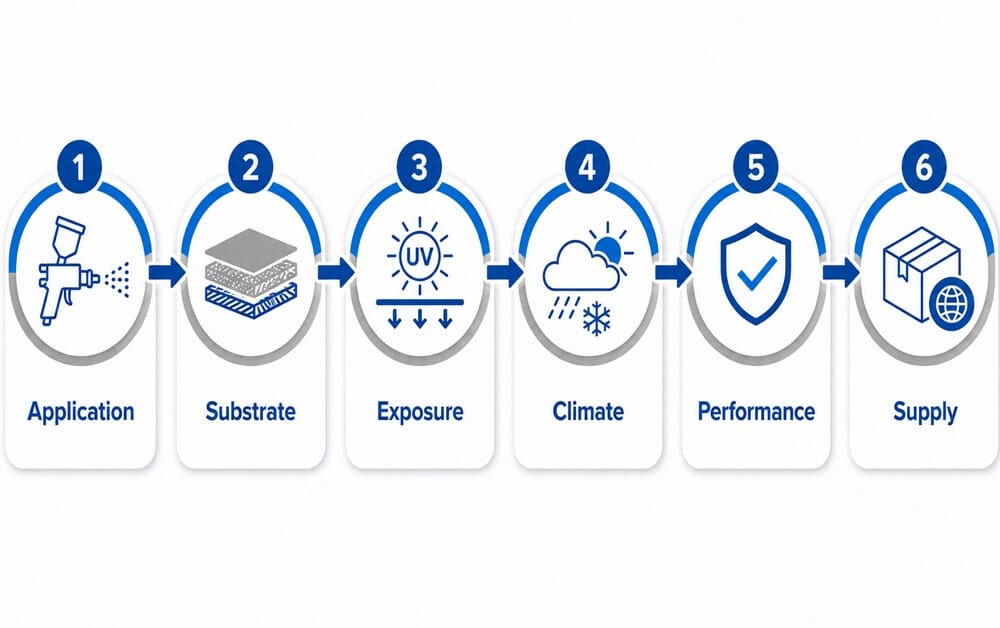
When I evaluate a PU waterproofing system, I normally follow this sequence:
Project condition → substrate → exposure → climate → technical performance → application method → supply requirements
That gives me a much clearer basis for selecting the right polyurethane waterproof coating.
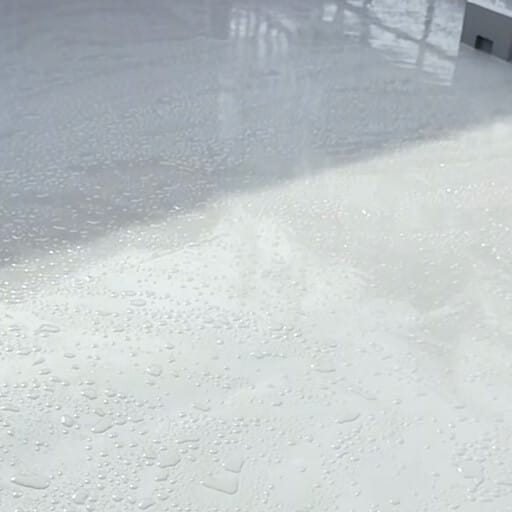
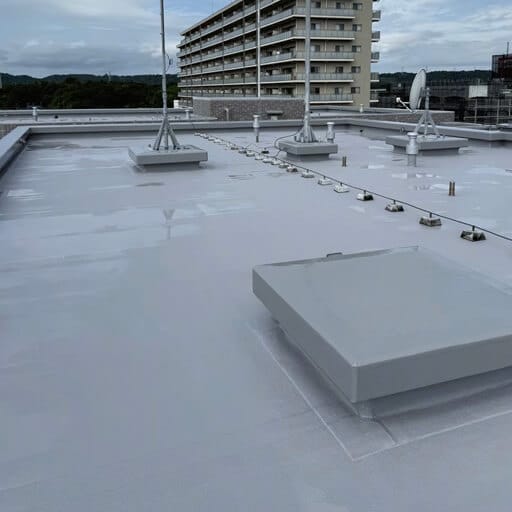
One-Component or Two-Component Polyurethane Waterproof Coating?
Once the project condition is clear, one of the next questions buyers often ask is whether they should choose a 1K or 2K polyurethane system.
I don’t treat this as a simple comparison where one type is always better.
The choice depends on the project, applicator, working conditions and required performance.
When I consider a one-component polyurethane waterproof coating
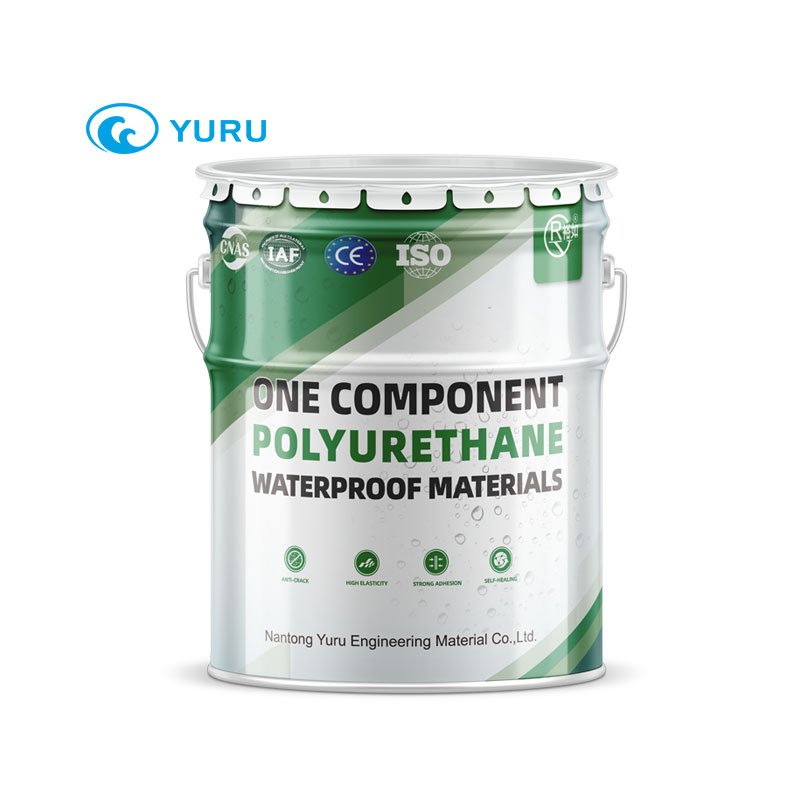
A one component polyurethane waterproof coating can be attractive when application simplicity is important.
There is no on-site A/B proportioning step, so one major source of mixing error is removed.
For distributors supplying many contractor teams, this can be useful because field experience may vary from one applicator to another. A simpler application process can make technical support easier.
However, ready-to-use does not mean that application control no longer matters.
I still check:
- substrate condition;
- required thickness;
- environmental conditions;
- curing requirements;
- recoat interval;
- service environment.
The material still needs to match the project.
When I consider a two-component polyurethane waterproof coating
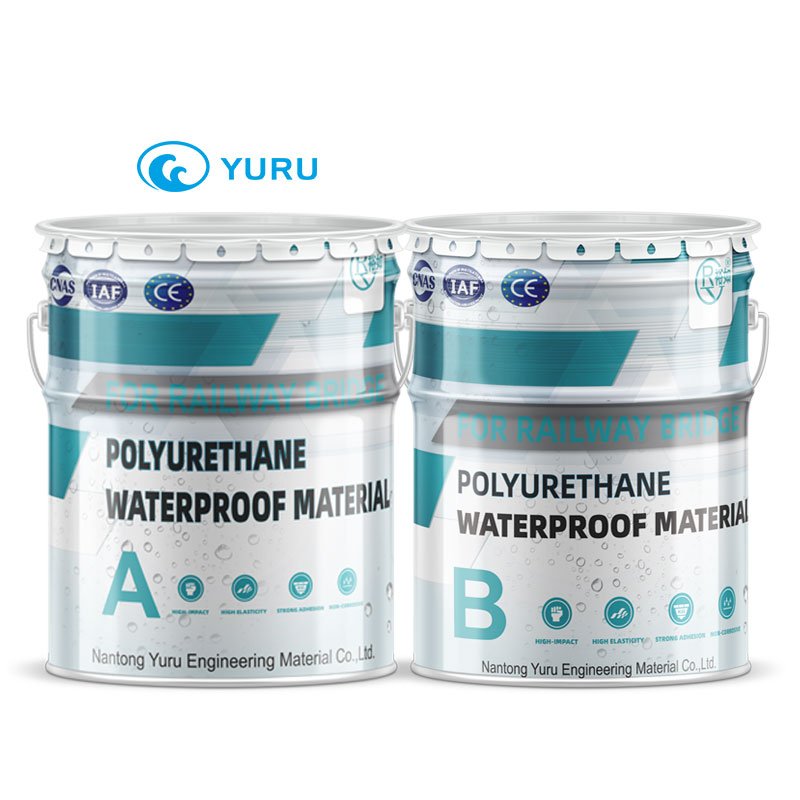
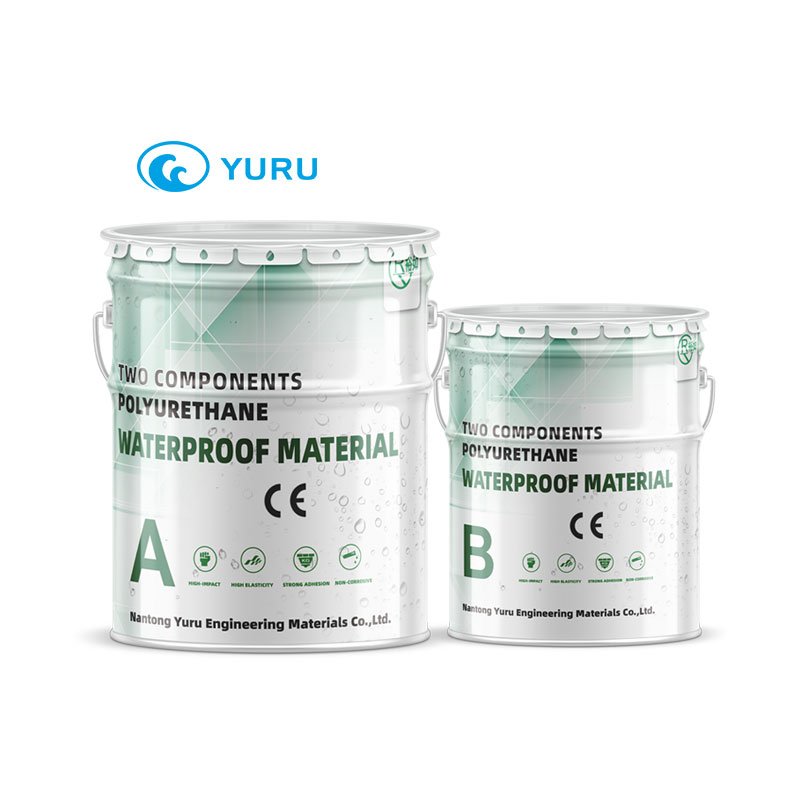
A two component polyurethane waterproof coating relies on a controlled reaction between its components.
This type of system may be selected where the project requires a particular curing profile, mechanical performance or specification. The trade-off is that application control becomes more important.
Contractor needs to follow the correct:
- mixing ratio;
- mixing procedure;
- working time;
- application interval;
- pot life.
This is not necessarily a disadvantage. Experienced waterproofing contractors can manage two-component systems very effectively.
But for a distributor, I would still ask an important commercial question:
Can the contractor teams in my market use the product consistently?
A technically advanced product that creates repeated application errors may not be the best product for every distribution channel.
For a more detailed comparison, see our 1K vs 2K waterproof coating comparison.
What Technical Parameters Should I Check?
Technical data matters, but I prefer to read several parameters together instead of judging the coating from one headline number.
For most polyurethane waterproofing projects, I pay particular attention to:
- tensile strength;
- elongation;
- adhesion;
- solid content;
- recommended film thickness;
- curing time;
- application conditions.
Tensile strength and elongation should be considered together
Tensile strength shows how much stress the cured material can resist under the stated testing conditions. Elongation tells us how far the membrane can deform before failure.
Neither value gives the complete picture on its own.
For a concrete roof with thermal movement, flexibility may be especially important. For another engineering application, the balance between mechanical strength and elasticity may be different.
The useful question is therefore not:
“Which coating has the highest tensile strength?”
It is:
“Does this combination of strength and flexibility match the structure?”
Where formal project specifications apply, recognized testing standards can also provide a useful reference. ASTM C836/C836M, for example, covers cold liquid-applied elastomeric waterproofing membrane requirements.
I would only claim product compliance with a particular standard when the corresponding test documentation supports it.
Solid content and film thickness affect the real project cost
For project buyers, this is where technical selection becomes a purchasing issue.
Two coatings may have different prices per kilogram, but the contractor does not buy waterproofing performance by kilogram alone.
What matters is how much material is needed to create the specified membrane over one square meter.
I therefore compare:
- wet-film thickness;
- dry-film thickness;
- recommended consumption;
- number of coats;
- primer requirements;
- actual substrate condition.
This gives a much better view of installed cost.
A lower unit price does not necessarily mean a lower waterproofing cost per square meter.
For this reason, the question “How many coats of polyurethane waterproofing are required?” should always be considered together with target film thickness and the manufacturer’s application specification.
Adhesion can decide whether the system succeeds
The waterproofing membrane must maintain substrate bond.
While this appears self-evident, many coating failures originate at this interface.
Inadequate surface preparation, weak concrete, contamination, moisture, or unsuitable primer can compromise adhesion despite adequate coating properties.
For a large project, I would rather identify these risks before full application.
A small adhesion test or trial area may be useful when substrate compatibility is uncertain.
Curing time needs to match the job-site conditions
I also avoid treating curing time as one universal number. Temperature, humidity, film thickness, ventilation, and formulation all influence material behavior.
This becomes particularly important on roofs and other exterior projects where the contractor has to work within a weather window.
A coating that works well under controlled conditions still needs enough time to cure correctly before rainfall or other exposure.
For buyers comparing application schedules, see our detailed guide to polyurethane waterproof coating drying time.

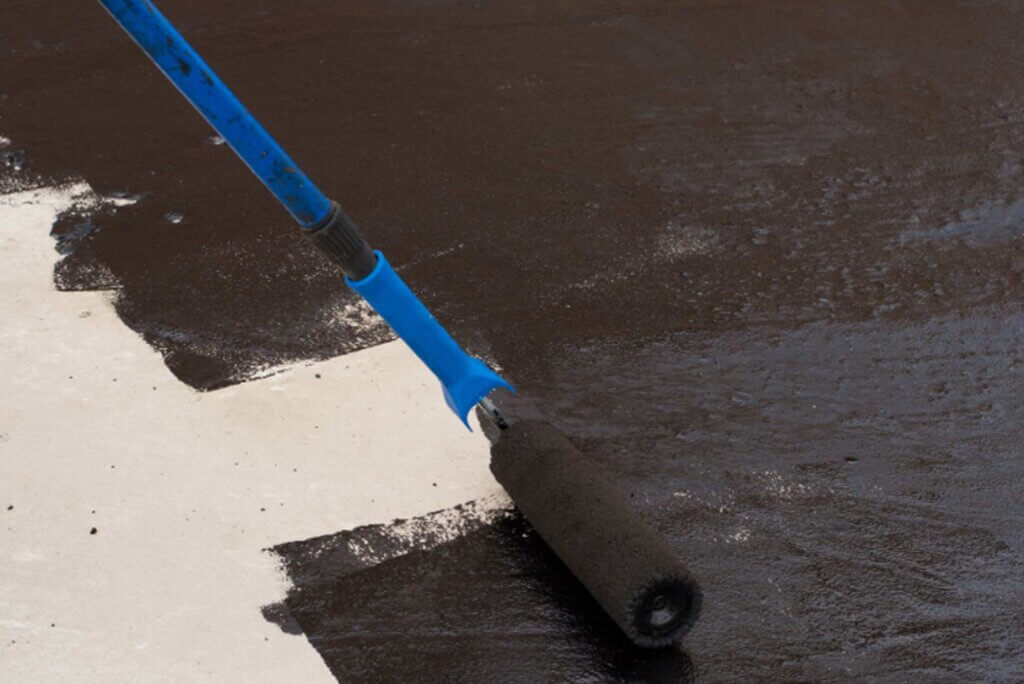
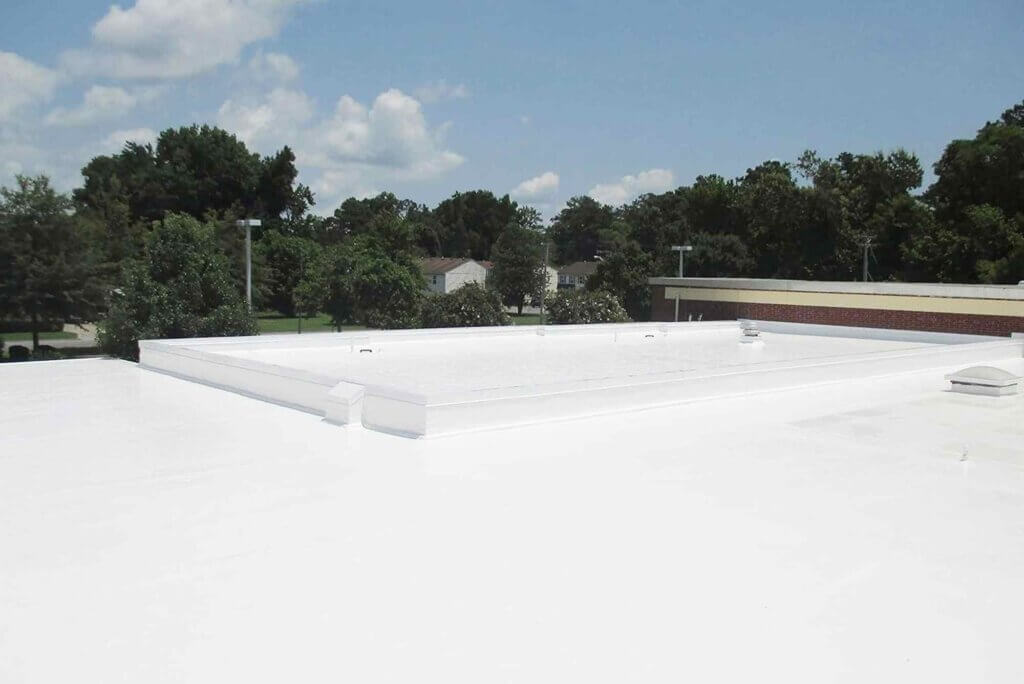
How I Choose PU Waterproof Coating for Concrete Roofs?
Concrete roof waterproofing is one of the most common applications buyers ask me about.
Here, I normally check the entire roof rather than just asking whether polyurethane can be used.
Important factors include:
- UV and weather exposure;
- roof temperature;
- existing cracks;
- drainage;
- ponding water;
- substrate moisture;
- parapets and corners;
- pipes and penetrations;
- expansion joints;
- required membrane thickness.
Large open roof areas are often not the most difficult part of the project. Failures frequently begin around details.
Drains, pipe penetrations, joints, corners and transitions between materials require careful treatment.
That is why I prefer to see polyurethane roof waterproofing as a complete system rather than simply applying a liquid coating over the entire slab.
For exposed roofs, the buyer should also confirm whether the polyurethane membrane itself is intended for the exposure condition or whether a protective topcoat forms part of the system.
You can read our more detailed guide to polyurethane waterproof coating for concrete roofs for application-specific considerations.
How I Choose PU Waterproof Coating for Basements and Underground Concrete?
Basement waterproofing has a different risk profile.
UV exposure is usually not the main issue.
Instead, I want to know:
- Is this new construction or repair?
- Which side of the concrete will receive the coating?
- Is groundwater present?
- Is the substrate damp?
- Are there cracks or joints?
- Will the finished membrane be protected after installation?
- Is hydrostatic pressure part of the project condition?
These details can change the waterproofing strategy significantly.
For example, applying an external waterproofing layer during new construction is very different from trying to deal with leakage from inside an existing basement.
That is why I would not select a waterproof coating for basement concrete purely from the product name.
The polyurethane coating needs to fit the complete waterproofing design.
How I Evaluate PU Coating for Infrastructure Projects?
Bridges, utility structures, transportation facilities and other infrastructure projects usually involve stricter technical requirements.
A project specification may define:
- minimum mechanical performance;
- film thickness;
- substrate preparation;
- application procedure;
- testing methods;
- curing conditions;
- supporting documentation.
In these situations, I prefer to review the waterproofing system as a whole:
substrate preparation + primer + polyurethane membrane + detail treatment + protective layer or topcoat
This is more reliable than treating the polyurethane coating as an isolated product.
Our guide to polyurethane waterproofing systems explains this system-based approach in more detail.
Climate Can Change Which PU Coating I Recommend
A coating can leave the same factory but face very different conditions after arriving in another country.
That is why destination market matters.
Hot and strongly exposed markets
For buyers supplying markets such as the Middle East, exposed roof systems may face strong sunlight, high surface temperatures and repeated thermal movement.
Here I pay more attention to:
- exposure conditions;
- thermal cycling;
- flexibility;
- roof detailing;
- topcoat requirements;
- long-term weathering strategy.
I do not recommend assuming that every polyurethane base membrane has the same direct-exposure performance.
The complete system needs to match the climate.
Hot and humid markets
Humid markets create different application risks.
Concrete may remain damp for longer periods, rainfall windows may be shorter and application schedules can become harder to control.
Here I pay particular attention to:
- substrate moisture;
- curing behavior;
- application window;
- adhesion;
- contractor handling.
For distributors, this is also where application simplicity becomes commercially important.
A product may perform well in controlled testing but still create problems if contractors find the site application difficult to manage.
Markets with stricter chemical documentation requirements
For importers selling into Europe, North America and other regulated markets, technical performance is only one part of procurement.
Buyers may also need to review:
- SDS;
- VOC information;
- chemical documentation;
- test reports;
- labeling requirements.
For the European market, buyers can refer to ECHA’s REACH requirements when assessing relevant chemical obligations.
For the United States, the OSHA Hazard Communication Standard provides an important reference for hazard communication and SDS requirements.
I recommend discussing these documents before the purchase reaches the shipping stage.
Solving a documentation issue before production is much easier than solving it after the container has arrived.
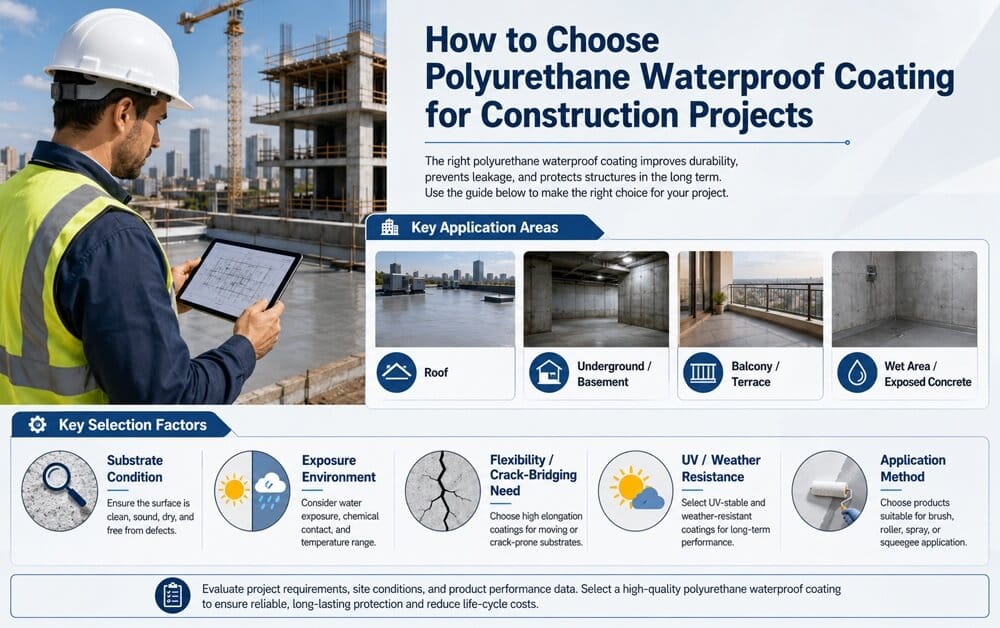
Before I Recommend a Product, I Usually Ask the Buyer Six Questions
A useful quotation should do more than show the price.
When a distributor, contractor, or importer asks me for a PU coating recommendation, I usually collect six things first.
1. Where will the product be used?
Roof, basement, bridge, deck, underground structure or another application?
2. What is the substrate?
Concrete, mortar, metal or another surface?
3. Will the membrane remain exposed?
Will it face sunlight and weather directly, or will it be protected by another layer?
4. What are the local climate conditions?
Temperature, humidity and rainfall can affect both installation and long-term service.
5. What performance does the project require?
For example:
- thickness;
- tensile strength;
- elongation;
- adhesion;
- curing time;
- other project specifications.
6. What are the commercial requirements?
I also need to know:
- estimated order volume;
- destination market;
- packaging;
- private-label requirements;
- documentation requirements.
With these six answers, I can usually narrow the product selection much faster than by comparing prices alone.
For purchasing, this also reduces the risk of sending a sample that performs well but does not actually match what the buyer needs to sell.
For Distributors and Importers, I Also Evaluate the Supplier
Choosing the right coating is only half of the purchasing decision.
For distributors, wholesalers, importers and private-label buyers, the manufacturer becomes part of the product.
A sample can perform well once. Long-term supply requires much more.
Technical documentation
A professional polyurethane waterproof coating supplier should be able to provide clear technical information.
Depending on the product and destination market, buyers may require:
- TDS;
- SDS;
- relevant test reports;
- storage information;
- application instructions;
- packaging specifications.
For distributors, good documentation also makes it easier to train sales teams and support contractors.
Batch consistency
Repeated purchasing depends on consistency.
If viscosity, curing behavior, color or application characteristics change noticeably between batches, the distributor eventually has to deal with the complaints.
The real objective is therefore not to produce one excellent sample.
It is to maintain reliable product characteristics across repeated orders.
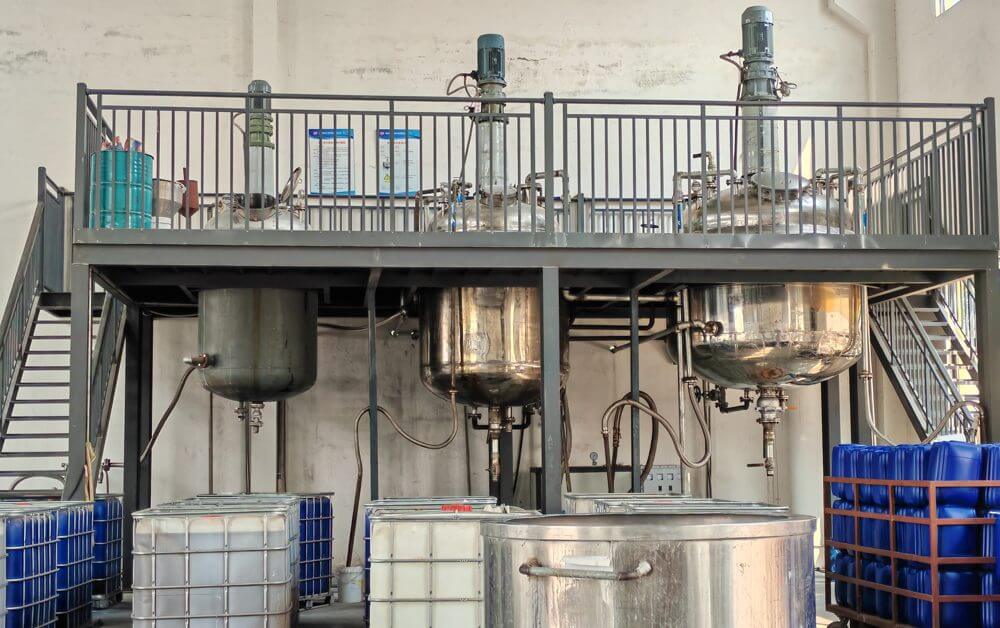
This is why production control and QC should be considered during supplier evaluation.
Packaging and export stability
International shipping introduces another risk that local buyers may never need to consider.
Liquid construction chemicals can spend weeks inside containers and pass through very different storage and temperature conditions.
Before export, I recommend confirming:
- shelf life;
- recommended storage conditions;
- container sealing;
- packaging strength;
- labeling;
- palletizing;
- loading arrangement.
These may appear to be logistics details, but they can directly affect the condition of the product when it arrives.
OEM and private-label requirements
For distributors developing their own brands, product selection may also include:
- private-label packaging;
- customized labels;
- different container sizes;
- localized documentation;
- market-specific packaging requirements;
- technical adjustments where feasible.
At YURU Waterproof, I prefer to begin this discussion with the buyer’s market and application rather than sending exactly the same quotation to every customer.
If you are comparing manufacturers more broadly, you can also review our guide to waterproof coating manufacturers.
A Practical PU Waterproof Coating Selection Table
| Project Condition | What I Check First | Selection Direction |
| Exposed concrete roof | UV, heat, movement, drainage | PU roof system suitable for exposure conditions; confirm topcoat requirements |
| Protected roof system | Adhesion, membrane thickness, protection layer | PU membrane compatible with the full roof build-up |
| Basement / underground | Substrate moisture, water conditions, membrane protection | Select according to below-grade system and concrete condition |
| High-movement concrete | Elongation, tensile strength, adhesion | Balance flexibility and mechanical performance |
| Hot climate | Thermal movement, exposure, application window | Check system suitability for high-temperature service conditions |
| Humid climate | Substrate moisture, curing and adhesion | Prioritize compatible application and curing conditions |
| Large infrastructure | Specification, testing, thickness, documentation | Match product and complete system to project specifications |
| Distributor / private label | Consistency, documentation, packaging, support | Evaluate manufacturer capability as well as product performance |
This table is only a selection starting point.
The final product still needs to be checked against the actual project conditions and the relevant technical data.
My Final Recommendation: Choose the Project System Before Comparing the Price
When I evaluate a polyurethane waterproof coating, I normally follow this order:
Project condition → substrate → exposure → climate → technical performance → application method → supplier capability
This helps avoid two common purchasing mistakes.
The first is choosing a coating simply because one technical parameter looks better; the second is choosing the lowest price per kilogram before considering membrane thickness, consumption, application requirements, shipping and technical support.
For buyers, a suitable polyurethane waterproof coating should work at several levels.
- It needs to perform on the structure.
- It needs to be practical for contractors to apply.
- It needs to arrive in stable condition.
- It needs appropriate technical documentation.
And for distributors building their own brands, the manufacturer needs to support repeated supply rather than treating each order as an isolated shipment.
That is how I would choose a polyurethane waterproofing system for a real construction project.
Need Help Selecting a Polyurethane Waterproof Coating?
If you are sourcing polyurethane waterproof coating for distribution, wholesale, OEM/private label or a specific construction project, send us the basic project information before selecting the material.
Please provide:
- application area;
- substrate;
- exposed or protected condition;
- local climate;
- required technical parameters;
- estimated quantity;
- destination country;
- packaging or OEM requirements.
YURU Waterproof can then help narrow the selection between one-component, two-component, water-based and other project-appropriate polyurethane waterproofing systems before you proceed with samples or bulk purchasing.
Frequently Asked Questions:
What is the difference between 1K and 2K polyurethane waterproof coating?
A one-component polyurethane waterproof coating requires no on-site component proportioning, simplifying application and reducing mixing errors. A two-component system requires the components to be mixed according to the specified ratio and may be selected where controlled curing or specific project requirements are important.
The right choice depends on the application, contractor capability and technical requirements rather than one system always being better.
Can polyurethane waterproof coating be used on concrete roofs?
Yes, polyurethane waterproofing systems can be used for concrete roof applications when the selected system matches the project conditions.
I would check substrate preparation, crack movement, drainage, UV exposure, target membrane thickness and whether a protective topcoat is required.
How many coats of polyurethane waterproofing are required?
There is no universal number that applies to every polyurethane coating.
Generally, it can be done 2-3 times, but the required number of coats should be determined from the manufacturer’s specified consumption, target dry-film thickness, substrate and application method.
For project costing, film thickness and material consumption are generally more useful than comparing the number of coats alone.
What should distributors check before buying polyurethane waterproof coating in bulk?
I recommend checking the product specification together with batch consistency, TDS/SDS availability, test documentation, storage requirements, shelf life, packaging, export stability and technical support.
For private-label buyers, OEM packaging and documentation capability should also be confirmed before bulk ordering.
Can polyurethane waterproof coating be customized for OEM or private label?
Depending on the product and project, OEM/private-label cooperation may include packaging, labels, container sizes, documentation and other commercial requirements.
Any technical formulation adjustment should be reviewed according to the intended application, required performance and destination market before confirmation.
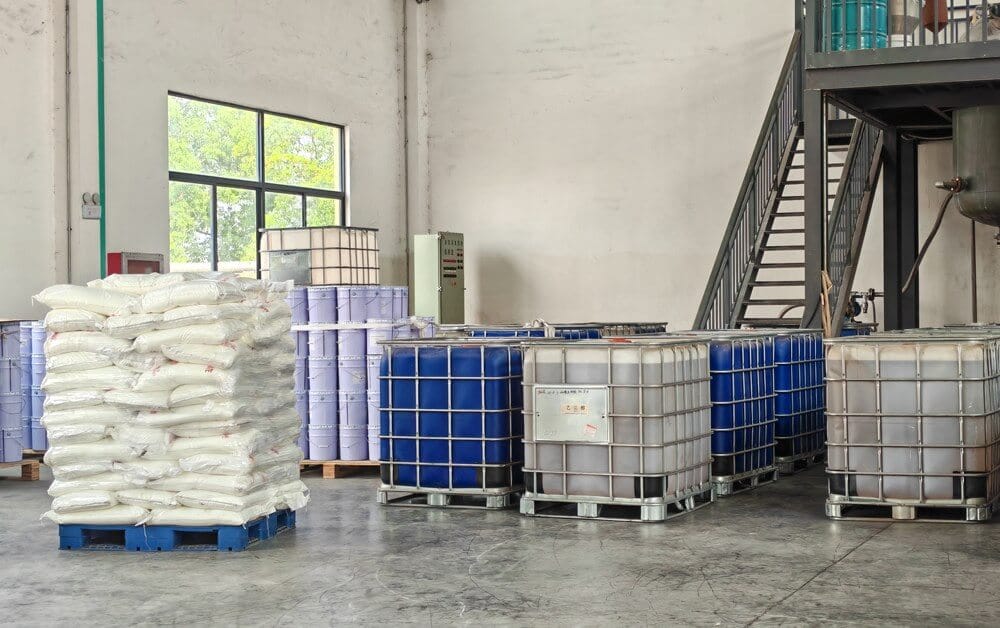
YURU Product solutions