How to Evaluate Epoxy Floor Coating Suppliers Before Bulk Orders?
Introduction
If you’re sourcing epoxy floor coatings for a warehouse project or your own distribution business, finding a low price is only half the job.
What happens when the next shipment doesn’t match the sample? Or when your contractor discovers that the coating cures too quickly for the site conditions?
A reliable supplier should be capable of explaining the contents of the product specification, how production batches are verified, and what support will be provided following order placement.
Here’s how to evaluate epoxy floor coating suppliers before committing to a bulk purchase.
1. What Epoxy Flooring Products Should You Source?
Before comparing factories, make sure you’re asking for the right flooring system.
Manufacturing plants equipped with heavy machinery and shopping centers have different priorities, and therefore require different types of flooring materials.
Standard Epoxy Floor Coating Systems
Standard epoxy flooring is commonly specified for warehouses, factories, workshops, and other commercial floors.
Depending on formulation, it may provide abrasion resistance, an easily maintained finish, and resistance to specified chemicals.
However, the topcoat is only one component of the entire flooring system. The complete process also includes a primer and an intermediate coat. Therefore, when comparing price quotes, it is essential to examine the overall composition, recommended coating thickness, and material consumption. One should not assume that a lower price for the topcoat alone equates to cost savings.
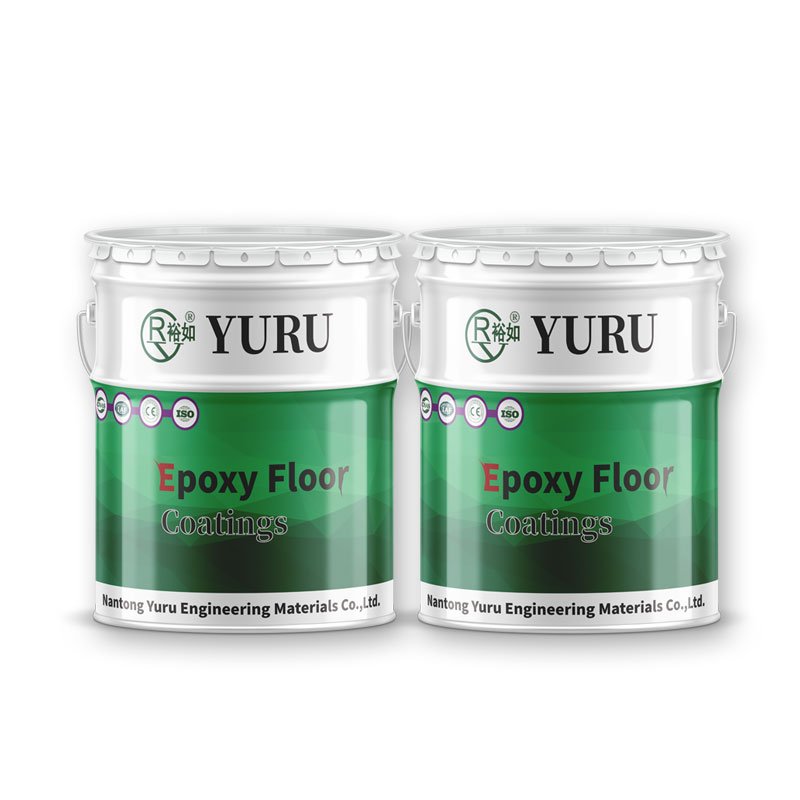
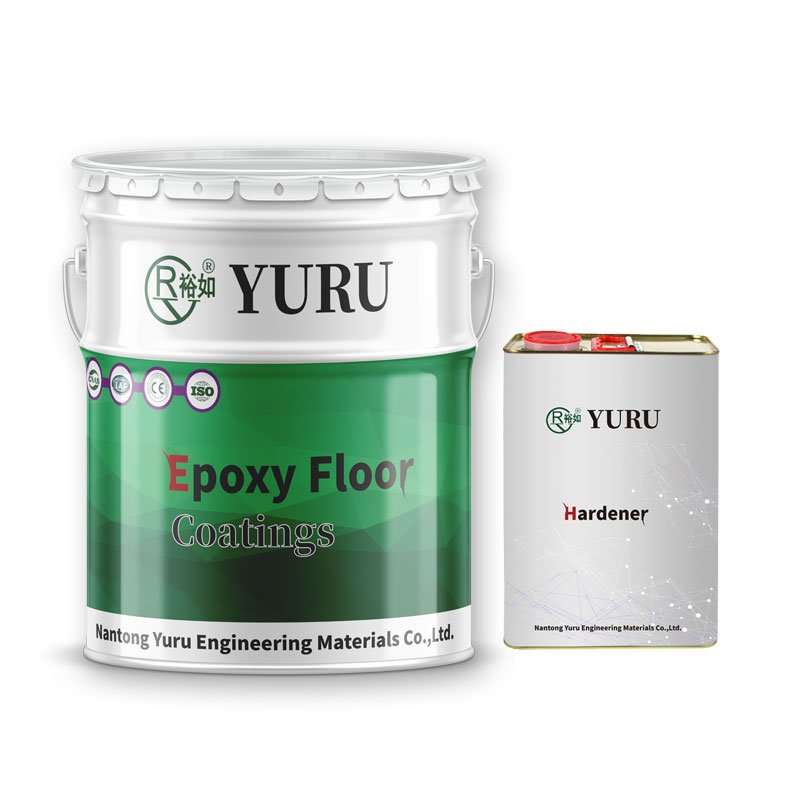
YURU’s epoxy floor coating system includes primer and finishing options for industrial and commercial applications.
Colored Sand Epoxy Flooring
For commercial projects where appearance matters, colored sand epoxy offers another option.
Traditional colored quartz broadcast systems involve spreading aggregates over wet resin, removing loose material after curing, and completing the required finishing layers.
YURU epoxy colored-sand system encompasses both traditional colored-quartz flooring coatings and a new type of self-leveling epoxy colored-sand flooring paint; the latter utilizes a pre-mixed process, in which the colored sand is incorporated into the material beforehand.
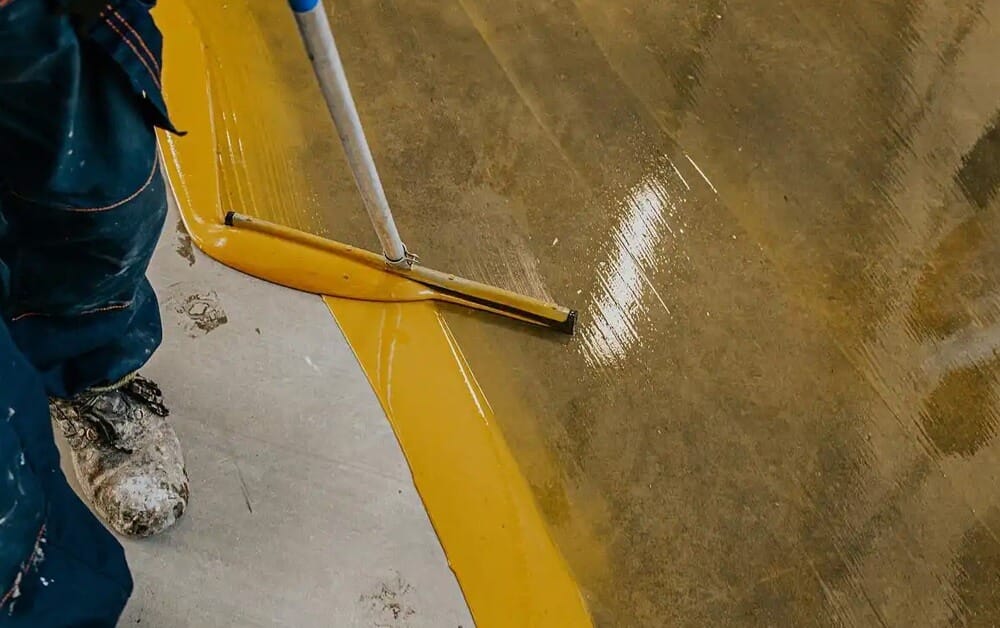
The standard system doesn’t require installers to add or broadcast sand separately. They still need to prepare and prime the concrete, mix components A and B at the specified 7:1 weight ratio, and spread the material correctly.
For contractors, that means less loose aggregate to manage. Distributors can also offer customers a decorative flooring option with a simpler material-handling process.
Standard Epoxy vs. Pre-Mixed Colored Sand Epoxy
| Buying Consideration | Standard Epoxy Flooring | Pre-Mixed Colored Sand Epoxy |
| Main Application | Industrial and commercial floor protection | Decorative commercial and industrial flooring |
| Finish | Smooth or specified textured surface | Integrated colored sand finish |
| Aggregate Handling | Depends on the specified system | Colored sand already incorporated |
| Installation | Primer and required coating layers | Primer, A/B mixing, pouring and leveling |
| Main Purchasing Checks | System compatibility, thickness, wear and chemical resistance | Color consistency, aggregate distribution and working time |
For more information about the two colored sand application methods, read our pre-mixed vs. separate colored sand epoxy flooring guide.

2. How to Verify an Epoxy Floor Coating Manufacturer?
Most suppliers can send you a product catalog and a factory photo. Neither tells you much about what will happen when you place a substantial order.
Start with three questions: Who makes the coating? Who controls its formulation? And who will deal with a product problem?
Confirm Who Actually Makes the Product
The company issuing your invoice may not be the company producing the material.
That’s not necessarily a problem — many buyers work successfully with trading companies. What matters is knowing where the product comes from and which business is responsible for its specification and quality.
For a new supplier, ask for the manufacturing address and production facility details. Product-specific factory videos or a live walkthrough can help you understand the operation.
A large contract may also justify an on-site audit.
Be careful with production capacity figures. A manufacturer’s total annual output across waterproofing, flooring, and other materials doesn’t tell you how much of a particular epoxy formulation it can produce within your delivery schedule.
Find Out What the Factory Can Customize
Suppose your customers work in a hot climate.
A short pot life may create problems for crews mixing large batches of epoxy. You need to discuss working time, temperature, application method, and curing requirements.
The same goes for other markets. Your customers may need specific colors, finishes, packaging sizes, or application characteristics.
A manufacturer with formulation development capabilities should be able to discuss these requirements and explain which options are available.
For those establishing a private-label flooring brand, the approval process for samples, formulation changes, packaging artwork, and final product specifications should be determined.
Check How the Factory Controls Repeat Orders
Your first shipment might be excellent. The real test comes when you reorder six months later.
Will the color still match? Has the formulation changed? Can the supplier identify which batch was delivered to which customer?
Batch identification, relevant production and inspection records, and a clear complaint investigation procedure should be examined.
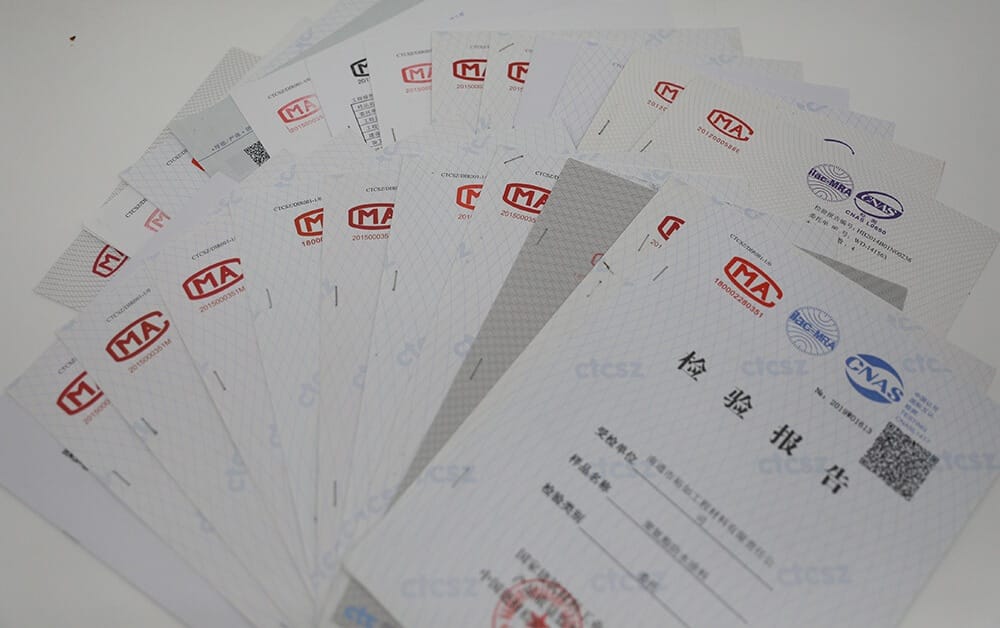
An ISO 9001 certificate may support assessment of the manufacturer’s quality management system. Certificate scope and validity should be verified; however, product testing and technical specifications should be employed to assess the epoxy coating itself.
3. What Technical Documents and Samples Should You Request?
A glossy sample board may assist in marketing a flooring product. It won’t tell you how the material behaves when a contractor mixes and applies it.
Before ordering in bulk, ask for the documents for the exact formulation you’ve been offered.
Start with the Product Documents
| Document | What to Check | Why It Matters |
| Technical Data Sheet (TDS) | Mixing ratio, pot life, thickness, curing and performance | Confirms whether the product fits your application |
| Safety Data Sheet (SDS) | Hazards, handling, storage and transport information | Supports safe handling and shipping arrangements |
| COA / Batch QC Record | Batch identification and inspection results | Helps verify the supplied production batch |
| Performance Test Report | Test method, results and tested product | Supports specific technical claims |
| Product Sample | Color, workability, leveling and curing | Shows how the coating behaves in practice |
| Flooring System Specification | Primer, coating layers and coverage | Helps confirm the full installation requirements |
Where a supplier provides only a general catalog, technical documents corresponding to the actual quoted product should be requested.
Try the Material Before Placing a Large Order
A small application trial is particularly useful when changing suppliers.
Use a suitable prepared substrate and follow the recommended mixing procedure. Pay attention to how the material mixes, spreads, levels, and cures.
For colored sand epoxy, check the finished color and texture as well as the distribution of the aggregate.
Take YURU’s EFS-1 formulation as an example. Its specified A mixing ratio is 7:1 by weight, with a working time of approximately 30–40 minutes under the stated conditions.
Those figures matter on site. In hot weather, a contractor may have less time to place and level a mixed batch. The crew needs to understand the product’s working limits before covering a large floor.
Where a project requires measured adhesion, a method such as ASTM D7234 can be used to evaluate the coating’s pull-off adhesion to concrete. The acceptance criteria should come from the relevant project specification.
Keep the Approved Sample Connected to the Order
Once you’ve accepted a sample, record the product reference, color, mixing ratio, and agreed performance requirements.
The same applies to private-label packaging. Approve the label and container details before production starts.
Upon shipment arrival, comparison should be made against an agreed specification.
4. How to Check Batch Consistency and Export Reliability?
For overseas buyers, receipt of the correct product is as significant as identifying a capable manufacturing facility.
A delayed container may impede a project. A batch exhibiting unexpected color variation may generate difficulties across an entire commercial floor.
Will Repeat Orders Match the Approved Specification?
Imagine a contractor completing a shopping mall floor in several phases.
The first area looks good. A later shipment arrives with a slightly different shade — and the difference is obvious once the new section goes in.
That’s why batch consistency needs to be discussed before the first bulk order, not after a complaint.
For ordinary epoxy flooring, review the agreed color, mixing characteristics, and curing requirements. For colored sand systems, ask about aggregate dispersion, storage behavior, and the recommended procedure for mixing the material after storage.
Some settling may be manageable with the correct mixing procedure. Hard settling that can’t be properly re-dispersed is a different issue and needs investigation.
Make sure delivered products carry batch identification that can be matched with the supplier’s records.
Don't Overlook Export Packaging
Overseas shipping adds another set of checks.
Resin and hardener components must be correctly identified and packed for their actual formulation and transport requirements.
Before the container is loaded, confirm:
- Packaging size, net weight, container condition, and labeling
- Product names, component identification, batch numbers, and shelf life
- Applicable SDS and transport classification
- Invoice, packing list, and other required shipping documents
- Agreed delivery schedule and Incoterms
Transport classification of epoxy materials is formulation-dependent.
It also pays to agree on how damaged packaging, shortages, or quality complaints get reported. Your warehouse team should know what evidence the supplier needs and who to contact.
5. How to Compare Epoxy Flooring Prices and Installation Costs?
The lowest price per kilogram doesn’t always give you the lowest installed floor cost.
A quotation may look attractive until you calculate the primer, intermediate layers, coverage rate, and installation work needed to finish the project.
Compare the Complete Flooring System
Say you’re buying materials for a 5,000 m² warehouse.
One product may cost more per kilogram but require a different coating build or application sequence. Another may have a lower purchase price but higher material consumption.
Prior to comparing totals, both systems should be confirmed as meeting identical project requirements.
Include required coating layers, specified thickness, estimated consumption, material waste, labor, and delivery costs.
For distributors, storage conditions, shelf life, packaging, and repeat-order reliability can also affect the real purchasing cost.
Our epoxy colored sand flooring price guide covers the pricing considerations for decorative colored sand systems in more detail.
Where Pre-Mixed Colored Sand Can Save Labor
Anyone who has installed a conventional broadcast quartz floor knows there’s work involved in handling the sand.
The crew has to spread the aggregate, manage unused material, and complete the remaining specified coating stages.
With YURU’s integrated colored sand epoxy, separate sand addition or broadcasting isn’t part of the standard application procedure.
This reduces loose material handling and aggregate-related tasks for the crew.
On large commercial floors, eliminating repeated site operations can reduce installation labor and facilitate work organization.
Actual savings depend on the system being replaced, project area, and crew working method. The complete application sequence should be compared when calculating costs.


6. Supplier Red Flags and a Pre-Order Audit Checklist
Sometimes the warning signs appear before you’ve paid anything.
A supplier might offer a surprisingly low quotation but struggle to provide a matching TDS. The sample may have a different product reference from the one listed on the invoice. Or nobody can explain what quality records will be supplied with the shipment.
None of these issues should be left unresolved just to secure a better price.
Final Checks Before Paying the Deposit
| Checkpoint | What Needs to Be Confirmed | Status |
| Product | Exact formulation and complete flooring system agreed | Approve / Recheck |
| Manufacturer | Production source and supplier responsibilities clear | Approve / Recheck |
| Sample | Trial completed and agreed reference recorded | Approve / Recheck |
| Quality | Batch traceability and acceptance criteria agreed | Approve / Recheck |
| Commercial Terms | Quantity, price, payment and packaging agreed | Approve / Recheck |
| Shipping | Delivery terms, schedule and documents confirmed | Approve / Recheck |
| OEM Requirements | Color, labels and packaging samples approved | Approve / Recheck |
If something essential is missing, get it settled in writing before releasing the production order.
7. Why Global B2B Contractors Partner with YURU Waterproof
For an importer, a competent supplier must provide more than container filling. Support is also required for product specifications, samples, packaging, and post-delivery customer inquiries.
That’s where working directly with a manufacturer can make a difference.
Direct Factory Manufacturing and Flooring Product Range
YURU Waterproof has been manufacturing construction materials since 2003.
Our 16,000 m² manufacturing facility has six specialized production lines, with an annual capacity exceeding 20,000 tons across our overall materials portfolio.
We supply standard epoxy floor coatings, integrated colored sand flooring, and other construction protection materials.
If you’re planning several projects or developing a flooring product range, you can discuss the materials, available formulations, and supply arrangements directly with our team.
Integrated Colored Sand for Lower Installation Costs
Labor can be a substantial part of the cost of installing a large commercial floor.
Our pre-mixed colored sand epoxy offers contractors a way to reduce some of that work.
The colored sand goes into the material during manufacturing. Rather than organizing a separate sand-broadcasting operation, installers mix the specified epoxy components and distribute the material over the prepared and primed surface.
You still need proper substrate preparation, accurate mixing, and curing time. But removing separate aggregate handling can simplify the job and reduce related labor requirements.
For contractors bidding on large flooring projects, this is worth considering alongside the material price.
For distributors, it’s also a useful alternative to offer customers who want a decorative floor without a conventional sand-broadcasting process.
OEM/ODM and Formulation Support for Your Market
Your customers may not all want the same product.
Some distributors need private-label buckets and specific colors. Others are looking for a different working time, viscosity, or application characteristic suited to their market.
YURU supports OEM/ODM services covering packaging, labeling, color customization, and formulation development.
We can also work with customer-supplied reference samples and target performance requirements to develop and evaluate appropriate formulations.
You can discuss samples and product specifications before confirming a bulk order.
International Supply, Quality Control and Technical Assistance
YURU has supplied construction materials to customers in more than 70 countries and regions.
For overseas buyers, we support product spec discussions, samples, available technical documentation, packaging arrangements, and export prep.
Our team can also address quality control requirements and batch identification for repeat supply.
Whether you’re buying for a single construction project or supplying contractors through your own distribution network, the goal is to set up a product specification and ordering arrangement you can work with over time.
Looking for factory-direct epoxy floor coatings?
Explore our epoxy floor coating supplier solutions or contact YURU to discuss your required product, samples, OEM packaging, and bulk pricing.
Frequently Asked Questions
How can I verify an epoxy floor coating manufacturer in China?
Check the manufacturing company’s registration details and production location. Match the product samples with the relevant TDS, and find out what batch records the supplier can provide. For a large order, a factory visit or live video audit can help you review the operation.
Should I test epoxy flooring samples before a bulk order?
A sample trial is worth doing, especially when changing suppliers or introducing a product to your market. Check mixing, working time, appearance, leveling, and curing. Where the project specifies adhesion or other performance tests, use the applicable test procedures and acceptance criteria.
Can pre-mixed colored sand epoxy reduce installation labor?
It can reduce labor associated with adding, broadcasting, and handling colored sand separately. YURU’s integrated system removes those tasks from its standard installation method. The actual saving depends on the project and the flooring system you’re comparing it with.
Can epoxy flooring manufacturers provide private-label products?
Many manufacturers offer private-label packaging, although the available services differ. YURU supports customized colors, labels, packaging, and formulation development. Confirm the approved samples, specifications, and packaging details before bulk production.
Conclusion: Choose a Supplier You Can Verify
A competitive quotation has value; however, the approved specification, consistent production, and reliable delivery are what render an epoxy flooring supplier suitable for long-term cooperation.
Before placing a large order, make sure you’ve checked the sample, agreed on quality requirements, and confirmed shipping arrangements.
If you’re sourcing industrial epoxy flooring or developing a private-label product range, contact YURU Waterproof to discuss your project, request samples, and get a factory quotation.
YURU Product solutions