How to Evaluate Waterproof Material Samples Before Bulk Orders?
Quick Answer
Before approving waterproof material samples for a bulk order, check product identity, batch information, packaging, appearance, workability, curing behavior, key technical parameters, and consistency with the supplier’s TDS or test reports. A good sample should not only work once. It should be traceable, repeatable, and close to future production batches. Ask the supplier for clear documents, batch records, and pre-shipment inspection support before placing a large order.
Introduction:
A sample can look good on a desk and still fail during real use.
That is why waterproof material sample evaluation matters before bulk orders. The sample stage gives customers a chance to check product quality, supplier communication, documentation, and batch control before larger money moves.
Many companies check only the surface result. They open the bucket, apply a small amount, wait for curing, and decide too quickly.
That is risky.
A waterproof coating sample should match the supplier’s technical data sheet. An injection grout sample should show stable reaction behavior. A flooring material sample should form the expected surface and cure within a reasonable time.
The sample also needs traceability. If the supplier cannot show product name, batch number, production date, shelf life, TDS, SDS, or basic application instructions, the bulk order carries more risk.
This guide explains how to evaluate waterproof material samples before bulk orders. It covers what to request, what to test, what to compare, and when to ask for laboratory verification.
YURU Waterproof supports customers during the sample stage with product selection, sample preparation, technical documents, packaging confirmation, and bulk order communication.
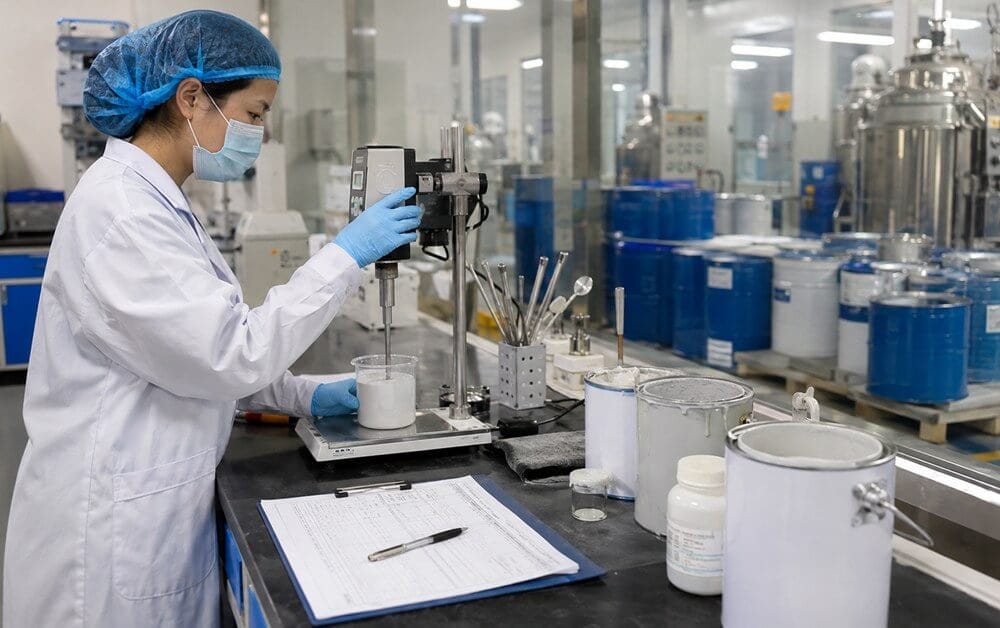
Sample approval is not only a product test.
It is also a supplier risk check.
A sample helps customers answer several practical questions:
- Is this the right product?
- Does the product match the application?
- Does the sample match the TDS?
- Can the supplier repeat the same quality?
- Will the bulk order match the approved sample?
A weak sample process can create problems later.
Common risks include:
- Sample and bulk goods do not match
- No batch number or production date
- Product cures differently than the TDS states
- Packaging differs from approved sample packaging
- Supplier cannot explain performance claims
- No batch inspection before shipment
- For waterproof materials, these risks can affect more than one order. They may affect project schedules, local customer trust, and repeat sales.
A careful sample evaluation process protects the bulk order before production starts.
What Information Should You Request With the Sample?
Do not evaluate a waterproof material sample by the product only.
Evaluate the product and the information that comes with it.
Ask the supplier to provide:
- Product name
- Product type
- Batch number
- Production date
- Shelf life
- Packaging size
- Component type
- Mixing ratio
- Technical Data Sheet
- Safety Data Sheet
- Test report if available
- Application instructions
- Recommended thickness or usage
- Storage condition
This information helps you check whether the sample is traceable and whether the supplier handles quality control seriously.
A sample without documents creates uncertainty.
A sample with clear documents allows you to compare actual performance with technical claims.
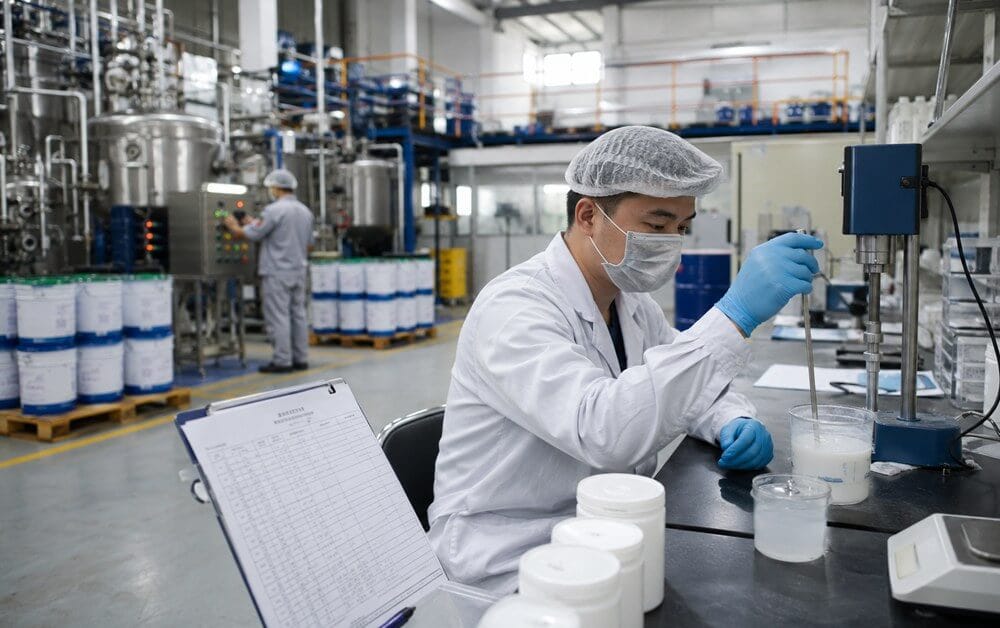
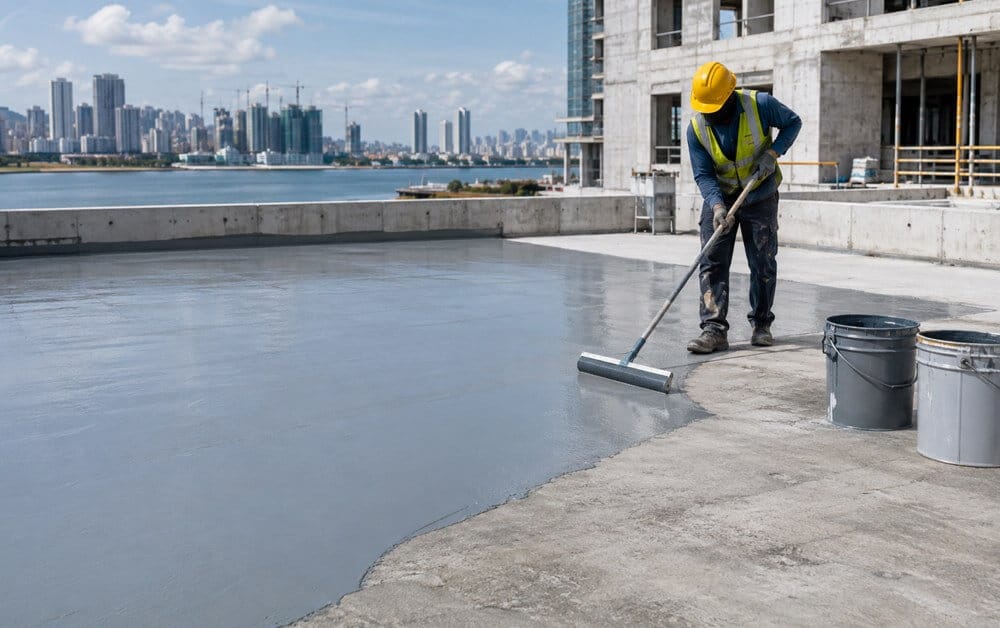
8 Key Checks Before Approving Waterproof Material Samples
1. Confirm Product Identity and Batch Information
Start with the label.
Before you test the sample, confirm the product identity.
Check:
- Product name
- Product type
- Batch number
- Production date
- Shelf life
- Component type
- Mixing ratio
- Packaging size
This step may look simple, but it matters.
If the sample has no batch number, you cannot trace it later. You also cannot compare it with the bulk order batch.
For two-component products, confirm A/B component names and mixing ratio. Do not test a two-component material if the component information is unclear.
A sample must be traceable before it can be approved.
2. Check Appearance, Packaging, and Labeling
Open the package carefully and inspect the condition.
Check the packaging first.
Look for:
- Broken seal
- Leakage
- Damaged bucket
- Missing label
- Unclear batch information
- Wrong component mark
Then check the material appearance.
For waterproof coatings, look for:
- Color consistency
- Sedimentation
- Skinning
- Separation
- Lumps
- Unusual odor
For injection grouting materials, check whether the material looks uniform and whether viscosity appears abnormal.
Some materials may need stirring before use. But heavy separation, hard lumps, broken packaging, or unclear labeling should raise questions.
Take photos before opening and during inspection. These photos help if you need to discuss the sample with the supplier.
3. Review TDS and Key Technical Parameters
Do not judge the sample only by sales claims.
Compare it with the supplier’s Technical Data Sheet.
For waterproof coatings, key parameters may include:
- Tensile strength
- Elongation
- Solid content
- Tack-free time
- Full cure time
- Adhesion
- Recommended thickness
- Application temperature
For injection grouting materials, review:
- Viscosity
- Reaction time
- Expansion behavior
- Gel time
- Density
- Curing behavior
For floor coating systems, review:
- Hardness
- Abrasion resistance
- Adhesion
- Pot life
- Curing time
- Surface appearance
The TDS gives you a baseline. Your sample test should not conflict with the basic product information.
If the sample cures in a very different time from the TDS, ask the supplier why. The reason may be temperature, mixing, storage, or a product issue.
4. Test Application and Workability
A sample should be easy to handle under normal application conditions.
You do not need a full project site to test basic workability.
For waterproof coating samples, apply a small area on a suitable substrate. Observe how the material behaves during mixing and application.
Check:
- Is it easy to stir?
- Does it spread evenly?
- Is the viscosity reasonable?
- Does it level properly?
- Does it create visible bubbles?
- Does it separate during application?
- Does the working time match the product instructions?
For two-component materials, start timing after mixing.
Watch the pot life or working time. If the material becomes too thick too fast, site application may become difficult.
Workability affects real projects. A product may have good lab data but still cause complaints if it is hard to apply.
5. Evaluate Curing Behavior
Curing behavior is one of the most useful sample checks.
Observe the sample from application to full cure.
For waterproof coatings, check:
- Tack-free time
- Full cure time
- Surface uniformity
- Sticky surface
- Bubbling
- Cracking
- Pinholes
- Film formation
For injection materials, check:
- Reaction speed
- Expansion behavior
- Final cured state
- Foaming stability if applicable
Keep the test conditions close to the supplier’s instructions. Temperature and humidity can change curing behavior.
If the coating remains sticky much longer than expected, do not approve the sample too quickly. If bubbles appear during curing, record when they appear and where they appear.
You can also use this stage to connect the issue with troubleshooting content, such as polyurethane waterproof coating bubbling after application.
6. Check Film or Material Performance
After curing, check the basic performance of the sample.
For waterproof coatings, observe:
- Film integrity
- Flexibility
- Basic adhesion
- Surface strength
- Water contact behavior
- Cracking after bending
For injection grouting materials, observe:
- Cured material structure
- Expansion condition
- Penetration behavior in a simple test gap
- Reaction stability
For floor coating materials, observe:
- Surface finish
- Hardness
- Wear feel
- Adhesion to substrate
- Color consistency
Small in-house tests can help you reject poor samples early.
But they cannot replace standard laboratory testing.
Do not use a simple bend test as proof of elongation. Do not use a water drop test as proof of full waterproof performance. Use these checks as screening tools.
7. Compare Sample Results With Supplier Claims
Suppliers may describe products with words like flexible, fast curing, strong adhesion, or high waterproof performance.
Your job is to compare those claims with the sample and documents.
| Supplier Claim | Sample Observation | Buyer Action |
| Fast curing | Curing time matches the TDS | Continue evaluation |
| High flexibility | Film bends without obvious cracking | Ask for test data |
| Low viscosity | Sample flows well during application | Compare with TDS value |
| Stable color | No visible variation after curing | Check next batch |
| Strong adhesion | Film bonds well to substrate | Confirm test method |
| Good workability | Product spreads evenly | Test pot life or working time |
This table helps turn a sample test into a practical decision.
If the claim and the sample do not match, ask for clarification before approving the order.
8. Evaluate Batch Consistency and Repeatability
A good sample does not automatically guarantee a stable bulk order.
This is the point many customers miss.
Before placing a bulk order, ask:
- Did the sample come from a normal production batch?
- Will the bulk order use the same formula?
- Can the supplier provide batch records?
- Can the supplier provide COA if required?
- Can the supplier support pre-shipment inspection?
- Can you receive a production sample before shipment?
- Will packaging match the approved sample?
The sample is only the first checkpoint.
Bulk order quality depends on production control, raw material stability, batch inspection, and shipment review.
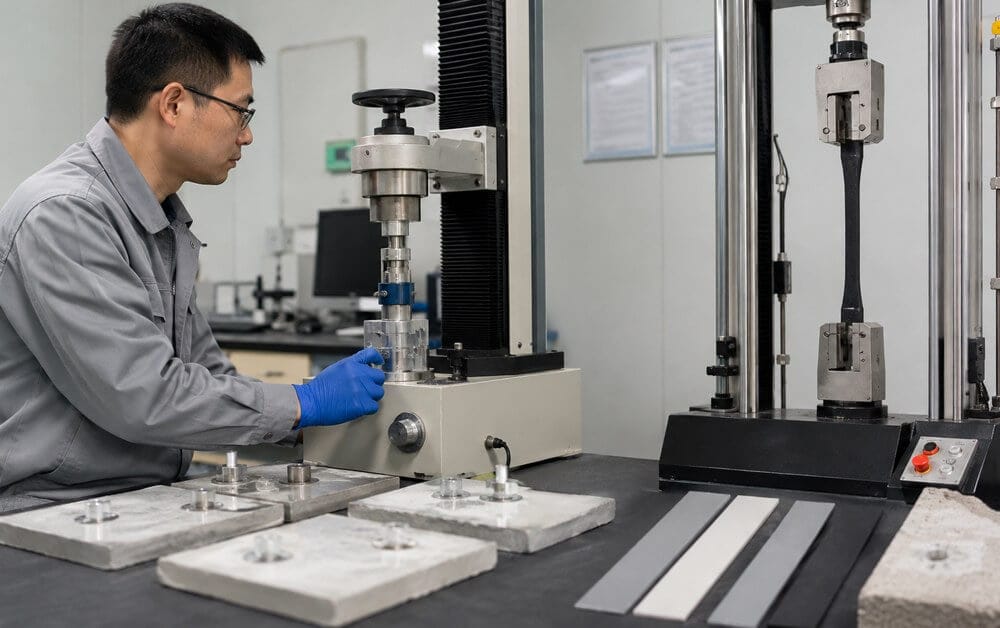
What Tests Can Buyers Perform In-House?
Many customers do not have a full laboratory.
That is normal.
You can still perform useful first-level checks.
| In-House Check | What It Shows |
| Appearance check | Color, separation, sediment, skinning |
| Packaging review | Label, seal, leakage, batch number |
| Mixing test | Workability and uniformity |
| Small application test | Ease of use and surface result |
| Curing observation | Tack-free and full cure behavior |
| Film bending check | Basic flexibility |
| Water contact check | Basic surface water response |
| Storage observation | Stability after short-term storage |
These checks help you find obvious problems.
They also help you compare samples from different suppliers in a practical way.
Keep notes and photos during each test. Record the date, temperature, substrate, mixing method, and curing time.
This habit helps you avoid unclear judgments later.
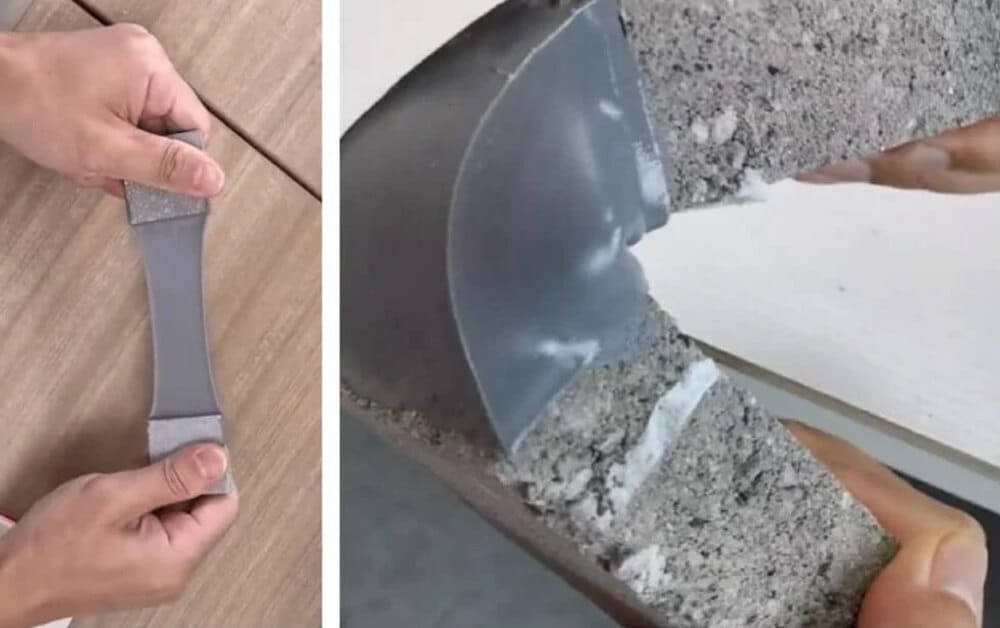
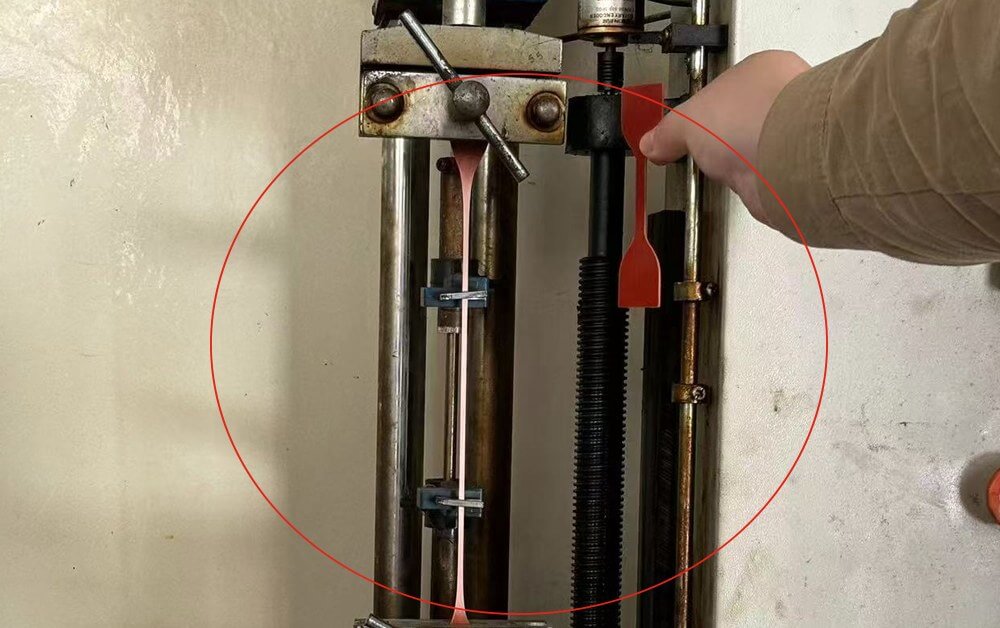
What Tests Should Be Verified by a Laboratory?
Some performance claims need proper testing equipment.
A simple office or site test cannot prove all technical parameters.
For waterproof coatings, laboratory verification may include:
- Tensile strength
- Elongation
- Adhesion strength
- Solid content
- Water resistance
- Low temperature flexibility
- Aging resistance
- Tear strength if required
For injection grouting materials, laboratory testing may include:
- Viscosity
- Reaction time
- Gel time
- Expansion ratio
- Density
- Mechanical strength if required
For flooring materials, laboratory testing may include:
- Hardness
- Abrasion resistance
- Adhesion
- Chemical resistance
- Impact resistance
Request laboratory testing when:
- The project has strict acceptance requirements
- The order value is high
- The supplier’s claims need verification
- Different samples show large performance gaps
- Local regulations or project documents require test reports
A reliable supplier should explain which tests are available and which require third-party confirmation.
How to Compare Samples From Different Manufacturers?
Do not compare samples only by price.
Cheap samples can look attractive, but they may hide problems in consistency, documentation, or long-term supply.
Use the same test method for each sample.
Compare:
| Comparison Item | Why It Matters |
| Product type | Avoid comparing different systems |
| TDS parameters | Check technical consistency |
| Workability | Affects application speed |
| Curing behavior | Affects project schedule |
| Film quality | Shows basic product condition |
| Batch traceability | Reduces bulk order risk |
| Supplier QC | Shows long-term reliability |
| Technical communication | Shows supplier support ability |
Test samples on the same substrate when possible.
Apply the same thickness.
Use the same curing environment.
Record the same information for every supplier.
This makes the comparison fair and useful.
Does One Good Sample Guarantee Bulk Order Quality?
No.
One good sample only proves that the tested sample performed well under your test conditions.
It does not automatically prove future batch consistency.
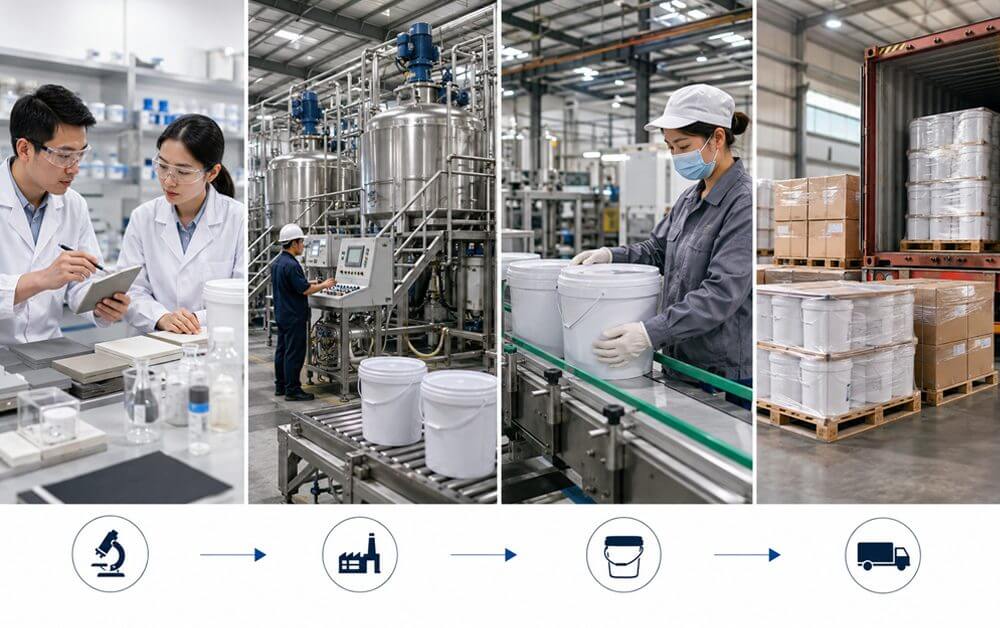
Before bulk production, confirm the approval path:
Sample Approved
↓
Specification Confirmed
↓
Packaging Confirmed
↓
Production Batch Prepared
↓
Batch QC Checked
↓
Pre-Shipment Inspection
↓
Bulk Order Released
Ask the supplier to confirm the approved product specification before production.
If you need OEM or private label packaging, confirm label artwork, bucket size, product name, and technical information before mass production.
For large orders, ask whether the supplier can provide a production sample or pre-shipment photos.
This step helps reduce the gap between sample approval and bulk delivery.
Red Flags When Evaluating Waterproof Material Samples
Stop and review carefully if you see any of these warning signs:
- The sample has no batch number
- The supplier does not provide TDS or SDS
- The label information is unclear
- The sample packaging differs greatly from production packaging
- Technical claims cannot be matched to test documents
- The sample performs differently after short storage
- Viscosity changes strongly between samples
- Curing behavior differs from the TDS without explanation
- The supplier refuses repeat sampling
- The supplier cannot explain its quality control process
- The supplier does not support pre-shipment inspection
One warning sign does not always mean the supplier is unreliable.
But several warning signs together can increase bulk order risk.
How YURU Waterproof Handles Sample Approval Before Bulk Production?
YURU Waterproof treats sample approval as part of the bulk order preparation process.
The goal is not only to send a small bucket.
The goal is to help customers confirm product suitability, technical documents, packaging details, and bulk order requirements before production.
Requirement Review
YURU Waterproof first reviews the customer’s requirements.
This may include:
- Product type
- Application area
- Target market
- Packaging needs
- Performance expectations
- OEM or private label requirements
Clear requirements help the team select a suitable waterproof material sample.
Sample Preparation and Label Confirmation
YURU Waterproof prepares samples based on product type and customer needs.
The team can confirm:
- Product name
- Sample quantity
- Packaging format
- Label information
- Batch information
- Component identification
For two-component materials, clear component marking helps customers avoid mixing mistakes during testing.
Technical Document Support
YURU Waterproof can provide supporting documents based on the product and customer request.
These may include:
- TDS
- SDS
- Product information
- Application guidance
- Testing documents if available
The purpose is to help customers evaluate the sample with technical reference, not guess from appearance only.
Buyer Feedback and Product Adjustment
After customers test the sample, YURU Waterproof reviews the feedback.
Common feedback may involve:
- Workability
- Viscosity
- Curing behavior
- Color
- Packaging
- Application method
- Performance requirements
For OEM or ODM projects, the team can further discuss formula adjustment, packaging customization, label approval, or reverse customization based on the customer’s market needs.
Bulk Order Confirmation
Before bulk production, YURU Waterproof confirms the main order details.
These may include:
- Approved sample
- Product specification
- Packaging design
- Label artwork
- Batch QC requirement
- Delivery plan
This process helps reduce misunderstanding before production starts.

Why Choose YURU Waterproof for Sample Evaluation and Bulk Supply?
Factory Direct Sample Support
YURU Waterproof is a waterproof material manufacturer, not a trading company.
Customers can communicate directly with the factory team about product type, application, packaging, and bulk order requirements.
Direct communication helps reduce misunderstanding during sample evaluation.
Product Testing and QC Communication
YURU Waterproof supports customers with sample review and QC communication.
The team can discuss sample condition, TDS information, application feedback, and batch requirements before bulk production.
This helps customers evaluate both the product and the supplier process.
OEM and Private Label Sample Development
For brand and market development projects, YURU Waterproof can support private label waterproof coating samples and customized waterproof material samples.
This may include:
- Packaging confirmation
- Label approval
- Color selection
- Formula adjustment
- Reverse customization
- Product documentation support
The sample stage helps customers confirm product direction before investing in bulk production.
Long-Term Bulk Order Support
A sample is not the end of the process.
It is the start of bulk order control.
YURU Waterproof helps customers connect sample approval with product specification, packaging details, batch inspection, and shipment preparation.
This approach helps reduce bulk order risk and supports long-term cooperation.
FAQs:
What should I check when evaluating waterproof material samples?
Check product name, batch number, production date, shelf life, packaging, appearance, TDS, SDS, workability, curing behavior, film quality, and batch consistency before approving samples.
Should waterproof material samples match the supplier’s TDS?
Yes. The sample should match the supplier’s TDS or test documents. If curing time, viscosity, appearance, or performance differs clearly, ask the supplier for an explanation before placing a bulk order.
Can one good sample guarantee bulk order quality?
No. One good sample does not guarantee bulk order consistency. Ask about batch QC, production records, COA, pre-shipment inspection, and approved sample comparison before mass production.
What waterproof material tests can buyers perform themselves?
Buyers can perform appearance checks, packaging review, mixing tests, small application tests, curing observation, basic flexibility checks, and short-term storage observation.
When should buyers request third-party laboratory testing?
Request third-party testing when the project has strict technical requirements, the order value is high, supplier claims need verification, or different samples show large performance differences.
Conclusion:
Evaluating waterproof material samples before bulk orders requires more than checking appearance.
A useful sample review should cover product identity, batch number, packaging, documents, workability, curing behavior, performance, supplier claims, and batch consistency.
Customers can perform basic in-house checks for appearance, mixing, application, and curing.
For important performance values, laboratory testing or third-party verification may be needed.
Most importantly, one good sample does not guarantee a stable bulk order.
Before placing a large order, confirm whether the supplier can repeat the same product quality through batch control, QC records, COA, pre-shipment inspection, and approved sample comparison.
YURU Waterproof supports customers with waterproof material samples, technical documents, QC communication, OEM sample development, and bulk order preparation.
Need a waterproof material sample for evaluation?
Tell YURU Waterproof your product type, application requirements, target market, and packaging needs. Our team can help prepare suitable samples and supporting technical documents for your evaluation.
YURU Product solutions