How to Waterproof a Large Commercial Roof? A Complete Guide for Protection
Introduction:
Here’s the thing about large commercial roofs. They’re not like the roof on your house. You can’t just slap some coating on a weekend and call it done. It’s a major investment — one that affects your operating budget, your building’s lifespan, and your stress level for years to come.
For contractors, facility managers, and project engineers, choosing the right waterproofing system is important.
Unlike residential roofs. Large commercial roofs are another animal entirely:
- Big surface areas — More square footage means more places for something to go wrong.
- Complex structures — Multiple levels, transitions, and details.
- Penetrations everywhere — Pipes, vents, HVAC units, skylights – each one is a potential leak point.
- Harsh conditions — Commercial roofs sit out there in the sun, wind, rain, and snow, year after year.
This comprehensive guide covers everything from material selection and preparation to application techniques and maintenance strategies.
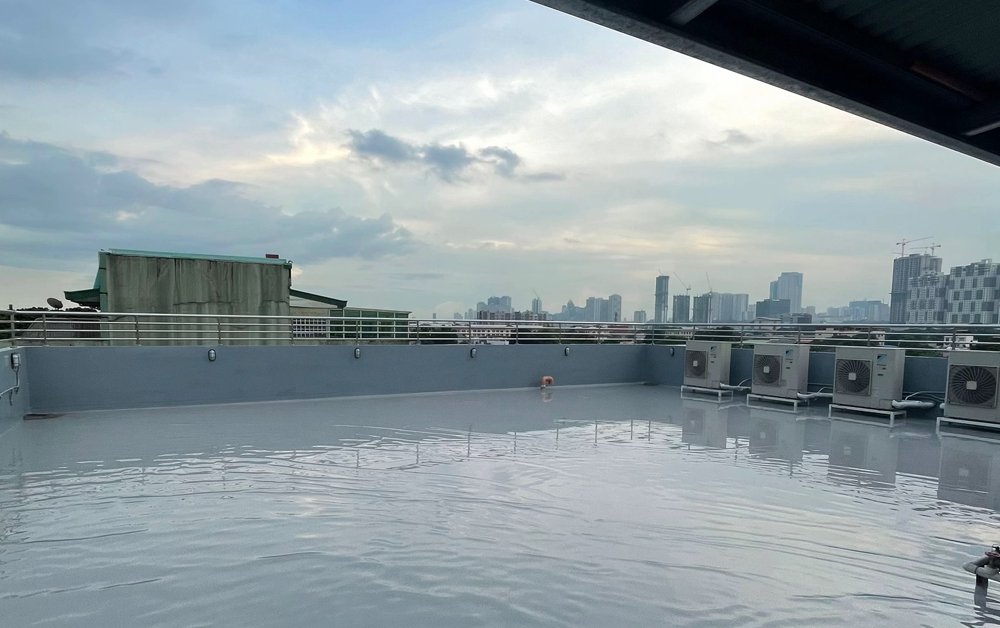
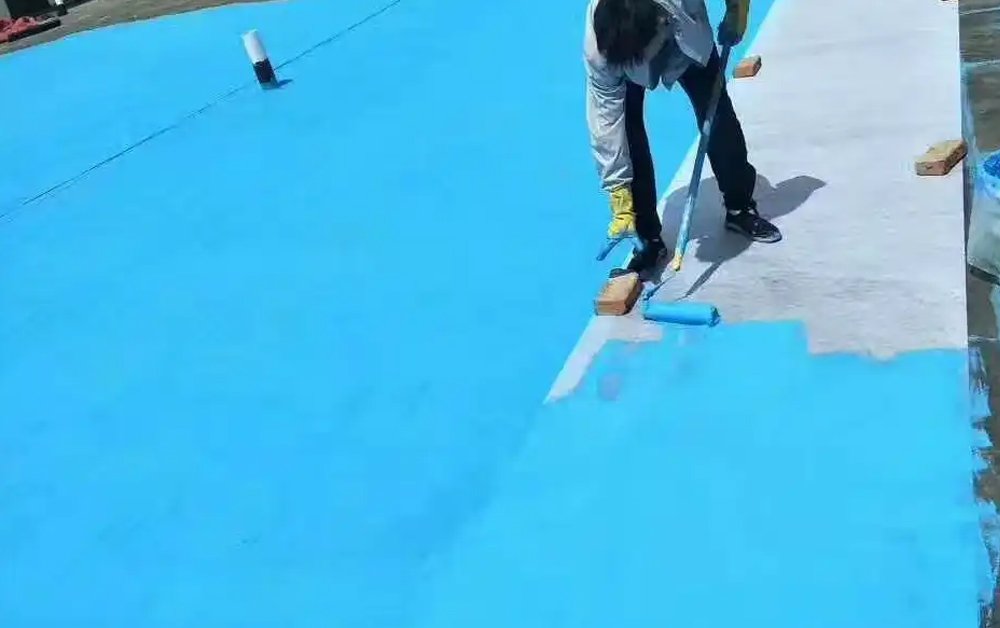
Key Challenges in Waterproofing Large Commercial Roofs
Large Surface Area and Application Complexity
One of the most obvious challenges is scale. Large roofs require:
- Consistent material application across wide areas
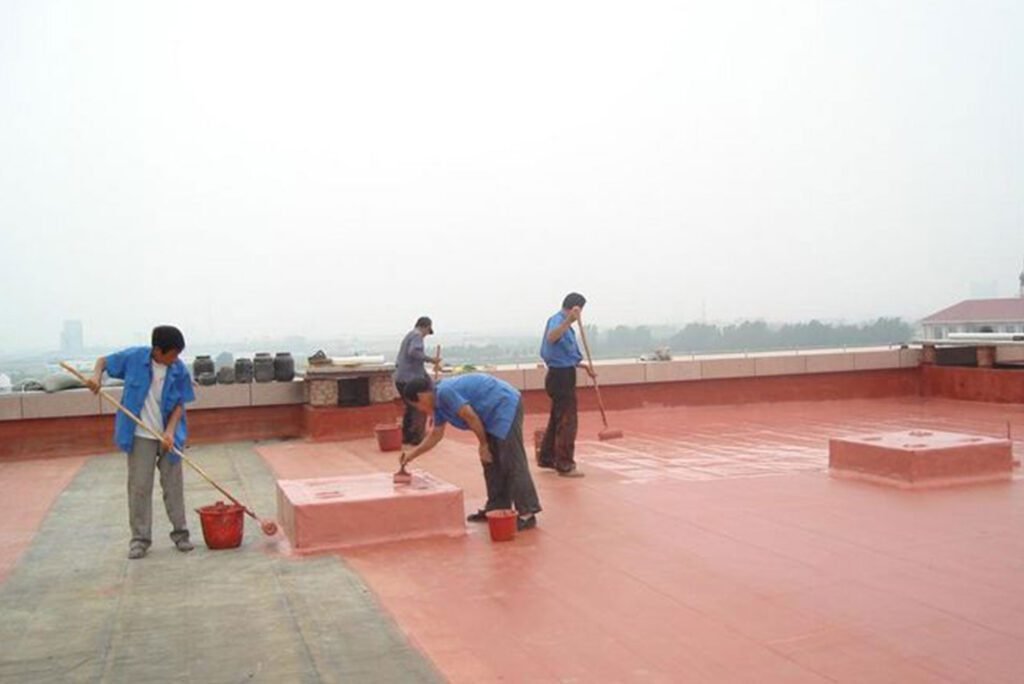
- Efficient workforce coordination
- Strict quality control
Even minor inconsistencies in application can lead to weak points and eventual leaks.
Complex Structural Details
Commercial roofs often include:
- HVAC systems
- Skylights
- Drainage outlets
- Pipe penetrations
These details increase the number of vulnerable areas where leaks can occur.
Exposure to Harsh Environmental Conditions
Large roofs are directly exposed to:
- UV radiation
- Heavy rainfall
- Temperature fluctuations
- Wind uplift
Over time, these factors can degrade even high-quality materials if not properly selected and applied.
Choosing the Right Waterproofing System
Selecting the appropriate system is one of the most critical decisions in the process.
Liquid Waterproof Membrane Systems
Advantages:
Liquid-applied membranes have become a go-to for large commercial projects. Beacuse:
- Seamless – No joints, no overlaps, no weak spots for water to sneak through.
- Adaptable – Works around penetrations and complex details.
- Repairable – Damage happens. With liquid systems, you patch the spot. No need to tear up large sections.
What to consider:
Different liquids do different things. Common liquid systems include:
- Polyurethane coatings – Flexible, tough, sticks like crazy. Good for roofs that move.
- Acrylic coatings – Handles sun well, reflects heat, water-based. Great for sunny roofs.
- Silicone coatings – Weathers like a champ. Good for wet climates and ponding water.
- Polyurea coatings – Cures quckily. Super strong. High strength.
Sheet Membrane Systems
Advantages:
Sheet membranes are suitable for:
- Large flat surfaces
- Projects requiring uniform thickness
Limitations:
However, seams and overlaps must be carefully handled to avoid leakage.
Performance Requirements for Large Roofs
When selecting materials, consider:
- High elasticity to accommodate movement
- Strong adhesion to various substrates
- Long-term UV resistance
- Water resistance and durability
Pre-Application Preparation
Roof Inspection and Condition Assessment
Before you even think about buying material, get up on the roof and look around. Look for leaks. Feel for soft spots. Figure out what you’re dealing with.
- Existing leaks — Where are they? What’s causing them? Fix the cause, not just the symptom.
- Structural issues — Any areas that feel bouncy or weak? Those need attention before coating.
- Old coatings — What’s already up there? Is it sound? Will your new system stick to it?
This step helps in designing a targeted waterproofing plan.
Surface Cleaning and Preparation
A clean substrate ensures proper adhesion:
- Remove dust, oil, and debris — Every bit of it. The coating needs to bond to the roof, not to a layer of dirt. Grind it. Pressure wash it. Degrease it.
- Repair damaged areas — Cracks, holes, soft spots, all of it needs to be fixed before the coating goes on.
- Ensure surface dryness — Moisture is the enemy. Test it. Don’t assume. If the roof is wet, the coating won’t stick.
Skipping surface preparation is the single biggest cause of coating failure.
Pre-Application Preparation
This is the core of the whole process. Do each step carefully, and you’ll end up with a roof that lasts.
1. Treatment of Critical Details
Reinforcing Vulnerable Areas
Focus on:
- Joints and seams
- Drain outlets
- Penetrations
Use sealants and reinforcing materials to strengthen these areas.
2. Primer Application
Enhancing Adhesion
Apply primer to:
- Improve bonding
- Seal porous surfaces
- Reduce air bubbles
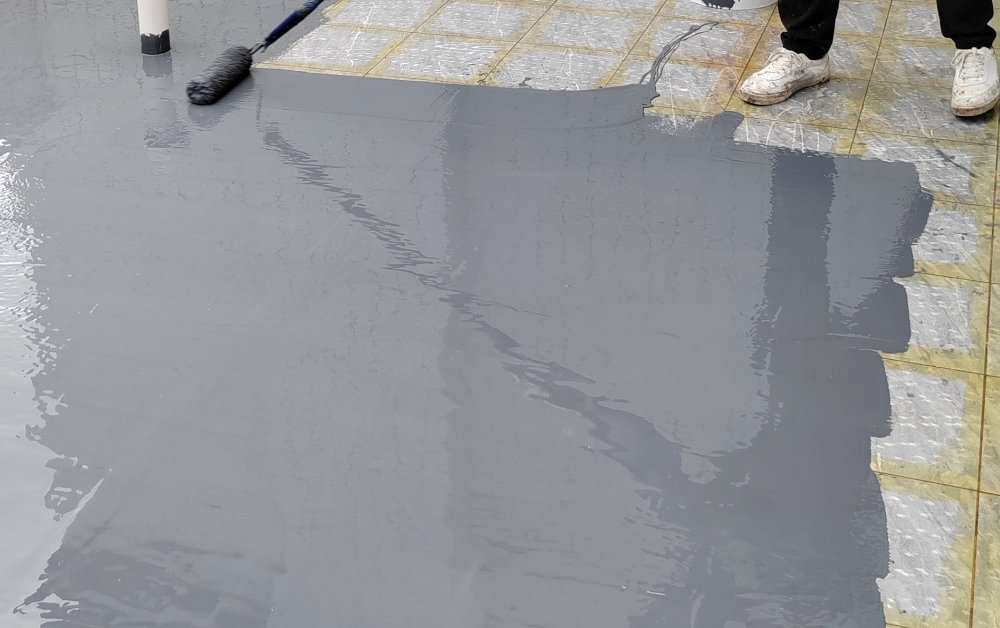
3. Main Waterproof Layer Application
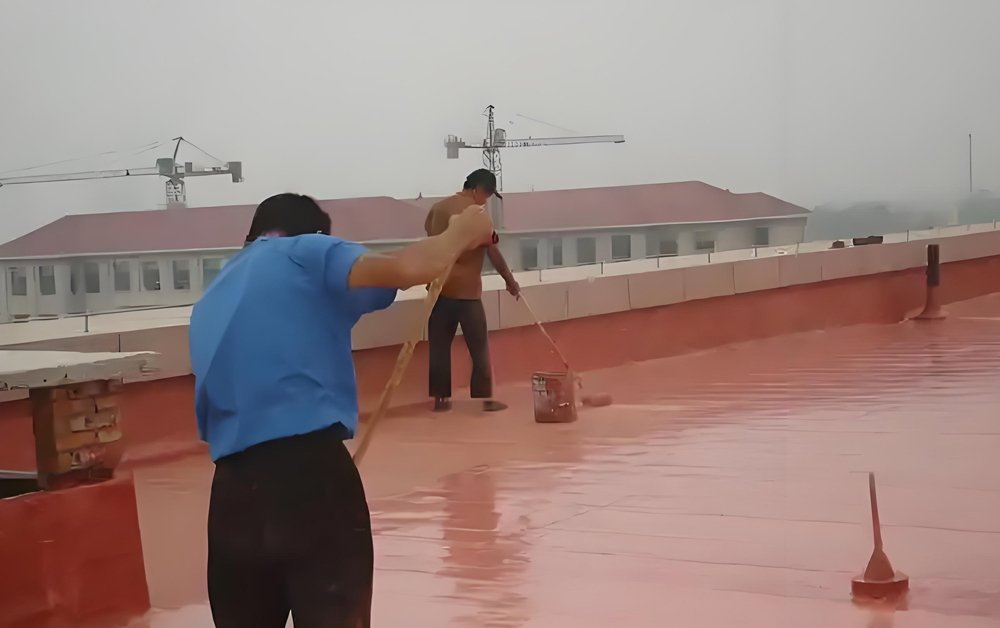
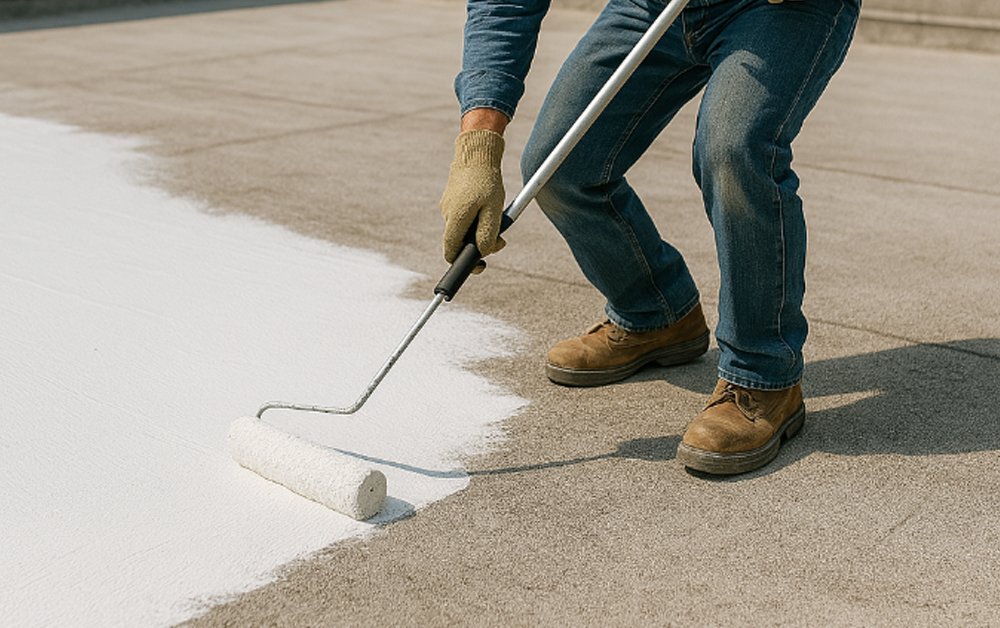
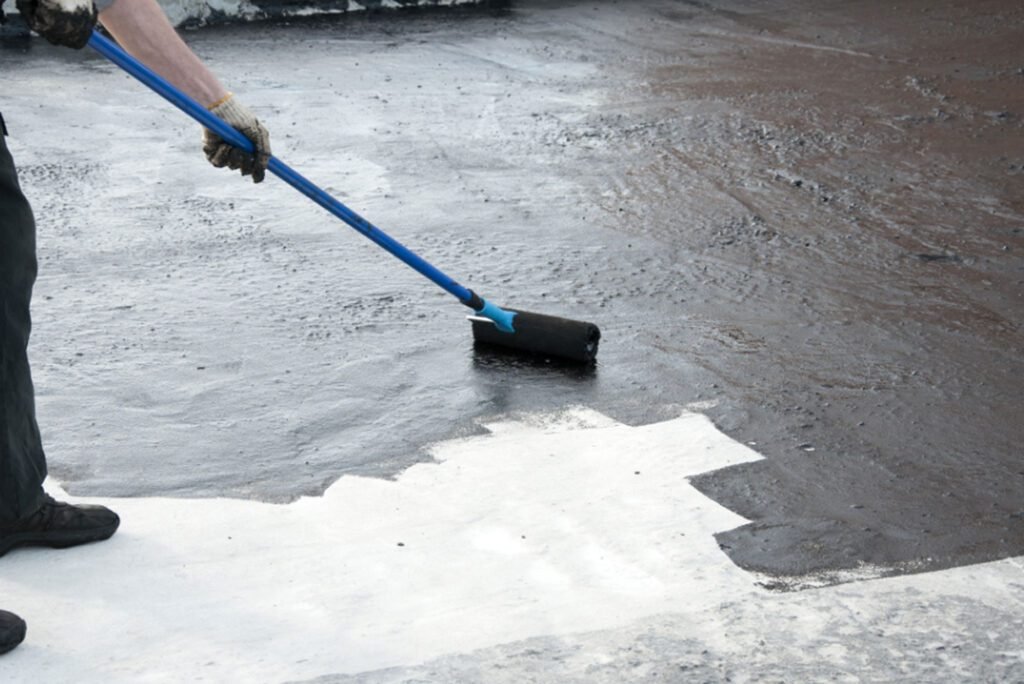
Uniform Coating
- Applied at uniform thickness.
- No thin spots or missed areas.
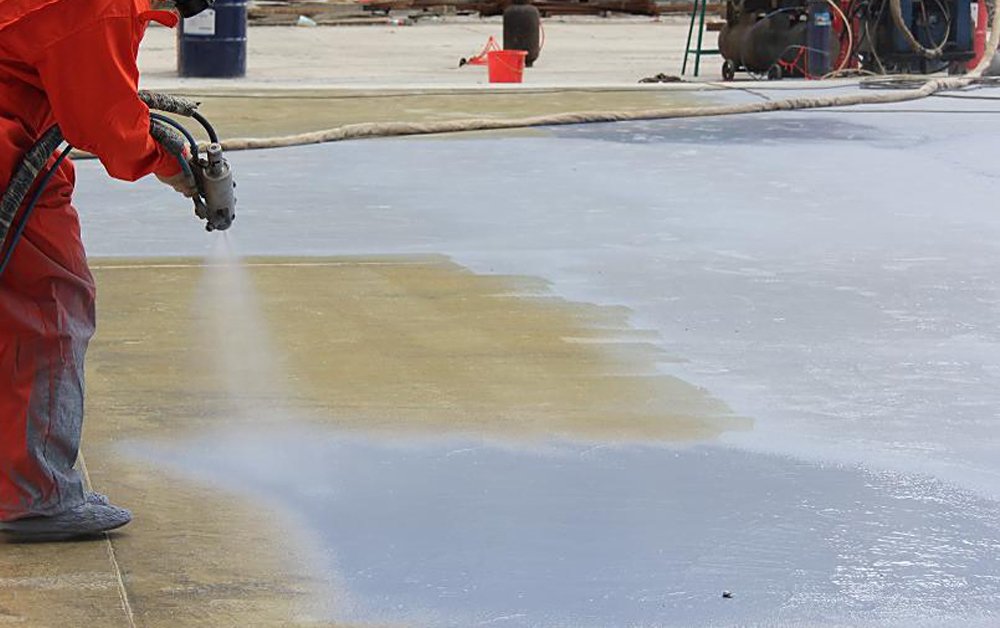
- Application method (roller/brush/spray) appropriate for product.
- Manufacturer guidelines followed.
4. Multi-Layer System Design
Improving Durability
Large roofs benefit from multi-layer systems:
- Base layer for adhesion
- Reinforcement layer
- Top waterproof layer
This structure increases reliability.
5. Protective Topcoat
UV and Weather Protection
A protective layer helps:
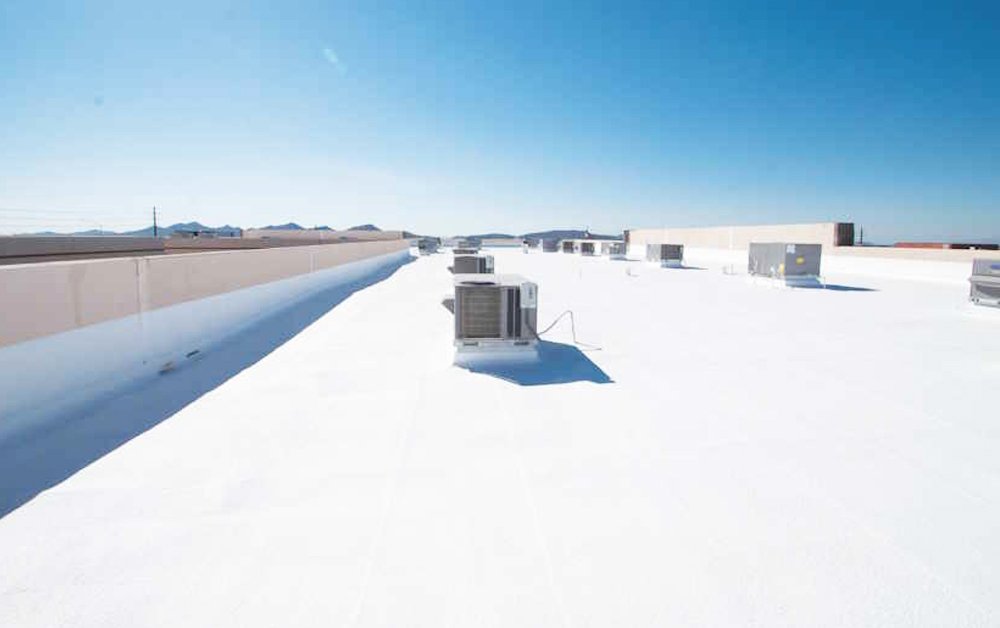
- Reflect sunlight
- Reduce thermal stress
- Extend service life
Quality Control and Common Mistakes to Avoid
Inconsistent Application
Uneven coating thickness can lead to weak points.
Poor Detail Treatment
Ignoring small areas like joints often results in major leaks.
Improper Weather Conditions
Avoid construction during extreme weather. Check the conditions before you start. If it’s too hot, too cold, or too humid — wait. A day of delay is nothing compared to a failed roof.
Maintenance Strategies for Long-Term Performance
| Maintenance tasks | Frequency | Key actions |
| Routine Inspection | At least once a year | Walk the roof; check for cracks, blisters, ponding, debris |
| Immediate Repairs | When issues are found | Fix cracks, blisters, failed seals immediately – don’t wait |
| Cleaning & Drainage | Regular | Remove debris; clear drains and gutters; prevent ponding |
How to Select a Reliable Waterproofing Supplier?
Product Quality and Range
Choose suppliers offering diverse and high-performance products.
Technical Support
Professional guidance ensures correct application and better outcomes.
Project Experience
Suppliers with experience in large-scale projects are more reliable.
YURU Waterproof – Your Partner for Large Commercial Roof Projects
Comprehensive Waterproofing Solutions
YURU Waterproof provides a full range of waterproof materials for large commercial roofs:
- Polyurethane coatings
- Acrylic coatings
- Silicone coatings
- Polyurea systems
- Primers and reinforcing fabrics
- Waterproof membranes
Designed for Complex and Harsh Environments
Our products are engineered to withstand:
- Extreme weather conditions
- UV exposure
- Structural movement
Flexible OEM and Project Support
We support contractors and distributors with:
- Custom formulations
- Bulk supply
- Technical consultation
Proven Reliability
With consistent product quality and technical expertise, YURU helps reduce project risks and improve long-term performance.
Benefits of Proper Waterproofing for Large Commercial Roofs
Extended Roof Lifespan
A roof that’s properly waterproofed doesn’t just last longer – it lasts a lot longer. We’re talking years of extra service life.
High-quality systems protect against the things that kill roofs: UV degradation, moisture infiltration, etc.. Instead of replacing your roof in 10 years, you might get 20 or more.
That’s not just a longer life. That’s a better return on your investment.
Reduced Maintenance Costs
Fewer repairs, lower operational expenses.
Improved Energy Efficiency
Reflective coatings reduce heat absorption and cooling costs.
Enhanced Building Safety
Prevents water damage and structural issues.
FAQs:
1. What is the best waterproofing method for large commercial roofs?
Liquid-applied membranes are often preferred due to their seamless coverage. Secondly, there is the waterproof membrane series.
2. How long does waterproofing last?
Typically 10–20 years depending on materials and maintenance.
3. How often should inspections be done?
At least once a year or after extreme weather.
4. Is waterproofing environmentally friendly?
Many modern coatings are water-based and eco-friendly.
5. How long does installation take?
Depends on roof size, but typically several days to weeks.
Conclusion:
Understanding how to waterproof a large commercial roof is essential. Pick the right materials. Follow the steps. Take care of it over time. Do those things, and you’ll have a roof that performs for years.
If you are planning a large commercial roofing project, contact YURU Waterproof today to get customized waterproofing solutions.
YURU Product solutions