Polyurea Concrete Crack Repair Material: Flexibility, Bonding and Waterproof Sealing
Introduction:
Many buyers search for polyurea concrete crack repair material because they are not simply trying to coat a concrete surface. In most real projects, the problem is more specific: a deformation joint is leaking, an expansion joint has re-leaked, a basement crack remains wet, or a settlement joint continues to open a water path after previous repairs.
That is why polyurea concrete crack repair should not be confused with polyurea concrete coating.
A surface coating protects the outside of concrete after the surface is prepared. A crack repair or grouting material is used to seal leakage paths, cover cracks, and reduce re-leakage risk in structural cracks or joints. The performance requirement is different. For crack leakage repair, the material must provide flexibility, bonding strength, and waterproof sealing.
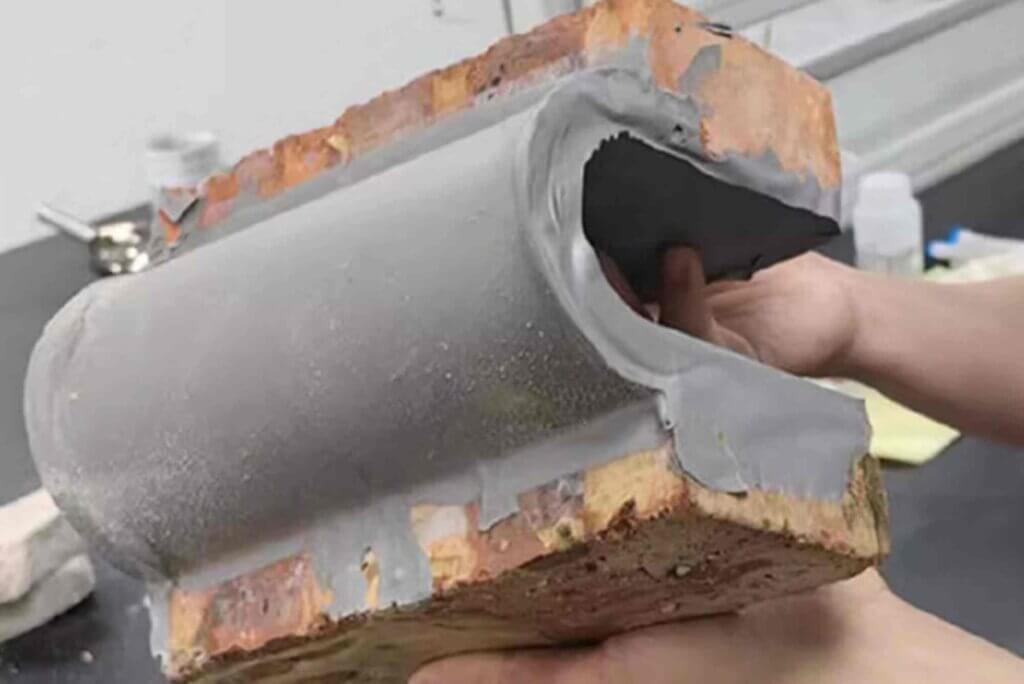
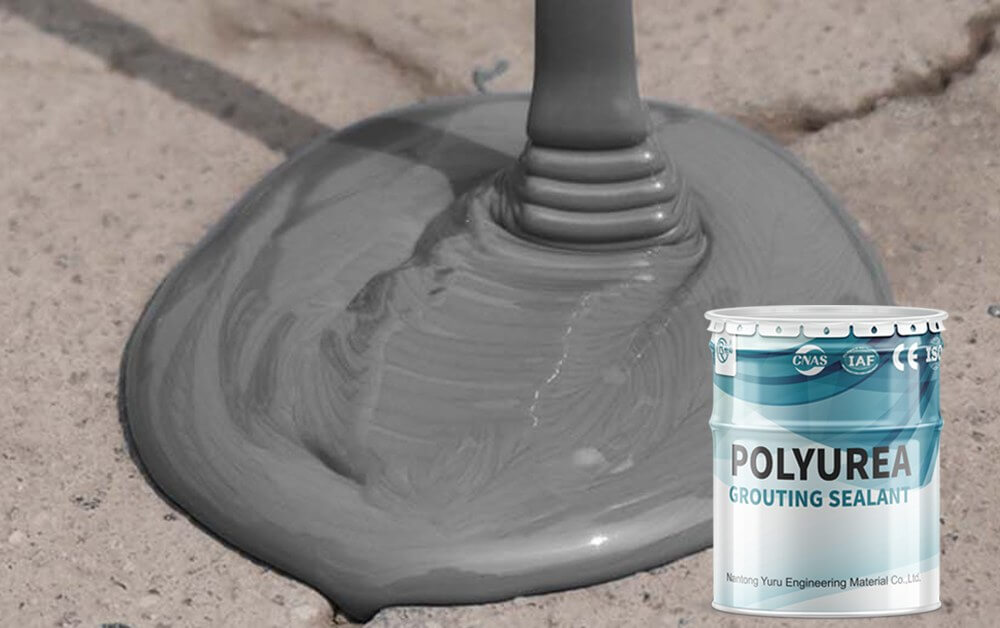
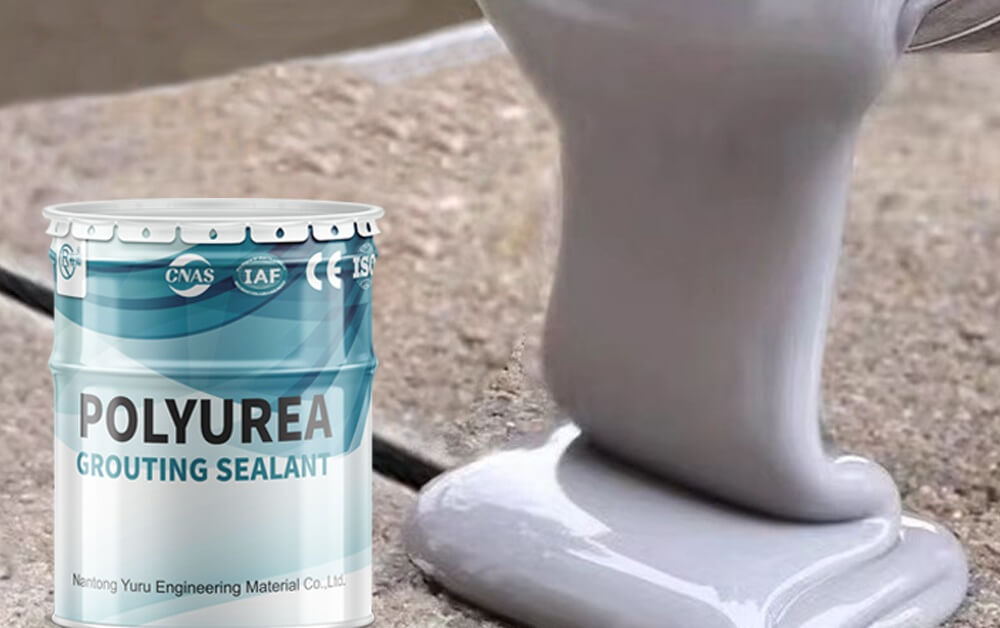
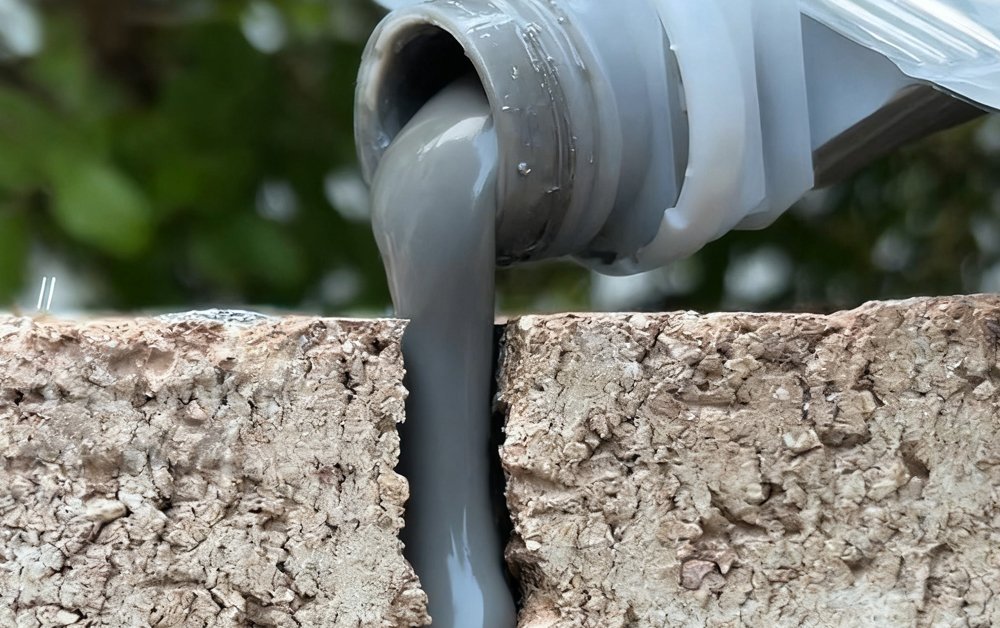
YURU PG-1 Polyurea Grouting Material is a single-component polyurea grouting sealant designed for structural crack leakage and re-leakage repair. It is a homogeneous viscous liquid based on high molecular polymer resin, mineral fillers, and additives. After reacting with water, it forms a high molecular polymer elastomer.
Its value is not that it is a “fast curing” material. It should be understood as a practical single-component grouting material with controlled application time, normal curing behavior, elastic sealing ability, bonding performance, and waterproof protection for suitable crack repair conditions.
What Is Polyurea Concrete Crack Repair Material?
Polyurea concrete crack repair material refers to a repair material used for cracks, joints, leakage paths, and structural crack sealing. In many projects, it works more like a grouting material or sealing material than a surface coating.
For example, a concrete roof coating is applied over the surface. A polyurea grouting material is used when the concern is leakage or re-leakage at deformation joints, expansion joints, settlement joints, or structural cracks.
This difference matters. If a contractor only applies a coating over the surface while the crack or joint still has an internal water path, leakage may return. Crack repair needs the material to seal the weak point more directly.
YURU PG-1 Polyurea Grouting Material is positioned for structural crack leakage repair, especially for deformation joints, expansion joints, joints, and settlement joints. It is a single-component material, so it does not require two-component mixing on site. This makes jobsite use more convenient, but the substrate and construction conditions still need to be controlled.
Key Property 1: Flexibility for Structural Crack Movement
Concrete cracks and joints are rarely completely still. A deformation joint may move slightly. An expansion joint may respond to temperature changes. A settlement joint may carry small long-term movement. If a repair material is too rigid, it may crack again when the structure moves.
That is why flexibility is an important property in polyurea concrete crack repair.
What Flexibility Means in Crack Repair:
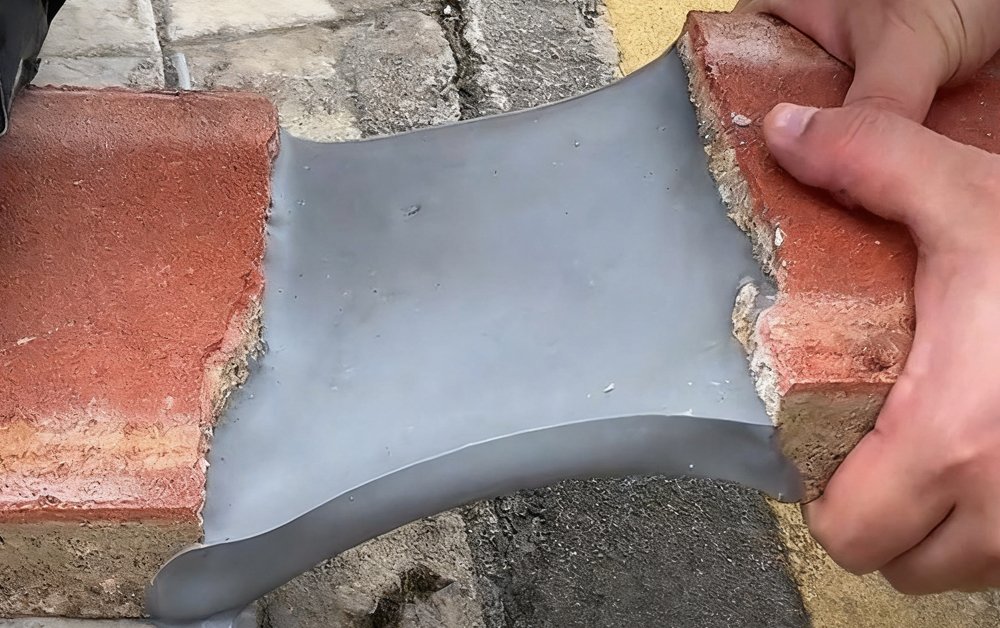
Flexibility does not simply mean the material is soft. In crack repair, flexibility means the cured material can adapt to slight movement while maintaining a sealing effect.
For structural joints and crack leakage repair, this is important because the repaired area may continue to experience minor movement after the repair is finished. A flexible repair material can help reduce the risk of cracking, separation, and re-leakage.
YURU PG-1 is designed to form a polymer elastomer after reacting with water. This elastic nature makes it suitable for crack sealing conditions where movement and waterproofing must both be considered.
Why Elastic Recovery Matters:
Elastic recovery is useful because it shows whether a material can return after being stretched or deformed. For joints and cracks that experience repeated small movement, this property helps the repair layer remain more stable.
In practical terms, this matters for basements, underground structures, utility corridors, water-retaining areas, deformation joints, and settlement joints. These areas may not need a rigid repair layer. They need a sealing material that can stay continuous while the structure moves slightly.
However, flexibility should not be misunderstood as structural reinforcement. If the crack is caused by serious structural movement, settlement, or load-bearing failure, the project should be evaluated separately — a flexible grouting material can help seal leakage, but it cannot replace structural repair design.
Low-Temperature Flexibility
Low-temperature flexibility also matters in areas with cold weather or large temperature differences. Some repair materials become brittle at low temperatures, which may lead to cracking or loss of sealing performance.
For crack repair projects in cold or changing environments, low-temperature bendability can be a useful reference. It helps show whether the material can maintain flexibility when the environment becomes cold.
Key Property 2: Bonding Strength on Dry and Wet Base Surfaces
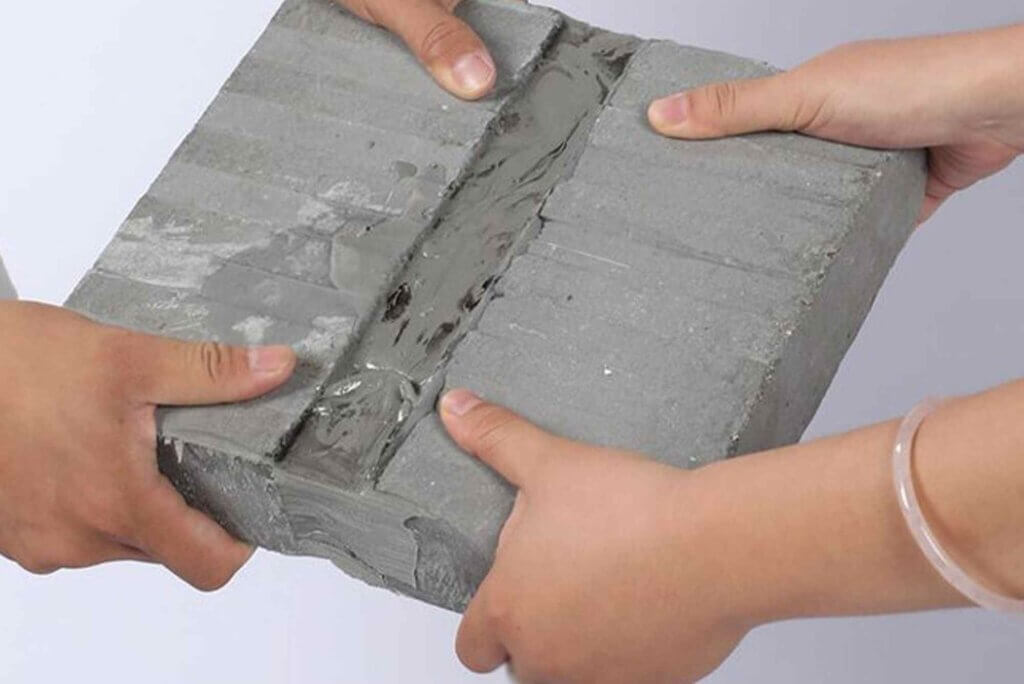
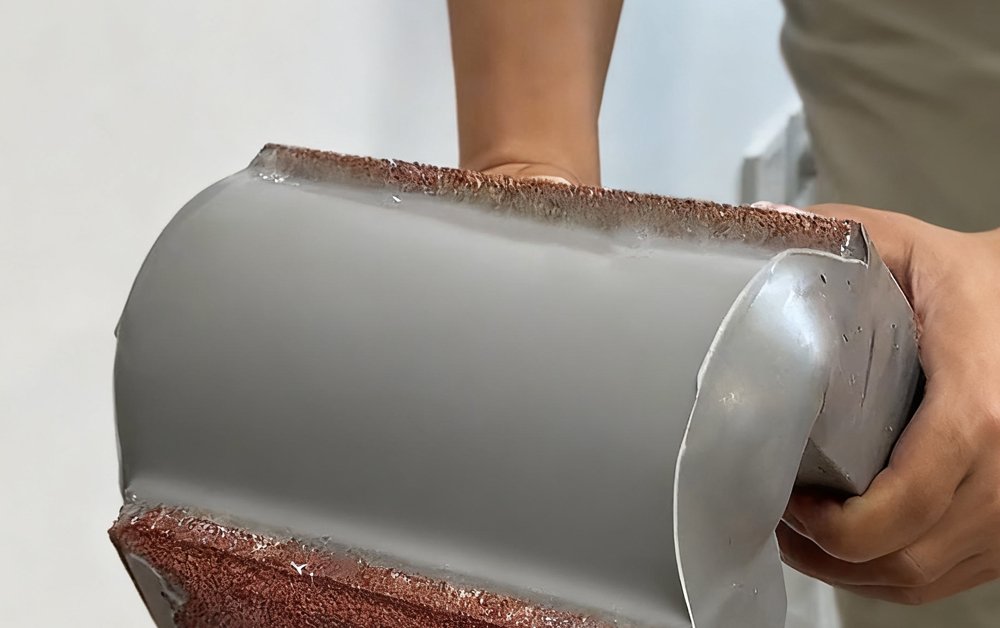
Bonding is another major factor in crack repair. A grouting material must not only fill or cover the crack. It must also connect well with the base surface or crack edges so that the sealing effect can remain stable.
Poor bonding can lead to delamination, local separation, hollow spots, or repeated leakage.
Why Bonding Strength Matters:
A crack repair material is exposed to water pressure, moisture movement, temperature changes, and sometimes slight structural movement. If it does not bond well to the base, water may find a new path around the repair.
For deformation joints, expansion joints, settlement joints, and general concrete joints, bonding strength helps the material remain in place after curing. It also helps reduce the risk of re-leakage.
Dry Base and Wet Base Bonding
There is one important point to explain clearly: wet-base bonding does not mean the material should be applied over visible open water.
PG-1 has bonding performance on dry base and wet base surfaces. This is helpful for damp construction conditions, because many leakage repair projects are not perfectly dry. However, the construction surface should not have open water. If there is visible water, it should be drained or treated before application.
This distinction is important for contractors. A damp or wet base surface is different from standing water or active water flow. Applying material directly over open water may reduce bonding and sealing quality.
How to Improve Bonding in Crack Repair?
Bonding depends on both material quality and jobsite preparation. Before application, the base should be cleaned to remove slurry, dust, loose material, and weak surface layers.
The contractor should also check whether the site temperature is suitable. Construction below 5°C should be avoided. After opening the barrel, the material should be used as soon as possible and should not remain exposed to air for a long time.
To improve bonding:
- Remove dust, slurry, and loose particles.
- Confirm there is no visible open water.
- Check the crack or joint condition before repair.
- Avoid low-temperature construction.
- Use the opened material within the recommended working time.
- Protect the repair area before the material is fully dry.
These steps are simple, but they often decide whether the repair lasts.
Key Property 3: Waterproof Sealing Against Leakage and Re-Leakage
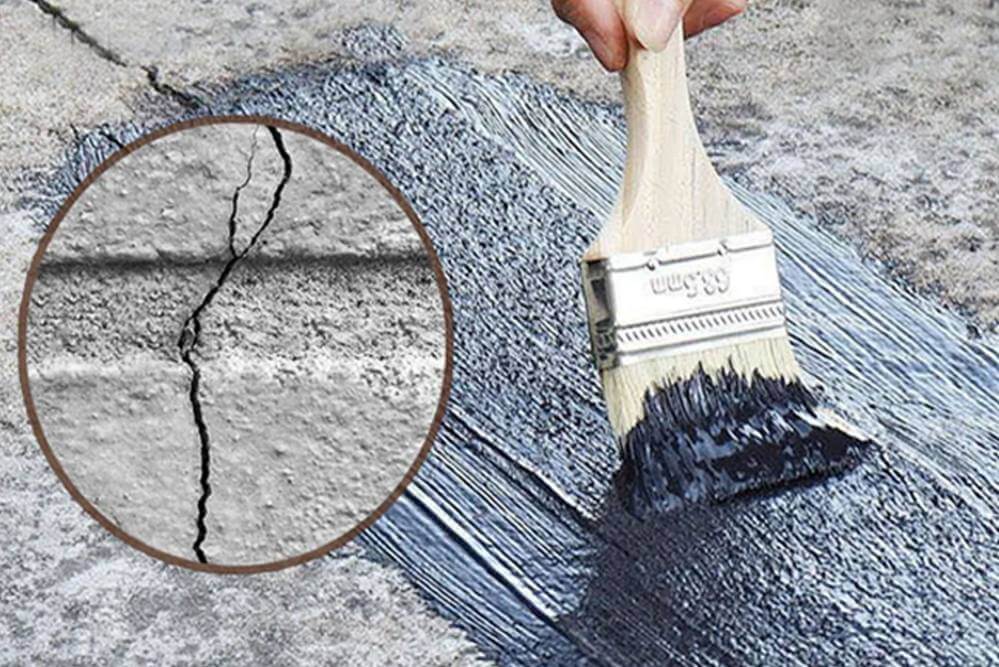
For structural crack repair, waterproof sealing is often more important than surface appearance — the goal is to stop leakage, reduce re-leakage, and protect the structure from water paths.
This is where polyurea grouting material has practical value.
Why Waterproof Sealing Is the Main Goal?
In deformation joints, expansion joints, settlement joints, and concrete joints, leakage often comes from movement or hidden water paths. If the repair does not create a durable sealing effect, water may return through the same weak point.
PG-1 is used for leakage and re-leakage in structural cracks. Therefore, the article should not describe it as a decorative surface coating or a fast roof repair coating. Its stronger positioning is waterproof crack repair and structural joint leakage sealing.
Dense Elastomer After Water Reaction
After reacting with water, the material forms a high molecular polymer elastomer. This cured body is designed to be dense and elastic. A dense elastomer helps create a waterproof sealing effect, while elasticity helps the repair adapt to slight movement.
This combination is especially useful in joints and cracks that require both water resistance and flexibility.
Water Absorption and Impermeability
Low water absorption and impermeability are also important. In wet structures or underground repair projects, a crack repair material may remain in contact with moisture for a long time. If the material absorbs too much water or loses density, sealing performance may decline.
A suitable polyurea grouting material should reduce water penetration and help maintain a stable repair layer. Still, final performance depends on crack condition, substrate preparation, application method, and site protection.
Why Normal Curing and Working Time Matter?
PG-1 should not be described as a fast-curing grouting material. Its working time and surface drying time are more suitable for controlled application and normal curing.
This is not a disadvantage. In crack repair, a reasonable working time can help the applicator prepare, place, and finish the material properly.
Why This Material Should Not Be Described as Fast Curing?
Some buyers assume that all polyurea materials cure very fast because they have seen spray polyurea coating systems. That is not correct.
Spray polyurea coating, polyurethane foaming grout, and single-component polyurea grouting material are different systems. They should not be described with the same curing expectation.
For PG-1, the better wording is:
- Controlled working time
- Normal curing
- Practical application window
- Single-component convenience
- Elastic waterproof sealing
This avoids misleading contractors who may expect the material to behave like spray polyurea or rapid foaming PU grout.
Application Time and Site Control
The application time means the contractor should prepare the substrate, tools, and work area before opening the barrel. Once opened, the material should be used as soon as possible.
If the material remains exposed to air for too long, crusting may occur. That can affect workability and final application quality.
Before opening the product, the team should already confirm:
- The base is clean.
- There is no open water.
- The temperature is suitable.
- The application area is ready.
- Tools and workers are prepared.
Good site control is part of product performance.
Surface Drying and Protection
After application, the surface needs time to dry — before the material is actually dry, the construction site should be protected from rain, dust, touching, damage, or disturbance.
This is especially important in underground repairs, basements, wet areas, and joint repair projects. If the material is disturbed before proper drying, sealing quality may be affected.
Where Polyurea Concrete Crack Repair Material Is Used?
Polyurea grouting material is used where cracks or joints need elastic waterproof sealing. It is not limited to one type of structure, but the site condition must be checked before use.
Deformation Joints
Deformation joints are designed to allow movement. If they leak, a rigid repair material may not perform well for long. A flexible sealing material is more suitable when slight movement remains.
Polyurea grouting material can help create an elastic repair layer for deformation joint leakage.
Expansion Joints
Expansion joints move with temperature changes. They may open and close slightly over time. For this reason, waterproof repair materials used in expansion joints should have flexibility and elastic recovery.
Before application, the joint should be cleaned and the surface should have no open water.
Construction Joints and General Joints
Construction joints are common weak points in underground concrete and water-retaining structures. If water finds a path through the joint, surface patching alone may not be enough.
Polyurea grouting material can be used for joint leakage and re-leakage repair when the project requires elastic waterproof sealing.
Settlement Joints
Settlement joints may experience slight long-term movement. A repair material for settlement joints should consider both bonding strength and flexibility.
If structural movement is too large, the joint design should be reviewed. The grouting material can help with sealing, but it cannot solve structural settlement.
Basements, Underground Structures and Wet Areas
Basements and underground structures often have damp conditions. This makes bonding and waterproof sealing more important.
PG-1 can be considered for structural crack leakage and re-leakage repair in such conditions, but there should be no visible open water on the construction surface. If active water leakage is severe, another injection material such as polyurethane grout may need to be used first.
Polyurea Grouting Material vs PU Grout, Epoxy Resin and Acrylate Grout
Many buyers compare polyurea grouting material with PU grout, epoxy injection resin, and acrylate grout. It’s easy to do — they all show up in similar situations on site. But they’re not interchangeable, and making a decision just because you recognize the name is a good way to end up with the wrong product.
Polyurea Grouting Material
Polyurea grouting material is suitable for structural crack leakage and re-leakage repair where elastic sealing, bonding strength, and waterproof performance are important.
Its advantages include single-component application, elastic sealing, bonding to dry and wet base surfaces, and waterproof protection. It is especially relevant for deformation joints, expansion joints, joints, and settlement joints.
Polyurethane Grout
Polyurethane grout is commonly used for active water leakage and rapid water stopping. It can react with water and form foam or sealing material depending on the type.
PU grout is often selected when water flow is obvious and fast leakage control is needed. It can be hydrophobic, hydrophilic, oil-based, water-based, one-component, or two-component depending on the application.
It is not the same as polyurea grouting material. For severe active leakage, PU grout may be used first, followed by other sealing or protection methods.
Epoxy Injection Resin
Epoxy injection resin is more suitable for dry structural cracks where bonding and strength are the main goals. It can help restore structural connection in suitable dry cracks.
However, epoxy is usually not the first choice for active water leakage. It is also less flexible than elastic crack sealing materials.
Acrylate Grout
Acrylate grout is often used for fine seepage, curtain grouting, and low-viscosity penetration. It can be useful where the leakage path is fine or complex.
It requires professional application control and should be selected based on project conditions.
Surface Polyurea Coating
Surface polyurea coating is used for waterproofing and protecting the surface after crack treatment. It can be useful on roofs, platforms, water tanks, or concrete protection areas.
However, coating should not be confused with crack repair grouting. A coating protects the surface. A grouting material is used to address cracks, joints, or leakage paths.
In many projects, both may be needed: first treat the crack, then protect the surface.
Case Example: Polyurea Grouting Material for Re-Leakage Repair in Structural Joints
Project Background:
A customer working on an underground concrete repair project faced repeated leakage at structural joints. The area was damp for a long time, and the joint showed slight movement. Before contacting YURU, the customer had used a rigid repair material. The surface looked sealed for a short period, but leakage returned later.
The customer did not want only a surface coating. The real need was a crack and joint repair material that could handle damp conditions, slight movement, and re-leakage risk.
Problem Analysis:
After discussing the site condition, YURU Waterproof considered that the main problem was not simply surface waterproofing. The internal joint path was still allowing water movement. Also, because the area had slight deformation, a rigid material could crack or separate again.
The project needed a material with:
- Flexibility for slight structural movement
- Bonding strength on the base surface
- Waterproof sealing ability
- Resistance to re-leakage
- Practical application for damp repair conditions
- No application over visible open water
Material Recommendation:
YURU recommended PG-1 Polyurea Grouting Material for the structural joint leakage repair.
The reason was not “fast curing.” Instead, the product matched the repair needs because it is a single-component polyurea grouting material that reacts with water to form a polymer elastomer. It provides flexibility, bonding strength, and waterproof sealing for suitable structural crack and joint leakage repair.
For this project, YURU also reminded the customer that the construction surface should not have open water. The base needed to be cleaned in advance to remove slurry, dust, and loose material.
Application Guidance:
YURU advised the customer to prepare the site before opening the barrel. The material should be used as soon as possible after opening and should not remain exposed to air for a long time.
The application team also needed to avoid construction below 5°C and protect the repair area before the material was actually dry.
The focus was not only on the material, but also on the repair process: clean base, no open water, correct site temperature, timely application, and protection after work.
Result and Takeaway:
After application, the customer reported improved sealing performance at the structural joint repair area. The case shows that repeated leakage should not be treated only as a surface problem.
For structural crack and joint repair, the material should match the movement, moisture, bonding, and waterproof sealing requirements of the site.
This case also shows why polyurea concrete crack repair material should be understood as grouting and sealing support, not simply as a coating product.
What to Confirm Before Buying Polyurea Concrete Crack Repair Material?
Before selecting a polyurea grouting material, review the project conditions carefully.
Ask these questions:
- Is the crack a deformation joint, expansion joint, construction joint, or settlement joint?
- Is the problem leakage or re-leakage?
- Does the crack or joint have slight movement?
- Is the base dry, damp, or covered with open water?
- Does visible water need to be drained first?
- Is elastic sealing required?
- Is wet-base bonding useful for the project?
- Is waterproof sealing the main goal?
- Is the temperature above 5°C?
- Can the opened material be used within the recommended application time?
- Is a surface coating also needed after crack treatment?
- Are TDS, MSDS, and application instructions available?
- Is sample testing needed before bulk purchase?
- Is OEM/ODM or private-label packaging required?
These questions help buyers avoid choosing a material only by name.
Why Choose YURU Waterproof for Polyurea Concrete Crack Repair Solutions?
YURU Waterproof is a professional manufacturer of waterproof coatings, injection grouting materials, and floor coating systems. For structural crack leakage and re-leakage repair, YURU provides PG-1 Polyurea Grouting Material and other grouting repair solutions.
PG-1 is a single-component polyurea grouting material for deformation joints, expansion joints, joints, settlement joints, and structural crack leakage repair. It is designed for flexibility, bonding strength, waterproof sealing, elastic recovery, and convenient construction.
YURU Waterproof can also help customers choose between polyurethane grout, microcrystalline polyurea grout, acrylate grout, epoxy injection resin, and polyurea waterproof coatings — depending on the project.
For example:
- Active water leakage may need polyurethane grout.
- Dry structural crack bonding may need epoxy injection resin.
- Fine seepage may need acrylate grout.
- Flexible waterproof sealing may use polyurea grouting material.
- Surface protection after crack repair may need a polyurea waterproof coating.
YURU Waterproof can provide sample testing, TDS, MSDS, application guidance, project communication, OEM/ODM, packaging customization, wholesale supply, and private-label support.
For contractors and distributors, the value is not only the material. It is also the ability to match the material to the actual crack condition.

FAQs:
1. Is polyurea grouting material fast curing?
PG-1 should not be described as a fast-curing material. It has a controlled application time and normal surface drying time. It is better described as a single-component grouting material with practical working time and normal curing behavior.
2. Can PG-1 be applied on wet base surfaces?
PG-1 has wet-base bonding performance, but the construction surface should not have visible open water. If open water is present, the area should be drained or treated before application.
3. What cracks are suitable for polyurea grouting material?
Polyurea grouting material can be used for leakage and re-leakage repair in deformation joints, expansion joints, joints, settlement joints, and related structural cracks. The final material choice should depend on crack movement, moisture condition, water pressure, and repair goal.
4. Does YURU Waterproof provide polyurea concrete crack repair materials?
Yes. YURU Waterproof provides PG-1 Polyurea Grouting Material, polyurethane grout, microcrystalline polyurea grout, acrylate grout, epoxy injection resin, and other crack repair and waterproofing materials. YURU also supports sample testing, technical documents, OEM/ODM, and project-based material selection.
Conclusion:
Polyurea concrete crack repair material should be evaluated by its real repair function, not by a broad product name.
For deformation joints, expansion joints, joints, and settlement joints, the key properties are flexibility, bonding strength, waterproof sealing, elastic recovery, and suitable application conditions.
PG-1 Polyurea Grouting Material is a single-component grouting material with normal curing behavior. It should not be described as a two-component product or a fast-curing material. Its value is in elastic waterproof sealing for structural crack leakage and re-leakage repair.
A reliable repair starts with the right question:
Is the project a surface coating job, or is it a crack and joint leakage repair job?
Once that is clear, the correct material can be selected.
If you are looking for polyurea concrete crack repair material, PG-1 Polyurea Grouting Material, structural crack leakage repair material, or joint re-leakage sealing solutions, YURU Waterproof can help you evaluate the project condition and recommend a suitable material system.
Contact YURU Waterproof to discuss PG-1 Polyurea Grouting Material, deformation joint sealing, expansion joint waterproofing, settlement joint re-leakage repair, polyurethane grout for active leakage, epoxy injection resin for dry cracks, acrylate grout for fine seepage, sample testing, OEM/ODM supply, and project-based material selection.
YURU Product solutions