Polyurethane Foam Grout: What Makes an Effective Seal?
Foam coming out of an injection point can look reassuring. It tells you the polyurethane has reacted. What it doesn’t tell you is how far the grout has travelled inside the concrete — or whether water can still pass through an untreated section of the crack.
That’s an important distinction when working with polyurethane foam grout. The material needs time to reach the leaking area before expansion restricts its movement. Once cured, it also has to provide a seal suited to the water conditions and the structure itself.
A high expansion rate on a technical data sheet won’t tell you all of that.
What matters on site is where the grout actually goes, how it behaves during the reaction, and whether the leakage remains under control after injection.
What Is Polyurethane Foam Grout and How Does It Seal Leaks?
A wet line along a concrete joint doesn’t always show where the water comes from. The actual leak path may run behind the surface, sometimes through several connected cracks or gaps. Covering the visible opening won’t necessarily reach it.
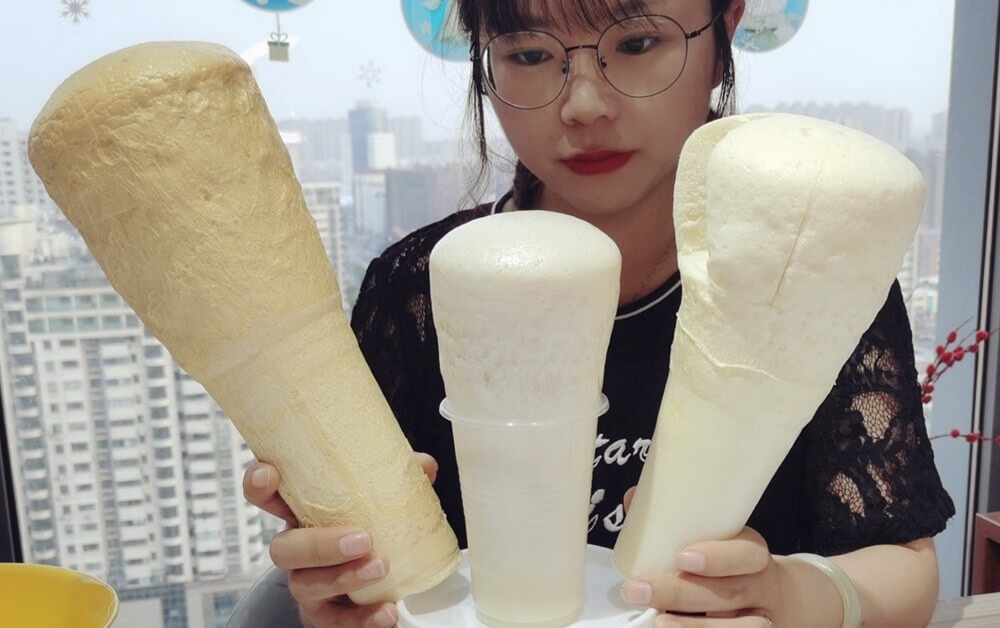
Polyurethane foam grout addresses this condition. It is a liquid resin injected into cracks, joints, or voids, where it reacts and expands. Certain formulations initiate reaction upon water contact. Others employ separate components, with mixing and curing requirements dependent on the product.
As the resin moves through the opening, the expanding foam takes up space and can block the passage of water. But concrete cracks aren’t neat, straight channels. They narrow, widen, and sometimes branch off. Grout might fill one pocket while another connected passage remains open.
There’s another distinction that matters when specifying materials. Polyurethane foam intended for waterproofing is not necessarily equivalent to foam used for slab lifting or soil stabilization. Non-foaming injection resins are different again. Shared basic chemistry does not render materials suitable for the same application.
In practice, repair effectiveness should be evaluated by the leakage controlled — not solely by foam volume observed during injection.

Where Does Polyurethane Foam Grout Work and Where Are Its Limits?
Polyurethane foam grout is commonly applied to leaking basement walls, construction joints, concrete cracks, and underground structures. Tunnel waterproofing represents another application, though conditions may be substantially more demanding than typical basement repair.
Take two leaking joints. One shows damp patches after heavy rain. The other has water flowing continuously. Both may require PU injection, but they don’t necessarily need the same grout. Slow seepage may allow more time for the grout to spread. Severe inflow may need a purpose-designed emergency water-stopping grout.
The intended repair also needs to be clear. Stopping a leak is different from filling a large underground void or lifting a settled concrete slab. Specialized polyurethane systems are used for some of these applications, but that doesn’t mean an ordinary waterproofing foam grout can perform the same work. Foam expansion alone is not evidence of structural reinforcement.
Some jobs need more than one stage. A tunnel with heavy inflow may need emergency injection before further waterproofing or structural repairs. Other leaks may be treated with a suitable injection system without a separate repair stage.
The practical limit is the same in either case: the grout must be suitable for the actual water conditions and the repair the structure needs — not just the application listed on a product sheet.
What Determines Whether PU Foam Forms an Effective Water Seal?
Picture a construction joint with water showing at two spots. From outside, it’s hard to tell if both leaks come from the same opening or separate paths behind the concrete. That matters for injection repair. Treating the most visible leak doesn’t mean you’ve reached the rest of the joint.
Prior to grout selection, the contractor requires a reasonable understanding of the treatment area. Where is the water entering? How far does the affected joint extend? And where can the resin be introduced to reach it?
Once injection begins, the liquid follows whatever passages are available. Some parts of a joint may be narrow, others much wider. The position of the injection packers and the way the grout is introduced influence where it travels.
Then comes the reaction. Water-reactive polyurethane grout changes on moisture contact. If it expands near the injection point, remaining liquid may struggle to move farther. With a strong flow of water, the opposite concern arises: a slow-reacting formulation may struggle to stay in the intended area.
The grout also has to do its job after the reaction has finished. A crack that remains relatively stable doesn’t place the same demands on the cured material as a joint that opens and closes over time. Expected water pressure and continued exposure to moisture are part of that decision, too.
Key Factors Affecting PU Foam Grout Sealing Performance
| What to check | Why it matters |
| Leakage route | Establishes which part of the joint needs treatment |
| Injection access | Influences where the liquid grout can travel |
| Water flow and reaction time | Helps determine whether the material can spread and react in the intended area |
| Foam distribution | Affects whether the required sealing area is filled |
| Cured properties | Determines whether the selected material is suitable for the joint’s service conditions |
When discussing a leaking structure with a grout supplier, photographs of the affected joint, a description of the water flow, and details of the required repair are far more useful.
Those details provide a starting point for selecting the formulation and planning the injection work.
Why Can Foam Expansion Look Successful but Leave Leakage Paths?
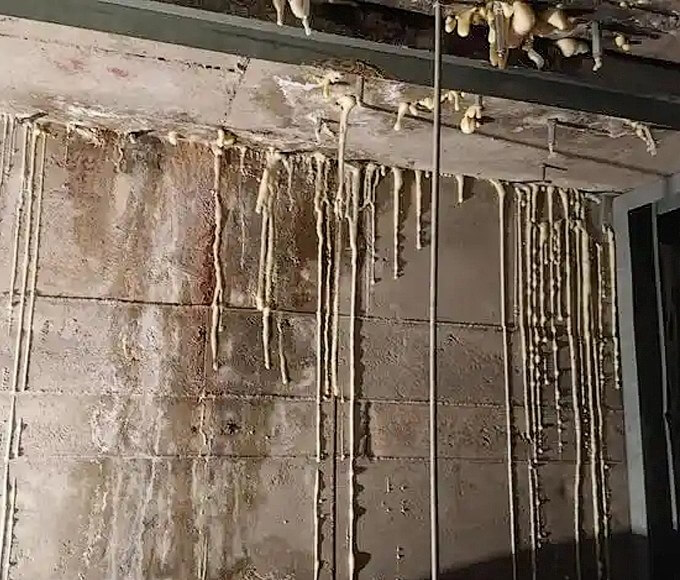
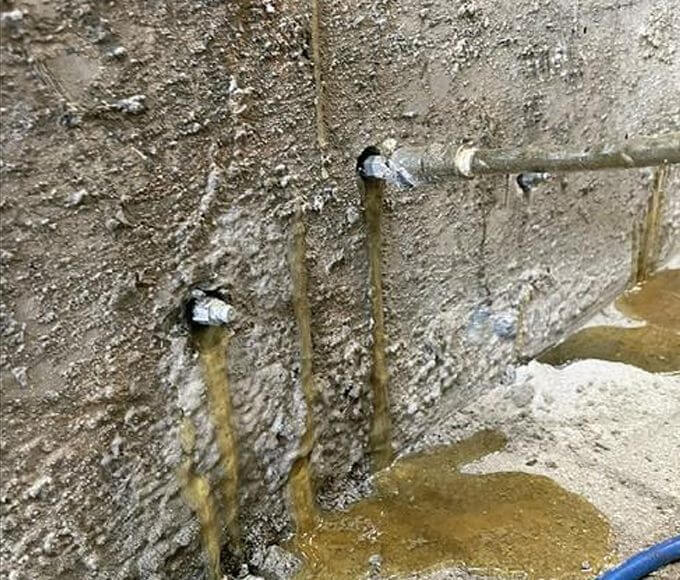
A leaking construction joint may look dry after injection. Foam has appeared around the packer, the visible water flow has stopped, and the treated area seems fine. But what happened farther inside the joint is harder to see. Some grout may have travelled back towards the injection opening while another connected passage received little material.
The difference often shows when water returns. Say the original leak stays dry — but a damp patch appears farther along the same joint. That doesn’t necessarily mean the foam at the first spot failed. Water may be finding another route through connected cracks or gaps not reached during injection.
Different situation: water comes through the original repair area again. The contractor needs to find out: Was the treated passage fully sealed? Has the joint moved? Have water conditions changed? These problems can look similar from the surface but don’t always have the same cause.
Signs to watch while working: grout returning unexpectedly from a nearby opening, foam collecting around the packer, water still seeping after curing. All point to areas needing another look. None alone proves the material is defective.
Judge a successful injection by the leakage it controls — not by foam produced.
Track where water appeared before treatment. Check whether it returns at the same spot or nearby. For underground structures, observe under expected normal-use water conditions.
One dry inspection right after injection can’t establish long-term performance. Further checking depends on structure, repair requirements, and consequences of renewed leakage.
If water reappears, examine the changed leakage pattern before deciding on more injection. Otherwise, more grout may go in without addressing the passage still carrying water.
How Should Contractors Evaluate Foam Expansion and Cured Performance?
Two polyurethane grouts may produce substantially different foam volumes in laboratory testing. That doesn’t necessarily tell a contractor which one will work better in a leaking concrete joint. The figures on a technical data sheet are useful, but only when you understand what was tested.
Take YURU’s OPU formulations as an example. One hydrophobic OPU data sheet reports a foaming rate of 2,627%, while the Emergency Two-Component OPU document lists 3,600%. These figures belong to different formulations.
Same caution for reaction and curing times. A product may specify reaction time, gel time, setting time, or coagulation time. These describe different stages or measurements depending on the test method.
For contractors reviewing several quotations, I would start with the test conditions rather than the largest number in the specification.
How to Read PU Foam Grout Technical Data?
| TDS Parameter | What to Check | What It Doesn’t Tell You |
| Viscosity | Test temperature and measurement method | How far grout will travel in an actual crack |
| Reaction / Setting Time | What was measured and under which conditions | Exact reaction behavior at every job site |
| Foaming Rate | Expansion calculation and test conditions | Whether the grout will stop a particular leak |
| Cured Mechanical Properties | Test method, units, and specimen conditions | Structural performance of the repaired concrete |
| Water Sealing Performance | Test pressure, duration, and specimen details | Long-term performance outside the tested conditions |
Cured material matters too. Foam that fills an opening during injection still needs to perform under conditions the joint will face afterward — water exposure, pressure, or repeated movement.
For projects with demanding waterproofing requirements, contractors should request the test information for the exact formulation being supplied. If the manufacturer offers a modified or custom formulation, its performance should be confirmed separately.
At YURU, different OPU formulations are available for different application requirements. We don’t treat the technical figures from one formulation as specifications for the entire product range.
Prior to material approval, I’d want to know three things: which formulation is supplied, how reported properties were measured, and whether available evidence corresponds to anticipated site conditions. This provides a firmer selection basis than expansion percentage comparison alone.
What Can We Learn from an Emergency Tunnel Water-Stopping Project?
Heavy water inflow in a tunnel calls for a different approach from repairing a slowly leaking basement wall. The immediate priority is water control, and the grout employed must be suited to underground conditions.
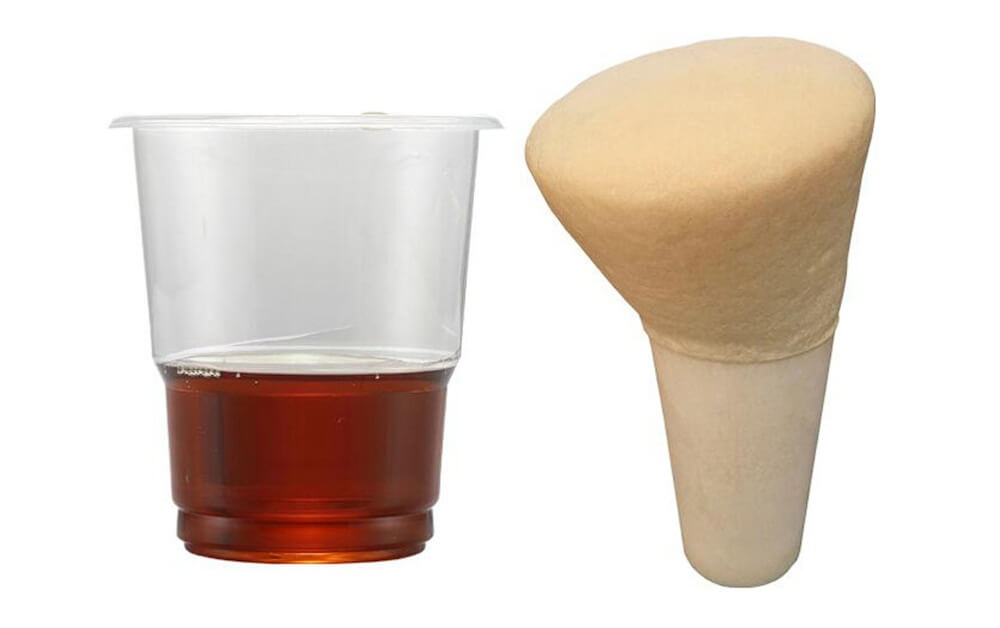
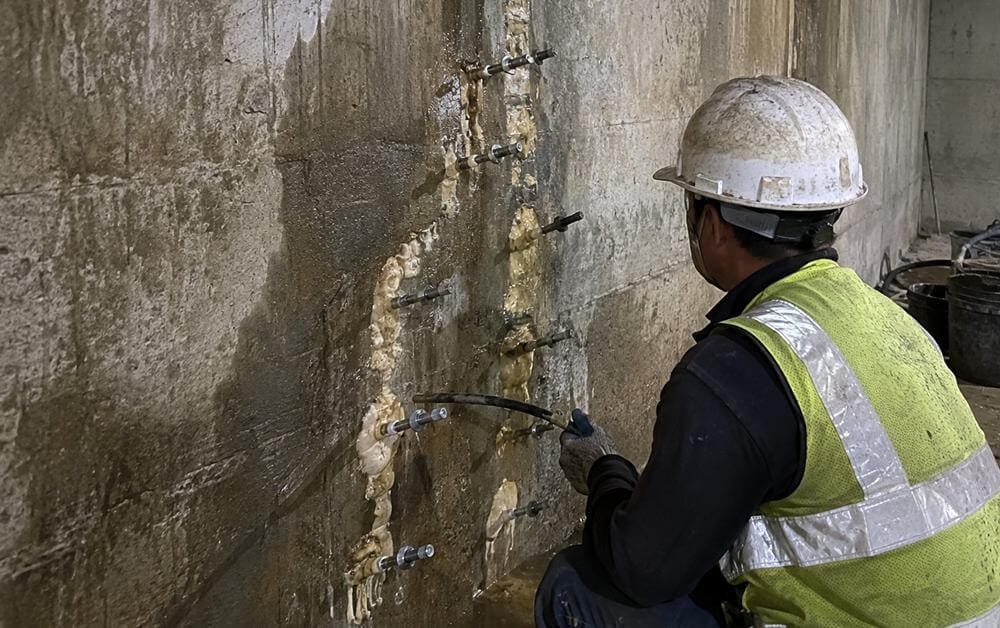
We’ve seen this in a tunnel project where YURU OPU Emergency Two-Component Oil-Based Polyurethane Grout was used to deal with severe water ingress. The project involved a large volume of incoming water, making emergency water stopping the priority.
The injection work successfully stopped the inflow, and the tunnel returned to normal operation.
It’s a useful example because it shows why we distinguish our emergency two-component OPU from other polyurethane grout formulations. They may belong to the same broader material family, but they aren’t necessarily intended for the same leakage conditions.
The emergency OPU formulation is designed for rapid water-stopping applications. Its reaction and expansion characteristics are different from those of our other OPU formulations, and those differences matter when water is flowing through the area being treated.
For a contractor dealing with a similar problem, the first question shouldn’t be which PU grout produces the most foam. It’s whether the proposed formulation has the reaction behavior and supporting technical evidence needed for the particular water conditions.
The tunnel project also highlights something that can get overlooked when looking at product demonstrations. Producing foam is one thing; controlling the actual water inflow is another. In this case, the reported outcome was successful water stopping followed by the tunnel’s return to normal use.
Doesn’t establish performance under every tunnel condition. Assess pressure, pathways, repair requirements per project.
What Should Engineers and Buyers Verify Before Specifying PU Foam Grout?
A contractor asking for polyurethane foam grout to stop a tunnel leak and a distributor looking to stock PU injection materials may use the same product name. But they need different information before placing an order.
For an engineering project, I’d start with the actual problem. Where is the water entering? Is it slow seepage or continuous flow? Is the affected joint likely to move? If water pressure has been measured, that information should be shared with the supplier as well. A few site photographs and a clear description of the leakage can make the initial discussion much more useful.
The subsequent question concerns repair objectives. Emergency stopping may be the immediate priority. Another project might need a sealing system for continued water exposure or joint movement. Agree on those requirements before selecting a formulation.
Once the application is clear, make sure the technical documents belong to the exact grout being supplied. A general OPU product description isn’t enough when several formulations are available.
At YURU, we offer different polyurethane grout formulations, including emergency two-component OPU, and can discuss adjustments for specific project conditions. The final specifications need to be confirmed for the selected formulation.
Engineers and purchasing teams should also request the relevant TDS, SDS, and applicable test reports. Batch quality documentation may be required for project approval or repeat procurement.
For distributors, consistent formulation identification is equally important. Where products are sold under private label, agreed specifications should remain traceable to the material actually supplied.
Where applications are demanding or customized formulations are proposed, sample testing or an appropriate site trial can establish whether the material meets specified requirements prior to bulk purchasing.
Frequently Asked Questions
Does more foam expansion mean better waterproofing?
Not necessarily. Expansion assists in filling available space; however, effective sealing also depends on grout distribution, leakage pathway characteristics, and cured material properties.
Can polyurethane foam grout stop severe water leakage?
Yes, suitable emergency formulations can be used for severe water ingress. YURU’s two-component emergency OPU has been used successfully in a tunnel water-stopping project. However, actual water conditions and injection requirements still need to be assessed.
How can contractors verify a successful PU grout injection?
Verify that the original leakage has ceased, inspect adjacent areas for continuing seepage, and conduct follow-up checks required by the project. A dry surface immediately following injection does not always constitute sufficient evidence of lasting performance.
Can PU foam grout be customized for different projects?
Yes. YURU supports project-specific formulation adjustments, including reaction behavior and viscosity where technically feasible. The resulting specifications should be confirmed through appropriate technical documentation and testing.
Conclusion: What Really Determines a Reliable PU Foam Grout Seal?
A successful PU foam grouting job isn’t measured by how much foam appears around the injection point. The resin must reach the intended leakage pathway before significant foaming restricts its movement. Reaction time, viscosity, and cured properties must also correspond to water flow, anticipated pressure, and joint conditions.
That’s why the grout formulation, site conditions, and sealing results all deserve attention before a material is approved for use.
Selecting PU foam grout for a waterproofing project? YURU Waterproof can help review available formulations and technical specs.
At YURU Waterproof, we offer standard and project-specific PU grout formulations, including two-component emergency OPU for demanding water-stopping applications.
Share your leakage conditions, project requirements, or purchasing needs through our contact page.
YURU Product solutions