Polyurethane Waterproof Coating for Roof: Application, Drying Time and Project Selection
Introduction:
Roof leaks rarely come from one problem. Water gets in through cracks, joints, aging layers, metal connections, and weak spots around pipes and edges. So selecting the right material isn’t just about finding a tough coating — it’s about matching the system to the actual roof.
A polyurethane roof coating is widely used for concrete roofs, commercial buildings, industrial facilities, and renovation projects because it forms a continuous waterproof layer after curing. Unlike traditional sheet membranes, liquid polyurethane can cover complex details and create fewer weak points caused by overlaps or joints.
But not all polyurethane coatings are the same.
For roof waterproofing applications, contractors typically compare single-component oil-based PU, water-based PU, and two-component oil-based PU. Each type has different characteristics in terms of application method, drying time, weather exposure, and long-term protection.
The right polyurethane waterproof coating for roof depends on several factors:
- Is the roof exposed to sunlight or covered by another layer?
- Is the substrate concrete, metal, or an existing waterproof surface?
- Does the project require fast application?
- Is UV resistance important?
- Does the coating need additional protection after installation?
A professional roof system considers the complete environment — not just the coating.
This article covers how PU roof coatings work, the differences between types, drying times, application conditions, and how to pick the right solution for different roofs.
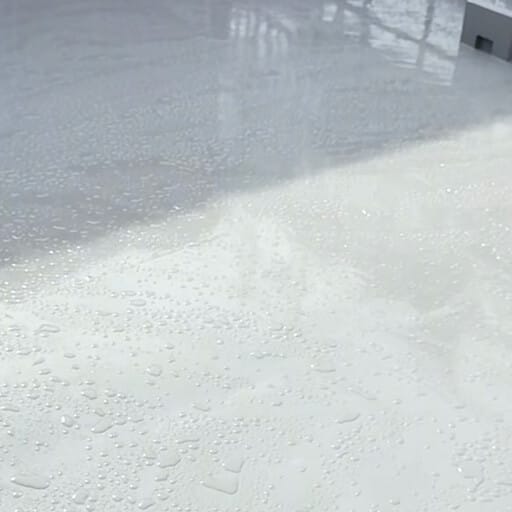
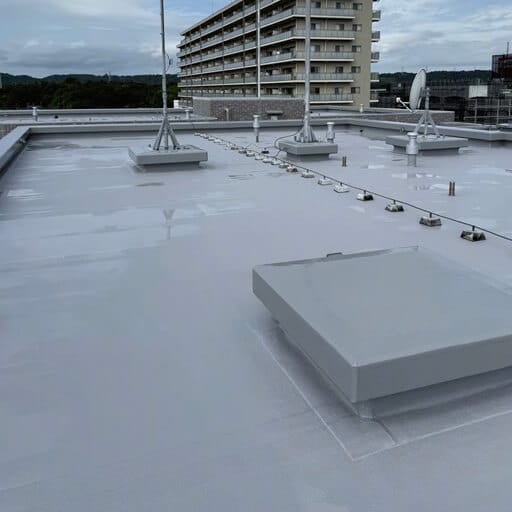
Why Polyurethane Waterproof Coating Is Widely Used for Roof Waterproofing?
Roof structures face continuous outdoor exposure — direct sunlight, rainwater, temperature changes, and seasonal movement.
An effective roof coating must provide waterproof protection while maintaining flexibility when the roof expands and contracts.
Polyurethane waterproof coating is widely specified for roof applications due to its ability to form a seamless waterproof membrane directly on the substrate. The liquid material can flow around corners, edges, and complicated roof details before forming a continuous film.
This makes polyurethane suitable for many roof structures, including:
- Concrete flat roofs;
- Industrial building roofs;
- Commercial building roofs;
- Metal roof waterproofing projects;
- Old roof renovation projects;
- Areas with complex details and penetrations.
Seamless Waterproof Layer for Complex Roof Details
One common weakness of traditional waterproofing systems is connection points.
Roof areas usually contain many details:
- Pipe penetrations;
- Drainage outlets;
- Expansion joints;
- Parapet walls;
- Equipment bases;
- Roof edges.
These areas become leakage points when materials separate or joints fail.
Liquid polyurethane coating covers these areas without creating numerous overlapping joints. Following curing, it forms a continuous waterproof layer that reduces water ingress risk at connection points.
However, the coating still requires proper detailing. A liquid membrane cannot repair structural cracks, loose concrete, or damaged roof components by itself.
Good Adhesion on Different Roof Substrates
Another reason contractors choose polyurethane is its bonding ability.
A properly prepared surface allows polyurethane coating to attach firmly to common substrates such as:
- Concrete;
- Cement mortar;
- Metal surfaces;
- Existing compatible waterproof layers.
Surface preparation remains one of the most important steps.
Dust, oil, loose particles, and weak old coatings kill adhesion. Even a great coating will fail over a bad surface.
Before applying any waterproof roof coating, contractors should inspect:
- Surface strength;
- Moisture condition;
- Existing coating condition;
- Crack locations;
- Drainage areas.
Flexibility for Roof Movement
Roofs undergo daily temperature cycling.
Solar radiation heats surfaces during daytime, with temperatures dropping at night. This repeated expansion and contraction induces stress on waterproof layers.
PU coating is often chosen because it stays flexible.
This flexibility helps the coating adapt to small movements caused by:
- Thermal expansion;
- Minor substrate movement;
- Building operation conditions.
But flexibility doesn’t mean it covers every crack.
Large structural cracks, active movement joints, or damaged concrete should be repaired prior to coating application.
Types of Polyurethane Waterproof Coating for Roof Applications
Polyurethane roof waterproofing materials are not all identical.
The main types used in construction projects include:
- Single-component oil-based polyurethane waterproof coating;
- Water-based polyurethane waterproof coating;
- Two-component oil-based polyurethane waterproof coating.
Each type has different application conditions.
The correct selection depends on:
- Roof exposure;
- Required durability;
- Construction method;
- Protection requirements;
- Project budget;
- Environmental conditions.
Single-Component Oil-Based Polyurethane Waterproof Coating
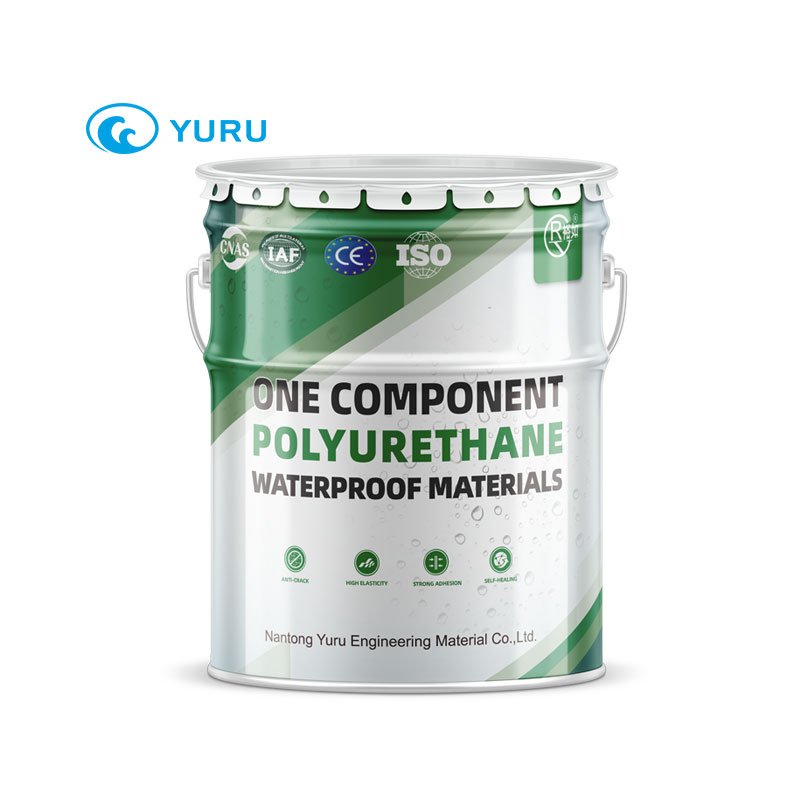
Single-component oil-based polyurethane coating is a ready-to-use material. Contractors do not need to mix two components before application.
This makes it convenient for many waterproofing projects.
Main Characteristics
Typical features include:
- Ready-to-use application;
- Simple construction process;
- Good film-forming ability;
- High solid content;
- Suitable waterproof performance.
For YURU single-component oil-based polyurethane waterproof coating:
Drying and curing time: approximately 8–11 hours;
Solid content: ≥90%.
Actual drying time depends on:
- Temperature;
- Humidity;
- Coating thickness;
- Ventilation;
- Surface moisture.
Suitable Applications
Single-component oil-based PU is commonly considered for:
- Non-exposed roofs;
- Protected waterproof layers;
- Underground waterproofing areas;
- Roof systems where another protective layer will cover the coating.
Important Note for Exposed Roofs
Many customers ask:
“Can oil-based polyurethane coating be directly exposed to sunlight?”
The answer depends on the product design. For long-term outdoor exposure, single-component oil-based PU usually requires an additional protection layer.
Without protection, continuous UV exposure may accelerate aging and reduce service life.
A protection layer or compatible topcoat can improve outdoor durability.
Water-Based Polyurethane Waterproof Coating
Water-based polyurethane coating has become a popular choice for projects that require easier environmental handling and exposed roof applications.
Compared with oil-based systems, water-based PU uses water as the dispersion medium.
Main Characteristics
Typical advantages include:
- Lower odor during application;
- Suitable for many renovation projects;
- Good weather exposure performance;
- Suitable for exposed roof applications.
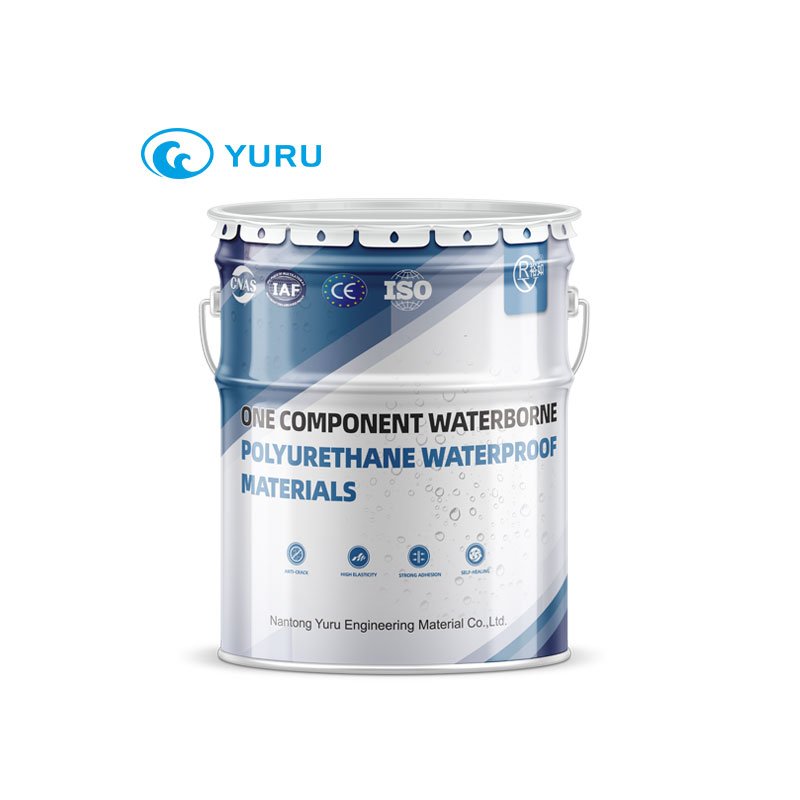
For YURU water-based polyurethane waterproof coating:
- Drying and curing time: approximately 4–8 hours;
- Solid content: ≥65%.
The actual curing speed changes depending on site conditions.
Suitable Applications
Water-based PU coating can be used for:
- Exposed concrete roofs;
- Commercial building roofs;
- Roof renovation projects;
- Outdoor waterproofing areas.
Because exposed roofs directly face sunlight and rain, the coating selection should consider long-term weather resistance.
Why Water-Based PU Is Often Selected for Exposed Roofs?
An exposed roof has no additional protective layer above the waterproof coating.
The coating itself must handle:
- UV radiation;
- Rain exposure;
- Temperature changes;
- Outdoor aging.
For this reason, water-based polyurethane waterproof coating is often considered when the project requires direct outdoor exposure.
However, correct surface preparation and application thickness remain essential.
Two-Component Oil-Based Polyurethane Waterproof Coating
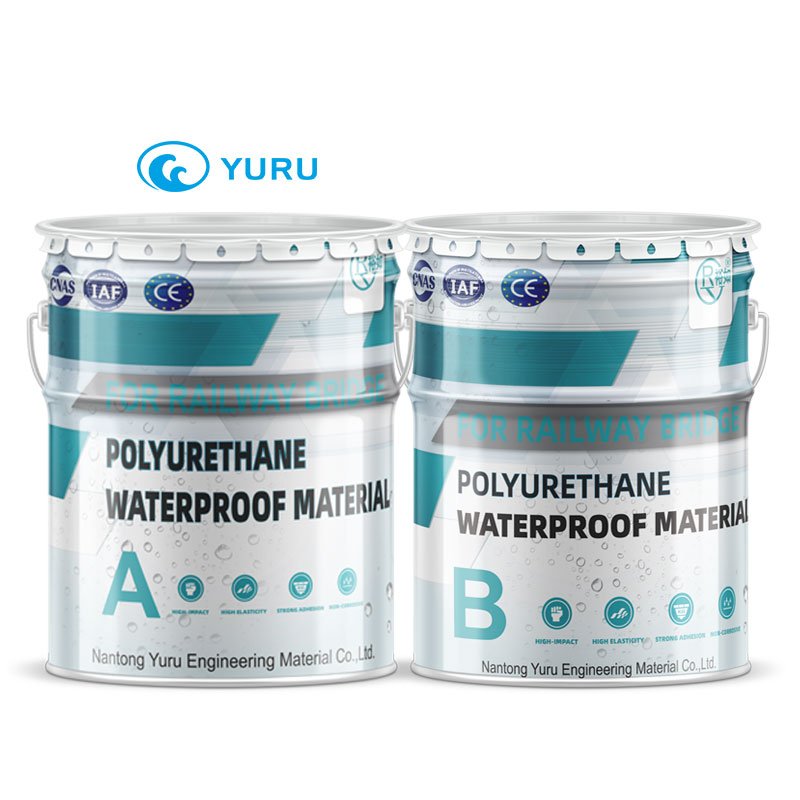
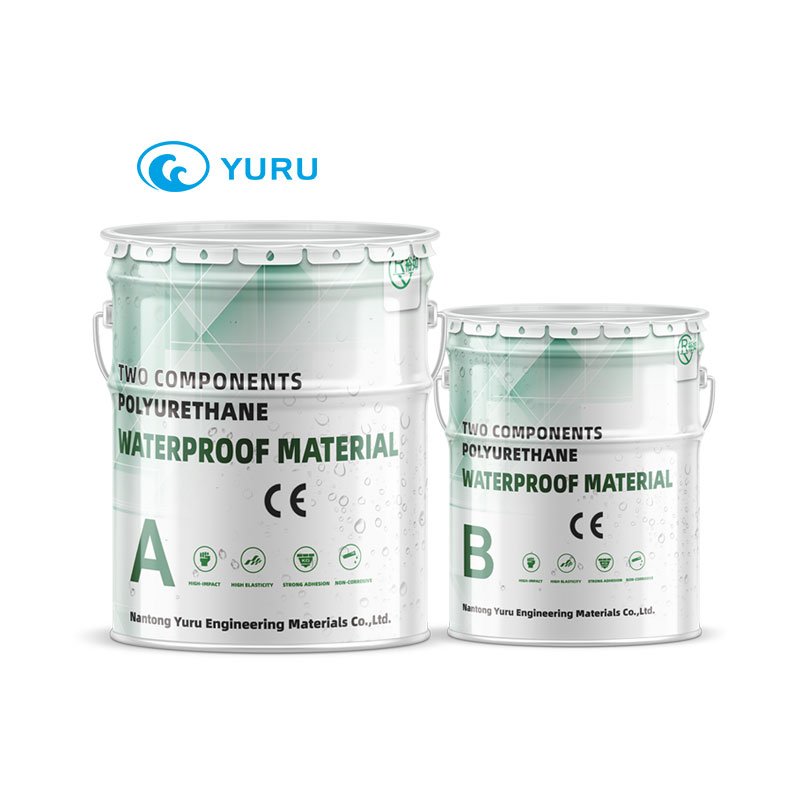
Two-component polyurethane coating uses a mixing system before application.
Usually, Component A and Component B must be mixed according to the required ratio.
Compared with single-component systems, two-component PU can provide a denser film and higher solid content.
Main Characteristics
For YURU two-component oil-based polyurethane waterproof coating:
- Drying and curing time: approximately 8–11 hours;
- Solid content: ≥97%.
The system is often selected for engineering projects that require strong waterproof performance.
Suitable Applications
Two-component PU is suitable for:
- Commercial roof waterproofing;
- Industrial roof projects;
- Engineering waterproofing systems;
- High-performance roof applications.
Application Requirements
Because it is a two-component system, contractors need to control:
- Mixing ratio;
- Mixing time;
- Application window;
- Surface preparation;
- Coating thickness.
Poor mixing can affect film formation and waterproof performance.
Important Note for Exposed Roof Applications
Although two-component PU provides strong performance, exposed outdoor use still requires careful consideration.
For direct sunlight exposure, contractors should normally add:
- Protective layer;
- Compatible topcoat;
- Surface protection system.
This additional step helps reduce UV aging and improves long-term roof protection.
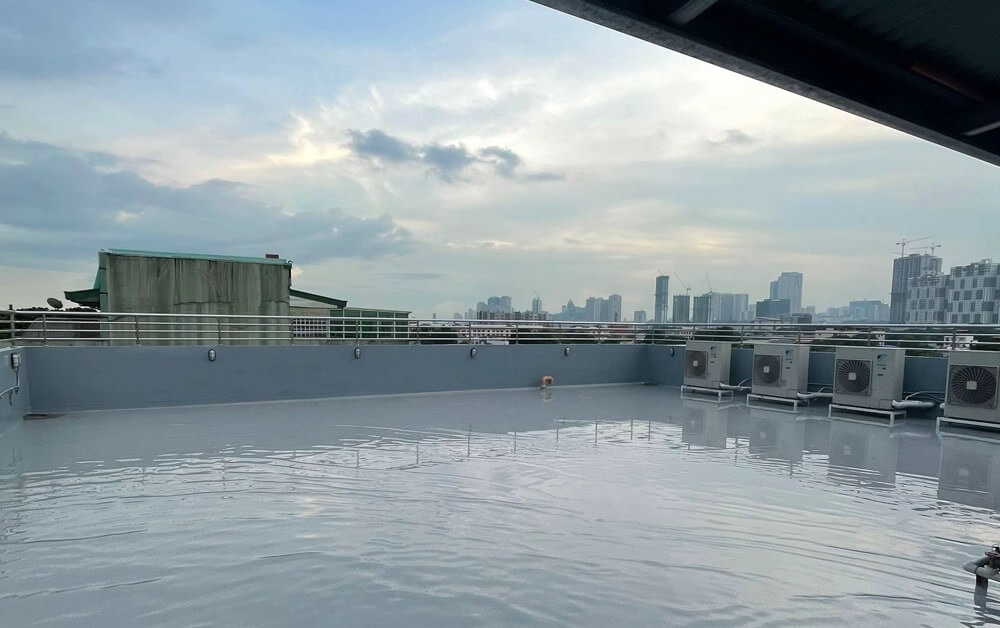
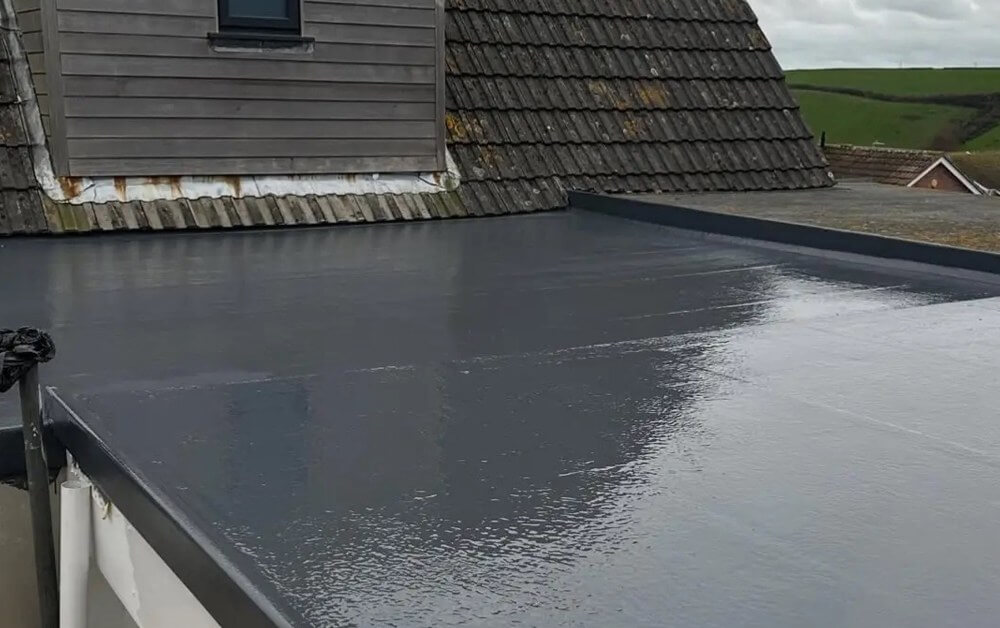
Polyurethane Roof Coating Selection Guide: Exposed vs Non-Exposed Roof
The first question before choosing a polyurethane roof coating is:
Will the roof coating remain exposed after installation?
This difference changes the material selection.
Selecting Polyurethane Coating for Exposed Roofs
Exposed roofs directly face:
- Sunlight;
- Rain;
- Temperature changes;
- Outdoor weather conditions.
The coating must provide long-term weather resistance.
Recommended directions:
Option 1: Water-Based Polyurethane Coating
Suitable when the coating needs to remain exposed.
Advantages:
- Outdoor application suitability;
- Weather resistance;
- Practical renovation use;
- No additional protection layer in many applications.
Option 2: Two-Component Oil-Based PU With Protection Layer
Two-component PU can also be used in exposed roof systems.
However, contractors should add:
- Protective coating;
- UV-resistant top layer;
- Other suitable surface protection.
The protection system reduces direct UV impact on the polyurethane membrane.
Selecting Polyurethane Coating for Covered Roof Systems
Non-exposed roofs have another layer above the waterproof coating.
Examples:
- Roofs covered by tiles;
- Protected waterproof layers;
- Areas under insulation systems.
In these cases, UV exposure is limited.
Suitable options include:
- Single-component oil-based PU;
- Two-component oil-based PU.
The selection depends on project requirements, substrate condition, and expected service life.
Application Areas of Polyurethane Roof Coating
Match application method to substrate and environment. Don’t choose by waterproof performance alone — consider movement, weather, surface condition, maintenance.
The most common application areas include:
- Concrete roof waterproofing;
- Metal roof waterproofing;
- Commercial building roofs;
- Industrial facility roofs;
- Existing roof renovation projects.
Each application requires different preparation and coating selection.
Polyurethane Coating for Concrete Roofs
Concrete roofs are one of the most common applications for polyurethane waterproof coatings.
Concrete itself is strong, but it can develop problems over time:
- Shrinkage cracks;
- Surface pores;
- Construction joints;
- Water absorption;
- Small movement cracks.
A liquid polyurethane coating can form a continuous waterproof layer over properly prepared concrete.
However, coating application should not start immediately after cleaning the surface.
Before applying a polyurethane waterproof coating for roof, contractors should check:
- Concrete strength;
- Surface moisture;
- Crack conditions;
- Existing waterproof layers;
- Drainage performance.
Recommended Preparation Steps
A typical concrete roof preparation process includes:
- Remove dust and loose materials;
- Repair visible cracks;
- Treat weak concrete areas;
- Confirm surface dryness;
- Apply primer if required;
- Apply polyurethane coating according to the specified thickness.
The coating protects the roof surface, but it should not be used as a replacement for structural crack repair.
Large cracks, moving joints, and damaged concrete sections require additional treatment before waterproof coating application.
Polyurethane Coating for Metal Roofs
Metal roofs face different challenges compared with concrete roofs.
The main problems include:
- Thermal expansion and contraction;
- Rust formation;
- Screw and fastener leakage;
- Joint movement;
- Aging sealants.
A suitable waterproof roof coating for metal buildings must maintain flexibility and bond well with the prepared metal surface.
Key Points Before Application
Before applying polyurethane coating on metal roofs:
- Remove rust;
- Clean oil and contamination;
- Check old coating adhesion;
- Repair damaged joints;
- Seal gaps around fasteners.
The coating should follow the movement of the metal sheet.
Poor surface preparation remains one of the most common reasons for coating peeling on metal roofs.
Polyurethane Roof Coating for Commercial Buildings
Commercial and industrial roofs usually require long-term waterproof protection.
Examples include:
- Warehouses;
- Factories;
- Shopping centers;
- Logistics buildings;
- Production facilities.
These roofs often have:
- Large surface areas;
- Equipment bases;
- Drainage systems;
- Pipe penetrations.
A liquid-applied polyurethane system can simplify waterproofing around complex details.
For large projects, contractors should evaluate:
- Application speed;
- Material supply stability;
- Maintenance requirements;
- Future repair accessibility.
Polyurethane Waterproof Coating for Existing Roofs
Many building owners prefer roof renovation instead of complete waterproof system replacement.
A new coating layer can extend roof service life when the existing structure remains stable.
Before renovation, contractors should inspect:
- Existing membrane condition;
- Adhesion strength;
- Moisture trapped below old layers;
- Previous repair areas.
Water-based polyurethane coating is often considered for renovation projects because of its practical application conditions.
However, the old surface must be compatible with the new coating system.
Applying new material over an unstable old layer can transfer the problem into the new waterproofing system.
Polyurethane Roof Coating Drying Time and Factors Affecting Curing
Drying time represents a frequent inquiry prior to roof waterproofing projects.
The question “How long does polyurethane roof coating take to dry?” is commonly asked. The answer is contingent upon coating type and site-specific conditions.
The values below represent typical conditions. Actual curing duration is influenced by temperature, humidity, ventilation, coating thickness, and substrate moisture content.
Drying Time Comparison
| Polyurethane Coating Type | Drying / Curing Time | Solid Content | Main Application Direction |
| Single-component oil-based PU coating | About 8–11 hours | ≥90% | Non-exposed roofs, protected waterproof systems |
| Water-based polyurethane coating | About 4–8 hours | ≥65% | Exposed roofs, renovation projects |
| Two-component oil-based PU coating | About 8–11 hours | ≥97% | Engineering waterproofing systems |
Factors Affecting Polyurethane Coating Drying Time
The actual curing speed depends on several factors.
Temperature
Higher temperatures usually accelerate curing.
But too hot can cause problems — the surface dries too fast while the bottom stays wet.
Humidity
High humidity slows evaporation (especially water-based).
Low humidity helps surface drying — but still need proper curing time.
Surface Moisture
Roof moisture is one of the most important factors.
Applying polyurethane coating over wet concrete can cause:
- Blisters;
- Poor adhesion;
- Surface defects.
The substrate should meet the product application requirements before coating.
Coating Thickness
Thicker isn’t always better.
If you apply one layer too thick, trapped solvents or moisture can slow curing.
Follow the recommended thickness and layer intervals.
Common Problems When Applying Polyurethane Waterproof Coating on Roofs
Most roof coating failures do not happen because the material itself is poor.
Many problems come from:
- Incorrect material selection;
- Poor surface preparation;
- Wrong construction method;
- Incorrect exposure conditions.
Understanding these failure modes enables contractors to avoid unnecessary remediation.
Why Polyurethane Roof Coating Develops Bubbles?
Blistering typically results from moisture or air entrapment beneath the coating film.
Common causes:
- Wet concrete surface;
- High moisture inside the substrate;
- Applying coating before the surface is ready;
- Poor ventilation.
Prevention:
Before application:
- Check substrate moisture;
- Allow sufficient drying time;
- Repair cracks first;
- Avoid coating immediately after rain.
Why Waterproof Roof Coating Loses Adhesion?
A waterproof coating needs a stable surface.
Adhesion problems often result from:
- Dust;
- Oil contamination;
- Loose concrete;
- Weak old coatings;
- Incorrect primer selection.
Prevention:
A proper preparation process includes:
- Cleaning;
- Grinding when needed;
- Removing weak layers;
- Checking compatibility.
The strongest coating cannot perform well on a weak surface.
Why Some Polyurethane Coatings Need Protection Layers?
UV exposure is a major factor for outdoor waterproof systems.
Single-component oil-based PU and two-component oil-based PU can provide strong waterproof performance, but exposed applications require additional consideration.
Without suitable protection:
- Surface aging may accelerate;
- Color changes may occur;
- Long-term performance may decrease.
For exposed roofs:
- Choose a suitable exposed-grade coating;
- Or add a compatible protective layer.
Mixing Problems Affect Coating Performance
Two-component polyurethane coating requires correct preparation.
Common mistakes include:
- Incorrect mixing ratio;
- Insufficient mixing;
- Long waiting time after mixing;
- Applying beyond the usable time.
These problems may affect:
- Film formation;
- Drying speed;
- Waterproof performance.
Contractors should always follow the technical data sheet.
Application Process of Polyurethane Roof Waterproof Coating
A successful roof waterproofing system follows a controlled process.
The coating material constitutes one component of a complete system.
Step 1: Roof Inspection
Before construction begins, inspect:
- Roof structure;
- Leakage points;
- Cracks;
- Drainage;
- Existing waterproof layers.
The inspection determines whether coating alone can solve the problem.
Step 2: Surface Preparation
Prep affects everything.
Typical steps:
- Remove dust;
- Remove oil;
- Repair cracks;
- Repair weak concrete;
- Dry the substrate.
A clean and stable substrate enhances coating adhesion.
Step 3: Primer Application
Some roof systems require primer before polyurethane coating.
Primer can improve:
- Surface bonding;
- Coating penetration;
- Overall system performance.
The right primer depends on the substrate and coating system.
Step 4: Polyurethane Coating Application
Apply polyurethane coating according to:
- Required thickness;
- Product instructions;
- Environmental conditions.
Excessive single-layer thickness should be avoided.
Multiple thinner layers typically provide improved application control.
Step 5: Protection Layer (When Required)
For exposed oil-based PU systems:
A protection layer is recommended.
This protects the waterproof membrane from:
- UV exposure;
- Weather aging;
- Mechanical damage.
Water-based polyurethane systems formulated for exposed use may not require the same additional protection.
Step 6: Final Inspection
After curing:
Check:
- Surface condition;
- Coating continuity;
- Detail areas;
- Drainage points.
Final inspection helps identify deficiencies prior to roof re-commissioning.
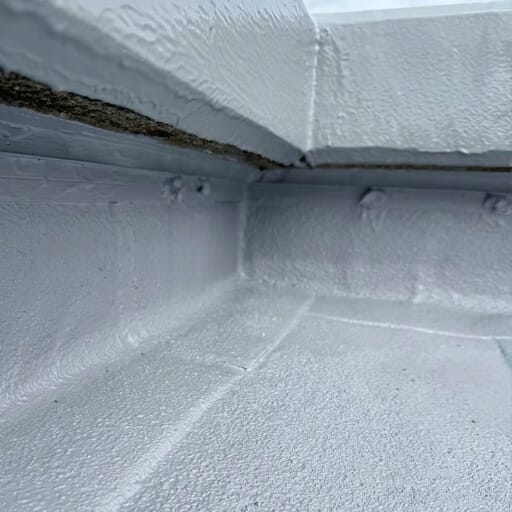
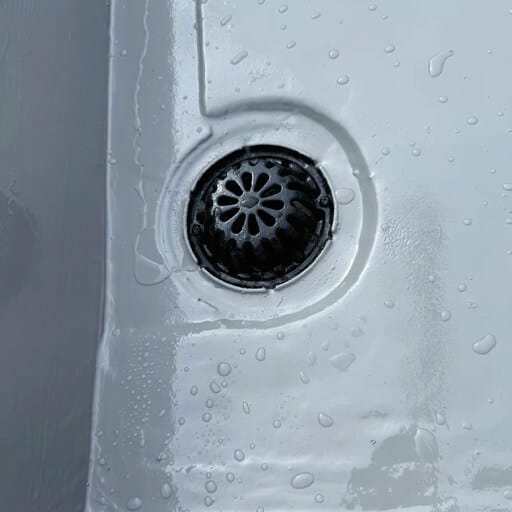
Case Example: Malaysia Contractor Using Polyurethane Waterproof Coating for Roof Projects
YURU Waterproof has worked with a Malaysia-based contractor specializing in roof waterproofing projects.
The contractor mainly provides waterproofing services for different types of building roofs, including exposed and non-exposed roof applications.
When the cooperation started, the contractor selected polyurethane waterproof coating as one of the main waterproofing materials for their projects.
Different Roof Conditions Required Different Material Selection
The contractor handled various roof conditions.
Some projects required exposed waterproof systems. Other projects had additional protective layers above the waterproof coating.
YURU recommended selecting polyurethane products according to the actual roof condition instead of using one material for every project.
For exposed roofs:
Recommended options included:
- Water-based polyurethane waterproof coating;
- Two-component polyurethane coating with an additional protection layer.
For non-exposed roofs:
Suitable options included:
- Single-component oil-based polyurethane;
- Two-component oil-based polyurethane.
Final Product Selection and Construction Method
After technical discussion, the customer selected two-component polyurethane waterproof coating.
The customer valued:
- Stable waterproof performance;
- Engineering application suitability;
- Reliable coating formation.
For exposed roof projects, the contractor followed the recommendation to add an additional protection layer or topcoat.
This approach helped reduce direct UV impact and improved the durability of the waterproof system.
Long-Term Cooperation With YURU
After successful cooperation with polyurethane waterproof coating, the customer continued purchasing other waterproof materials from YURU.
The product range later expanded to:
- Acrylic waterproof coating;
- Polyurea waterproof coating.
The cooperation continued because YURU provided not only materials but also:
- Product selection support;
- Application guidance;
- Project communication;
- Customized supply solutions.
This case shows that roof waterproofing success depends on selecting the right material for the actual environment.
Why Choose YURU Polyurethane Waterproof Coating for Roof Projects?
Choosing a roof waterproofing material is not only about purchasing a coating product. Contractors and project teams also need stable supply, consistent quality, technical information, and practical application support.
YURU Waterproof focuses on providing complete waterproofing material solutions for construction and infrastructure projects.
The company manufactures:
- Polyurethane waterproof coatings;
- Polyurea waterproof coatings;
- Acrylic waterproof coatings;
- Silicone waterproof coatings;
- Injection grouting materials;
- Floor coating systems.
For roof waterproofing applications, YURU provides different polyurethane systems based on project conditions.
Manufacturing Experience and Quality Control
YURU Waterproof was founded in 2003 and specializes in waterproofing materials, grouting materials, and floor coating systems.
The company operates:
- 10,000 m² manufacturing facility;
- 6 specialized production lines;
- Annual production capacity exceeding 10,000 tons.
YURU controls the production process from raw materials to finished products.
Quality control includes:
- Raw material inspection;
- Production monitoring;
- Finished product testing;
- Batch quality management.
Stable manufacturing control helps maintain consistent product performance for different projects.
OEM and Customized Polyurethane Waterproof Coating Solutions
Different markets and projects may require different packaging, colors, or product specifications.
YURU provides OEM and ODM services, including:
- Private label packaging;
- Customized labels;
- Color adjustment;
- Package size customization;
- Product formulation adjustment based on project requirements.
For example, a roofing contractor may require:
- Different package sizes for local projects;
- Customized product labels;
- Specific application instructions;
- Product combinations for different roof conditions.
YURU can support these requirements through factory-based production.
Technical Support for Roof Waterproofing Projects
A successful waterproofing project requires more than material delivery.
YURU provides support related to:
- Product selection;
- Technical documents;
- Application guidance;
- Sample testing;
- Project communication.
Before selecting a polyurethane roof coating, customers can provide information such as:
- Roof type;
- Surface condition;
- Exposure condition;
- Required application method;
- Expected project requirements.
Based on these details, YURU can recommend a suitable polyurethane waterproofing solution.
Global Project Experience
YURU products have been supplied to more than 70 countries and regions, including:
- North America;
- Europe;
- Middle East;
- Southeast Asia;
- Africa;
- Australia.
The products are used in applications such as:
- Building roofs;
- Underground structures;
- Tunnels;
- Industrial facilities;
- Commercial buildings.
YURU has also established cooperation with engineering companies and construction organizations in different markets.
The company has obtained certifications and quality systems including:
- ISO 9001;
- ISO 14001;
- CE;
- RoHS;
- China Environmental Labeling (Ten-Ring).
FAQs:
PU roof coating creates a seamless waterproof layer on roofs. Used on concrete, industrial, commercial, metal roofs, renovations. Protects from rain, moisture, exposure.
Yes. Continuous membrane, good adhesion on prepped surfaces.
However, the correct product type must match the roof condition.
For example:
- Exposed roofs require better weather resistance;
- Non-exposed roofs may use protected PU systems;
- Metal roofs require attention to movement and surface preparation.
Yes, polyurethane roof coating can be used for some metal roof waterproofing projects.
However, contractors should first check:
- Rust condition;
- Surface cleanliness;
- Existing coating adhesion;
- Metal movement;
- Joint details.
Proper surface preparation is essential for long-term performance.
Common reasons include:
- Poor surface preparation;
- Dust or oil contamination;
- Wet substrate;
- Incorrect coating thickness;
- Wrong product selection;
- UV exposure without suitable protection.
Most coating failures are related to application conditions rather than the coating material alone.
Single-component PU:
- Ready to use;
- No mixing required;
- Easier application.
Two-component PU:
- Requires mixing;
- Higher solid content;
- Requires more construction control.
The choice depends on project requirements and application conditions.
Conclusion: Select Polyurethane Roof Coating Based on Real Project Conditions
A suitable polyurethane roof coating should match the actual roof environment.
There is no single product that fits every roof project.
The selection should consider:
- Whether the roof is exposed or non-exposed;
- The substrate condition;
- Weather environment;
- Required service life;
- Construction method;
- Need for additional protection.
Exposed roof applications:
- Water-based polyurethane coating is often suitable because it is designed for outdoor exposure.
Non-exposed roof systems:
- Single-component oil-based PU and two-component oil-based PU can provide reliable waterproof protection.
For engineering projects requiring higher solid content:
- Two-component polyurethane coating can be considered, with proper mixing and application control.
The final waterproof performance depends on several factors:
- Correct product selection;
- Proper surface preparation;
- Correct coating thickness;
- Suitable curing conditions;
- Professional construction.
YURU Waterproof supplies polyurethane waterproof coatings for different roof applications, including concrete roofs, metal roofs, renovation projects, and commercial building waterproofing.
If you are looking for a reliable polyurethane waterproof coating for roof, contact YURU Waterproof to discuss your project requirements, product selection, samples, and customized solutions.
YURU Product solutions