Tunnel Waterproof Injection: Materials, Methods and Solutions
Introduction:
Tunnels face groundwater, concrete movement, long-term exposure. Leaks affect durability, service life, repair costs.
For many tunnel applications, surface waterproofing alone cannot resolve existing leakage issues.
Engineers often need a targeted repair method that can reach:
- Concrete cracks
- Construction joints
- Segment connections
- Hidden leakage channels
This is where tunnel waterproof injection becomes an important repair solution.
Tunnel waterproof injection uses specialized grouting materials to fill cracks, seal water paths, and improve the waterproof performance of underground structures.
However, successful injection repair depends on more than choosing a grout material.
Engineers need to evaluate:
- Leakage conditions
- Crack characteristics
- Water pressure
- Structural requirements
- Long-term performance expectations
Different materials provide different functions.
For example:
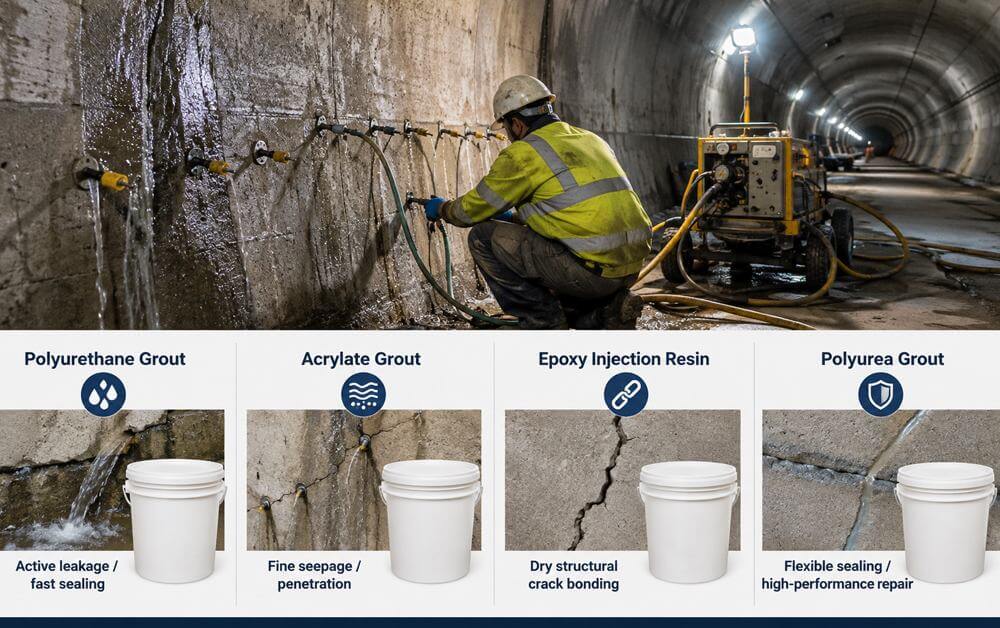
- Polyurethane grout focuses on waterproof sealing.
- Epoxy injection grout focuses on structural crack bonding.
- Polyurea grout provides flexible sealing performance.
- Acrylate grout works well for fine cracks and complex water paths.
Choosing the correct injection material helps reduce repair risks and improves the long-term performance of tunnel structures.
This guide explains the main tunnel waterproof injection materials, methods, and solutions, helping contractors, engineers, and project partners select the right waterproof injection system.
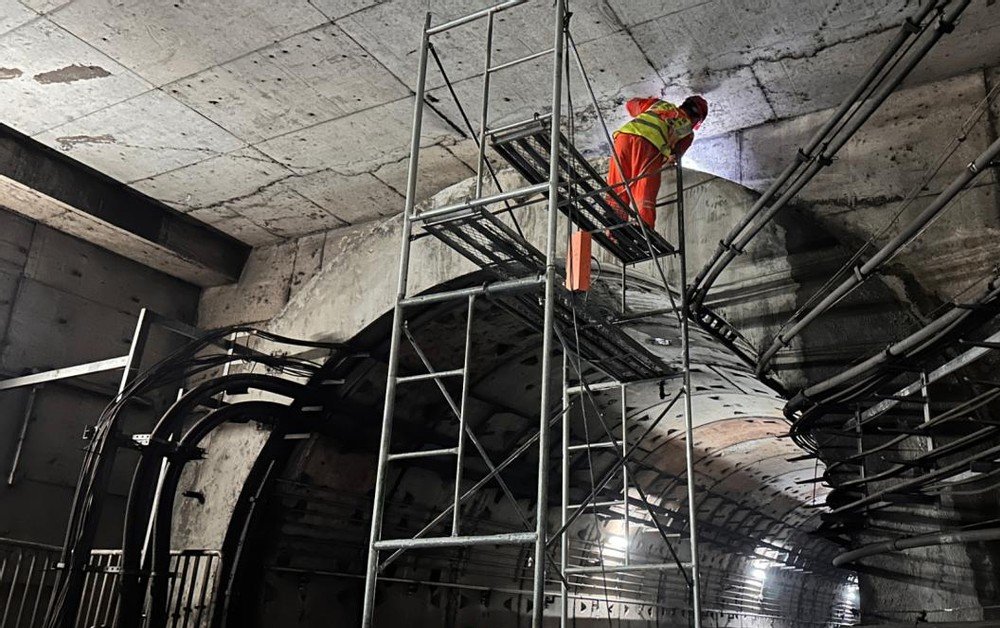
Why Tunnel Waterproof Injection Is Needed for Underground Structures?
Underground Structures Face Continuous Water Pressure
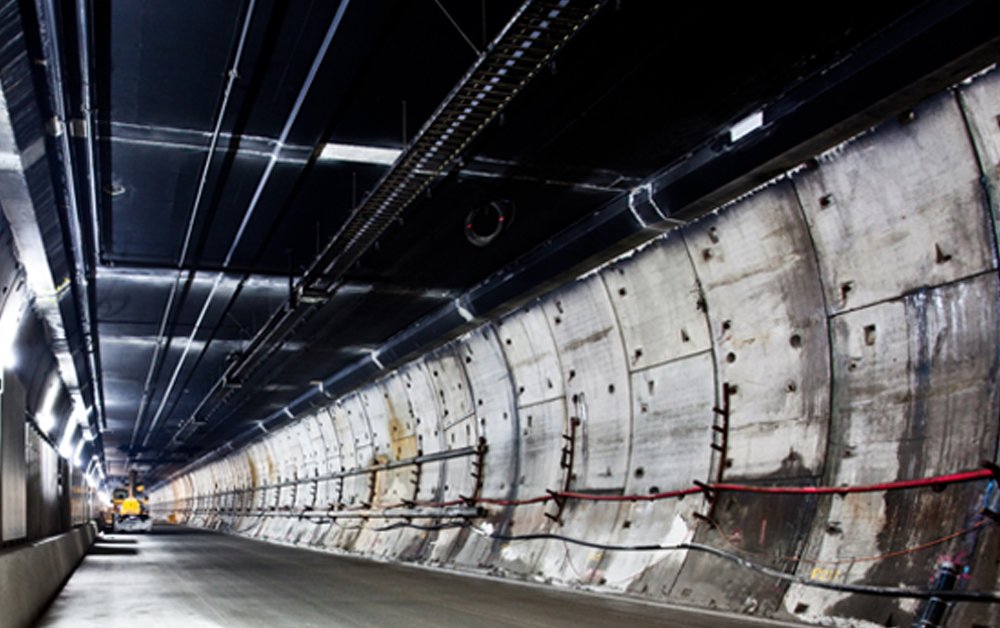
Tunnels are constructed below grade, where they are subject to groundwater exposure.
Unlike above-ground structures, tunnels must accommodate:
- Groundwater pressure
- Soil moisture
- Concrete shrinkage
- Structural movement
- Long-term environmental variation
Water ingress occurs through structural vulnerabilities:
- Concrete cracks
- Construction joints
- Expansion joints
- Segment connections
- Pipe penetrations
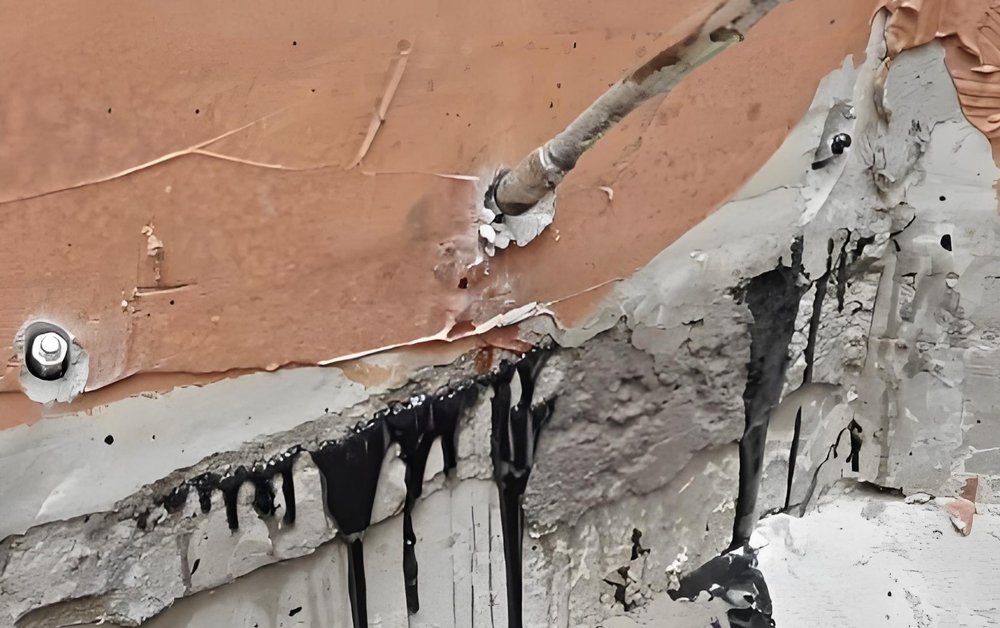
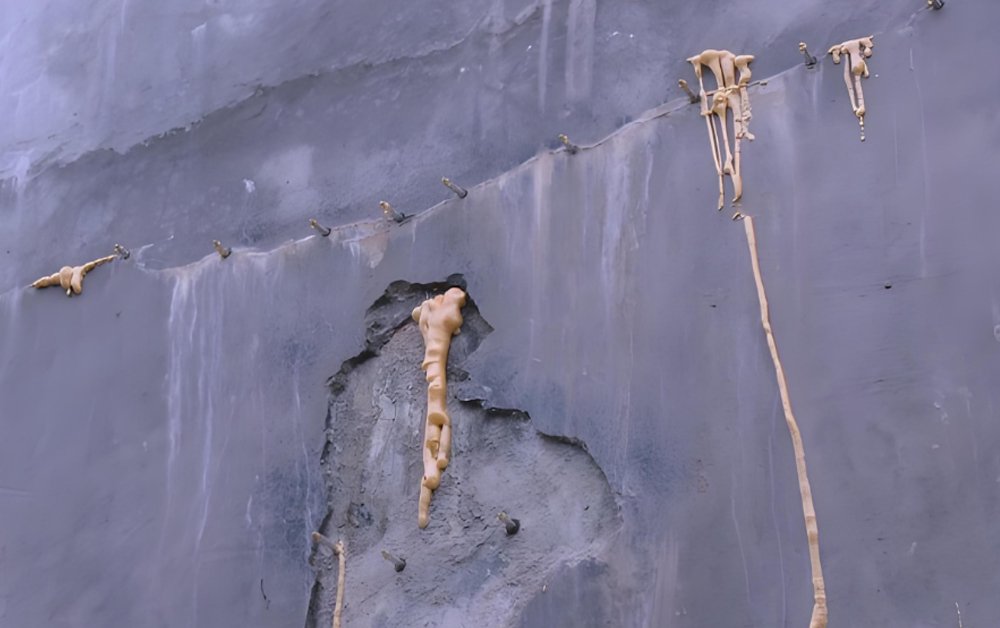
Once water penetrates, it may migrate through internal cracks and create expanded leakage pathways.
Minor leakage issues may escalate into significant maintenance concerns without early intervention.
Injection Repair Targets the Internal Leakage Path
Traditional waterproofing methods mainly protect external surfaces.
However, existing tunnels may already have:
- Developed cracks
- Water channels inside concrete
- Leakage behind structural layers
Tunnel waterproof injection works differently.
Injection material enters the internal cracks and voids, then creates a sealing barrier inside the structure.
This approach allows engineers to repair leakage without removing large areas of concrete.
Tunnel Waterproof Injection Supports Different Repair Requirements
Different tunnel projects have different waterproofing goals.
Some projects need:
Water Leakage Control
The main goal is to stop active water leakage.
Example:
- Subway tunnels
- Underground passages
- Utility tunnels
Structural Crack Repair
The goal is to restore crack strength and improve structural performance.
Example:
- Concrete lining cracks
- Structural joints
Flexible Waterproof Sealing
The goal is to maintain sealing performance when the structure moves.
Example:
- Expansion joints
- Dynamic cracks
Because tunnel conditions vary, material selection becomes a critical step.
Common Causes of Tunnel Water Leakage
Concrete Cracks
Concrete is strong, but it is not completely waterproof.
During tunnel operation, cracks may appear because of:
- Concrete shrinkage
- Temperature changes
- Ground movement
- Structural stress
These cracks can become direct paths for groundwater.
Small cracks may create slow seepage.
Larger cracks may allow continuous water flow.
Construction Joint Leakage
Tunnel construction usually involves multiple concrete sections.
The connection areas between different concrete pours can become weak points.
Common problems include:
- Poor joint sealing
- Insufficient waterproof details
- Material aging
Construction joints often require injection repair because water may travel behind the visible surface.
Segment Joint Leakage in Tunnel Structures
Many modern tunnels use precast concrete segments.
The joints between segments require reliable sealing.
Over time, problems may occur because of:
- Joint movement
- Seal aging
- External water pressure
Injection materials can help seal leakage paths around these areas.
Groundwater Pressure
Groundwater creates constant pressure around underground structures.
When waterproof systems weaken, water follows the easiest path into the tunnel.
Higher water pressure can increase leakage problems.
Engineers must consider:
- Water pressure level
- Leakage speed
- Crack size
- Repair conditions
before selecting the injection material.
Problems Caused by Tunnel Leakage
Concrete Deterioration
Constant water exposure wears down concrete.
Water may carry:
- Chemicals
- Minerals
- Contaminants
Over time, these accelerate concrete damage.
Steel Corrosion Risk
Many tunnels incorporate reinforced concrete.
Water ingress to reinforcement zones may elevate corrosion risk.
Corrosion can reduce structural durability and increase maintenance requirements.
Increased Maintenance Cost
Uncontrolled leakage often requires repeated repair work.
Frequent maintenance can increase:
- Labor cost
- Operation interruption
- Repair frequency
A suitable injection solution can help reduce long-term maintenance pressure.
Impact on Tunnel Operation
For transportation tunnels, leakage can affect daily operation.
Examples include:
- Metro systems
- Railway tunnels
- Road tunnels
Water problems may require additional inspection and maintenance activities.
Early waterproof injection repair helps maintain safer operating conditions.
Common Materials Used for Tunnel Waterproof Injection
Tunnel waterproof injection projects use several different grouts.
The right pick depends on the leak and project needs.
Polyurethane Grout
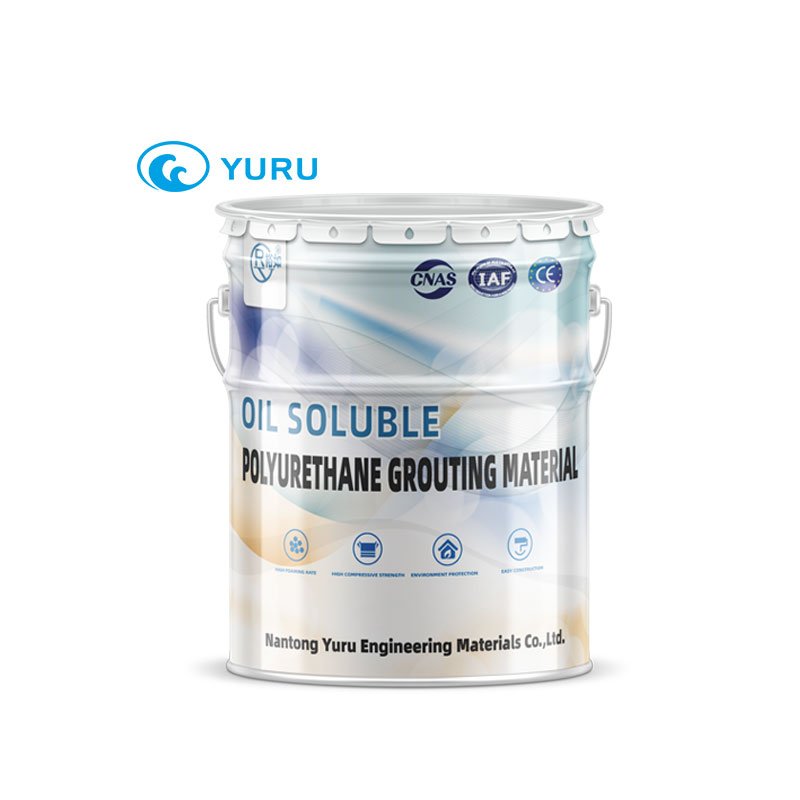
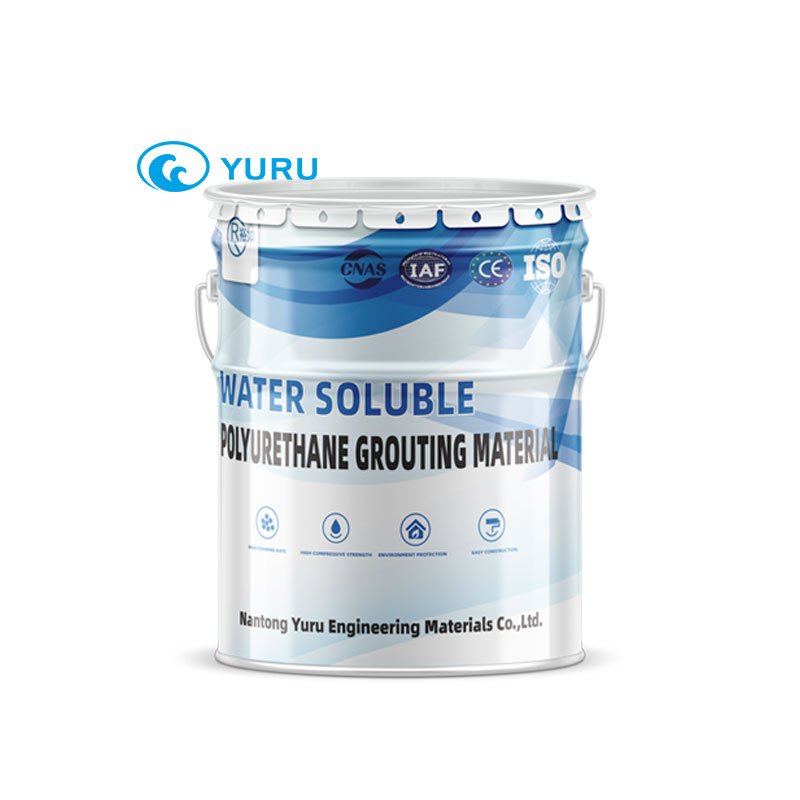
Polyurethane grout is one of the most commonly used materials for tunnel waterproof injection.
It is widely selected for:
- Active water leakage
- Concrete cracks
- Construction joints
- Underground waterproof repair
Polyurethane grout works by entering leakage paths and forming a sealing structure after reaction.
Its main advantages include:
- Good waterproof sealing ability
- Flexible performance
- Strong adhesion
- Good compatibility with wet conditions
For many tunnel repair applications, PU grout offers a practical leakage control solution.
Epoxy Injection Grout
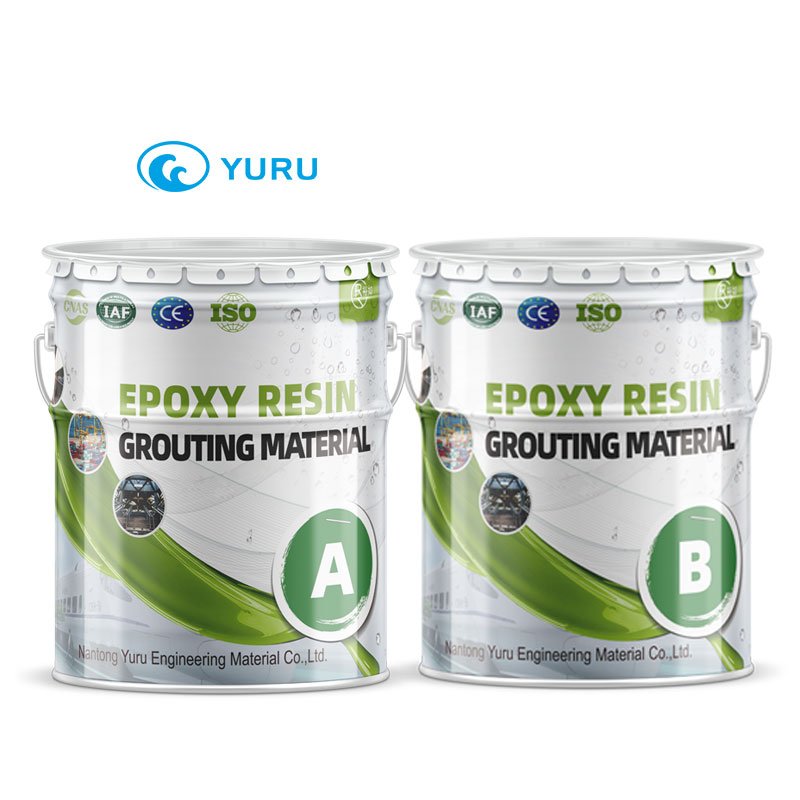
Epoxy injection grout is primarily indicated for structural crack repair.
It is commonly specified when requirements include:
- Strong bonding
- Crack reinforcement
- Structural restoration
Epoxy grout is often considered for dry or low-moisture cracks where structural strength is the main concern.
Distinction from polyurethane:
- Polyurethane = waterproof sealing
- Epoxy = structural bonding
Polyurea Grout
Polyurea grout provides flexible waterproof sealing performance.
It can be considered for projects requiring:
- Elastic sealing
- High durability
- Resistance to movement
Applications may include:
- Complex leakage areas
- Structures with movement risks
- High-performance waterproof repair projects
Acrylate Grout
Acrylate grout is for fine crack injection.
Its low viscosity enables penetration of smaller leakage pathways.
Typical applications:
- Micro cracks
- Complex seepage areas
- Difficult-to-access leakage channels
Polyurethane Grout for Tunnel Waterproof Injection
Why Polyurethane Grout Is Widely Used in Tunnel Repair?
Among different injection materials, polyurethane grout remains one of the most common choices for tunnel waterproof injection.
The reason is simple:
Many tunnel leakage problems are related to water.
The first repair goal is often stopping water movement.
Polyurethane grout is formulated for waterproof sealing rather than exclusively structural bonding.
Polyurethane Grout for Active Water Leakage
Active leakage denotes continued water flow through cracks or joints.
Such conditions require materials compatible with wet environments.
PU grout is frequently selected due to its ability to react and form a sealing barrier within leakage pathways.
Typical applications include:
- Tunnel lining cracks
- Underground passages
- Concrete joints
- Basement structures
Flexible Waterproof Protection
Tunnel structures may experience movement after construction.
Ground changes and temperature differences can create stress inside concrete.
A rigid repair material may not always match these conditions.
Polyurethane grout provides flexibility, which helps maintain sealing performance when minor movement occurs.
Choosing the Right Polyurethane Grout Type
Different tunnel projects may require different polyurethane grout types.
Common options include:
Hydrophobic Polyurethane Grout
Suitable for:
- Active water leakage
- Crack sealing
- General waterproof injection
Hydrophilic Polyurethane Grout
Suitable for:
- Moist environments
- Water-reactive sealing requirements
- Specific leakage conditions
PU Foam Grout
Suitable for:
- Fast filling requirements
- Large void filling
- Expansion sealing applications
The final selection should depend on:
- Leakage condition
- Crack size
- Water pressure
- Project requirements
Epoxy Injection Grout for Tunnel Crack Repair
Epoxy injection grout serves a distinct function from polyurethane grout.
Polyurethane grout is primarily formulated for water leakage arrest, while epoxy injection grout is designed for concrete crack strength restoration.
This distinction is critical in tunnel repair material selection.
A tunnel crack does not always require the same repair method.
Some cracks only create water leakage.
Other cracks affect the structural condition of concrete.
Engineers need to identify the crack type first.
When Should You Choose Epoxy Injection Grout?
Epoxy injection grout is commonly selected when the project requires:
- Strong crack bonding
- Structural crack repair
- Improved concrete integrity
Typical applications include:
- Concrete lining cracks
- Structural cracks
- Dry crack repair
- Concrete restoration projects
Epoxy materials can penetrate cracks and bond separated concrete sections together.
This makes epoxy injection grout suitable for situations where strength recovery is a priority.
Limitations of Epoxy Injection Grout
Epoxy injection grout is not designed for every leakage condition.
For example:
Active water leakage can reduce epoxy bonding performance.
Where water continues through cracks, leakage control may precede epoxy application.
Selection should therefore consider:
- Moisture condition
- Crack movement
- Structural requirement
Polyurea Grout for High-Performance Waterproof Injection
Polyurea grout is another option for demanding waterproof injection projects.
It provides flexible sealing performance and is designed for situations where movement resistance and durability are important.
Advantages of Polyurea Grout
Polyurea grout provides:
- Good elasticity
- Strong waterproof sealing
- Resistance to environmental stress
- Long-term flexibility
These characteristics make it suitable for applications where rigid materials may not provide enough movement tolerance.
Typical Applications of Polyurea Grout
Polyurea grout can be considered for:
- Tunnel leakage repair
- Moving cracks
- Complex waterproofing conditions
- Infrastructure maintenance projects
However, polyurea grout should be selected based on actual project requirements.
The strongest material is not always the most suitable material.
Acrylate Grout for Fine Crack Injection
Acrylate grout is primarily employed for fine crack injection and complex leakage pathways.
Its low viscosity enables penetration of smaller voids where conventional materials may be less effective.
Applications of Acrylate Grout
Common applications include:
- Micro cracks
- Fine leakage channels
- Complex underground structures
Acrylate grout is often considered when engineers need deeper penetration into narrow cracks.
Selecting Acrylate Grout for Tunnel Projects
Before selecting acrylate grout, engineers should evaluate:
- Crack width
- Water condition
- Required sealing performance
- Project environment
Acrylate grout is a specialized solution, not a universal replacement for polyurethane or epoxy materials.
PU Grout vs Epoxy vs Polyurea Grout: How to Choose?
Choosing the correct injection grout depends on the actual repair objective.
The question is not:
“Which grout is the strongest?”
The better question is:
“Which grout matches the leakage problem?”
Material Selection Comparison Table
| Material | Main Function | Suitable Condition | Main Advantage |
| Polyurethane Grout | Waterproof sealing | Active water leakage | Flexible and effective sealing |
| Epoxy Injection Grout | Structural repair | Dry structural cracks | Strong bonding ability |
| Polyurea Grout | Flexible waterproof sealing | Movement areas and demanding conditions | Elastic performance |
| Acrylate Grout | Fine crack penetration | Micro cracks and complex leakage paths | Low viscosity penetration |
Selection Process
A practical selection process:
Identify Leakage Condition
↓
Check Crack Type
↓
Evaluate Water Pressure
↓
Define Repair Objective
↓
Select Injection Material
Tunnel Waterproof Injection Methods and Process
A successful tunnel waterproof injection project requires proper preparation.
The injection material is only one part of the repair system.
The construction process also affects the final result.
Step 1: Leakage Inspection
Before injection, engineers inspect:
- Leakage location
- Crack condition
- Water flow level
- Concrete condition
The inspection helps determine the repair approach.
Step 2: Material Selection
Engineers select materials based on:
Active Water Leakage
Recommended consideration:
- Polyurethane grout
Structural Crack Repair
Recommended consideration:
- Epoxy injection grout
Flexible Waterproof Requirement
Recommended consideration:
- Polyurea grout
Fine Crack Injection
Recommended consideration:
- Acrylate grout
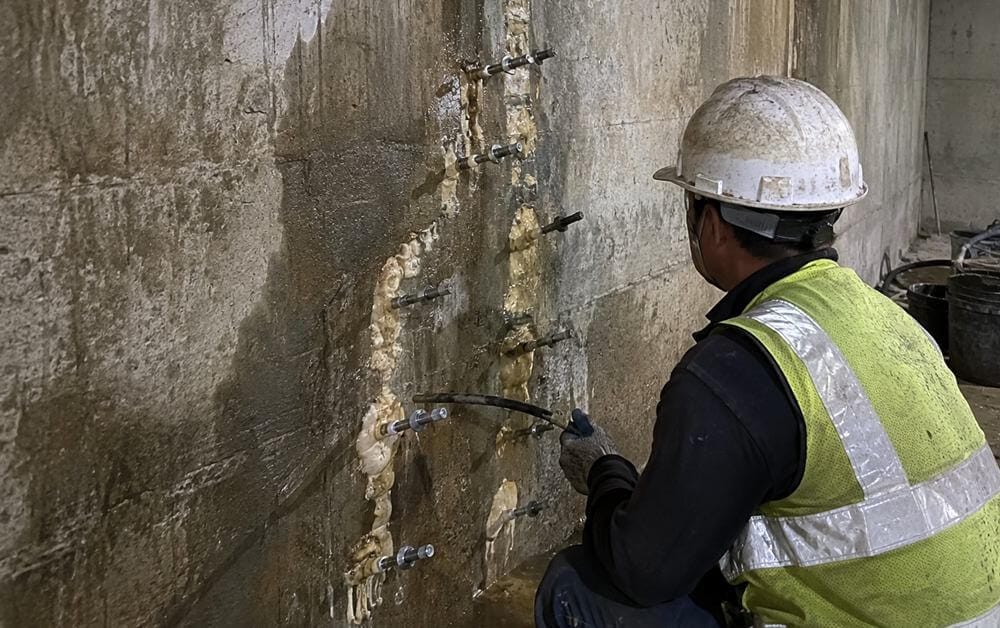
Step 3: Drilling and Injection
The general injection process includes:
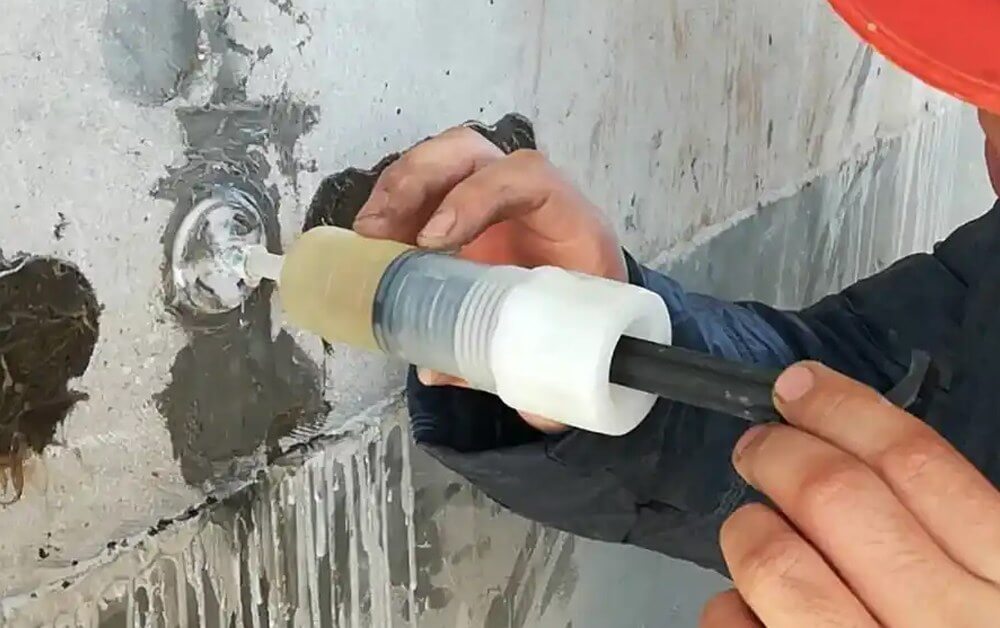
- Mark leakage areas
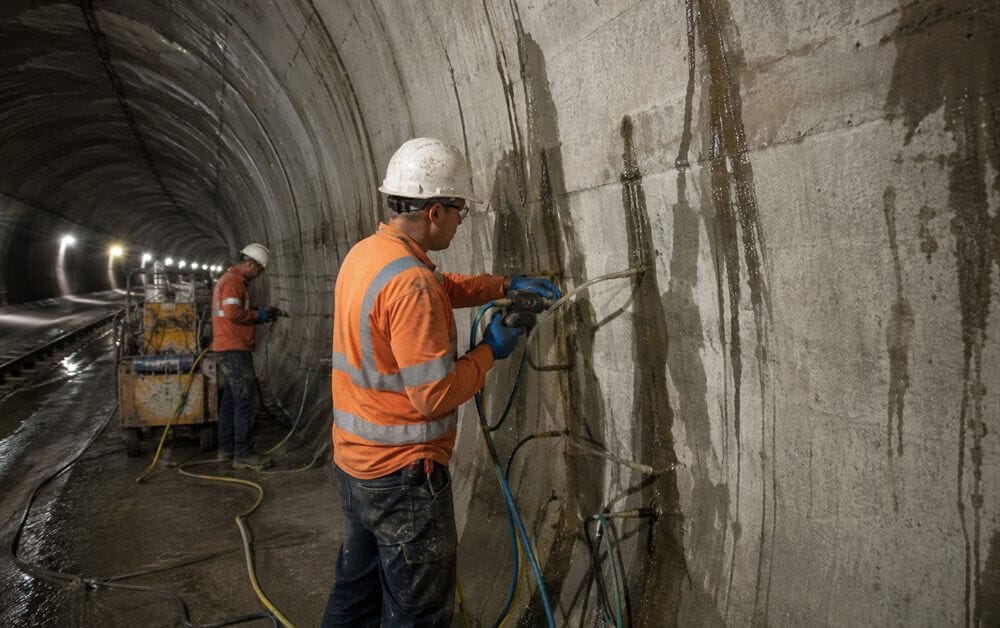
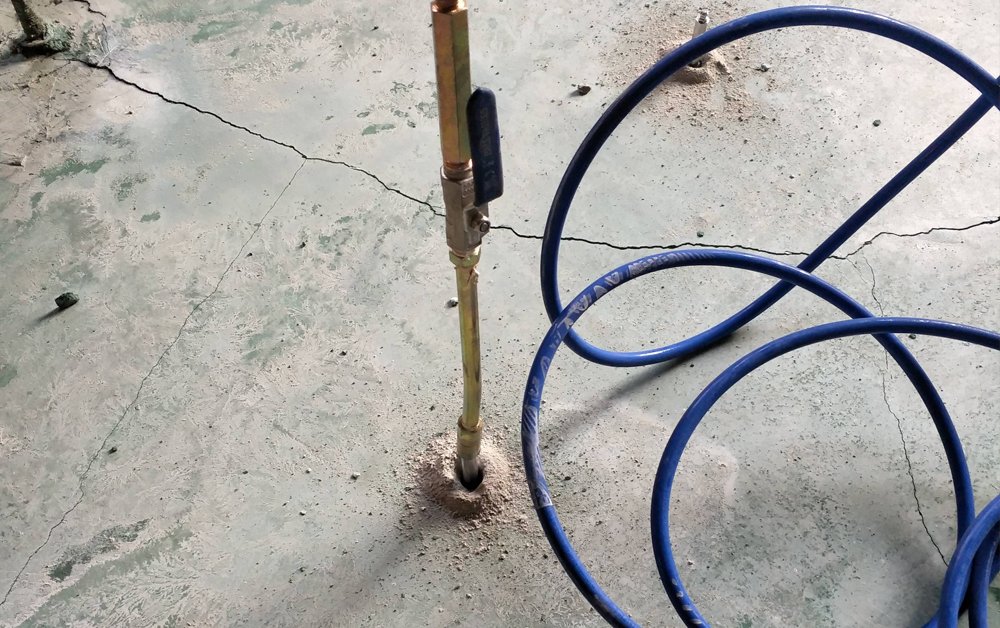
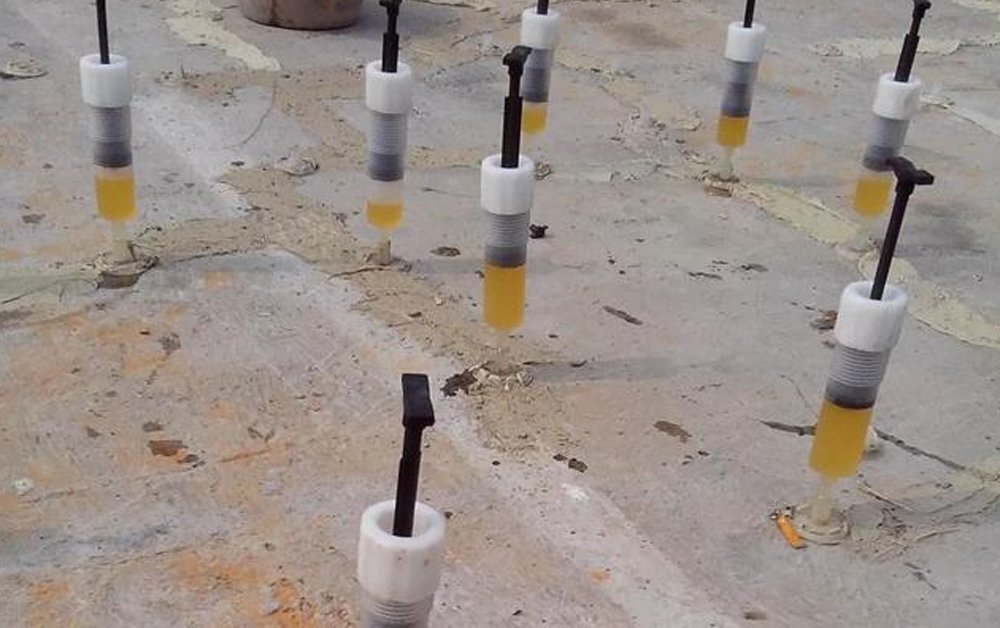
- Drill injection holes
- Install injection packers
- Inject selected grout material
- Monitor injection pressure
The injection process should control:
- Pressure level
- Material consumption
- Injection coverage
Step 4: Final Inspection and Verification
After injection, engineers verify:
- Leakage reduction
- Surface condition
- Repair effectiveness
A complete repair process helps improve long-term waterproof performance.
How to Select the Right Tunnel Waterproof Injection Material?
Consider the Leakage Condition
The first question is:
What type of leakage problem does the tunnel have?
Different conditions require different solutions.
Consider the Crack Characteristics
Important factors include:
- Crack width
- Crack depth
- Crack movement
- Location
A moving crack may require a flexible material.
A stable structural crack may require stronger bonding.
Consider the Tunnel Environment
Different tunnel types create different challenges.
Examples:
Metro Tunnel
Focus:
- Operational safety
- Limited repair time
- Leakage control
Railway Tunnel
Focus:
- Long-term durability
- Structural protection
Road Tunnel
Focus:
- Heavy environmental exposure
- Maintenance reduction
Utility Tunnel
Focus:
- Continuous waterproof performance
How to Choose a Reliable Tunnel Waterproof Injection Supplier?
Selecting a supplier is an important step for project success.
A reliable supplier should provide more than standard products.
Check Manufacturing Capability
Customers should evaluate:
- Production ability
- Quality control
- Product consistency
- Testing process
A manufacturer with stable production can provide reliable long-term cooperation.
Check Technical Support
Injection projects often require technical communication.
A professional supplier should support:
- Material selection
- Sample testing
- Project discussion
- Application guidance
Check Customization Ability
Different countries and projects may have different requirements.
A capable supplier should support:
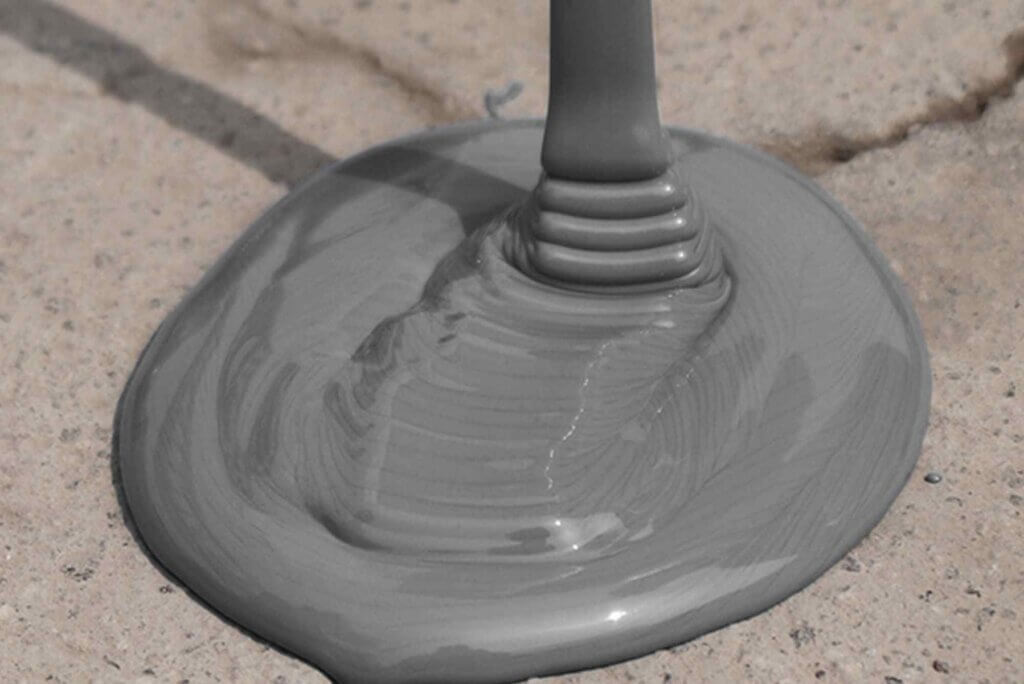
- Customized formulation
- Viscosity adjustment
- Packaging customization
- Private label solutions
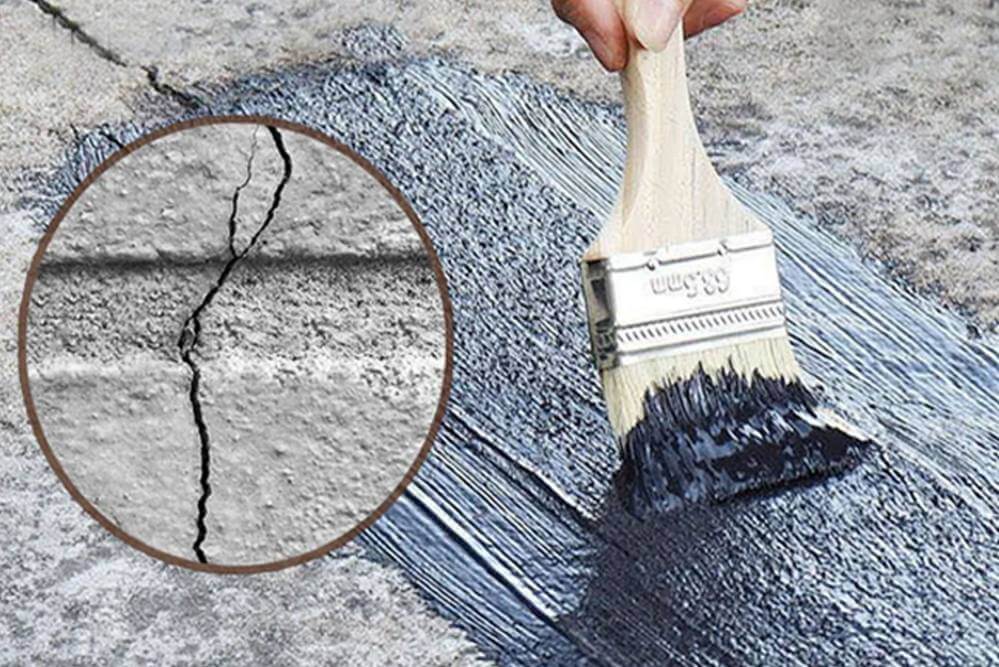
Russia Tunnel Waterproof Injection Project: Customized PU and Epoxy Grouting Solution
Customer Background
A waterproofing contractor from Russia contacted YURU Waterproof for a tunnel waterproof injection project.
The customer needed suitable injection materials for local tunnel leakage repair.
The initial requirement included:
- Polyurethane grout
- Epoxy injection grout
Standard Material Testing
At the beginning, the customer purchased standard injection grout products for testing.
The customer evaluated the materials based on actual project requirements.
After testing, the customer found that some performance characteristics needed further adjustment to match the local project conditions.
Customized Injection Grout Solution
The customer communicated the project requirements with YURU Waterproof again.
Based on:
- Project conditions
- Application requirements
- Expected performance
YURU Waterproof adjusted the injection grout solution.
The customized:
- Polyurethane grout
- Epoxy injection grout
were prepared for another round of sample testing.
Successful Application and Long-Term Cooperation
After the customized samples achieved the expected application results, the customer started large-volume purchasing.
The cooperation continued because the materials matched the project requirements.
Now, this Russian customer has become a stable project partner of YURU Waterproof.
The customer continues purchasing:
- Polyurethane injection grout
- Epoxy injection grout
This cooperation shows the importance of communication, testing, and project-based material selection.
YURU Waterproof Tunnel Injection Solutions
YURU Waterproof provides injection grouting materials for different underground waterproofing requirements.
The product system includes:
- Hydrophobic polyurethane grout
- Hydrophilic polyurethane grout
- PU foam grout
- Epoxy injection grout
- Polyurea grout
- Acrylate grout
Project-Based Material Recommendation
YURU Waterproof does not recommend the same grout for every project.
The selection considers:
- Leakage condition
- Crack characteristics
- Structural requirements
- Application environment
This helps customers select a more suitable waterproof injection solution.
Customized Injection Grouting Support
YURU Waterproof supports overseas customers through:
- Sample testing
- Technical communication
- Product customization
- Application recommendations
This approach helps customers reduce project risks before large-scale purchasing.
Why Choose YURU Waterproof?
Professional Injection Grouting Manufacturer
YURU Waterproof focuses on waterproof materials and injection grouting solutions.
The company provides materials for:
- Underground waterproofing
- Tunnel repair
- Concrete leakage control
- Structural crack repair
Complete Injection Material System
Customers can choose different materials based on project requirements.
The product range covers:
- PU grout
- Epoxy grout
- Polyurea grout
- Acrylate grout
Engineering Support Before Purchase
YURU Waterproof helps customers evaluate:
- Project conditions
- Material requirements
- Sample performance
The goal is to provide suitable solutions, not only products.
FAQs:
1. What materials are commonly used for tunnel waterproof injection?
The main materials include:
- Polyurethane grout
- Epoxy injection grout
- Polyurea grout
- Acrylate grout
2. What is the difference between PU grout and epoxy injection grout?
PU grout mainly focuses on waterproof sealing.
Epoxy injection grout mainly focuses on structural crack bonding.
3. Which grout is best for tunnel water leakage?
Polyurethane grout is commonly selected for active water leakage because it provides flexible waterproof sealing.
The final selection depends on leakage conditions.
4. Can polyurea grout be used for tunnel waterproofing?
Yes.
Polyurea grout can be used for projects requiring flexible waterproof sealing and long-term durability.
5. How do I choose a tunnel waterproof injection supplier?
Consider:
- Manufacturing capability
- Product quality
- Technical support
- Sample testing
- Customization ability
Conclusion:
Tunnel waterproof injection requires the right combination of:
- Correct material
- Proper method
- Suitable supplier
Polyurethane grout remains one of the most common choices for active water leakage.
Epoxy injection grout works well for structural crack repair.
Polyurea grout provides flexible waterproof sealing performance.
Acrylate grout helps solve fine crack injection problems.
The best solution depends on the tunnel condition and repair objective.
YURU Waterproof provides tunnel waterproof injection materials and technical support for global projects.
Contact YURU Waterproof to discuss your tunnel leakage repair requirements and select the right injection grout solution.
YURU Product solutions