What Is the Difference Between Polyurea Grout and Polyurethane Grout?
Introduction:
Choosing the right injection grout is critical in waterproof repair.
When concrete leaks happen, engineers often compare polyurea grout and polyurethane grouts.
Both materials are widely used in waterproof injection applications, but they are not exactly the same.
The best choice depends on:
- Project condition
- Leakage type
- Repair target
- Expected service performance
A common mistake is choosing a grout because the name sounds better or the price is lower.
In real projects, engineers need to consider:
- Water leakage condition
- Concrete crack characteristics
- Structural movement
- Required sealing performance
- Application environment
This article covers the difference between polyurea and polyurethane grout, when to use each, and provides a practical guide for selecting the right injection grout supplier.
What Is Polyurethane Grout?
Understanding Polyurethane Grout for Waterproof Injection
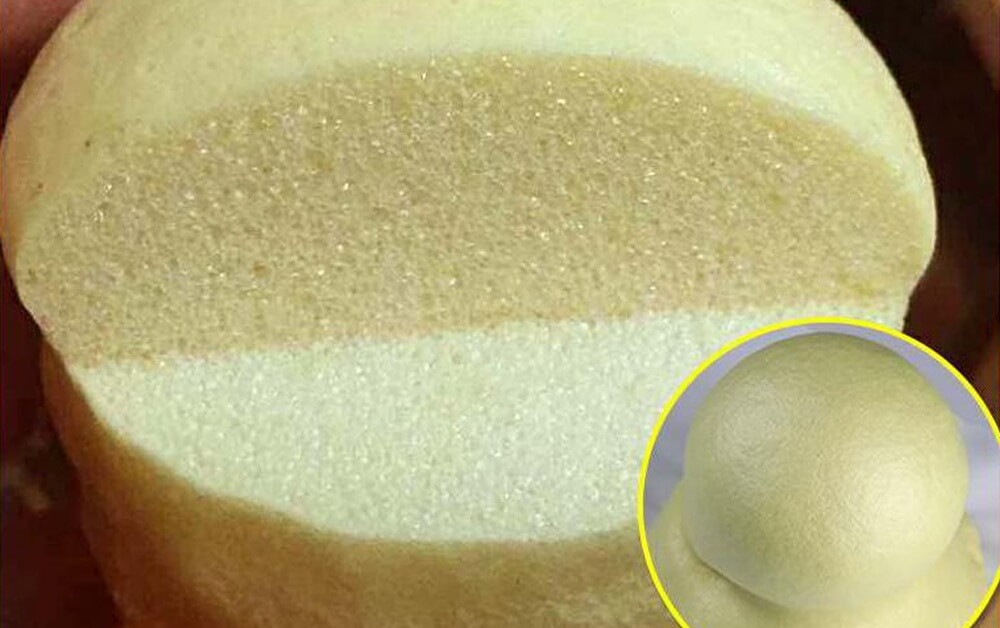
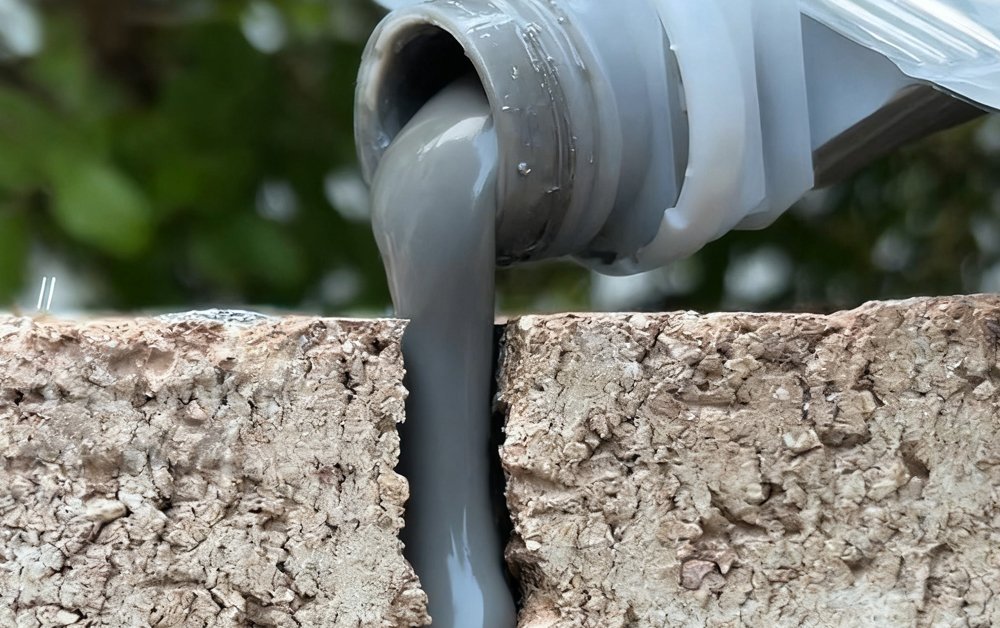
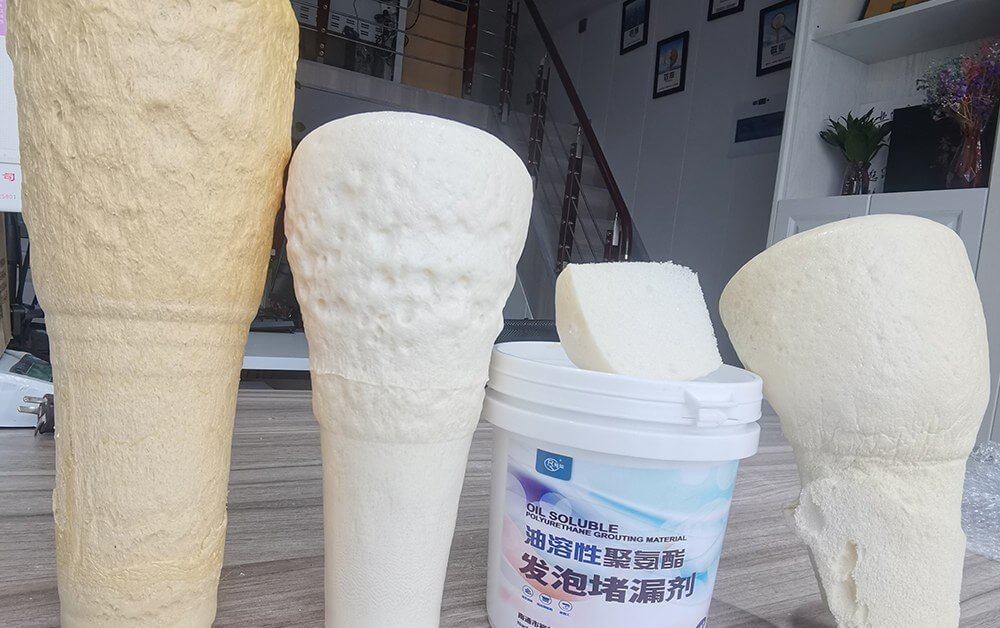
Polyurethane grout, commonly referred to as PU grout, is among the most frequently specified materials in waterproof injection applications.
It is primarily employed to arrest water leakage through injection into cracks, joints, and concrete defects.
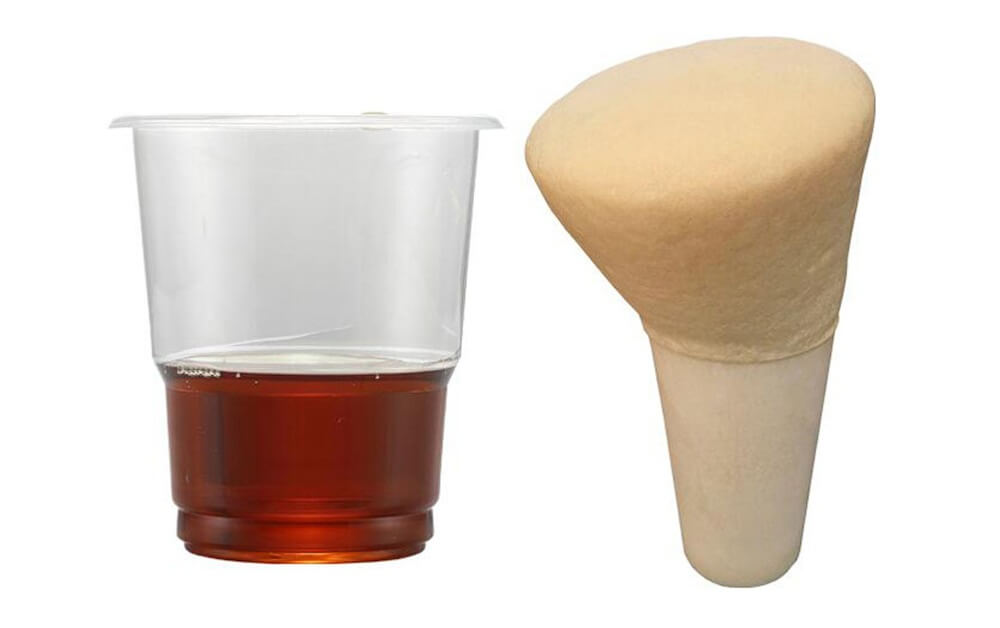
During injection, PU grout reacts with moisture to form a sealing structure within the concrete matrix.
This characteristic renders it suitable for diverse repair scenarios requiring water infiltration control.
Common applications include:
- Basement leakage repair
- Underground concrete structures
- Tunnel waterproofing
- Concrete crack injection
- Construction joint sealing
PU grout has gained widespread adoption due to its ability to penetrate leakage pathways and establish a waterproof barrier within concrete structures.
Main Characteristics of Polyurethane Grout
Good Water Sealing Performance
One of the main reasons contractors choose polyurethane grout is its ability to seal active water leakage.
When groundwater enters concrete through cracks or joints, surface repair methods may not solve the internal leakage path.
Injection allows the material to reach deeper areas.
This helps control:
- Water seepage
- Crack leakage
- Joint leakage
For underground waterproofing projects, selecting a grout that matches the water condition is important.
Expansion Ability for Leakage Blocking
Many polyurethane grout systems are designed to expand after contact with water.
This expansion helps the material fill gaps and improve sealing performance.
It is often selected for:
- Active leakage points
- Concrete cracks
- Hidden water channels
However, engineers should understand the project condition before choosing an expansion-type grout.
Too much expansion or unsuitable material selection may affect the final repair result.
Common Applications of Polyurethane Grout
Polyurethane grout is widely used in:
Basement Waterproofing
Basements often experience water problems caused by:
- Groundwater pressure
- Concrete cracks
- Construction joints
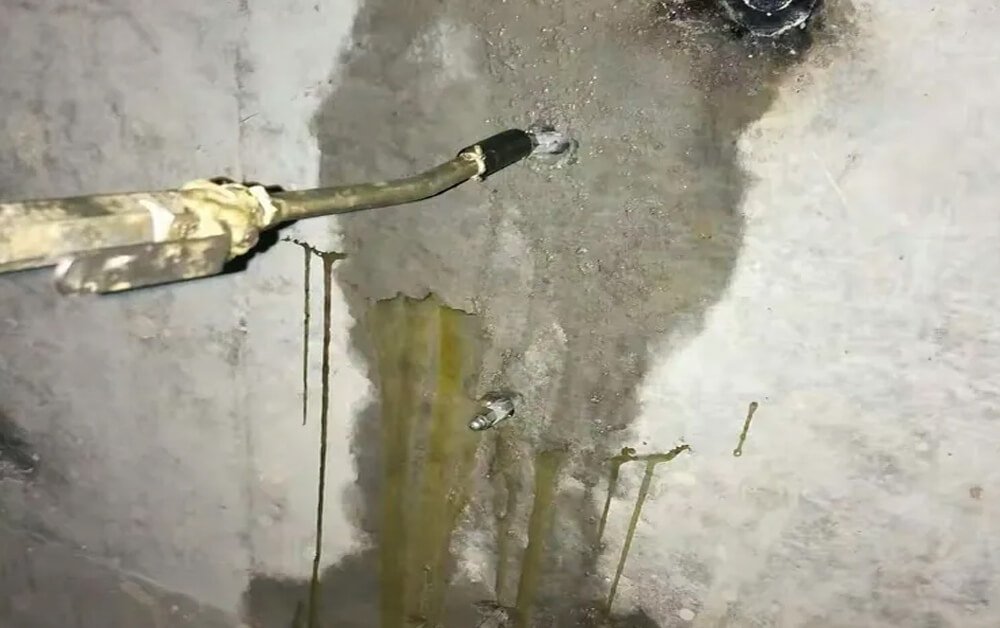
PU grout injection helps repair leakage paths without major structural demolition.
Tunnel Leakage Repair
Tunnels require reliable waterproof systems because they operate in underground environments.
Polyurethane grout is commonly used for:
- Tunnel cracks
- Segment joints
- Water seepage points
Concrete Crack Injection
Concrete cracks can become channels for water movement.
PU grout injection helps seal these cracks and reduce water penetration.
What Is Polyurea Grout?
Understanding Polyurea Grout for Waterproof Injection Projects
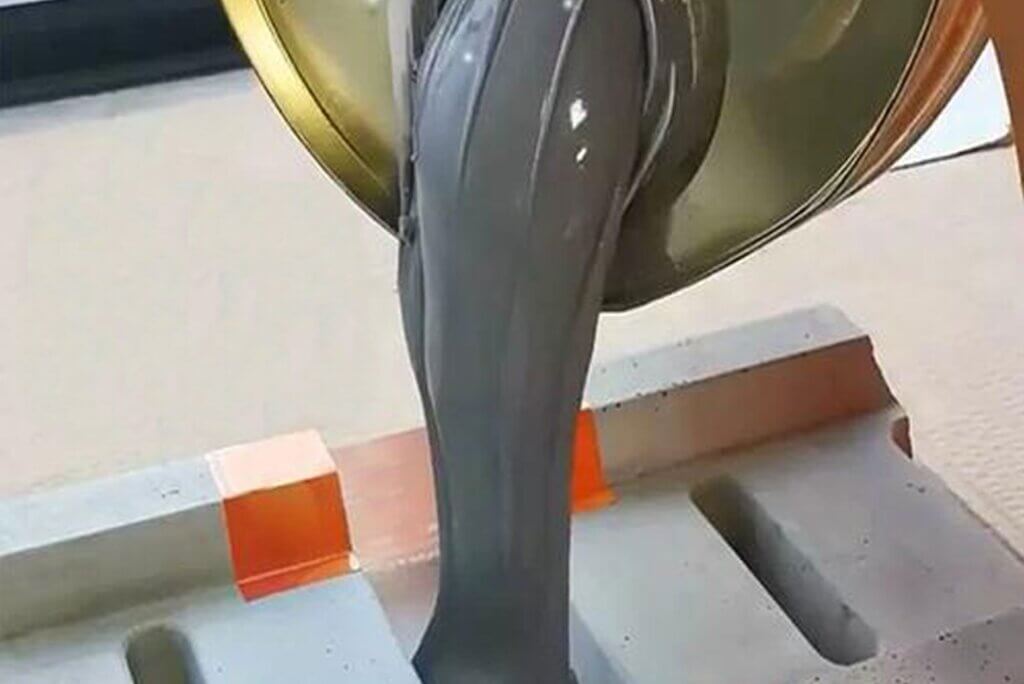
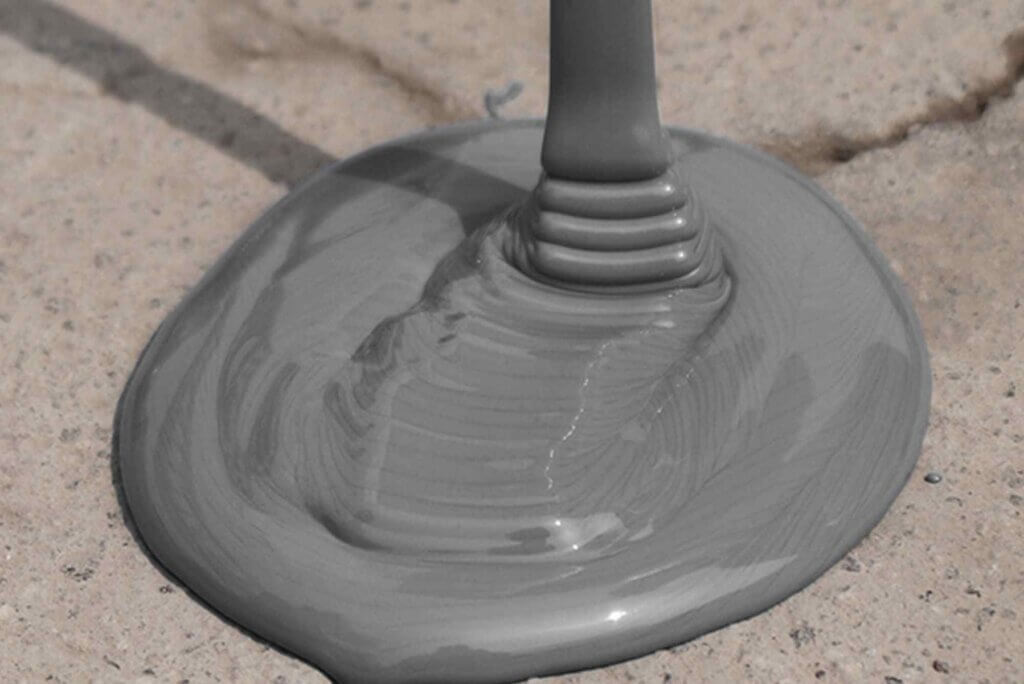
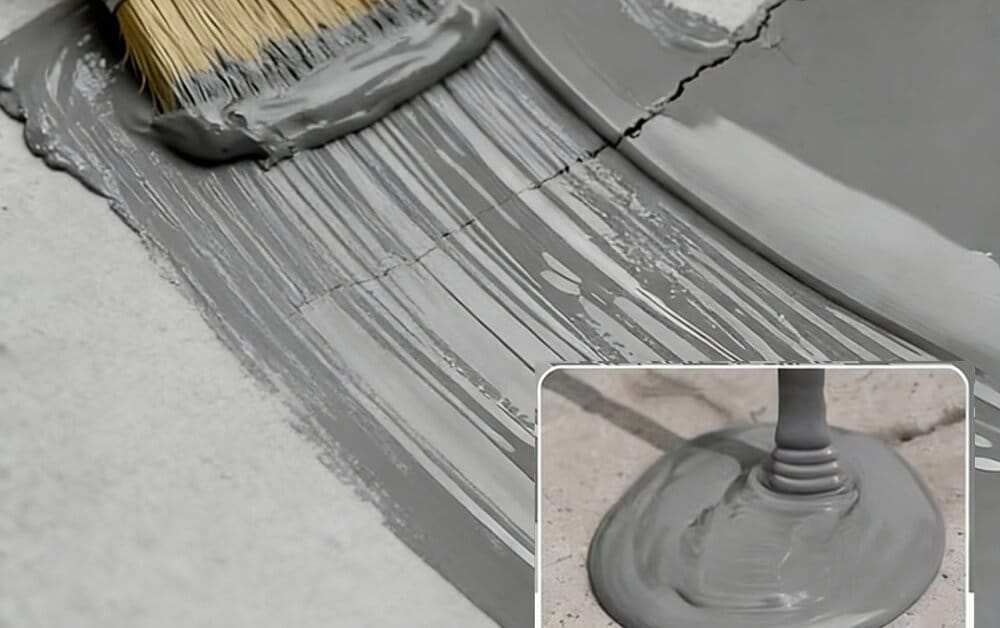
Polyurea grout is a high-performance injection material used for waterproof sealing and concrete repair applications.
It is selected when projects require:
- Flexible sealing performance
- Good water resistance
- Long-term crack adaptation
- Durable waterproof protection
Unlike rigid repair materials, polyurea grout focuses on maintaining sealing performance when structures experience small movements.
This makes it suitable for complex underground environments.
Main Characteristics of Polyurea Grout
Excellent Elasticity for Dynamic Structures
Concrete structures can experience movement over time.
Factors include:
- Temperature changes
- Structural vibration
- Ground movement
- Crack expansion
For these conditions, flexibility becomes important.
Polyurea grout provides elastic properties that allow the material to adapt to certain structural changes.
It is often considered for:
- Moving cracks
- Expansion joints
- Underground structures
Strong Water Resistance
Waterproof injection projects require materials that can maintain sealing performance in wet environments.
Polyurea grout is designed for applications where long-term waterproof sealing is required.
It can be used for:
- Underground concrete repair
- Leakage sealing
- Crack injection
The correct material selection depends on the actual project requirements.
Good Resistance in Challenging Environments
Some projects involve difficult conditions.
For example:
- Industrial facilities
- Underground infrastructure
- Water-related structures
In these environments, engineers consider not only initial sealing performance but also long-term material stability.
A professional supplier should provide technical information to help customers understand suitable applications.
Common Applications of Polyurea Grout
Underground Concrete Structures
Underground structures often face long-term water exposure.
Examples include:
- Underground parking
- Utility tunnels
- Subway structures
- Foundation structures
Polyurea grout can provide flexible sealing solutions for these applications.
Concrete Cracks With Movement Risk
Not all cracks behave the same way.
Some cracks remain stable.
Others continue to move due to:
- Temperature changes
- Structural stress
- Environmental conditions
For moving cracks, flexible injection materials become more important.
Expansion Joints
Expansion joints allow concrete structures to move.
However, they can also become leakage points.
A suitable flexible grout system helps maintain waterproof performance around these areas.
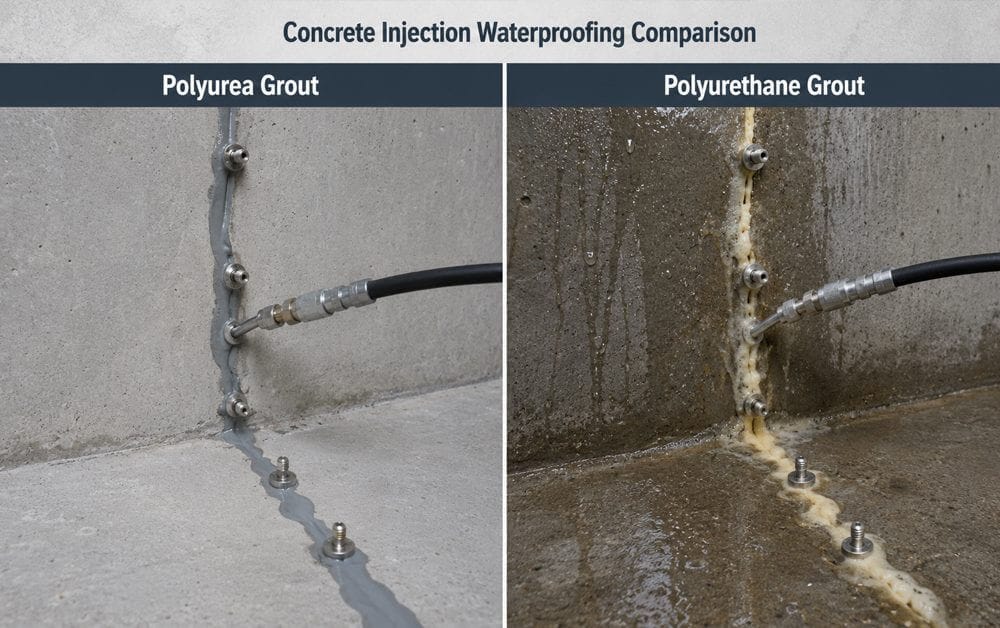
Polyurea Grout vs Polyurethane Grout: Key Differences
Comparison Table
| Comparison Item | Polyurea Grout | Polyurethane Grout |
| Main Focus | Flexible waterproof sealing | Leakage blocking and water sealing |
| Flexibility | High flexibility for movement conditions | Depends on formulation |
| Typical Application | Underground structures, moving cracks, long-term sealing | Active leakage repair, cracks, joints |
| Water Condition | Suitable for waterproof repair requirements | Commonly used for wet and leaking areas |
| Selection Focus | Movement resistance and durability | Water stopping and expansion performance |
How Should Engineers Understand the Difference?
The difference between polyurea grout and polyurethane grout is not about which material is always better.
Each material solves different engineering problems.
A simple selection principle is:
Identify Leakage Condition
↓
Analyze Crack or Joint Type
↓
Define Repair Objective
↓
Select Suitable Injection Grout
↓
Test Material Performance
When Polyurethane Grout May Be a Better Choice
Polyurethane grout is often considered when the project requires:
- Active water leakage control
- Crack sealing
- Expansion filling
- Waterproof injection repair
For example:
A basement wall with active water leakage may require a material that reacts with water and fills leakage paths.
When Polyurea Grout May Be a Better Choice
Polyurea grout is often considered when the project requires:
- Flexible sealing
- Long-term waterproof performance
- Adaptation to structural movement
For example:
An underground concrete structure with moving cracks may require a more flexible injection solution.
Which Grout Should You Choose for Waterproof Injection Projects?
Selecting between polyurea grout and polyurethane grout depends on the actual project condition.
There is no single grout material that fits every waterproof injection project.
Engineers should first understand:
- Where the leakage happens
- Why water enters the structure
- Whether the crack moves
- What performance the repair requires
A correct material selection process reduces repair risks and improves long-term waterproof performance.
Selection Guide Based on Leakage Conditions
Active Water Leakage
When concrete structures have active water leakage, engineers usually focus on stopping water flow first.
Important factors include:
- Leakage pressure
- Water volume
- Crack size
- Injection environment
Polyurethane grout is often considered for these conditions because it can react with water and expand inside leakage paths.
Typical applications include:
- Basement leakage repair
- Underground wall leakage
- Tunnel seepage points
The final selection should depend on the project situation and supplier recommendations.
Cracks With Structural Movement
Some concrete cracks continue changing after repair.
Common causes include:
- Temperature changes
- Structural movement
- Ground settlement
For these conditions, flexibility becomes an important factor.
Polyurea grout can be considered when the project requires:
- Flexible sealing
- Crack movement adaptation
- Long-term waterproof protection
Fine Cracks and Complex Leakage Paths
Some projects involve small cracks or complicated water paths.
In these situations, engineers may consider other injection materials such as acrylate grout.
Material selection depends on:
- Crack width
- Penetration requirement
- Waterproof target
A professional injection grout supplier should evaluate the project before recommending a solution.
Factors Affecting Injection Grout Performance
The final performance of a waterproof injection project depends on multiple factors.
The grout material is only one part of the complete system.
Crack Condition
The crack condition directly affects material selection.
Engineers should evaluate:
- Crack width
- Crack depth
- Crack movement
- Crack location
A stable crack and a moving crack require different repair approaches.
Choosing the wrong grout may reduce repair effectiveness.
Water Condition
Water condition is another important factor.
Projects may face:
- Dry cracks
- Damp cracks
- Active leakage
- High water pressure
Different water conditions require different injection strategies.
For example:
A dry structural crack may require a different material compared with a leaking underground wall.
Injection Method and Construction Quality
Even the right material can fail if the application process is incorrect.
Important factors include:
- Packer installation
- Injection pressure
- Injection sequence
- Operator experience
A professional supplier should provide basic technical guidance to help contractors achieve better results.
Project Environment
The surrounding environment also affects material choice.
Engineers should consider:
- Underground conditions
- Temperature
- Chemical exposure
- Long-term service requirements
For industrial and infrastructure projects, material durability becomes especially important.
How to Select the Right Injection Grout Supplier?
Choosing the right supplier is as important as choosing the right grout.
A reliable supplier should support customers before, during, and after purchase.
Check Product Range and Technical Capability
A professional injection grout supplier should provide multiple solutions.
For example:
- Polyurea grout
- Polyurethane grout
- Acrylate grout
- Epoxy injection grout
A complete product range allows customers to select materials based on actual project requirements.
Check Sample Testing Support
Before bulk purchasing, customers should test the product.
Sample testing helps confirm:
- Material suitability
- Application performance
- Waterproof effect
This step is especially important for overseas projects.
Different regions may have different construction conditions and requirements.
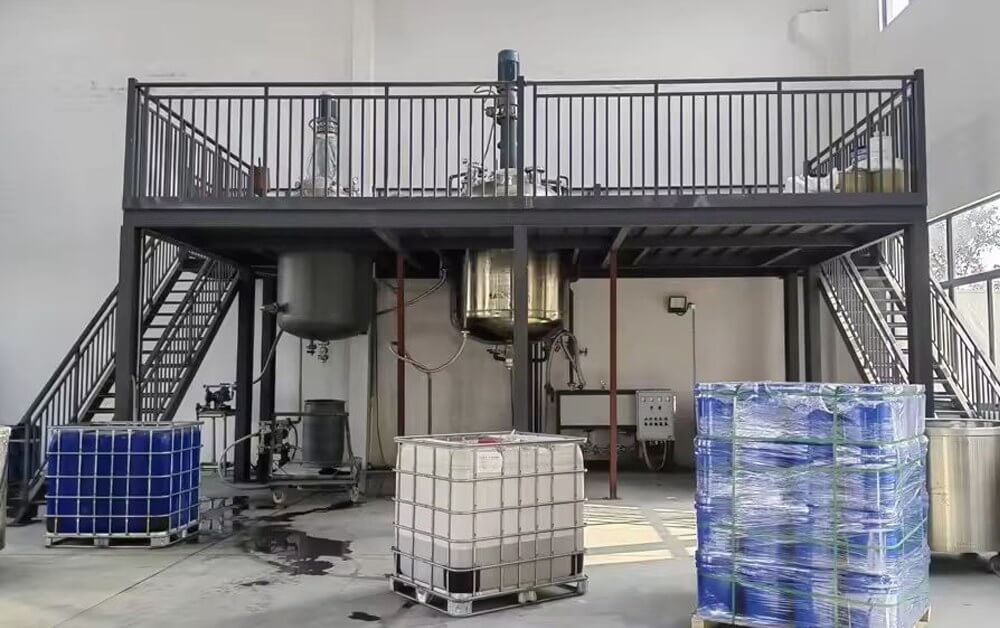
Check Manufacturing Capability
Customers should evaluate whether the supplier has real production capability.
Important points include:
- Factory information
- Quality control process
- Production consistency
- Export experience
A manufacturer with strong production control can provide more stable cooperation.
Check Technical Communication Ability
Waterproof injection projects often require detailed discussion.
A good supplier should understand:
- Project background
- Leakage condition
- Customer expectations
Technical communication helps avoid incorrect product selection.
Czech Customer Sample Testing Case: Selecting YURU Polyurea Grout
Customer Background
A customer from the Czech Republic contacted YURU to find a suitable polyurea grout solution.
The customer needed an injection material for waterproof repair applications.
Before making a larger purchase, the customer wanted to verify the product performance through actual testing.
Sample Testing Before Purchase
YURU provided samples according to the customer’s requirements.
The customer tested the material in their application environment.
The testing process helped confirm:
- Product suitability
- Application performance
- Waterproof sealing effect
After successful testing, the customer decided to continue cooperation with YURU.
Long-Term Cooperation
After the first successful evaluation, the customer returned for repeat purchases.
This cooperation shows an important point:
Engineering customers often value proven performance and reliable supplier support.
Our YURU continues to support customers through:
- Product communication
- Technical discussion
- Stable material supply
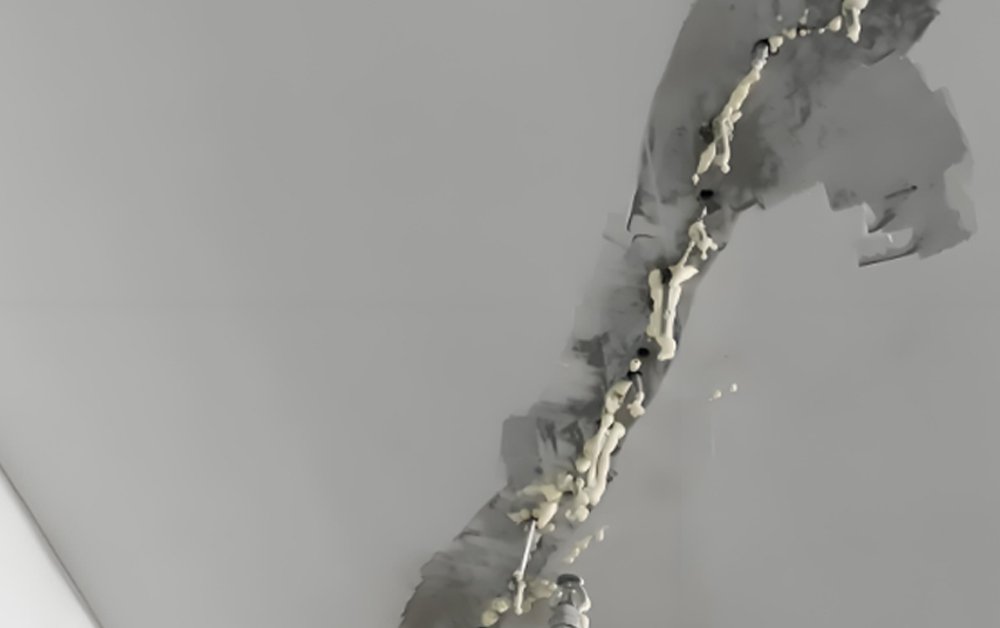
YURU Injection Grouting Solutions
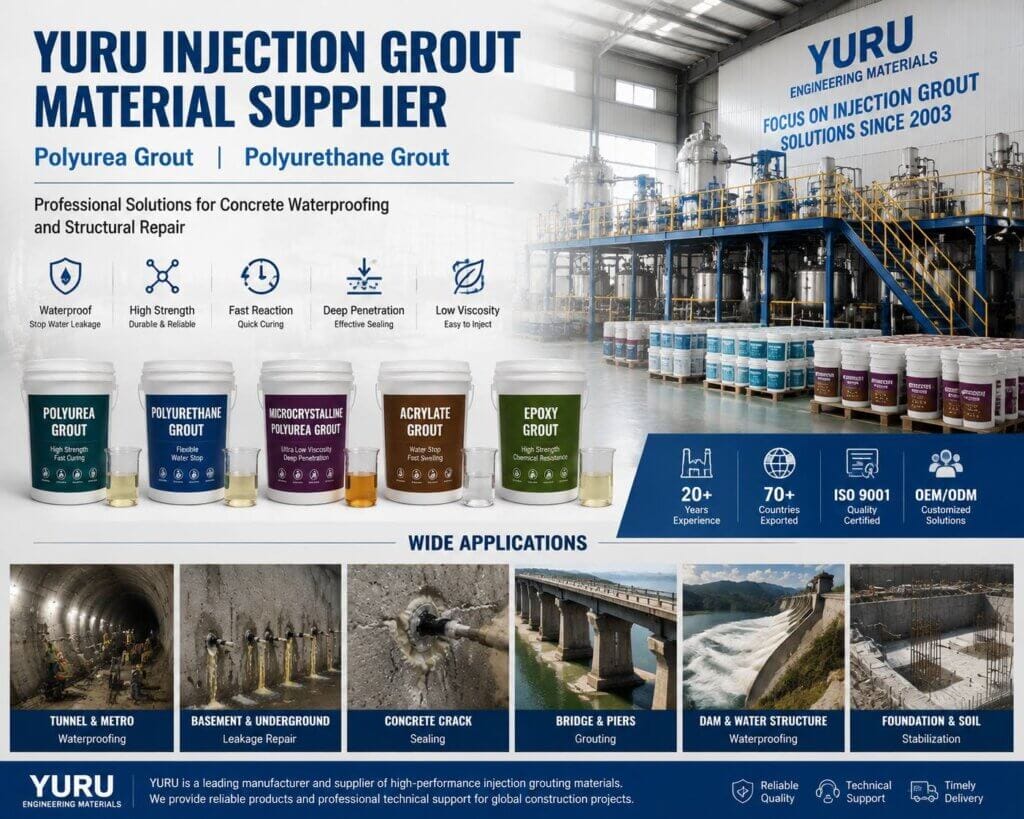
YURU provides a complete range of injection grouting materials for waterproof repair projects.
The product range includes:
- Polyurea grout
- Polyurethane grout
- Acrylate grout
- Epoxy injection grout
These materials support different applications:
- Underground concrete structures
- Basement leakage repair
- Tunnel waterproofing
- Concrete crack injection
- Infrastructure maintenance
Material Selection Support
YURU helps customers select suitable injection materials based on project conditions.
The selection process considers:
- Leakage type
- Crack condition
- Waterproof requirements
- Application environment
Instead of recommending one product for all projects, YURU focuses on matching the material with the engineering requirement.
Customized Solutions for Overseas Projects
Different markets and projects may require different product specifications.
YURU supports:
- Product customization
- Packaging customization
- Technical communication
This helps overseas partners develop suitable waterproof injection solutions.
Why Choose YURU Waterproof as Your Injection Grouting Supplier?
Professional Waterproofing Material Manufacturer
YURU focuses on waterproofing materials, injection grouting materials, and flooring systems.
The company provides solutions for overseas construction and waterproof repair projects.
Complete Injection Grouting Product System
Customers can choose from multiple injection materials.
This allows contractors to select the right solution for different leakage conditions.
Technical Support During Project Selection
YURU Waterproof supports customers through:
- Material recommendation
- Sample testing
- Technical communication
This support helps customers make better purchasing decisions.
Stable Supply for Long-Term Cooperation
Waterproof projects often require continuous material supply.
YURU focuses on:
- Product consistency
- Production stability
- Long-term customer relationships
FAQs:
Both materials are employed in waterproof injection applications. The main difference is their performance focus.
Polyurethane grout is commonly specified for leakage sealing, whereas polyurea grout is more focused on flexible waterproof sealing and accommodation of movement.
Not always.
The correct choice depends on:
- Leakage condition
- Crack movement
- Waterproof target
- Project environment
It depends on the crack condition.
Stable cracks, moving cracks, and active leakage areas may require different materials.
Yes.
Some projects use different injection materials in different areas depending on leakage conditions and repair requirements.
Look for:
- Manufacturing capability
- Technical support
- Sample testing
- Product range
- Long-term cooperation ability
Conclusion:
The difference between polyurea grout and polyurethane grout is not simply about which material is better.
Both materials have their own application advantages.
Polyurethane grout is commonly considered for water leakage sealing and expansion-based waterproof repair.
Polyurea grout provides flexible sealing performance for projects that require long-term waterproof protection and movement adaptation.
The best choice depends on:
- Leakage condition
- Crack characteristics
- Project requirements
- Expected service performance
Choosing a reliable injection grout supplier is also an important part of project success.
YURU Waterproof provides professional injection grouting materials and technical support for overseas waterproofing projects.
Contact YURU Waterproof to discuss your project requirements and select the right injection grout solution.
YURU Product solutions