Why Polyurea Concrete Coating Fails and How to Avoid Common Application Problems?
Introduction:
Polyurea concrete coating is often chosen because it can provide waterproofing, elasticity, fast curing, and strong protection for concrete surfaces. But when a coating project fails, it’s not always the material.
On real jobsites, polyurea failure usually comes from practical issues — concrete too wet, surface not prepared correctly, cracks covered without repair, wrong polyurea system selected, or two-component manual-applied product not mixed properly.
Contractors, distributors, and project buyers should treat polyurea coating as a complete system, not just a liquid product in a bucket.
A good polyurea formula can still fail if the substrate is weak, contaminated, wet, cracked, or if the application process does not follow product guidance. Before discussing price or coating thickness, the first question should be: is the concrete surface ready for polyurea?
This guide explains the most common reasons for polyurea failure — peeling, poor adhesion, blistering, pinholes, cracking, leakage, UV aging, slow curing, uneven film formation — and how to avoid these problems before coating work begins.
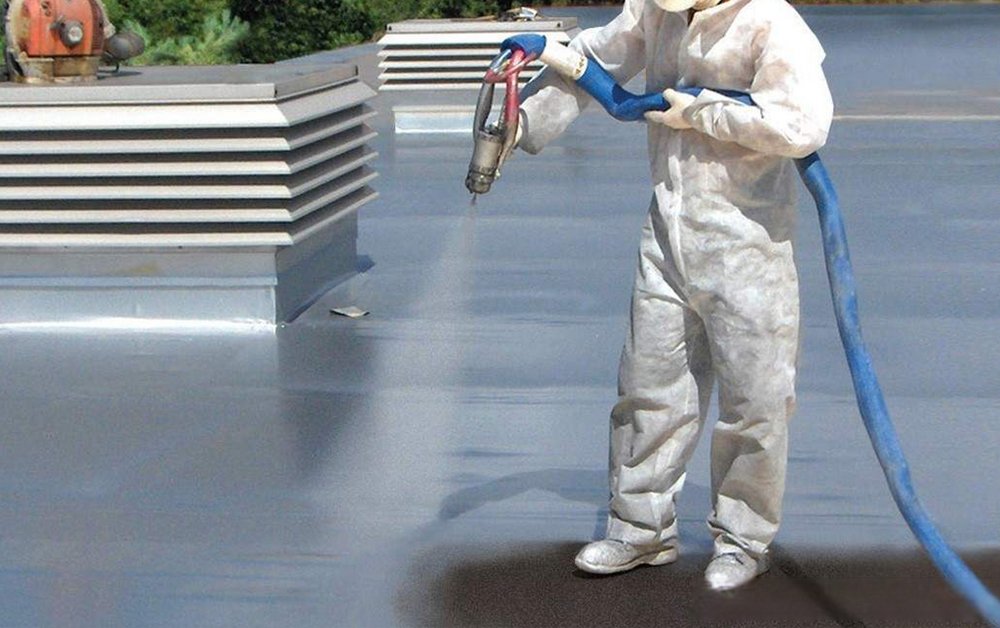
Why Does Polyurea Concrete Coating Fail?
Polyurea fails when material, substrate, environment, and application method don’t match.
For example, a non-exposed manual-applied polyurea product may fail faster if used directly on an exposed roof. Two-component UV-resistant manual-applied polyurea performs poorly if not mixed evenly. Spray polyurea may also fail if the equipment temperature, pressure, or ratio is not controlled correctly.
Common failure signs include:
- Peeling or poor adhesion
- Blisters and pinholes
- Uneven film surface
- Cracking after application
- Water leakage after coating
- Slow curing
- Soft or sticky film
- UV aging on exposed roofs
- Local delamination
- Poor bond strength
In most cases, these issues can be reduced by checking the concrete surface, controlling moisture, choosing the right primer, repairing cracks, using the correct product type, and following the mixing and application instructions.
Problem 1: Peeling or Poor Adhesion
Peeling is one of the most common polyurea coating problems. It usually appears as local separation, edge lifting, film delamination, or poor bonding between the coating and concrete surface.
Main Causes:
Polyurea may peel when the concrete surface is weak, dusty, oily, or too wet — when surface laitance is not removed, old coating remains, or wrong primer is used.
Another common reason is poor timing. If the coating is applied outside the correct recoat window, the bond between layers may become weak. In some projects, the product itself is not suitable for the substrate condition or exposure environment.
Typical causes include:
- Weak concrete surface
- Dust or loose particles
- Oil, grease, or old coating residue
- Surface laitance not removed
- Excessive substrate moisture
- Missing or unsuitable primer
- Wrong recoat window
- Wrong product for the project condition
How to Avoid It:
Before applying polyurea concrete coating, the surface should be clean, sound, and prepared according to the product requirements. Dust, oil, loose particles, laitance, and old weak coatings should be removed.
For important projects, a small test area is useful. It can show whether the coating bonds well to the concrete before full application begins.
To reduce peeling risk:
- Check concrete strength before coating
- Remove laitance, dust, grease, oil, and loose layers
- Control substrate moisture
- Use the recommended primer
- Follow the correct recoat window
- Apply a sample area before full coating
- Do adhesion testing when project risk is high
A polyurea coating cannot build strong adhesion on a weak or wet base. Surface preparation is part of the coating system.
Problem 2: Blisters, Pinholes and Air Bubbles
Blistering is another common complaint — the coating may look uneven, swollen, or full of small bubbles. Sometimes the surface looks acceptable at first, but blisters appear after heat, rain, or curing.
Main Causes:
Blisters and pinholes are often linked to moisture vapor, porous concrete, trapped air, or poor primer sealing.
Concrete is porous — if the surface is coated while moisture is still moving through the slab, vapor pressure pushes against the coating film. If the concrete pores are not sealed by a suitable primer, air may escape during application and create pinholes or small craters.
Manual application can also bring in air when the coating is mixed or rolled incorrectly. In spray polyurea projects, unstable equipment pressure, temperature, or mixing ratio may also create surface problems.
Typical causes include:
- Moisture vapor from concrete
- Overly wet concrete surface
- Porous concrete not sealed by primer
- Rising substrate temperature during application
- Air trapped during mixing
- Coating applied too thick in one pass
- Incorrect roller or brush technique
- Spray equipment pressure or temperature not stable
- Poor mixing ratio in two-component systems
Case Example: Moist Concrete Surface Caused Blistering After Application
YURU Waterproof once worked with a customer who purchased polyurea waterproof coating and applied it directly to the project surface. The customer had removed visible debris, but did not carefully check the concrete moisture condition. Some areas of the substrate were still overly wet.
After the coating formed a film, those wet areas developed blisters, uneven surface texture, and reduced bonding strength. After communication, YURU identified that the problem was mainly related to substrate moisture and insufficient surface inspection before application, rather than a simple material defect.
This case gives a practical lesson: cleaning visible debris is not the same as preparing the concrete surface. Moisture, hidden damp areas, porosity, primer must be checked.
For old concrete roofs, underground structures, water tanks, and repair areas, substrate condition is often more important than speed. If the surface is not ready, even a good coating can fail.
How to Avoid It:
The best way to reduce blistering is to control moisture and seal the concrete surface properly.
Before application, the contractor should inspect damp spots, water vapor risk, surface porosity, and local substrate weakness. If the concrete is old or exposed to moisture for a long time, extra attention is needed.
To avoid blisters and pinholes:
- Check substrate dryness before coating
- Pay attention to local damp areas, not only the general surface
- Use a suitable primer to seal porous concrete
- Avoid coating when the substrate temperature is rising too quickly
- Do not apply too thick in one pass
- Avoid trapping air during mixing
- Use proper brush or roller technique for manual application
- Keep spray equipment temperature, pressure, and ratio stable
- Test a small area before large-scale work
Blistering prevention starts before coating. Once bubbles appear, repair may require grinding, removing weak areas, and recoating.


Problem 3: Cracking or Leakage After Coating
Some contractors expect polyurea coating to cover all cracks — this is a misunderstanding. Polyurea can handle minor movement and small surface cracks, but it is not a replacement for structural crack repair. If active cracks, leaking cracks, or moving joints are covered directly, the coating may crack or leak later.
Main Causes:
Cracking or leakage after coating often happens when the real source of movement or water is not treated.
If a roof has visible cracks, they should be repaired before coating, if water is actively leaking through a crack, injection grouting may be needed first. If a movement joint is treated like a normal crack, the coating may fail when the joint moves again.
Typical causes include:
- Active cracks not repaired
- Structural cracks covered directly
- Moving joints treated as normal cracks
- Active water leakage not stopped before coating
- Coating thickness too thin
- No reinforcement at crack-prone areas
- Wrong polyurea system selected
- Substrate movement beyond coating capacity
How to Avoid It:
Before coating, cracks should be inspected and classified. A hairline surface crack is not the same as a structural crack. A dry crack is not the same as an active leaking crack.
For active leakage, polyurethane grout or another injection material may be needed before polyurea coating. For construction joints, expansion joints, and moving joints, the joint design should be handled separately.
To reduce cracking and leakage risk:
- Inspect crack type before coating
- Repair structural cracks first
- Stop active water leakage before coating
- Use reinforcement at crack-prone areas where required
- Maintain the designed coating thickness
- Treat movement joints separately
- Do not use polyurea coating as structural repair material
- Choose the correct system for the movement and exposure condition
Polyurea coating can protect concrete, but it cannot remove the cause of structural movement.
Problem 4: UV Aging or Weathering on Exposed Roofs
Outdoor concrete roofs are demanding. They face UV exposure, rain, temperature change, ponding water, and thermal movement. If the wrong polyurea product is used, aging or peeling can happen.
Main Causes:
One common mistake is using a non-exposed polyurea coating outdoors. Some manual-applied polyurea products are designed for non-exposed use or protected areas. They should not be used as long-term exposed roof coatings.
UV aging may also happen if the coating is too thin, the roof cracks were not treated, drainage is poor, or the coating was applied under unsuitable weather conditions.
Typical causes include:
- Non-exposed polyurea used outdoors
- No UV-resistant coating system
- Wrong product selected for roof exposure
- Coating thickness too low
- Poor crack treatment before coating
- Ponding water or drainage problem
- Application under wrong weather conditions
How to Avoid It:
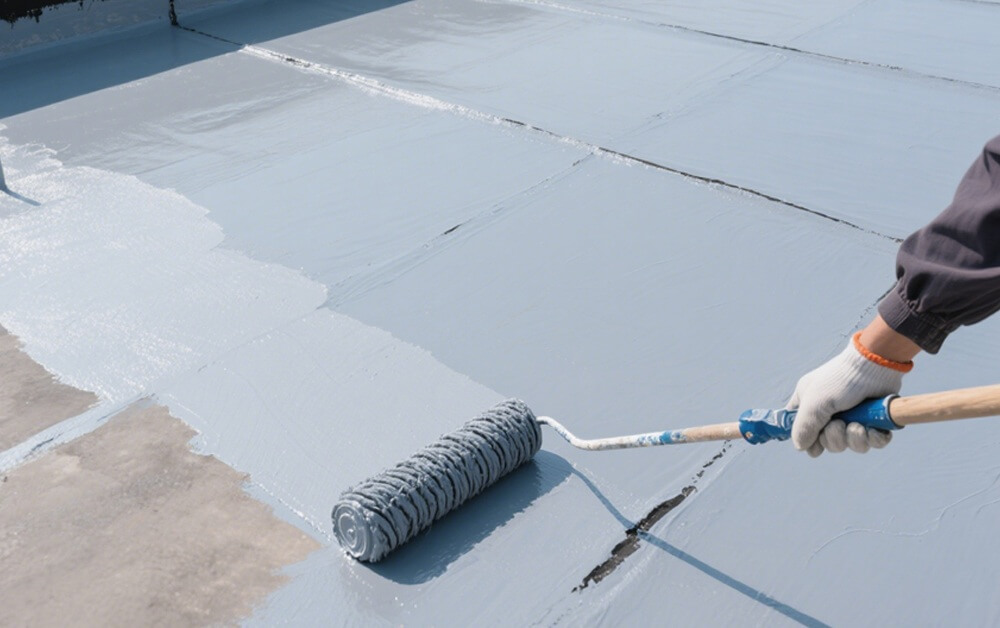
Exposed roofs need coating designed for outdoor weathering — UV-resistant polyurea coating or spray polyurea waterproof coating should be considered, depending on the project size, equipment availability, and schedule.
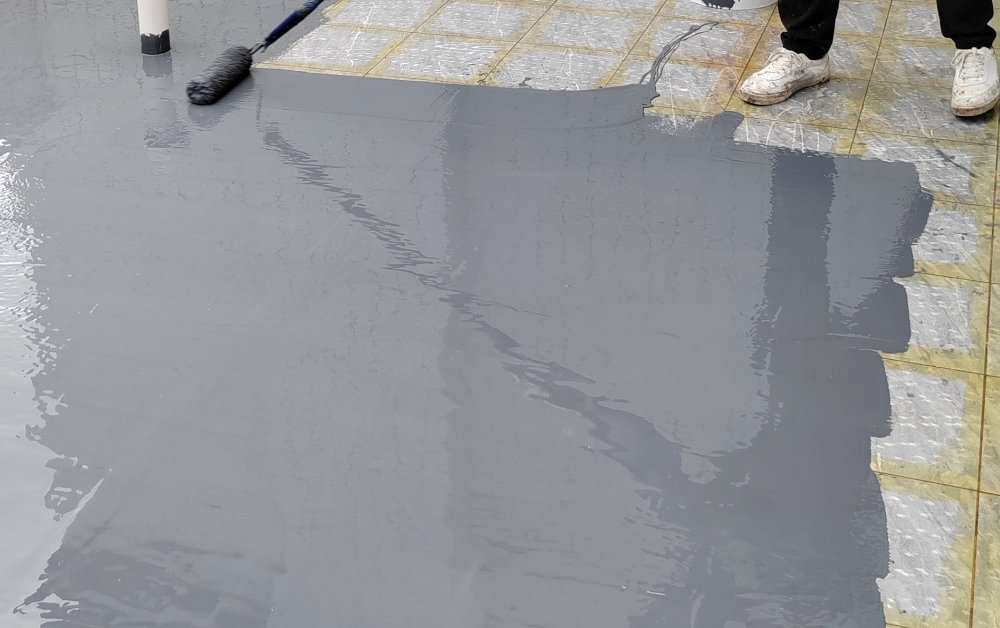
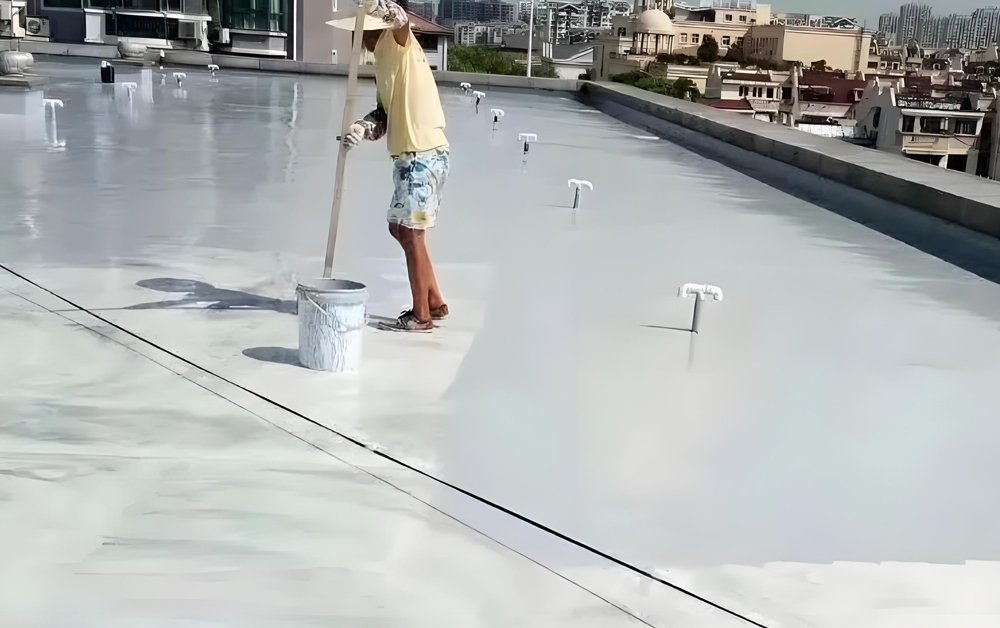
If the contractor does not have spray equipment, a UV-resistant two-component manual-applied polyurea coating can be a practical option. However, it still requires correct mixing, proper substrate preparation, and suitable weather conditions.
To reduce UV aging and weathering problems:
- Use UV-resistant polyurea coating for exposed roofs
- Do not use non-exposed polyurea for long-term outdoor exposure
- Repair roof cracks before coating
- Solve drainage and ponding water problems
- Apply the correct coating thickness
- Avoid application before rain or under unsuitable humidity
- Choose spray polyurea for large, fast-curing exposed projects
- Choose UV-resistant manual-applied polyurea when spray equipment is not available
The product must match the exposure condition. UV resistance is not optional for outdoor roof projects.
Problem 5: Slow Curing or Uneven Curing in Manual-Applied Polyurea
Manual-applied polyurea is useful for smaller projects, repair work, and jobsites without spray equipment. However, two-component manual-applied systems require careful mixing and application control.
If the material is not mixed correctly, the coating may cure slowly, cure unevenly, or form a weak film.
Main Causes:
Slow or uneven curing often comes from mixing errors. The contractor may use the wrong ratio, stir too quickly, stir too little, or mix too much material at one time. If the pot life is exceeded, the coating may lose proper workability.
Temperature and humidity also affect curing. In cold or humid conditions, curing may slow down. Another common problem is expecting manual-applied polyurea to cure like spray polyurea. These are different systems.
Typical causes include:
- Wrong mixing ratio
- Poor mixing
- Insufficient stirring
- Too much material mixed at one time
- Pot life exceeded
- Temperature too low
- Humidity too high
- Manual-applied product expected to cure like spray polyurea
- One-component and two-component systems misunderstood
Case Example: Poor Mixing Caused Slow Film Formation in Two-Component Polyurea
A long-term customer of YURU Waterproof used YURU’s two-component UV-resistant manual-applied polyurea waterproof coating. The product was suitable for exposed waterproofing. However, during application, the customer did not mix the two components thoroughly.
As a result, film formation took longer than expected, and the final coating effect was not ideal.
After reviewing the situation, YURU provided guidance on the correct mixing ratio, mixing method, stirring time, application window, and manual brushing process. Because the customer had maintained long-term cooperation with YURU, YURU also provided one additional set of material free of charge in the next shipment to help the customer retest and adjust the application.
This case shows that two-component manual-applied polyurea should not be treated as a simple “pour and brush” material. Correct ratio and complete mixing directly affect curing speed, film quality, and final performance.
It also shows why technical communication matters for engineering materials. A supplier should not only sell the product, but also help customers understand how to use it correctly.
How to Avoid It:
Manual-applied polyurea can work well, but the applicator must follow the product instructions closely.
To avoid slow or uneven curing:
- Follow the specified mixing ratio
- Use a suitable mixing tool
- Mix thoroughly for the required time
- Avoid mixing too much material at once
- Do not apply material after pot life is exceeded
- Adjust work planning according to temperature and humidity
- Understand that manual-applied polyurea and spray polyurea cure differently
- Read the TDS and application guide before work starts
- Make a sample area for important projects
For two-component coatings, mixing quality is part of product performance.
How to Choose the Right YURU Polyurea Matrial to Avoid Failure?
YURU Waterproof provides several polyurea waterproof coatings. Each one has its own application boundary. Selecting the right product is one of the best ways to reduce coating failure.
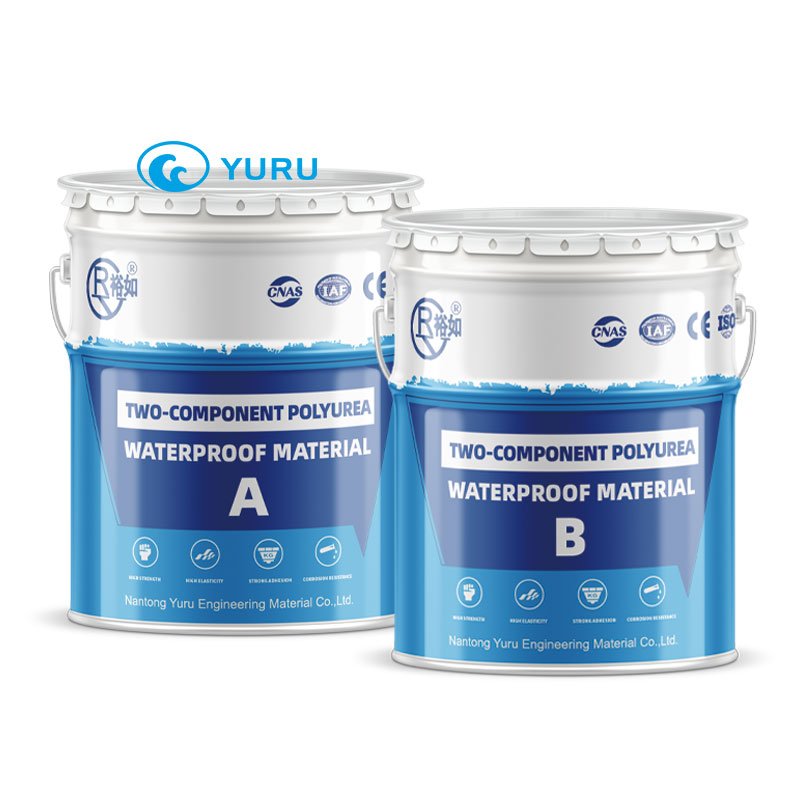
Single-Component Manual-Applied Polyurea Waterproof Coating
This product is suitable for non-exposed use. It has lower equipment requirements and can be useful for small areas, detail work, and non-exposed waterproofing.
However, it cures more slowly and is not recommended for exposed roofs. It should not be promoted as a spray polyurea system or a fast-curing UV-resistant roof coating.
Two-Component Manual-Applied Polyurea Coating for Non-Exposed Use
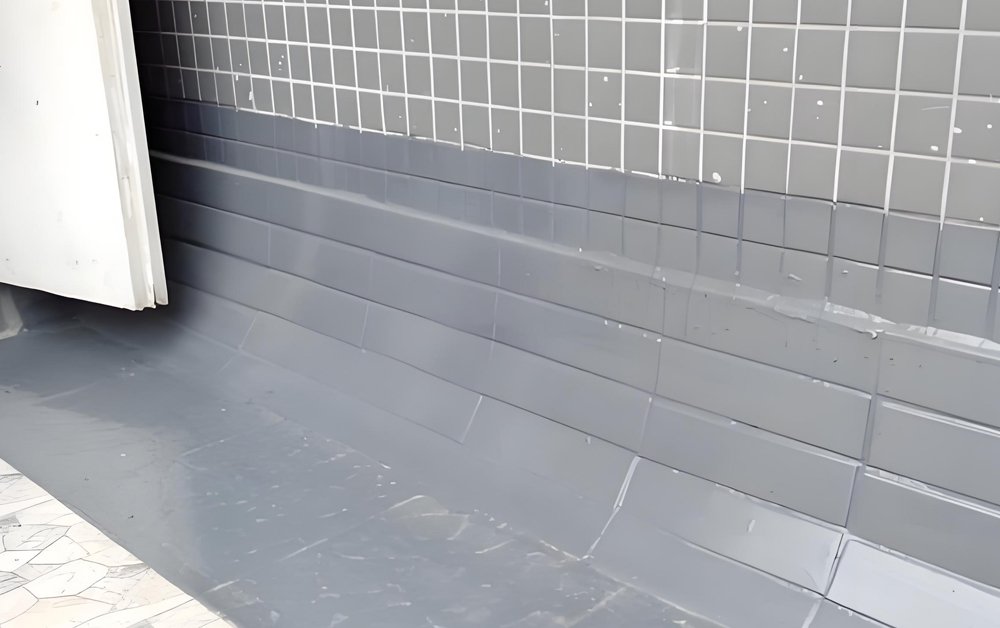
This system is also for non-exposed use. It has a standard curing speed and can be used for underground structures, non-exposed concrete waterproofing, or areas with a protective layer.
The key control points are mixing ratio, full mixing, pot life, substrate condition, and correct application thickness. It should not be used directly for long-term exposed environments.
UV-Resistant Two-Component Manual-Applied Polyurea Coating for Exposed Use
This product is designed for exposed use and has UV resistance. It cures faster than standard manual-applied systems, but not as fast as spray polyurea.
It is suitable for roofs, exposed platforms, and repair areas where the contractor does not have spray equipment. The main control points are crack treatment, substrate dryness, correct ratio, full mixing, weather window, and coating thickness.
Spray Polyurea Waterproof Coating for Fast-Curing Exposed Projects
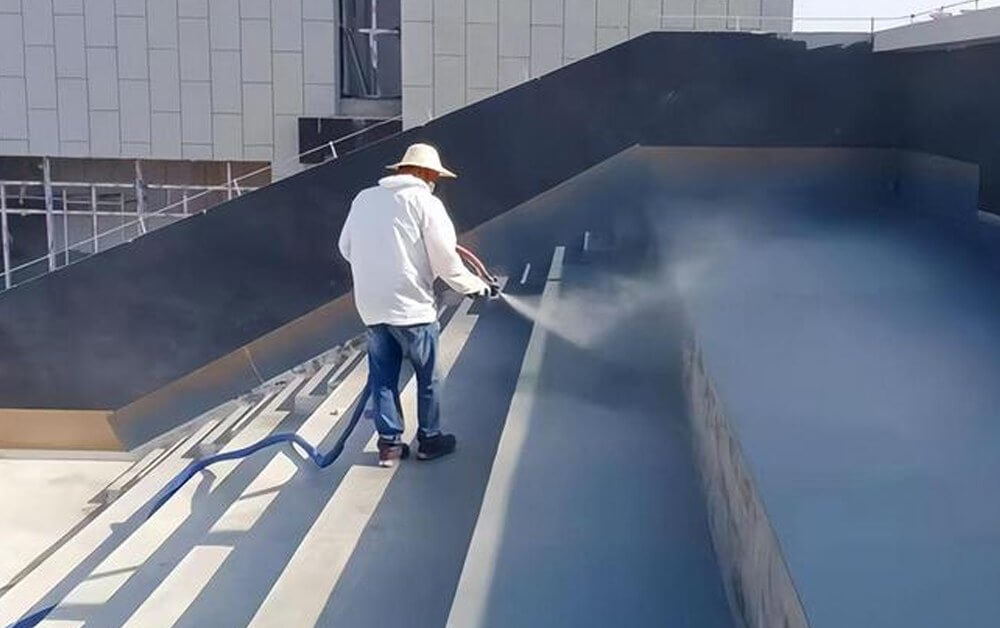
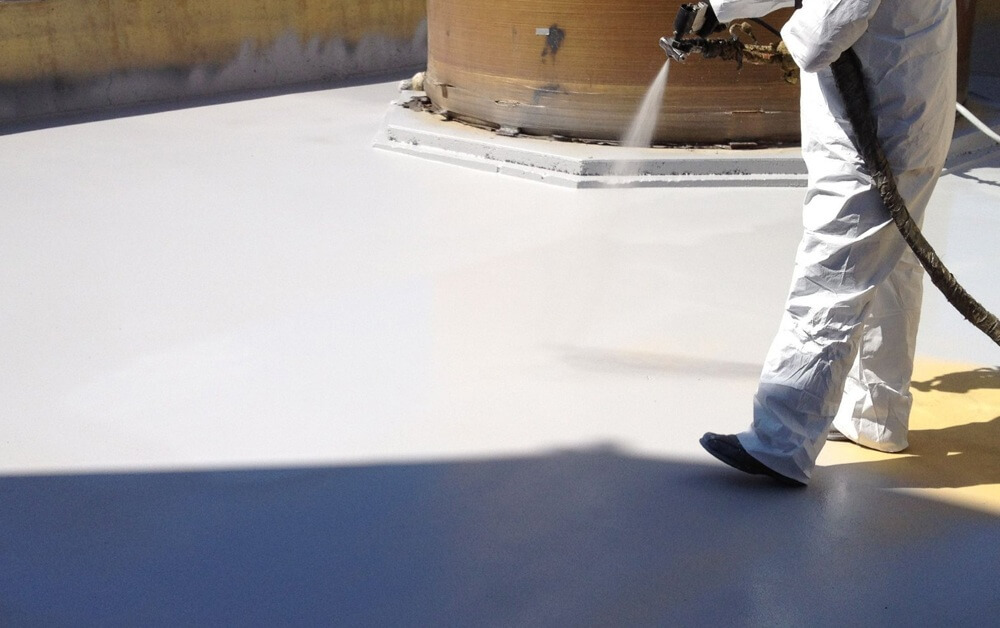
Spray polyurea waterproof coating is suitable for exposed use, UV resistance, and fast-curing large-area projects. It is often used when project speed is important.
However, it requires professional spray equipment and trained applicators. Equipment temperature, pressure, ratio, and spray experience can all affect the final result.
Application Checklist Before Starting a Polyurea Concrete Coating Project
Before starting a polyurea coating project, review the following checklist:
- Is the substrate strong enough?
- Is there dust, laitance, oil, grease, or old coating?
- Is the concrete locally too wet?
- Is there moisture vapor pressure?
- Have cracks been inspected and classified?
- Has active leakage been stopped before coating?
- Is primer needed to seal the surface?
- Is the product suitable for exposed or non-exposed use?
- Is UV resistance required?
- Will the coating be applied manually or by spray?
- Is the two-component mixing ratio clear?
- Has the material been mixed thoroughly?
- Does the application team understand pot life?
- Is the coating thickness confirmed?
- Are the number of coats and intervals clear?
- Is the weather suitable for application?
- Are TDS, MSDS, and application instructions available?
- Has a sample area been tested?
This checklist is simple, but it prevents many expensive coating failures.
Why Choose YURU Waterproof for Polyurea Concrete Coating Support?
YURU Waterproof is a professional manufacturer of waterproof coatings, injection grouting materials, and floor coating systems. For polyurea concrete coating and waterproofing projects, YURU provides different polyurea materials for different application needs.
YURU Waterproof can supply:
- Single-component manual-applied polyurea waterproof coating for non-exposed use
- Two-component manual-applied polyurea coating for non-exposed use
- UV-resistant two-component manual-applied polyurea coating for exposed use
- Spray polyurea waterproof coating for fast-curing exposed projects
YURU can help customers choose the right system based on exposed or non-exposed conditions, roof or underground use, manual or spray application, curing speed, substrate cracks, project schedule, and equipment availability.
Based on real project feedback, YURU has helped customers identify issues: wet substrates, blistering, poor adhesion, insufficient mixing, slow curing in manual-applied two-component systems.
YURU Waterproof can also provide sample testing, TDS, MSDS, application guidance, mixing ratio support, project communication, OEM/ODM, color customization, packaging customization, wholesale supply, and private-label cooperation.
For contractors and distributors, this support helps reduce application risk and improve customer confidence.
FAQs:
1. Why does polyurea concrete coating peel off?
Peeling may be caused by weak concrete, dust, oil, excessive moisture, missing primer, wrong surface preparation, poor recoat timing, or incorrect product selection — adhesion depends on both the material and the substrate condition.
2. Why does polyurea coating blister on concrete?
Blistering often comes from moisture vapor, overly wet concrete, porous concrete, poor primer sealing, rising substrate temperature, trapped air, excessive single-pass thickness, or incorrect application method.
3. Can polyurea coating be applied on damp concrete?
Generally not recommended directly on overly damp concrete — substrate moisture condition should be checked according to product requirement — drying, primer sealing, or water vapor treatment may be needed before coating.
4. Does YURU Waterproof provide support for polyurea concrete coating application?
Yes. YURU Waterproof provides single-component manual-applied polyurea, two-component manual-applied polyurea, UV-resistant manual-applied polyurea, and spray polyurea waterproof coating. YURU also supports selection communication, sample testing, TDS, MSDS, application guidance, mixing ratio support, OEM/ODM, and long-term supply.
Conclusion:
Polyurea concrete coating failure does not always mean the material is poor — more often, the failure comes from product selection, substrate preparation, moisture control, crack treatment, primer choice, mixing quality, weather conditions, and application method.
Polyurea coating can provide waterproofing, elasticity, fast curing, and concrete protection — but these advantages only appear when the system is selected correctly and applied under the right conditions.
Before starting a project, check whether the surface is exposed or non-exposed, whether the concrete is wet, whether cracks or active leaks exist, whether UV resistance is needed, and whether the contractor has spray equipment — then choose the right polyurea concrete coating system and follow the TDS and application guidance carefully.
Most coating failures can be avoided before application begins.
Contact YURU Waterproof to Avoid Polyurea Concrete Coating Failure
If you’re choosing polyurea, or have faced peeling, blistering, cracking, slow curing, UV aging, poor adhesion, or roof leakage — YURU can review your project and help select suitable polyurea waterproof coating.
Contact YURU Waterproof to discuss polyurea concrete coating selection, substrate preparation, moisture control, UV-resistant roof coating, manual-applied polyurea, spray polyurea waterproof coating, sample testing, OEM/ODM supply, and project-based application support.
YURU Product solutions