Epoxy Colored Sand Floor Paint vs Epoxy Floor Coating: Which Flooring System Is Better?
Introduction:
Flooring system selection represents an important decision for commercial and industrial projects.
A floor isn’t just something you walk on. It affects daily operations, maintenance costs, safety, and building aesthetics.
Many project teams compare two common solutions:
Both systems use epoxy resin technology but serve distinct purposes.
Standard epoxy floor coating is primarily formulated for surface protection, providing a smooth, durable, and easily maintainable finish suitable for industrial applications.
An epoxy colored sand floor combines epoxy resin, colored sand, and curing agent into a two-component self-leveling flooring system. The colored sand is already mixed in. It creates a decorative surface with unique texture and strong visual impact after curing.
When customers search for epoxy colored sand vs epoxy floor, they usually want to understand one question:
Which flooring system is better for my project?
The answer depends on the project environment.
A warehouse may require a practical, wear-resistant surface.
A hotel lobby or showroom may require a decorative floor with long-term durability.
Therefore, this epoxy flooring comparison focuses on:
- Material composition
- Performance characteristics
- Application areas
- Installation requirements
- Project selection
By understanding the difference between these systems, contractors and project teams can choose a flooring solution that matches their real requirements.
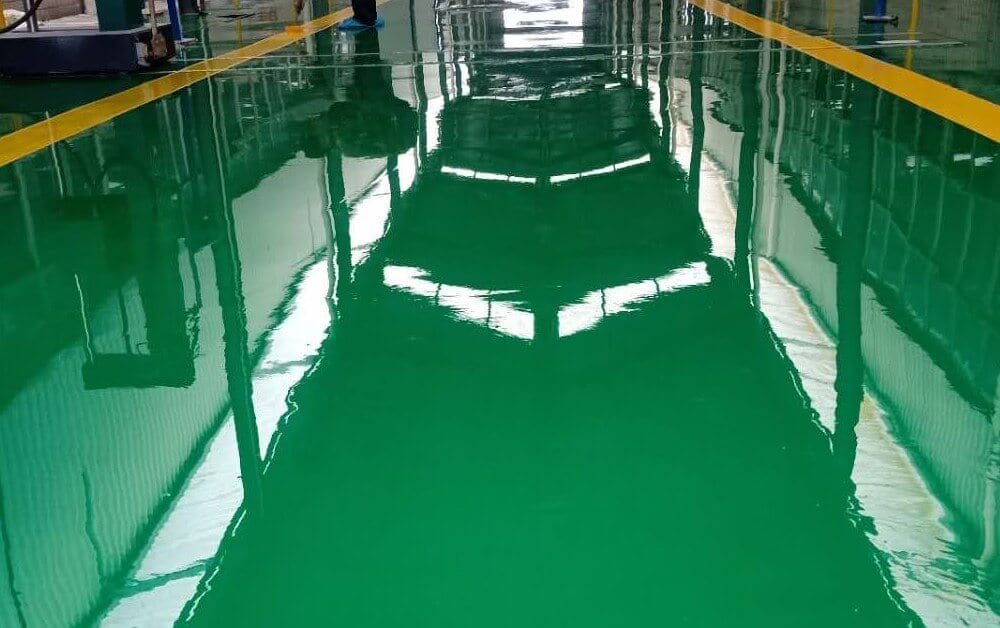
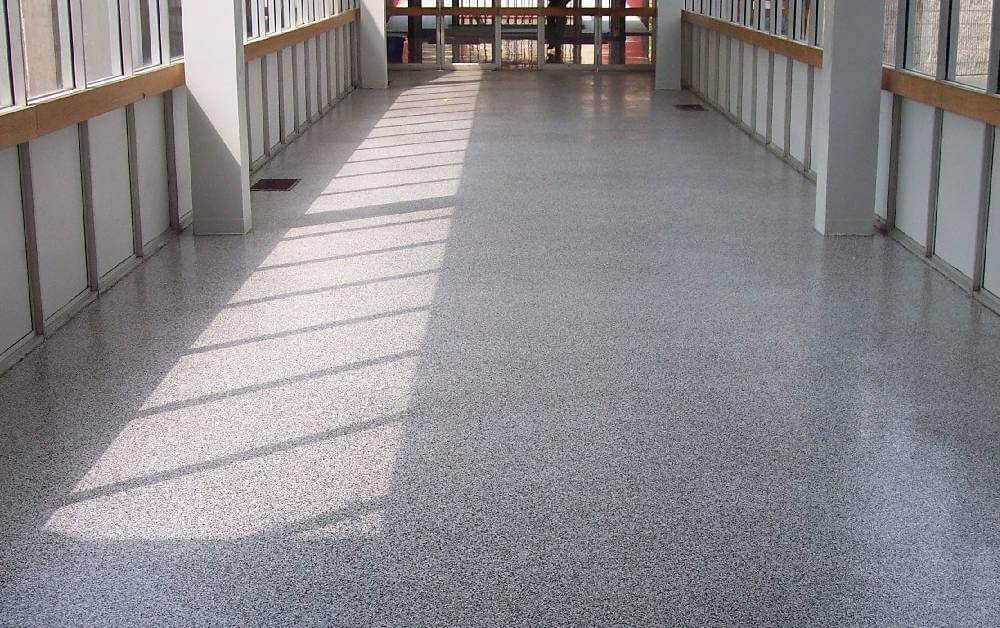
What Is Epoxy Floor Coating?
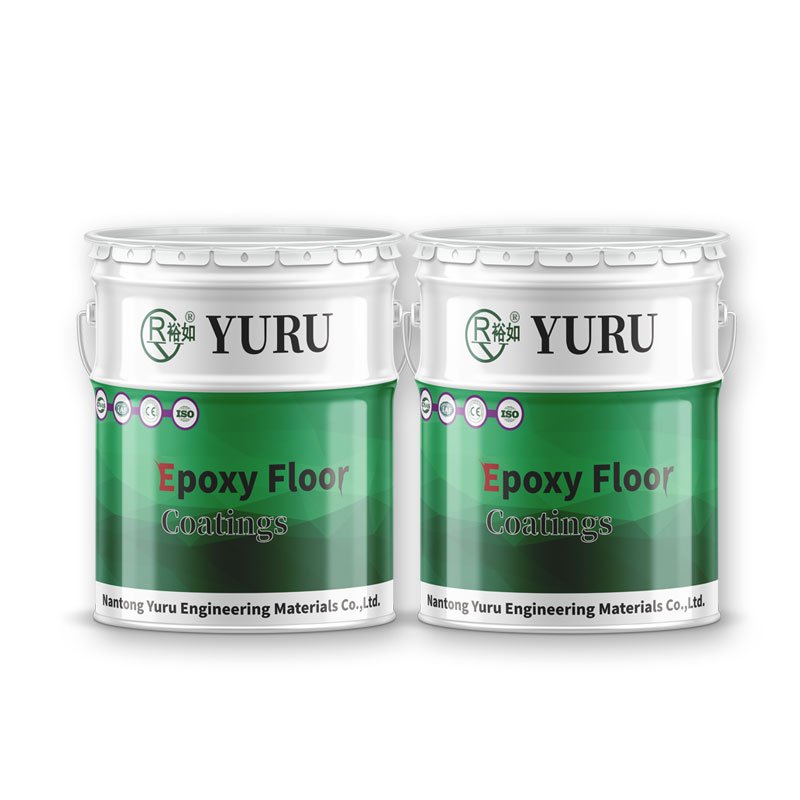
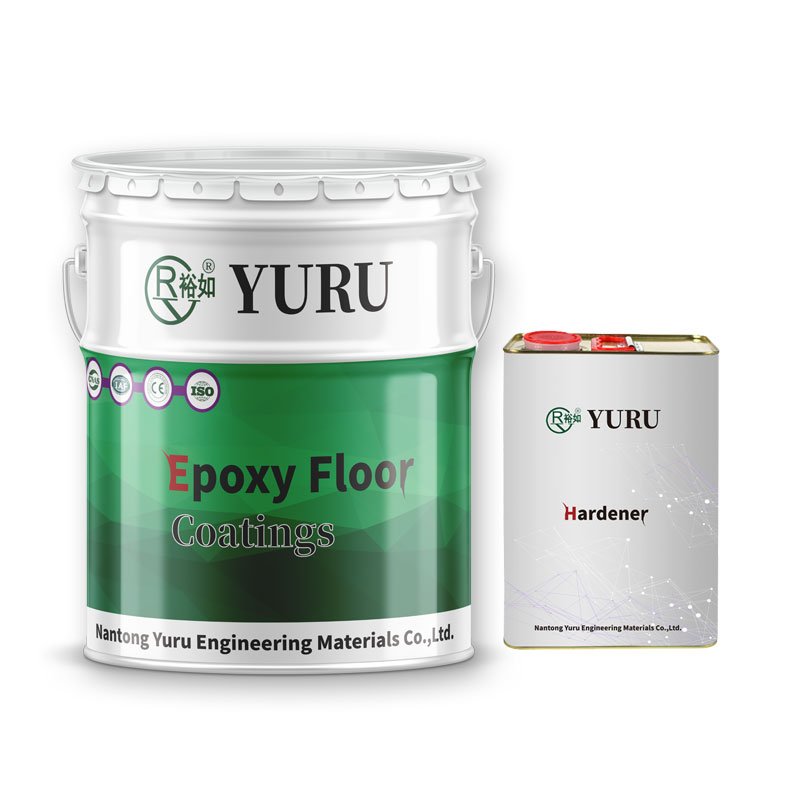
Epoxy floor coating is a resin-based flooring system formulated from epoxy resin and curing agents.
Upon mixing and application, the material cures to form a hard protective surface over the concrete substrate.
Why It’s Used:
- Good adhesion
- Surface protection
- Easy cleaning
- Chemical resistance
- Smooth appearance
Traditional epoxy floor coating systems are often selected for areas where function is the main priority.
Common applications include:
- Industrial workshops;
- Warehouses;
- Production areas;
- Garages;
- Mechanical rooms.
Main Features of Epoxy Floor Coating
Smooth and Clean Surface
Clean environment, less dust than concrete
This makes it suitable for areas requiring regular cleaning.
Functional Floor Protection
Many industrial floors experience:
- Foot traffic;
- Equipment movement;
- Material handling;
- Daily maintenance activities.
Epoxy floor coating forms a protective layer that enhances concrete surface durability.
Cost-Effective Flooring Solution
Compared to decorative systems, epoxy floor is often chosen for reliable performance with simpler design.
For projects that mainly require:
- Protection;
- Easy maintenance;
- Practical performance;
epoxy floor coating can be a suitable option.
Limitations of Standard Epoxy Floor Coating
Although epoxy coating performs well in many applications, it has some limitations.
The appearance is usually simpler.
Most standard epoxy floors use:
- Single colors;
- Solid finishes;
- Basic decorative effects.
For projects that require stronger visual design, a different flooring system may provide better results.
This is where epoxy colored sand flooring becomes an alternative.
What Is Epoxy Colored Sand Floor Paint?
Epoxy colored sand flooring is a two-component self-leveling flooring system.
The main components include:
- Epoxy resin;
- Colored sand;
- Curing agent.
The colored sand is already integrated into the formula.
This is different from systems that apply epoxy first and add loose sand later.
The material creates a complete flooring system after mixing and application.
System Structure:
Concrete Substrate → Surface Preparation → Primer Layer (as required) → Two-Component Epoxy Colored Sand Self-Leveling Floor Paint (Epoxy Resin + Colored Sand + Curing Agent) → Curing → Finished Seamless Decorative Floor Surface
The final floor provides:
- Decorative appearance;
- Seamless surface;
- Good wear resistance;
- Easy maintenance;
- Design flexibility.
How Epoxy Colored Sand Flooring Works:
The performance of epoxy colored sand flooring comes from the combination of different materials.
Epoxy Resin
The epoxy resin provides:
- Strong bonding;
- Surface hardness;
- Mechanical strength;
- Chemical resistance.
It connects the internal colored sand particles and forms the main flooring structure.
Colored Sand
The colored sand creates the visual character of the floor.
Because the sand is already mixed into the epoxy system, it provides:
- Uniform distribution;
- Consistent appearance;
- Decorative texture.
The surface does not rely on a separate sand layer; the colored sand is integral to the flooring material.
Curing Agent
Controls the hardening reaction.
Accurate mixing of Component A and Component B is essential.
Proper mixing helps the floor achieve:
- Stable curing;
- Better surface performance;
- Consistent quality.
Why Epoxy Colored Sand Flooring Is Different?
The biggest difference is the combination of appearance and performance.
A normal epoxy floor mainly focuses on protection.
An epoxy colored sand floor focuses on both:
- Functional performance;
- Decorative design.
This makes it suitable for projects where the floor must look professional while handling daily use.
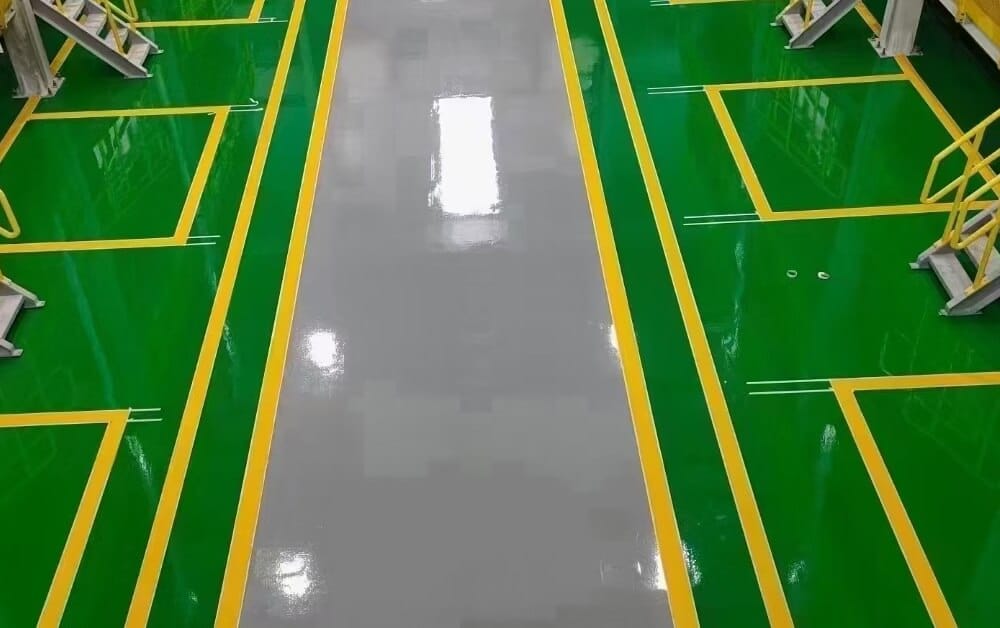
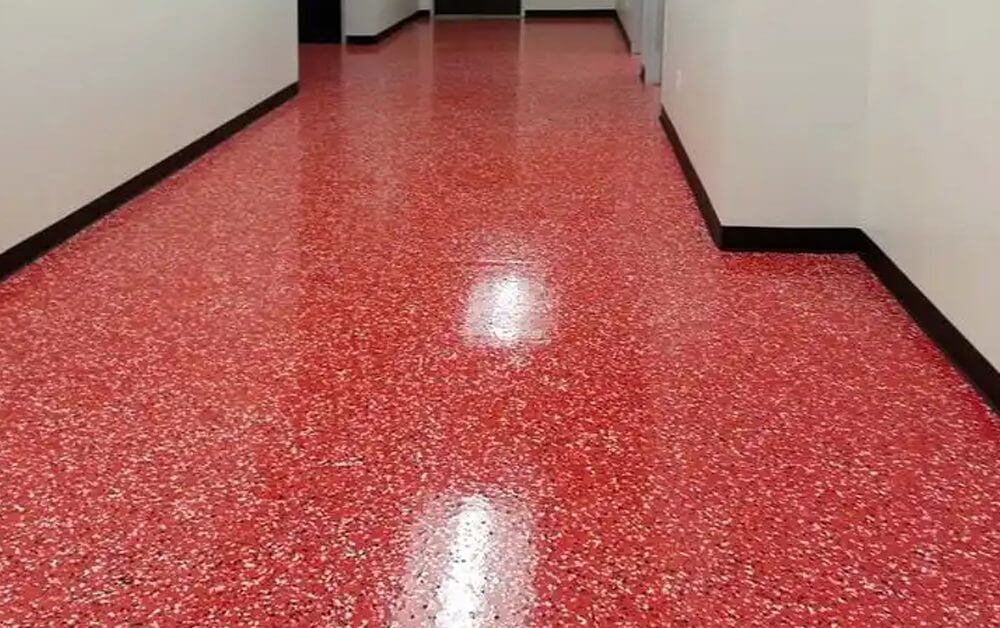
Epoxy Colored Sand Flooring vs Epoxy Floor Coating: Key Differences
Epoxy Flooring Comparison: Main Differences Between Two Systems
The best flooring choice depends on project requirements.
The following comparison explains the main differences.
| Feature | Epoxy Floor Coating | Epoxy Colored Sand Flooring |
|---|---|---|
| Main Purpose | Surface protection | Protection + decorative effect |
| Material Structure | Epoxy resin system | Epoxy resin + colored sand + curing agent |
| Appearance | Simple and uniform | Textured decorative appearance |
| Design Options | Limited | More flexible |
| Surface Effect | Smooth finish | Rich visual texture |
| Main Applications | Industrial areas | Commercial + industrial projects |
| Project Focus | Function and durability | Appearance and performance balance |
Appearance and Design Flexibility Comparison
Appearance is one of the biggest differences between the two systems.
Epoxy Floor Coating Appearance
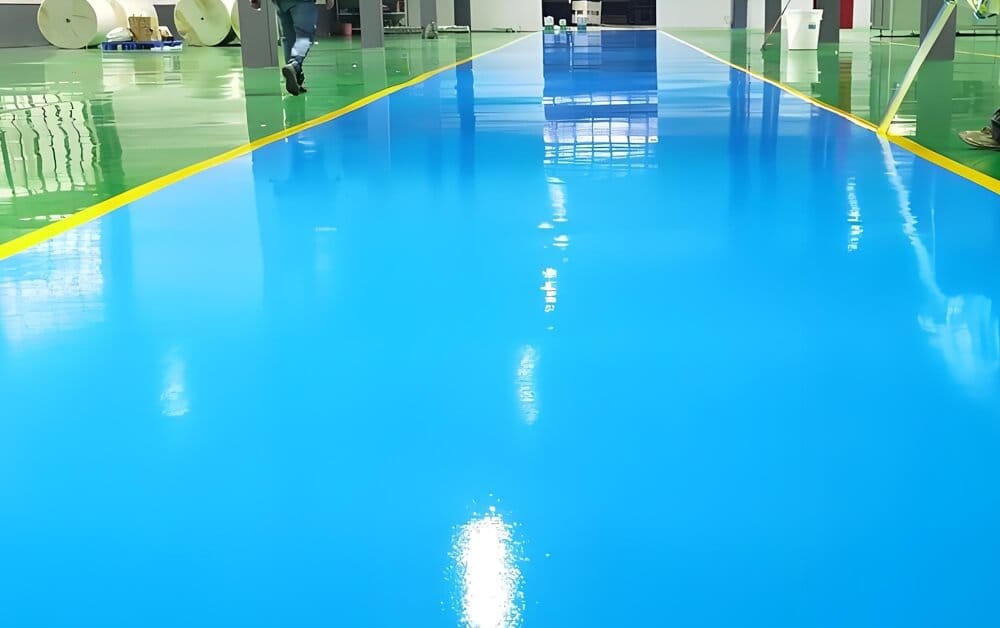
Traditional epoxy coating usually provides a clean and professional surface.
It works well for:
- Factories;
- Storage areas;
- Workshops.
The design is simple and practical.
Typical options include:
- Gray;
- Green;
- Blue;
- Other solid colors.
Epoxy Colored Sand Flooring Appearance
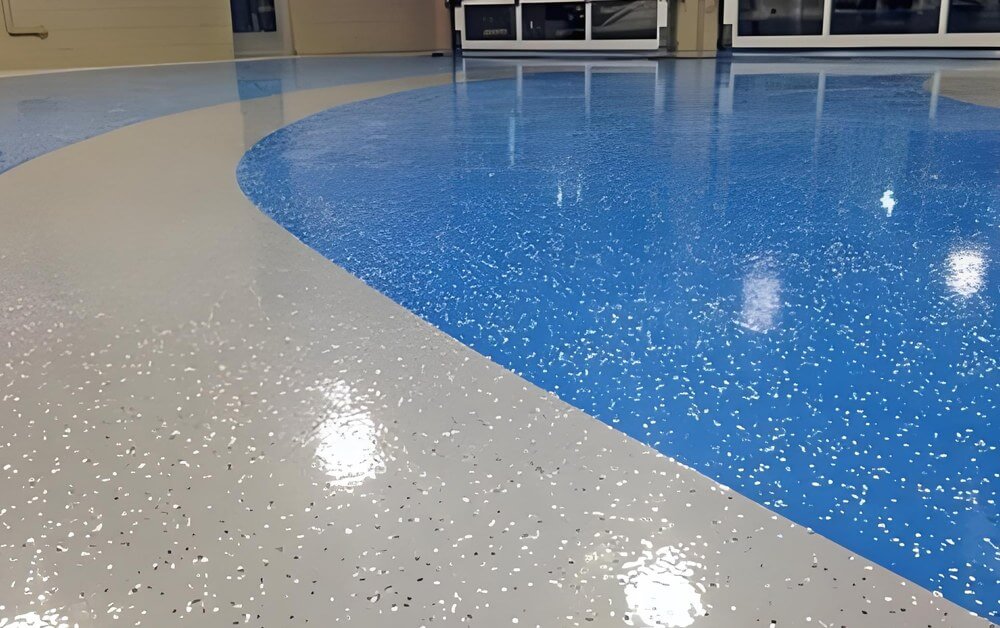
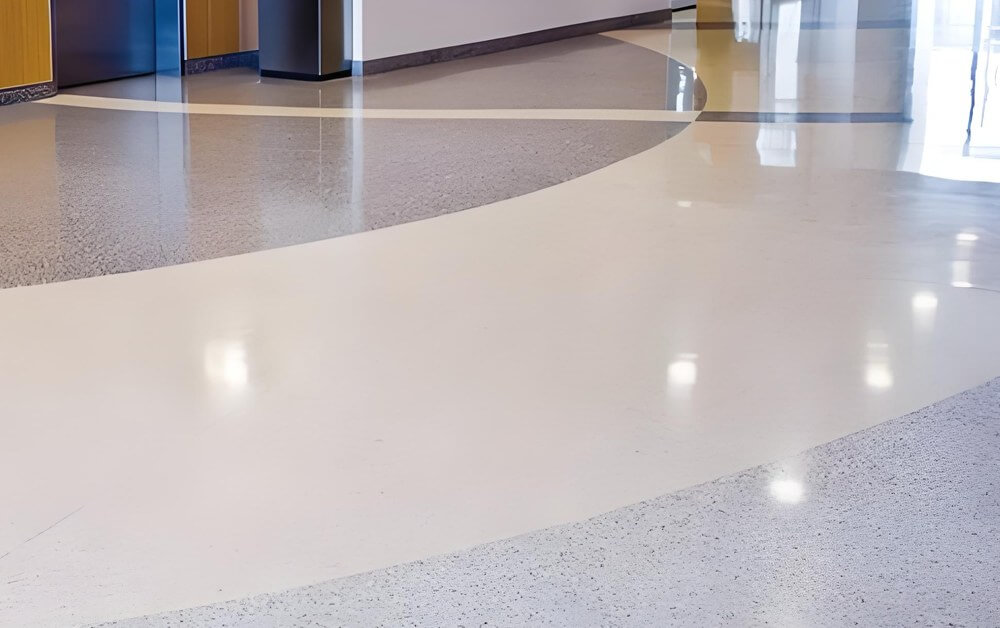
Epoxy colored sand flooring provides a more decorative effect.
The integrated colored sand creates:
- Natural texture;
- Visual depth;
- Custom appearance.
This makes it suitable for:
- Commercial buildings;
- Hotels;
- Showrooms;
- Public spaces.
For projects where floor appearance affects customer experience, colored sand epoxy flooring provides more design possibilities.
Durability Comparison Between Epoxy Colored Sand Flooring and Epoxy Floor Coating
Durability matters for any flooring project.
But durability depends on more than just the material.
It also depends on:
- Concrete preparation;
- Installation quality;
- Floor thickness;
- Project environment.
Wear Resistance
Both flooring systems can provide good wear resistance when properly installed.
However, the selection should consider the application.
For example:
A warehouse with heavy equipment movement may prioritize mechanical performance.
A commercial space may require a balance between durability and appearance.
Cleaning and Maintenance
Both systems provide easier cleaning compared with untreated concrete.
Epoxy floors create a sealed surface that reduces dust and helps daily maintenance.
Epoxy colored sand floors also provide a seamless surface while adding decorative value.
This makes them suitable for environments that require both cleanliness and appearance.

Choosing the Right Flooring System for Different Projects
The question is not:
“Which flooring system is always better?”
The better question is:
“Which flooring system fits this project?”
When Epoxy Floor Coating Is a Better Choice
Epoxy floor coating is suitable when the project mainly requires:
- Functional protection;
- Simple appearance;
- Cost control;
- Industrial performance.
Typical applications:
- Manufacturing areas;
- Warehouses;
- Equipment rooms;
- Utility areas.
When Epoxy Colored Sand Flooring Is a Better Choice
Epoxy colored sand flooring is suitable when the project requires:
- Decorative appearance;
- Professional visual design;
- Surface durability;
- Easy maintenance.
Typical applications:
- Commercial buildings;
- Retail spaces;
- Hotels;
- Showrooms;
- Public areas.
Epoxy Flooring Selection Flow
Project Requirement → Decorative Appearance Required?
- Yes → Epoxy Colored Sand Flooring
- No → Epoxy Floor Coating
Commercial and Industrial Application Guide
Different projects have different flooring requirements.
A successful flooring system should match:
- Traffic conditions;
- Working environment;
- Maintenance needs;
- Appearance expectations.
Both epoxy floor coating and epoxy colored sand flooring can provide reliable performance, but their ideal applications are different.
Commercial Applications of Epoxy Colored Sand Flooring
Commercial projects care about more than durability.
They also require a floor that creates a professional environment.
Epoxy colored sand gives you a strong balance of appearance and performance.
Shopping Centers and Retail Spaces
Retail environments receive constant visitor traffic.
The floor needs to provide:
- Attractive appearance;
- Easy cleaning;
- Long-term surface protection.
A colored sand epoxy flooring system can create a more decorative atmosphere compared with standard epoxy coatings.
It allows designers to select different color combinations that match the overall interior style.
Hotels and Public Buildings
Hotels, exhibition areas, and public buildings usually require flooring that looks professional.
The floor should:
- Maintain a clean appearance;
- Resist daily wear;
- Support regular maintenance.
Decorative epoxy flooring solutions are often selected because they combine design flexibility with practical performance.
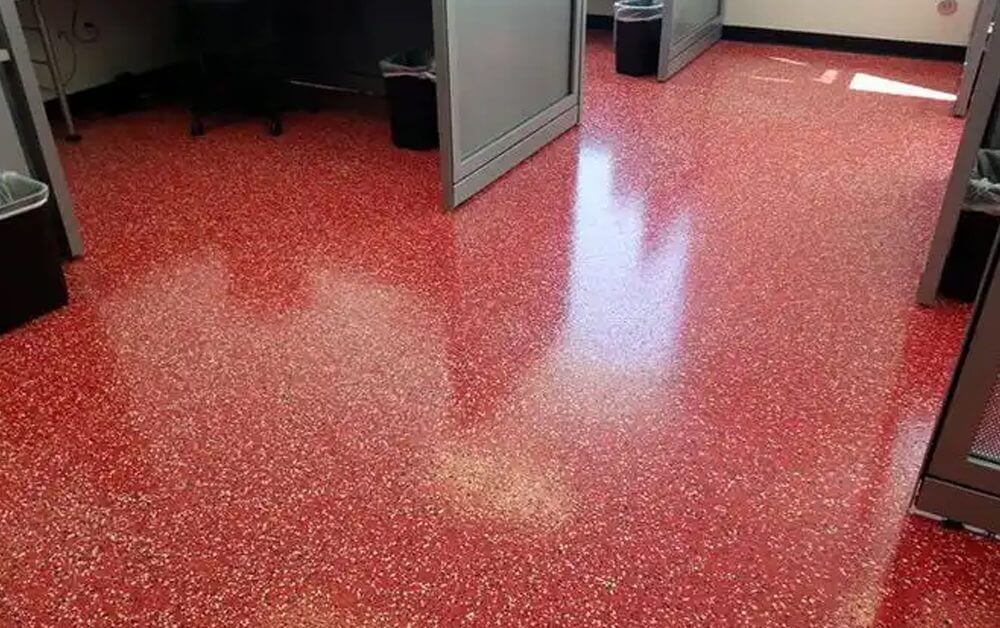
Offices and Showrooms
Office spaces and showrooms represent company image.
A simple industrial floor may not meet the design requirements.
Epoxy colored sand floor systems provide:
- Modern appearance;
- Customized colors;
- Seamless finish.
They are suitable for spaces where visitors notice the floor design.
Commercial Applications of Epoxy Colored Sand Flooring
Industrial environments usually focus on function first.
They need floors that can handle:
- Equipment movement;
- Heavy traffic;
- Daily operations;
- Frequent cleaning.
Warehouses
Warehouses often require:
- Easy maintenance;
- Dust reduction;
- Good wear resistance.
An epoxy floor coating system can provide a practical solution for large floor areas.
Manufacturing Facilities
Factories have different requirements depending on the production environment.
Important factors include:
- Chemical exposure;
- Mechanical stress;
- Cleaning methods;
- Traffic level.
The flooring system should match the actual working conditions.
Parking Facilities
Parking areas experience:
- Vehicle movement;
- Tire friction;
- Oil contamination;
- Weather exposure.
The selected epoxy system should provide:
- Strong adhesion;
- Surface durability;
- Easy maintenance.
Epoxy Flooring Application Comparison Table
| Project Type | Recommended System | Main Reason |
|---|---|---|
| Retail Space | Epoxy Colored Sand Flooring | Decorative appearance + durability |
| Hotel Lobby | Epoxy Colored Sand Flooring | Premium visual effect |
| Showroom | Colored Sand Epoxy Flooring | Custom design flexibility |
| Warehouse | Epoxy Floor Coating | Practical protection |
| Factory | Industrial Epoxy System | Wear and chemical resistance |
| Parking Area | Heavy-duty Epoxy System | Traffic durability |
Installation Difference Between Epoxy Colored Sand Flooring and Epoxy Floor Coating
The installation process affects the final performance of any epoxy flooring system.
Although both systems use epoxy technology, the application methods have differences.
Epoxy Floor Coating Installation Process
A typical epoxy floor coating installation includes:
Concrete Inspection → Surface Grinding → Cleaning → Primer Application → Epoxy Coating Application → Curing → Final Inspection
The main goal is to create a protective epoxy layer on the concrete surface.
Epoxy Colored Sand Flooring Installation Process
Epoxy colored sand flooring follows a different process.
Because the colored sand is already mixed into the material, workers do not apply a separate sand layer.
The process includes:
Concrete Inspection → Surface Preparation → Primer (as required) → Component A + Component B Mixing → Epoxy Colored Sand Self-Leveling Application → Surface Leveling → Curing → Final Inspection
Important Installation Factors
Both systems require proper construction control.
Key factors include:
Concrete Preparation
The substrate must be:
- Clean;
- Dry;
- Strong;
- Free from oil and dust.
Poor preparation can reduce adhesion.
Correct Material Mixing
For two-component epoxy colored sand flooring, workers must follow:
- Correct mixing ratio;
- Proper mixing time;
- Suitable working time.
Incorrect mixing can affect curing quality.
Proper Application Thickness
The final performance depends on correct thickness control.
Too thin:
- Reduced protection;
- Lower durability.
Too thick:
- Higher material consumption;
- Longer curing time.
Common Mistakes in Epoxy Flooring Selection
Choosing the wrong flooring system can increase maintenance costs and reduce project performance.
The following mistakes happen frequently.
Mistake 1: Choosing Only Based on Appearance
A beautiful floor does not always mean it fits the project.
Some projects need:
- Heavy-duty performance;
- Chemical resistance;
- Industrial durability.
Others need:
- Decorative design;
- Customer experience;
- Visual quality.
The flooring system should match the environment.
Mistake 2: Treating All Epoxy Floors as the Same
Many people think all epoxy flooring systems have the same performance.
However, different formulas provide different results.
Factors include:
- Resin type;
- Aggregate system;
- Thickness;
- Construction method.
Mistake 3: Ignoring Concrete Condition
The concrete substrate determines the success of the flooring system.
Common problems include:
- Moisture issues;
- Cracks;
- Weak concrete surface;
- Contamination.
A professional inspection should happen before installation.
Mistake 4: Selecting a Supplier Without Technical Support
A flooring supplier should provide more than material supply.
Important support includes:
- Product recommendation;
- Application guidance;
- Technical documents;
- Project communication.
This reduces construction risks.
Why Choose YURU Epoxy Colored Sand Flooring?
Choosing a reliable flooring manufacturer helps ensure stable project results.
YURU Waterproof provides epoxy flooring solutions for commercial and industrial applications.
Two-Component Epoxy Colored Sand Self-Leveling Floor Paint
YURU epoxy colored sand flooring uses a two-component solvent-free formula.
The main ingredients include:
- Epoxy resin;
- Colored sand;
- Curing agent.
The colored sand is already integrated into the material.
This creates:
- Seamless surface;
- Decorative texture;
- Stable color effect;
- Strong floor performance.
Performance-Focused Flooring Development
YURU focuses on practical flooring solutions.
The epoxy colored sand floor system is designed for projects requiring:
- Clean appearance;
- Wear resistance;
- Decorative effect;
- Long-term usability.
Product testing includes:
| Test Item | Result |
|---|---|
| Abrasion Resistance | 123 mm² |
| Flexural Strength | 21.5 MPa |
| Compressive Strength | 38.6 MPa |
These performance indicators help customers evaluate the suitability of the flooring system.
Customized Flooring Solutions
Different markets and projects have different requirements.
YURU provides customization support including:
- Color options;
- Packaging solutions;
- OEM service;
- Product specifications.
This allows customers to develop flooring products suitable for different applications.
Factory Manufacturing Capability
YURU Waterproof was founded in 2003.
The company specializes in:
- Waterproof coatings;
- Grouting materials;
- Floor coating systems.
YURU operates a manufacturing facility with:
- Production capability;
- Quality inspection process;
- Professional technical support.
The company supplies construction materials to customers in different countries and regions.
FAQs:
Epoxy floor coating is primarily formulated for surface protection.
Epoxy colored sand flooring combines epoxy resin, colored sand aggregates, and curing agent to deliver both protective performance and decorative appearance.
Neither system is always better.
The correct choice depends on the project.
Choose epoxy colored sand flooring when you need:
- Decorative appearance;
- Design flexibility;
- Commercial presentation.
Choose epoxy floor coating when you need:
- Practical protection;
- Industrial function;
- Cost-effective performance.
Common applications include:
- Hotels;
- Retail spaces;
- Showrooms;
- Public buildings;
- Commercial facilities.
It can also be used in industrial areas where appearance and durability are both important.
Yes.
The system can be suitable for industrial applications when the correct product design and installation method are selected.
Project factors should include:
- Traffic level;
- Load conditions;
- Chemical exposure;
- Maintenance requirements.
No.
For YURU epoxy colored sand self-leveling floor paint, the colored sand is already mixed into the epoxy system.
Workers do not install a separate sand broadcasting layer.
Conclusion:
The question of epoxy colored sand vs epoxy floor does not have one simple answer.
Both systems have their own advantages.
An epoxy floor coating is a practical choice when the project mainly needs:
- Surface protection;
- Easy maintenance;
- Functional performance.
Epoxy colored sand flooring is a better option when the project requires:
- Decorative appearance;
- Customized design;
- Seamless finish;
- Performance balance.
The right flooring system depends on:
- Project environment;
- Traffic conditions;
- Design requirements;
- Maintenance expectations.
For commercial projects that value appearance and durability, epoxy colored sand flooring provides a strong solution.
For industrial projects that focus on protection and daily operation, epoxy floor coating may be the better choice.
YURU provides customized epoxy flooring solutions for different project requirements.
Contact YURU to discuss your epoxy colored sand flooring and epoxy floor coating needs.
YURU Product solutions