Concrete Protective Coatings: Types, Applications & How to Choose
Introduction
Ask for a “concrete protective coating,” and you’ll find products meant for very different jobs. Some are built to withstand wear on a floor. Others keep rain out, protect a roof, or reduce water absorption without changing the look of the concrete.
That’s why material names alone won’t get you far. Epoxy, polyurethane, polyurea, acrylic, silicone, cementitious coatings, and penetrating water repellents each protect concrete differently.
The useful comparison is what each material does, where it works, and what the finished coating system needs to handle.
What Does a Concrete Protective Coating Do?
Unprotected concrete floors deteriorate under repeated forklift traffic. Externally, rainwater penetrates pores and cracks. In workshops and processing plants, chemical spills and frequent cleaning present distinct challenges.
Protective coatings assist in preventing such damage. A warehouse floor may require a hard-wearing surface resistant to abrasion and chemical spills. On roofs and exterior walls, the primary function is water exclusion and protection of concrete from weather exposure. Flexible coatings can additionally accommodate cracks that open and close within their designed movement range.
Reinforced concrete has another concern. Moisture and chlorides may reach embedded steel, while carbon dioxide contributes to carbonation of surrounding concrete. Protective systems designed to limit ingress of these substances assist in slowing deterioration.
The American Concrete Institute’s guidance on protective treatments discusses how different exposure conditions affect the choice of concrete protection materials.


What Is the Difference Between Concrete Coatings and Penetrating Treatments?
A protective coating forms a continuous layer over concrete. Depending on the formulation, this layer provides waterproofing, wear protection, or resistance to specified chemicals.
Penetrating treatments go into the pores near the concrete surface. They protect the substrate by changing water absorption or other surface properties — without creating that same continuous coating.
| Treatment Type | How It Works | Typical Purpose |
| Protective Coating | Forms a continuous protective layer | Waterproofing, abrasion resistance, chemical protection |
| Hydrophobic Impregnation | Repels water at pore surface | Reduces absorption, keeps look |
| Impregnation | Penetrates and modifies or fills near-surface pores | Reduces porosity, improves surface |
All three methods are covered by EN 1504-2 concrete surface protection standard.
“Sealer” is widely used in product names — for both penetrating and film-forming products. Understanding the protection mechanism helps you compare materials more accurately.
What Are the Main Types of Concrete Protective Coatings?
Concrete protection covers quite a wide range of materials. A coating that works well on a factory floor won’t necessarily be the right choice for a roof, a basement wall, or a water tank. The seven material types below are commonly used for different concrete protection jobs.
1. Epoxy Protective Coatings
Epoxy is a familiar selection for industrial concrete floors, particularly in warehouses, factories, workshops, and production areas.
Such floors are subject to substantial mechanical demands. Forklifts run the same routes every day, pallets scrape across the surface, machinery puts pressure on specific spots. A properly installed epoxy coating creates a hard, wear-resistant finish that protects the concrete underneath.
Cleaning is another reason epoxy is popular. Its seamless surface is easier to maintain than untreated concrete — especially where dust and spills are a concern.
YURU Epoxy Floor Coating is available for industrial and commercial flooring, with different finishes and application systems.
Chemical exposure warrants closer examination during epoxy specification. A warehouse storing packaged goods has different requirements from a workshop where solvents or cleaning chemicals regularly contact the floor. Chemical type, concentration, and surface contact duration are all relevant.
Conventional epoxy flooring is generally used indoors. For exposed outdoor concrete, a UV-resistant system is the better choice.
2. Polyurethane Protective Coatings
Polyurethane is often chosen for concrete that needs waterproofing plus some flexibility.
Take a concrete balcony or an exposed platform. It heats up during the day, cools at night, and shifts slightly as temperatures change. A flexible PU membrane moves with it — within its rated range — while keeping the waterproof layer intact.
That’s why PU waterproofing appears on balconies, roofs, concrete platforms, and various underground structures.
YURU Two-Component Polyurethane Waterproof Coating forms an elastic membrane over properly prepared concrete and other compatible substrates.
Some PU products are made specifically for industrial floors. Their formulations and finished properties differ from waterproofing membranes.
Where regular pedestrian traffic occurs across a waterproofed platform, the membrane requires an appropriate wearing layer or a system rated for such traffic. Waterproofing and surface protection must function together.
3. Polyurea Protective Coatings
Polyurea shows up a lot where concrete needs a continuous, flexible waterproof barrier. It covers large surfaces with relatively few seams — roofs, concrete platforms, bridge structures, other infrastructure.
The application method makes a considerable difference.
Spray polyurea is useful on large projects where installation speed matters. Fast-reacting spray formulations cure quickly, allowing contractors to cover substantial areas within a shorter construction window.
Hand-applied and hand-scraped polyurea offer another route. They work well for smaller projects, repairs, detailing, and sites where bringing in spray equipment isn’t practical.
Outdoor exposure also affects formulation choice. Aliphatic polyurea provides superior UV and color stability, making it suitable for exposed surfaces. Standard non-UV-resistant formulations are generally used in protected locations or beneath an appropriate protective finish.
YURU manufactures several polyurea waterproofing formulations, including double-component polyurea waterproof coating for concrete protection projects.
We’ve covered the material’s properties and application methods in more detail in our article on how polyurea concrete coatings work.
4. Acrylic Protective Coatings
Exterior concrete takes a beating from weather. Rain, sunlight, and repeated temperature changes gradually wear on the surface — especially building facades and exposed roof areas.
Acrylic coatings are commonly used for a weather-resistant finish and to reduce water penetration. They also offer good UV resistance, which makes them useful for outdoor waterproofing.
YURU Acrylic Waterproof Coating can be applied to compatible concrete substrates as well as other specified surfaces. It forms a flexible waterproof layer and is suited to exterior applications.
For ordinary weatherproofing, primary considerations are water resistance, adhesion, and long-term outdoor exposure.
Reinforced concrete facades may present an additional requirement: protection against carbonation. In such projects, contractors should specify an anti-carbonation coating with the required resistance to carbon dioxide penetration and appropriate water vapor permeability.
5. Silicone Protective Coatings
Silicone is particularly useful for exposed concrete roofs — standing water and sunlight can be tough on a waterproof coating.
Flat roofs are a good example. Water can sit around drains or in low areas long after rain stops. A roof-grade silicone coating made for ponding-water exposure offers protection in those conditions.
Silicone also has good UV resistance and holds up well to outdoor weather. Its water-repellent surface helps protect the roof from moisture.
YURU 100% Silicone Roof Coating can be used on compatible concrete roofing surfaces, forming a continuous waterproof layer.
One practical point is how the roof will be used. Silicone roof coatings are primarily intended for waterproofing. Walkways, maintenance areas, and surfaces exposed to regular equipment movement need protection suited to that traffic.
6. Penetrating Water Repellents
Sometimes the concrete doesn’t need a visible coating at all.
Architectural concrete is a good example. A building owner might want to cut rainwater absorption while keeping the natural color and texture. An opaque protective film would change the look — probably not what they want.
Penetrating water repellents provide an alternative method of protecting concrete. They penetrate near-surface pores and reduce water absorption without leaving the continuous film characteristic of epoxy or polyurethane coatings.
YURU Nano Waterproof Agent is a methyl-silicate-based treatment used on compatible concrete and other cement-based surfaces.
These materials are useful for exposed walls, architectural concrete, and porous mineral substrates where maintaining the original appearance is part of the project requirement.
Their main job is controlling surface water absorption. Open cracks, leaking construction joints, and areas exposed to water pressure need a repair or waterproofing system that addresses those particular problems.
7. Cementitious Waterproof Coatings
Cementitious materials are widely used for waterproofing concrete walls, basements, foundations, and other cement-based surfaces. They are especially relevant where the waterproofing material needs to work closely with the mineral substrate.
There are two types worth separating.
Polymer-cement waterproof coatings combine cement-based materials with polymer components. Once applied and cured, they form a bonded waterproof layer over the concrete.
These coatings are used on walls, floors, basements, and other areas where surface waterproofing is required. YURU JS Polymer Cement Waterproof Coating belongs to this group.
Cement-based crystalline waterproofing materials work differently.
When their active ingredients react with moisture and cement hydration products, insoluble crystalline deposits form within the concrete’s pores and capillary pathways. This helps reduce the movement of water through the concrete.
YURU Cement-Based Penetrating Crystallization Waterproof Coating uses this approach for concrete waterproofing.
The choice between them comes down to the waterproofing method required. A polymer-cement coating provides a bonded surface layer, while crystalline treatment also works within the concrete itself. For underground structures, the condition of the concrete, water exposure, and treatment of joints and cracks all influence the final system.
Concrete Protective Coating Types at a Glance
| Material Type | Main Protective Properties | Key Selection Consideration |
| Epoxy | Abrasion, hard surface, chemical resistance | Traffic loads, chemical exposure, surface finish |
| Polyurethane | Flexible waterproofing and movement accommodation | Membrane flexibility, substrate movement, traffic requirements |
| Polyurea | Seamless waterproofing and elastic protection | Application method, curing speed, UV-resistant formulation |
| Acrylic | Exterior waterproofing, UV and weather resistance | Exposure, substrate, performance |
| Silicone | Waterproofing, UV, standing water (roof-grade) | Roof exposure, water retention, traffic limits |
| Penetrating Water Repellents | Reduced water absorption with minimal visible surface change | Porosity, penetration, vapor permeability |
| Cementitious | Waterproofing, moisture protection | Polymer-cement vs crystalline mechanism |


Where Are Concrete Protective Coatings Used?
A warehouse floor, concrete roof, and wastewater tank place very different demands on a protective coating. The material needs to withstand the conditions the concrete faces every day.
The table below matches common applications with their main protection requirements and coating options.
| Concrete Application | Main Protection Requirements | Materials to Consider |
| Industrial Floors and Warehouses | Abrasion, forklift traffic, mechanical wear, chemical spills | Epoxy, industrial PU |
| Exterior Walls and Facades | Rain absorption, UV, weathering, carbonation | Acrylic, penetrating repellents, specified anti-carbonation or facade coating systems |
| Roofs and Concrete Platforms | Waterproofing, UV, thermal movement, standing water | PU, UV-resistant Polyurea, Acrylic, roof-grade Silicone |
| Basements and Foundations | Moisture ingress, groundwater exposure | Cementitious systems and designed PU waterproofing |
| Parking Decks | Vehicle traffic, slip resistance, crack movement | Traffic-rated PU, Polyurea, designed deck coating systems |
| Water Tanks | Continuous immersion, water quality, lining integrity | Approved cementitious, epoxy, Two-component polyurea waterproofing (requires a protective layer) or specialized lining systems |
| Wastewater Facilities | Chemical attack, wet conditions, abrasion | Chemical-resistant epoxy, specialized PU or Polyurea |
Industrial Floors and Concrete Traffic Areas
Before choosing a floor coating, check:
- Traffic: Standard warehouse use → industrial epoxy. Heavy forklift traffic and turning areas → higher wear-resistance requirements.
- Chemicals: Identify the chemicals used or spilled on the floor before specifying chemical resistance.
- Parking decks: Use traffic-rated systems with suitable slip resistance. Treat moving joints and cracks separately.
Exterior Concrete and Waterproofing Projects
Match the treatment to the condition of the concrete:
- Exposed walls: Sound concrete with no visible finish required → penetrating water repellent. Weatherproof surface finish → suitable acrylic coating.
- Carbonation: Reinforced concrete requiring carbonation protection → specified anti-carbonation coating.
- Roofs: Check drainage, standing water, UV exposure, and joints. Choose the waterproofing system based on these conditions.
Repair existing cracks and failed joints before applying the protective treatment.
Water Tanks and Wastewater Facilities
Three checks help narrow down the lining system:
- Drinking-water tanks: Confirm potable-water contact approval and continuous immersion performance.
- Wastewater tanks: Check chemical resistance against the actual wastewater, temperature, and cleaning agents.
- Exposure zones: Submerged areas, corrosive headspaces, and high-flow sections have different protection requirements.
AMPP’s guidance on wastewater protective coatings describes the use of different protective systems according to their service environments.
Specify the lining for each exposure zone, including the treatment of construction joints and pipe penetrations.
How to Choose the Right Protective Coating for Concrete?
A warehouse floor, exposed roof, and industrial tank each impose distinct demands on the coating.
The following content may provide you with helpful suggestions.
Identify the Exposure and Protection Requirements
- Floors: Verify forklift traffic, abrasion, equipment loads, and contact with oils or cleaning chemicals. Determine required mechanical strength and chemical resistance.
- Exterior concrete roofs: Check for standing water, UV exposure, and joints that move.
- Tanks: Identify the stored liquid, operating temperature, and areas exposed to continuous immersion or corrosive gases.
Assess the Concrete Substrate and Movement
An effective coating cannot compensate for weak or inadequately prepared concrete.
Check existing coatings, cracks, and surface moisture. Moving joints need a suitable detailing system. Moisture rising through a floor slab can affect your choice of primer and resin coating.
Compare Coating Performance and Complete Systems
Once the site conditions are clear, compare the performance that matters most:
- Adhesion to the concrete
- Water resistance
- Abrasion and impact resistance
- Chemical resistance
- UV and weather resistance
- Crack-bridging performance
- Required coating thickness
Look at the complete coating system as well.
For example, YURU’s epoxy floor coating system can include a sealing primer, optional epoxy putty, and a self-leveling topcoat.
Compare adhesion, total coating thickness, and the wear, chemical, or waterproofing performance required for the job. For outdoor systems, include UV resistance and any necessary protective finish.
Match the Application Method and Project Schedule
How long can the area stay closed?
A warehouse requiring rapid reopening has different installation requirements from a new construction project. Surface preparation time, application equipment, number of coats, curing period, and return-to-service time should be confirmed prior to placing the order.

What Should You Check Before Applying a Protective Coating?
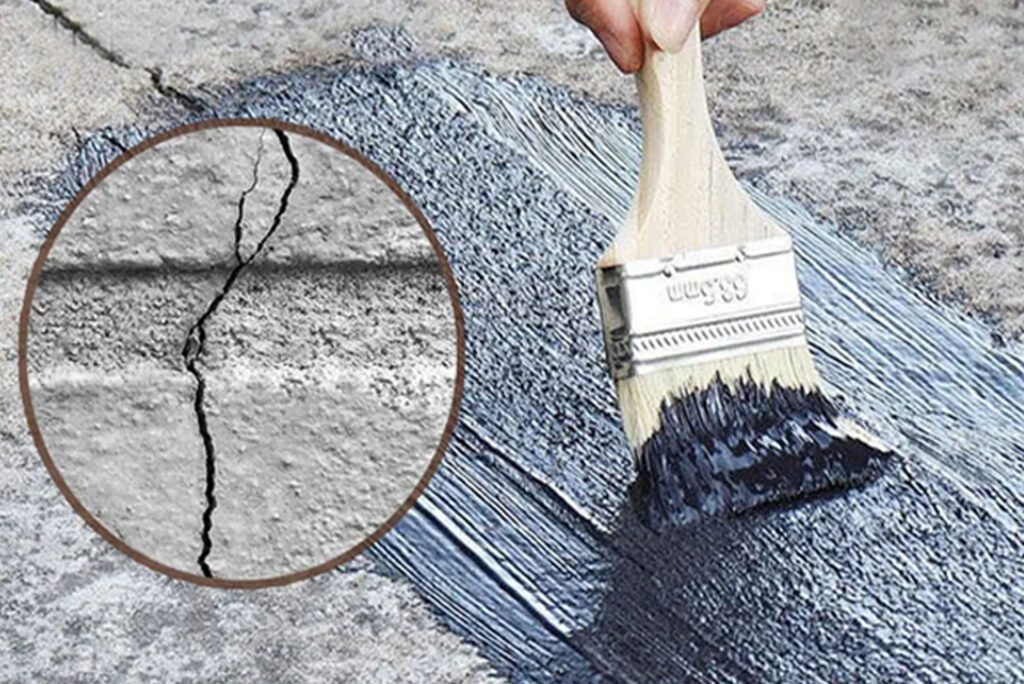
A new coating will not remedy a weak or contaminated concrete surface. Before formal construction begins, verify the following points:
- Surface condition: Remove oil, dust, laitance, loose concrete. Check existing coating.
- Cracks and joints: Repair damage. Plan treatment around movement joints, drains, corners, pipe penetrations.
- Moisture: Test against product limits. Check for moisture transmission through the slab and surface condensation.
- Surface preparation: Grind or shot-blast concrete to the profile required by the primer and coating.
- Working conditions: Confirm substrate temperature, humidity, dew point, coating thickness, recoat intervals, and curing time.
Where the surface fails any of these checks, correction should precede coating. Even a high-performance product depends on a sound, properly prepared substrate.
For additional guidance, see AMPP’s concrete surface preparation and coating selection reference.
What Should Contractors and Buyers Confirm Before Ordering?
Before ordering concrete protective coatings, give your supplier a clear description of the project.
- Concrete application
- Exposure conditions
- Expected traffic or chemical contact
- Required coating performance
- Specified system thickness
Request: TDS, SDS, test reports, primer recommendations, coverage rates, application instructions.
For contractors, these documents assist in confirming that the selected system meets project requirements. Distributors and importers should additionally verify sample availability, packaging options, order quantities, and product consistency.
YURU Waterproof supplies waterproof coatings, concrete protection materials, and industrial floor coating systems for overseas distributors and engineering projects.
We also support bulk orders and OEM/ODM customization, including packaging, labeling, colors, and formulation development for specific performance requirements.
Frequently Asked Questions About Concrete Protective Coatings
What is the best protective coating for concrete?
Epoxy is a common choice for industrial floors that need abrasion resistance and mechanical protection. PU and polyurea systems provide flexible waterproofing, while acrylic and silicone coatings protect suitable exterior surfaces. Cementitious materials and penetrating water repellents serve different moisture-control requirements.
Is epoxy or polyurethane better for concrete protection?
Epoxy resins are appropriate for wear-resistant industrial flooring subjected to frequent foot or vehicle traffic and exposure to specific chemicals. Polyurethane may be used to create flexible waterproofing membranes and various specialized floor protection systems. Selection between the two should be based on comprehensive assessment of specific requirements and conditions.
Can concrete protective coatings be used outdoors?
Yes. Acrylic, roof-grade silicone, UV-resistant polyurea, and suitable polyurethane systems are used for different exterior applications.
Can protective coatings be applied to damp concrete?
Certain cementitious coatings and moisture-tolerant resin systems are designed for suitably prepared damp concrete. Other systems require a dry substrate.
How long do concrete protective coatings last?
Service life varies with the coating system, surface preparation, traffic, exposure conditions, and maintenance.
Conclusion: Match the Coating to the Concrete Protection Requirement
Concrete protective coatings work best when the material is chosen for the conditions the surface actually faces.
A busy industrial floor needs wear protection. An exposed roof needs reliable waterproofing and weather resistance.
Start with the exposure conditions, then compare the coating performance, substrate requirements, and complete application material system.
If you’re sourcing materials for a construction project or distribution business, contact YURU Waterproof with your project details. We can help you review suitable products, technical specifications, samples, and bulk or OEM supply options.
YURU Product solutions