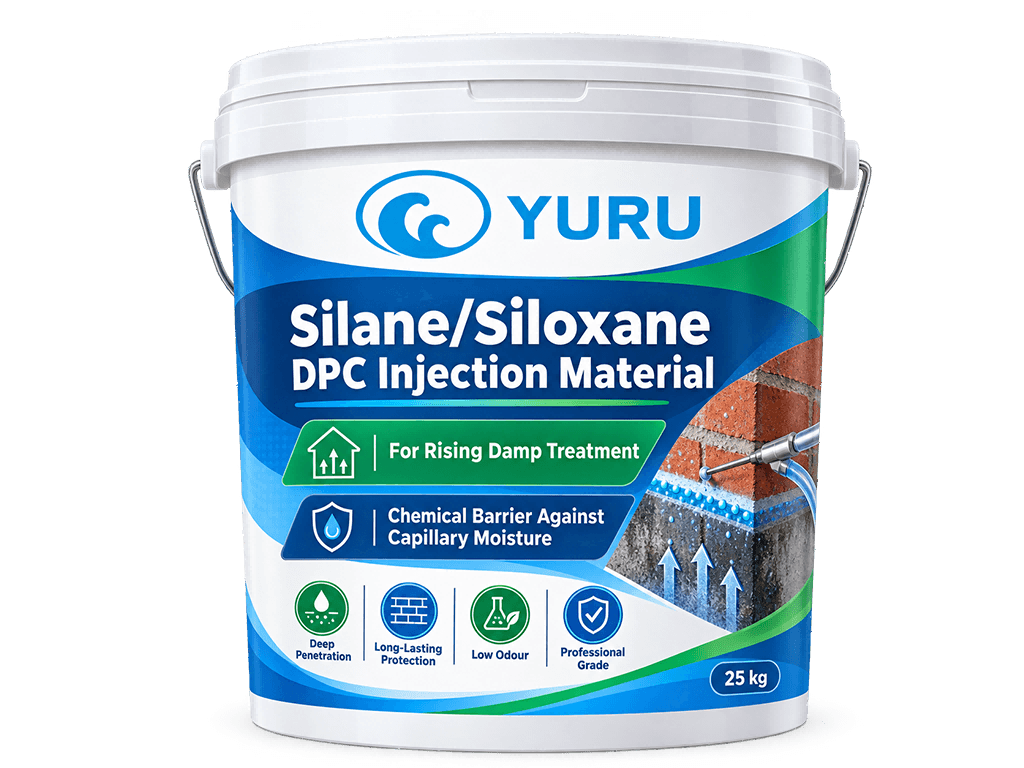
Concentrated vs Ready-to-Use DPC Injection Fluid: What Should Buyers Compare?
Introduction
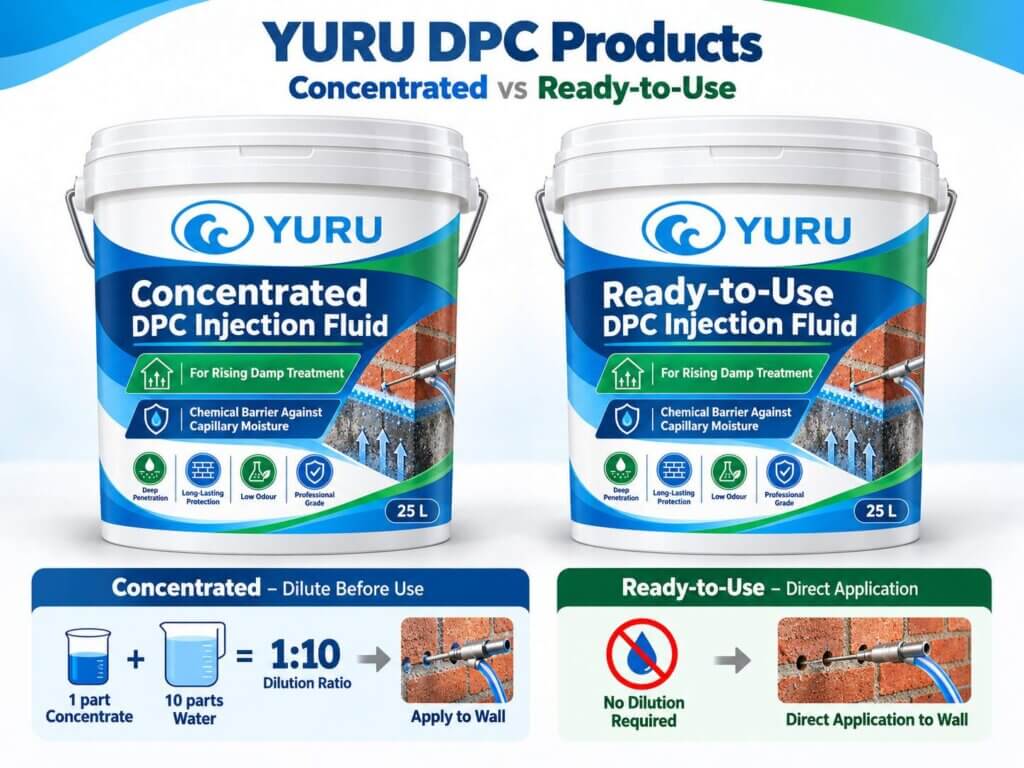
When you’re buying DPC injection fluid, you may come across two options: a concentrate that needs to be diluted before use and a ready-to-use liquid that can be injected directly into masonry.
Comparing the containers alone can be misleading.
Concentrated DPC injection fluid may reduce shipping volume, while ready-to-use fluid saves on-site preparation. The better option depends on the final working solution, material consumption, handling requirements and total purchasing cost.
For contractors, importers and distributors, these differences can affect more than the initial quotation. They influence how much material needs to be ordered, how it is stored and how easily local contractors can use it.
At YURU Waterproof, we supply both concentrated and ready-to-use DPC injection fluids. Here is what we suggest comparing before placing a bulk order.
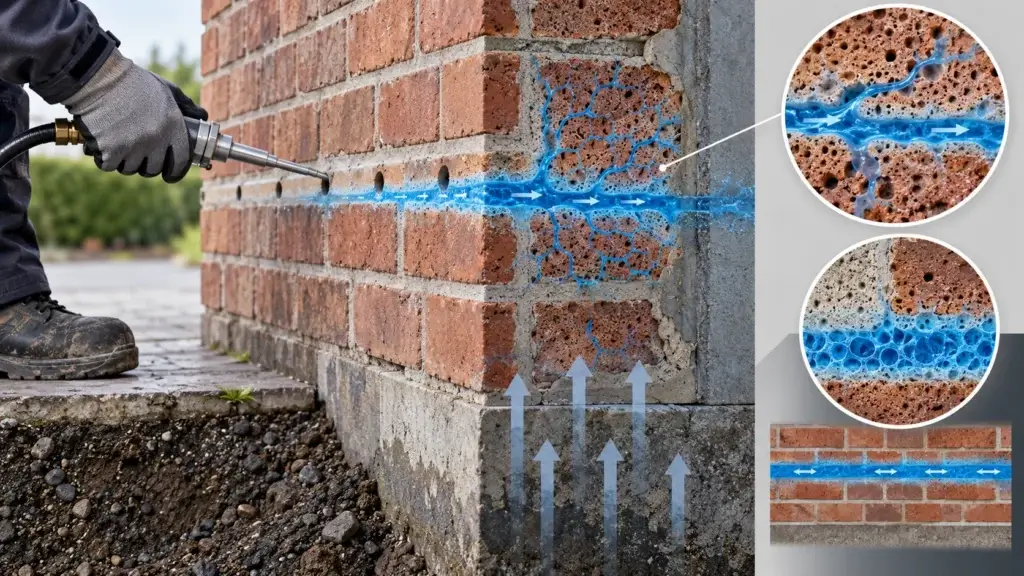
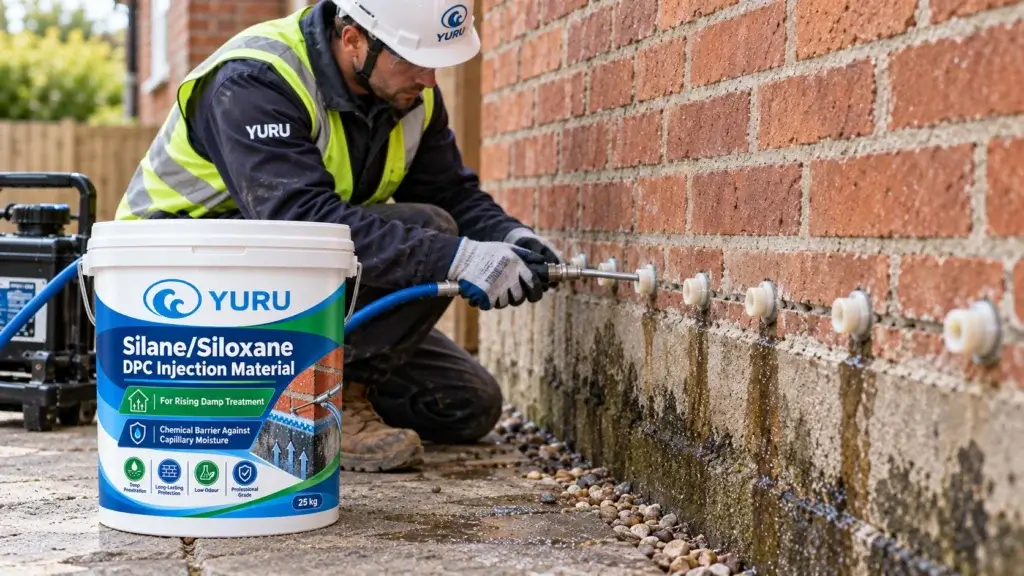
What Is the Difference Between Concentrated and Ready-to-Use DPC Injection Fluid?
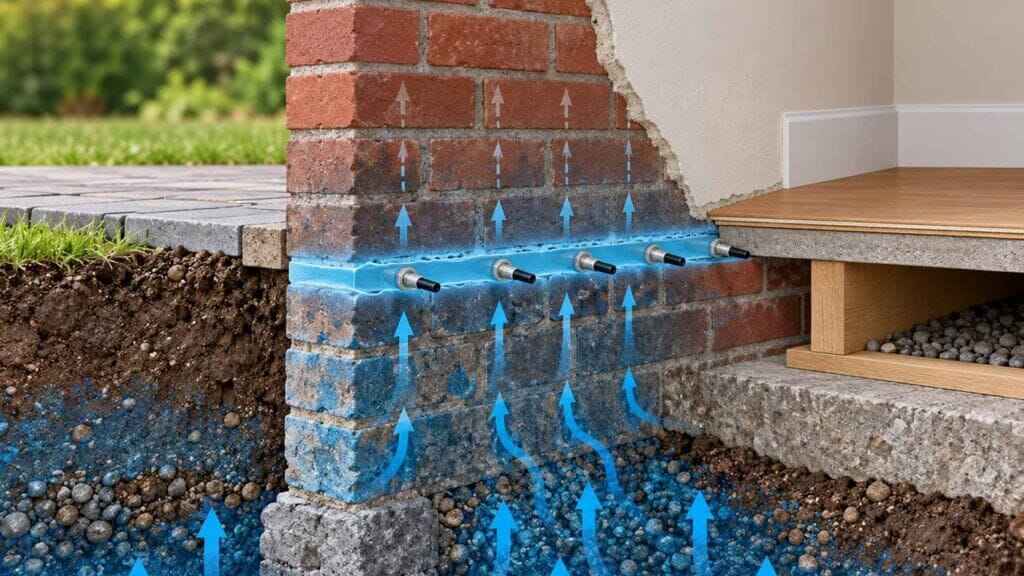
Both are liquid chemical damp-proof course materials used to help control capillary rising damp in masonry. The main difference: how they’re supplied and prepared.
A concentrated DPC injection fluid is diluted according to the manufacturer’s instructions before application. The quantity of usable working liquid depends on the specified dilution ratio.
A ready-to-use DPC injection fluid is already prepared at its intended application concentration. Contractors can use it without an additional dilution step.
| Comparison | Concentrated DPC Fluid | Ready-to-Use DPC Fluid |
| Supplied form | Concentrate | Prepared working liquid |
| Dilution | Required | Not required |
| Working volume | Depends on dilution ratio | Based on usable supplied volume |
| Site preparation | Measuring and mixing | Direct application |
| Shipping | May reduce liquid volume shipped | Full working-liquid volume shipped |
| Storage | Check concentrate and diluted solution separately | Follow finished-product storage instructions |
| Main buying consideration | Yield, preparation and total cost | Convenience, handling and total cost |
If your crew is already set up to mix and prepare injection materials, concentrates fit naturally. Ready-to-use may be more convenient for smaller jobs or fewer prep steps.
Nevertheless, these differences don’t mean one format creates a better damp-proof course than the other. Final results also depend on formulation, masonry, and application conditions.
This comparison concerns two types of liquid DPC. If you are still deciding between liquid and cream systems, our guide to liquid DPC injection vs DPC cream covers that separate choice.
Why Does the Dilution Ratio Matter When Comparing DPC Injection Fluids?
One of the first things I would check in a concentrate quotation is how much working liquid the product produces after dilution.
A 5 L concentrate and a 25 L ready-to-use product might seem very different in quantity. However, the concentrate could produce the same working volume once the required water has been added.
The dilution ratio determines that yield, but it doesn’t tell us everything about product performance.
Concentrate Volume vs. Final Working Solution
Let’s compare two products with prep instructions.
The Bostik Sovereign AquaJect Super Concentrate Technical Data Sheet specifies mixing 700 mL of concentrate with 24.3 L of clean water to produce 25 L of working solution.
BIOKIL BioDry ProSil uses a different ratio: one part concentrate to four parts clean water. Five litres of concentrate therefore produces 25 L of working liquid.
| Product | Concentrate | Added Water | Working Volume |
| Bostik AquaJect | 0.7 L | 24.3 L | 25 L |
| BIOKIL BioDry ProSil | 5 L | 20 L | 25 L |
Both products produce 25 L of working solution, but their concentrate quantities are very different.
At YURU Waterproof, our concentrated DPC injection fluid uses a 1:10 concentrate-to-water mixing ratio, with one part concentrate mixed with ten parts water before application. Our ready-to-use version is supplied for direct injection without additional dilution.
This matters when buying in bulk. An importer needs to know how much usable liquid will be available after preparation, not just how many litres of concentrate are being shipped.
It also matters for distributors preparing product instructions for their customers. Each formulation needs to be diluted exactly as specified.
Does a Higher Dilution Ratio Mean Better Value?
Not necessarily.
A concentrate that produces more working liquid from a smaller original volume may offer shipping advantages. But that alone doesn’t establish how much treated wall the material will cover.
Different DPC formulations may have different active ingredients, working concentrations and recommended application quantities.
Where a product requires greater working liquid per metre of masonry, higher dilution yield may not translate to lower treatment cost.
Compare the usable working solution and its recommended consumption together. Looking at either figure alone can lead to the wrong purchasing decision.
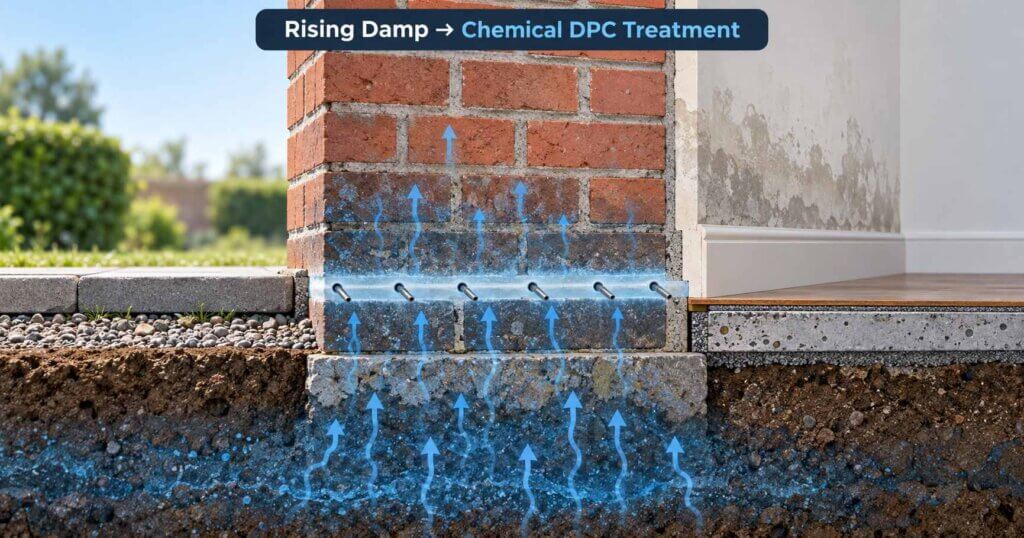
What Technical Specifications Should Buyers Compare Before Choosing Either Version?
Two DPC injection fluids can both be called silane/siloxane products, however, their technical specifications may differ substantially.
Take active ingredient content. A concentrate’s percentage usually refers to the material before dilution. A ready-to-use fluid is already at its application concentration. Water-repellency results can be just as tricky to compare, especially when the products have been tested on different substrates or under different conditions.
Masonry type matters too. Older brickwork with open, porous joints may absorb more liquid than dense masonry. This affects material distribution through the wall and required quantity. Some formulations are for pressure injection; others also work with gravity feed. Ready-to-use doesn’t automatically mean it works with every injection method.
Storage matters as well, particularly for distributors keeping materials in stock. A concentrate may have one shelf life in its original container and another after dilution. Ready-to-use products have their own storage conditions.
YURU Waterproof supplies silane/siloxane DPC injection material in both concentrated and ready-to-use versions. The two formats have their own technical requirements, which can be discussed according to the buyer’s application and purchasing needs.
How Do Concentrated and Ready-to-Use DPC Fluids Compare in Total Cost?
For a bulk order, comparing the price per container is rarely enough. The better question: how much does it cost to treat a given length of masonry with each product?
The calculation starts with the amount of working liquid needed, followed by the quantity that must actually be purchased.
Compare Cost per Treated Linear Metre, Not Just Price per Container
The basic material estimate is:
Required working fluid (L) = Recommended consumption (L/m) × Wall length (m)
Consider a 20-metre section of approximately 230 mm brickwork.
Bostik’s AquaJect technical sheet states that 25 L of diluted solution can treat approximately 7.5 linear metres of 9-inch brickwork. That works out to about 3.33 L per metre.
For a 20-metre wall, the theoretical requirement is approximately 66.7 L of working solution. Three 700 mL bottles would produce 75 L after dilution.
Now consider a ready-to-use example.
The Safeguard Dampcheck Plus Technical Datasheet gives a recommended consumption of 2.6 L per linear metre for 230 mm masonry.
For 20 metres, that equals 52 L of ready-to-use fluid. With 25 L drums, the theoretical purchasing requirement rounds up to three drums.
| Example | Bostik Concentrate | Safeguard Ready-to-Use |
| Wall length | 20 m | 20 m |
| Nominal wall thickness | About 230 mm | 230 mm |
| Published working-fluid consumption | About 3.33 L/m | 2.6 L/m |
| Theoretical working fluid required | 66.7 L | 52 L |
| Units needed based on material yield | 3 × 700 mL bottles | 3 × 25 L drums |
| Working liquid represented by those units | 75 L | 75 L |
These are two manufacturers’ published usage recommendations, not a controlled comparison of product performance or efficiency.
There is also a purchasing detail worth noticing: Bostik’s technical sheet lists its 700 mL bottles in cartons of six. Three bottles represent the calculated material requirement, not necessarily the number of bottles a supplier will sell separately. If full-carton purchasing is required, the actual order quantity and remaining inventory will be higher.
With YURU’s 1:10 concentrate-to-water ratio, buyers can also estimate how much working liquid can be prepared from a concentrated order. The actual amount needed for a wall still depends on the product’s recommended consumption and the masonry being treated.
What Changes for Bulk Orders and Overseas Distribution?
Once material requirements are established, full purchasing cost should be compared.
Cost per treated metre = Total procurement and handling cost ÷ Planned treated wall length
For this calculation, include:
- Actual price of purchase units
- Freight
- Local delivery
- Preparation labour
- Expected handling losses
Where unused material can be stored for subsequent projects, its potential inventory value can be considered separately rather than simply treating it as waste.
Quotations should employ comparable delivery terms. An EXW price from one manufacturer and a CIF quotation from another do not include the same transport responsibilities.
A concentrated product may reduce international shipping volume — matters for importers buying large quantities. But local dilution needs suitable water, prep equipment, and trained staff.
Ready-to-use fluid reduces those preparation steps — but transporting full working-liquid volume affects freight and warehouse space.
How Do Mixing, Storage, and Application Requirements Affect the Choice?
For concentrated DPC fluid, prep is part of the job. You need to measure the right amount of water, follow mixing instructions, and keep injection equipment clean.
Bostik, for instance, instructs users to add its AquaJect concentrate to clean water, not the other way around, and to mix the solution thoroughly.
The diluted solution’s storage life is another important consideration.
Bostik states that its prepared solution remains stable for up to six months in airtight containers under the specified conditions. BIOKIL also states a six-month period for its diluted BioDry ProSil solution.
These examples show that some diluted products can be stored for later use. However, buyers must check the instructions for the actual formulation rather than assume every mixed DPC fluid has the same storage life.
With ready-to-use material, the dilution stage is removed. That can simplify preparation, especially for contractors moving between smaller projects. Storage requirements, equipment cleanliness and the recommended injection method still need attention.
The decision between concentrated and ready-to-use liquid is therefore separate from the choice of injection method. Our article on DPC pressure injection vs gravity feed discusses how those delivery methods differ.
Which DPC Injection Fluid Is Better for Contractors, Importers, and Distributors?
The difference becomes more noticeable once the material reaches a job site. A crew treating a long stretch of masonry may already have a mixing area set up, so preparing concentrate adds little extra work. For someone moving between several smaller damp-proofing jobs, ready-to-use fluid is often more convenient. There’s no need to mix another batch at every stop.
Concentrate can also be appealing to importers because they’re shipping less liquid for the same potential working volume. But lower freight costs aren’t much help if local contractors prefer a product they can use straight from the container. That’s something distributors have to consider when deciding what to keep in stock. In some markets, contractors are used to mixing their own injection fluids. In others, ready-to-use products are simply easier to sell.
At YURU Waterproof, we supply both versions in 25 L packaging. Our concentrated DPC fluid is mixed at a 1:10 concentrate-to-water ratio, while the ready-to-use version needs no dilution. We also offer OEM and private-label supply, with packaging and product options available for different purchasing requirements.
What Should Buyers Confirm Before Placing a Bulk DPC Injection Fluid Order?
A quote for 25 litres of concentrate isn’t quite the same thing as a quote for 25 litres of ready-to-use fluid, even if the prices look similar at first. One still has to be mixed with water; the other is already in its working form.
With YURU’s concentrated DPC fluid, for example, the 1:10 concentrate-to-water ratio makes a difference to the quantity of working liquid available from an order. For a contractor pricing a particular job, the next question is how much of that liquid the wall will actually need. An importer buying for resale may be more concerned about packaging sizes, minimum order quantities and how much space the shipment will occupy.
Freight terms can change the picture as well. A lower factory price doesn’t necessarily mean a cheaper delivered product, particularly when one quotation is EXW and another includes freight to the destination port. And while concentrate may be attractive to ship, the people using it will still need to prepare it on-site.
Private-label orders bring in another practical detail: the instructions on the container. The concentrated and ready-to-use versions need to be clearly identified so customers know whether the product requires dilution.
YURU Waterproof supplies both formats and supports OEM and bulk orders. We can discuss the appropriate version, packaging, product information and quotation based on where the material will be sold and how it will be used.
Frequently Asked Questions
Is concentrated DPC injection fluid always cheaper than ready-to-use fluid?
No. Concentrate can reduce shipping volume, but the final cost also depends on dilution yield, recommended consumption, packaging, freight and preparation. Compare the total cost of treating equivalent masonry rather than relying on container prices.
Does a higher dilution ratio mean better damp-proofing performance?
No. Dilution ratio indicates only the quantity of water added to a concentrate. Performance is also determined by chemical formulation, working concentration, substrate, and application conditions.
Can ready-to-use DPC injection fluid be diluted with water?
Not unless manufacturer allows. Supplied at intended application concentration. Extra dilution changes specified properties.
How should buyers compare the coverage of different DPC fluids?
Use each product’s recommended consumption in litres per linear metre for the relevant masonry thickness. Calculate total working-liquid requirement, then figure out actual order quantity.
Does YURU supply both concentrated and ready-to-use DPC injection fluids?
Yes. YURU Waterproof supplies both liquid DPC formats in 25 L packaging. Concentrated version: 1:10 concentrate-to-water ratio. Ready-to-use: no dilution. Discuss specs, packaging, samples, and bulk purchasing with our team.
Which DPC Injection Fluid Should You Buy?
Select concentrated DPC injection fluid where its technical specifications correspond to the application and the savings in shipping or bulk supply justify additional preparation. Select ready-to-use fluid where direct application and simplified handling offer greater value.
Neither option should be judged only by dilution ratio or container price. Compare the finished working solution, product-specific consumption, handling requirements and actual purchasing cost.
YURU Waterproof supplies both versions for professional buyers. If you are planning a project order, local distribution or private-label supply, contact our team with your required format, destination country and estimated quantity to discuss the appropriate product information, samples and bulk quotation.
YURU Product solutions