How to Waterproof a Brick Wall: Materials, Methods & Step-by-Step Guide
Introduction
To waterproof a brick wall, start by checking where the water is entering. Repair damaged mortar joints and other defects, then choose a treatment that suits the brick, rain exposure, and drying conditions.
A penetrating water repellent may help protect exposed brick from rain. Transparent waterproof coatings and other wall coatings can also be used on compatible surfaces. If moisture is rising from the ground, a chemical damp-proof course (DPC) may be needed instead.
Here’s how to decide whether your wall needs treatment, select the right material, and carry out the work.
Why Do Brick Walls Need Waterproofing?
Bricks and mortar contain pores, rainwater can soak into porous bricks or find its way through cracked mortar joints and damaged areas of a wall.
Over time, you may start noticing white salt deposits, crumbling mortar, damp patches appearing indoors and freeze-thaw damage in cold climates.
Worth addressing before things get worse. Waterproofing helps protect the masonry — but the cause matters. Each one needs a different treatment.

When Should You Seal a Brick Wall -- and When Should You Not?
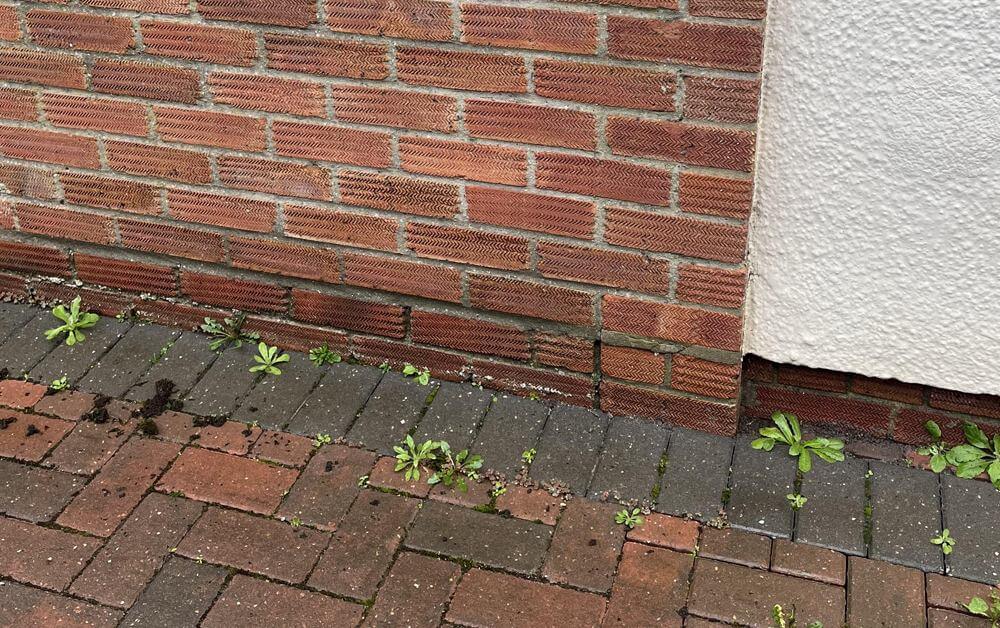
Not every brick wall needs a waterproof sealer.
No sealing needed when:
- Sheltered from direct rain
- Good condition
- Dries normally
Consider sealing when:
- Repeated rain exposure keeps brickwork damp
- Weathering continues despite drainage improvements
- Interior moisture traced to rainwater absorption through exterior wall
Before applying anything:
- Repair damaged mortar
- Repair faulty flashing
- Repair other water-entry points
Persistent salt deposits, trapped moisture, or historic brickwork may also require closer investigation.
The Brick Industry Association’s guidance on colorless coatings explains why properly constructed and maintained brickwork often needs no additional surface treatment.
Rain exposure, masonry condition, and the wall’s ability to dry should guide the decision.
What Waterproofing Materials Work for Brick Walls?
Brick wall waterproofing materials come in several categories. Some reduce water absorption within porous masonry, while others form a protective coating on the surface.
In addition, there are materials specifically designed to address issues such as rising damp — for example, siloxane-based DPC (damp-proof course) chemical damp-proofing materials.
Penetrating Water Repellents for Exposed Brick
Penetrating water repellents are appropriate where an exposed brick wall requires rain protection without altering its original appearance.
These materials absorb into compatible porous masonry and create a hydrophobic treatment within the substrate. They help reduce liquid water absorption while leaving the brick finish visible.
YURU WWA-1 Invisible Waterproofing Agent is suitable for red brick and compatible absorbent masonry, including exterior brick walls and mortar joints.
The formulation provides water repellency while retaining vapor permeability, permitting moisture vapor transmission through treated masonry.
That makes it an option for exposed red brick where both rain protection and original appearance matter.
But damaged mortar, open cracks, and faulty construction details must be repaired before applying.
Transparent Waterproof Coatings
Transparent waterproof coatings protect compatible masonry surfaces while keeping the existing finish visible.
Unlike penetrating repellents, these materials form a protective coating film.
YURU WTC-1 Transparent Waterproof Glue is an acrylic-emulsion-based coating forming a clear, flexible waterproof film.
Wall brick and other inorganic building materials among its applications. It has porous permeability.
For exposed clay brick, check adhesion, vapor permeability, and substrate compatibility before use.
This is particularly significant for older masonry and walls subject to freeze-thaw conditions.
Waterproof Coatings for Rendered Brick Walls
Brick walls covered with cement-based render or another suitable prepared finish may allow a wider choice of waterproofing materials.
Depending on wall construction and product requirements: acrylic, silicone, or polyurethane coatings can be considered.
Acrylic coatings are commonly specified for exterior weather protection. Silicone-based systems provide weather resistance and water repellency, while selected polyurethane coatings offer flexible waterproof protection.
The final choice depends on substrate compatibility, weather exposure, crack conditions, and the required coating performance.
For a detailed material comparison, see our guide to acrylic, PU, and silicone waterproof coatings for exterior walls.
Chemical DPC Injection for Rising Damp
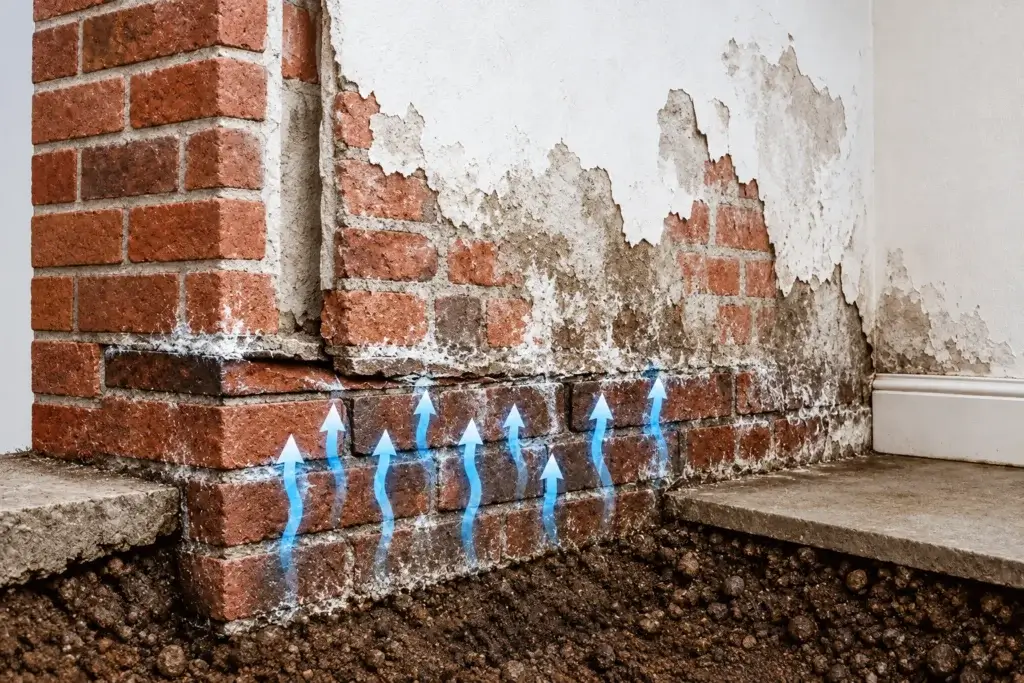
When ground moisture rises through porous masonry by capillary action, a chemical damp-proof course may be appropriate after the cause has been confirmed.
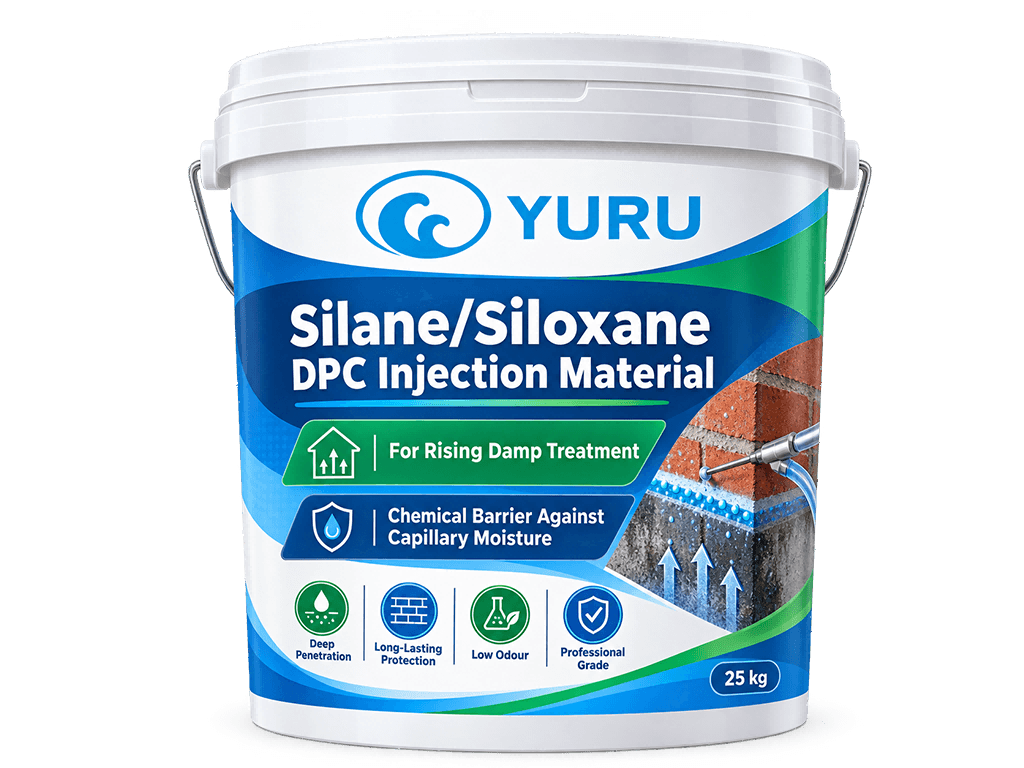
YURU Premium Silane/Siloxane DPC Injection Material is a liquid treatment designed to form a water-repellent chemical barrier inside suitable masonry, including red brick.
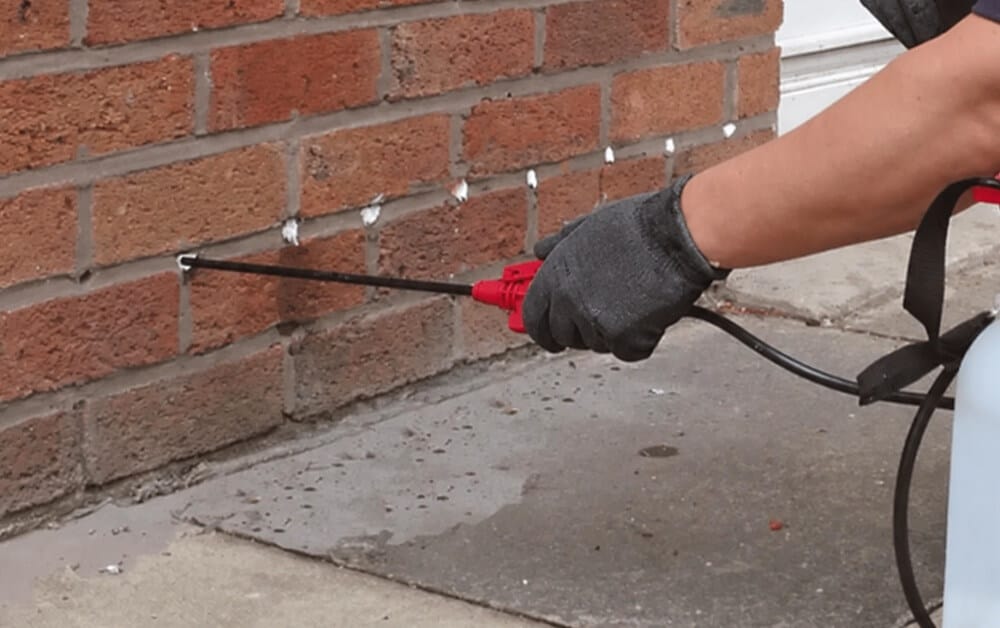
It is injected through holes near the base of the wall to reduce upward capillary moisture movement.
This treatment is different from coating the exterior brick surface. We cover its basic application later in this guide.
Which Waterproofing Material Should You Choose?
| Brick Wall Problem or Condition | Material | Key Point |
| Exposed red brick absorbing rainwater | Penetrating invisible water repellent | Absorption + appearance + vapor |
| Compatible brick or masonry surface requiring transparent protection | Transparent waterproof coating | Adhesion, compatibility, drying |
| Rendered exterior brick wall exposed to weather | Acrylic/silicone/PU waterproof coating | Match the system to the render and exposure conditions |
| Rising damp | Silane/siloxane chemical DPC injection | Establish a moisture-control barrier within suitable masonry |
| Cracked mortar joints or failed wall details | Repair mortar/sealant | Fix before treatment |
The selected material should always be verified against wall condition and the manufacturer’s technical data sheet.
Why Does Choosing the Right Waterproofing Material Matter?
The suitable waterproofing material should fix the actual moisture problem — without creating new ones.
A surface water repellent can’t repair defective flashing. An unsuitable film-forming coating may also interfere with drying in older brickwork containing moisture and salts.
Historic England explains how trapped moisture and salt accumulation can damage traditional brick and stone.
Check before specifying:
- Brick type
- Existing moisture
- Expected rain exposure
- Vapor permeability requirements
These checks help reduce coating failure, unnecessary repairs, and future maintenance problems.
How to Waterproof a Brick Wall Step by Step
Step 1 — Inspect the Brick Wall and Find the Moisture Source
Look at when and where the wall gets wet.
Does dampness appear after heavy rain? Is it concentrated around windows or mortar joints? Does the lower part of the wall remain damp even during dry weather?
Check these areas:
- Cracked/missing mortar joints
- Damaged bricks, open gaps
- Window sills, wall caps, flashing
- Roof drainage, water running down wall
- Blocked drainage openings/weep holes
Further investigation needed: large cracks, significant structural movement, active leakage, water pressure against below-ground walls.
Step 2 — Repair Cracks and Damaged Mortar Joints
Repairs should be carried out using suitable patching materials; however, if a brick is severely damaged — or effectively beyond use — it should simply be replaced.
Check joints around windows, doors, and wall penetrations. Even if brick faces repel water, rain can still get in through poorly sealed details.
For older brickwork, repair mortar must suit the original masonry. Mortar that’s too hard or impermeable may be unsuitable for soft traditional brick.
Allow repairs to cure in accordance with the repair material instructions prior to waterproofing application.
Step 3 — Clean and Prepare the Surface
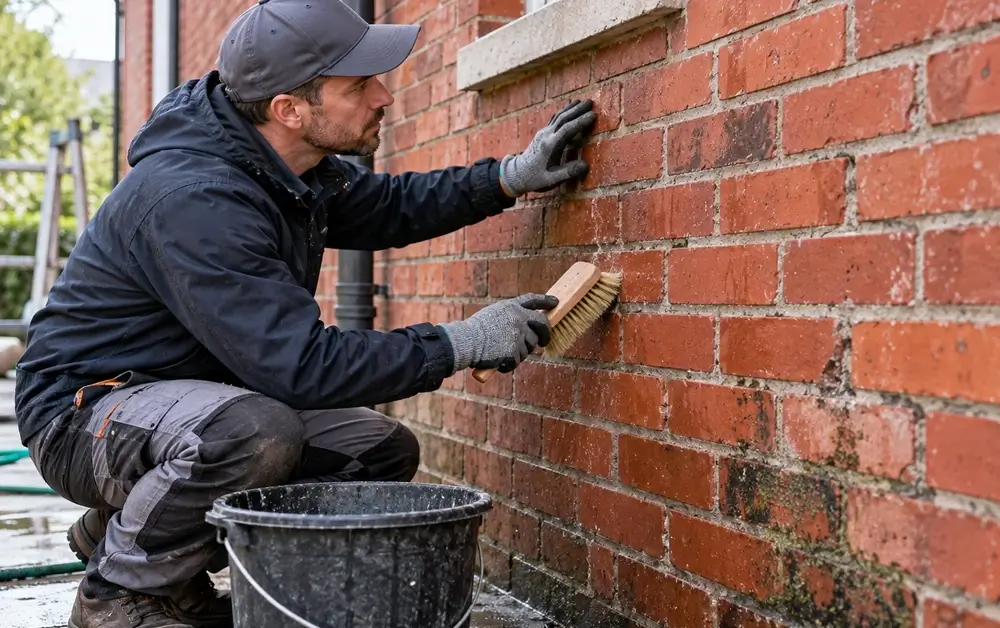
Remove loose dust, dirt, mildew, oil, and other contaminants from the wall.
Please note that if you choose to use high-pressure washing, excessive force may damage old or weathered masonry and cause water to penetrate the wall structure. Therefore, ensure you select an appropriate cleaning method for the initial removal process.
Follow the preparation requirements for the specific material and surface.
Step 4 — Choose the Material and Test a Small Area
Select the treatment according to the prepared brick surface and its exposure conditions.
For exposed red brick where the natural finish should remain visible, a compatible penetrating water repellent may be suitable.
For surfaces that can accept a transparent protective film, a compatible waterproof coating may also be evaluated.
Before treating the entire wall, test the product on a small area.
Check for changes in color, uneven absorption, visible residue, or adhesion problems. Allow the test area to dry or cure as specified before assessing the result.
This is particularly useful for highly absorbent, old, or decorative brickwork.
Step 5 — Apply the Waterproofing Treatment
Use the application method specified for your chosen product. Two approaches show the differences.
Applying a Penetrating Brick Water Repellent
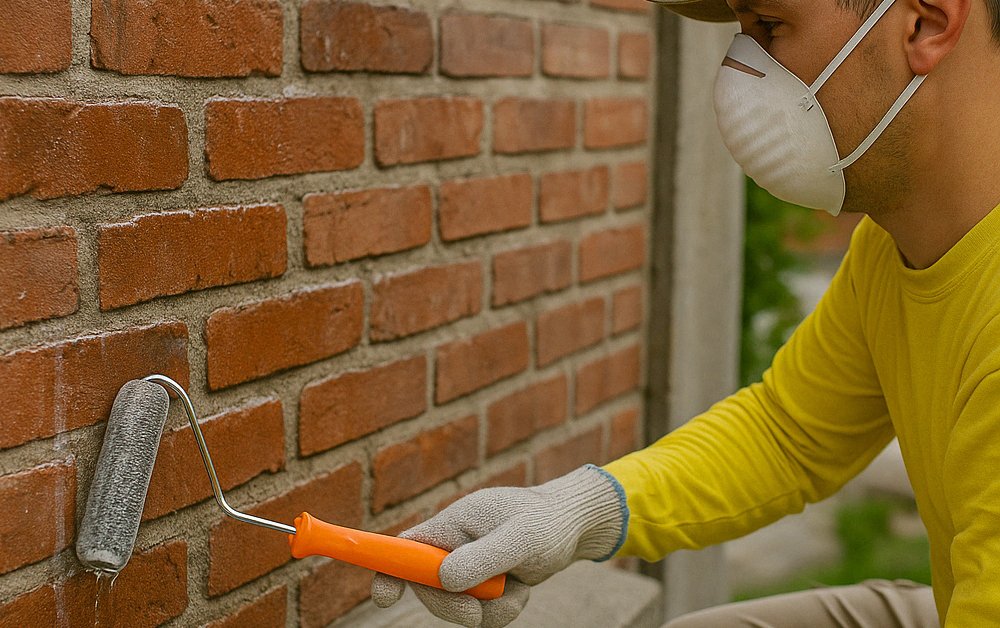
YURU WWA-1 Invisible Waterproofing Agent can be applied by brush, roller, or low-pressure sprayer.
Apply the material evenly across the prepared brick faces and mortar joints.
For this WWA-1 formulation, recommends two applications. Apply the second approximately 5–10 minutes after the first, before the surface has completely dried.
The TDS gives a reference consumption of 0.3–0.4 kg/m² for absorbent masonry and mortar.
Actual consumption depends on brick absorption rate; the test area should be used to confirm required quantity.
Attention should be given to recessed mortar joints, irregular brick surfaces, and edges where missed areas may be difficult to identify.
Applying a Film-Forming Waterproof Coating
Film-forming waterproof coatings require a sound, compatible substrate and specified coating coverage.
YURU WTC-1 Transparent Waterproof Glue may be applied by roller, brush, scraper, or spray equipment.
Generally two to three coats, subject to project requirements and the specified application procedure.
Confirmation should be made whether the substrate requires pre-wetting, drying, priming, or other preparation. Product requirements for coverage and recoating should be followed.
Appropriate personal protective equipment should be used, and adjacent surfaces protected in accordance with the product’s safety and application instructions.
Step 6 — Allow the Treatment to Dry and Cure
Weather conditions should be verified prior to commencement. Rainfall, unsuitable temperatures, and elevated humidity may interfere with application and curing.
For YURU WWA-1 Invisible Waterproofing Agent:
- Surface drying: approximately 1–2 hours at 25°C and 60% relative humidity
- Complete curing: approximately 24–48 hours
Other acrylic, silicone, and PU coatings may have different drying and recoating requirements.
The wall should be protected from rain and water exposure for the period required by the selected material.
Step 7 — Inspect the Waterproofing Results
Following curing, the treated wall should be examined for missed areas, uneven coverage, or visible coating defects.
Mortar joints, corners, and other details that may have been difficult to access should be inspected.
With penetrating repellents, watch for a “lotus effect” — water beading and rolling off the surface. If you see that, the waterproofing worked, and the surface has become hydrophobic.
What If the Moisture Is Rising from the Ground?
Dampness concentrated near the base of a brick wall may indicate rising damp, especially when salt deposits or deteriorating plaster are present.
However, similar symptoms can have other causes. The Society for the Protection of Ancient Buildings cautions that rising damp is often misdiagnosed in older buildings.
If capillary rising damp has been confirmed and the masonry is suitable, a liquid chemical DPC injection treatment may be considered.
YURU Premium Silane/Siloxane DPC Injection Material is intended for this application.
Its TDS describes drilling holes of approximately 12 mm diameter, generally 10–12 cm apart, near the base of the affected wall. The stated drilling depth is approximately two-thirds of the wall thickness.
The liquid is introduced using suitable injection equipment to establish a moisture-control barrier within the masonry.
This is a professional treatment. The actual hole layout, injection method, product consumption, and expected drying period depend on the wall construction and site conditions.
For further technical guidance, see how surface silane/siloxane waterproofing differs from DPC injection.
Common Mistakes When Waterproofing Brick Walls
A waterproofing product can be suitable for brick — and the treatment can still fail because of incorrect prep or application.
| Common Mistake | Why It Causes Problems | What to Do Instead |
| Sealing without locating the water source | Rain may continue entering through defective wall details | Inspect and repair the actual entry points |
| Treating over damaged mortar | Open joints stay vulnerable | epair or repoint joints |
| Using an unsuitable coating on old brick | Moisture and salts may accumulate within the masonry | Check vapor permeability and brick compatibility |
| Applying to a too-wet substrate | Penetration or adhesion affected | Follow moisture requirements |
| Treating rising damp with exterior sealer | Capillary pathway untreated | Confirm diagnosis + evaluate DPC |
| Ignoring curing instructions | Early rain or unsuitable conditions affect performance | Follow the specified application and protection periods |
If a treated wall still leaks, investigate the remaining water path before adding more material.
Frequently Asked Questions
Can you waterproof a brick wall from the outside?
Yes. Compatible penetrating water repellents and selected waterproof coatings may be applied to suitable exterior brickwork.
Repair joints/flashing/entry points first. A wall already performing adequately may not require additional treatment.
What is the best waterproofing material for a brick wall?
For exposed red brick absorbing rainwater, a compatible vapor-permeable penetrating water repellent is often worth considering.
Transparent coatings and other waterproofing materials can be used on suitable prepared surfaces. Confirmed rising damp requires a different approach, such as an appropriate DPC treatment.
The wall condition determines the best material.
Can you apply waterproof paint directly to brick?
Some waterproof coatings are designed for direct application to brick. Others need a prepared or rendered surface.
Check adhesion, vapor permeability, substrate.
Will waterproofing a brick wall trap moisture?
It can — if the treatment restricts drying or isn’t suitable for the masonry.
A compatible vapor-permeable treatment can reduce liquid water absorption while allowing moisture vapor movement. However, performance varies by product and wall construction.
Can you waterproof a brick wall while it is still damp?
That depends on the product and the condition of the wall.
Certain penetrating water repellents require a dry, absorbent surface. YURU WWA-1 Invisible Waterproofing Agent, for example, specifies substrate moisture below 10%.
Other coating materials have differing moisture requirements.
Where water continues entering through defective wall details, the cause should be repaired prior to surface treatment application.
Conclusion: Choose the Treatment Your Brick Wall Actually Needs
A brick wall that remains dry and in sound condition may not require sealing. Where repeated rainwater absorption becomes problematic, repairs should be undertaken first, followed by selection of a treatment appropriate to the brick and its drying conditions.
Penetrating water repellents can help protect exposed red brick. Compatible waterproof coatings offer other options, while chemical DPC injection addresses confirmed rising damp.
For project material selection, distribution, or bulk purchasing, contact YURU Waterproof with your brick type, moisture condition, and application requirements. Our team can help you evaluate product options, technical documents, samples, and OEM supply requirements.
YURU Product solutions