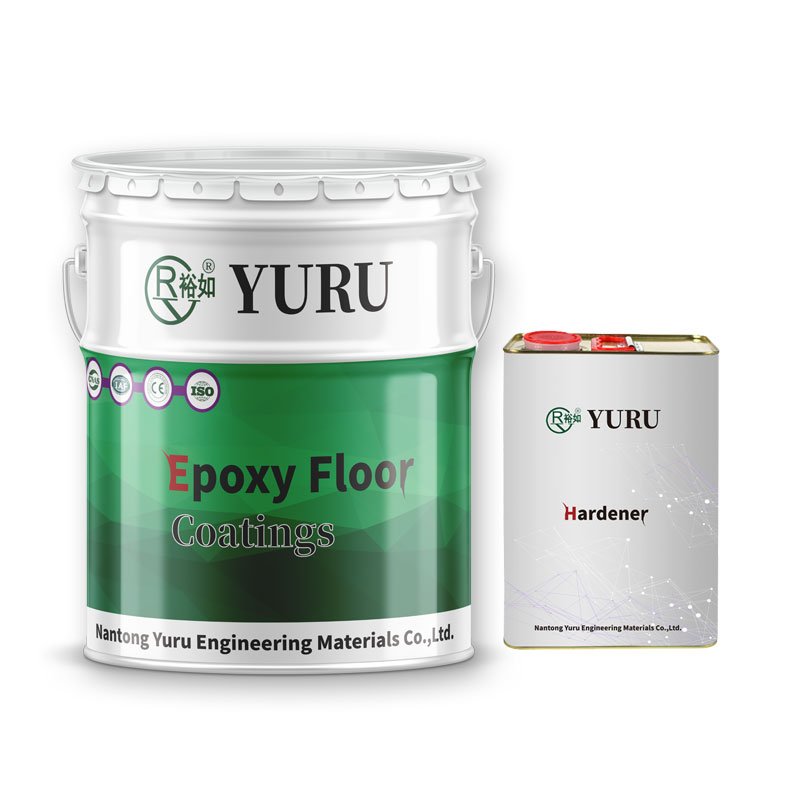
Epoxy Colored Sand Flooring vs Traditional Epoxy Flooring: Which Is Better for Your Project?
If you’re selecting an epoxy flooring for factories, warehouses, commercial buildings, parking structures, or other high-traffic spaces, one question usually comes up quite early: should you use epoxy colored sand flooring or a traditional smooth epoxy floor?
There is no single answer that works for every project.
Epoxy colored sand flooring may be the better fit where appearance, surface texture, decorative flexibility, and performance are all priorities. Traditional epoxy flooring is typically the more straightforward choice where the primary requirement is a smooth, functional, easy-to-clean industrial surface.
At YURU Waterproof, we usually start with the project conditions rather than deciding from the flooring name alone. Traffic, substrate condition, cleaning requirements, finish expectations, construction conditions, and budget can all change the final recommendation.
This guide compares the two systems from that practical project-selection point of view.
Epoxy Colored Sand Flooring vs Traditional Epoxy: Quick Comparison
The easiest way to understand the difference is to look at what each flooring system is designed to achieve.
| Comparison Factor | Epoxy Colored Sand Flooring | Traditional Epoxy Flooring |
| Surface appearance | Decorative aggregate texture with visible colored-sand effect | Smooth, uniform epoxy appearance |
| Design flexibility | More options for texture and decorative combinations | Mainly controlled through coating color and gloss |
| Surface feel | More textured visual character | Generally smoother |
| Cleaning | Easy to maintain when properly installed | Very easy to clean because of the smoother surface |
| Wear performance | Suitable for demanding flooring applications when correctly specified | Depends on resin quality, thickness and total flooring system |
| Installation structure | YURU standard system uses integrated colored sand, reducing separate aggregate application steps | Commonly uses primer, intermediate coat and topcoat |
| Typical use | Commercial, public and decorative industrial flooring | Factories, warehouses and functional industrial flooring |
| Installed cost | Can offer lower complete installed cost because colored sand is already integrated into the two-component material | Usually involves more coating layers and application steps |
One point is important here: performance still depends on the full flooring system.
What Is Epoxy Colored Sand Flooring?
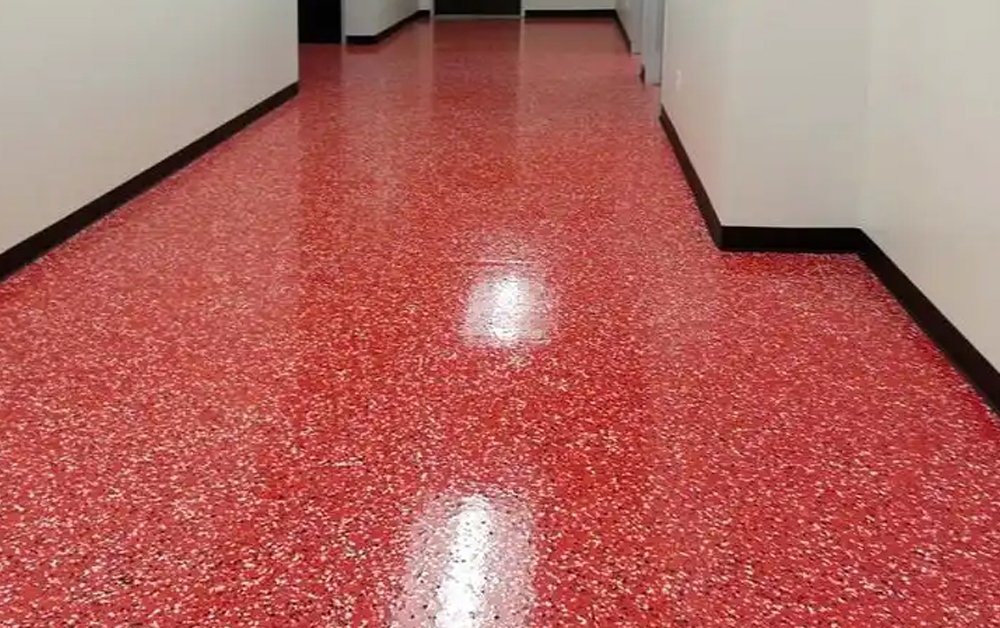
Epoxy colored sand flooring combines epoxy resin, colored sand, and curing components to create a seamless floor with visible aggregate texture and a more decorative finish.
YURU’s standard system uses a two-component formulation with colored sand already integrated into the material, which simplifies the normal application sequence. For a deeper explanation of how this system differs technically from regular self-leveling epoxy, see our guide to colored sand vs regular self-leveling epoxy.
What Is Traditional Epoxy Flooring?
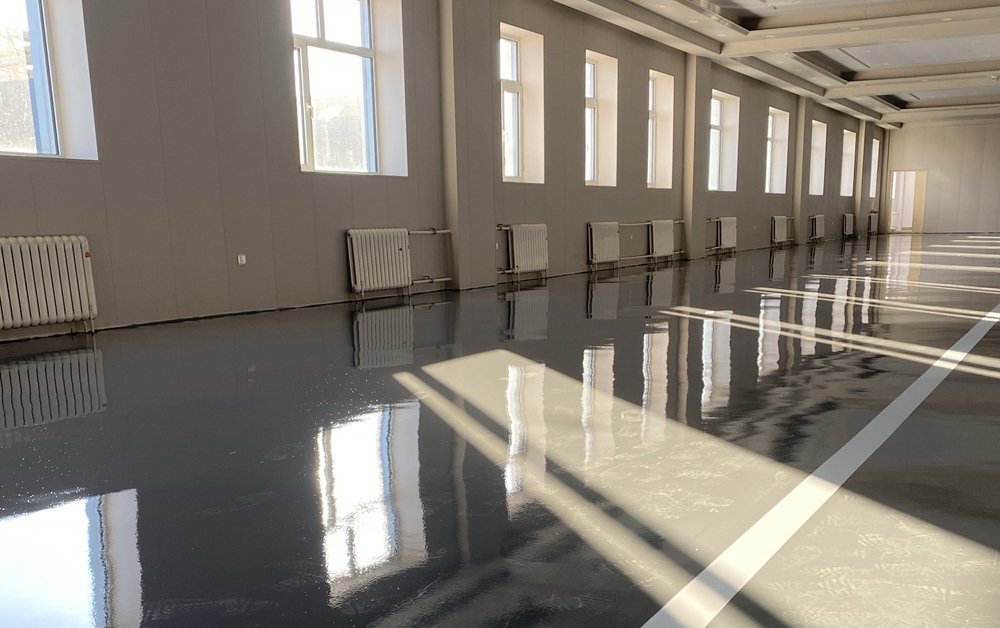
Traditional epoxy flooring generally refers to a smooth resin-based system installed over prepared concrete. Depending on the specification, it may include primer, intermediate coat, and topcoat.
It is commonly selected where the project prioritizes a clean, uniform, functional floor rather than visible aggregate texture.

Surface Appearance and Design
This is where the difference between the two systems is usually easiest to see.
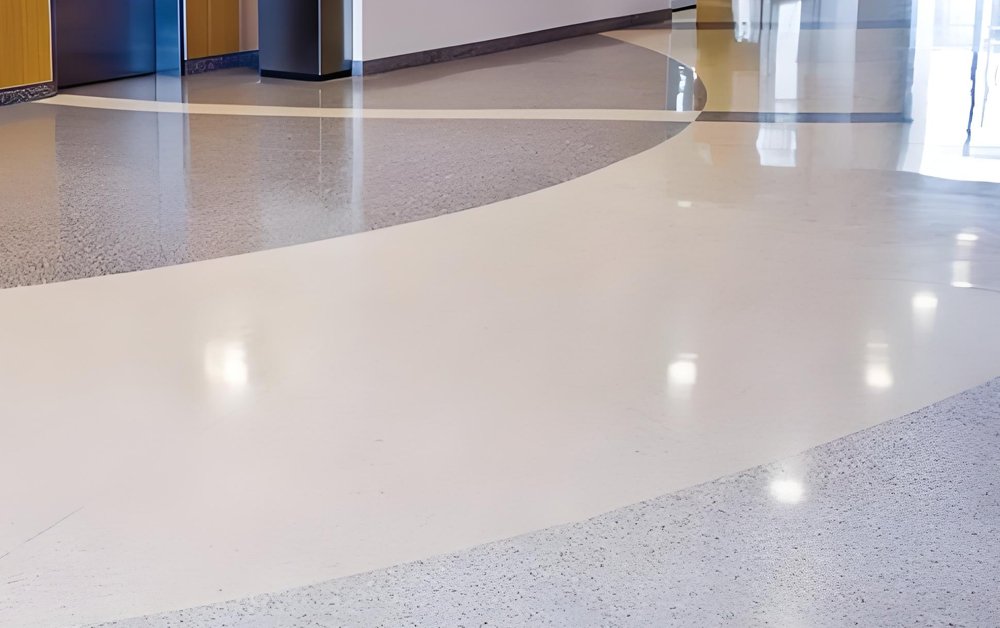
Epoxy colored sand flooring has a visible aggregate character. The colored sand creates more surface depth and gives the floor a stronger decorative identity than a simple solid-color coating.
That makes it useful in spaces where the floor is part of the overall visual design.
Commercial buildings, public facilities, exhibition areas, retail environments and certain industrial spaces may want a floor that is both practical and visually distinctive.
Traditional epoxy flooring takes a different approach.
A regular smooth epoxy floor generally has a cleaner and more uniform appearance. The visual effect comes mainly from color, gloss and the smoothness of the finished coating.
For many factories and warehouses, that is exactly what is needed.
Choose colored sand epoxy when appearance and surface texture are part of the project requirement. Choose traditional smooth epoxy when the main objective is a clean, uniform, functional finish.
Durability and Wear Performance
Both systems can provide durable flooring when the specification matches the traffic, substrate, thickness, and operating conditions.
YURU epoxy colored sand flooring has documented abrasion, flexural, and compressive strength data, while properly designed traditional epoxy systems can also provide strong industrial performance.
For projects where durability is the main decision factor, see our detailed guide to epoxy colored sand floor durability.
Which System Is Easier to Install?
For project planning, the more useful comparison is the number of required construction steps.
YURU’s standard epoxy colored sand system uses a two-component formulation with the colored sand already integrated into the material, so no separate colored-sand application step is required.
A conventional epoxy flooring system commonly uses primer, intermediate coat, and topcoat. Traditional quartz or separately applied colored-sand systems can require even more stages.
This difference can affect labor, construction time, and complete installed cost.
For the technical differences in mixing, flow, leveling, and aggregate distribution, see our colored sand vs regular self-leveling epoxy guide.
Maintenance and Cleaning
Both systems offer seamless surfaces, contributing to the widespread adoption of epoxy flooring in industrial and commercial applications.
A traditional smooth epoxy floor generally offers an advantage where cleaning efficiency is the primary consideration. Its smoother surface makes routine sweeping, wiping and floor-machine cleaning straightforward.
Epoxy colored sand flooring is also designed for practical maintenance, but the visual texture of the surface can be different.
The exact cleaning requirement will depend on the finished texture and system design.
This becomes particularly important in:
- clean production environments;
- laboratories;
- hospitals;
- commercial public spaces.
Where hygiene and rapid cleaning take precedence over decorative appearance, a smooth epoxy finish may be the more logical selection.
Where appearance and flooring performance need to be balanced, colored sand epoxy becomes more attractive.

Slip Requirements and Surface Texture
Surface texture is another factor that should be considered separately from appearance.
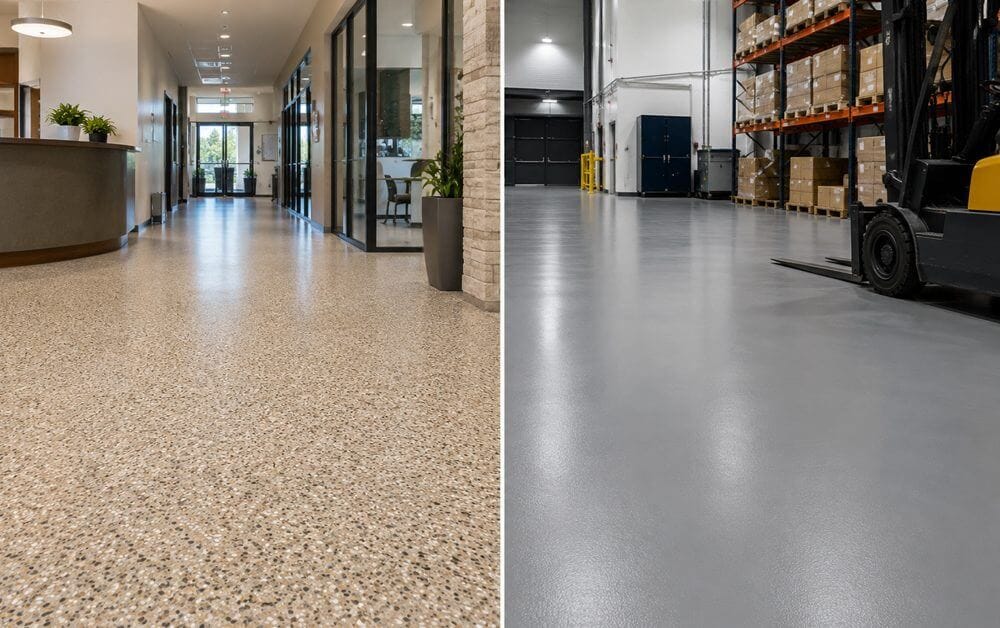
A smoother epoxy surface may be easier to clean, but very smooth surfaces can behave differently when water, oil or other contaminants are present.
Colored sand systems can provide a more textured surface character, depending on the formulation and finishing method.
However, we would not recommend selecting a flooring system simply because one is described as “anti-slip.”
Slip performance depends on the actual finished surface and project specification.
For areas where slip resistance is a critical safety requirement, buyers should confirm the required test standard and finished surface specification instead of relying only on a general product description.
This is especially relevant for:
- parking areas;
- ramps;
- wet processing environments;
- workshops;
- entrances;
- areas exposed to oil or water.
Cost and Installed System Comparison
Flooring cost should be compared as a complete installed system rather than by product price per kilogram.
YURU’s standard epoxy colored sand flooring uses a two-component formulation with colored sand already integrated into the material. Because it does not require a separate colored-sand application step, the construction sequence can be simpler and the complete installed cost can be lower than a conventional epoxy flooring system using primer, intermediate coat, and topcoat.
Traditional quartz-sand or separately applied colored-sand epoxy systems usually involve additional aggregate application and finishing stages. When primer, intermediate layers, quartz or colored sand, topcoat, labor, and construction time are included, their total installed cost can be higher again.
For buyers, the useful comparison is therefore:
material system + layer structure + labor + installation steps + curing time + project conditions
rather than coating price alone.
Which Flooring Is Better for Your Project?
The better floor system depends on what the project needs the floor to do.
Epoxy colored sand flooring is a strong fit when decorative appearance, visible aggregate texture, customizable color, and simplified colored-sand application matter alongside flooring performance.
Traditional smooth epoxy remains a practical choice where the main requirement is a clean, functional industrial floor with straightforward maintenance.
Choose Epoxy Colored Sand Flooring When...
Epoxy colored sand flooring is worth considering when:
- the finished appearance is important;
- a visible colored aggregate texture is preferred;
- the project combines decorative and practical flooring requirements;
- commercial or public areas need more visual character;
- the customer wants an integrated colored-sand flooring system;
- consistent decorative appearance is important across a large floor area.
For these projects, the floor is not only a protective surface. It is also part of the finished environment.
Choose Traditional Epoxy Flooring When...
A traditional smooth epoxy system may be more suitable when:
- the main requirement is a functional industrial floor;
- a smooth surface is preferred;
- easy routine cleaning is a major priority;
- decorative aggregate appearance is unnecessary;
- the project specification is relatively simple;
- the space is mainly a factory, warehouse or working area.
This does not mean traditional epoxy is a lower-grade solution.
In many industrial projects, it is exactly the right solution because the buyer does not need additional decorative complexity.

Which System Fits Different Project Types?
The project environment often gives a clearer answer than the product name.
Warehouses
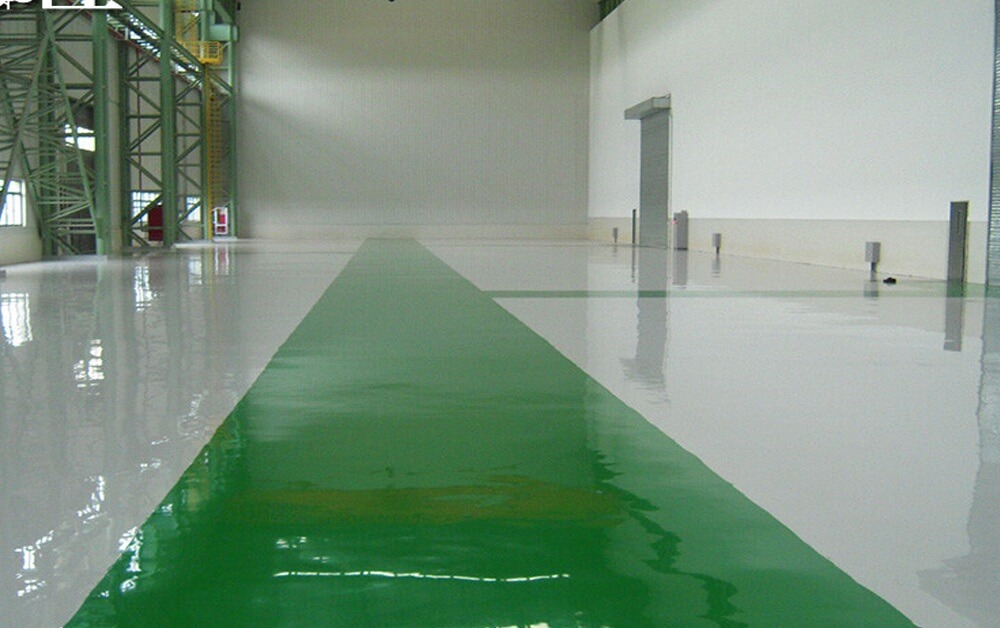
A smooth epoxy system can work well where the main concerns are cleanliness, wear and normal material-handling traffic.
Colored sand flooring may still be selected when the warehouse also has customer-facing areas or when a more decorative finish is required.
Factories and Workshops
Both systems can be suitable.
The decision should be based on traffic, machinery, impact, chemicals, cleaning procedures and required surface texture.
For these projects, performance specification matters more than appearance alone.
Shopping Malls and Commercial Buildings
Colored sand flooring often has an advantage where appearance plays a bigger role.
The aggregate texture can create a more distinctive finish than a standard single-color epoxy surface.
Public Facilities
Schools, exhibition spaces, corridors, offices and similar areas may benefit from colored sand flooring when durability and appearance both matter.
Parking Areas
The selection should focus on wear, vehicle traffic, slip requirements, substrate condition and maintenance.
The flooring system should be specified for the actual traffic rather than chosen only by appearance.
Clean Working Areas
Where easy cleaning is the main consideration, smooth epoxy can be attractive because of its simple surface.
But the actual selection should also consider chemicals, moisture, hygiene requirements and operational conditions.
What Buyers Should Compare Before Ordering?
For distributors, contractors and project buyers, comparing only product names is rarely enough.
Before ordering either flooring system, I would suggest confirming at least the following points with the supplier:
- What is the concrete substrate condition?
- What traffic will the floor receive?
- Is the project mainly industrial or commercial?
- Is decorative appearance important?
- What finished texture is required?
- Are there chemical exposure requirements?
- What coating thickness is specified?
- What curing time can the project schedule allow?
- Are technical documents available?
- Is the material supplied as a complete flooring system?
- Is OEM or customized packaging required?
- Will the floor receive strong or long-term UV exposure?
YURU standard epoxy colored sand flooring has a certain level of UV resistance, while stronger or long-term outdoor UV exposure may justify the high-performance UV-resistant version.
These questions usually reveal very quickly whether the buyer needs a decorative colored sand system or a simpler smooth epoxy floor.
They also make supplier quotations much easier to compare.
YURU’s standard colored sand system integrates the colored sand into the material. If you need a detailed comparison with separately applied quartz or colored-sand systems, see our guide to pre-mixed vs separate colored sand epoxy flooring
How YURU Supports Epoxy Flooring Selection?
For project selection, YURU can review substrate condition, traffic, required finish, floor area, application method, and purchasing requirements before recommending a flooring system.
For specifications, packaging, OEM/ODM, samples, and bulk supply information, see the YURU epoxy colored sand floor paint product page.


Frequently Asked Questions
Is epoxy colored sand flooring better than traditional epoxy flooring?
Not in every situation.
Colored sand epoxy can be a better choice where decorative appearance, aggregate texture and flooring performance all matter. Traditional smooth epoxy can be more suitable where the main requirement is a simple, functional and easy-to-clean industrial surface.
The better system is the one that matches the project conditions.
Which epoxy flooring is better for high-traffic areas?
Traffic level alone is not enough to make the decision.
You should also compare resin formulation, flooring thickness, abrasion performance, substrate quality, mechanical load and installation quality.
A properly specified colored sand system can perform well in demanding environments, but a correctly designed traditional epoxy system can also provide strong industrial performance.
Which system is easier to clean?
Traditional smooth epoxy generally has the advantage when maximum ease of cleaning is the priority because the surface is typically smoother.
Epoxy colored sand flooring can also be easy to maintain, but the final texture may differ depending on the flooring system and finishing method.
Is YURU epoxy colored sand flooring cheaper to install than conventional epoxy?
YURU’s standard colored sand flooring can have a lower complete installed cost because the colored sand is already integrated into the two-component material, reducing separate application steps. Final cost still depends on substrate preparation, thickness, labor, area, and project conditions.
Can epoxy colored sand flooring handle UV exposure?
YURU standard epoxy colored sand flooring has a certain level of UV resistance. For stronger or long-term outdoor UV exposure, YURU also offers a high-performance UV-resistant version.
Final Selection Guide
Epoxy colored sand flooring and traditional epoxy flooring serve different project priorities.
Choose epoxy colored sand flooring when decorative texture, customizable appearance, integrated colored-sand application, and overall system efficiency are important.
Choose traditional smooth epoxy when the project mainly requires a clean, functional, easy-to-maintain industrial surface.
The final decision should be based on substrate condition, traffic, cleaning, chemical exposure, UV exposure, appearance, installation sequence, and complete installed cost.
For product specifications, samples, OEM/ODM options, or project-based recommendations, see the YURU epoxy colored sand floor paint product page.
YURU Product solutions