Epoxy Colored Sand Self-Leveling Flooring vs Regular Epoxy Flooring: What’s the Difference?
Epoxy colored sand self-leveling flooring and regular self-leveling epoxy use the same basic epoxy chemistry, but the material structure and application behavior are different.
In a regular self-leveling epoxy flooring, the material is designed primarily to form a smooth and uniform resin-rich surface. In YURU epoxy colored sand self-leveling flooring, colored sand is already integrated into the two-component material, adding texture, visual depth, and aggregate structure to the flooring system.
That difference affects more than appearance. It also changes how the material flows, how consistently it must be mixed, how the surface is finished, how many construction steps are required, and how the complete installed system cost should be evaluated.
For buyers, distributors, and contractors, understanding those system differences is more useful than simply asking which flooring is “better.”
What Is the Structural Difference Between the Two Systems?
The clearest difference is the role of aggregate inside the flooring material.
Regular Self-Leveling Epoxy
A conventional self-leveling epoxy system normally uses epoxy resin, curing components, pigments, and fillers to create a smooth continuous surface.
Its material structure is designed around:
- flow and leveling;
- uniform film formation;
- smooth surface finish;
- consistent color;
- controlled system thickness.
Depending on the flooring specification, a complete conventional epoxy floor may include primer, intermediate coat, and topcoat.
YURU Epoxy Colored Sand Self-Leveling Flooring
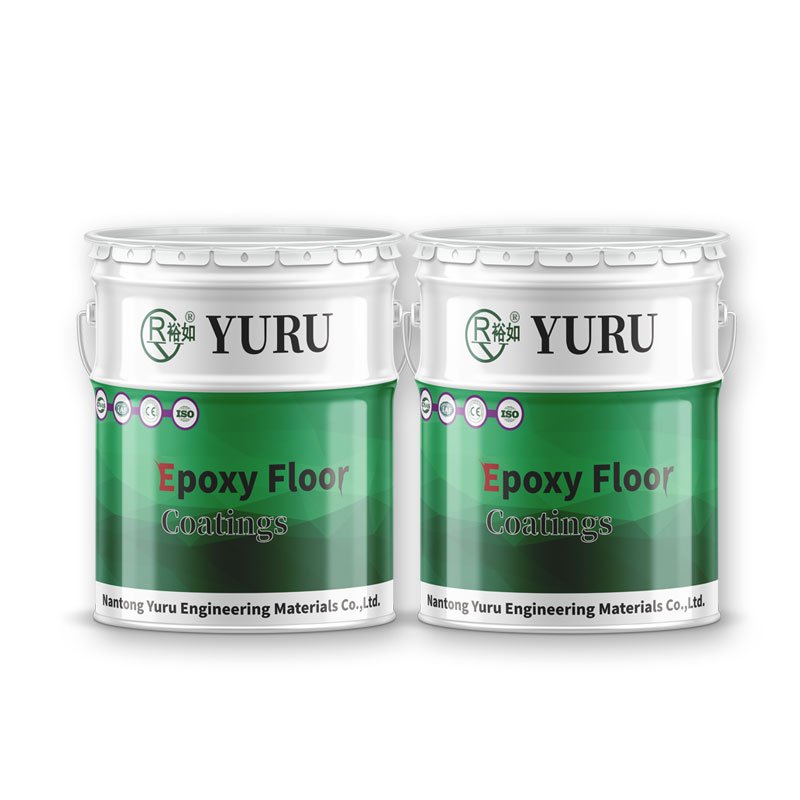
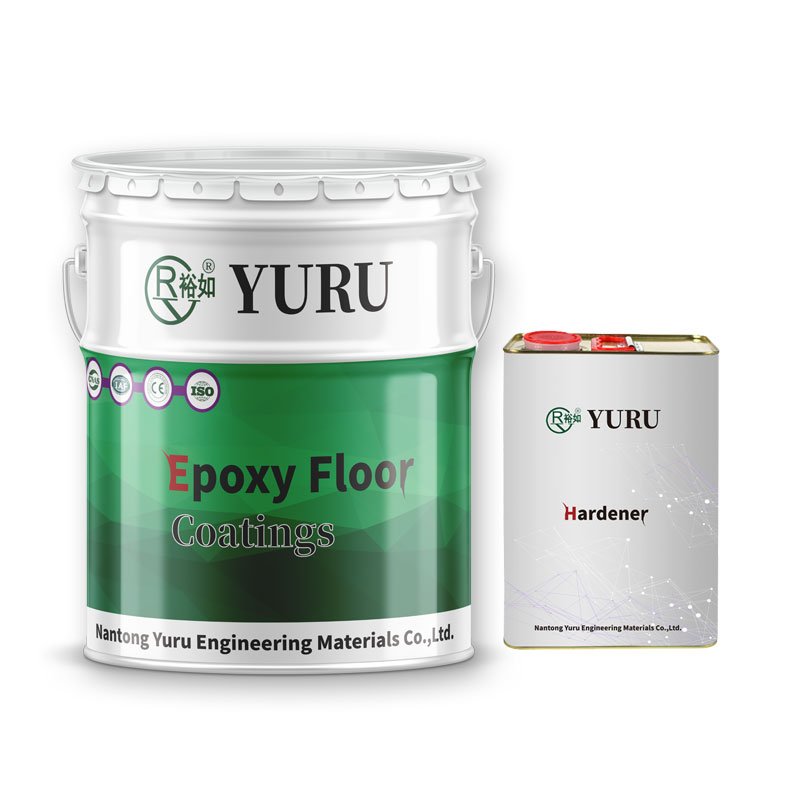
YURU’s standard epoxy colored sand flooring is a two-component system with colored sand already incorporated into the material.
The aggregate becomes part of the flooring structure instead of being applied as a separate decorative layer during standard installation.
This gives the material:
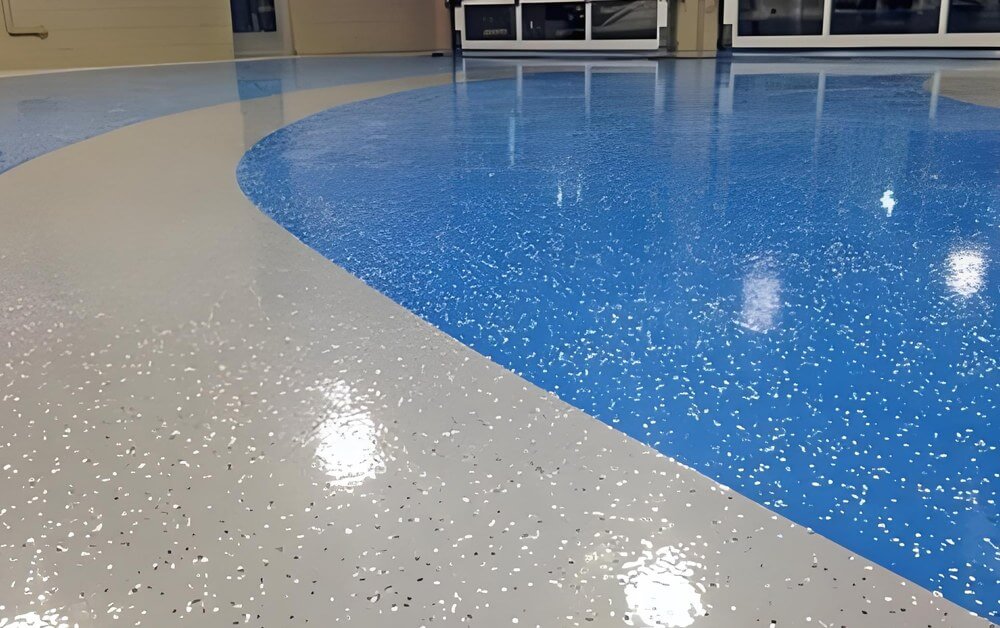
- more visible texture;
- additional material body;
- decorative color variation;
- a different surface character from smooth epoxy.
YURU can also provide other packaging or system configurations where a project requires a different application approach.
How Does Integrated Colored Sand Change the Material?
Adding aggregate changes both the physical structure of the wet material and the appearance of the cured floor.
Material Body and Texture
A smooth self-leveling epoxy is relatively resin-rich in appearance.
With colored aggregate distributed through the material, the flooring develops greater visual depth and a more textured character.
The finished surface can therefore combine epoxy flooring performance with decorative color and aggregate effects.
Aggregate Distribution
Aggregate distribution becomes an important part of application control.
Consistent mixing helps maintain:
- uniform color;
- similar texture across adjacent areas;
- even aggregate concentration;
- a consistent finished appearance.
Large differences between batches can become visible after curing, particularly in decorative projects.
Resin and Aggregate Balance
The presence of solid aggregate also changes how the wet material behaves during application.
Resin flow, aggregate movement, spreading, and final surface formation all need to remain balanced during installation.
Exact behavior depends on the formulation and project conditions, so contractors should work from the selected product specification rather than assuming every self-leveling epoxy handles the same way.
How Does Colored Sand Affect Self-Leveling Behavior?
“Self-leveling” describes the way a flooring material spreads and forms a continuous surface, but material composition still affects how that happens.
Regular self-leveling epoxy is mainly controlled through resin flow, application thickness, and finishing.
An integrated colored-sand system adds aggregate distribution to those variables.
During application, contractors need to keep control of:
- batch consistency;
- mixing;
- working time;
- spread rate;
- aggregate distribution;
- local thickness;
- surface finishing.
A consistent application rhythm becomes especially important across large floor areas.
If adjacent batches are mixed or spread differently, changes in aggregate concentration or surface appearance may become visible.
Why Does Aggregate Distribution Matter?
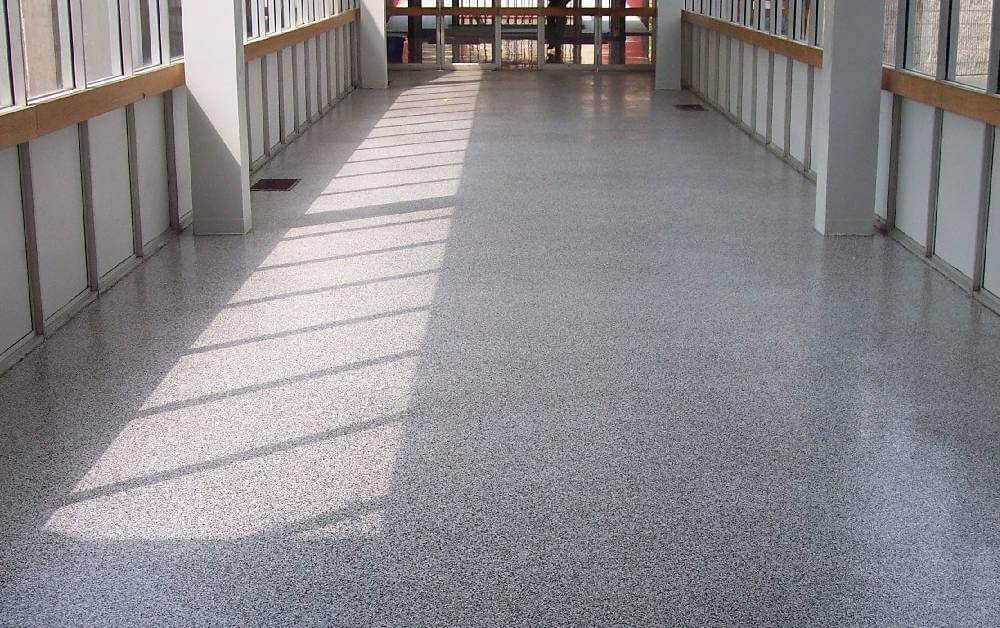
In decorative aggregate flooring, distribution affects more than appearance.
Uneven concentration can create local differences in texture and can make adjacent areas look less consistent.
For commercial spaces, schools, public buildings, showrooms, or other areas where the finished floor remains highly visible, this becomes an important workmanship issue.
The objective is a uniform resin-and-aggregate mixture before the material reaches its final cured state.
How Does Installation Differ from Regular Self-Leveling Epoxy?
Both flooring materials depend on good substrate preparation and correct application. The difference lies in what must be controlled during installation.
Mixing
With integrated colored sand, the installer needs to maintain consistent distribution of both components and aggregate throughout each batch.
YURU’s standard epoxy colored sand product uses a 7:1 mixing ratio, with an approximate working period of 30–40 minutes under suitable conditions.
Batch size should therefore match the available application time.
Spreading and Leveling
Material quantity and spread rate should remain reasonably consistent across adjacent areas.
Large differences in thickness or working rhythm may affect the final texture and visual uniformity.
Surface Finishing
As with other self-leveling epoxy floors, contractors should also control:
- trapped air;
- pinholes;
- bubbles;
- substrate sealing;
- surface continuity.
Good substrate preparation remains essential because the decorative aggregate cannot compensate for poor adhesion beneath the flooring system.
Curing
YURU’s standard product data indicate approximately 6 hours surface drying and 24–36 hours through drying under suitable conditions.
Actual return-to-service timing should still reflect temperature, project conditions, system thickness, and the expected traffic load.
Integrated Colored Sand and Broadcast Quartz Are Different Systems
Colored-sand epoxy is sometimes confused with broadcast quartz flooring.
The two application methods should be distinguished.
In YURU’s standard system, colored sand is already incorporated into the two-component flooring material.
In many traditional quartz or colored-sand flooring systems, aggregate is introduced as a separate installation step and may then require additional leveling, sealing, or finishing layers.
This changes the construction sequence, labor requirement, and system cost.
For a detailed explanation of these two approaches, see our guide to pre-mixed vs separate colored sand epoxy flooring.


Why Does the Installed Cost Structure Differ?
For epoxy flooring, material price alone does not show the true project cost.
The more useful comparison is the complete installed system.
YURU Integrated Colored-Sand Flooring
Because the colored sand is already incorporated into the two-component material, the standard YURU flooring system does not require a separate colored-sand application step.
This can reduce:
- separate material handling;
- additional aggregate installation;
- labor stages;
- application complexity;
- construction time.
As a result, the complete installed system cost can be lower than a conventional primer–intermediate coat–topcoat epoxy flooring system.
Conventional Epoxy Flooring
A conventional epoxy floor commonly uses:
primer → intermediate coat → topcoat
Each stage adds material, labor, application time, and curing control.
Traditional Quartz or Separately Applied Colored-Sand Flooring
A traditional quartz or separate colored-sand system may require:
primer → intermediate layer → aggregate application → additional leveling/sealing → finish coat
With more material stages and additional aggregate handling, the total installed cost can be higher again.
This is why project buyers should compare:
- complete system structure + material consumption + labor + application steps + curing time
rather than only comparing coating price per kilogram.
How Does the Finished Surface Differ?
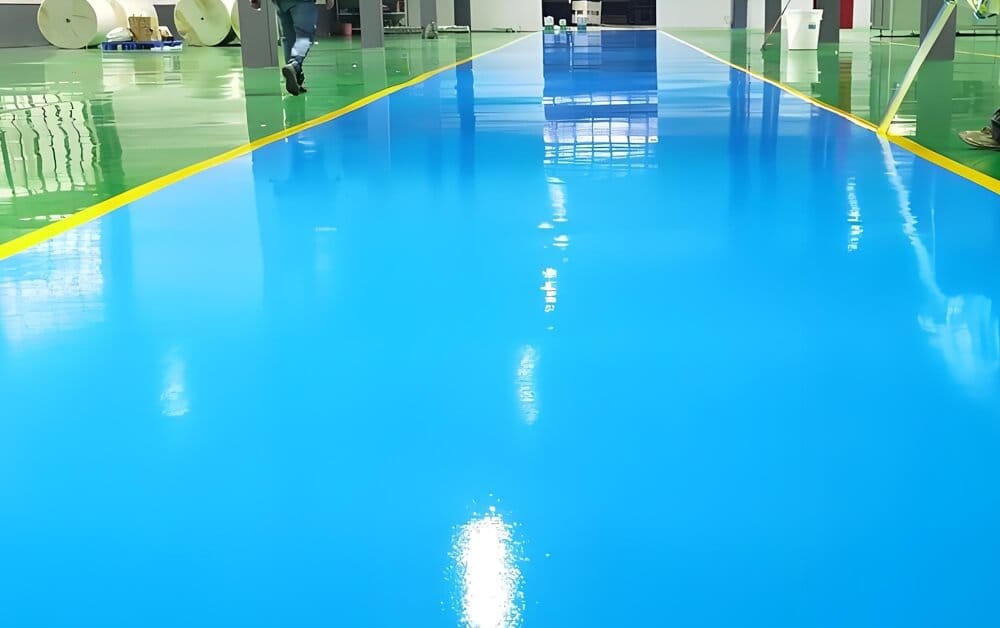
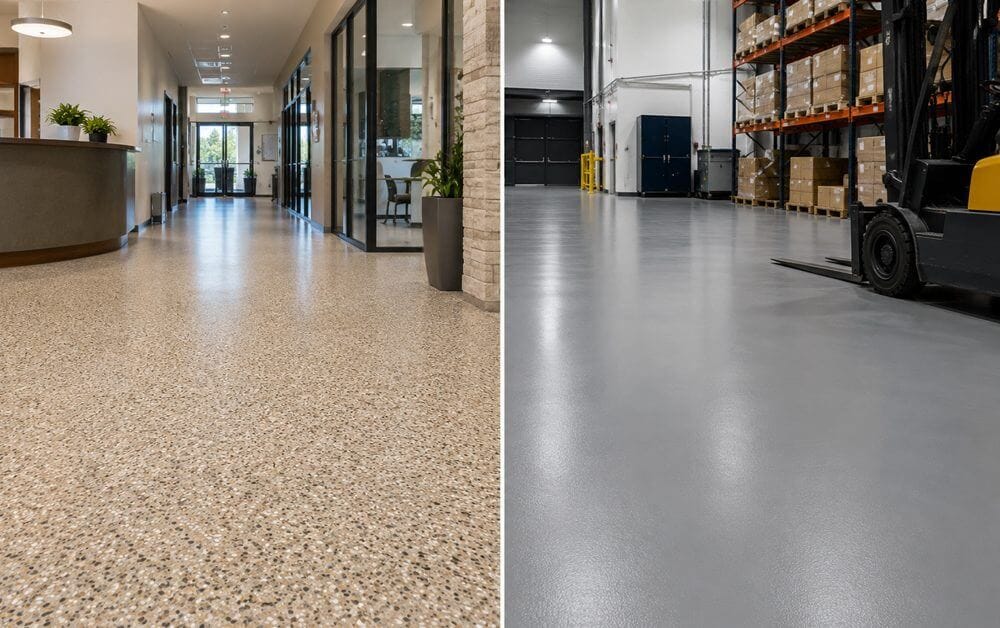
Regular self-leveling epoxy generally provides a smoother and more uniform resin finish.
This is useful where the design requirement is a clean, continuous industrial surface.
Colored sand self-leveling flooring creates a visibly different finish.
The integrated aggregate can provide:
- decorative texture;
- greater visual depth;
- color variation;
- customized color combinations;
- additional design flexibility.
YURU supports customized colors and pattern options where the project requires a more distinctive floor appearance.
What Should Distributors Understand About the Two Systems?
For distributors, the two floor systems can occupy different positions within a flooring product portfolio.
Regular self-leveling epoxy represents a familiar smooth-flooring system for conventional industrial and commercial demand.
Colored sand self-leveling epoxy adds a differentiated option where buyers are looking for decorative texture, customizable color, or a simplified integrated colored-sand application method.
Carrying both systems can therefore broaden product coverage without treating one as a universal replacement for the other.
For OEM/ODM programs, YURU can also support product color, packaging, labeling, and other agreed customization requirements.
What Else Should Buyers Specify Before Ordering?
Technical comparison should eventually return to the actual project conditions.
Before confirming the flooring system, buyers should provide information about substrate condition, required thickness, traffic, chemical exposure, finish requirements, application method, curing schedule, and indoor or outdoor exposure.
UV exposure also matters.
YURU standard epoxy colored sand flooring has a certain level of UV resistance and can handle general light exposure. For stronger or long-term outdoor UV conditions, YURU also provides a high-performance UV-resistant epoxy colored sand flooring system.
The selected system should therefore match the actual exposure conditions.

Frequently Asked Questions
Is colored sand already mixed into YURU epoxy flooring?
Yes. In YURU’s standard epoxy colored sand flooring, the colored sand is already incorporated into the two-component material, so a separate colored-sand installation step is not required.
Other packaging or system configurations can also be supplied for projects requiring a different application method.
Is colored sand self-leveling epoxy the same as broadcast quartz flooring?
No. The main difference is how the aggregate is introduced.
YURU’s standard colored sand system integrates the aggregate into the material, while broadcast quartz systems apply aggregate as a separate construction step.
Does colored sand change how self-leveling epoxy is applied?
Yes. Aggregate changes the material structure, so mixing consistency, distribution, spreading, thickness control, and surface finishing require appropriate attention during application.
Why can an integrated colored-sand system require fewer installation steps?
The colored aggregate is already contained in the standard YURU two-component material.
This removes the need for a separate colored-sand application stage and can simplify the complete construction sequence.
Is YURU standard epoxy colored sand flooring UV resistant?
Yes. The standard version has a certain level of UV resistance and can handle general light exposure.
For stronger or long-term outdoor UV exposure, YURU also offers a high-performance UV-resistant version.
Is colored sand epoxy more durable than regular epoxy?
Durability depends on the complete flooring system, thickness, substrate, traffic, chemical exposure, and installation quality.
For a detailed analysis of this topic, see our guide to epoxy colored sand floor durability.
Which flooring system should I choose for my project?
Flooring material selection depends on the project requirements.
For the full selection comparison, see epoxy colored sand flooring vs traditional epoxy flooring.
Final Takeaway
Epoxy colored sand self-leveling flooring differs from regular self-leveling epoxy in more than appearance.
The integrated aggregate changes the material structure, self-leveling behavior, application control, surface texture, construction sequence, and installed cost structure.
YURU’s standard system incorporates the colored sand directly into the two-component flooring material, reducing the need for separate aggregate application.
Regular self-leveling epoxy remains a useful smooth flooring system, while colored sand self-leveling epoxy provides a different material structure and decorative finish for buyers who need those characteristics.
The most useful comparison starts with how the system is built and applied, rather than simply asking which product is better.
For product specifications, samples, customization, or project-based flooring information, see the YURU epoxy colored sand floor paint product page.


YURU Product solutions