Liquid DPC Injection for Rising Damp: What Affects Penetration and Distribution in Masonry?
A liquid chemical damp-proof course (DPC) can be highly fluid and still behave differently from one masonry wall to another.
That is because liquid DPC injection is not simply a matter of getting fluid into drilled holes. The product has to move through real masonry, where brick, mortar, stone, moisture, wall thickness, and internal voids can all affect how it spreads.
For contractors and technical buyers, the practical question is whether the selected liquid can distribute through the actual wall well enough to form a continuous treatment zone against capillary rising damp.
This guide explains the main variables that affect that result.
Quick Answer: What Affects Liquid DPC Penetration?
Liquid DPC penetration depends on three things working together: the product, the wall, and the application design.
High fluidity and favorable wettability can facilitate movement through porous masonry, however, these properties do not ensure uniform distribution. Wall moisture content, pore structure, wall thickness, internal voids, hole layout, material volume, and injection methodology all influence post-injection behavior.
The goal is not maximum penetration depth. It is sufficient distribution to develop a continuous DPC across the required section of masonry.
What Does Liquid DPC Injection Actually Need to Achieve?
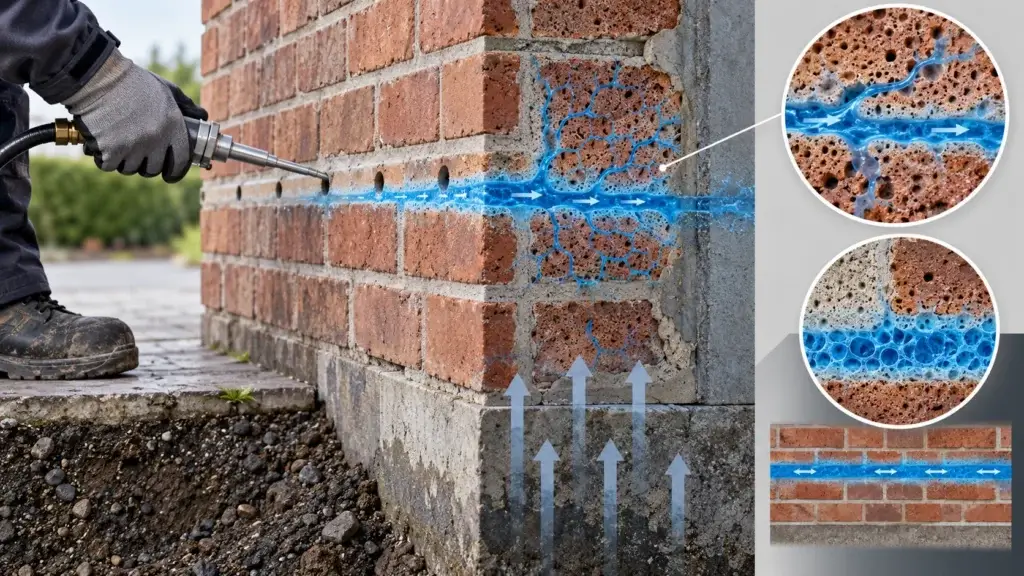
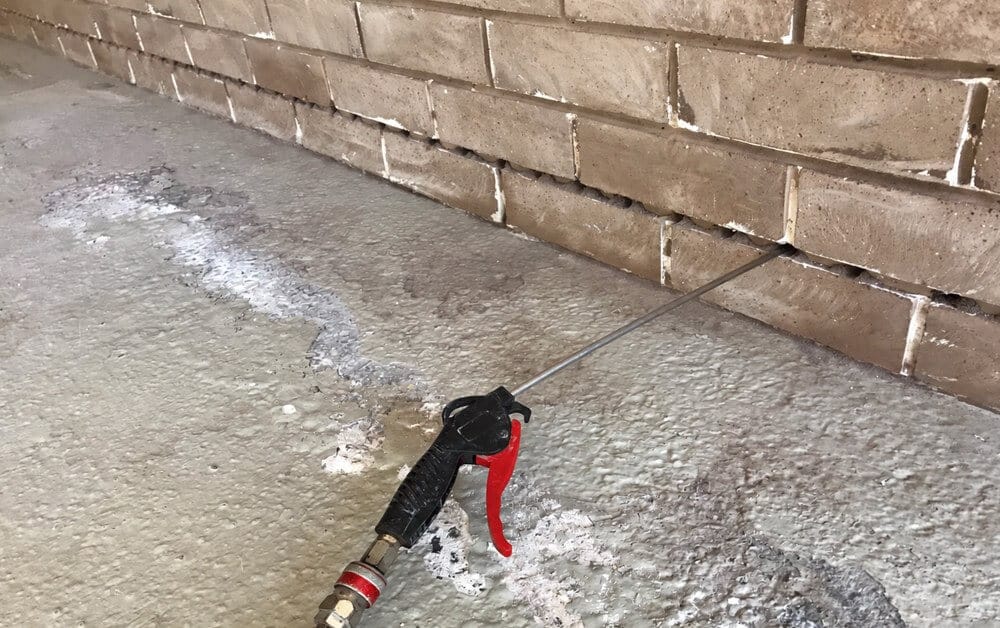
Chemical DPC injection is used to create a horizontal treated zone within existing masonry so that capillary water movement is restricted.
This distinction matters because successful injection is not measured simply by whether each drilled hole accepts material. The treatment around adjacent injection points must spread sufficiently to produce an effective continuous zone.
Published research into chemical damp-proof courses describes this continuity as a fundamental part of the treatment mechanism. If significant untreated paths remain, capillary moisture may still pass through the wall.
So penetration depth on its own is not the best measure of success.
A more useful engineering question is whether the material has spread far enough, in the right parts of the wall, for the treated areas to connect.
That principle is the basis for evaluating the other variables in this article.
Why Does High Fluidity Not Guarantee Even Penetration?
Fluidity is useful because a liquid has to enter and move through a porous structure. But it is only one part of the process.
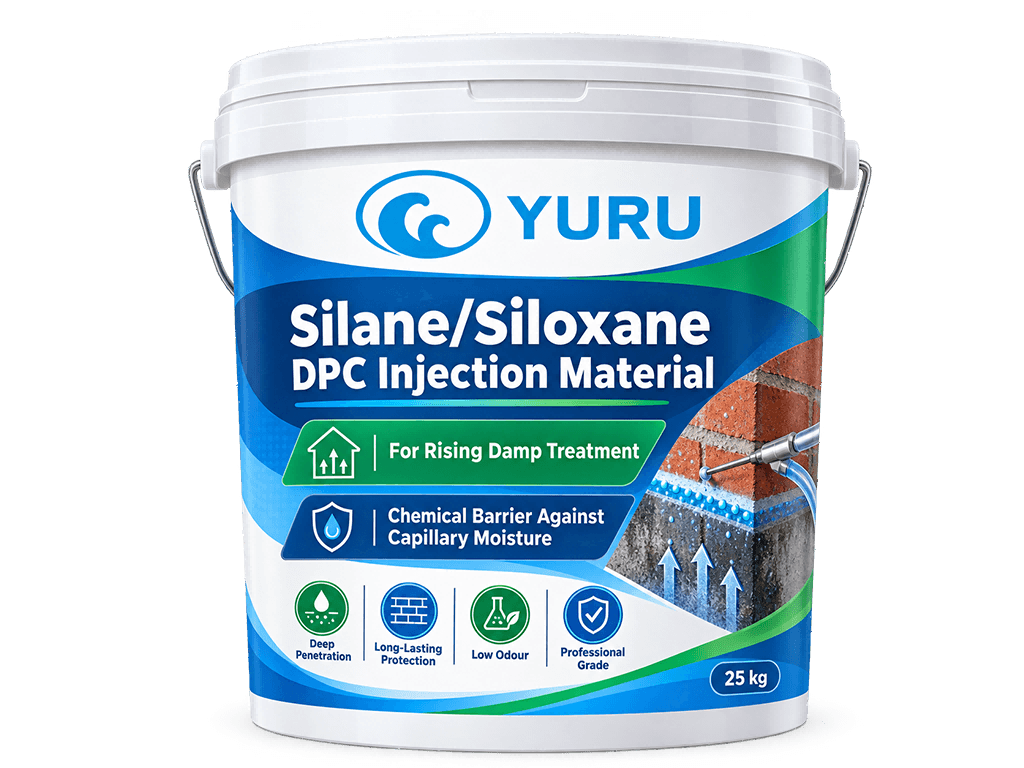
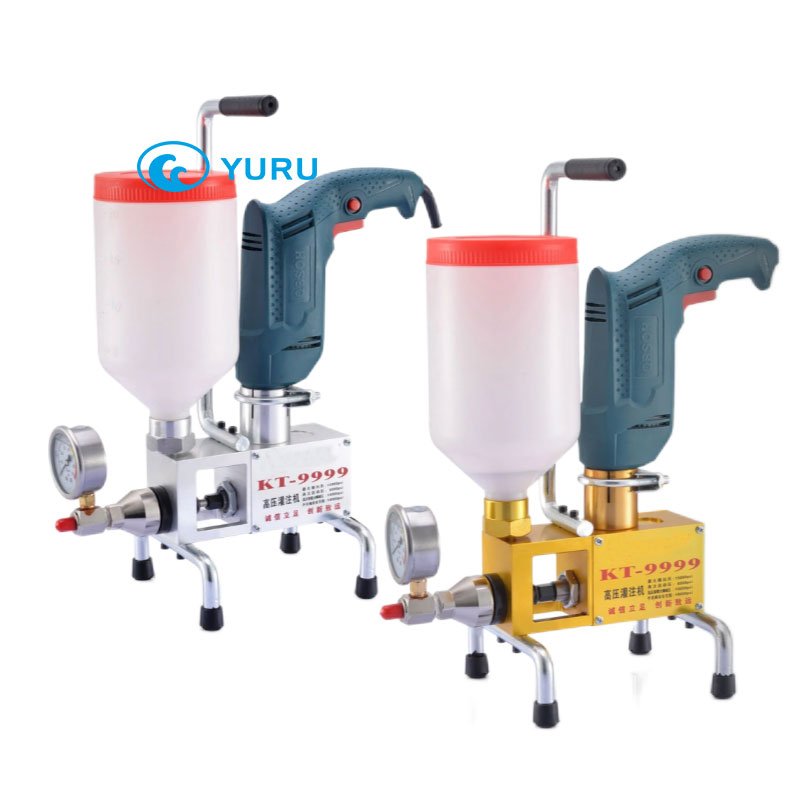
YURU’s Premium Silane/Siloxane DPC Injection Material is a single-component material described in its product data as having very high fluidity and excellent wettability. It is based on reactive polydimethylsiloxanes in emulsion and is designed to form a chemical barrier against capillary rising damp.
Those are product properties. They do not mean that every wall will absorb or distribute the liquid in the same way.
Experimental research comparing 15 chemical injection products found clear differences in spreading and effectiveness under different moisture conditions. Carrier or solvent type had a particularly strong influence in wet masonry, while product form and active components also mattered.
For practical purposes, this means that high fluidity can support movement, but it cannot predict site distribution by itself.
The formulation still has to interact with the pore structure and moisture condition of the wall.
This distinction is also important because not every silane/siloxane water-repellent product is designed for wall injection. See our guide to silane/siloxane waterproofing agent vs DPC injection material for the difference.
Product form is another part of that decision. If you are still deciding between a liquid system and an injection cream, see our guide to liquid DPC vs DPC cream before comparing penetration behavior.
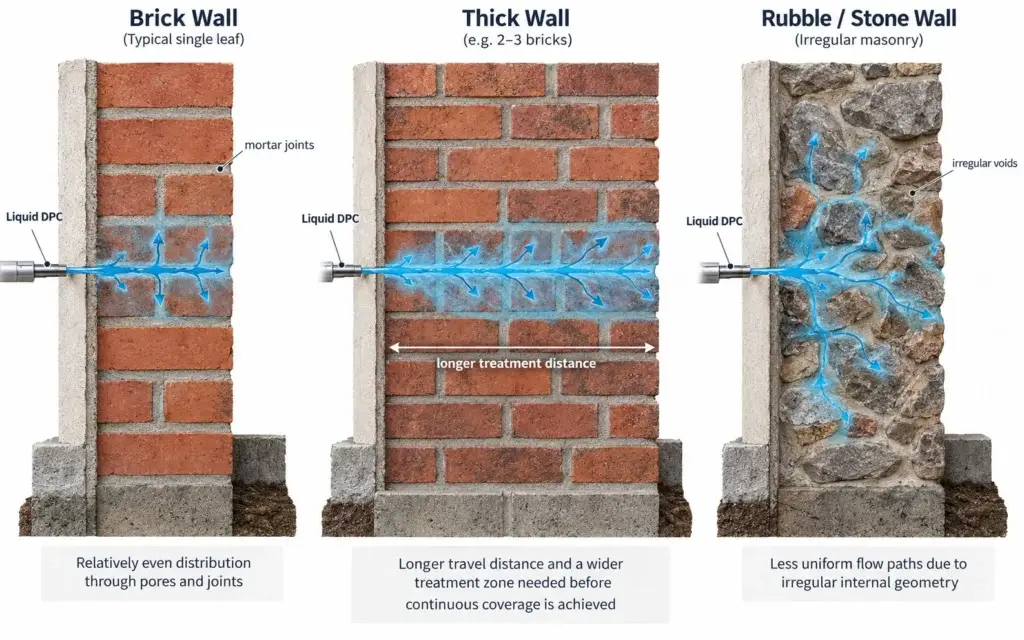
How Does Masonry Structure Affect Liquid DPC Distribution?
A masonry wall may look uniform from the outside, but internally it is usually a combination of materials with different absorption characteristics.
Mortar, brick, interfaces, repairs, joints, and voids can all create different paths for an injected liquid.
Brick, Mortar, and Their Interfaces
Brick and mortar should not be treated as one identical porous material.
Experimental work on mortar-and-brick combinations found that substrate heterogeneity and differences in pore-size distribution affected both spreading and treatment effectiveness. The interface between the two materials can also influence how chemical injection products move.
This helps explain why two visually similar walls may not absorb a liquid DPC in exactly the same way.
A dense brick, a highly absorbent mortar joint, or a local repair may each change the movement of the fluid. None of these conditions automatically means that chemical injection will fail, but they make simple claims such as “deep penetration” less useful without information about the actual substrate.
Stone, Rubble, and Internal Irregularity
Stone and rubble masonry need even more careful assessment because their internal structure can be difficult to predict.
YURU’s product lists both stone masonry and cavity or rubble masonry among the intended substrates for its liquid DPC material.
Published literature, however, also warns that masonry containing large voids or cracks can present difficulties for chemical injection because injected material may drain into those spaces instead of remaining where the treatment zone is needed.
These two points should be considered together.
A product may be specified for rubble masonry while a particular rubble wall still contains voids or irregular construction that require additional assessment. The label “rubble masonry” alone is therefore not enough to determine suitability.
How Does Wall Moisture Affect Liquid DPC Penetration?
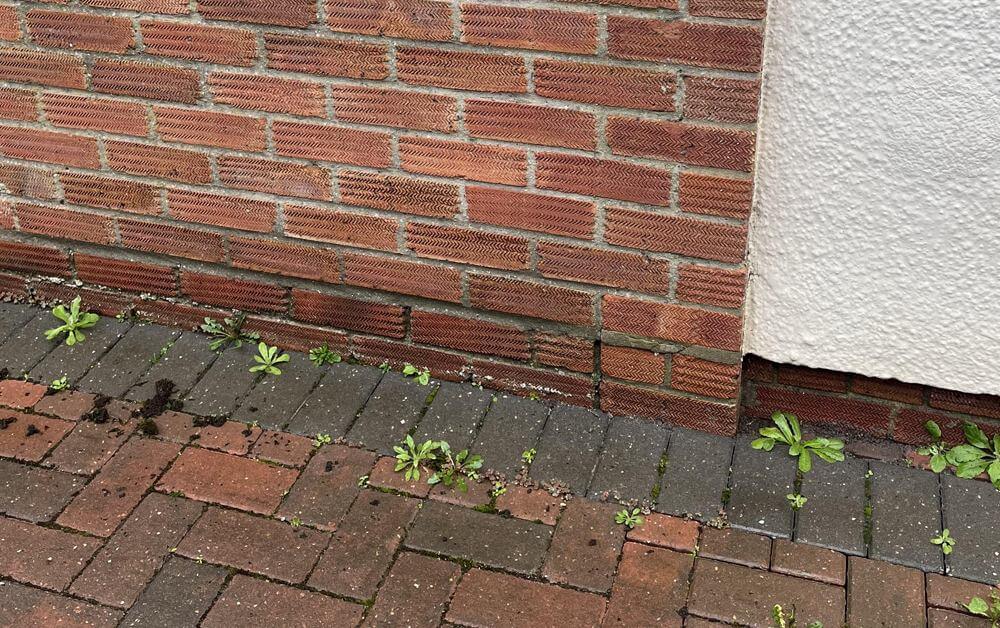
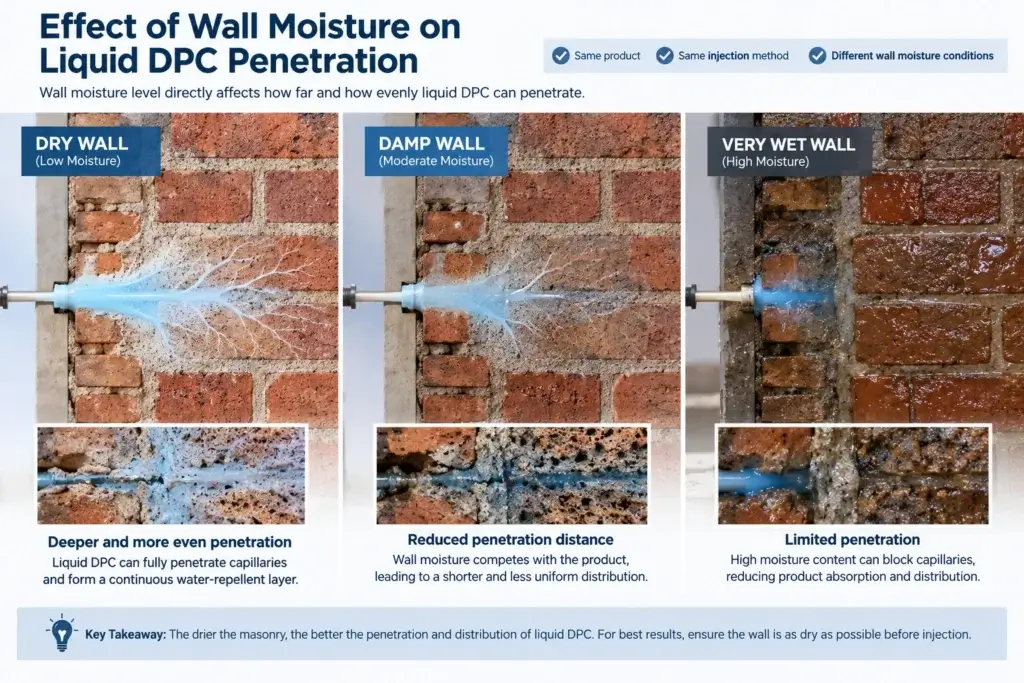
A wall affected by rising damp already contains water, and that water changes the environment through which an injection material has to move.
Experimental research using bricks at different degrees of water saturation found that moisture condition significantly affected the spreading and effectiveness of chemical injection products. Different carrier systems also behaved differently in wet substrates.
This leads to a useful engineering principle:
- Wall moisture is part of the material’s transport environment, not just a symptom of rising damp.
Moisture does not affect every DPC formulation in the same way. In the 2013 study, some water-based silane/siloxane liquids spread very well in the wet brick specimens tested, but that result was specific to the products, substrates, and laboratory conditions involved. It should not be treated as proof that all liquid DPC systems perform better in highly saturated masonry.
For site selection, the moisture condition therefore needs to be considered together with the actual formulation and the manufacturer’s application guidance.
Why Do Wall Thickness and Internal Voids Change the Injection Design?
Wall thickness and internal voids affect different parts of the same problem: how much masonry has to be treated and where the injected liquid is likely to travel.
Wall Thickness Changes the Treatment Distance
A thicker wall creates a larger cross-section over which the treatment has to develop.
This can affect drilling depth, the quantity of material required, and the distance across which the treatment needs to spread.
For YURU’s liquid DPC system, the PDS specifies drilling to approximately two-thirds of the wall thickness. It also states that theoretical yield varies according to masonry type and thickness, with estimated consumption linked directly to wall thickness.
Wall thickness alone does not determine whether a liquid DPC is suitable. It changes the treatment geometry that the injection plan has to address.
Internal Voids Can Redirect Material
Internal voids create a different problem.
When liquid reaches a larger cavity or discontinuity, part of the material can move away from the intended treatment area. Published research identifies large voids and cracks as an important limitation when evaluating chemical DPC treatments.
On site, unexpectedly high material uptake in isolated injection points may therefore deserve further investigation.
It does not automatically prove that a hidden void exists. But simply continuing to inject more material without understanding the reason may increase consumption without improving treatment coverage.
How Do Hole Spacing and Hole Depth Affect Liquid DPC Distribution?
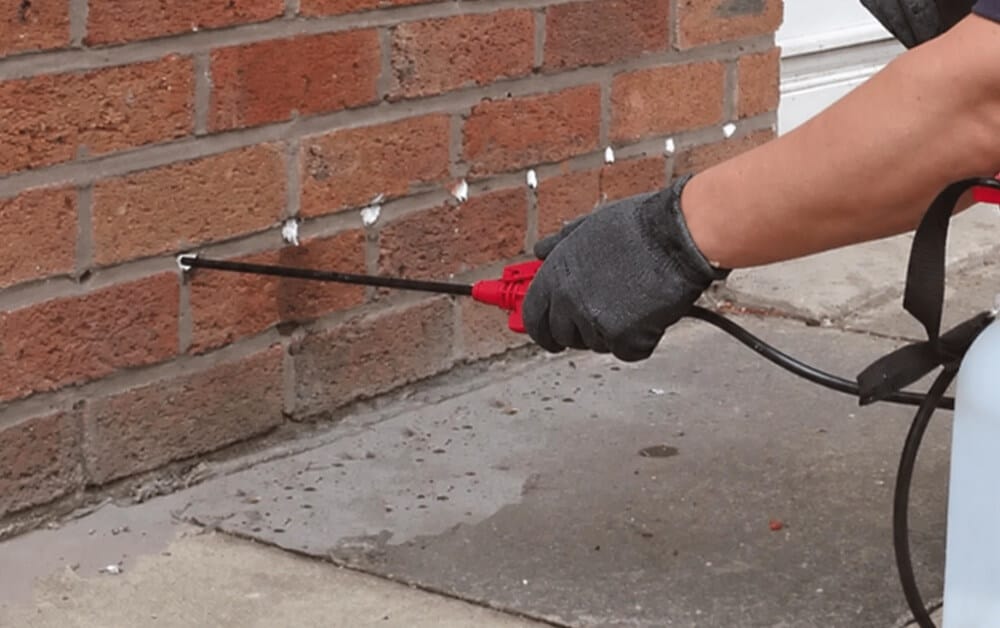
Hole spacing and depth are more than installation details. They determine where the treatment enters the wall.
Each drilled hole creates an entry point. From there, the liquid has to spread into the surrounding masonry far enough for adjacent treated areas to connect.
Put simply:
Hole spacing and depth determine where the product enters the wall and how far it must spread before the treatment becomes continuous.
The exact dimensions should come from the specific product instructions.
For YURU’s material, the PDS specifies approximately 12 mm hole diameter, 10–12 cm spacing, drilling to about two-thirds of the wall thickness, and 12/16 mm multi-hole packers for the stated pressure-injection method.
These are YURU product-specific application parameters, not universal values for every liquid DPC on the market.
Using drilling dimensions taken from another formulation without checking the relevant TDS can change the intended distribution geometry.
Does Higher Injection Pressure Improve DPC Penetration?
Not automatically.
Pressure changes how the liquid is delivered into the masonry, but it is not a universal measure of treatment quality.
Chemical DPC systems can be introduced through pressure-assisted or non-pressure methods, depending on the product and application design. Research describing chemical injection systems recognizes both pressure injection and hydrostatic or gravity-fed approaches.
YURU’s material similarly allows variable-pressure pump application as well as gravity feeding with suitable equipment.
There is therefore no reliable general rule that says higher pressure produces a deeper or better DPC.
The wall still controls how the fluid is absorbed and where it can move. If uptake is poor or inconsistent, increasing pressure should not replace checking the masonry structure, moisture condition, and product-specific application instructions.
Pressure is a delivery variable, not a performance score.
If the product allows more than one application route, the next question is how to choose between DPC pressure injection and gravity feed.
How Does Injection Volume Affect Treatment Coverage?
A liquid DPC needs enough material to develop the intended treated zone.
Too little material can leave inadequate coverage, but simply injecting more is not automatically better. Actual uptake depends on the masonry that receives it.
For YURU’s system, estimated consumption is approximately 0.25 L per centimetre of wall thickness per linear metre. The same PDS states that yield varies according to the type and thickness of the masonry.
That qualification is important.
A theoretical calculation can help with project planning, but actual consumption may change because of differences in porosity, mortar condition, previous repairs, internal voids, or other variations within the wall.
The useful question is therefore not how much liquid the wall can absorb, but whether the specified volume is being distributed through the intended treatment area.
An unexpectedly high uptake does not necessarily mean a better DPC.
What Should Be Checked Before Approving a Liquid DPC Injection Plan?
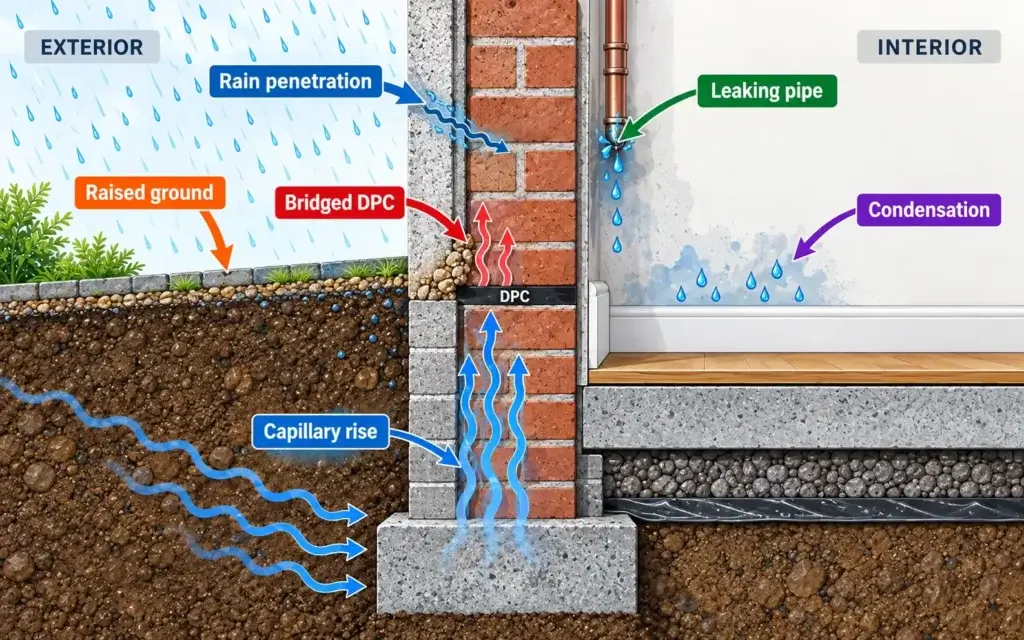
Before deciding on drilling layout, material volume, or injection method, first confirm that a chemical DPC is addressing the right moisture mechanism. If the moisture source has not yet been confirmed, start by checking how to tell if a wall has rising damp before DPC injection.
For historic and traditional buildings, Historic England’s 2026 guidance emphasizes careful investigation and diagnosis because damp can have multiple sources and moisture measurements need to be interpreted in the context of the building.
Once capillary rising damp has been reasonably established, the technical review should cover six areas:
- Masonry structure: Identify the main wall materials and whether the construction is regular brickwork, blockwork, stone, cavity masonry, or irregular rubble.
- Moisture condition: Consider how wet the wall is and whether the product guidance places any limits on the expected condition.
- Wall geometry: Confirm thickness and consider whether hidden cavities, infill, or large internal voids may affect material movement.
- Drilling layout: Check the hole diameter, spacing, depth, and treatment line required by the specific product.
- Delivery method: Confirm whether the formulation is intended for pressure injection, gravity feed, or another application route.
- Material uptake: Compare estimated consumption with what is happening on site and investigate large or localized differences rather than automatically adding more liquid.
These checks provide a more useful basis for approval than a single claim such as “high penetration.”
When Should Distribution Risk Be Investigated More Carefully?
Further assessment is sensible when the wall construction is unclear, large internal voids are suspected, moisture saturation is unusually high, or material uptake varies sharply between neighboring injection points.
The same applies when the product-specific drilling layout cannot be achieved because of the actual wall construction.
These are not automatic reasons to reject liquid DPC injection. They are signals that the original assumptions behind the injection plan may no longer be reliable.
In that situation, the next step should be to understand the wall or adjust the treatment design before simply increasing pressure or material quantity.
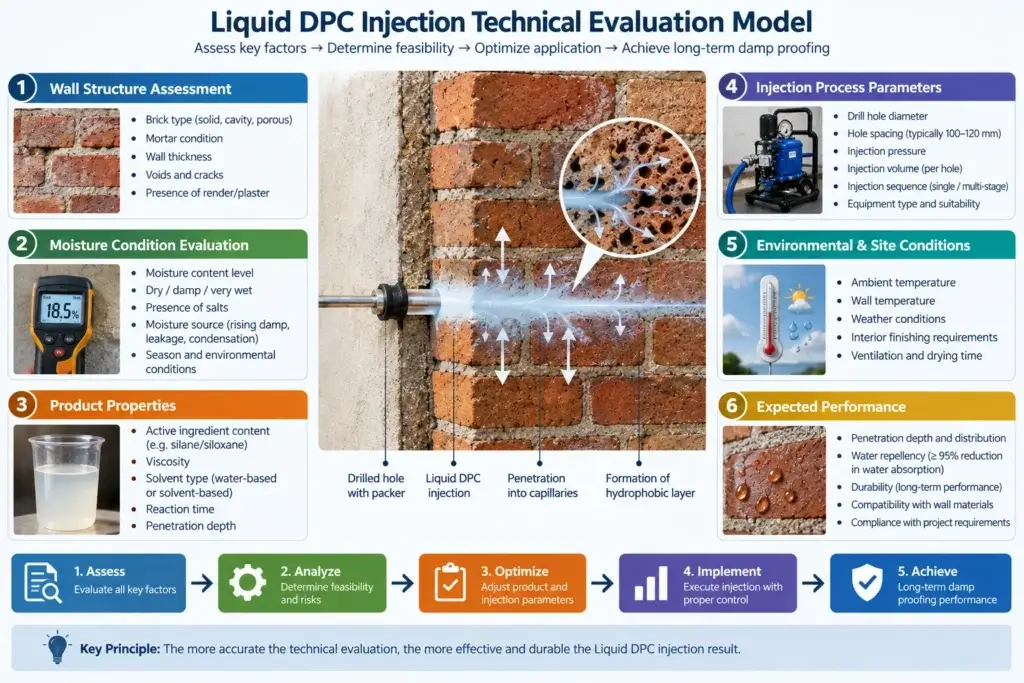
A Practical Model for Evaluating Liquid DPC Penetration
A contractor or technical buyer can reduce the decision to five connected checks.
Product: How is the liquid formulated, and how is it intended to move and react in masonry?
Wall: What material, moisture condition, thickness, and internal geometry will the product encounter?
Delivery: Where will the material enter the wall, and will it be delivered by pressure, gravity, or another approved method?
Coverage: Can the treatment around the injection points spread sufficiently to form a continuous DPC?
Decision: Do the wall conditions and application design support proceeding, or should the plan be adjusted or reassessed?
The core principle is simple:
- Do not judge liquid DPC penetration from fluidity alone. Evaluate the product, the wall, and the delivery method as one system.
If those checks support a liquid DPC approach, the next step is to compare the actual wall conditions with the specific product TDS and application instructions. You can review the YURU liquid silane/siloxane DPC injection material specifications before final material selection.
If a wall has already been treated but remains damp, see why damp can persist after DPC injection.
Frequently Asked Questions
Does Low-Viscosity DPC Fluid Always Penetrate Deeper?
No. Low viscosity or high fluidity can help material move through porous masonry, but actual spreading also depends on formulation, pore structure, wall moisture, and application design. Penetration should therefore be evaluated together with the wall rather than from viscosity alone.
Can Liquid DPC Be Injected Into a Very Wet Wall?
It can be possible, but the answer depends on the formulation and substrate. Research shows that water saturation can significantly change the spreading of chemical DPC products, so the specific product guidance and wall condition should be checked before treatment.
Does Higher Injection Pressure Improve DPC Penetration?
Not automatically. Pressure affects delivery, while final distribution still depends on the product, masonry, moisture condition, and injection layout. Follow the application method specified for the selected DPC system.
Can Liquid DPC Be Used in Rubble Masonry?
Some products, including YURU’s liquid system, list rubble masonry among their intended substrates. However, large internal voids can make material distribution less predictable, so the actual wall construction should be assessed before approving the injection plan.
Need to Check Whether Liquid DPC Fits Your Wall?
If you are evaluating a liquid DPC system for a rising damp project, the most useful next step is to compare the product requirements with the actual wall conditions.
Send YURU Waterproof your masonry type, wall thickness, observed moisture condition, known cavities or rubble construction, intended injection method, and available project photos or drawings.
We can review these conditions together with the relevant product data and application requirements before you move to final material specification or purchasing.
YURU Product solutions