
What Should Distributors Check Before Approving a Private-Label Injection Grout?
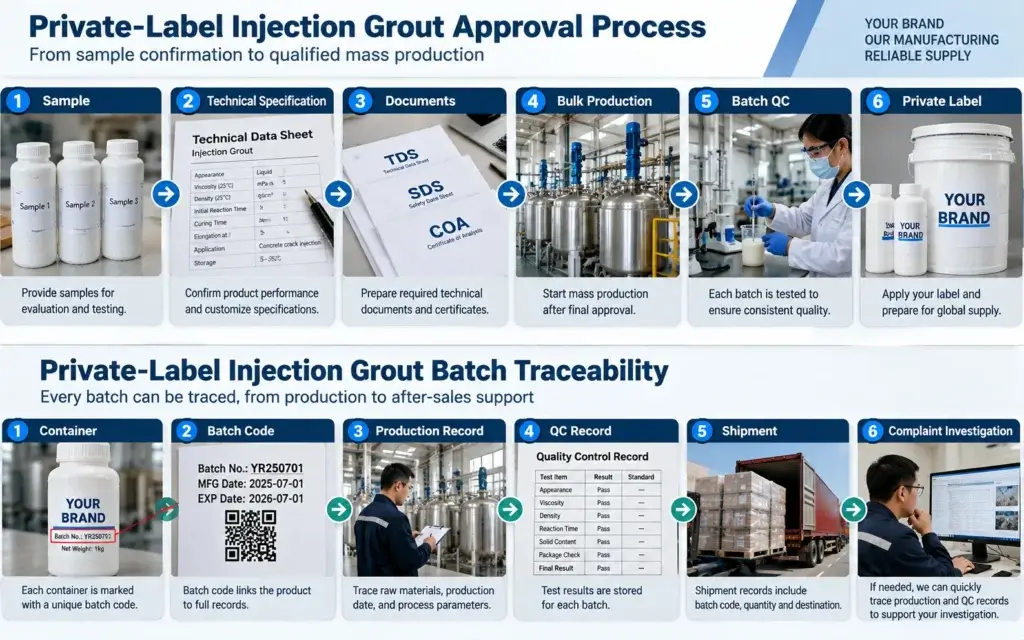
Quick Answer Before approving a private-label injection grout, distributors should confirm the product’s application fit, approved technical specification, TDS and SDS, sample-to-bulk consistency, batch traceability, packaging and labeling, supply terms, and the rules for future product changes. Private-label approval should cover the product behind the brand, not only the artwork on the container. What Should […]
How Does Joint Geometry Affect Injection Grout Distribution and Penetration?
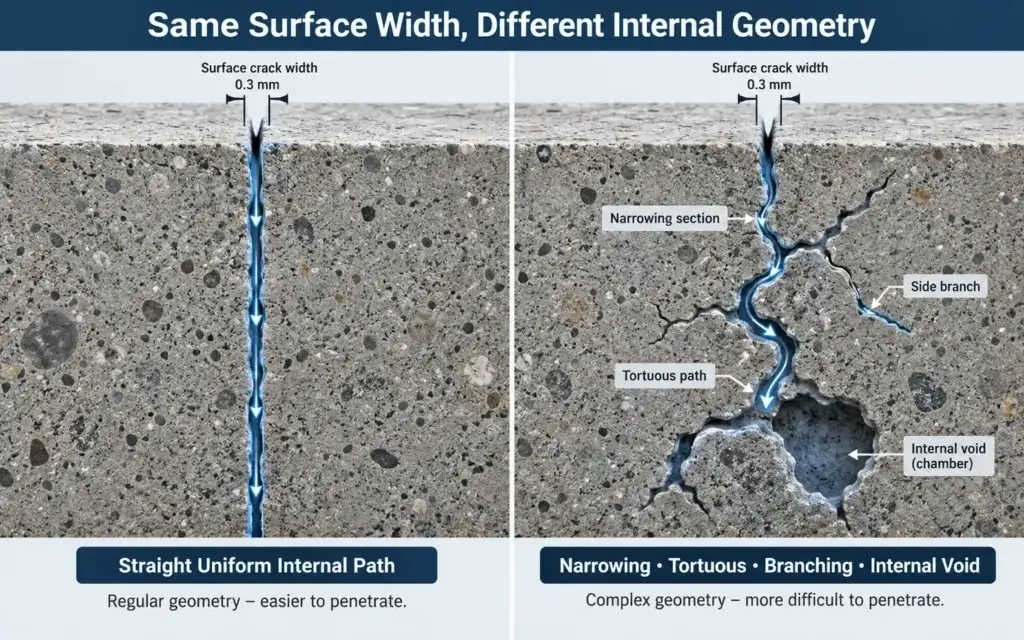
Two concrete cracks can look almost identical at the surface but behave very differently during injection. One may accept grout smoothly and allow the material to move toward the target area. Another may have a similar visible width but restrict the grout after a short distance, redirect it toward another outlet, or distribute it into […]
How Does Injection Grout Viscosity Affect Penetration into Concrete Joints?
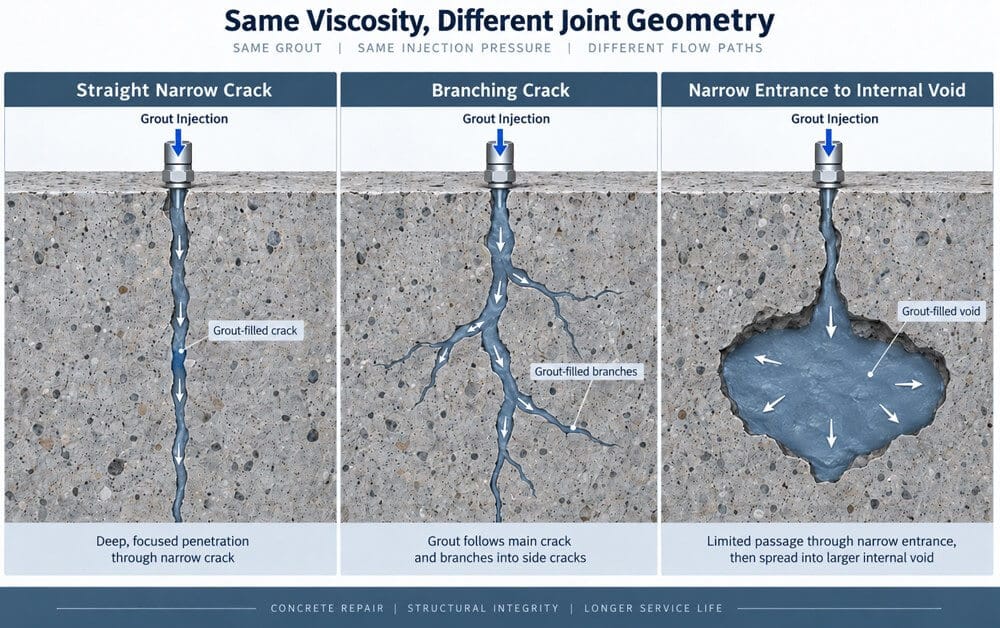
When comparing injection grouts, the lower-viscosity product often looks like the obvious choice for deeper penetration. This conclusion, however, may be incorrect. Lower viscosity can facilitate entry into narrow cracks, joints, and connected voids. However, penetration depends on more than the initial viscosity reported on a TDS. Working time, viscosity development, joint geometry, water conditions, […]
How Does Temperature Affect Polyurea Injection Grout Working Time and Penetration?

A contractor may read “15-minute application time” on a technical data sheet and expect the same working window on every jobsite. I would not make that assumption. A TDS value is a useful reference, but field behavior also depends on the conditions around the material. Ambient temperature, concrete temperature, material temperature, groundwater conditions, joint geometry, […]
How Should Polyurea Injection Grout Be Stored and Shipped for Export?
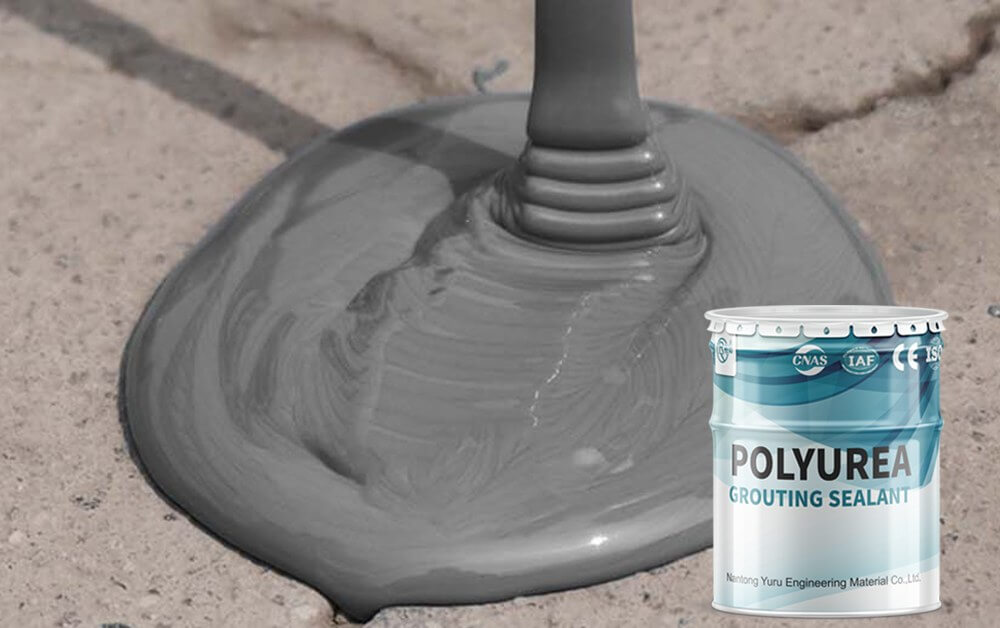
When an importer approves a grout sample, the job is not finished. The material still has to pass through factory storage, packaging inspection, loading, international transport, customs handling, destination warehousing, and final delivery. A good production batch can still become a problem if the package is damaged, the storage conditions are unsuitable, the transport classification […]
What Technical Parameters Should Buyers Check Before Ordering Polyurea Injection Grout?

When a distributor, contractor, importer, or project buyer sends me a polyurea grout technical data sheet and asks, “Are these specifications good?”, I rarely judge the product from one impressive number. High elongation may look attractive. Fast curing may sound efficient. A low-temperature test result may seem suitable for a cold-region project. But none of […]
When Should You NOT Use Polyurea Grout? 5 Project Conditions to Check First

Introduction: When a contractor or distributor sends me a photo of a leaking concrete joint and asks, “Can we use polyurea grout here?”, I do not answer based on the presence of a crack or water alone. I first look at three things: what is moving, what the water condition is, and what the repair […]
How Should Polyurethane Waterproof Coating Be Stored and Shipped for Export?
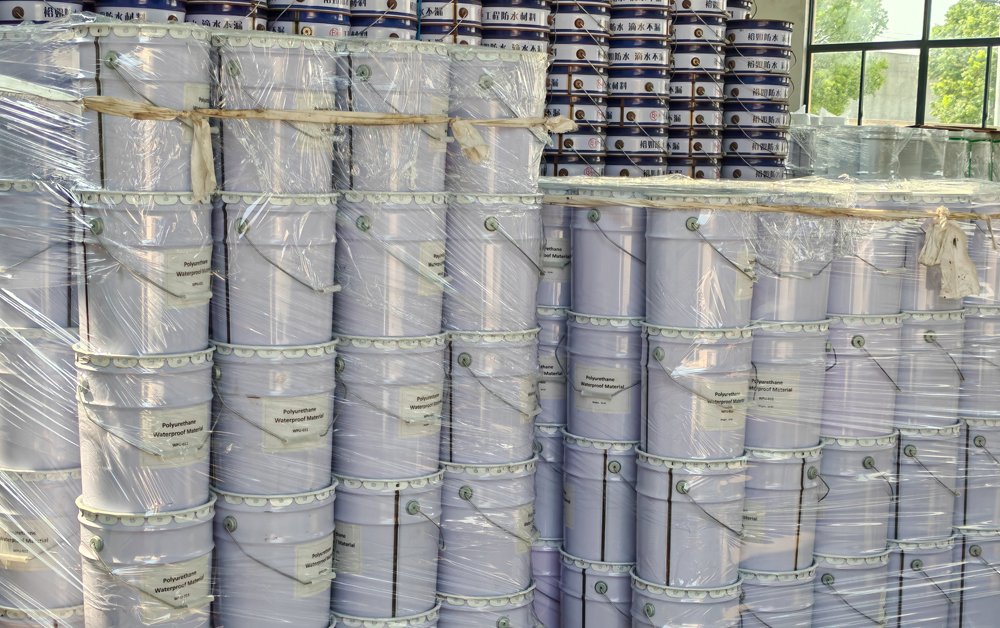
Introduction: When an overseas buyer asks me about polyurethane waterproof coating, storage is rarely the first question. Most discussions start with tensile strength, elongation, solid content, price or whether the coating is suitable for a roof, basement or concrete structure. However, once the order transitions from samples to palletized or container quantities, additional factors become […]
Can Flexible Polyurea Grout Seal Active Water Leaks? What Project Conditions Matter?

Quick Answer Flexible polyurea grout can work well for leaking cracks when the water flow is under control and the crack still needs a flexible seal. The key is the type of leak. A damp crack, a slowly seeping joint, and a crack with strong running water are very different conditions. If water is only […]
Why Does Epoxy Colored Sand Self-Leveling Flooring Develop Bubbles and Pinholes?

Quick Answer Bubbles and pinholes in epoxy colored sand self-leveling floor paint typically arise from air or vapor migration through the coating during the wet phase. Common sources include porous concrete, inadequate surface preparation, insufficient primer coverage, substrate moisture, air entrainment during mixing, incorrect component ratio, rising slab temperature, and application beyond the material’s usable […]