
Epoxy Flooring: How to Choose the Right Epoxy Floor Coating System for Industrial and Commercial Projects
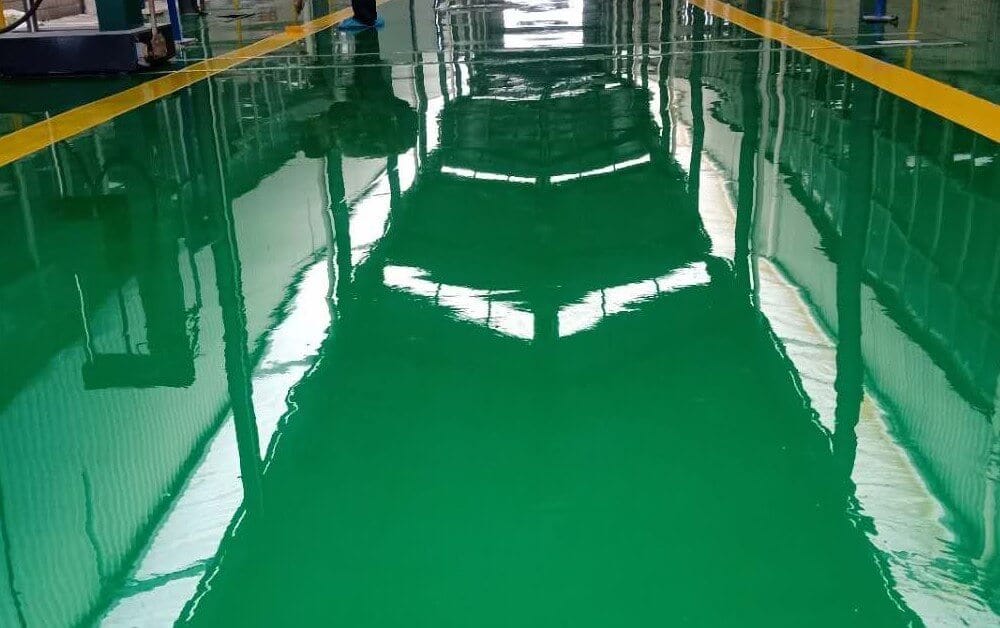
A warehouse, a cleanroom, and a commercial showroom can all use epoxy flooring — but they’re not asking the floor to do the same job. Warehouse deals with forklifts and repeated abrasion. A cleanroom cares more about a smooth, easy-to-maintain surface. In a commercial interior, appearance and daily cleaning can matter as much as wear. […]
Damp Proof Injection: How a Chemical DPC Protects Your Home from Rising Damp
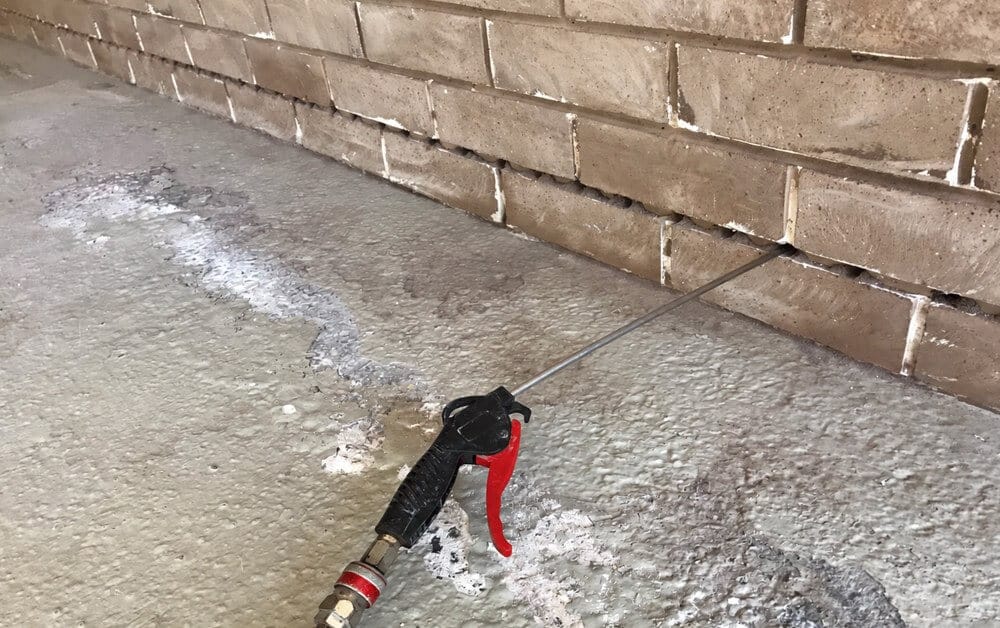
Moisture appearing near the bottom of a wall is easy to notice. Working out why it is there is harder. When the problem really is rising damp, moisture from the ground is moving upward through the porous structure of the masonry. An effective damp proof course is meant to interrupt that route. In an older […]
How Should Hole Spacing and Drill Depth Be Planned for Liquid DPC Injection?
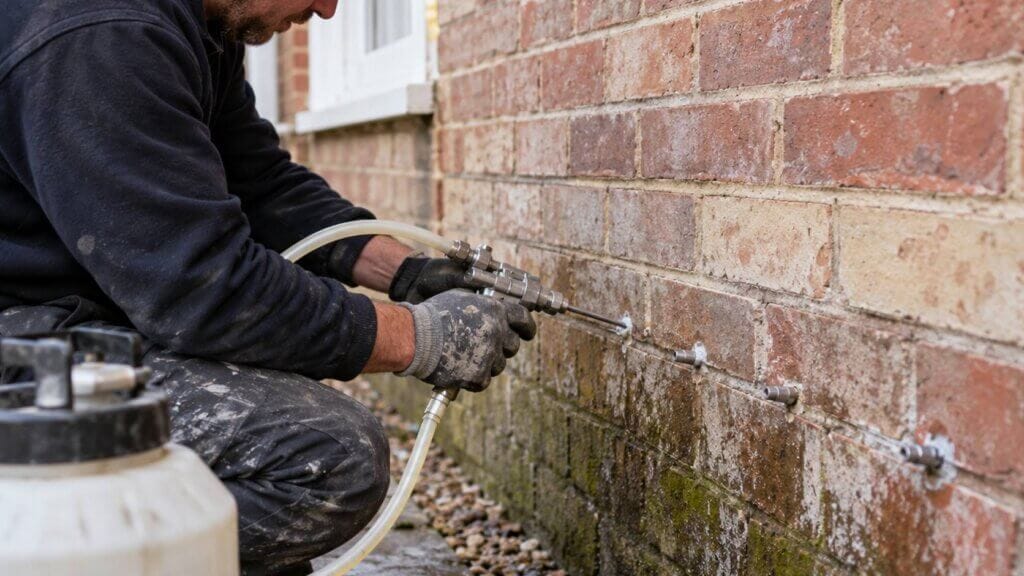
Different chemical DPC systems do not always use the same drilling pattern. A spacing or drill depth specified for one injection cream should not automatically be copied to a professional liquid DPC system. Hole spacing, drill depth, wall thickness and the selected DPC system need to be considered together. The aim is not simply to […]
Damp Proof Injection for Rising Damp: How It Works, When It Fits, and What to Check
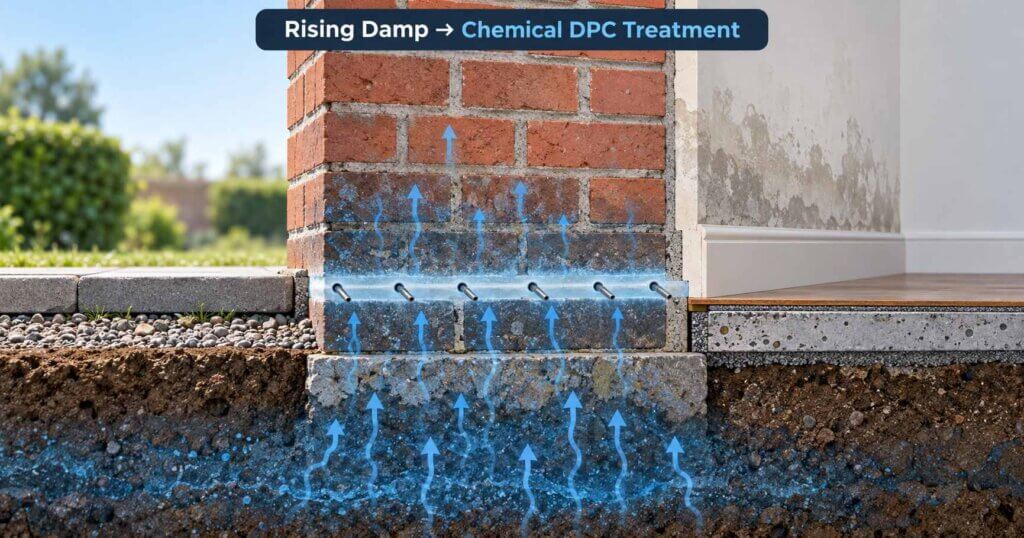
Damp proof injection is a remedial way of installing a chemical damp-proof course to control rising damp. It is not a treatment for every damp wall, and it does not refer to one specific injection cream. Before selecting a system, three questions need to be answered: Is the moisture actually rising damp? Is a new […]
When Should You Replaster After DPC Injection? Salts, Drying, and Wall Finishes
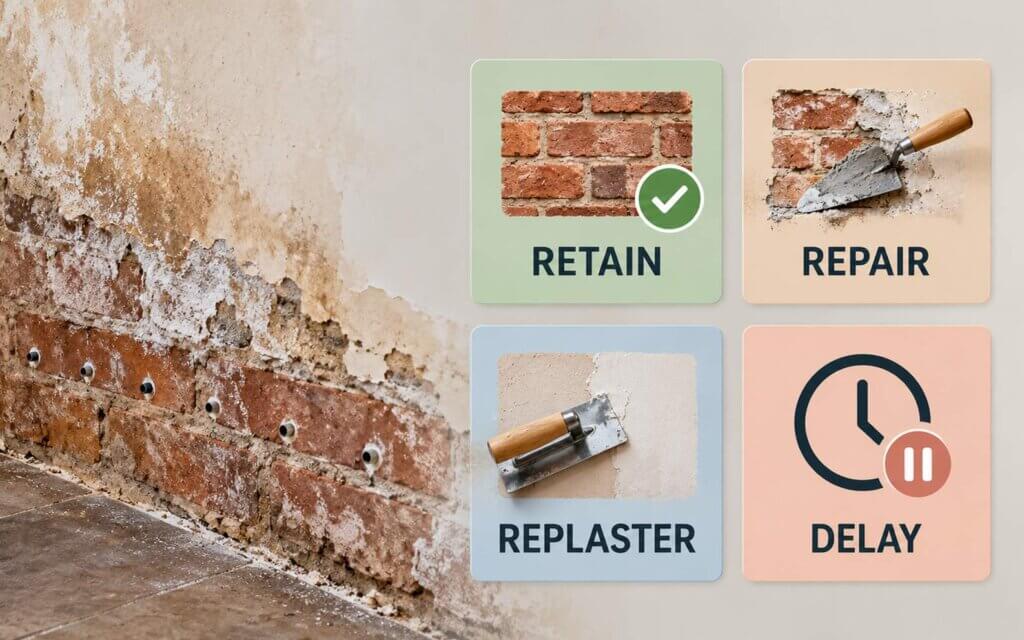
Replastering following DPC injection is not determined by a fixed elapsed time. The decision depends on whether the moisture source has been controlled, the condition and salt load of the existing plaster, the type of wall being repaired, and the restoration system being specified. Some walls need full replastering, some only need localized repair, while […]
Why Is the Wall Still Damp After DPC Injection? Drying, Salts, or Treatment Failure?
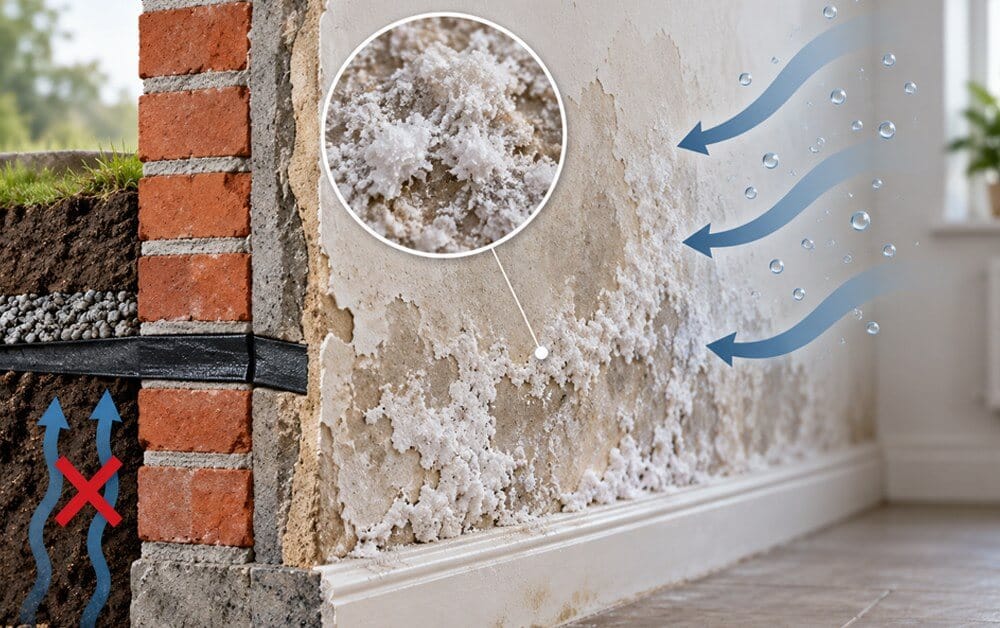
Introduction A wall that still looks damp after DPC injection does not automatically mean the treatment has failed. The wall may still be releasing moisture retained prior to treatment. Hygroscopic salts can keep plaster damp by absorbing moisture from the air. Old or replacement finishes may still be affected by salt contamination. The original DPC […]
DPC Pressure Injection vs Gravity Feed: Which Method Fits the Wall?
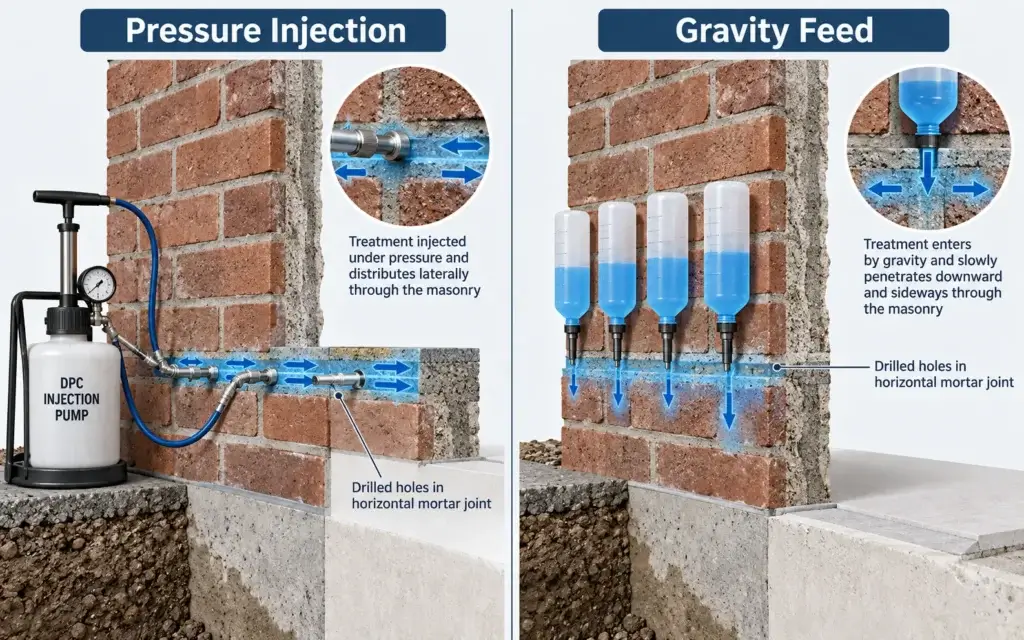
Introduction: Pressure injection and gravity feed are both used to introduce liquid chemical damp-proof course (DPC) materials into masonry, but they do not deliver the material in the same way. With DPC pressure injection, a pump actively delivers the liquid through drilled holes. Gravity feed works without external pump pressure and relies more on gravity […]
Liquid DPC Injection for Rising Damp: What Affects Penetration and Distribution in Masonry?
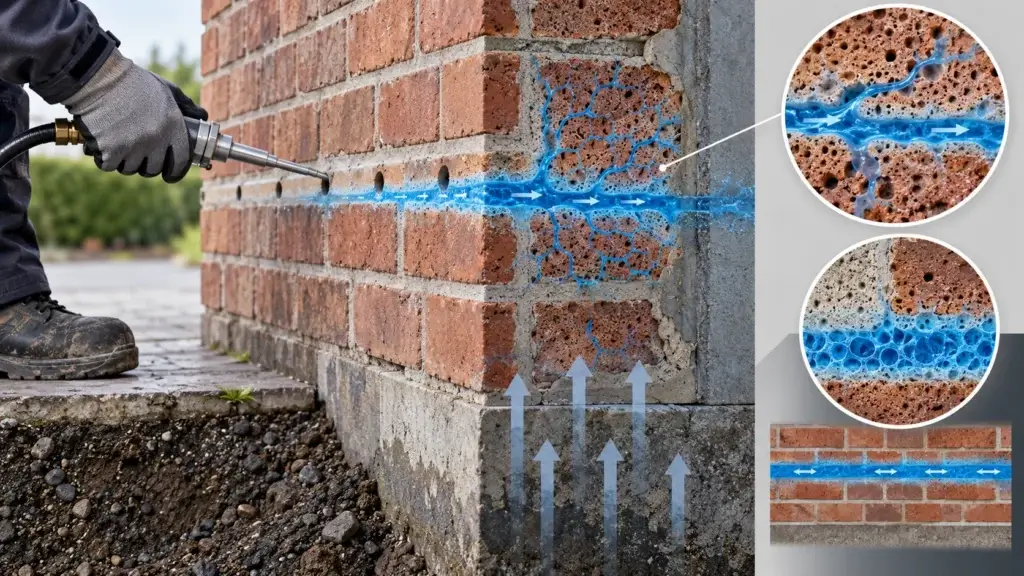
A liquid chemical damp-proof course (DPC) can be highly fluid and still behave differently from one masonry wall to another. That is because liquid DPC injection is not simply a matter of getting fluid into drilled holes. The product has to move through real masonry, where brick, mortar, stone, moisture, wall thickness, and internal voids […]
Liquid DPC Injection vs DPC Cream: Which Is Better for Rising Damp?
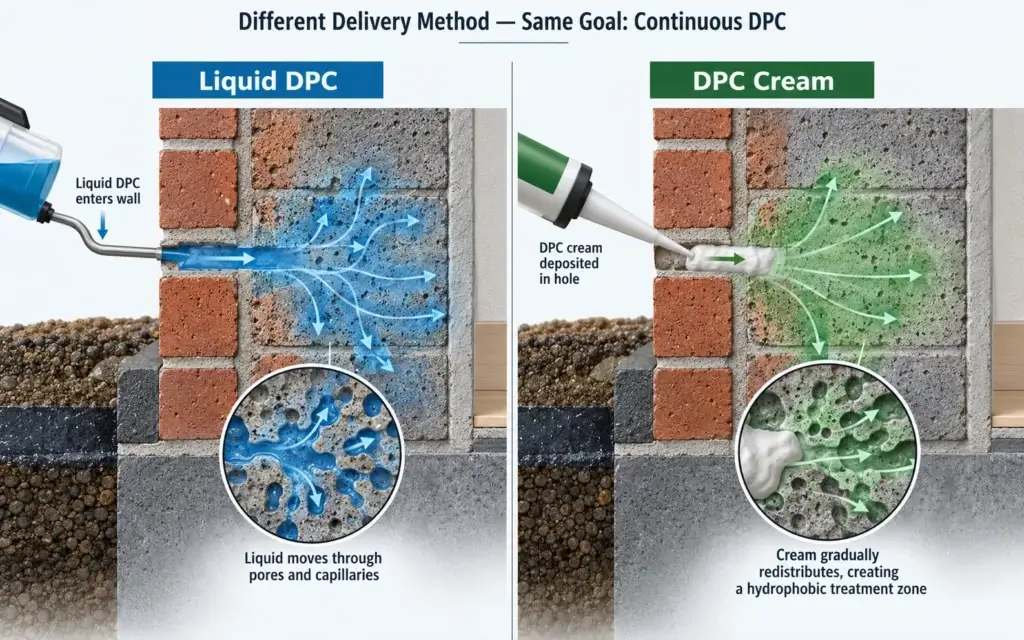
Once a wall has been confirmed as a genuine rising damp problem, another question follows quickly: Should you use a liquid DPC injection system or a DPC cream? Cream usually requires less equipment and is easy to place through drilled holes with an applicator. Liquid DPC can be delivered by pressure or gravity, depending on […]
How Can You Tell If a Wall Has Rising Damp Before DPC Injection?
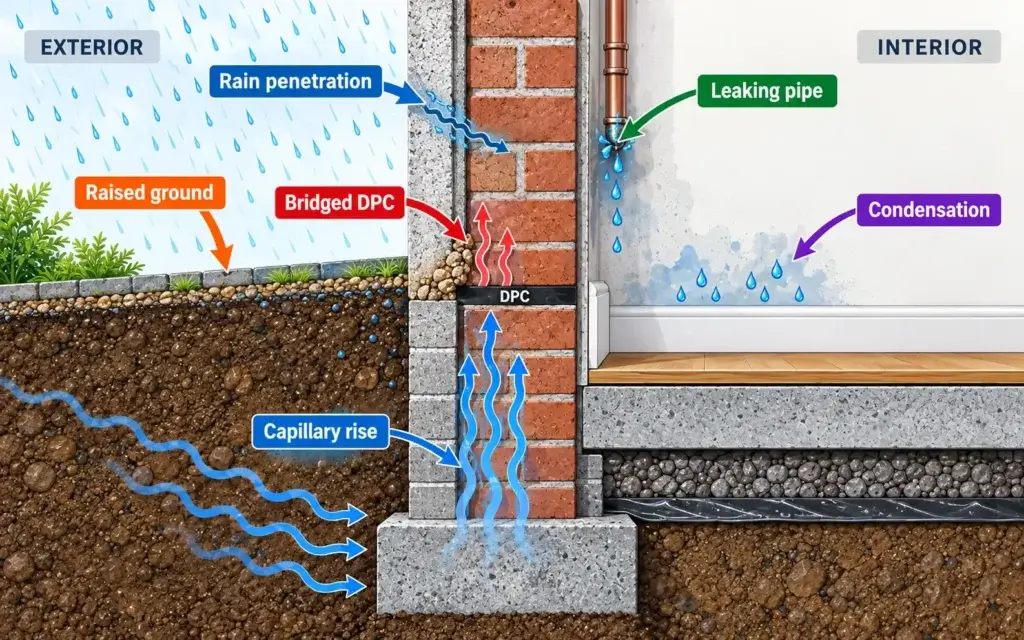
Low-level damp doesn’t automatically mean rising damp. Prior to recommending chemical DPC injection, the moisture source should be identified. A damp patch near floor level may be consistent with capillary rising damp, but comparable damage may originate from rainwater ingress, leaking services, raised ground levels, bridged damp-proof courses, drainage issues, or condensation. A wrong diagnosis […]