
Can Epoxy Injection Be Used in Wet Concrete Cracks?
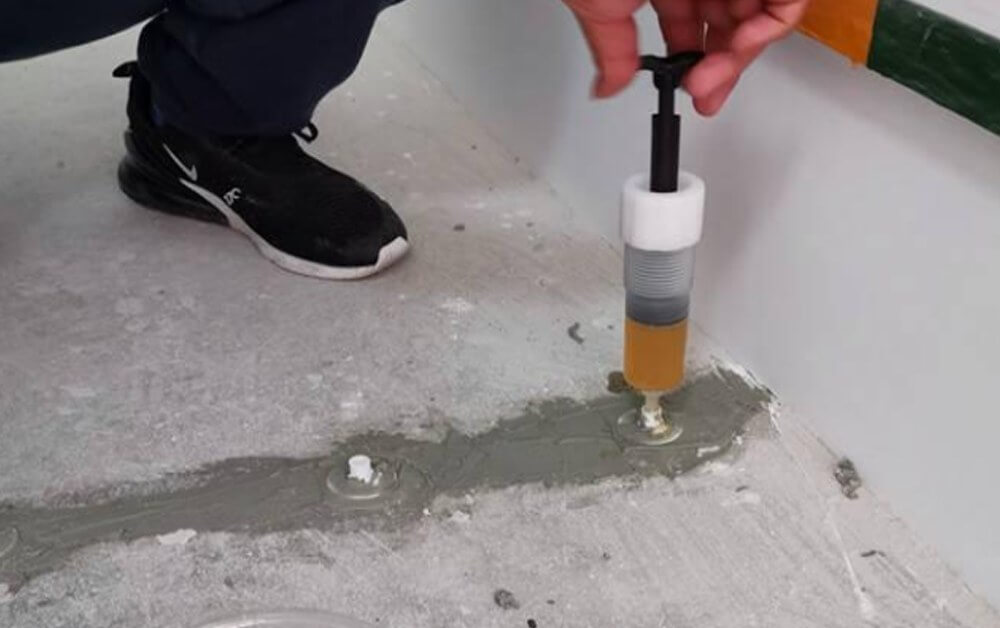
Introduction A damp concrete crack does not always rule out epoxy injection. The problem is knowing what kind of moisture is present. A crack left damp after earlier water exposure is very different from one where groundwater is still finding its way through, even if the leak is barely noticeable. For structural repairs, conventional epoxy […]
Polyurethane Foam Grout: What Makes an Effective Seal?

Foam coming out of an injection point can look reassuring. It tells you the polyurethane has reacted. What it doesn’t tell you is how far the grout has travelled inside the concrete — or whether water can still pass through an untreated section of the crack. That’s an important distinction when working with polyurethane foam […]
How Does Acrylate Grout Gel Time Affect Penetration and Seepage Control?
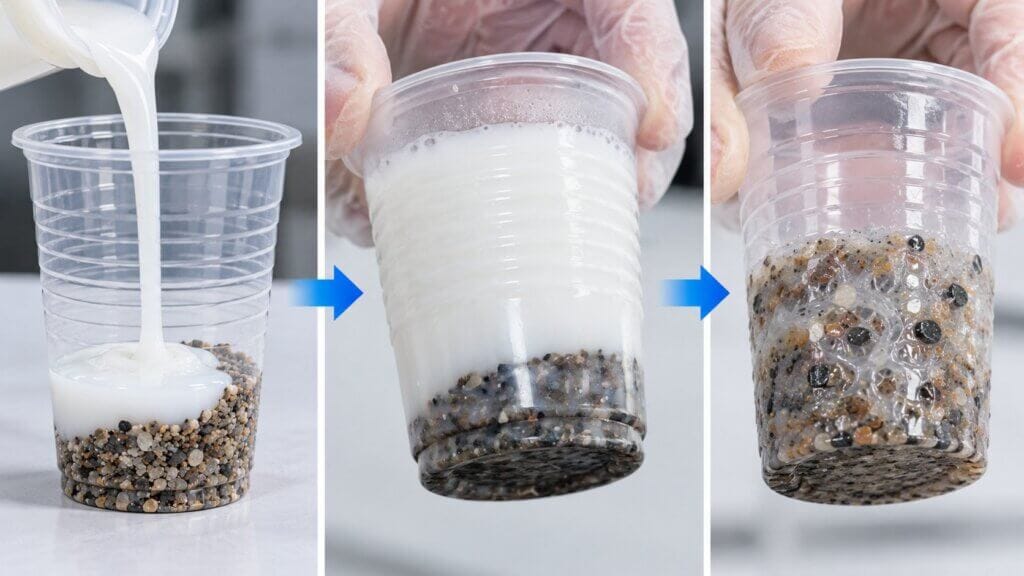
Introduction Acrylate grout can get into a fine concrete joint and still miss the area that needs sealing. Sometimes it’s not about initial viscosity. The grout starts thickening while moving through the joint and stops before reaching the leak. The opposite can happen when the material stays fluid too long. In a connected crack with […]
When Should You NOT Use Acrylate Grout?
Introduction On a tunnel waterproofing job, water may be finding its way through fine cracks or narrow joints. Low-viscosity acrylate grout can reach these small passages before it forms a flexible sealing gel. But what if the contractor discovers a large cavity behind the concrete? The repair now requires more than sealing small passages. A […]
Epoxy Flooring: How to Choose the Right Epoxy Floor Coating System for Industrial and Commercial Projects
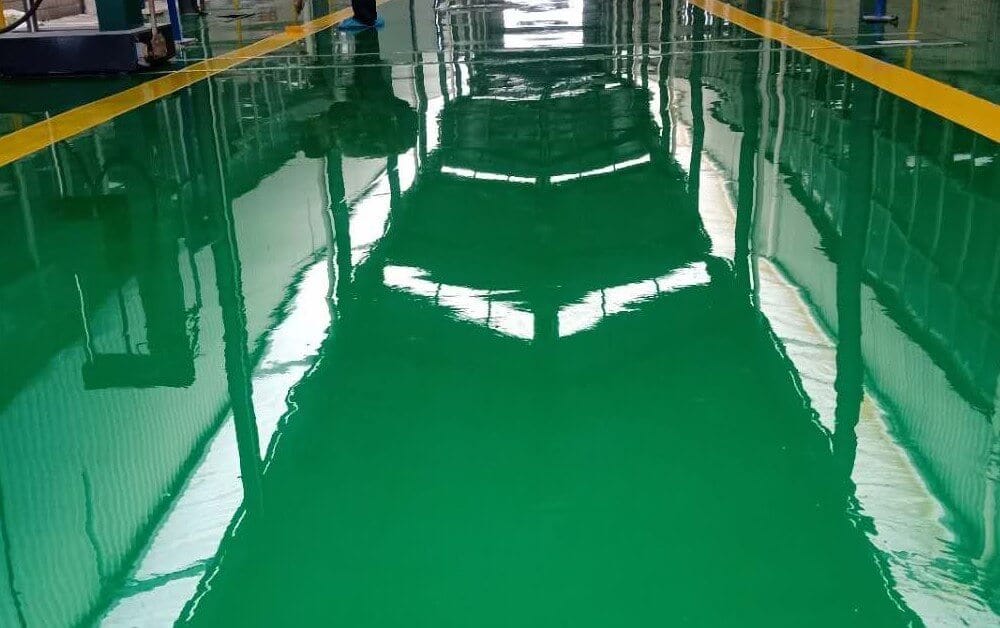
A warehouse, a cleanroom, and a commercial showroom can all use epoxy flooring — but they’re not asking the floor to do the same job. Warehouse deals with forklifts and repeated abrasion. A cleanroom cares more about a smooth, easy-to-maintain surface. In a commercial interior, appearance and daily cleaning can matter as much as wear. […]
Damp Proof Injection: How a Chemical DPC Protects Your Home from Rising Damp
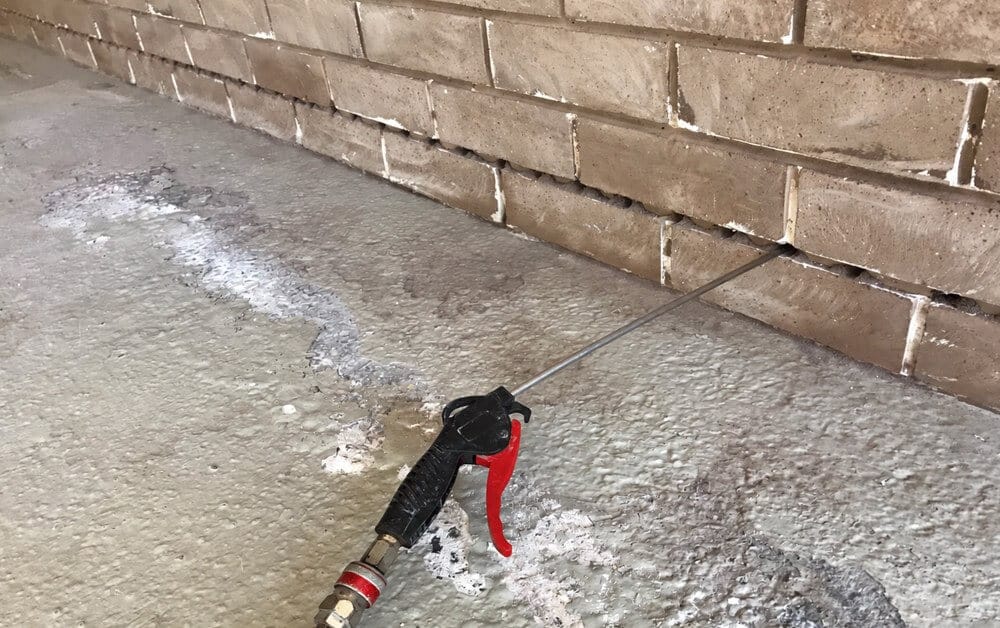
Moisture appearing near the bottom of a wall is easy to notice. Working out why it is there is harder. When the problem really is rising damp, moisture from the ground is moving upward through the porous structure of the masonry. An effective damp proof course is meant to interrupt that route. In an older […]
How Should Hole Spacing and Drill Depth Be Planned for Liquid DPC Injection?
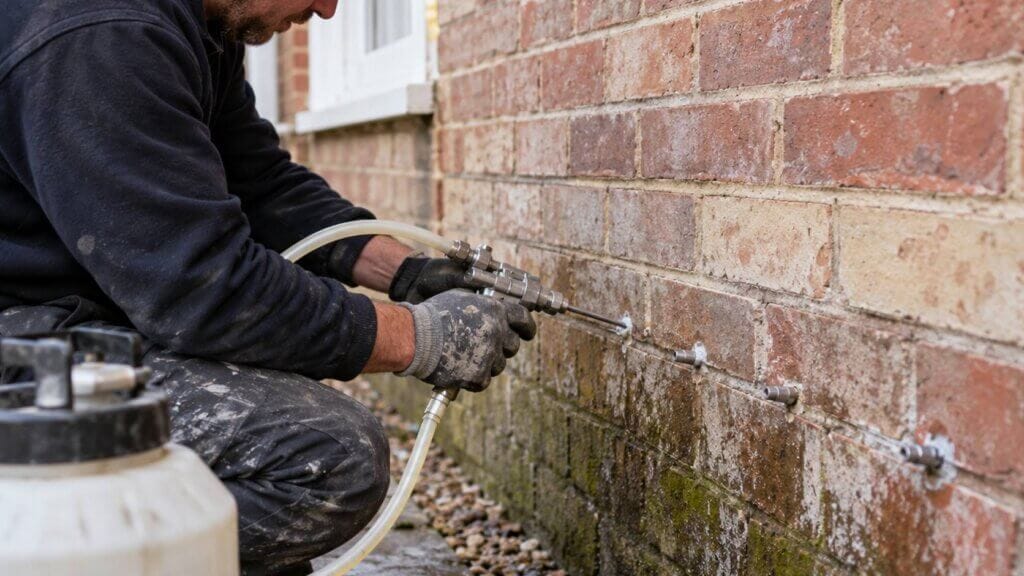
Different chemical DPC systems do not always use the same drilling pattern. A spacing or drill depth specified for one injection cream should not automatically be copied to a professional liquid DPC system. Hole spacing, drill depth, wall thickness and the selected DPC system need to be considered together. The aim is not simply to […]
Damp Proof Injection for Rising Damp: How It Works, When It Fits, and What to Check
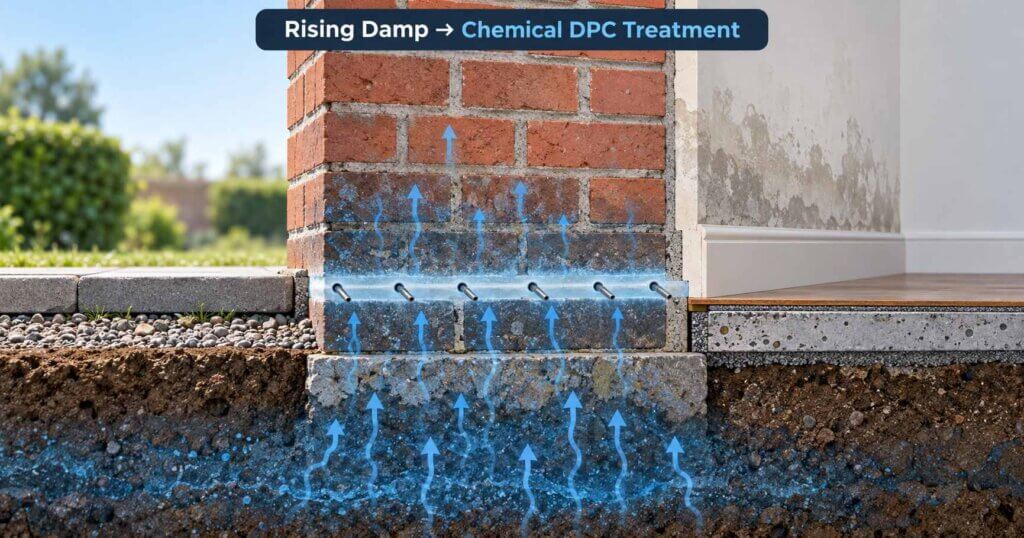
Damp proof injection is a remedial way of installing a chemical damp-proof course to control rising damp. It is not a treatment for every damp wall, and it does not refer to one specific injection cream. Before selecting a system, three questions need to be answered: Is the moisture actually rising damp? Is a new […]
When Should You Replaster After DPC Injection? Salts, Drying, and Wall Finishes
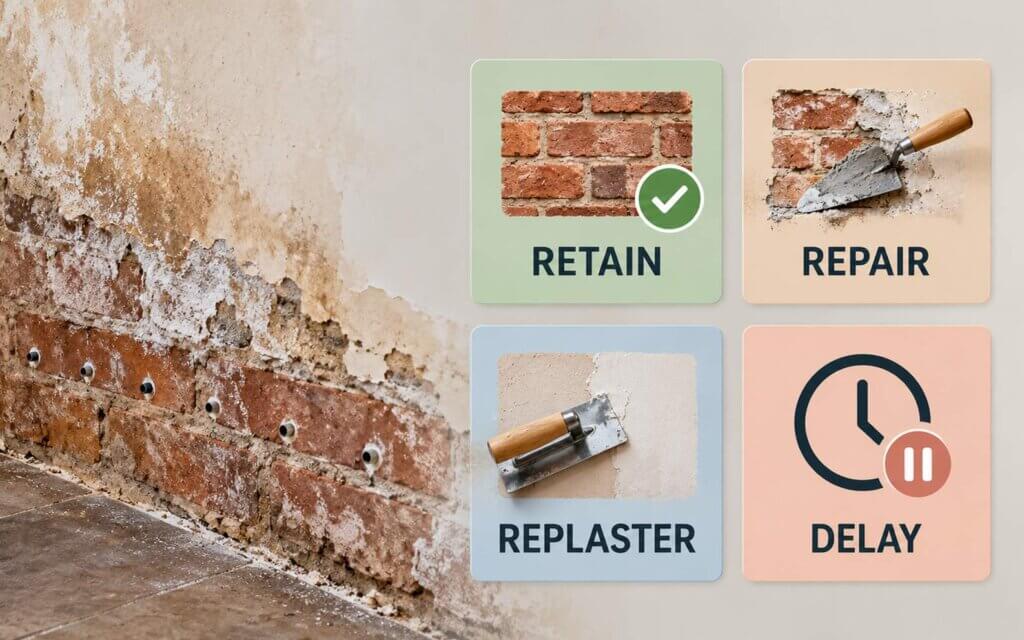
Replastering following DPC injection is not determined by a fixed elapsed time. The decision depends on whether the moisture source has been controlled, the condition and salt load of the existing plaster, the type of wall being repaired, and the restoration system being specified. Some walls need full replastering, some only need localized repair, while […]
Why Is the Wall Still Damp After DPC Injection? Drying, Salts, or Treatment Failure?
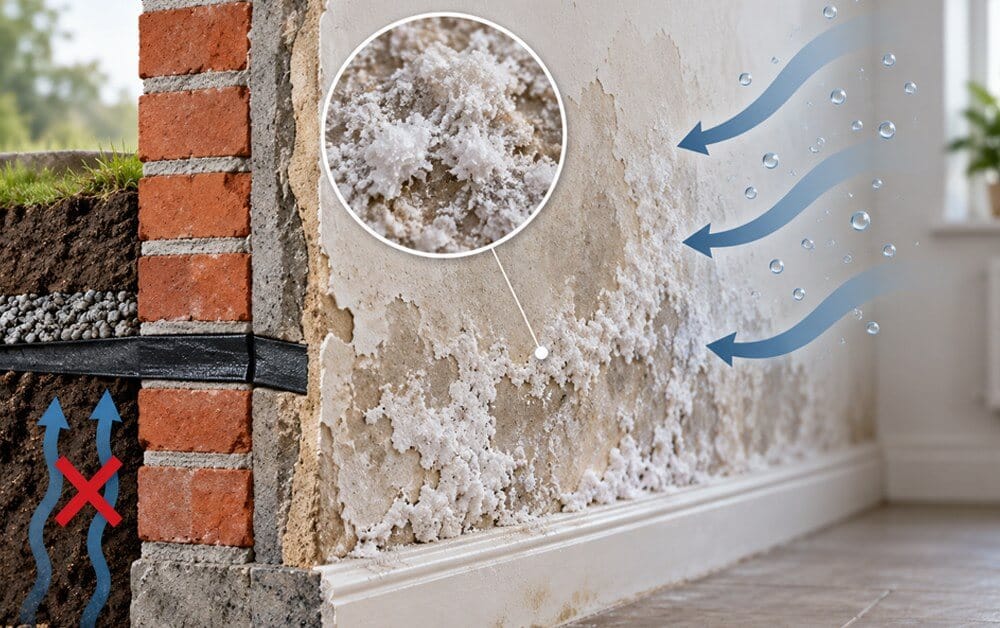
Introduction A wall that still looks damp after DPC injection does not automatically mean the treatment has failed. The wall may still be releasing moisture retained prior to treatment. Hygroscopic salts can keep plaster damp by absorbing moisture from the air. Old or replacement finishes may still be affected by salt contamination. The original DPC […]